How Long to Bake Bread, at What Temperature, and How to Tell It's Done
Why Is My Bread Doughy in the Middle? Causes and How to Fix It
Updated Nov 21, 2026
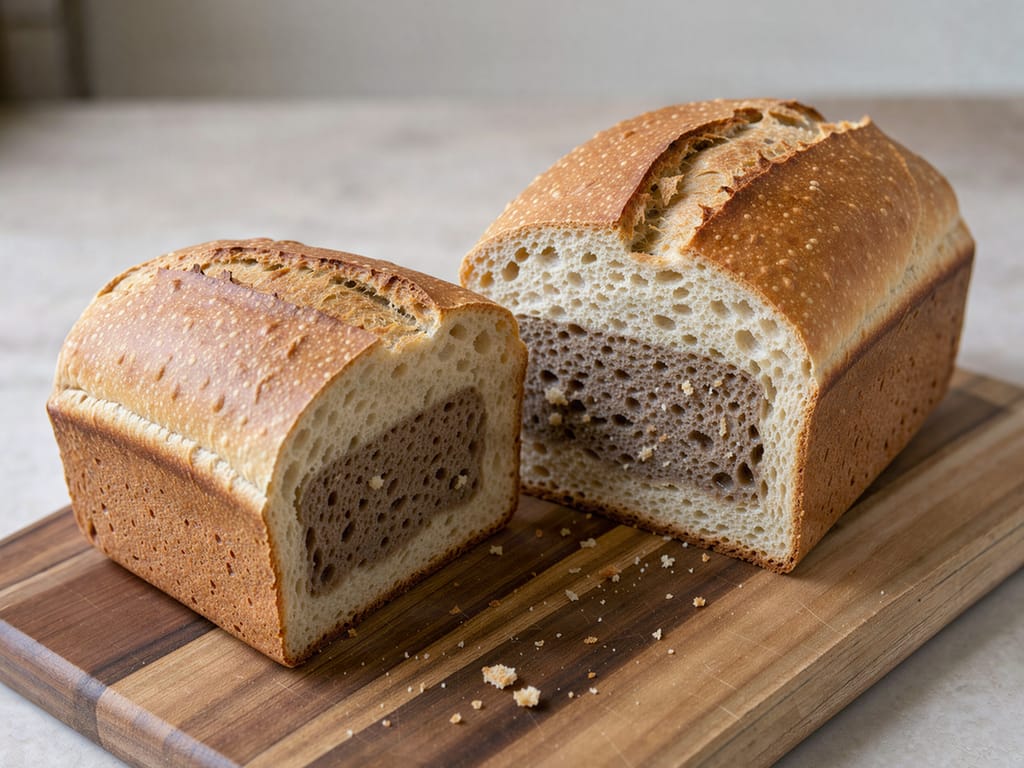
Bread that is doughy in the middle is almost always underbaked: the crust browned before the center reached the temperature at which the crumb sets. A cool oven, a loaf too big for its pan, a very wet or underproofed dough and slicing while hot all make it worse. A thermometer in the center tells you for sure.
The center of a loaf is the last part to heat up. When bread comes out doughy, wet or gummy in the middle, the crumb there never got hot enough to set. The common reasons, most likely first:
It simply needed longer. The crust looked done, so it came out.
The oven runs cool. Ovens can run hotter or cooler than the dial.
The loaf is big, tall or dense, so heat takes longer to reach the middle.
The dough was very wet, or heavy with whole grain, fruit or seeds.
The dough was underproofed, which leaves a tight, damp band in the crumb.
It was sliced while hot, before the crumb had finished setting.
The good news: all of these are fixable, and most of them on the next bake.
Seasonal baking plans, tested recipes and kitchen tricks that save you time. Unsubscribe in one click.
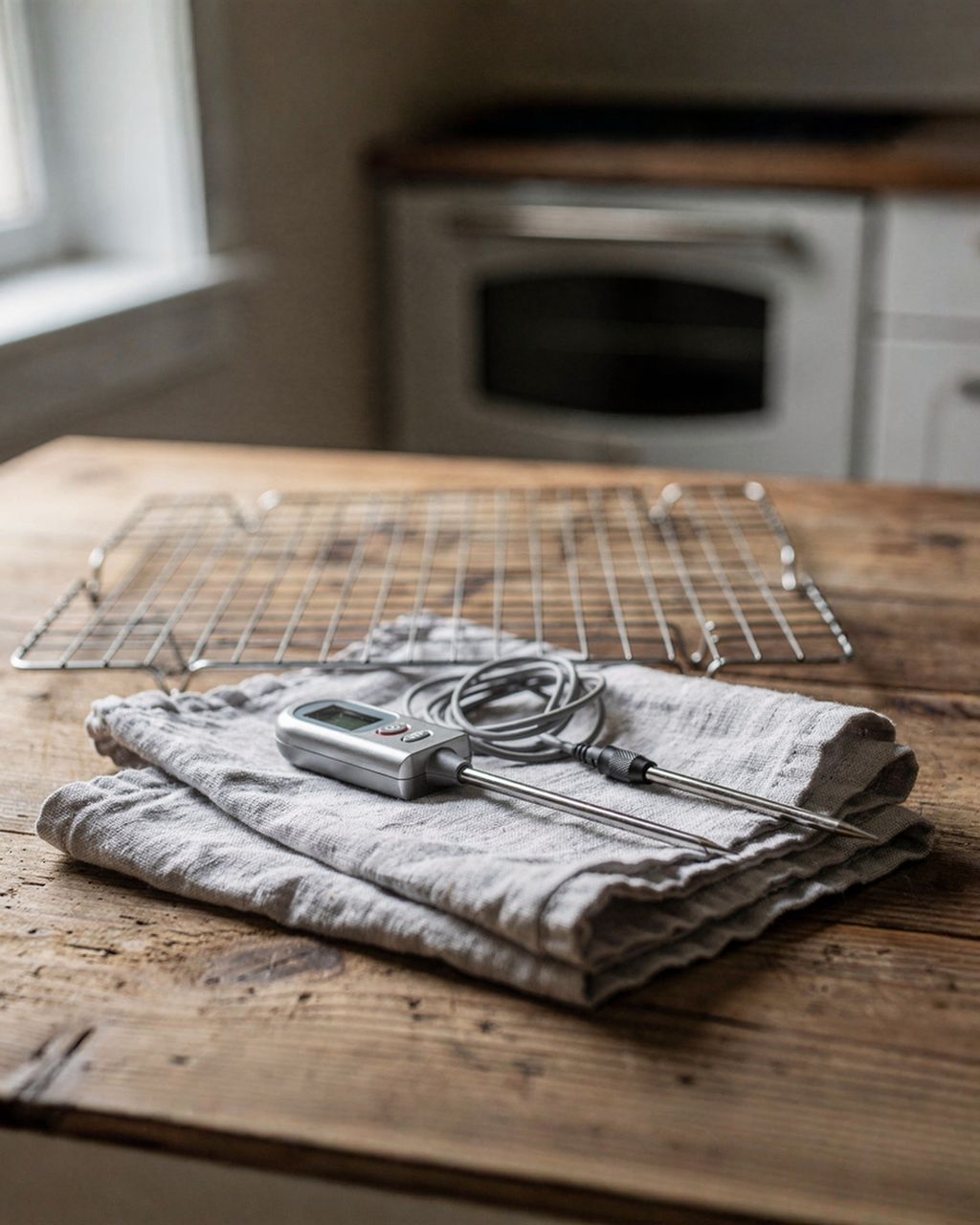
Crust color and baking time are only rough guides. A digital thermometer pushed into the center of the loaf is the surest test.
King Arthur Baking gives these figures for the center of the loaf:
Most yeast bread and sandwich loaves: 88 °C (190 °F). Soft rolls are done at about the same point.
Rye bread: 96–99 °C (205–210 °F).
Gluten-free bread: 96 °C (205 °F), so the starches can set.
Push the probe in from the side or the bottom to reach the very middle. On rolls and small loaves the edge reads far hotter than the center, so the center reading is the one that counts. Lean, crusty loaves such as baguettes run hotter inside, so judge those by a deep brown crust instead.
No thermometer? Turn the loaf out and tap the bottom. A done loaf sounds hollow and the sides feel firm, not soft. This test is less reliable on dense loaves, so treat it as a hint rather than proof. Our guide on how long to bake bread has times and temperatures for common loaves.
If loaves are pale on top and soft inside at the end of the recipe's time, the oven may simply be cooler than its dial. Ovens can run hotter or cooler than the dial, and many take longer to preheat than the light suggests.
Hang an oven thermometer in the middle of the oven and compare it with the dial.
Preheat fully, and give a baking stone or steel extra time.
Check whether your recipe means a conventional or a fan oven. A recipe written for fan heat bakes slower in a conventional oven at the same setting. Our oven temperature converter switches between fan, conventional, °C and °F.
Size and shape. A tall, heavy loaf needs much longer than a long, flat one of the same weight. If you doubled a recipe into one big loaf, or used a smaller pan than the recipe asks for, the timing no longer fits. Bake longer, or split the dough into two loaves.
The pan. Glass and ceramic pans heat slowly, and dark metal pans brown the outside fast. Both can leave a pale, soft or doughy center when the top looks ready.
Wet or heavy dough. High-hydration doughs, whole grain flours, rye and doughs loaded with fruit, cheese or seeds hold more water and need longer in the oven. Czech rye bread, žitný chléb, is the classic example: it is meant to be moist and close, but it still has to reach the higher rye temperature. Our guide to Czech rye bread explains what to expect from it.
Measuring. Flour measured by the cup can swing a lot, and too little flour gives a wetter dough. If your recipe is in cups, our cups and spoons to grams tool uses 125 g of all-purpose flour per US cup (236.6 ml) and 132 g per metric cup (250 ml).
Not every damp crumb is underbaked.
Underproofed dough didn't rise enough before baking. The crumb ends up tight, and you often see a dense, gummy band near the bottom or a few big holes under the top crust. Our guide to proofing dough covers how to tell when the dough is ready.
Slicing hot bread squashes the crumb while the starches are still setting, and steam escapes from the cut. Let the loaf cool on a rack for at least an hour, longer for a large loaf or rye. A loaf that reached the right temperature but was cut early can still look gummy.
If the crumb is damp only at the very center and the loaf sounded dull, it was underbaked. If it's damp in a band and the loaf is small and tight, look at proofing first.
Yes, if you catch it straight away.
Put the loaf back in the oven at the same temperature, out of the pan and straight on the rack, so the sides and base get heat.
Bake for another 10 to 15 minutes, then check the center with a thermometer.
If the crust is already dark, lay a sheet of foil loosely over the top.
A loaf you already sliced will dry out at the cut, but it is still worth finishing. If you only find the raw center much later, after the loaf has sat out and cooled, don't try to rebake it. Start a fresh loaf.
Use a thermometer and bake to the figure above, not to the clock.
Check your oven's real temperature and whether the recipe means fan or conventional heat.
If the crust darkens early, lower the oven by about 10 °C (about 20 °F) and bake longer, or cover the top loosely with foil partway through.
Match the pan to the recipe, and split big batches into smaller loaves.
Weigh flour and water rather than using cups.
Let the dough proof fully, and let the loaf cool before slicing.
Because the center didn't get hot enough to set before you took the loaf out. The usual causes are a short bake, an oven running cooler than the dial, a large or tall loaf, or a very wet or underproofed dough.
King Arthur Baking gives 88 °C (190 °F) in the center for most yeast bread and sandwich loaves. Rye needs 96–99 °C (205–210 °F) and gluten-free bread 96 °C (205 °F).
Yes, if you notice straight away while the loaf is still warm. Put it back without the pan for 10 to 15 minutes and check the center with a thermometer before you take it out again.
It was probably sliced too soon. The crumb keeps setting as the loaf cools, so cut it only after it has cooled on a rack, at least an hour for most loaves and longer for rye.
Lower the oven a little and bake longer, and lay a sheet of foil loosely over the top once the crust has the color you want. Check the real oven temperature with an oven thermometer.
One recipe worth heating the oven for, one tip, and one deal from the shop. Nothing else.