Chocolate mousse
How to Tell Whipped Egg Whites Are Ready: Soft Peaks, Stiff Peaks and Overbeating
Updated Oct 6, 2026
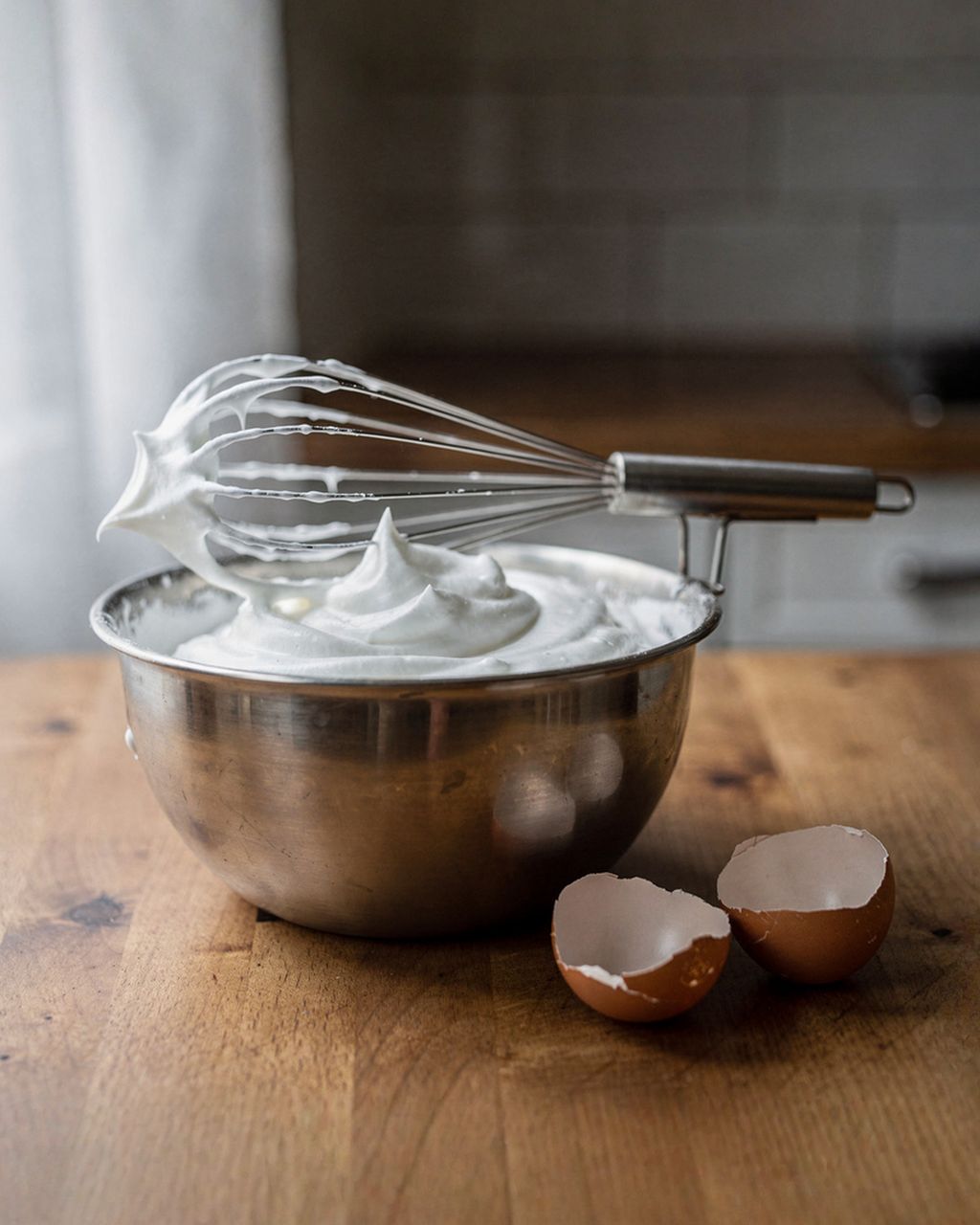
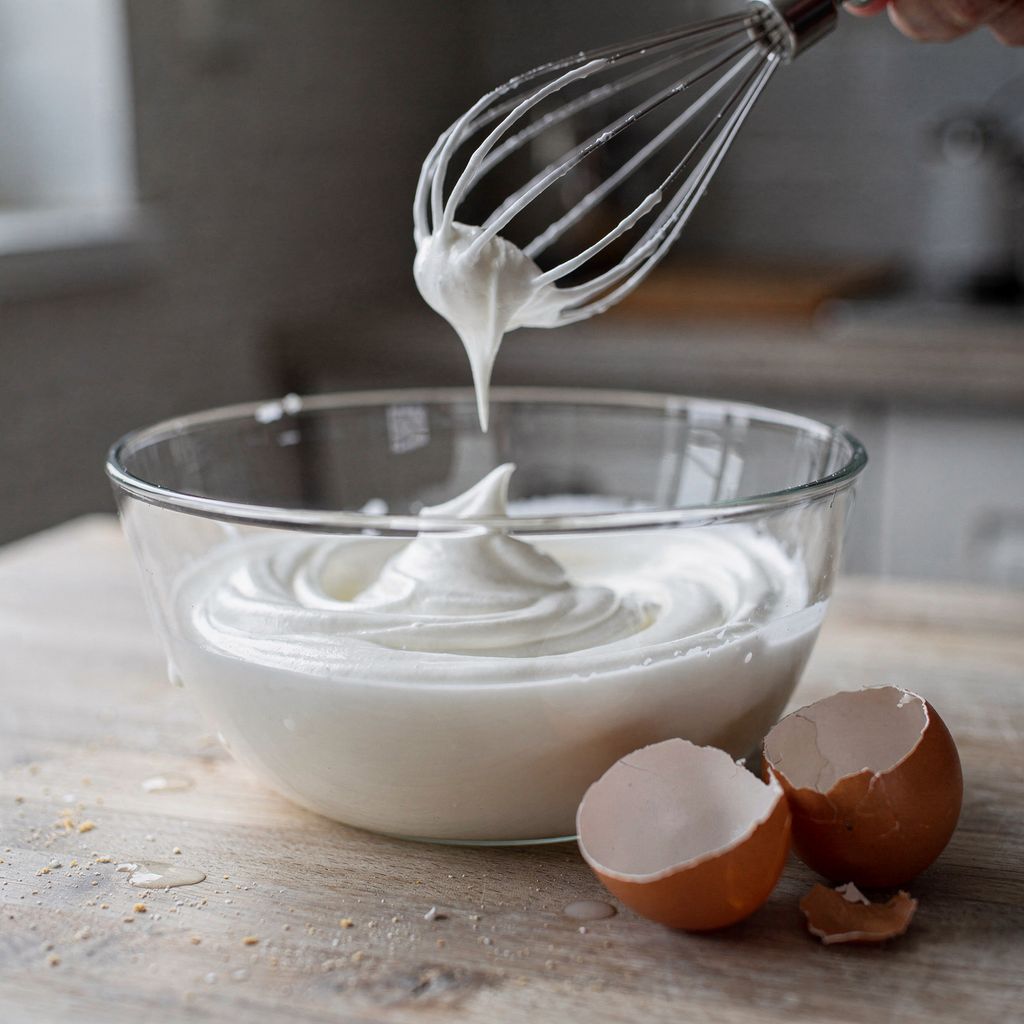
You know egg whites are properly whipped when they're thick, glossy and smooth, hold a straight peak on the lifted whisk, and don't budge even if you turn the bowl upside down. But "whipped" doesn't mean the same thing for every recipe: chocolate mousse wants soft peaks, meringues want stiff ones. Here's how to tell the stages apart, when to stop, and how to spot when you've gone too far.
You can confirm egg whites are whipped to stiff peaks with four checks: the peak on the whisk stands up straight, the foam doesn't budge when you flip the bowl, a knife cut stays open, and the surface is glossy and smooth, not grainy.
The whisk peak. Stop the mixer, lift out the whisk and turn it point-up. Stiff egg whites will form a peak that stands tall, with at most just the very tip curling over. If the whole peak flops over like a wave, you're still at the soft-peak stage.
The upside-down bowl test. Tilt the bowl, then carefully turn it completely upside down. Stiff foam will stay stuck to the bottom as if glued. Do this over the counter or an empty bowl — and only once the other tests tell you it's ready.
The knife cut. Run a knife through the foam. Properly whipped egg whites will leave a clean groove that doesn't close up or collapse.
Shine and texture. Good foam is white, satiny and thick, like shaving cream. If it looks dull, grainy or "curdled," you've overbeaten it.
Keep an eye on volume too: as they whip, egg whites expand to roughly 6-8 times their original size and lose their translucency. If there's still liquid pooling at the bottom of the bowl, don't go by time — go by these signs instead.
Egg whites move through four stages: foam → soft peaks → stiff peaks → overbeaten. Your recipe will tell you which stage you need — and the gap between stiff peaks and overbeaten is often just half a minute.
Foam. The whites are translucent, full of large uneven bubbles, and still liquid. This is the point to add a pinch of salt or acid — about ½ teaspoon lemon juice per 4 egg whites.
Soft peaks. The foam turns opaque white and holds a shape, but a peak on the whisk flops over and falls right away. This stage is right for mousses and anywhere the foam gets folded into a thicker mixture without "tearing" it apart.
Stiff peaks. Thick, glossy foam that stands tall, with a peak that stays upright and a bowl you can turn upside down. This is usually what recipes mean when they say "whip the egg whites" — think sponge cakes, roulades, meringues, meringue-topped slices.
Overbeaten foam. It loses its shine, turns grainy, breaks into clumps, and water starts pooling at the bottom. It's hard to fold into batter and gives much weaker lift.
If you're not sure which stage a recipe wants, whip to stiff peaks but stop the moment the peak starts to stand up on its own. Save the highest mixer speed for after the foamy stage — start on medium so small, stable bubbles can form first.
You'll know egg whites are overbeaten when they turn dull, grainy, and start weeping liquid at the bottom of the bowl. The proteins have clumped so tightly that they've squeezed out water and the bubbles are starting to burst.
The surface looks like curdled cheese or cotton wool rather than a smooth foam.
When you try to fold it in, it breaks into visible lumps that stay lumpy in the batter.
After sitting for a few minutes, a puddle forms underneath the foam.
You can often rescue slightly overbeaten foam: add one fresh egg white and beat briefly on medium speed until it comes back together and turns glossy again. But if the foam has completely broken down and is weeping a lot of water, it's quicker to start over with fresh egg whites and a clean bowl.
The surest prevention is sugar. Foam with sugar takes longer to whip, but it's far harder to overbeat — sugar binds water and firms up the foam.
Add sugar only once the egg whites have reached soft peaks, and do it gradually, one spoonful at a time, while beating continuously. If you add it at the start or dump it in all at once, the egg whites take longer to whip and end up with less volume.
Both caster and powdered sugar work; caster sugar dissolves more slowly, so keep whipping until it's fully incorporated. Test by rubbing a bit of the foam between your fingers — you shouldn't feel any grains.
For meringues, the usual ratio is roughly double the weight of sugar to egg whites (2:1). This foam is thick, very glossy, and won't fall out of the bowl even upside down.
For sponge cakes and roulades, you use less sugar and the foam stays a bit lighter — still, whip it to stiff, glossy peaks.
If you want to practice on meringues, try lilac meringues with lemon curd — there you'll instantly see the difference between "almost there" and truly stiff foam.
Egg whites most often refuse to whip properly because of fat (a trace of yolk, a greasy bowl), the wrong type of bowl, or egg whites that are too cold. Whipping unfolds the proteins in the egg white so they can link up around air bubbles into a stretchy network — anything that disrupts that network will ruin your foam.
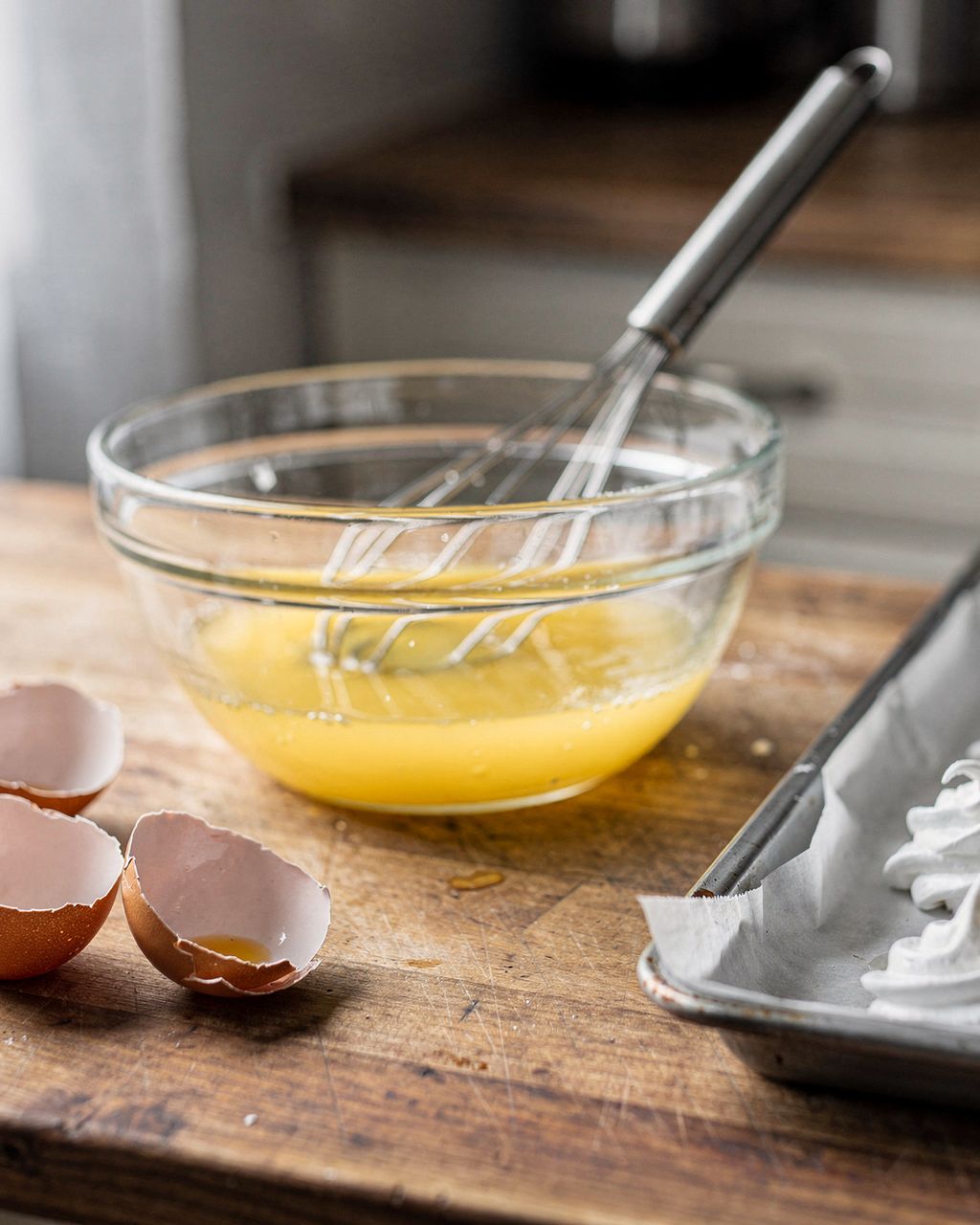
Fat is enemy number one. Even a trace of yolk or a greasy bowl will stop the whites from whipping to stiff peaks. Crack each egg white into a small cup first, then transfer it to the bowl. Plastic bowls hold onto grease even after washing, so stainless steel or glass is a better choice; wipe the bowl out with a paper towel dabbed in lemon juice or vinegar before whipping.
Acid stabilizes the foam. For 4 egg whites, about ½ teaspoon lemon juice or vinegar, or ⅛ teaspoon cream of tartar, is enough. It helps the whites hold their structure and delays overbeating. According to cooking tests, a copper bowl works in a similar way — copper reacts with the proteins and makes the foam more stable.
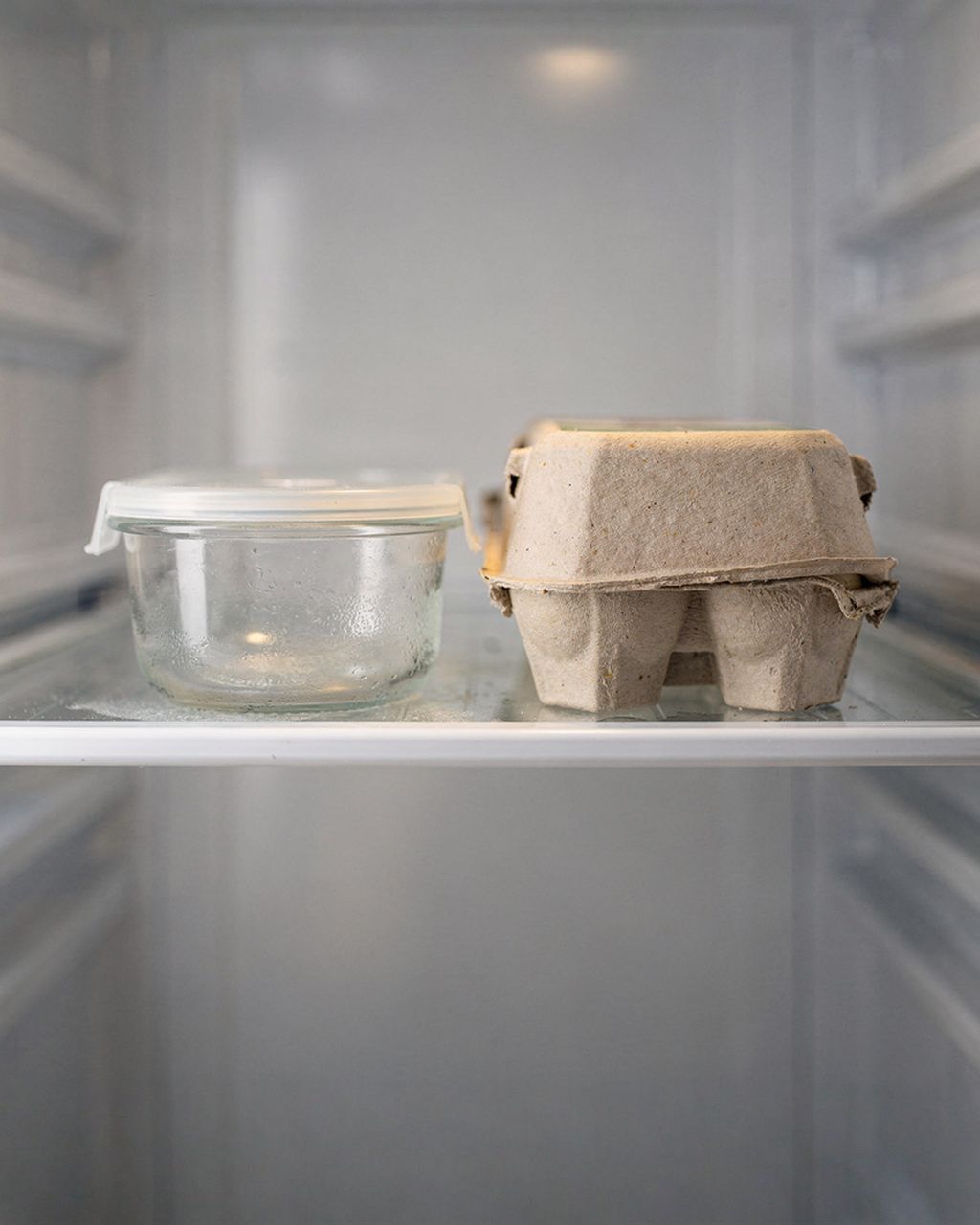
Temperature. Room-temperature egg whites whip up faster and to a greater volume than cold ones straight from the fridge. But they're easier to separate while cold — so separate them straight out of the fridge, then let them sit for 20-30 minutes to come up to temperature.
Egg age. Older egg whites are thinner and whip more easily, while fresh ones give a more stable foam. Either works, as long as you stick to the no-fat rule.
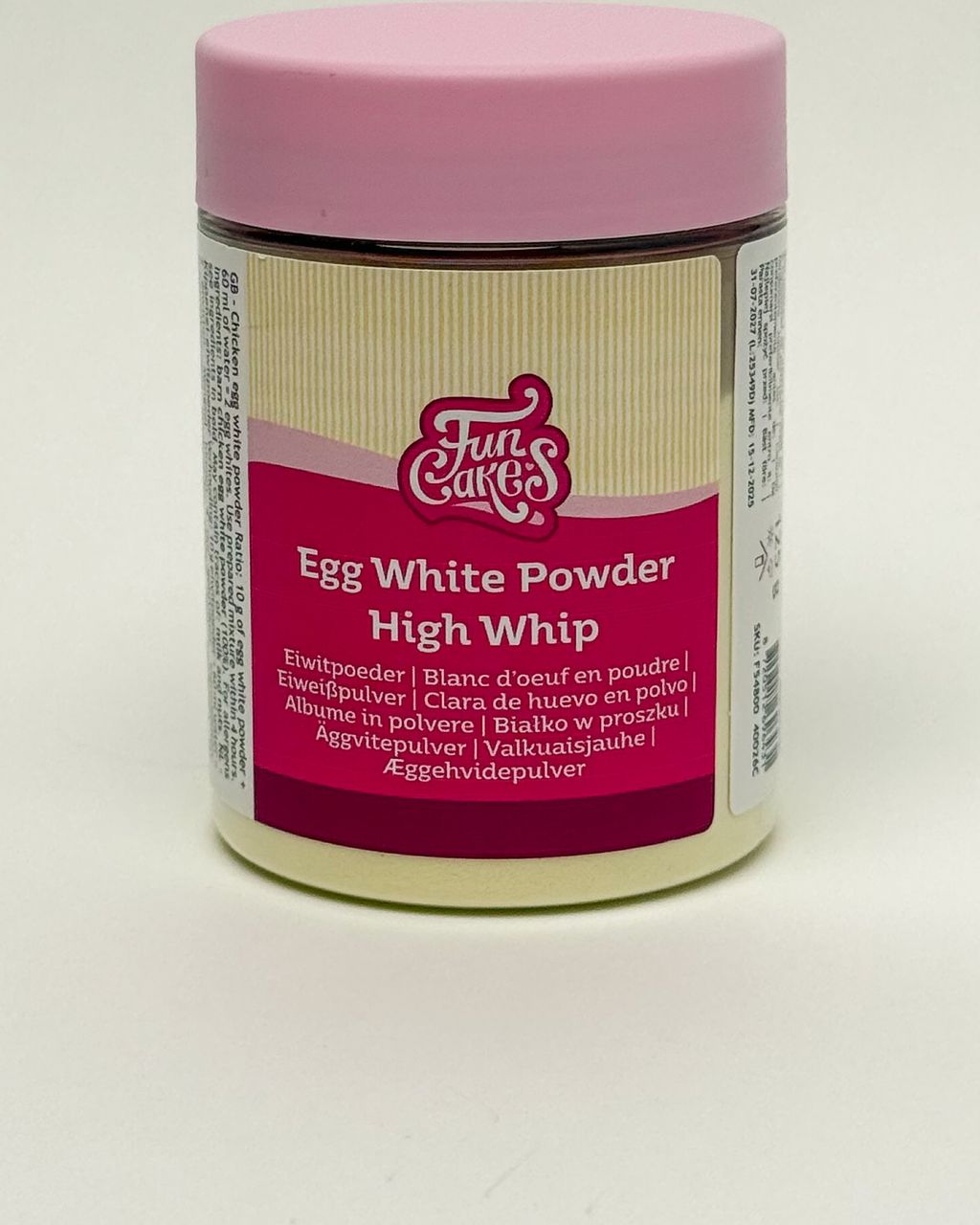
When you need a sure thing — say, for no-bake desserts — reach for dried egg white powder instead. You'll find it among baking ingredients; mix it according to the package instructions and it will whip to stiff peaks reliably, with no risk of a stray trace of yolk.
Fold whipped egg whites into batter right after whipping, using a spatula, never a mixer — stir in a third first, then fold in the rest with gentle strokes from the bottom up. Egg whites without sugar start to thin out and weep water within a few minutes; foam with sugar holds a little longer.
Stir in about a third of the foam first — you can be fairly brisk here, since this just loosens up the batter.
Add the rest in two batches, folding gently with a spatula from the bottom up while turning the bowl.
Stop as soon as the white streaks disappear. Every extra stroke costs you bubbles that are meant to lift the dessert.
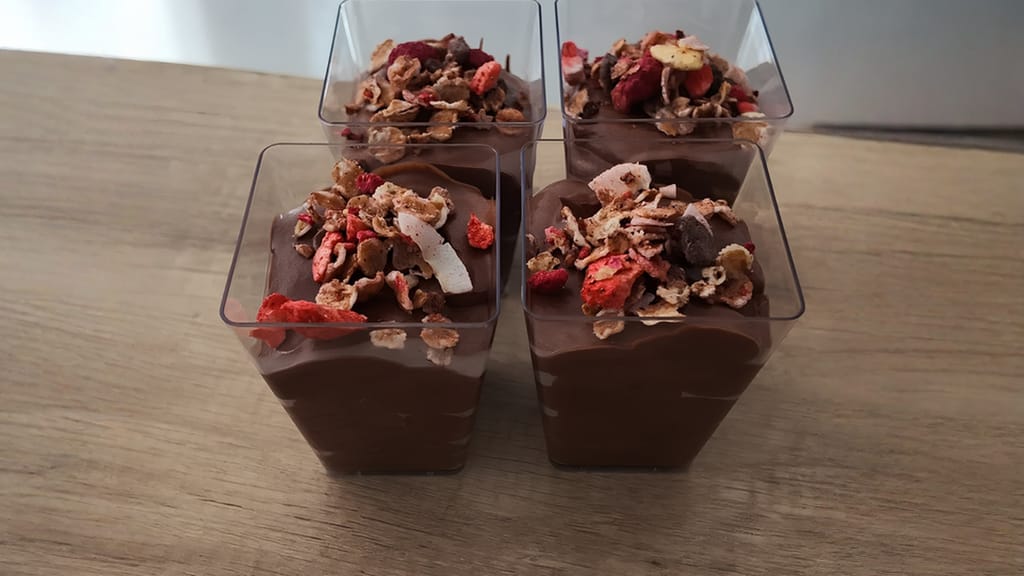
This is exactly how you fold foam into chocolate mousse — there, soft versus stiff peaks make the difference between an airy mousse and a dense one.
Chocolate mousse
Chocolate mousse made with whipped egg whites
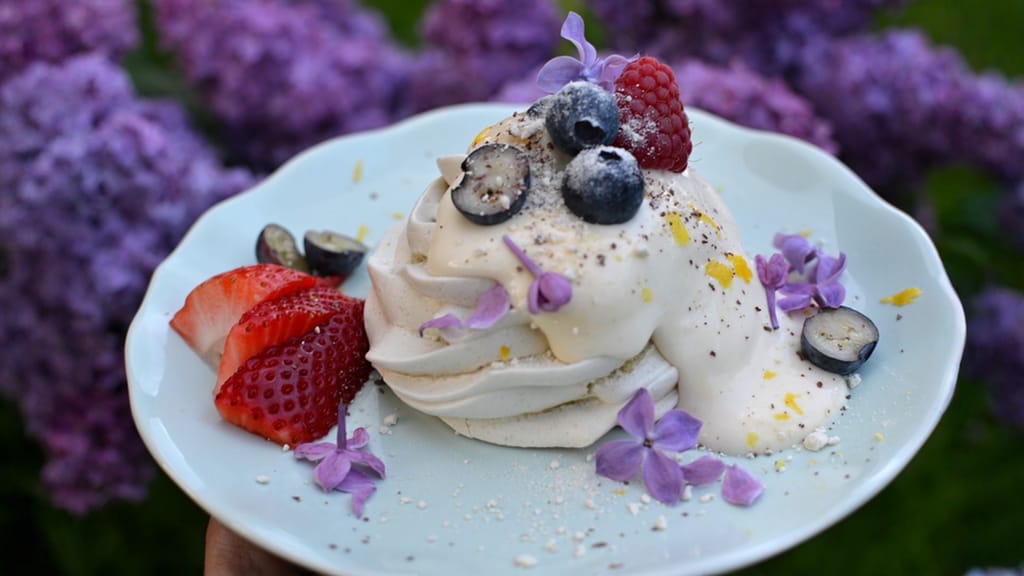
Lilac meringue kisses with lemon curd cream and fresh fruit
Lilac meringues made from stiff whipped egg whites
Yes, you can whip egg whites to stiff peaks with a hand whisk too — it just takes longer and some stamina. Use a wide stainless-steel or glass bowl and a large balloon whisk, beat with fast circular motions that whip air into the whites, and check for the same signs as with an electric mixer: glossiness, a standing peak, and the bowl test.
With a hand mixer or stand mixer, 4 egg whites will whip to stiff peaks in roughly 3-5 minutes: start on medium speed, then switch to the highest setting once they move past the foamy stage. Adding sugar takes 2-4 minutes longer. Timing is only a rough guide, though — it depends on how many whites you're using, their temperature and how powerful your machine is. Go by appearance instead: glossiness, a straight peak and a clean knife-cut.
One medium egg white (about 30-35 g) will whip up to roughly 200 ml of stiff foam, since egg whites expand to about 6-8 times their original volume. That's why a standard sponge cake or roulade calls for 4-6 egg whites; with sugar added, the foam is a bit denser and yields slightly less volume.
Yes, frozen egg whites whip up just as well as fresh ones. Thaw them slowly in the fridge, let them come to room temperature before whipping, and make sure there's no trace of yolk in them.
Once mixed with water according to the instructions, foam made from dried egg white powder is very similar to the fresh version — and often even more stable. The advantage is that it's pasteurized, so it works well in no-bake desserts, and you don't have to figure out what to do with leftover yolks.
One recipe worth heating the oven for, one tip, and one deal from the shop. Nothing else.