Why Is My Soup Bitter? Common Causes and How to Fix It
Why Is My Cooked Cabbage Bitter? Overcooking, Sulfur and Fixes
Updated Nov 21, 2026
Cooked cabbage usually turns harsh and sulfurous because it was cooked too long: the longer it cooks, the more strongly its sulfur compounds break down into smelly ones. Natural bitterness in the head itself, a scorched pan and an unbalanced pot (no fat, salt, sweetness or acid) do the rest. Cook it just until tender, then balance it the way Czech kitchens do, and most bitterness disappears.
Cabbage, like broccoli, kale and Brussels sprouts, belongs to the Brassica family. These plants contain sulfur compounds called glucosinolates. A 2021 study in the journal Foods describes glucosinolates and their breakdown products as partly responsible for the bitter taste and pungent flavor of brassicas.
When you cut and cook cabbage, those compounds start breaking down. How bitter or sulfurous the dish ends up depends on a handful of things:
How long it cooked. The usual culprit for a sulfurous, harsh pot. Long, hard boiling turns a sweet vegetable into a gray, sharp one.
The cabbage itself. Varieties and individual heads differ, and some taste noticeably sharper than others, even raw.
What else is in the pot. Cabbage with no fat, salt, sweetness or acid tastes flat and bitter. The same cabbage with onion, butter and a splash of vinegar does not.
Scorching. A cabbage that catches on the bottom tastes burnt and bitter all the way through.
Who is eating it. People differ in how strongly they taste brassica bitterness, so one person's "a bit sharp" is another's "inedible".
Most harsh, smelly cabbage is simply overcooked. University of Illinois Extension puts it plainly: the odor problem is a result of overcooking, and the longer cabbage cooks, the smellier its sulfur compounds become. Signs you have gone too far:
The leaves are gray-green or khaki instead of bright green or pale ivory.
The kitchen smells of sulfur rather than of sweet cabbage.
The texture is mushy and waterlogged rather than soft.
What to do instead:
Cook shredded cabbage briefly. Sautéed or stir-fried shreds are done when they wilt and turn tender-crisp, usually a matter of minutes.
Boil wedges just until a knife slides in. Check early and lift them out as soon as they are tender.
Use stainless steel or enameled pans. Illinois Extension says the smelly reaction is stronger in aluminum pans.
Keep the lid ajar for boiled cabbage so the sharpest-smelling steam can escape.
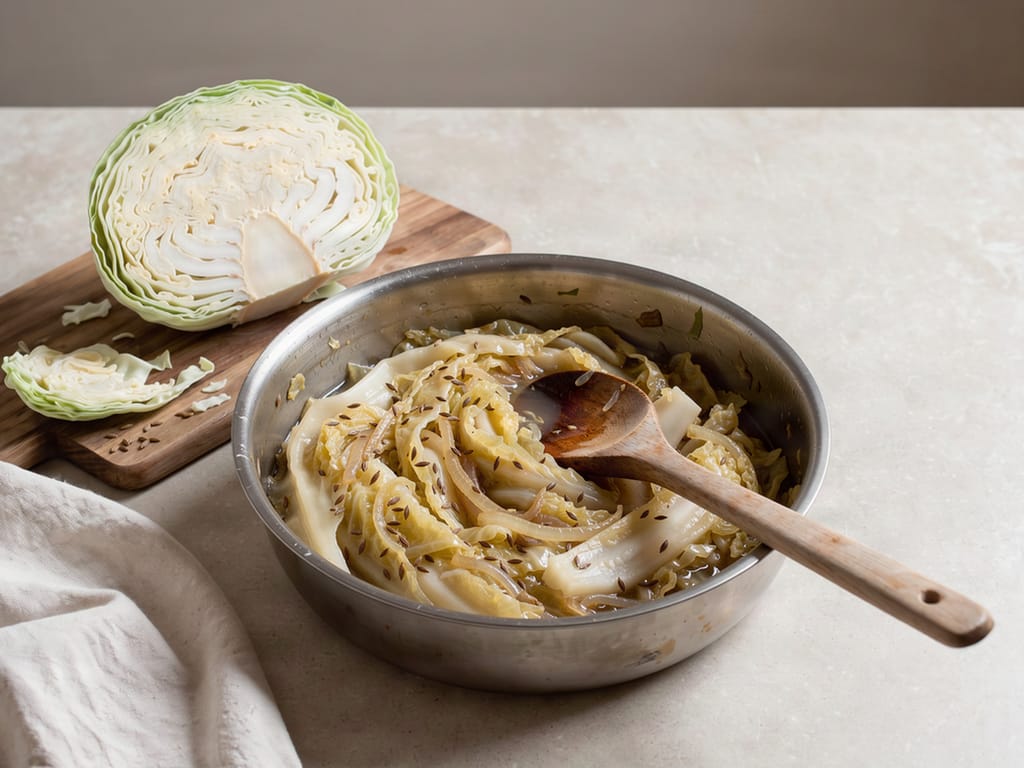
Long, slow cooking still has its place. Czech braised cabbage, dušené zelí (soft braised white cabbage or sauerkraut), cooks for a long time, but in a little liquid with onion, fat, caraway, sugar and vinegar. That balance is what keeps it sweet-sour rather than bitter. Our guide to braised cabbage covers the method.
You can't undo overcooking, but you can make bitter cabbage taste much better. Work in small amounts and taste between each step:
Salt. Salt makes bitterness taste milder. Undersalted cabbage is one of the most common reasons it tastes "off".
Fat. A knob of butter, a spoon of lard or a little bacon fat rounds out a sharp pot. In Czech kitchens, cabbage is rarely cooked without some fat.
Sweetness. A pinch of sugar, a spoon of grated apple or a little caramelized onion softens the edges.
Acid. A splash of apple cider vinegar or white vinegar brightens it. Cabbage that is sweet, sour and salty at once rarely tastes bitter.
Caraway. Caraway seeds are the classic Czech partner for cabbage, and their warm, anise-like flavor carries the dish.
If the bitterness comes from a scorched bottom, don't stir it in. Spoon the cabbage that has not touched the burnt layer into a clean pan, leave the base behind, and then season as above.
Sometimes the cabbage was bitter before it reached the pan.
Raw cabbage can be sharp. Taste a leaf before cooking. If it is already peppery or bitter, plan for more balance (fat, sugar and acid) and a gentler method.
Variety matters. White cabbage is the everyday choice. Savoy cabbage, with its crinkled leaves, tends to taste milder and cooks faster. Napa or Chinese cabbage is milder still.
The core and thick ribs. These are tougher and take longer to cook. Cut the core out and slice thick ribs thinly, so the leaves are not overcooked while you wait for the stalky parts.
Burnt aromatics. Onions, garlic or caraway that went too dark before the cabbage was added make the whole dish taste bitter. Cook them gently until soft and golden, not brown-black.
Recipe of the week, one tip that saves you time and one deal from the shop. Unsubscribe in one click.
The next issue goes out on Thursday, November 26.
Each method has its own sweet spot:
Sautéed or stir-fried: thin shreds, a hot pan, a little fat, a few minutes. Season at the end with salt and a dash of vinegar or lemon juice.
Boiled or steamed wedges: cook just until tender and drain well. Toss with butter, salt and caraway or dill.
Roasted wedges: oil, salt and a hot oven brown the edges and bring out sweetness. Turn once so both sides color.
Braised: the Czech dušené zelí way, with onion softened in fat, shredded cabbage, a little water, caraway, then sugar and vinegar to taste. Keep the heat low and stir now and then so nothing catches.
For more ideas, see what to cook with cabbage, from soups to slaws and sauerkraut.
Everything above applies to the whole family. Brussels sprouts, broccoli, kale and cauliflower all turn sulfurous and bitter when they are boiled too long, and all respond to the same fixes: shorter cooking, plenty of salt, some fat, and a little sweetness or acid.
If you are fighting bitterness in other vegetables too, our article on bitter asparagus covers a different cause (the woody base and the peel) with the same balancing tricks.
Overcooking is the usual culprit: the longer cabbage cooks, the more sulfurous and harsh it tastes and smells. The head's own natural bitterness, a scorched bottom, or a pot with no fat, salt, sweetness or acid to balance it can add to it.
Balance it rather than trying to remove it: add salt, a little fat such as butter or lard, a pinch of sugar and a splash of vinegar, then taste and adjust. If the bottom has scorched, move the unburnt cabbage to a clean pan without scraping the base.
Cabbage smells when it is overcooked, because its sulfur-containing compounds break down into smellier ones the longer it cooks. University of Illinois Extension advises cooking it just until tender and notes the reaction is stronger in aluminum pans.
Salting helps mainly at the table, because salt makes bitter flavors taste milder. Salting shredded cabbage ahead also draws out water, which is useful for slaw and quick sautés, but it is not a cure for overcooked cabbage.
Cabbage that tastes bitter from overcooking or natural variety is a flavor problem, not a sign it has gone off. Cabbage that smells sour or rotten raw, is slimy or has mold is a different matter and belongs in the bin.
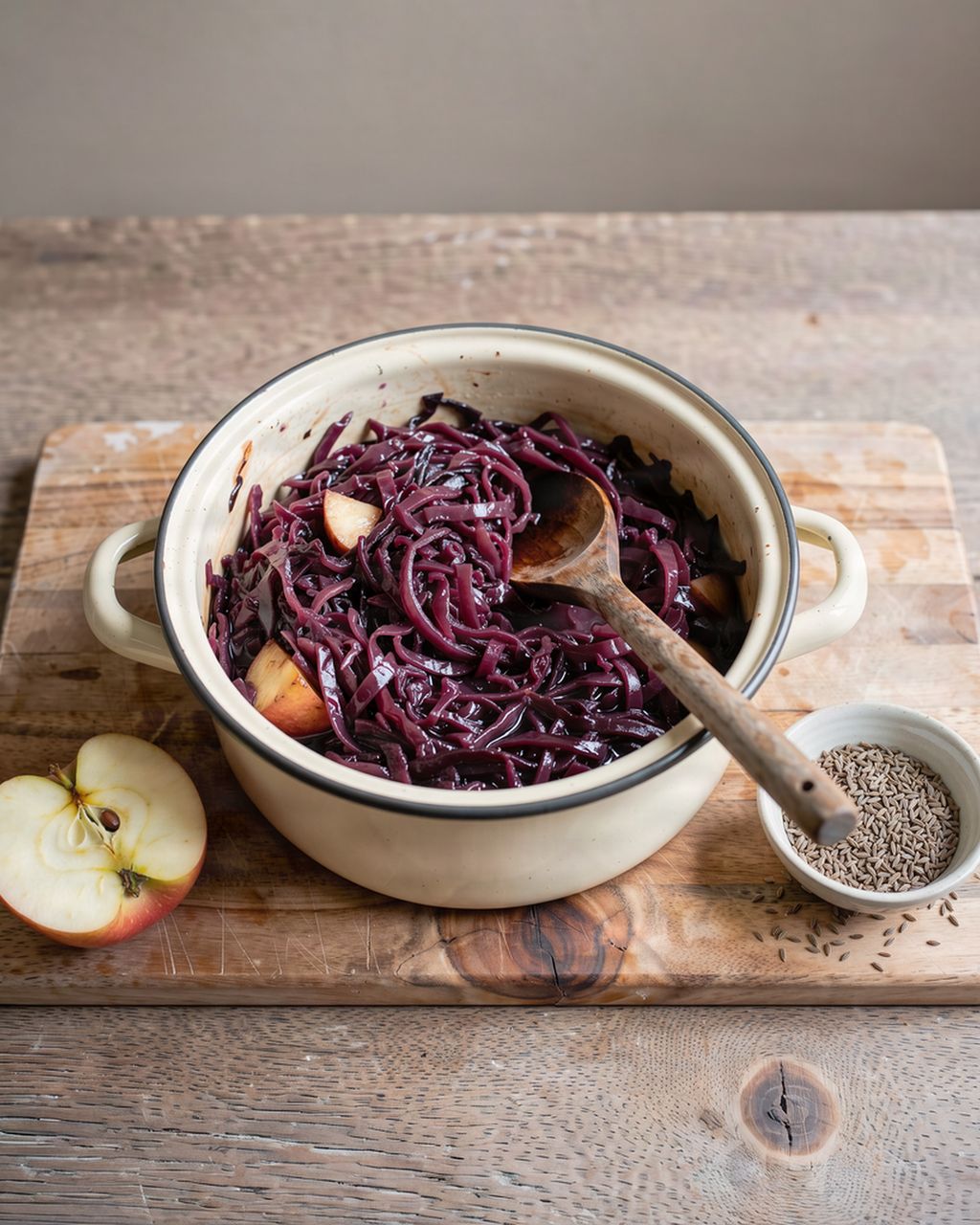
Red cabbage turns bitter for the same reasons as white: overcooking, a scorched pan or too little balance. Czech and German red cabbage is cooked with vinegar or apple and a little sugar, which balances it and keeps its color red.
One recipe worth heating the oven for, one tip, and one deal from the shop. Nothing else.