Quick zucchini and lemon pasta

Updated Jul 16, 2026
The boiling point of water isn't a fixed number. Water boils at 100°C only under standard sea-level pressure – at higher altitude it boils cooler, while salt or sugar nudge it a touch warmer. And that's exactly what determines how long your pasta needs, whether your eggs come out hard-boiled, and when homemade jam finally sets. Here's what's really going on in the pot – and how to use it to your advantage.
The boiling point of water is the temperature at which it turns from liquid into vapour – under standard atmospheric pressure of 1013 hPa (at sea level), that's 100°C.
The key to understanding this is pressure. Water boils the moment the pressure of its vapour matches the pressure of the surrounding air. As long as the air above the surface is "stronger," water molecules have no way to escape. Once the pressures even out, water starts turning into vapour even inside the liquid – and those are the bubbles you see rising.
Two things drive changes in the boiling point: altitude (which changes air pressure) and dissolved substances like salt or sugar (which change the water's properties). Let's look at both.
The higher above sea level you go, the cooler water boils – roughly 0.5°C for every 150 metres of elevation. In numbers:
Sea level (0 m): 100°C
Prague (~200 m): ~99°C
Kathmandu (1,400 m): ~95°C
La Paz, Bolivia (3,640 m): ~88°C
Summit of Mount Everest (8,849 m): ~70°C
According to pressure-and-altitude tables, water on Everest does technically "boil," but it's barely hot enough for tea – and food practically won't cook in it.

Because there's less air above you up there, and therefore lower pressure. Water molecules face less resistance escaping into vapour, so a lower temperature is enough to make them boil.
Watch out for a common misconception: water at altitude boils sooner (at a lower temperature), but not faster. It's cooler, so food actually takes longer to cook in it – sometimes a third longer or more than down at sea level.
Plan on longer cooking times and lower temperatures. Specifically:
Add time. Pasta, rice, and hard-boiled eggs all need longer at altitude – go by whether they're done, not by the time on the packet.
Cook with the lid on. It traps heat and steam in the pot and cuts down on losses.
Reach for a pressure cooker. It raises internal pressure and pushes the boiling temperature back up to around 120°C regardless of altitude – which is why it's indispensable up high for legumes and braised meat.
Top up the water. Longer cooking means more evaporates.
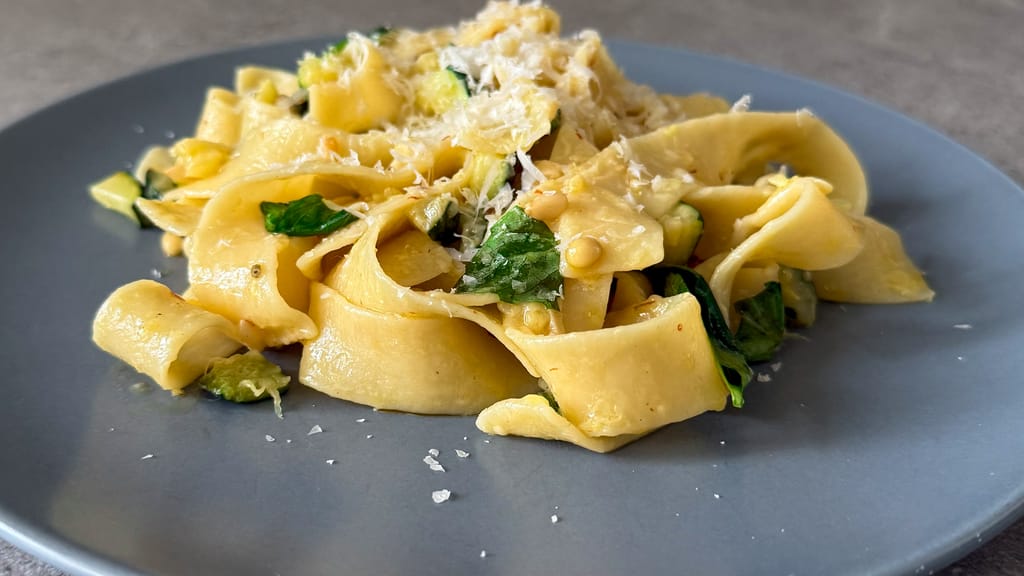
Quick zucchini and lemon pasta
Quick pasta with courgette and lemon – keep an eye on the cooking time, as it'll need a few extra minutes at altitude.
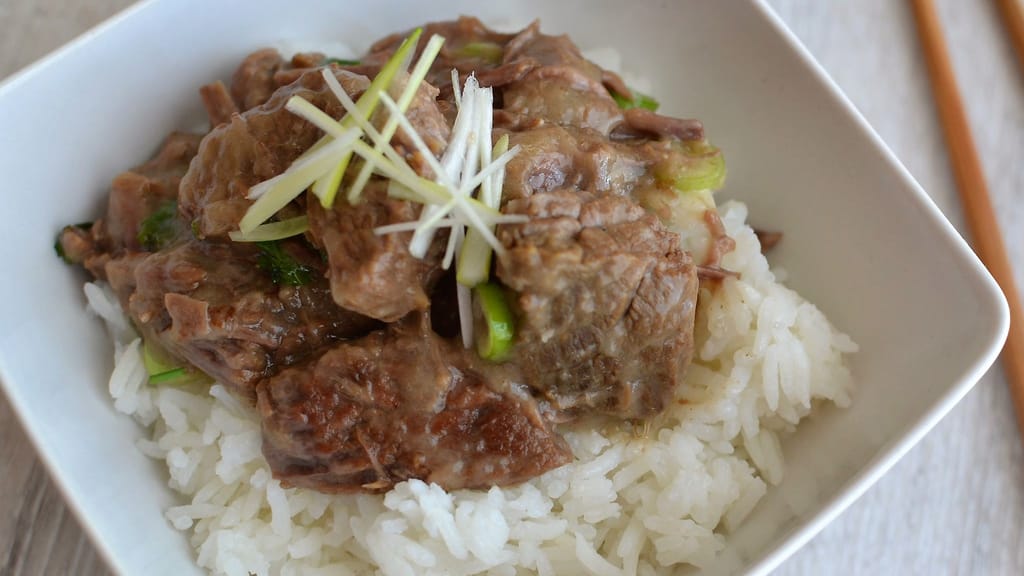
Beef chunks braised in coconut milk
Beef chunks braised in coconut milk – at high altitude, a great candidate for the pressure cooker.
Dissolved salt and sugar both raise the boiling point, but so slightly in the kitchen that you'd never notice. A pinch of salt in pasta water shifts the boiling point by less than half a degree – it has zero effect on cooking time.
The technical term is boiling-point elevation: the boiling point of a solution rises with the number of dissolved particles, not with their "weight" or the density of the water. To shift the boiling point by 2°C, you'd need water roughly four times saltier than the sea – simply not realistic in a saucepan.
So why salt pasta water at all? For flavour, not for boiling. Salt is your only chance to season the pasta from the inside, not just on the surface.
With sugar, the effect is much more noticeable – simply because you add so much more of it. Syrups and jams happily boil at 104–105°C, and that very temperature is the signal that the jam will "set" and firm up as it cools. Try it out with chilli jam – the final thickness is decided right at that boiling point.
Precisely controlling the boiling point keeps the entire food and chemical industry running. In brief:
Pasteurisation: milk is heated to an exact temperature (classically ~72°C for 15 seconds), which destroys harmful bacteria without changing its flavour or nutritional value.
Sterilising and canning: a higher temperature kills off microbes more reliably and extends shelf life – which is why canning jars are heated above the normal boiling point.
Distillation: separating substances based on their different boiling points. This is how petrol and diesel are extracted from crude oil, and how pure chemicals and medicines are produced.
Same physical principle, just on a different scale: whoever controls the boiling temperature controls the outcome – in a saucepan or in a factory.

At the summit of Mount Everest (8,849 m), water boils at around 70°C. Because air pressure is so low up there, it's barely hot enough for tea, and food practically won't cook in it.
Yes, but in the kitchen it's negligible – a pinch of salt in pasta water raises the boiling point by less than half a degree. We salt for flavour, not for a faster boil.
Yes. A lid traps heat and steam in the pot, so the water reaches boiling noticeably faster and uses less energy. Once it's boiling, crack the lid open so the pot doesn't boil over.
Yes. A pressure cooker traps steam and raises the pressure, so the water inside boils at up to around 120°C. That higher temperature dramatically cuts cooking time for legumes and braised meat – which is exactly why it's indispensable at high altitude too.
Homemade jam sets once the syrup reaches roughly 104–105°C. The high sugar content raises the boiling point, and it's precisely at this temperature that the jam takes on the right thickness as it cools.
One recipe worth heating the oven for, one tip, and one deal from the shop. Nothing else.