Why Is My Sourdough Dense or Gummy? Underproofed vs Overproofed
Why Did My Bread Dough Rise Then Fall? Overproofing and Other Causes
Updated Nov 21, 2026
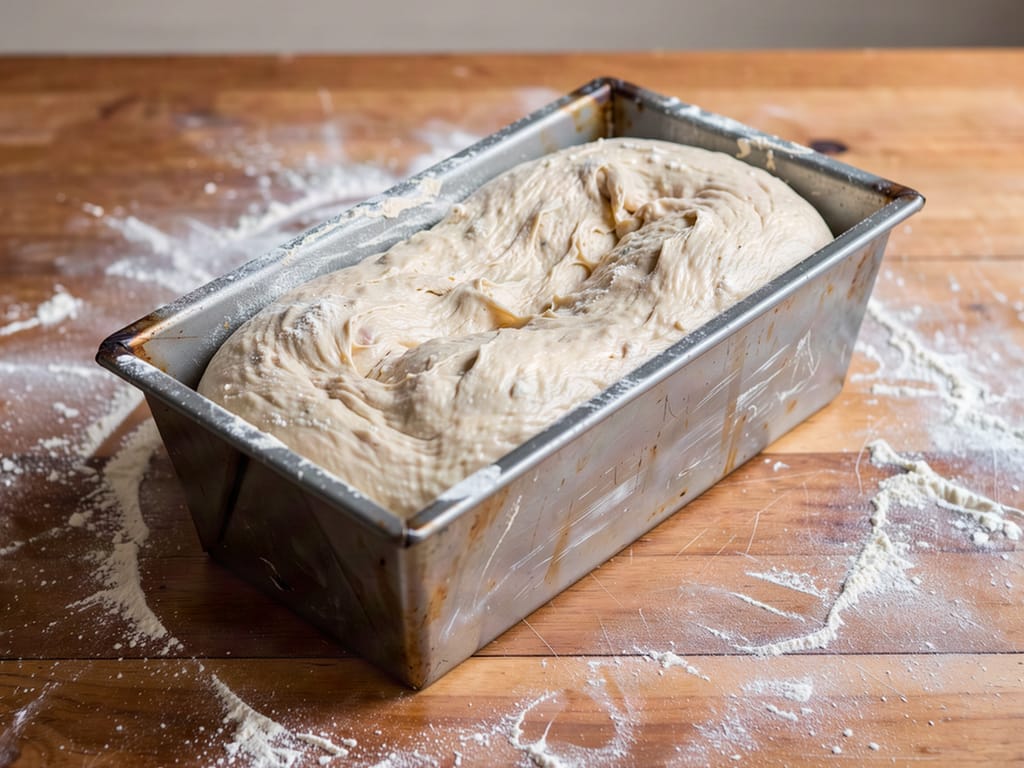
Bread dough that rises well and then collapses has usually overproofed: the yeast made more gas than the gluten could hold, so the bubbles burst and the dough sank. A warm kitchen, too much yeast, too little salt, very wet dough or weak flour make it more likely. The poke test tells you when to bake before it happens.
Rising dough is a balloon of gluten filled with gas from the yeast. As long as the gluten is strong enough to stretch, the dough keeps growing. When it is stretched too far, the bubbles merge and burst, the gas escapes, and the dough sinks.
That is overproofing, and it is the main reason dough rises well and then collapses, whether in the bowl, in the pan or in the oven. It happens when:
The dough proofed too long for the temperature of your kitchen.
The kitchen was warm, so the yeast worked much faster than the recipe expected.
There was too much yeast, often from converting between fresh and dried yeast.
There was too little salt, which normally slows the yeast down.
The gluten was weak: soft flour, very wet dough or too little kneading.
Sugar plays a part too. A little feeds the yeast and speeds it up. A lot slows it down, which is why rich doughs often rise slowly.
Overproofed dough tends to:
look very big, puffy and fragile, often more than double its starting size
have large bubbles on the surface, or a wrinkled, sagging top
smell strongly of yeast or alcohol
feel slack and sticky, and spread when you tip it out
keep the dent when you poke it, or sink when you touch it
The poke test. Press a floured finger about 1 cm (half an inch) into the dough:
Springs back quickly and fully: underproofed. Give it more time.
Springs back slowly and leaves a small dent: ready. Bake it.
The dent stays and the dough feels fragile, or it sighs and deflates: overproofed.
The test works best on shaped loaves at room temperature. Cold dough from the fridge springs back slowly anyway, so read it with care. Our guide to proofing dough covers timing and temperature in more detail.
Usually, yes, as long as it hasn't gone into the oven yet.
Tip the dough out and press the gas out gently.
Reshape it with good surface tension.
Let it rise again, and watch it rather than the clock. The second rise is faster, because there is plenty of yeast at work.
Poke-test it early and bake as soon as it's ready.
The bread may brown a little less, but it is still good bread. This works best with yeasted dough; an overproofed sourdough rarely recovers fully, so consider turning it into focaccia or flatbread. A very overproofed, soupy dough is better turned into flatbread or focaccia, pressed into a pan, than forced into a loaf.
A loaf that goes in looking fine and comes out sunken, flat or with a dip in the top almost always went in overproofed. It had no strength left, so instead of springing up in the heat it sagged.
Other causes:
Too much yeast or too little salt. Check your conversions. Fresh, dried and instant yeast are not used in equal amounts, and our yeast converter gives the swap. Our guide to dried vs fresh yeast explains the differences.
Very wet dough for the flour you used. European flours often absorb less water than American bread flour, so a US recipe can feel wetter here. Our guide to bread flour in Europe helps you pick a stronger flour.
A knock going in. A fully proofed loaf is fragile. Slashing too deep, bumping the pan or dropping the dough can deflate it.
A cool oven. If the crust sets slowly, a weak dough has longer to sag. Ovens can run hotter or cooler than the dial.
A loaf that sinks after it comes out of the oven is often underbaked as well, because the soft center can't hold the crust up as it cools.
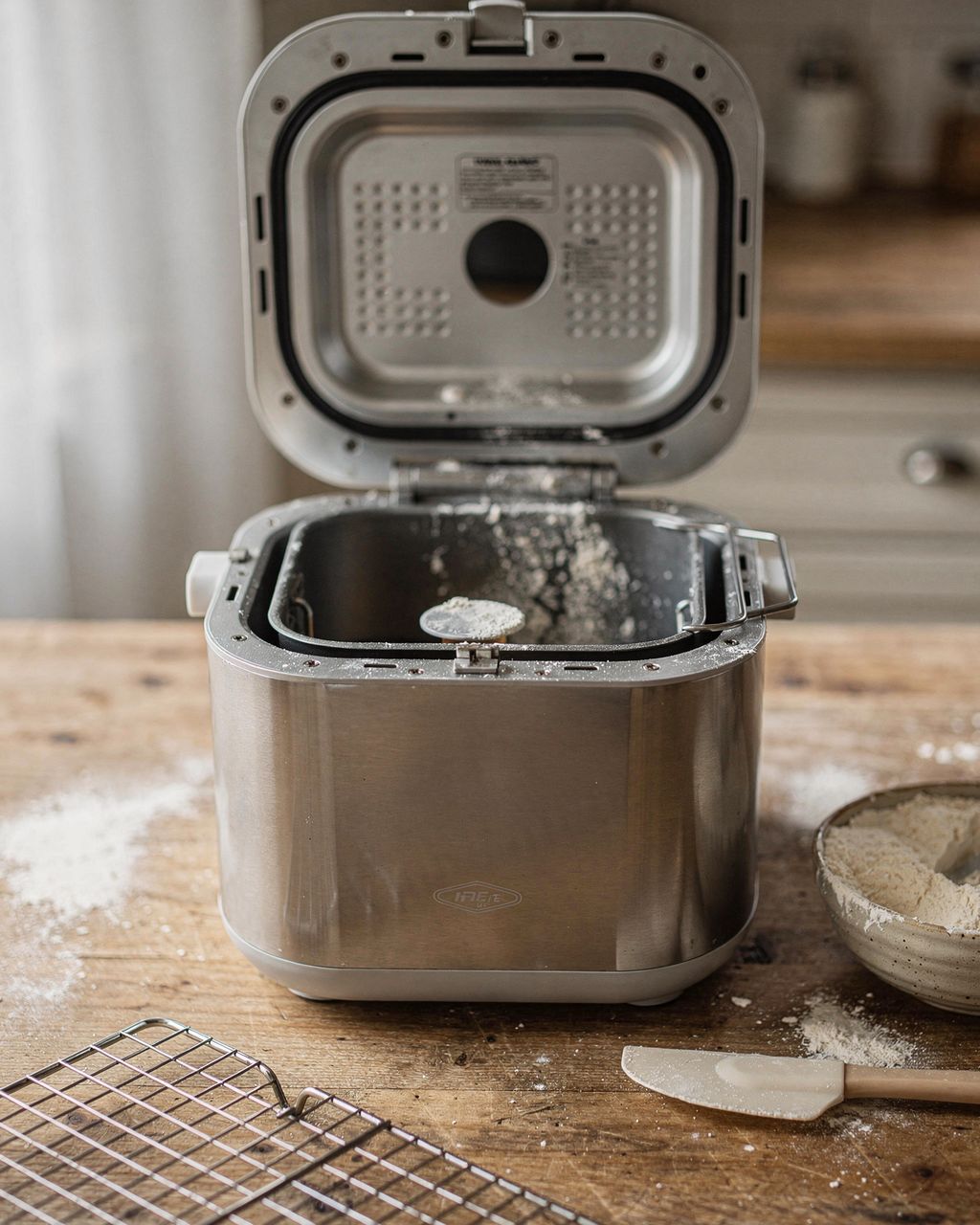
Bread machines run to a fixed program, so they can't wait for slow dough or stop a fast one. When the top caves in, the dough usually rose too high before the bake started.
Measure flour, water, yeast and salt by weight, and use the yeast the recipe names.
Cut the yeast slightly if the kitchen is warm.
Don't skip or cut the salt.
Reduce the water a little if the dough looks very slack during kneading.
Our guide to bread machine and stand mixer dough covers the programs. Gluten-free loaves collapse for different reasons, because they have no gluten to hold the gas.
Recipe of the week, one tip that saves you time and one deal from the shop. Unsubscribe in one click.
The next issue goes out on Thursday, November 26.
Watch the dough, not the clock. Recipe times assume a particular room temperature. In a warm kitchen, check early and often.
Use a straight-sided container for the first rise and mark the starting level, so you can see when it has roughly doubled.
Weigh the yeast and salt. Small mistakes in either make a big difference.
Slow it down on purpose. Use cooler water, or let the shaped loaf rise covered, in the fridge. Cold slows the yeast and gives you more control.
Build the gluten. Knead or fold until the dough is smooth and stretchy, and use a flour strong enough for the loaf.
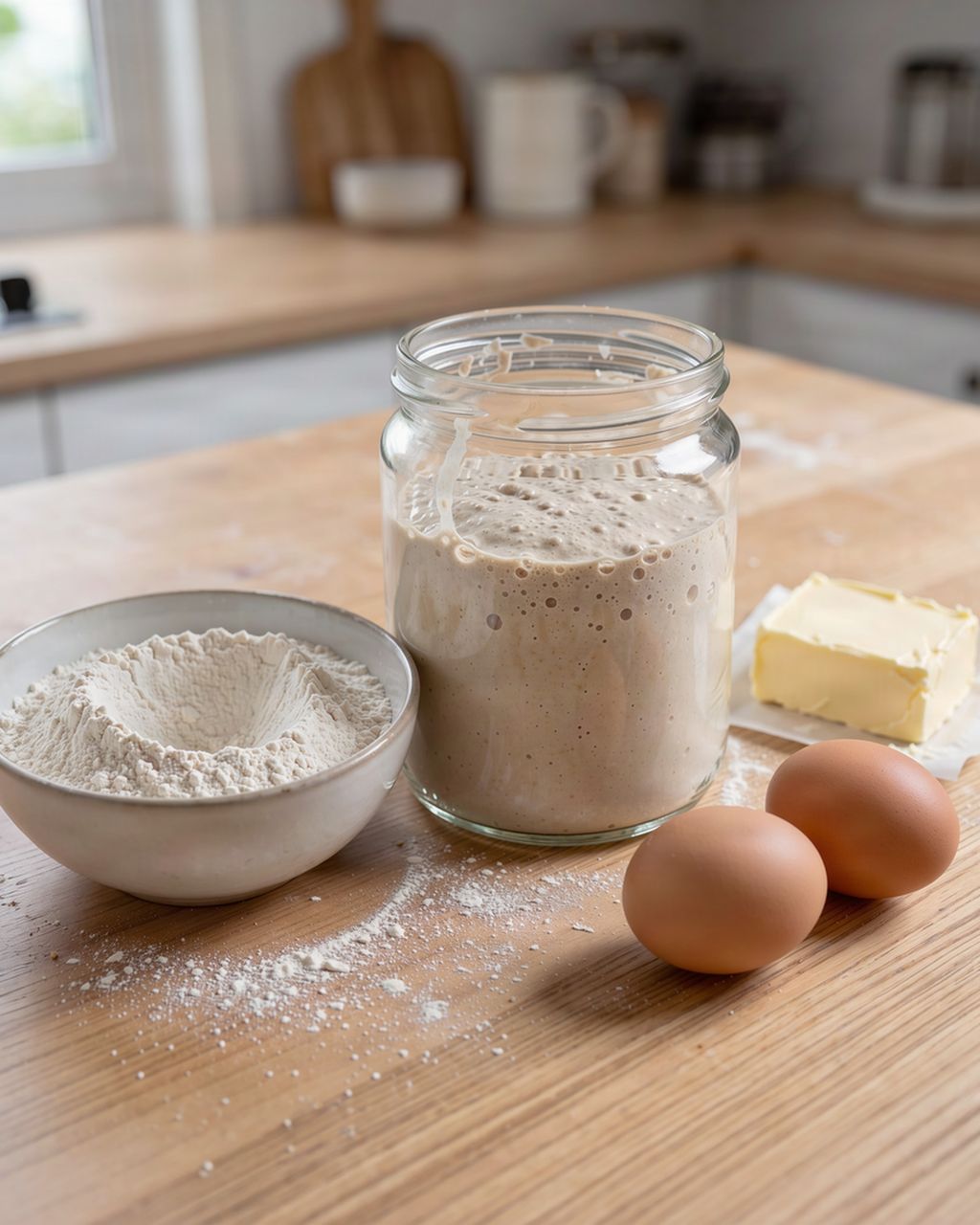
If your sourdough starter rises and falls, that is normal: it peaks after feeding and then drops back as the food runs out. Our guide to the sourdough starter explains when to use it.
It most likely overproofed. The dough kept rising until the gluten stretched too thin to hold the gas, and then it collapsed. A warm room, too much yeast or too little salt speeds this up.
Often, yes. Press the gas out, reshape the dough and let it rise again, watching it closely. The second rise is quicker and the bread may taste a little more yeasty, but it usually bakes well.
Press a floured finger about 1 cm (half an inch) into the dough. If it springs back fast, give it more time. If it springs back slowly and leaves a small dent, bake it. If the dent stays and the dough sighs, it has overproofed.
Usually because the dough was overproofed going in, so it had no strength left to rise further. Too much yeast, a very wet dough or bumping the loaf as it goes in can also make it sink.
Most often because the dough rose too high before baking. Too much yeast or water, too little salt, or a warm kitchen are the usual causes. Measure by weight and use the exact amounts the machine recipe gives.
Yes. A starter rises to a peak after feeding and then sinks as the yeast runs out of food. Use it at or near its peak.
One recipe worth heating the oven for, one tip, and one deal from the shop. Nothing else.