Mom's christmas braid
Sourdough Vánočka: How to Adapt Your Recipe and Why It Stays Soft Longer
Updated Oct 17, 2026
Sourdough vánočka (Czech Christmas braided bread) is made with an active wheat starter instead of yeast. For 500 g of flour, you use 100–150 g of starter at its peak and allow 11–18 hours from feeding the starter to putting the loaf in the oven. The result is a deeper, butterier flavor and a crumb that goes stale more slowly. You don't need a brand-new recipe: you can convert your trusted yeasted vánočka with just a few changes. Here's exactly what to adjust.
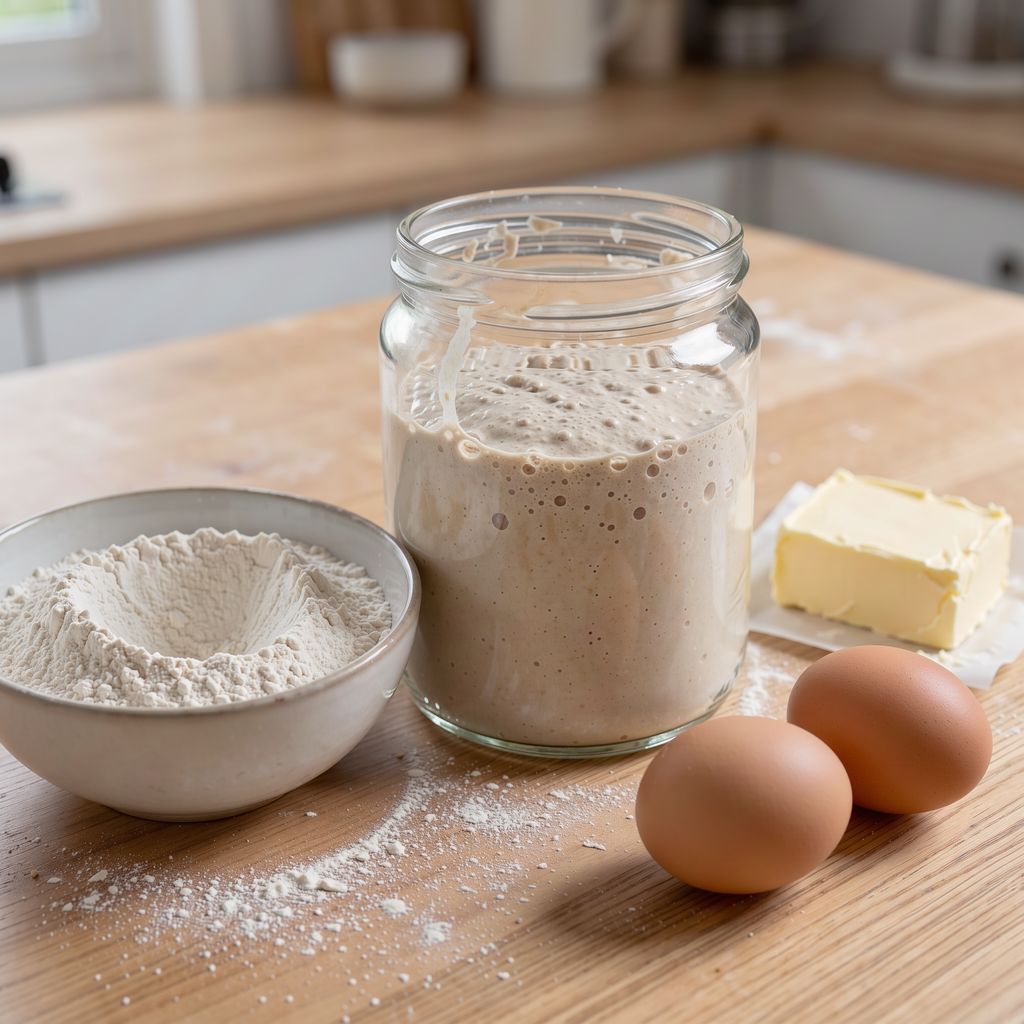
For a sourdough vánočka, use 20–30% active starter relative to the weight of the flour. For 500 g of flour, that means 100–150 g of starter at 100% hydration (equal parts flour and water). It replaces all 20–42 g of fresh yeast in the original recipe.
Starter is half flour and half water, though, so you need to subtract those from the recipe. Otherwise the dough will be slack and heavy:
Flour: subtract half the weight of the starter (with 120 g of starter, take out 60 g of flour).
Liquid (milk): subtract the other half (take out 60 ml of milk).
Yeast and the yeast pre-ferment: leave them out completely. You no longer need the mixture of yeast, milk and sugar that a classic recipe starts with, because the active wheat starter does that job.
Sugar, butter, egg yolks, salt, raisins: keep them as they are, but hold the sugar to 15% of the flour weight (see below).
Sample conversion for 500 g of flour: 440 g all-purpose flour, 120 g starter, 190 ml milk, 2 egg yolks + 1 egg, 70 g sugar, 100 g butter, 8 g salt, lemon zest. Mom's Yeasted Vánočka makes a great starting point, and this is exactly how you'd convert it.
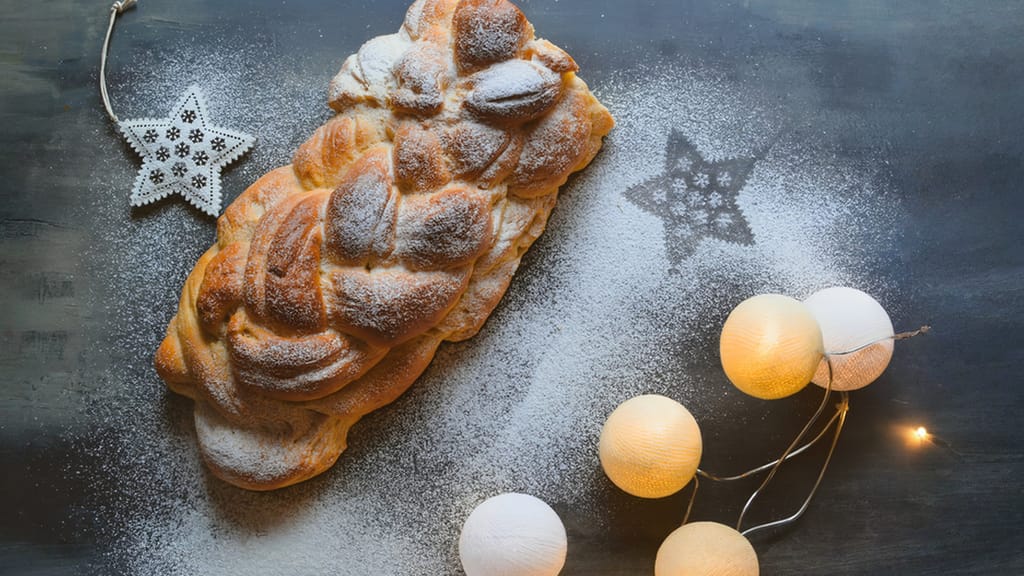
Mom's christmas braid
Mom's vánočka: a classic yeasted recipe you can convert to sourdough vánočka
Use a wheat starter that has been fed 2–3 times in a row and is used right at its peak: when it has doubled in volume, has a domed surface and hasn't started to fall yet. A tired starter straight from the fridge won't lift the loaf and will bring a sharp sourness to it.
Wheat, not rye. A rye starter adds an earthy, tangier flavor and a darker crumb. If you only have rye, convert it with 2–3 feedings of plain wheat flour.
Feed at 1:2:2 up to 1:3:3 (starter : flour : water). A higher feeding ratio dilutes the acids, so the vánočka turns out milder.
Warmth of 24–27 °C (75–81 °F). In the warmth, the starter ripens in 4–8 hours and the flavor leans toward a mild, lactic sourness rather than a vinegary one.
A stiff starter (50–60% water) is an option for experienced bakers, as with panettone: it gives the dough more strength and a gentler flavor. But then you subtract the flour and water in a different ratio (at 50% hydration, two thirds of the starter's weight is flour).
Don't have a starter yet? You can make one following the recipe Sourdough Starter – No Science Needed!, but allow 1–2 weeks until it's strong enough for a sweet dough.
Sourdough vánočka dough rises for 7–10 hours in total at 24–26 °C (75–79 °F): 4–6 hours for the first rise, then another 3–4 hours after braiding. A yeasted vánočka gets through both stages in 1.5–2.5 hours. With a ripe starter, allow 11–18 hours altogether from feeding the starter to the oven.
Building the leaven (feeding the starter): 4–8 hours at 24–27 °C (75–81 °F), or overnight for 10–12 hours at 20–21 °C (68–70 °F).
First rise of the dough: 4–6 hours at 24–26 °C (75–79 °F), until the dough has grown by about 50–75%.
Rise of the braided loaf: 3–4 hours at 24–26 °C (75–79 °F), or 8–12 hours in the fridge and then 1–2 hours in a warm spot.
Total: 11–18 hours in the warmth; with an overnight leaven, 17–22 hours.
Temperature sets the pace, not the clock. At 21 °C (70 °F), each stage can easily run half again as long. The most practical approach is to cover the loaf and put it in the oven with just the light on, where it stays around 25 °C (77 °F).
A schedule that fits into a weekend (with an overnight leaven, about 18.5 hours): on Friday at 10:00 pm, feed the starter and leave it at room temperature. On Saturday, mix the dough at 8:00 am, braid at 1:00 pm and bake around 4:30 pm. Fridge option: braid in the evening, put the loaf in the fridge overnight, and in the morning just let it finish rising and bake it.
Sugar and butter slow down the starter because sugar draws water away from the yeast and fat coats the gluten and the cells. That's why a sourdough vánočka is mixed differently from a yeasted one:
Keep sugar to 15% of the flour weight: no more than 70–75 g for 500 g of flour. Any more, and the starter slows down noticeably.
Add the butter at the end, softened and in pieces, once the dough is already smooth and elastic (after 8–10 minutes of kneading). The gluten needs to develop first, and only then will it take up the fat.
Bring the ingredients to room temperature. Cold milk and eggs straight from the fridge will drop the dough temperature below 22 °C (72 °F) and the rise will stall. Aim for a dough temperature of 25–26 °C (77–79 °F) after kneading.
Knead until you can pull a windowpane. A small piece of dough stretched between your fingers should turn translucent without tearing. Only that kind of dough can hold the gas during a long rise.
A braided sourdough vánočka is ready when it has roughly doubled in size, jiggles when you gently shake the baking sheet, and a finger poke springs back slowly and only partway.
The dent springs straight back: it hasn't risen enough yet. In the oven, the loaf will then crack and tear between the strands. We cover the causes in the article Why Vánočka Cracks: 7 Causes and How to Fix Them.
The dent stays and the dough doesn't spring back: it's overproofed. The gluten can no longer hold, and the loaf spreads out in the oven. See Vánočka Spread Sideways: How to Make It Hold Its Shape.
A slow, incomplete spring-back: this is the ideal moment to brush it with egg and put it in the oven.
With sourdough, the window between underproofed and overproofed is wider than with yeast, so you needn't worry about an extra hour. Overproofing is mainly a risk in temperatures above 28 °C (82 °F).
Bake a sourdough vánočka made with 500 g of flour at 160–170 °C (320–340 °F) with the fan, or 170–180 °C (340–355 °F) top and bottom heat, for 40–50 minutes. For the first 10 minutes, you can bake 10 °C (about 20 °F) higher so it springs up quickly.
Thanks to the acids and sugar, sourdough dough browns faster. If it's dark after 25–30 minutes, cover it with parchment paper.
The most reliable tool is an instant-read thermometer: according to King Arthur Baking, sweet yeasted dough is done when the center reaches at least 88 °C (190 °F).
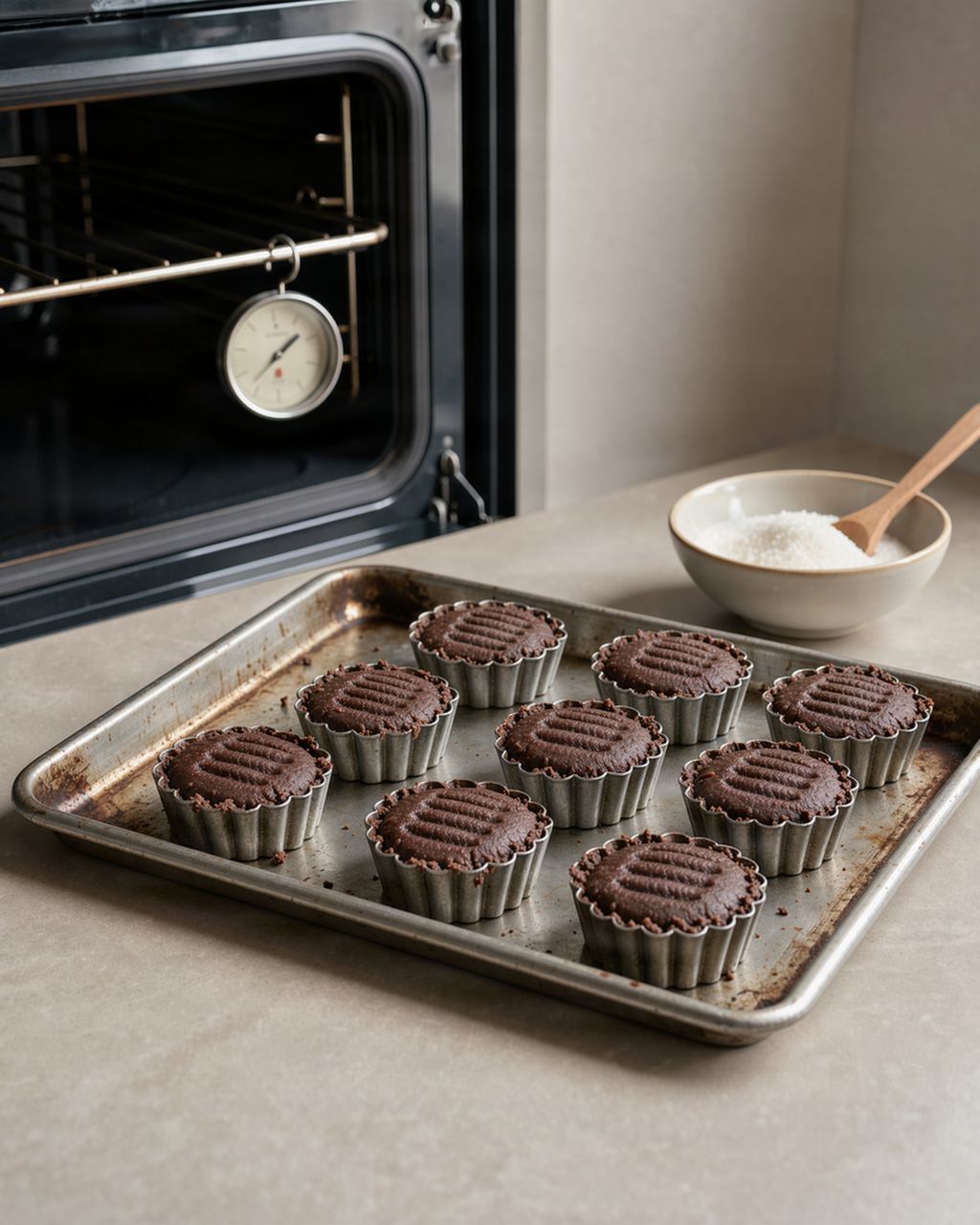
Ovens often run hotter or cooler than they show. For why, and how to check yours, see the article Oven Thermometer: Why Your Oven Doesn't Show the Real Temperature.
After taking it out, let it cool on a wire rack for at least 2 hours. The crumb is still finishing cooking and setting.
Sourdough vánočka tastes deeper and fuller: butterier, with a hint of caramel and just a gentle, creamy tang that most people only notice in a side-by-side comparison. By contrast, a yeasted vánočka is sweeter and simpler, with a pronounced yeasty aroma.
The difference comes from the long fermentation: lactic acid bacteria and yeasts have hours to release aromatic compounds from the flour. The crumb tends to be slightly denser and chewier, and it pulls apart into long strands.
If yours turns out too sour, it's almost always the starter, not the recipe: it was overripe, underfed or rose in the cold. More feeding (1:3:3) and a warmer spot will reliably bring the sourness down.
Sourdough vánočka stays soft longer because acids and enzymes from fermentation slow starch retrogradation, the process in which starch recrystallizes after baking and the crumb firms up. Studies of sourdough baked goods show a smaller increase in firmness during storage and slower retrogradation of amylopectin than in bread made without sourdough.
According to research, lactic and acetic acid also slow the growth of mold. In one experiment, sourdough bread made with a selected bacterial strain lasted an average of 6 days longer without mold than an unacidified control loaf. But those were laboratory conditions with a specific strain, and a home starter doesn't offer that kind of guarantee.
So the same storage rules apply as for any homemade baked goods:
Room temperature: 3–5 days, wrapped in a tea towel or bag.
Freezer (−18 °C / 0 °F): about 3 months for best quality (USDA FoodKeeper). Freeze it sliced so you can take out single slices.
Fridge: not recommended. At around 4 °C (39 °F), starch firms up fastest, so the vánočka goes stale sooner than it would on the counter.
So sourdough doesn't add days of safety, but it does add days when the vánočka is still soft and good. By day three, a sourdough vánočka usually tastes better than a yeasted one. You'll find more tips in the article Vánočka: How Long It Keeps and How to Keep It Soft.
Conversions most often go wrong because of a weak starter, cold dough or rushing:
Starter straight from the fridge: the loaf won't rise and tastes sour. Always feed it 2–3 times first.
Not subtracting the flour and water in the starter: the dough is sticky and spreads in the oven.
Keeping the original amount of sugar above 15% of the flour: the rise takes forever.
Butter right at the start: the gluten doesn't develop and the loaf doesn't hold its shape.
Following the yeast recipe's rising times: after 1.5 hours, a sourdough vánočka is only getting started.
Weak flour: for vánočka, reach for a flour with a higher protein content (around 11–12%). For how different flours compare, see the article Types of Flour and What They're Best For.
Once you've mastered sourdough vánočka, the same conversion method works for mazanec (Czech Easter bread). Try it with the recipe An Easter Classic: Fragrant Mazanec. We also have inspiration for more homemade baked goods all in one place.
Yes. 2–3 g of fresh yeast per 500 g of flour cuts the rising time by roughly half and acts as insurance if your starter is on the weak side. This is called a hybrid vánočka: the sourdough flavor is still there, just a little milder, and the loaf stays soft for a somewhat shorter time than a pure sourdough one.
Not as the only leavening. Unfed starter from the fridge isn't strong enough to lift a heavy, sweet dough, and it would make the loaf sour. You can, however, add 50–100 g of it to a yeasted vánočka for flavor. If you do, subtract half its weight from the flour and half from the milk.
You can freeze raw sourdough vánočka dough, but it's more reliable to freeze the loaf after baking. Freezing damages some of the yeast, so thawed raw sourdough dough rises slowly and unpredictably. Wrap the baked, fully cooled loaf in a freezer bag; according to USDA FoodKeeper, it keeps its best quality in the freezer for about 3 months.
Most often because the starter wasn't at its peak, or the loaf went into the oven underproofed. Check that your starter doubles in volume after feeding, that the dough is 25–26 °C (77–79 °F) after kneading, and that the braided loaf has roughly doubled in size before baking. Adding the butter before the gluten has developed can also make the loaf dense.
Yes, and for a first attempt a long loaf pan is the safer choice: the pan supports the loaf when the dough is softer after its long rise. Put the braided loaf in a greased pan, let it rise until it's just below the rim, and bake as you would on a baking sheet, but 5–10 minutes longer.
One recipe worth heating the oven for, one tip, and one deal from the shop. Nothing else.