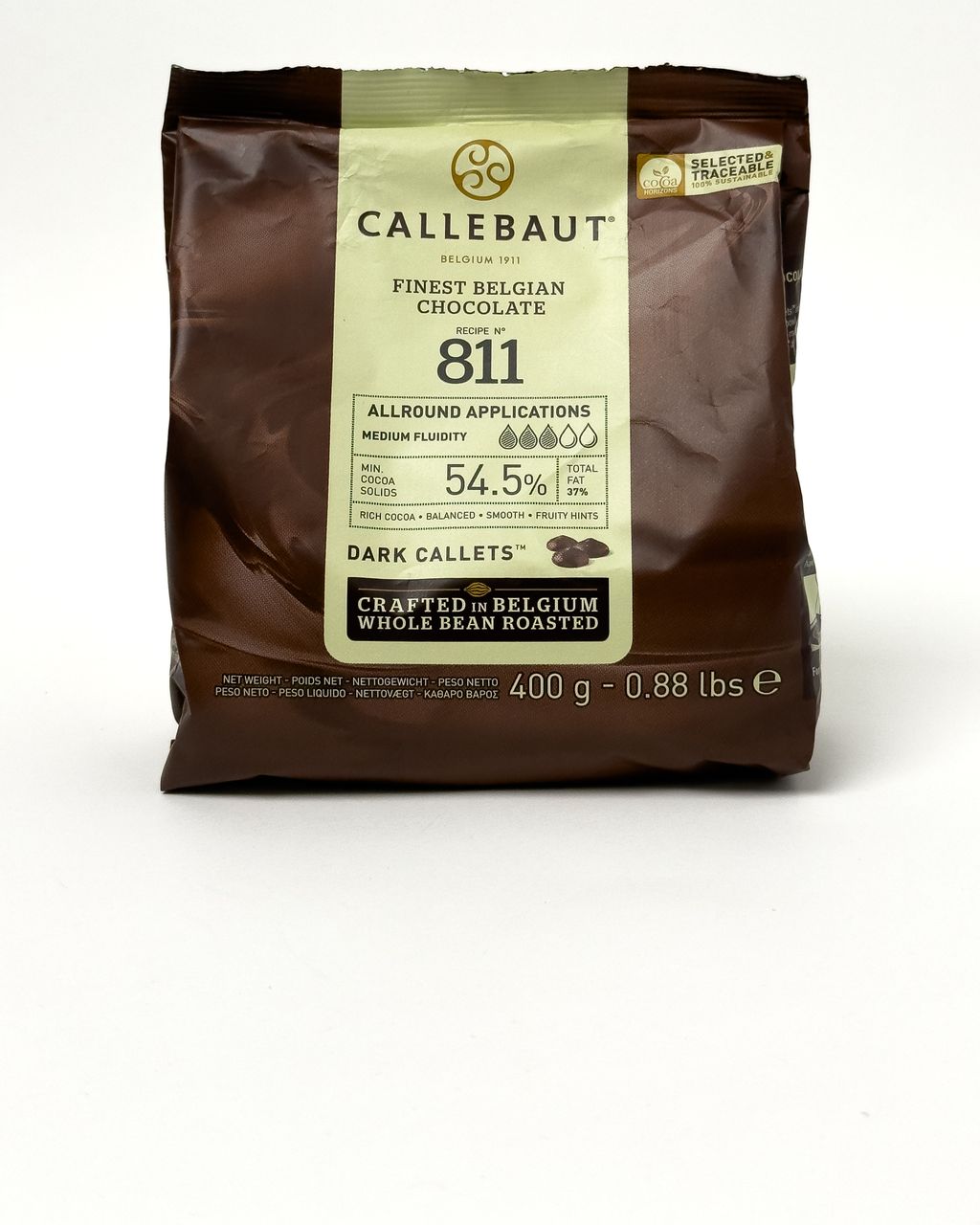
Callebaut Dark Chocolate Callets (811) 400g
Why Cream Horns Go Soft and How to Keep Them Crisp Until Christmas Eve
Updated Oct 17, 2026
Why do cream horns go soft? Because moisture from the filling migrates into the dry pastry, and the shell soaks it up like a sponge, often within a few hours. Three steps keep them crisp: brush the insides with a thin layer of chocolate, store the empty shells somewhere dry, and fill them as late as you can – anywhere from a few hours to 2–3 days before serving, depending on the filling.
Cream horns go soft because water travels from the moister place to the drier one – from the filling into the baked pastry. A baked wafer or pastry shell has almost no moisture and contains starch and sugar, which readily bind water. The filling, on the other hand, is full of water: milk, butter (which is around 16% water), whipped cream, custard.
As long as the two layers touch, moisture keeps passing across until the levels even out. You can't stop it – you can only slow it down. The food industry solves it exactly the way you can at home: it puts a thin fat barrier between the filling and the pastry, one that water barely passes through. According to patents from ice cream cone makers, this is a thin layer of chocolate or fat-based coating sprayed onto the inside of the wafer.
The second source of moisture is the air. An empty shell will absorb moisture from your kitchen or from the fridge, where the air is damp – which is why even an unfilled one goes soft if you leave it lying out.
The more water in the filling, the faster the shell goes soft. Roughly from fastest to slowest:
Whipped cream and cream-based fillings – horns filled with them soften within a few hours, so fill them right before serving (1–2 hours ahead at most).
Custard and milk-based creams (cooked cream made with milk and custard powder) – they soften within 1–2 days.
Quark and mascarpone fillings – a lot of water, and they belong in the fridge, where it's humid. Fill on the day of serving.
Pure butter creams (butter + icing sugar, nut cream) – they stay crisp for 3–5 days.
Ganache and chocolate fillings with a low proportion of cream – the most resistant, especially when they contain more chocolate than cream. This includes Parisian cream (chocolate melted with cream), though it usually has more cream than a firm ganache, so it's softer and breaks down the shell a little sooner. To make it firmer, see firm Parisian cream: the chocolate-to-cream ratio.
We cover specific fillings and how long they keep in How long cream-filled cookies keep and what to fill them with. Here the focus is on keeping the shell itself crisp.
A thin layer of chocolate inside the shell separates the filling from the pastry and stretches crispness from hours to days. Here's how:
Melt the chocolate – about 100–150 g is enough for 30–40 horns. Melt dark chocolate to 45–50 °C (113–122 °F), and white and milk chocolate only to 40–45 °C (104–113 °F), otherwise it thickens or seizes.
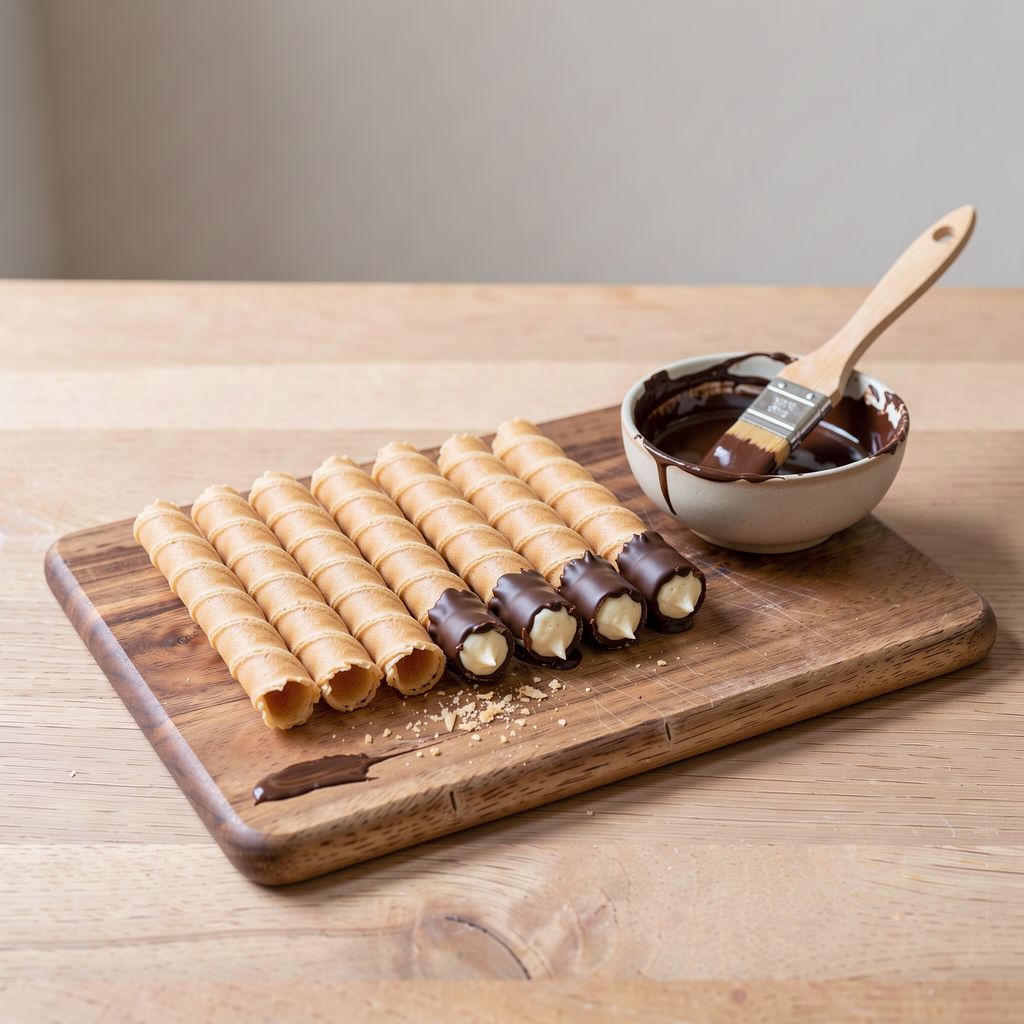
Apply it inside – use a thin brush, or pour a teaspoon into the shell, turn it so the inside is coated, and let the excess run back into the bowl.
Keep the layer thin, around 1 mm. A thick layer adds nothing; it just weighs the shell down and masks the flavor of the pastry.
Let it set – 20–30 minutes at room temperature, faster in a cool place (not the fridge). Fill only once it has set completely.
Seal the ends – after filling, level the cream with a knife and dip the ends in chocolate. This also closes off the spot where air gets to the filling.
Tempered or just melted? Untempered chocolate will make a barrier too; it'll just be softer, may smear, and will turn grayish over time. If you want a firm, glossy layer, especially on the dipped ends, it's worth tempering – see How to temper chocolate for how.
Couverture is best for coating the shells – a chocolate with a higher proportion of cocoa butter that's fluid when melted and can be applied thinly. Regular baking chocolate works, but it's thicker and the layer comes out heavier.
Dark – the all-rounder, and it suits nut, coffee, rum and butter fillings. We've had good results with Callebaut dark chocolate callets (811) – they're fluid enough and melt evenly. You'll find more dark couvertures in the dark chocolate category.
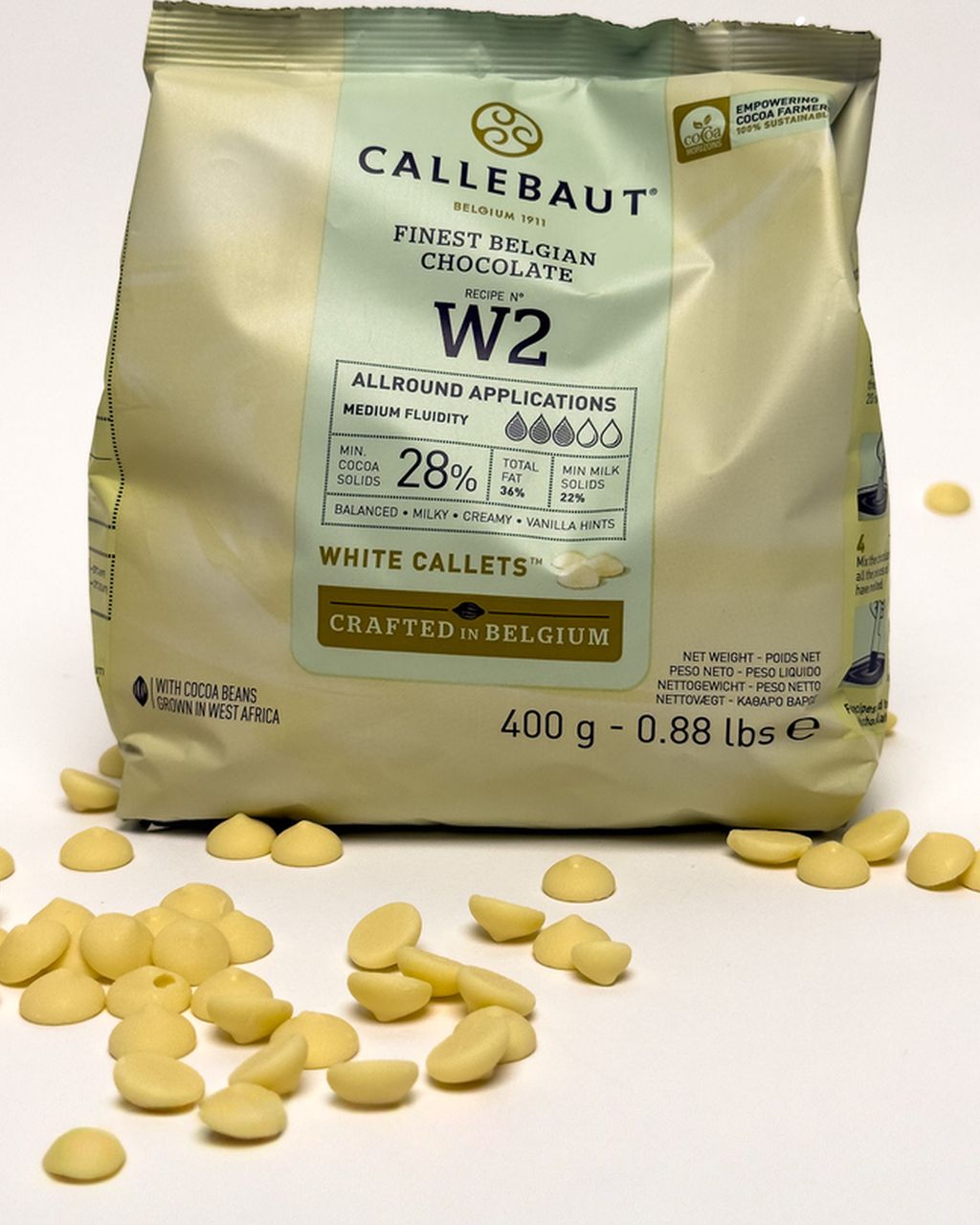
White – for when you have a light vanilla, lemon or coconut filling and don't want a dark edge showing through. Callebaut white chocolate callets (W2) work well; melt it slowly, as it's sensitive to overheating.
Milk – a compromise for kids and for caramel fillings.
Pure cocoa butter – what pastry shops use when they don't want any chocolate flavor at all. The barrier is invisible and neutral in taste. We don't carry it, but if you can find it, it works beautifully.
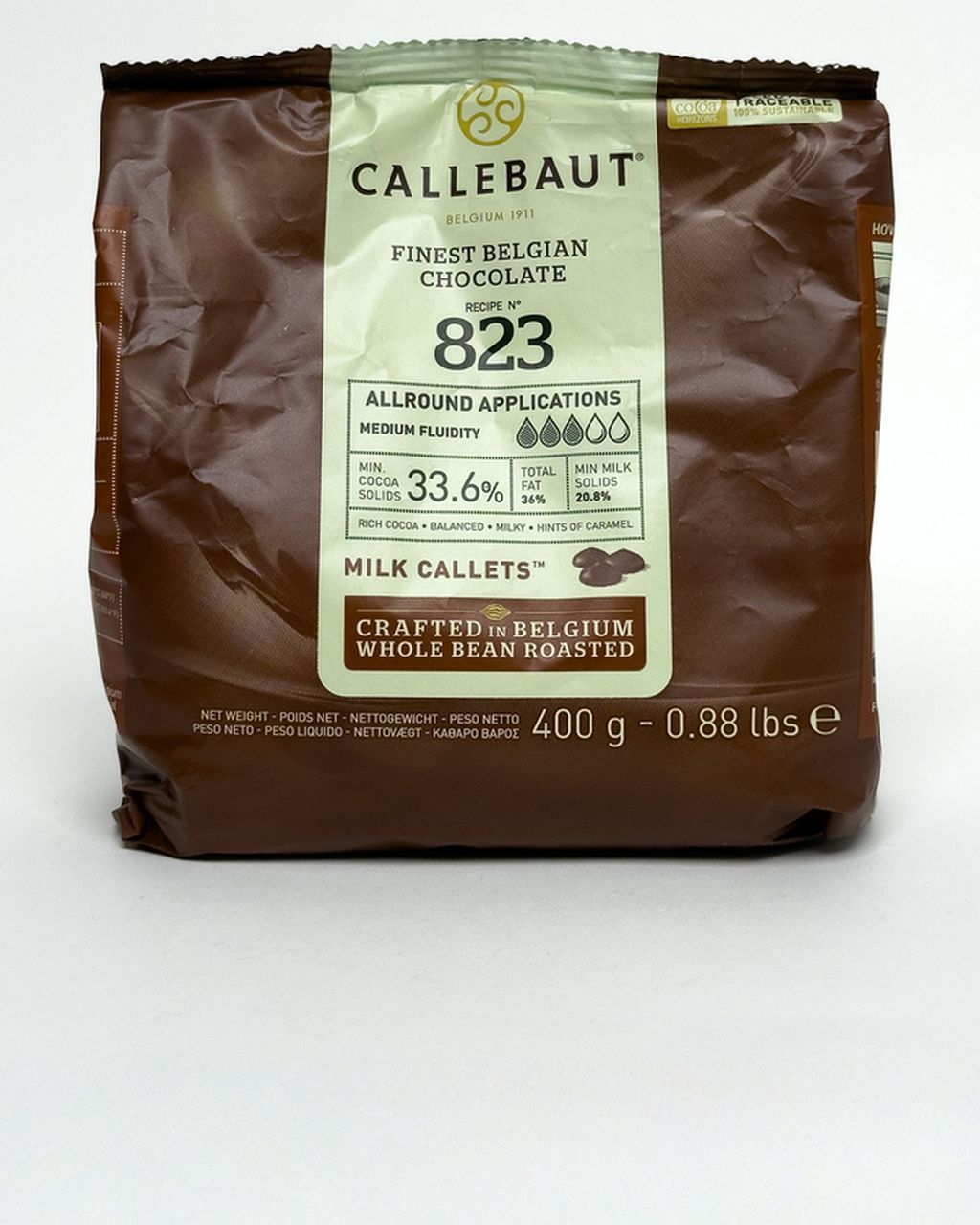
We explain what the couverture numbers mean in Callebaut 811, 823, W2 and RB2. You can use up leftover chocolate right away on your next batch of cookies – for how to dip them without smearing, see dipping cookies in chocolate.
Store empty shells in a tin or a well-sealing box, in a dry, cool place (ideally 15–18 °C / 59–64 °F), never in the fridge. That way they stay crisp for 2–3 weeks.
Completely cooled. Close the box only after they've cooled to room temperature, otherwise steam condenses inside and softens them from within.
Not in the fridge. It's damp and full of odors; the shells soak up both.
Away from soft cookies and baked goods. Don't put them in the same box as soft honey gingerbread, jam-filled linzer cookies or vánočka – moisture moves between the pieces.
Layered with baking paper so they don't break.
Already gone soft? You can rescue empty shells: spread them on a baking sheet and put them in the oven for 3–5 minutes at 150 °C (300 °F), then let them cool completely. Filled ones can't be saved – eat those.
Fill them as late as possible: whipped cream ones right before serving, custard and quark ones on the day of serving, and butter and chocolate ones 2–3 days ahead at the earliest. You can bake and chocolate-coat the shells a full two weeks in advance.
A practical Christmas plan:
By mid-December – bake the shells, coat them with chocolate and store them in a tin.
December 21–22 – cook or mix the filling and keep it in the fridge; butter creams keep for a few days in a closed container.
December 23–24 – let the filling soften at room temperature, whip it up again and pipe it into the shells. Dip the ends in chocolate.
Filled horns should be stored according to the filling. Only those with a butter or chocolate filling can stay in a cool spot outside the fridge (pantry, hallway, 10–15 °C / 50–59 °F), in a single layer and not packed tightly under a lid. Horns with whipped cream, quark, mascarpone or custard filling belong in the fridge.
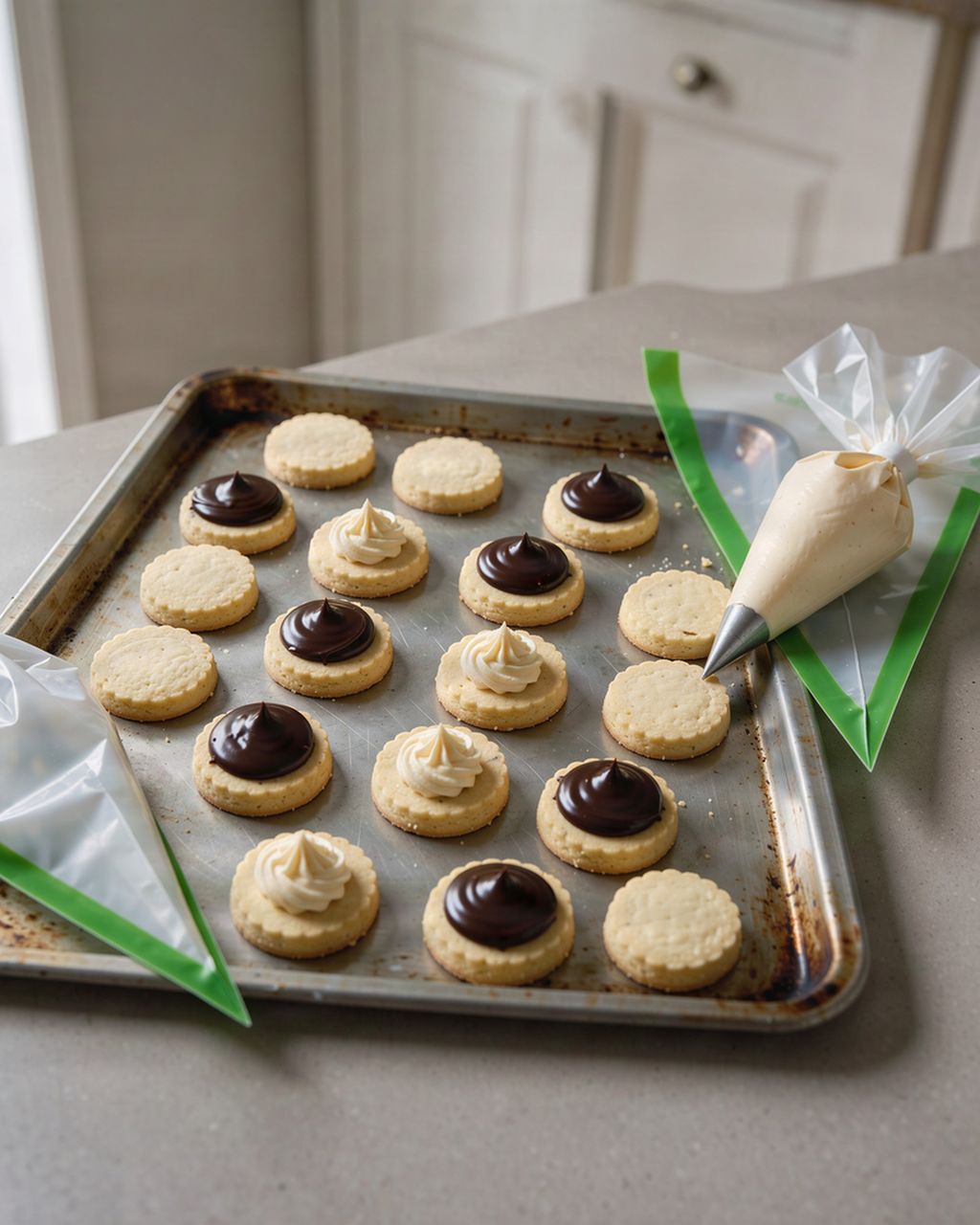
If you're filling a big batch, how to fill a piping bag without the mess will save you time and nerves.
A coating on the outside won't protect the crispness within, because the filling softens the shell from the inside. Chocolate on the outside only helps against humid air and looks pretty; the barrier against the filling has to be on the inside.
They can, but they usually turn soft once thawed, because condensation forms on them. It's better to freeze only the empty baked shells in an airtight box, then re-crisp them in the oven for 3–5 minutes at 150 °C (300 °F) after thawing.
A food-safe silica gel packet helps; rice barely does. Silica gel absorbs moisture from the air in the tin far more effectively than rice. Use it only with empty shells, and keep it from touching the cookies directly. It won't help with filled horns, because the moisture comes from the filling, not the air.
Yes, thin wafer rolls soften faster than those baked from butter dough or puff pastry. They have thin walls and a large surface area, so moisture from the filling soaks right through sooner – which makes the chocolate layer inside even more important for them.
Only briefly: with a whipped cream, quark or yogurt filling, the horns stay crisp for roughly a few hours up to the next day, even if you coat them with chocolate. These fillings contain a lot of water and have to be kept in the fridge, where it's humid, so the chocolate layer only delays the softening. Fill them on the day you serve them and dip the ends in chocolate.
One recipe worth heating the oven for, one tip, and one deal from the shop. Nothing else.