Why Is My Pound Cake Dense or Gummy? Causes and Fixes
Why Are My Cupcakes Dense or Dry? Mixing, Flour and Baking Time
Updated Nov 21, 2026
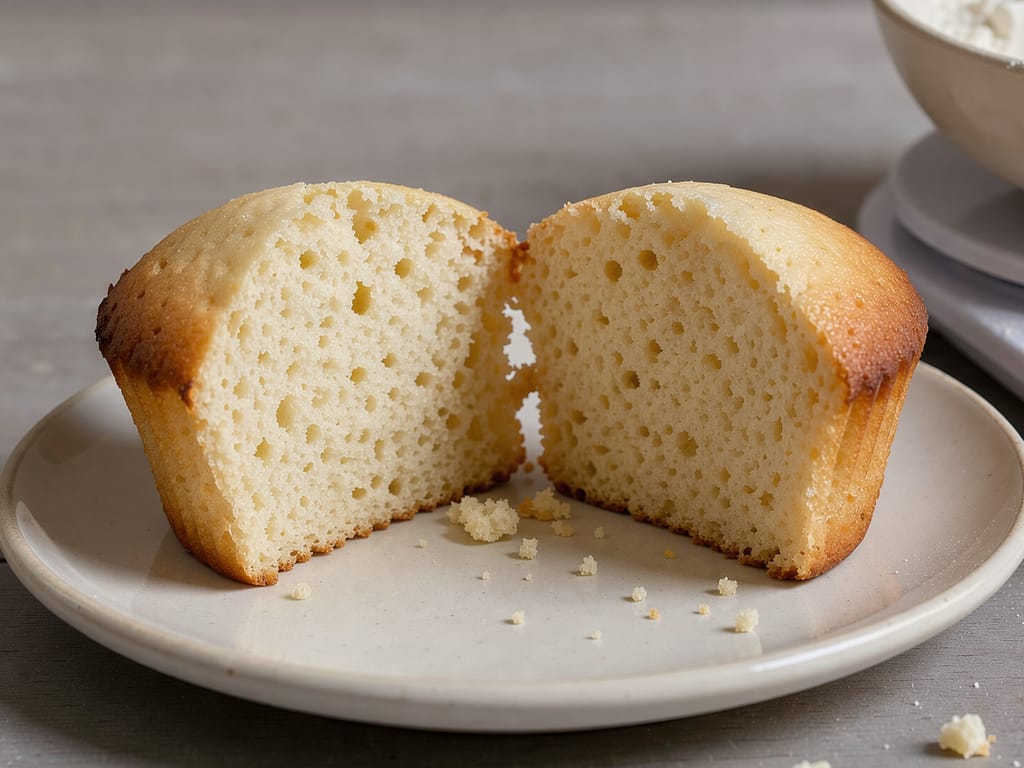
Cupcakes turn out dense when the batter is overmixed after the flour goes in, has too much flour, or didn't get enough air when creaming; they turn out dry when they are overbaked or have too much flour. Weighing the flour, mixing gently and pulling them from the oven on time fixes most batches. Here is how to tell which problem you have.
The two often come together, but they point to different steps.
Dense, tight, heavy, maybe a little gummy: the batter lacked air or had too much gluten. Look at creaming, mixing and leavening.
Dry, crumbly, firm: too little moisture survived the oven. Look at flour amount and baking time.
Dense and dry together: too much flour is the usual culprit, because it causes both.
Recipe of the week, one tip that saves you time and one deal from the shop. Unsubscribe in one click.
The next issue goes out on Thursday, November 26.
This is the most common cause of dense, dry cupcakes in American-style recipes. Scooping a measuring cup straight into the flour bag packs it down, so you can end up with noticeably more flour than the recipe means.
Weigh it. All-purpose flour is about 125 g per US cup (236.6 ml) and 132 g per metric cup (250 ml), spooned and leveled. Some publishers use 120 g, so if your recipe gives a weight, use that. See 1 US cup of flour in grams.
No scale? Spoon the flour into the cup and level it with a knife. Don't tap or shake it down.
Check the flour type. Cake flour gives a softer crumb than all-purpose. In Europe, it is sold under other names; our cake flour in Europe guide lists them.
The same goes for cocoa powder, which absorbs a lot of liquid: too much makes chocolate cupcakes dry. Weigh it too.
Once flour meets liquid, every extra turn of the mixer builds gluten. A little gives structure; a lot gives a tight, chewy, bready crumb, sometimes with long tunnels inside.
Add the flour last, on the lowest speed or by hand with a spatula.
Stop as soon as no dry streaks remain. A few small lumps are fine.
If a recipe alternates flour and milk, mix each addition only until just combined.
Muffins work the same way, which is why muffin recipes tell you to stir only briefly.
Butter-based cupcakes get much of their lift from air beaten in while creaming.
Cream long enough. Butter and sugar should look pale and fluffy, not just mixed. Our guide to creaming butter and sugar shows how soft the butter should be and how long to beat.
Use room-temperature eggs and milk. Cold eggs or milk firm the butter back up and the batter can look curdled, losing air.
Butter not too soft. Melted or greasy butter can't hold air.
Check your leavening. Old baking powder gives flat, dense cupcakes. Here is how to tell if baking powder is still good.
Sometimes the method is fine and the recipe is lean.
Fat coats flour and keeps the crumb tender. Cutting the butter or oil to make cupcakes "lighter" makes them drier and tougher.
Sugar holds on to moisture as well as sweetening. Reducing it a lot gives a drier, firmer cupcake that also goes stale faster.
Liquid: swapping milk for a thick yogurt without thinning it, or leaving out a splash of milk, tightens the batter.
Eggs: an extra egg adds structure, which can make cupcakes springy but dry. Use the egg size the recipe expects.
Butter vs oil. Butter gives flavor and lift from creaming. Oil stays liquid at room temperature, so oil-based cupcakes feel moister, especially the next day. Many recipes use both.
If you change a recipe, change one thing at a time, so you know what made the difference.
Cupcakes are small, so they go from done to dry fast. A couple of minutes too long, or an oven running hot, is enough.
Start checking early, a few minutes before the recipe's time.
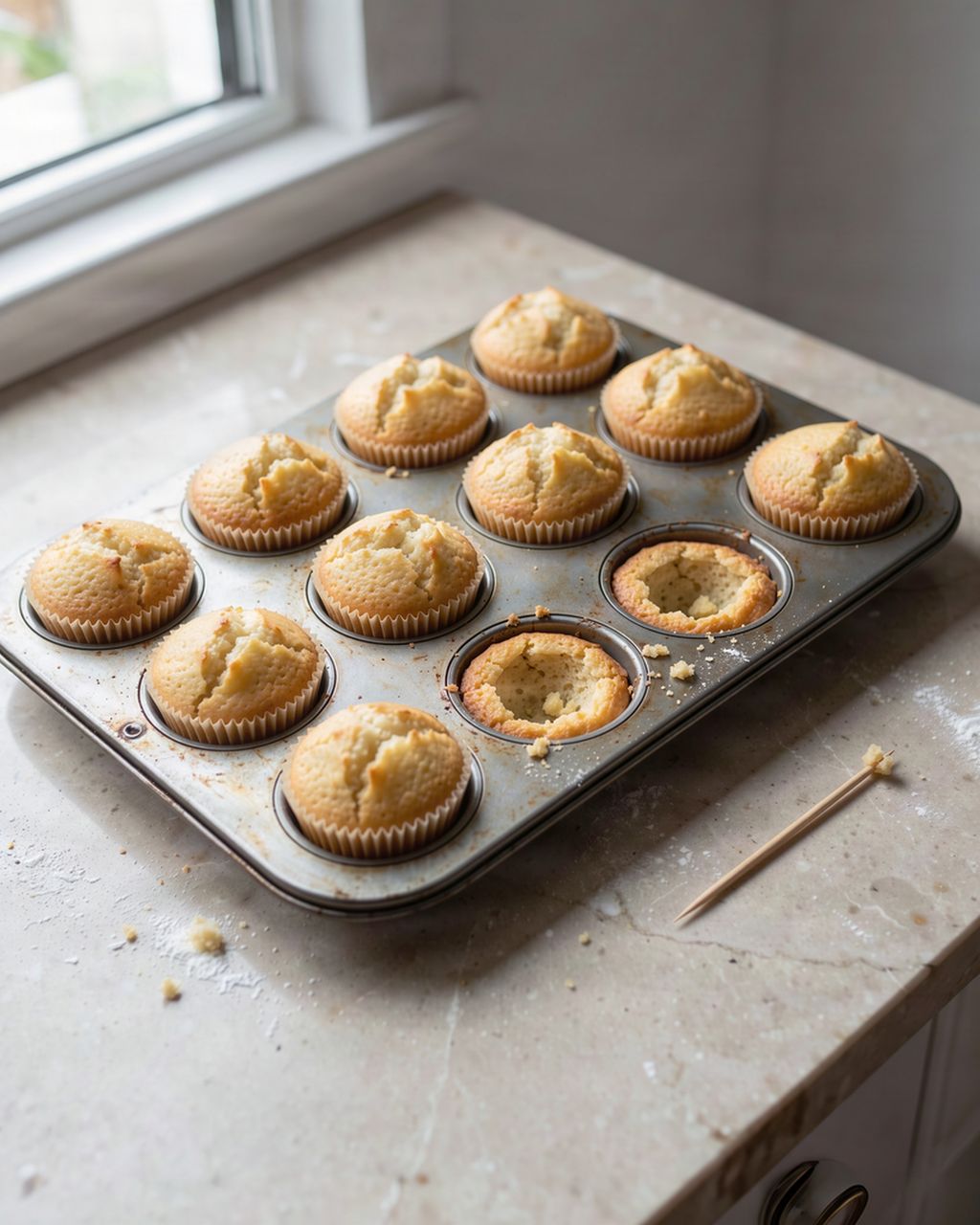
Test the middle of the tin: a toothpick comes out clean or with a few moist crumbs, and the top springs back.
Know your oven. Ovens can run hotter or cooler than the dial. An oven thermometer shows the truth. A fan oven also bakes faster than a conventional one at the same setting, so a recipe written for one needs adjusting for the other.
Take them out of the tin after a few minutes. Left in a hot metal tin, they keep baking.
Dark tins bake faster than light ones, and the bottoms and edges dry first.
A hard, crusty top usually means overbaking, too much top heat or a very sweet batter.
Sometimes the top of a cupcake is fluffy but there is a heavy, wet-looking band at the base. The usual reasons:
Butter and sugar not fully creamed, so streaks of fat sank and pooled at the bottom. Scrape down the bowl and the beaters while creaming.
Batter left standing before baking, so the leavening started working and the heavier part settled. Get the tin into a fully preheated oven promptly.
Underbaked middles, often from overfilled liners. The base is the last part to finish.
Too much liquid or fruit for the batter to hold, which sinks to the bottom.
If only the bottom is dense and the rest is fine, look at mixing and baking time before you change the recipe.
Let them cool, then cover them. Uncovered cupcakes dry out quickly.
Frost them once fully cool; frosting seals the top.
Rescue dry ones by brushing the tops with a little sugar syrup before frosting, or by filling them with cream or jam.
Chill cream-filled ones. Cupcakes filled with cream or custard, or topped with whipped cream or cream cheese frosting, belong in the fridge. Under USDA's 2-hour rule for perishable food, don't leave them out for more than 2 hours, or more than 1 hour above 32 °C (90 °F).
Choose a moister recipe. Oil-based batters and recipes with buttermilk, sour cream or yogurt stay moist longer than all-butter ones. Our chocolate cupcakes are an example.
Cupcakes are usually dense because the batter was overmixed after the flour went in, there was too much flour, or the butter and sugar weren't creamed enough. Cold ingredients and weak baking powder add to it. Weigh the flour, cream until fluffy and fold the flour in only until it disappears.
Cupcakes are dry mostly because they were overbaked or had too much flour. Even two or three extra minutes dries small cakes out. Start checking a few minutes before the recipe's time and weigh your flour instead of scooping it.
Yes, overmixing after the flour is added makes cupcakes dense, tough and sometimes tunneled. Mixing develops gluten and knocks out air. Stir the flour in on low speed or by hand, only until no dry streaks remain.
Weigh the flour, use room-temperature ingredients, cream the butter and sugar until pale, mix the flour in gently and take the cupcakes out as soon as a toothpick comes out clean. Recipes with oil, buttermilk or sour cream stay moist longer.
You can make dry cupcakes nicer by brushing the tops with a simple sugar syrup before frosting, or by filling them with jam, or with whipped cream if you'll keep them in the fridge. Frosting also seals in moisture. They won't turn fluffy again, but they'll taste less dry.
Cupcakes go hard on top when they overbake or bake too close to the top heat, or when the batter is very sweet. Bake them on the middle shelf, check the real oven temperature and take them out as soon as they test done.
One recipe worth heating the oven for, one tip, and one deal from the shop. Nothing else.