Why Egg Whites Won't Whip to Stiff Peaks: 7 Causes and How to Fix It
Creaming Butter and Sugar: How Soft the Butter Should Be and How Long to Beat It
Updated Nov 17, 2026
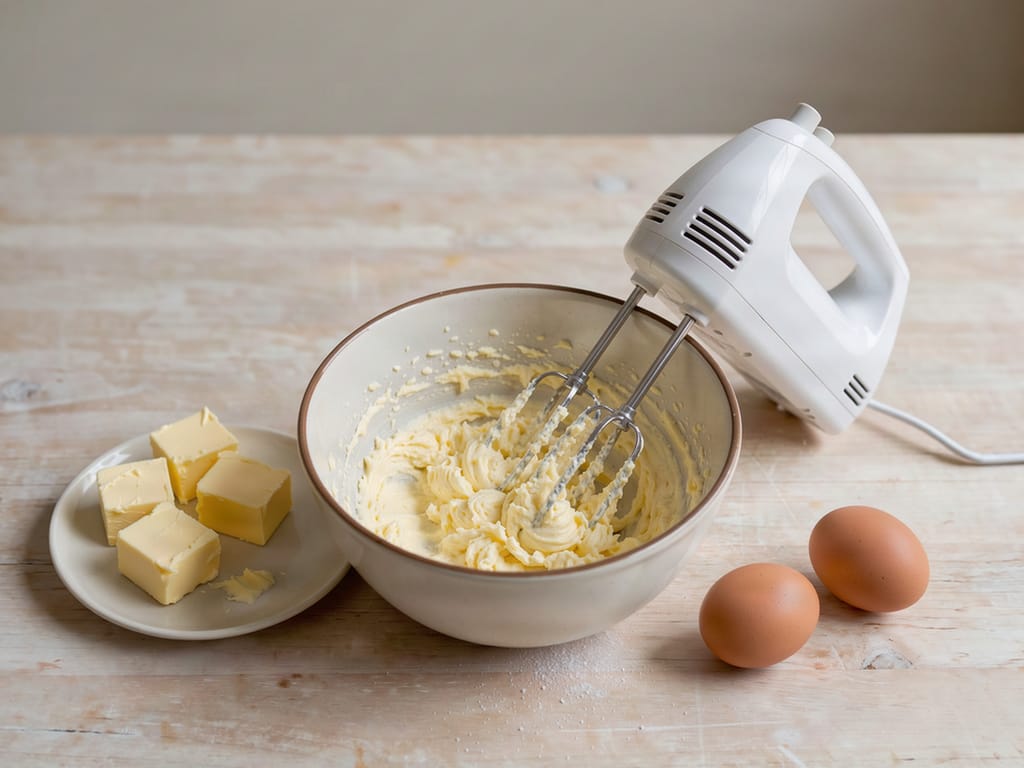
You can only cream butter and sugar properly when the butter is cool-soft – roughly 18–20°C (64–68°F), so it dents when you press it with a finger but isn't greasy yet – and you beat it on medium speed (2–3 minutes in a stand mixer, 4–6 minutes with a hand mixer) until the mixture turns paler and gains volume. This is the step where you build the air that gives a Bundt cake, muffins or a pound cake its light crumb. Below you'll find how to soften butter quickly without melting it, what "creamed" really looks like, which sugar to use and how to add the eggs so the batter doesn't curdle.
The butter should be cool-soft: when you press a finger into it, it leaves a dent, but the butter holds its shape, still feels a little cold to the touch and isn't greasy. Bakers usually give around 18–20°C (64–68°F); King Arthur Baking describes the right butter as giving way under a finger like clay, but still slightly cool.
Why such a narrow range? When you beat, the sharp edges of the sugar crystals cut tiny air pockets into the firm fat. The fat has to hold on to them – and it can only do that when it is pliable, not liquid.
Butter too cold (straight from the fridge): the sugar won't work into it, the mixture is lumpy and grainy like peanut butter, and it barely lightens. The Bundt cake then turns out dense and heavy.
Butter just right: after a few minutes you get a pale, fluffy, soft mass.
Butter too warm or glossy: the mixture is greasy and wet, the air bubbles can't survive in it, and the cake is heavy and oily. Melted butter can't be creamed at all.
A practical test without a thermometer: a stick of butter should bend without snapping, and a knife should slide in easily without leaving a greasy film on the blade.
Seasonal baking plans, tested recipes and kitchen tricks that save you time. Unsubscribe in one click.
You can soften butter five ways: cubing it, grating it, rolling it out between sheets of paper, a warm "dome" from a cup, or, in a pinch, the microwave – the best approach is to increase the butter's surface area rather than heat it. Ranked from most reliable:
Cut it into small cubes and spread them on a plate at room temperature. Small pieces soften much sooner than a whole stick – and, above all, evenly.
Grate cold butter on the large holes of a box grater straight into the bowl. The shavings soften almost immediately and combine with the sugar without lumps.
Roll it out between two sheets of parchment paper with a rolling pin into a thin slab. The warmth of your hands and the pressure soften it evenly.
The cup "dome": rinse a glass or mug with hot water, dry it and invert it over the butter on a plate. The warm air gently warms it from the outside.
Microwave only in an emergency: lowest power, checking every 5–10 seconds. Butter softens from the inside in a microwave, and the center can easily melt even when the edges look fine.
What not to do: don't put butter on a radiator or the stove, and don't melt "just a little". Butter that is merely too soft or glossy can still be rescued by a short chill in the fridge. But once part of the butter has melted, even re-chilling won't save the creamed mixture – the crystalline structure of the fat that holds the air collapses.
If you leave butter out to soften on the counter for longer, the US Department of Agriculture (USDA) says butter is safe at room temperature, but doesn't recommend leaving it there for more than 1–2 days – after that it starts to turn rancid. Put the rest back in the fridge.
Cream butter and sugar in a stand mixer on medium speed for about 2–3 minutes (King Arthur Baking recommends speed 3–4 on a stand mixer and scraping down the bowl with a spatula halfway). With a hand mixer, expect roughly 4–6 minutes, and 10 minutes or more with a wooden spoon – but watch the mixture itself more than the clock.
Butter and sugar are "creamed" when they:
turn paler – from buttery yellow to a light cream color, but not white,
gain volume and look visibly fluffy, not shiny and smooth,
stop sticking to the sides of the bowl and pull in toward the beaters,
feel almost smooth between your fingers – the sugar is nearly dissolved and only just slightly gritty.
Don't start at full speed. Beat slowly for the first few seconds so the sugar doesn't fly out of the bowl, then switch to medium. High speed doesn't add more air, it only warms the butter through friction.
Watch out for overbeating. If the mixture turns completely white and starts to look like whipped cream, it holds more air than the batter can support. The bubbles expand in the oven, some burst, and the cake sinks or ends up with dense, rubbery streaks. How this shows up in the finished Bundt cake is covered in why a Bundt cake sinks.
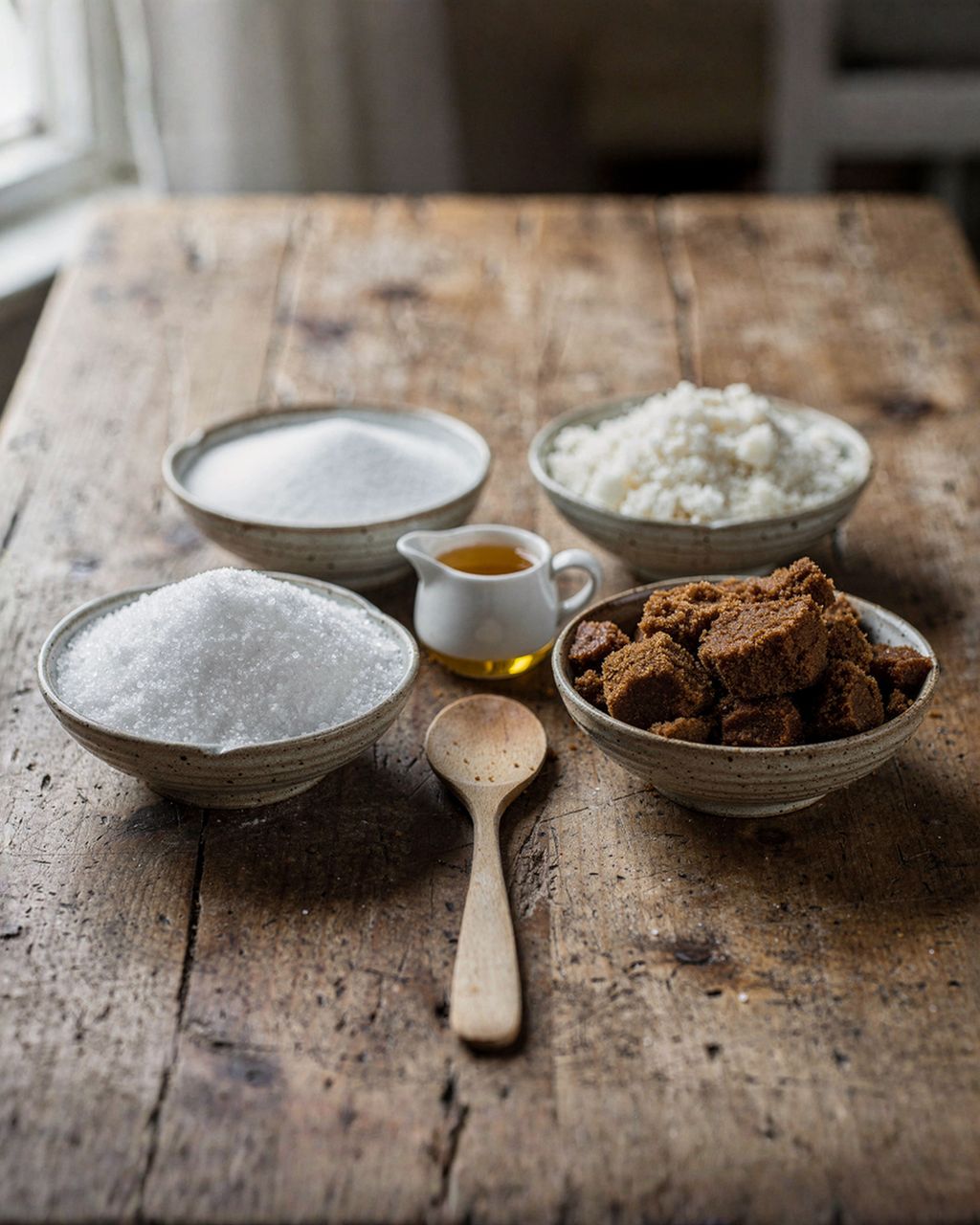
Fine granulated sugar (krupice) is best for creaming. The small crystals have plenty of edges to cut air pockets and dissolve quickly at the same time.
Fine granulated (krupice): ideal for Bundt cakes, muffins and pound cakes. The most volume and the most even crumb.
Coarse crystal sugar (krystal): it works, but takes longer to beat and the coarse crystals may not have time to dissolve. Tiny specks can then remain in the finished batter.
Powdered sugar: the crystals are ground so finely that they don't "cut" the air in, so the creamed mixture is denser and less voluminous. It suits recipes where you want a fine, compact texture – buttercreams and shortbread-style cookies – and is less suited to a light Bundt cake.
Brown (cane) sugar: it is moister and stickier and creams to a smaller volume. It adds a caramel flavor, but expect weaker leavening – feel free to combine it half and half with granulated sugar.
Add vanilla sugar or ground vanilla straight to the sugar so the flavor spreads into the fat – fat carries vanilla flavor best. How much ground vanilla to use in place of a pod is in the article on ground vanilla.
Add the eggs to the creamed butter and sugar one at a time, beat each until fully smooth (about half a minute of beating) and use eggs that aren't ice cold. A cold egg chills the butter instantly, the fat firms up, the emulsion breaks and the creamed mixture curdles into tiny lumps.
Take the eggs out of the fridge 30–60 minutes ahead – or put them in a bowl of water at around 40°C (104°F) for 5–10 minutes. According to the US Food Safety and Inspection Service (USDA FSIS), refrigerated eggs shouldn't stay out of the fridge for more than 2 hours (only 1 hour at 32°C/90°F and above), so don't leave them on the counter overnight.
Crack them into a cup first and add them to the creamed mixture one at a time – with large batches, you can even add just a half-beaten egg at a time.
Beat until the egg is fully combined, and only then add the next one. Scrape down the sides of the bowl in between.
If the mixture starts to curdle, add a spoonful of flour from the amount weighed out for the recipe. The flour binds the loose liquid and the emulsion usually comes back together.
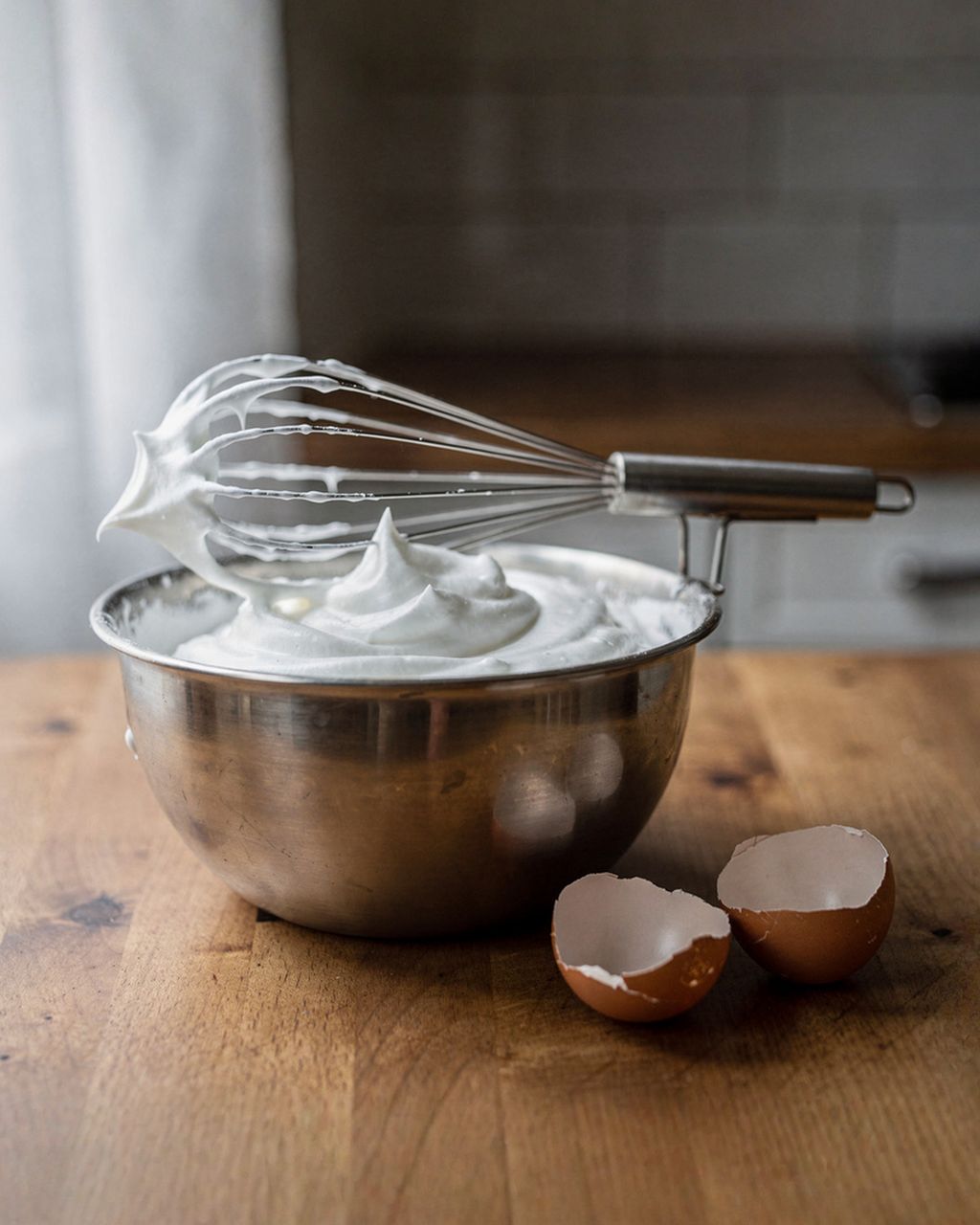
If the recipe calls for the yolks and whites separately, with whipped egg whites (the classic for a Czech creamed Bundt cake), the same applies: add the yolks one at a time to the creamed butter, then fold in the whipped whites at the very end by hand, not with the mixer.
If the batter curdles anyway, it's no disaster – what to do next, step by step, is covered in the guide to curdled batter.
Five mistakes most often spoil a creamed batter: butter warmed until glossy, too-short beating, maximum speed, all the eggs at once and overmixing once the flour goes in.
Butter warmed until glossy. In the microwave it looks soft, but it can't hold air. Cut or grate it instead.
Beating "by eye" for just 30 seconds. A quick stir isn't creaming. Keep beating until the mixture is paler and has volume.
Maximum speed. More speed doesn't mean more air, only warmer butter.
All the eggs at once. The emulsion doesn't stand a chance and the batter curdles.
Overmixing once the flour goes in. Mix the flour in only briefly on the lowest speed or with a spatula, until the white streaks disappear. Long mixing with flour makes the batter dense – and the Bundt cake then won't rise or will bulge, see why a Bundt cake cracks or doesn't rise.
Once you've got these covered, try the technique on a marble Bundt cake with buttermilk and vanilla or an orange Bundt cake with almonds and cardamom.
You can cream butter and sugar with a wooden spoon or a whisk – it just takes longer (expect 10 minutes or more) and the butter should be on the softer side, but still not greasy. First mash the butter on its own against the side of the bowl until smooth, then add the sugar in portions and beat vigorously in one direction until the mixture turns paler and thickens. Working by hand is easiest with granulated sugar and grated butter.
Most often the butter is either too cold or too warm. Cold butter gives a grainy mass with no volume – leave the bowl in a warm kitchen for a while, or briefly warm the outside with a towel soaked in hot water. If the butter is overly soft or the mixture looks greasy and shiny, put it in the fridge for a short while so the fat firms up again, then beat it again. But if the butter has already partly melted, chilling won't help – use fresh butter.
Yes – butter and sugar are always creamed on their own first, and the eggs only go into the finished creamed mixture. Without eggs, it becomes the base for buttercream or shortbread-style cookies; for buttercream, choose powdered sugar, which leaves no grains. Use the egg-free creamed mixture right away, while the butter is still at the right temperature.
Yes, baking fats cream well and often faster, because they are softer and stay pliable across a wider range of temperatures. Just watch out for half-fat and three-quarter-fat margarines and other reduced-fat spreads – they contain a lot of water, can't hold the air and the batter will curdle. No vegetable fat can replace the flavor and aroma of butter, though.
Better not – use the creamed mixture right away. If it sits, the butter either firms up or softens further and the air gradually escapes, so the batter won't rise as much and won't be as light. It's fine to prepare ahead by weighing out the ingredients and letting the butter and eggs soften.
One recipe worth heating the oven for, one tip, and one deal from the shop. Nothing else.