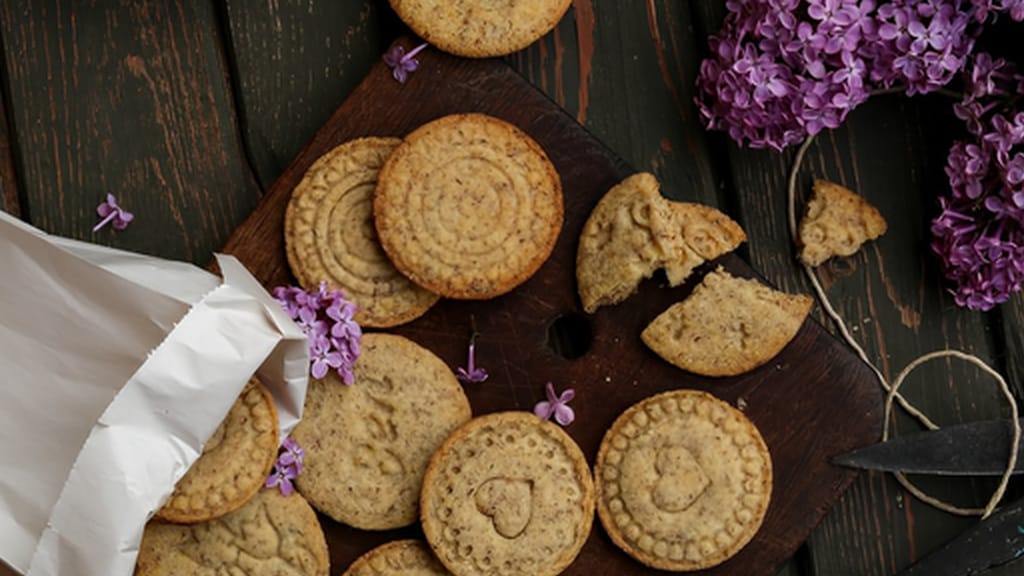
Delicate almond shortbread cookies
Polvorones & Mantecados: Traditional Spanish Christmas Cookies (Recipes & Differences)

Updated Jul 19, 2026
Polvorones and mantecados are traditional Spanish Christmas cookies from Andalusia — crumbly little bites of flour, fat and almonds that quite literally melt away on your tongue. The main difference lies in the ratio of ingredients: mantecados are built on lard, while polvorones add ground almonds and a bit more flour. In this article you'll find out where they come from, exactly how they differ, and how to bake both at home — including the toasted-flour trick that gives them that true sandy, melt-in-the-mouth crumb.
The main difference comes down to the fat-to-flour ratio and the almonds: mantecados use more lard and less flour, while polvorones use more flour and always include ground almonds. In fact, a polvorón is really a type of mantecado — just with almonds added and a slightly longer bake.
Quick comparison:
Fat: mantecados are built on pork lard (manteca = lard, hence the name); polvorones can be made with butter too, but always come with almonds.
Almonds: compulsory in polvorones, optional in mantecados.
Texture: mantecados are denser and more buttery, while polvorones are drier and crumble almost "to dust" (polvo = dust).
Shape: mantecados tend to be round and often topped with sesame seeds or anise; polvorones are oval and heavily coated in icing sugar.
Baking: polvorones bake a little longer, since they have a higher proportion of flour.
Both hail from Andalusia and belong together — you'll find them side by side on any Spanish Christmas table.
Polvorones and mantecados were first baked in the 16th century at the Santa Clara convent in Estepa, in the province of Seville, where cheap flour and pork lard were both in plentiful supply. The nuns put the surplus to good use, and the result was a sweet that's now enjoyed all over Spain.
They didn't become a commercial product until around 1870. According to local tradition, that's thanks to Micaela Ruiz Téllez of Estepa: her baking earned a stellar reputation, and thanks to her husband, who worked as a carrier, "mantecados from Estepa" travelled to other towns and cities. Two Andalusian towns still compete for the claim to have invented them today — Estepa in the province of Seville and Antequera in the province of Málaga.
Genuine mantecados and polvorones from Estepa now carry a Protected Geographical Indication (PGI), which safeguards both their origin and their quality. During the festive season, they remain a symbol of sharing and abundance — wrapped individually in paper, given as gifts, and offered to guests. They belong to the same festive trio as turrón, the Spanish nougat that traditionally appears on the table alongside them.
The key to that authentic sandy crumb is toasted flour (harina tostada) — not more fat, but flour dried out in the oven. Skip this step and you just get ordinary buttery biscuits; do it right, and each bite melts away on your tongue.
How to do it: spread plain flour on a baking tray and toast it at 150°C (300°F) for about 20–30 minutes, stirring every 10 minutes, until it smells lightly nutty and turns a very pale ivory colour. It must not brown. Once toasted, always sift the flour — it tends to clump while drying. And most importantly, let it cool completely.
Why it works: toasting dries out the flour and breaks down its gluten proteins. Without a gluten network to hold the cookie together, you get that classic loose, sandy structure instead of a firm bite.
And the fat? The traditional recipe is built on lard. You can use butter instead, but it contains more water, so the result will be a bit firmer and less "sandy". Whichever you choose, both the fat and the toasted flour need to be cold, and the dough should only be worked until it just holds together when pressed — overworked dough turns tough.
Polvorones are crumbly almond cookies baked at 160°C (320°F) for about 15 minutes and coated in icing sugar once done. The base is toasted flour, ground almonds, fat and sugar. The recipe below uses butter for an easier home version; for the most authentic result, swap it for lard.
250 g plain flour (toasted and cooled – see method)
100 g ground almonds (or almond flour for a finer texture)
150 g butter, at room temperature (or lard for the traditional version)
100 g icing sugar
a pinch of salt
zest of 1 lemon
1 teaspoon vanilla extract
icing sugar for coating the finished cookies
Toast the flour: spread the plain flour on a baking tray and toast at 150°C (300°F) for 20–30 minutes, stirring every 10 minutes, until lightly fragrant and pale ivory in colour. Sift and let cool completely.
Dry ingredients: mix the cooled flour with the ground almonds and a pinch of salt.
Fat and sugar: beat the softened butter (or lard) with the icing sugar until creamy, then add the lemon zest and vanilla.
Combine: gradually fold the dry mixture into the fat mixture, working it only until the dough just holds together. Don't overwork it.
Shape: form balls about 3 cm across and gently flatten them with your palm or a fork.
Bake: bake in a preheated oven at 160°C (320°F) for about 15 minutes, until the edges are lightly golden.
Finish: let cool completely on the tray (they'll crumble if warm), then coat generously in icing sugar.
Want a stronger nutty flavour? Swap some of the flour for almond flour.
The cookies must cool completely before serving — fresh out of the oven they're extremely fragile.
Store in an airtight container and they'll keep for several weeks.
A classic trick: wrap each cookie in a small square of paper and gently press it together inside the wrapper just before eating, to help it hold its shape.
Delicate almond shortbread cookies
Crumbly almond cookies – a simpler almond-based alternative to polvorones you can bake right away
Mantecados are buttery, crumbly Andalusian cookies made with pork lard, baked at 180°C (160°C fan) for about 12–15 minutes. Compared with polvorones, they contain more lard, less flour, and don't need almonds at all — which makes them denser and richer.
250 g plain flour (toasted and cooled – see method under polvorones)
125 g lard, at room temperature
125 g icing sugar
1 teaspoon cinnamon (optional)
a pinch of salt
sesame seeds or anise seeds for topping (optional, in the style of Estepa)
sugar for dusting, to taste
Toast the flour just as for polvorones (150°C/300°F, 20–30 minutes) and let it cool — this is the step that gives mantecados their proper sandy crumb.
Dry ingredients: mix the cooled flour with a pinch of salt and the cinnamon, if using.
Lard: work the lard in with your fingers or a mixer until you get a crumbly mixture.
Sugar: add the icing sugar and mix until the dough holds together when pressed.
Rest: wrap the dough in plastic and chill in the fridge for an hour.
Shape and bake: form patties about 3 cm across, place on a lined baking tray and bake at 180°C (160°C fan) for 12–15 minutes, until the edges are lightly golden. If using sesame seeds, press them onto the top before baking.
Finish: let cool briefly on the tray, then dust with sugar and store in an airtight container.
Both cookies keep for several weeks in an airtight container in a cool, dry place, so feel free to bake them well ahead of Christmas. Traditionally, each one is wrapped in a little square of paper, which holds the cookie together while you eat it and also turns it into a handy gift or treat to offer guests.
In Spain they're served with hot chocolate, coffee or sweet wine. Want to round out your Spanish festive table? Try another classic too — roscón de Reyes for Epiphany. And if you're partial to Czech-style crumbly Christmas biscuits, polvorones will remind you of linecké (linzer cookies).
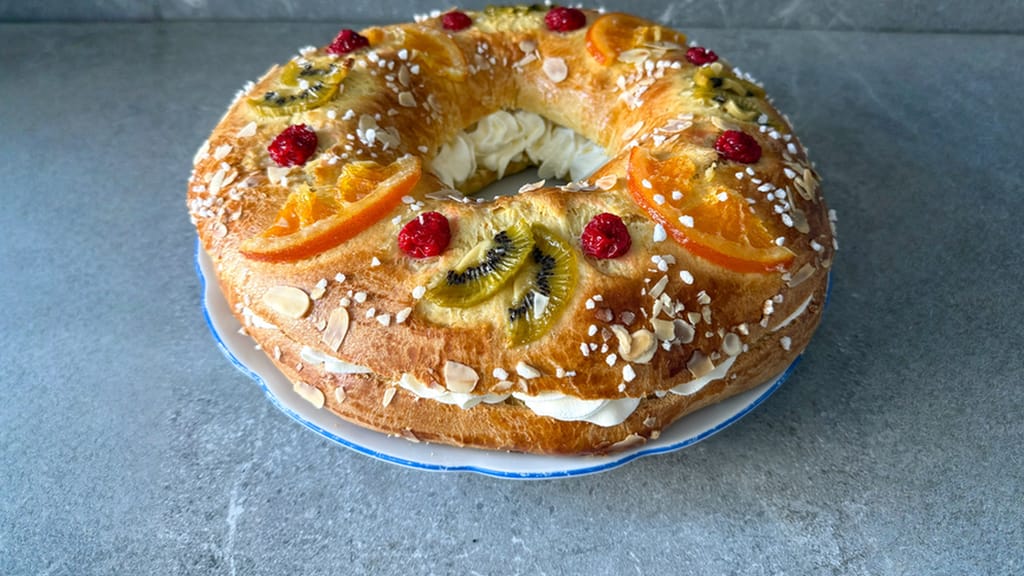
Roscón de reyes: spanish three kings' cake with candied fruit
Roscón de Reyes – the Spanish Epiphany cake, another festive classic to serve alongside polvorones and mantecados
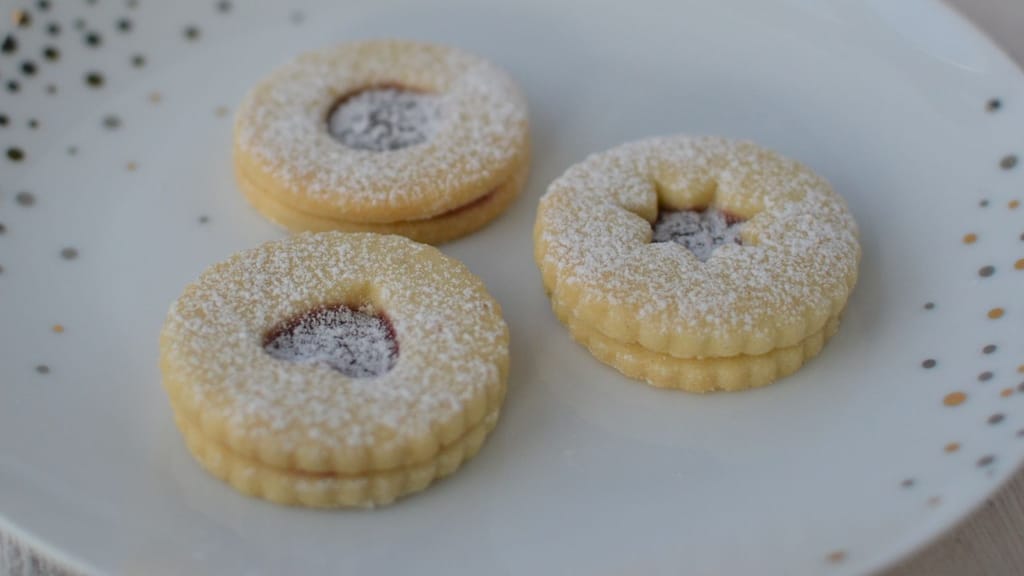
Classic christmas cookies: delicate linzer cookies
Classic crumbly linzer cookies – Czech Christmas biscuits that share that same true melt-in-the-mouth crumb with polvorones
Good-quality butter is the best 1:1 swap for lard in mantecados, though the texture will be a touch firmer and less "sandy", since butter contains more water. For a vegan version, solid plant-based fat (coconut or palm) at room temperature works well; lard gives the traditional flavour, so the result made with it will be softer.
Classic polvorones and mantecados aren't gluten-free — they're based on wheat flour. Gluten-free versions do exist, though, swapping the flour for rice flour or relying entirely on ground almonds; polvorones adapt more easily thanks to their high almond content, whereas mantecados are trickier.
The most common cause is taking the cookies off the tray while they're still hot — crumbly cookies like these need to cool completely on the tray, or they'll fall apart. It also helps to chill the dough before shaping and to avoid overworking it, so it holds together once pressed.
Yes, both freeze well. You can freeze them either as raw shaped balls (then bake straight from frozen, adding a few extra minutes), or fully baked and cooled in an airtight container for up to 3 months; only dust them with icing sugar after they've thawed.
Leave out the almonds and you're really making mantecados rather than polvorones — it's the ground almonds that set polvorones apart and give them their nutty flavour. If you skip them, replace their weight with the same amount of toasted flour (so for the recipe above, add 100 g more flour) and bake a few minutes less; the texture will turn out denser and more buttery. If you just need an allergy-friendly swap, ground sunflower seeds can stand in for the almonds.
One recipe worth heating the oven for, one tip, and one deal from the shop. Nothing else.