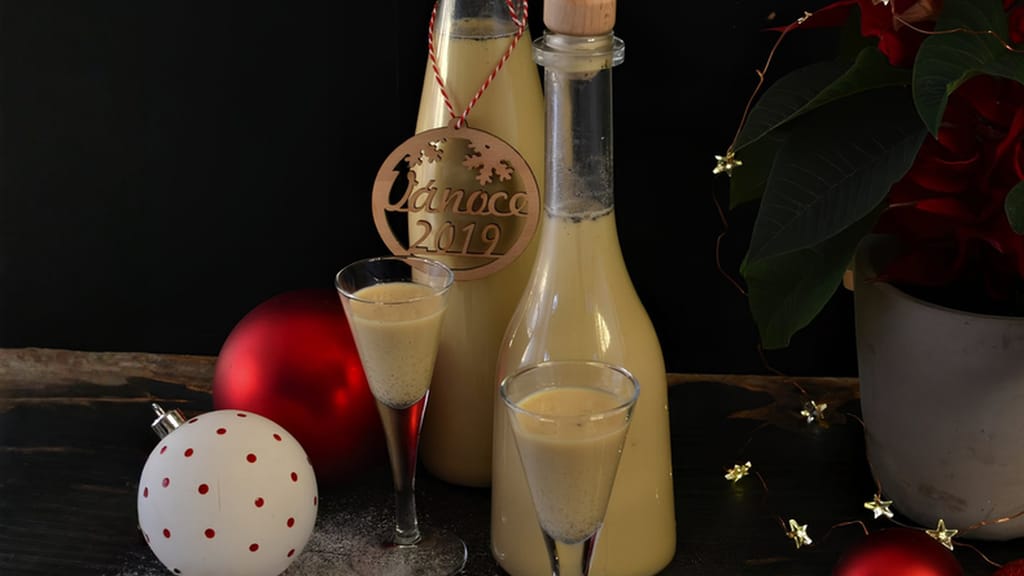
Homemade eggnog – the best christmas drink
How to Make Eggnog Safely: A Salmonella-Free Method
Updated Oct 6, 2026
How do you make eggnog safely? Heat the egg yolks with sugar to 71°C (160°F) while whisking constantly, or simply use pasteurized yolks instead — rum alone won't reliably kill salmonella in eggnog. Homemade eggnog made this way tastes exactly the same as grandma's version with raw yolks: thick, velvety, fragrant with vanilla. The only difference is you can pour it for anyone at the table without quietly hoping the eggs were fine.
Alcohol won't reliably kill salmonella in eggnog — the finished drink only contains around 10–20% alcohol. Rum itself is roughly 40% ABV, but once it's mixed with yolks and milk, that gets diluted well below the level needed. Bacteria are only reliably destroyed at concentrations of around 60–90%, the kind of strength you'd find in hand sanitizer — as US university food-safety extensions point out.
You'll often see a study by microbiologists at Rockefeller University cited: they spiked a very strong eggnog with salmonella and, after three weeks in the fridge, couldn't find any trace of it. But after one day and after a week, the bacteria were still very much present. And that was a single batch under lab conditions, not a proven method you can rely on at home.
The takeaway is simple: eggnog freshly whisked from raw yolks is a risk that alcohol alone won't eliminate. Safety comes from either heat or pasteurized eggs.
You can make eggnog safely in three ways: heating the yolks with sugar over a water bath to 71°C (160°F), cooking the base like a custard (crème anglaise), or starting with pasteurized egg yolks.
Heat yolks and sugar over a water bath to 71°C (160°F) — closest to the classic method using sweetened condensed milk.
Cook the base like a custard — yolks, sugar and milk heated to 75–80°C (167–176°F).
Use pasteurized egg yolks — no cooking needed, just the classic cold method.
The key figure is 71°C (160°F): at this core temperature, food safety guidelines confirm salmonella is reliably destroyed. That's why an instant-read thermometer is worth using — guessing by eye simply isn't accurate enough.
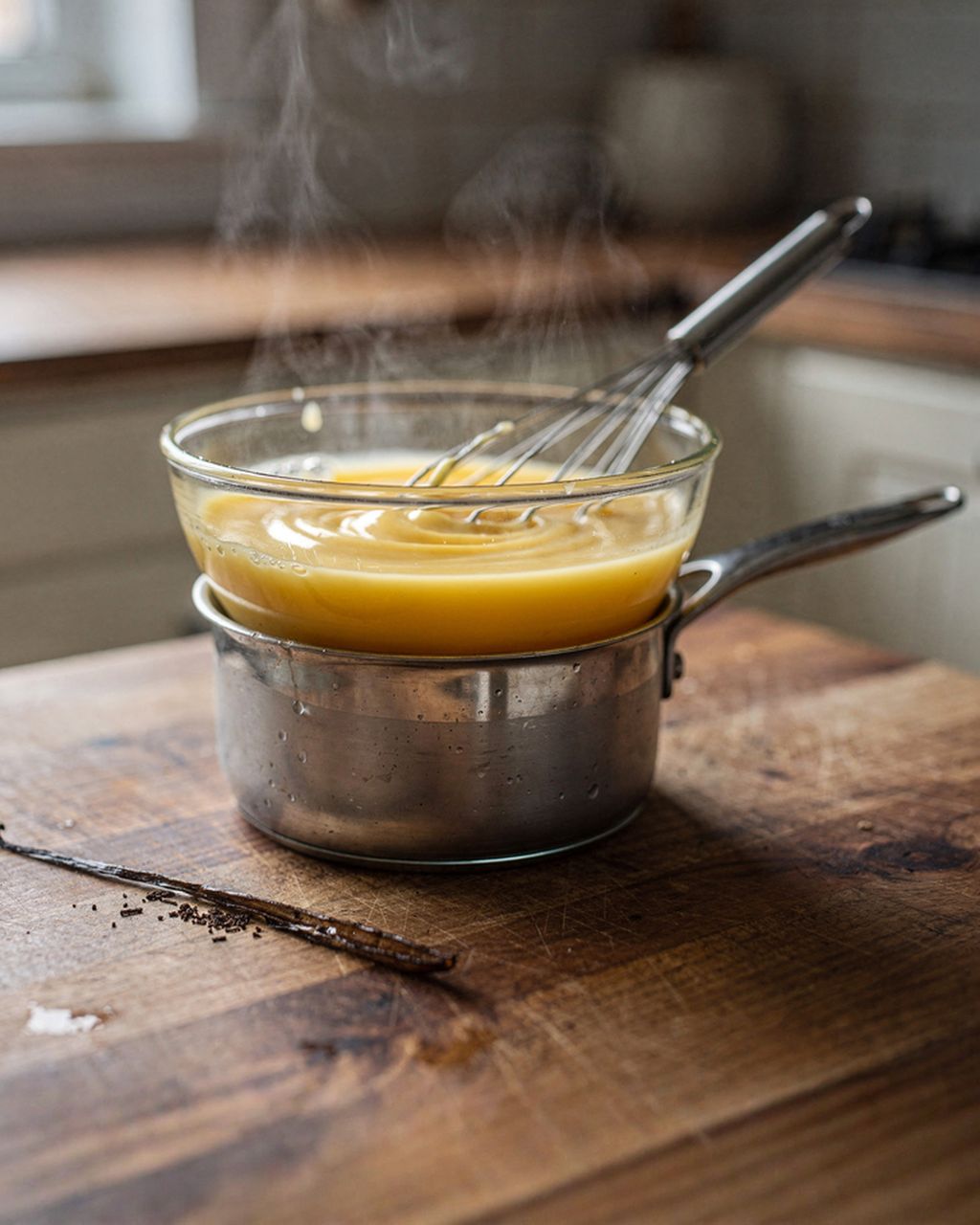
To make eggnog over a water bath, whisk the yolks with sugar over simmering water until they reach 71°C (160°F), then stir in the rum only once the base has cooled. This is the method closest to classic Czech-style eggnog made with sweetened condensed milk.
Pour 2–3 cm (about 1 inch) of water into a saucepan and bring it to a gentle simmer. The water must not touch the bottom of the bowl and shouldn't boil hard — otherwise the yolks at the edges will cook before the rest heats through evenly.
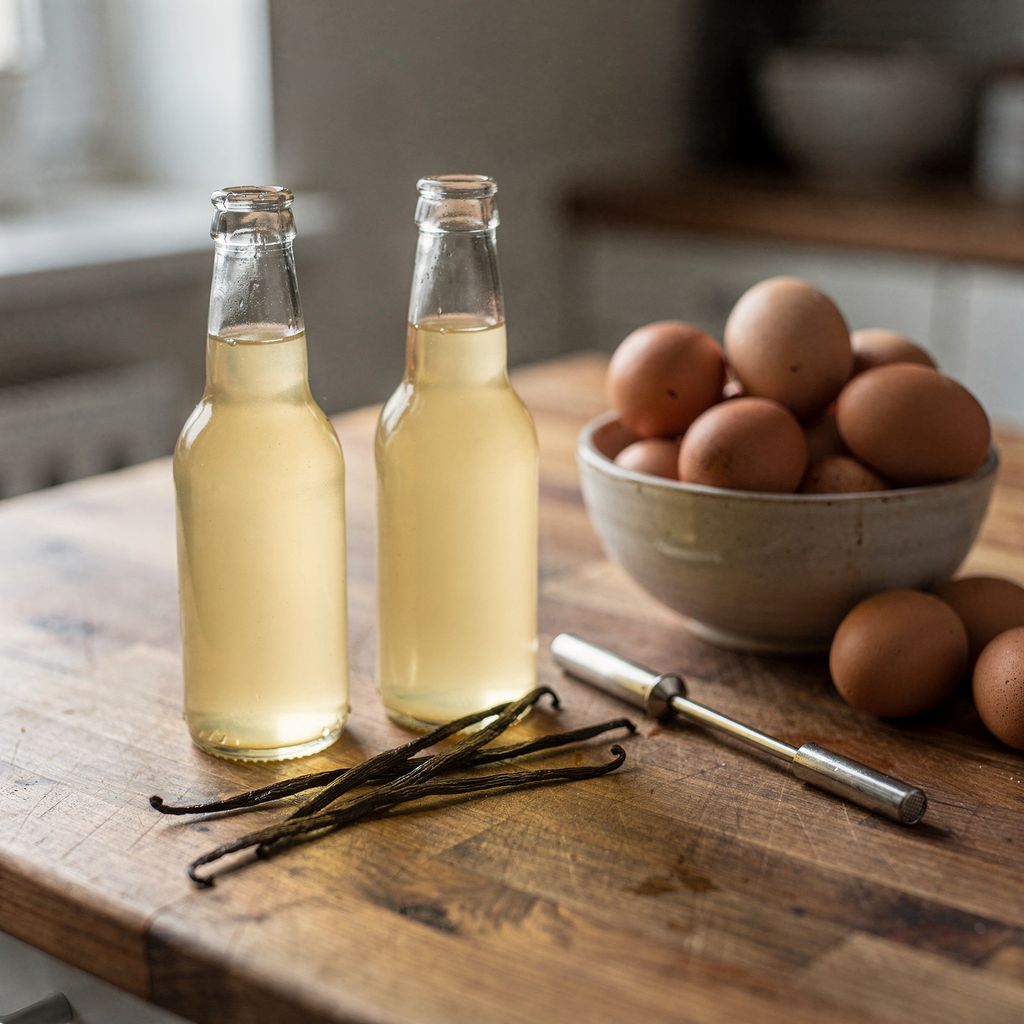
In a metal or glass bowl, whisk the yolks with sugar — for 4–6 yolks, use 80–120 g (about ⅓–½ cup) of sugar (you'll find exact amounts in the recipes below). Sugar isn't just there for sweetness: it coats the proteins and raises the temperature at which the yolks curdle. That's what lets you safely bring them up to 71°C (160°F) without ending up with scrambled eggs.
Set the bowl over the simmering water and whisk constantly, ideally with a hand whisk. The mixture will lighten in color, thicken, and increase in volume.
Check the temperature at the center of the mixture. Once it hits 71°C (160°F), hold it there for 1–2 minutes while still whisking, then remove the bowl from the heat right away.
Set the bowl into a larger bowl of ice water and keep whisking until it cools completely — otherwise residual heat will keep cooking it.
Once the base has cooled, stir in the condensed milk, vanilla, and rum last, adding it gradually.
Never add rum to a warm base: the alcohol will partly evaporate, and the hot mixture can curdle easily when it hits the alcohol.
To make milk-based eggnog, treat it like a custard: heat yolks, sugar, and hot milk together while stirring constantly until it reaches 75–80°C (167–176°F), then add the rum once the base has cooled. Pour whole milk and cream into a saucepan, whisk the yolks with sugar in a separate bowl, gradually stir in the hot milk, then return everything to low heat.
Stir constantly with a wooden spoon or spatula, scraping the bottom of the pan, until the temperature reaches 75–80°C (167–176°F). Above 82–85°C (180–185°F), the yolks will start to curdle into lumps. Strain the finished custard through a sieve into a chilled bowl, let it cool, and only then stir in the rum.
The result is lighter and less sweet than the condensed-milk version — closer to American-style eggnog.
With pasteurized egg yolks, you can make eggnog cold with no cooking at all, since the yolks have already been heat-treated by the manufacturer. You'll find them chilled in cartons (look for "pasteurized egg yolk" on the label), processed in a way that keeps them liquid. With these, you can make eggnog the classic cold way: whisk the yolks with sugar, then stir in condensed milk, vanilla, and rum.
Just watch the quantities: the carton usually states how many grams correspond to one yolk — typically around 18–20 g.
Eggnog curdles when it's heated when the yolks overheat or heat unevenly. The most common causes are:
the water under the bowl is boiling too hard or touching the bowl,
you stop whisking, even briefly,
you pour the hot milk into the yolks all at once instead of gradually,
you add rum while the base is still warm.
Small lumps can often be rescued with an immersion blender and a sieve. For more, check out our article on why eggnog curdles and how to fix curdled eggnog.
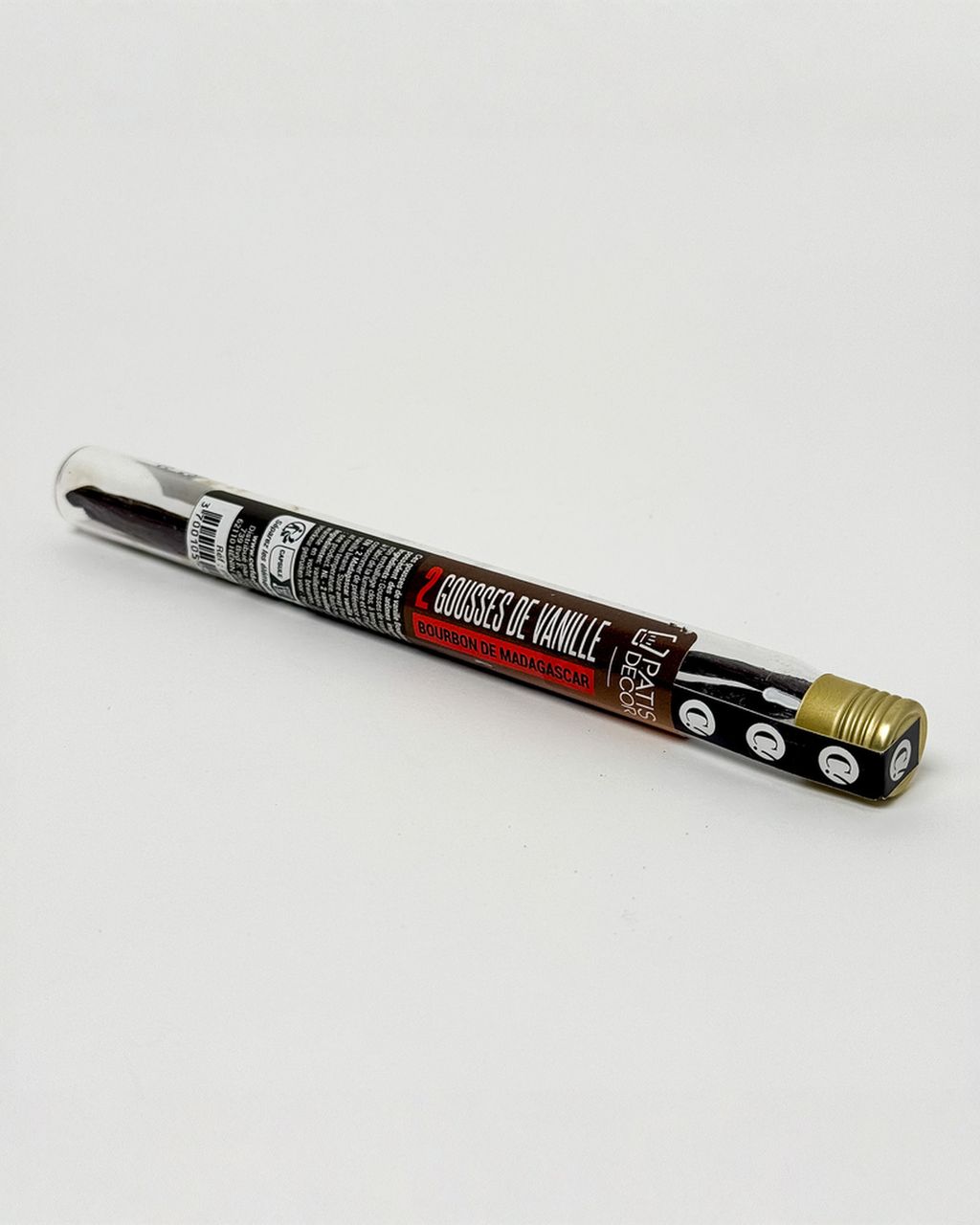
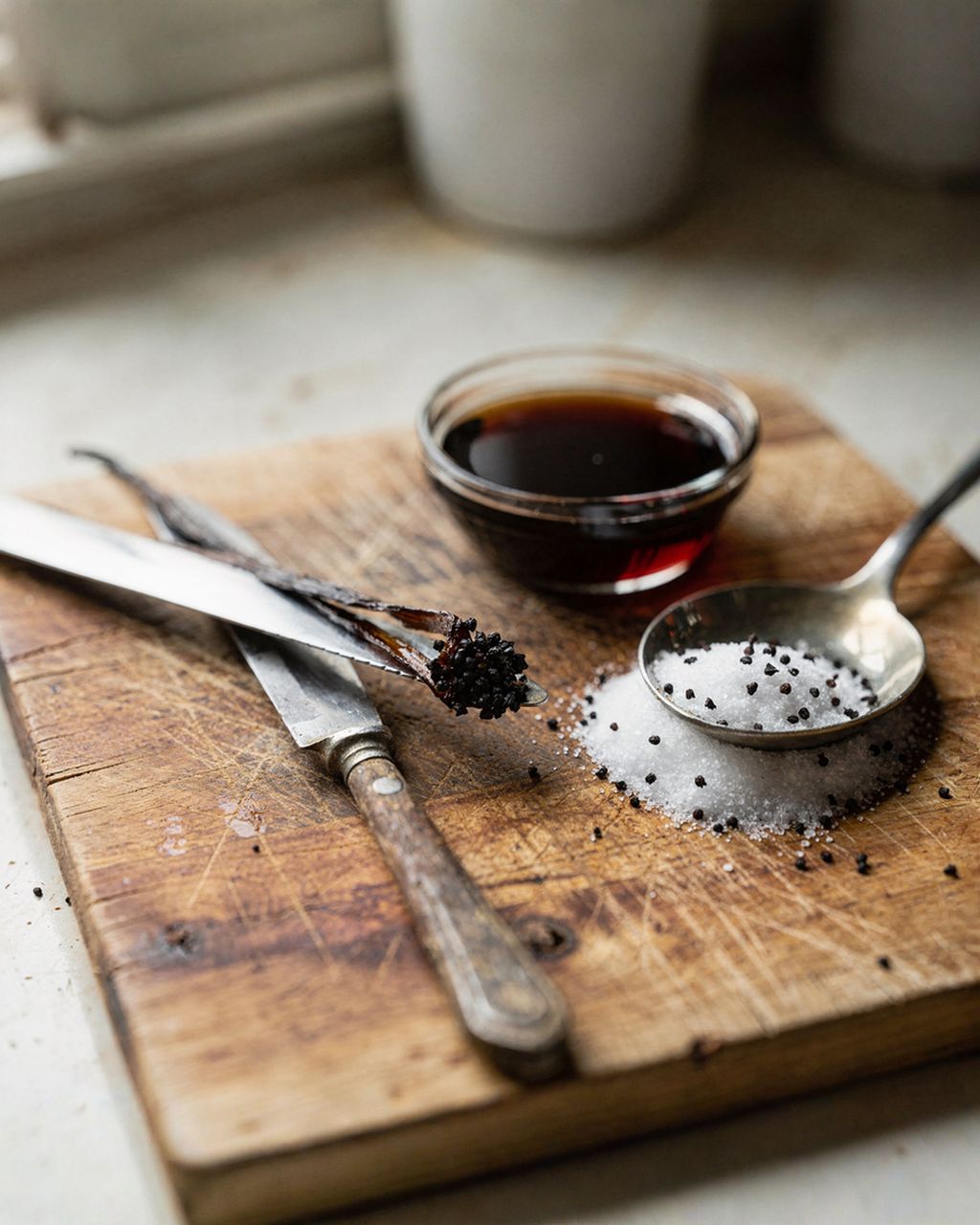
Real vanilla pods are the best choice for eggnog. Slice the pod lengthwise, scrape the seeds into the yolks, and let the empty pod steep in the milk or condensed milk while the eggnog cools. One pod is enough for a batch of roughly 0.7–1 L (about 3–4 cups).
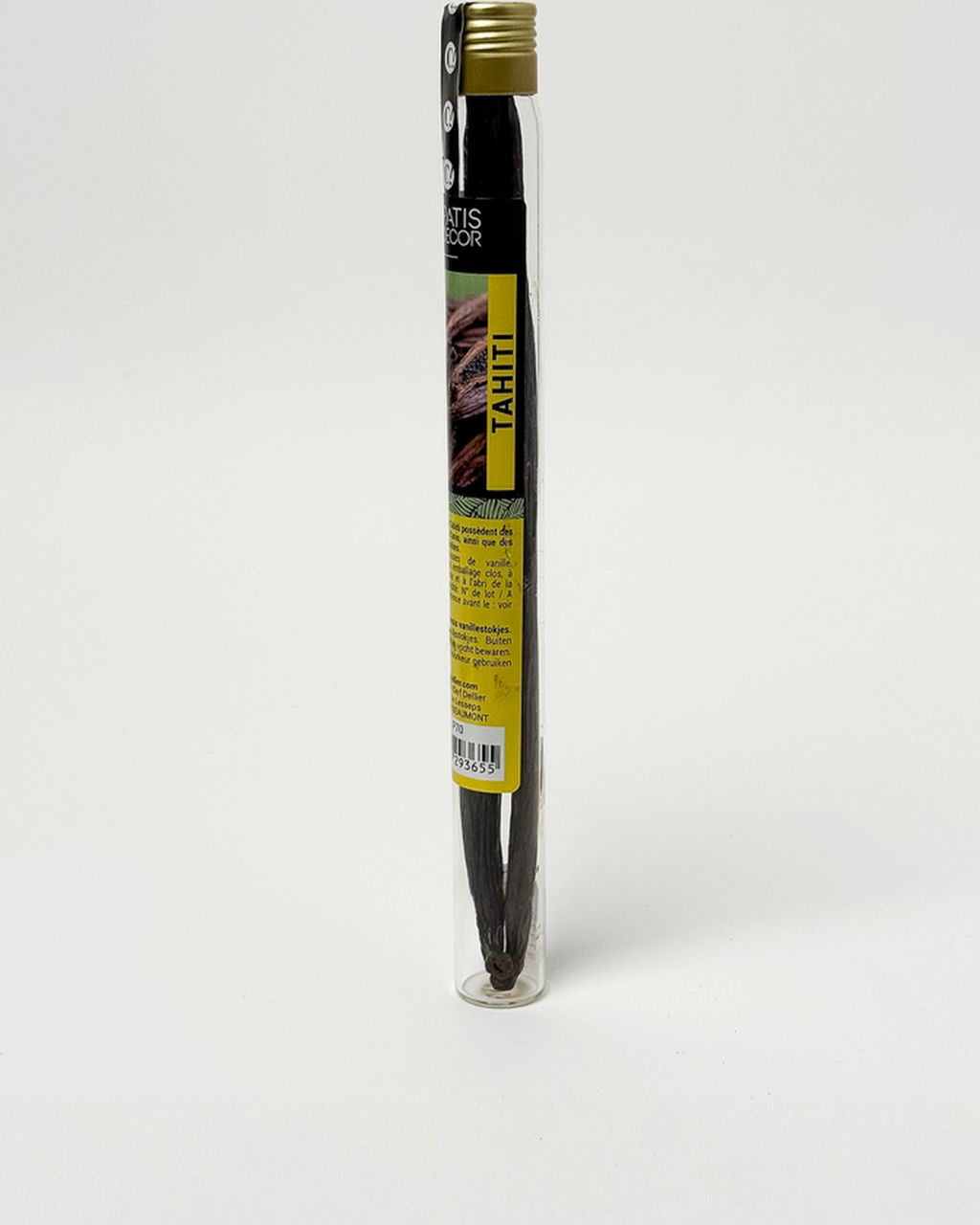
Vanilla does more than add aroma here — it masks the eggy note that can develop during heating. Madagascar bourbon vanilla gives that classic, creamy flavor, while Tahitian vanilla is more floral and fruity. You'll find a selection of pods and other vanilla products among our baking and dessert vanilla picks.
Eggnog traditionally calls for Czech-style "tuzemák" rum or a light rum at 37.5–40% ABV. Tuzemák gives that classic "Christmassy" flavor most Czechs associate with eggnog, while a dark aged rum adds caramel and woody notes. Stronger spirits above 40% ABV are more likely to curdle the thick base, so add them carefully.
The ratio is really down to taste — a common rule of thumb is 200–300 ml of rum per 4–6 yolks and one can of condensed milk. If you want a lower-alcohol version for drivers, or a completely alcohol-free one, check out our article on what to use instead of rum in eggnog.
Classic Czech eggnog is made with egg yolks, sugar, sweetened condensed milk, and tuzemák rum — you'll find two tried-and-tested recipes below. If a recipe calls for raw yolks, use one of the safe methods above instead — the flavor stays exactly the same.
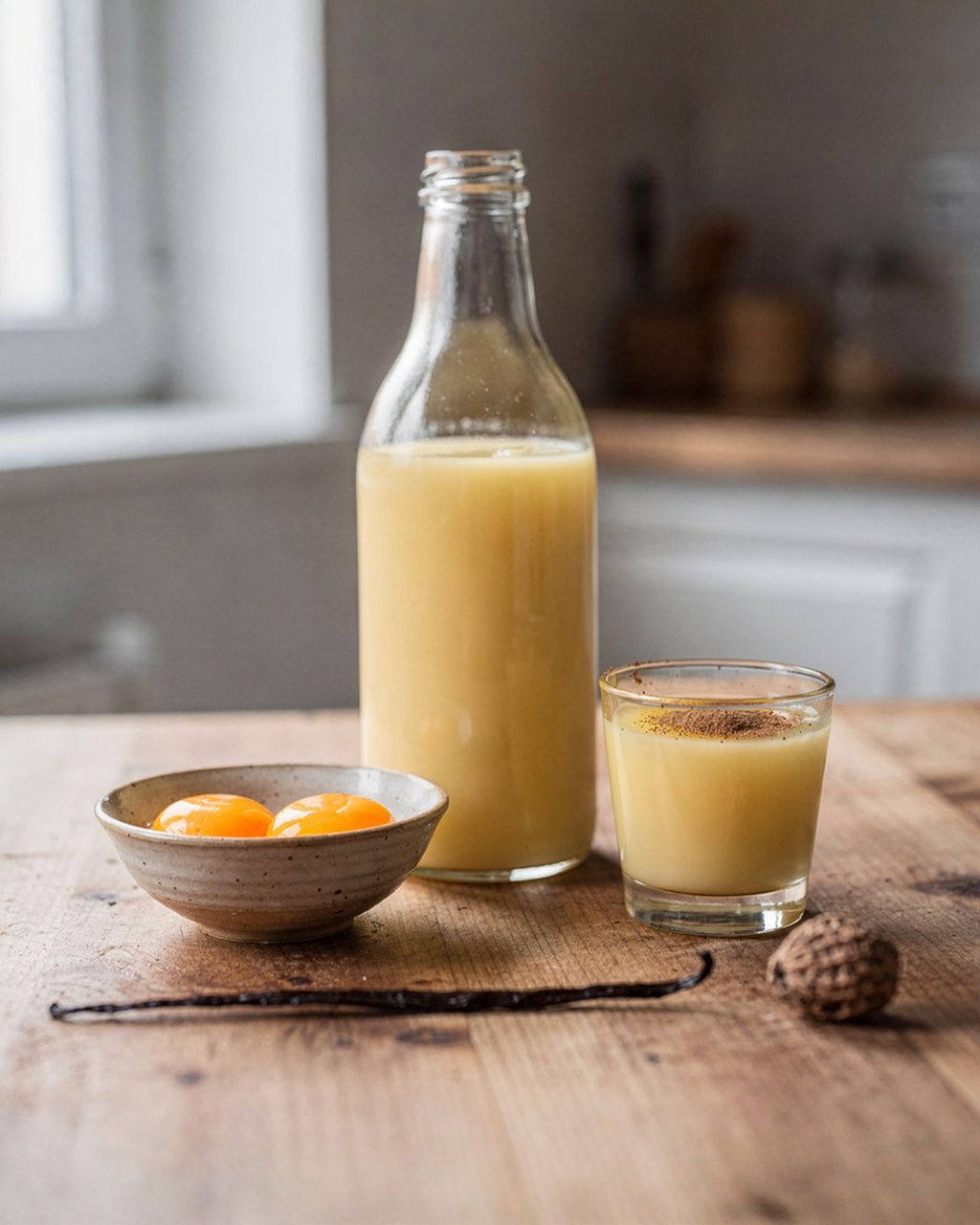
Homemade eggnog – the best christmas drink
Eggnog with condensed milk and tuzemák rum — heat the yolks from the recipe with sugar to 71°C (160°F) first, or use pasteurized yolks
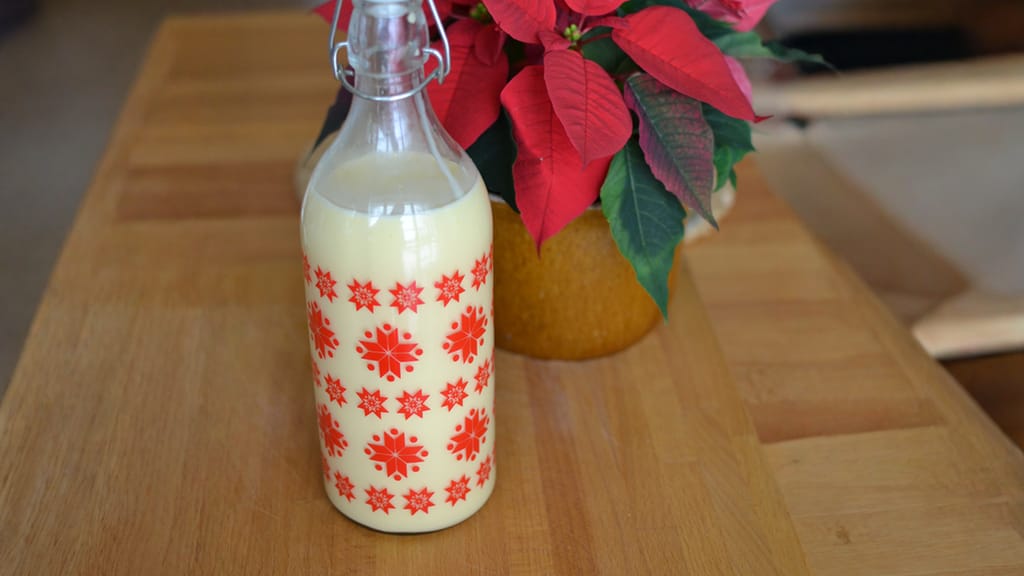
Sandtner's homemade eggnog liqueur
Sandtner's Eggnog — a classic recipe
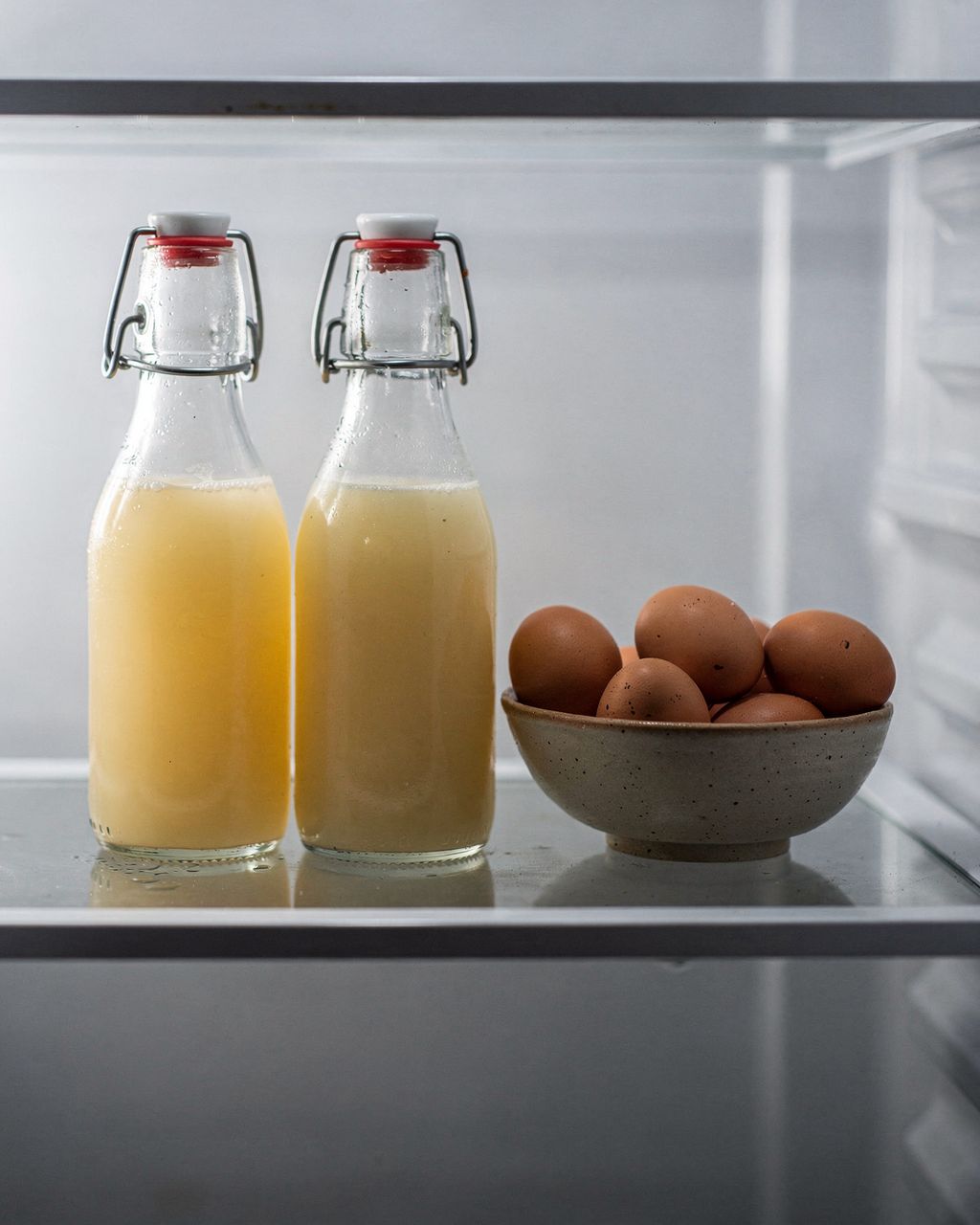
Store homemade eggnog in the fridge (below 4°C/39°F) in a clean, sealed bottle and drink it within 2–4 days — that's what food safety authorities recommend. Don't count on the alcohol to extend its shelf life. Give it a good shake before each pour, and if it turns sour, smells off, or separates permanently, throw it out.
You can, but the eggnog will be thinner and less velvety — egg white is mostly water and won't add any richness. The classic recipe calls for yolks only; you can use the leftover whites for meringues or [walnut egg white bread](/cs/recipes/bilkovy-chlebicek-s-orisky--425dc04d-fe67-4e6e-8f68-b5536a0ae345). Whole eggs also need to be heated to 71°C (160°F), or you can use pasteurized ones.
Homemade eggnog usually contains roughly 10–20% alcohol, depending on how much rum you add. With a typical ratio of around 250 ml of 40%-ABV rum to 4–6 yolks and a can of condensed milk, you end up with about 15% ABV.
Eggnog usually tastes eggy because it's been overheated — overheated egg mixture develops a distinct 'cooked egg' flavor. Keep an eye on the temperature with a thermometer, whisk without stopping, and finish the eggnog with real vanilla, which helps mask any lingering eggy notes.
Sweetened condensed milk gives eggnog its thickness, sweetness, and caramel notes all at once, without watering it down. It's also already heat-treated, so it doesn't add any extra risk to the safe preparation method.
One recipe worth heating the oven for, one tip, and one deal from the shop. Nothing else.