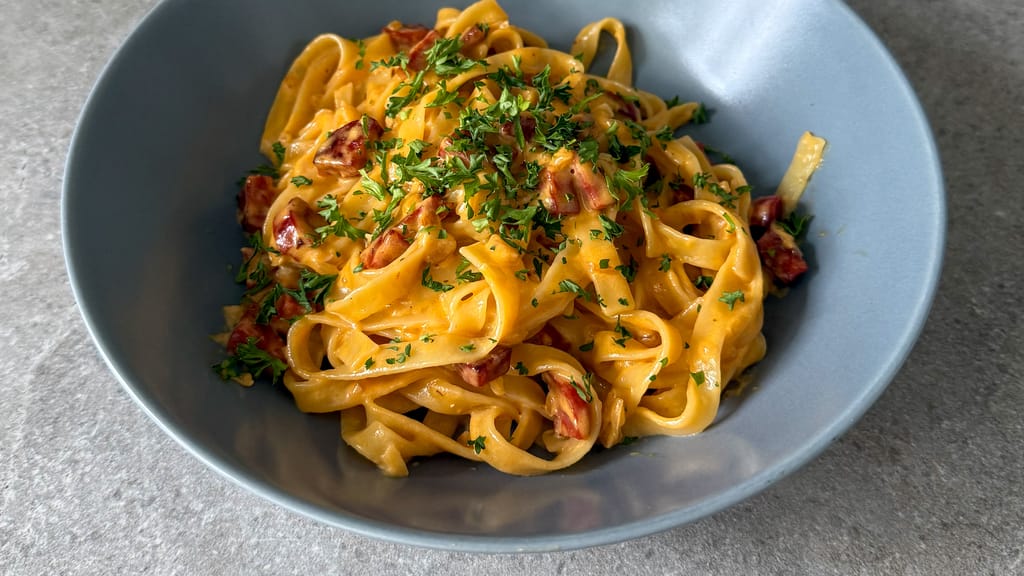
Creamy chorizo tagliatelle with parmesan
What to Cook With Sausage and Chorizo: Pasta, Omelet, Quesadilla, Risotto and Hot Dogs
Updated Nov 24, 2026
What can you cook with sausage when you have some in the fridge and don't just want to heat it up? The fastest options are chorizo pasta, an omelet in a quarter of an hour, or a quesadilla with potatoes. With more time, make risotto or gnocchi with salsiccia, a grilled hot dog, or Swiss papet with leeks. What matters most is which sausage you have: dry-cured chorizo needs only a quick sear, while raw sausage has to be cooked through to the center.
Within half an hour you can make pasta, an omelet or a quesadilla from sausage. With a little more time, make risotto, gnocchi, a hot dog or Swiss papet with leeks and potatoes. Here is the full selection, with times from the recipes:
creamy chorizo tagliatelle with Parmesan, 36 minutes
quick chorizo pasta with sun-dried tomatoes, 26 minutes
chorizo omelet with shallot and Gouda, 14 minutes
Mexican quesadilla with chorizo and potatoes, 31 minutes
risotto with salsiccia and Gran Moravia cheese, 67 minutes
gnocchi with salsiccia, spaghetti squash and sage, 80 minutes
sausage hot dog with mustard mayonnaise, sausages marinate the day before
papet vaudois, cabbage sausage with leeks and potatoes, 105 minutes
One rule applies to all of them: here the sausage is a seasoning, not just meat. You slice it and brown it, it releases its fat, and that fat flavors everything else in the pan, whether onion, cream, rice or potatoes. That's why you need so little. The omelet for one uses 20 g of chorizo, and the tagliatelle for two use 150 g.
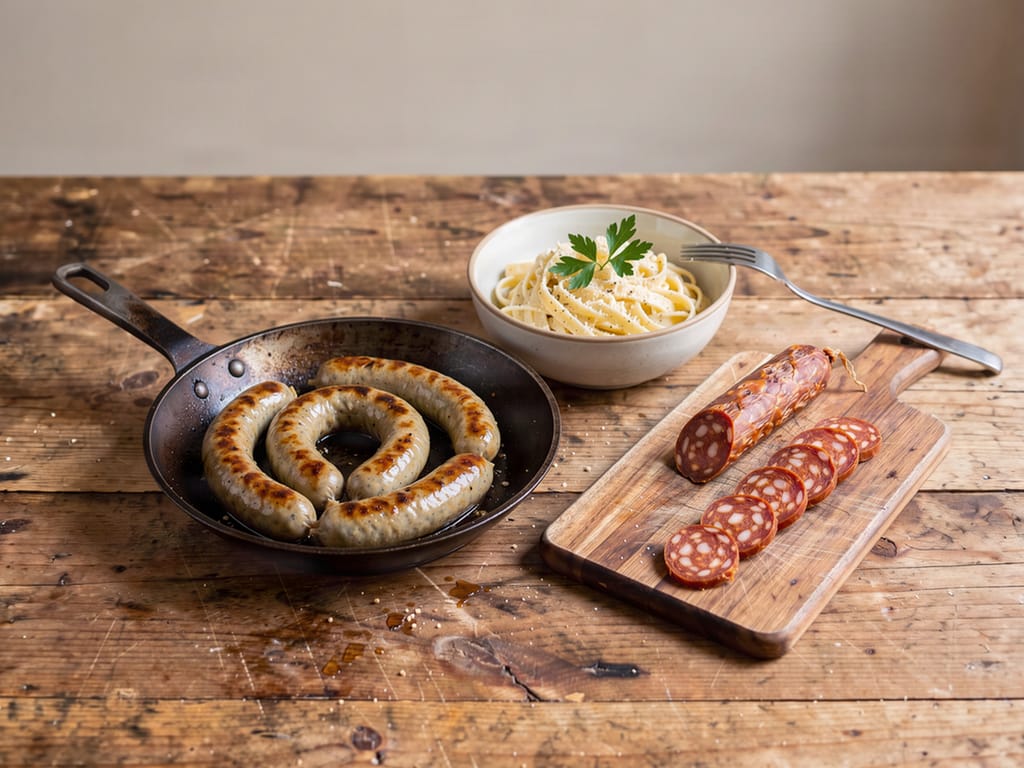
In the kitchen, sausages fall into three types: dry-cured (chorizo, ready to eat), smoked (Moravian sausage, just needs warming through) and raw (salsiccia, wine sausage, Mexican chorizo, which must be cooked to the center). The type decides how long you cook the sausage.
Dry-cured (aged) chorizo is ready to eat as you buy it. Spanish chorizo is a pork sausage with paprika that needs no cooking after weeks of curing. You fry it only to release its red, paprika-scented fat. A moment is enough, and longer makes it tough.
Smoked sausage, such as Moravian sausage, is usually already cooked. You only need to warm it through or fry it until crisp. How to do that without it splitting is covered in our article on how to reheat frankfurters, sausage and špekáčky.
Raw (fresh) sausage, which includes Italian salsiccia, wine sausage, Mexican chorizo and many butcher's sausages, is essentially ground meat in a casing. It has to be cooked all the way through.
If you're not sure, read the packaging. Producers of raw sausages state on it that the product is intended for cooking. If there's no such note and the sausage is firm, dry and can be sliced thinly, it is a dry-cured type.
Creamy chorizo tagliatelle is pasta in a Parmesan cream sauce, ready in 36 minutes for two. In the recipe for creamy chorizo tagliatelle with Parmesan, you first fry the chorizo until golden and its fat runs out, then soften an onion in that fat, and pouring in cream makes a sauce that the noodles go into straight from the pot.
Why it works: the chorizo fat carries the paprika flavor and the cream spreads it over every noodle. That's why the chorizo is browned first and nothing is rushed. If you toss it into the cream underdone, the sauce stays pale and bland.
Creamy chorizo tagliatelle with parmesan
Creamy chorizo tagliatelle with Parmesan: chorizo and cream pasta in 36 minutes
Chorizo pasta with sun-dried tomatoes is a creamy version for three, ready in 26 minutes. In quick chorizo pasta with sun-dried tomatoes, the chorizo is cut into thin half-rounds and sautéed to render its fat, then cream is poured in along with the tomatoes.
Why it works: sun-dried tomatoes are a tangy, sweet counterweight to the fatty sausage, so you don't need to season with anything else. Thin half-rounds brown quickly and evenly, so no piece turns rubbery.
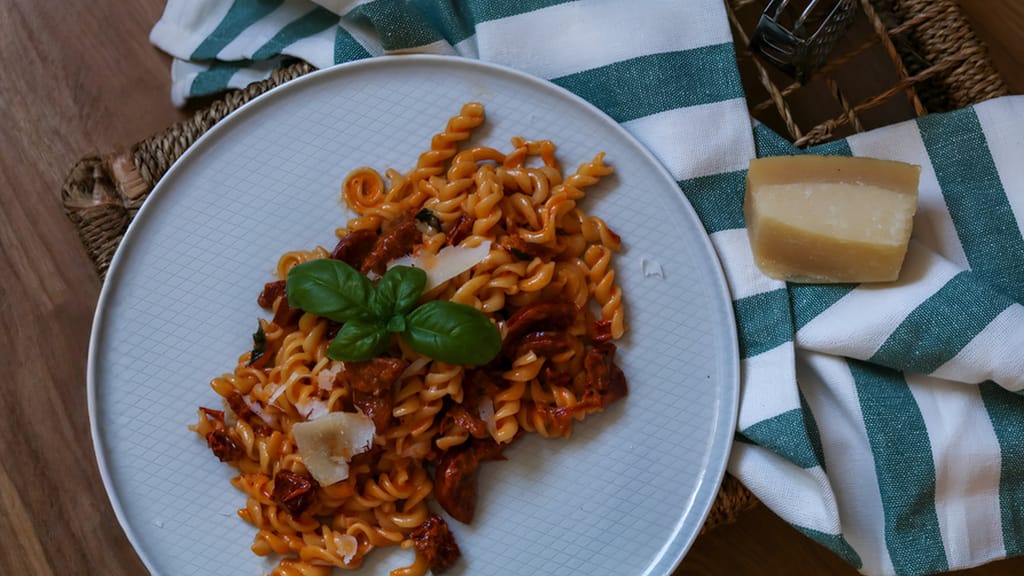
Quick chorizo and sun-dried tomato pasta
Quick chorizo pasta with sun-dried tomatoes: creamy chorizo sauce in 26 minutes
A chorizo omelet is a breakfast for one in 14 minutes, and it needs only 20 g of chorizo. The chorizo omelet relies on shallot fried with the chorizo, eggs whisked with cream and Gouda on top. The key trick: use a spatula to push the set edges toward the center and tilt the pan so the liquid egg runs into the free space.
Why it works: the cream softens the eggs, and pushing the edges in creates soft layers instead of one firm disk. Add the chorizo to the pan only once the shallot is softened and foamy. If it fried alone for long, it would turn hard.
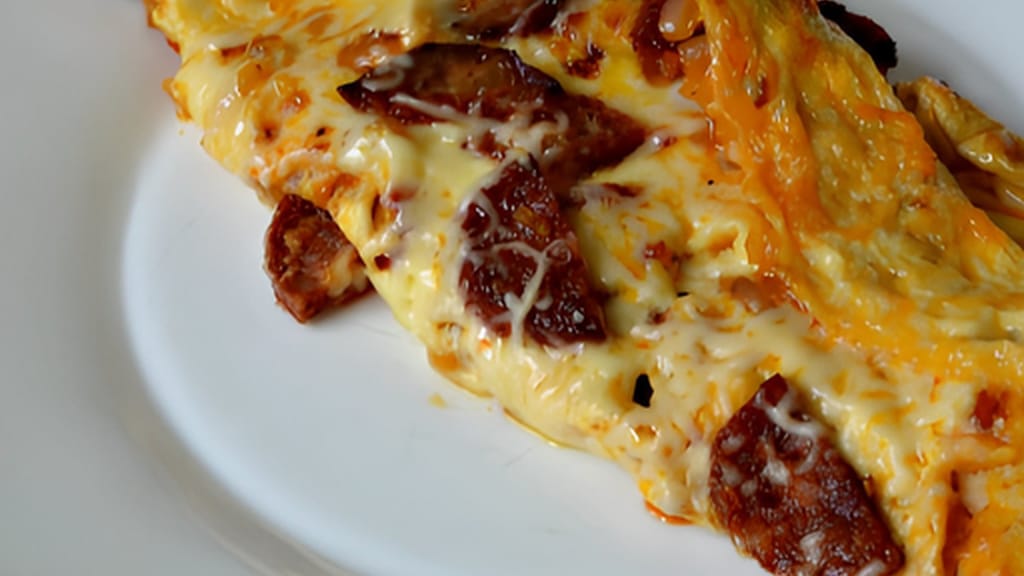
Chorizo omelette
Chorizo omelet with shallot and Gouda: a quick chorizo breakfast in 14 minutes
A chorizo and potato quesadilla is a tortilla with Gouda and a spicy potato filling, serving two in 31 minutes. In the Mexican quesadilla with chorizo and potatoes, dry-cured chorizo is fried for only about a minute to release its red fat, then mashed with cooked potatoes into a single filling. The recipe specifically warns that any longer and the chorizo would turn hard.
Why it works: starchy potatoes are used on purpose. They mash into a creamy mixture that soaks up the red fat and holds the filling together, whereas waxy potatoes would crumble.
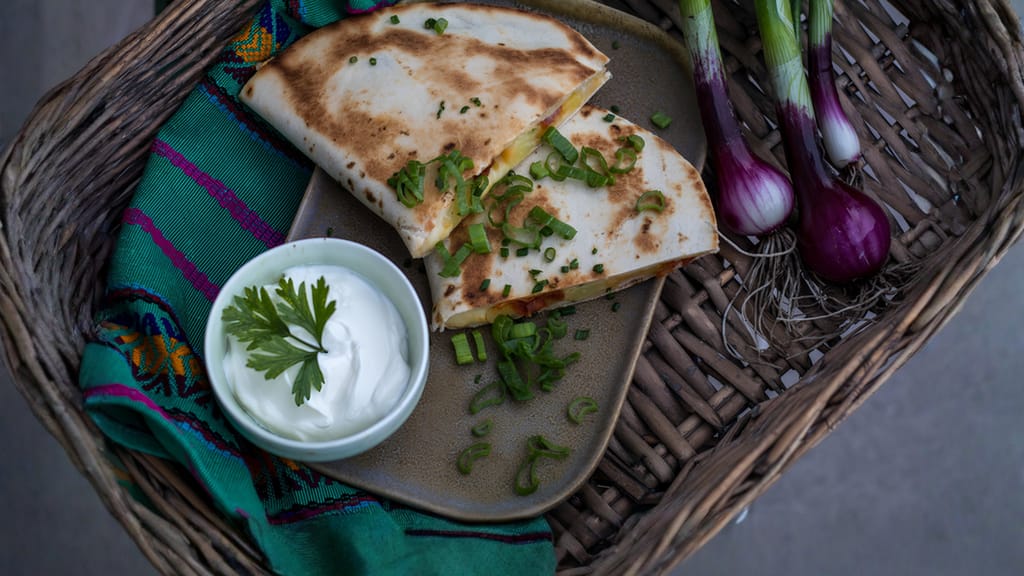
Mexican quesadilla with chorizo and potatoes
Mexican quesadilla with chorizo and potatoes: tortilla with Gouda and a spicy potato filling
Risotto with salsiccia is the best place for raw Italian sausage, because it has time to cook through safely. Italian risotto with salsiccia and Gran Moravia cheese is a classic arborio risotto moistened with wine and hot stock, serving four in 67 minutes. The recipe stirs one salsiccia straight into the rice and fries the other separately in slices until crisp.
Why it works: the pieces cooked in the rice release flavor into the whole pot, while the fried slices add crunch and a deeper browned flavor.
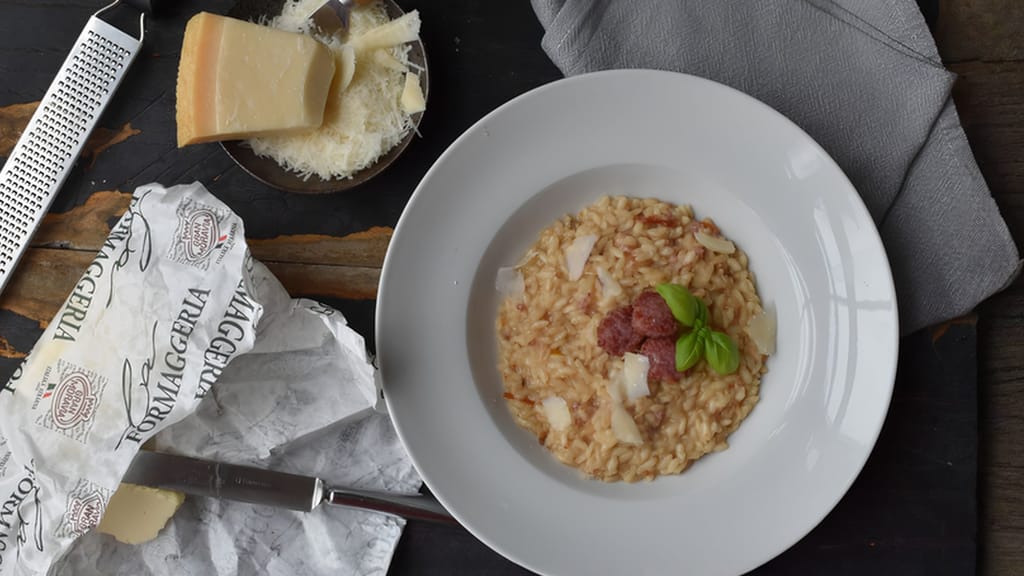
Italian risotto with salsiccia and gran moravia cheese
Italian risotto with salsiccia and Gran Moravia cheese: risotto with Italian sausage for four
Gnocchi with salsiccia is an autumn plate in which the sausage serves as the sauce. In the recipe for gnocchi with spaghetti squash, sage and Italian salsiccia, the salsiccia is squeezed out of its casing in pieces straight into a pan with shallot and sage, then combined with seared gnocchi and roasted squash. It takes 80 minutes for four servings, but most of that is the squash roasting, and you don't have to do anything.
Why it works: small squeezed-out pieces of meat brown on all sides and cook through much faster than a whole sausage.
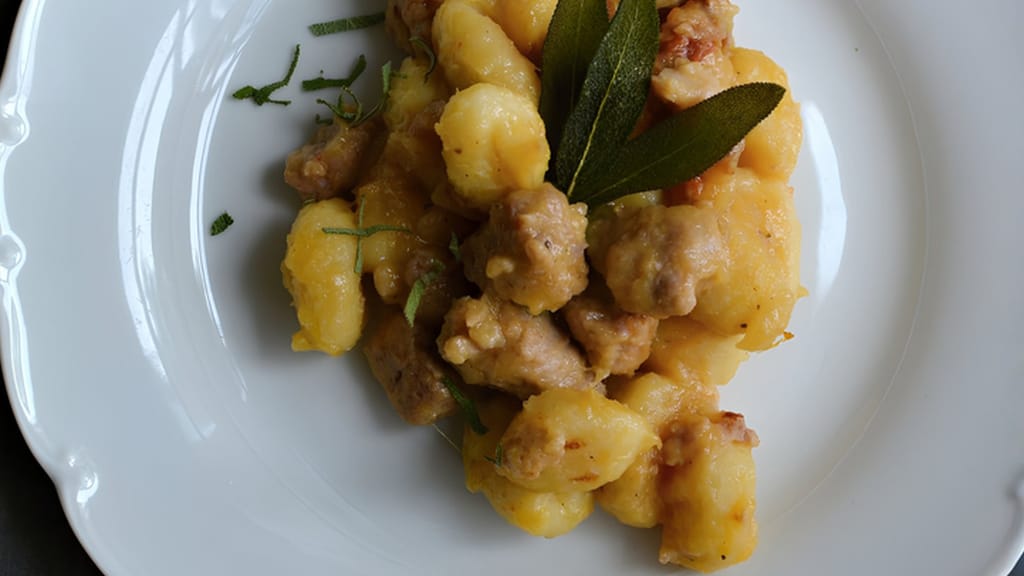
Gnocchi with spaghetti squash, sage and italian salsiccia
Gnocchi with salsiccia, spaghetti squash and sage: an autumn dish with Italian sausage
A sausage hot dog is grilled salsiccia in a bun with caramelized onion and mustard mayonnaise. Compared with a frankfurter in a roll, it has coarsely ground, seasoned meat and a casing that crisps on the grill. The sausage hot dog with mustard mayonnaise marinates the salsiccias in grill seasoning and oil the day before and slowly cooks the onion in lard until caramelized.
Why it works: the sausages are grilled over medium heat, because raw sausage over high heat blackens outside before it cooks through inside. For more American classics, from mac and cheese to ribs, see our article on American food at home.
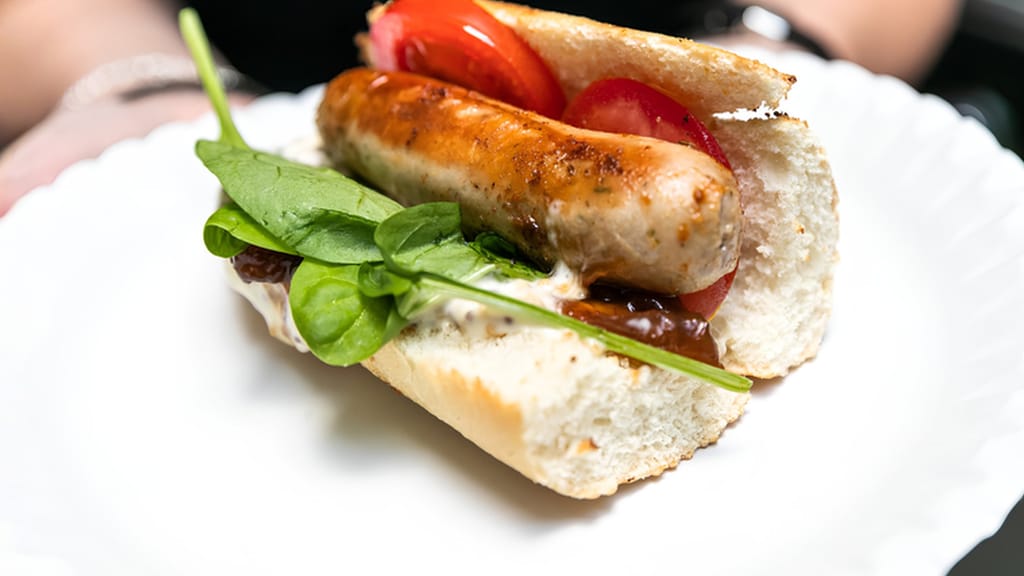
Hot dog with sausage and mustard mayo
Sausage hot dog with mustard mayonnaise: grilled salsiccia with caramelized onion
Papet vaudois is a Swiss dish from the canton of Vaud, in which the sausage is warmed right on a thick leek and potato base. In the recipe for Papet Vaudois: Swiss cabbage sausage with leeks and potatoes, leeks and potatoes are stewed in white wine, some of the potatoes are mashed, and a cabbage sausage pricked with a toothpick is laid on top. For two, count on 105 minutes. It's a Sunday dish, not a quick weeknight dinner.
Why it works: the pricked sausage releases its juices into the potatoes, so the wine, leek and sausage merge into one smooth flavor.
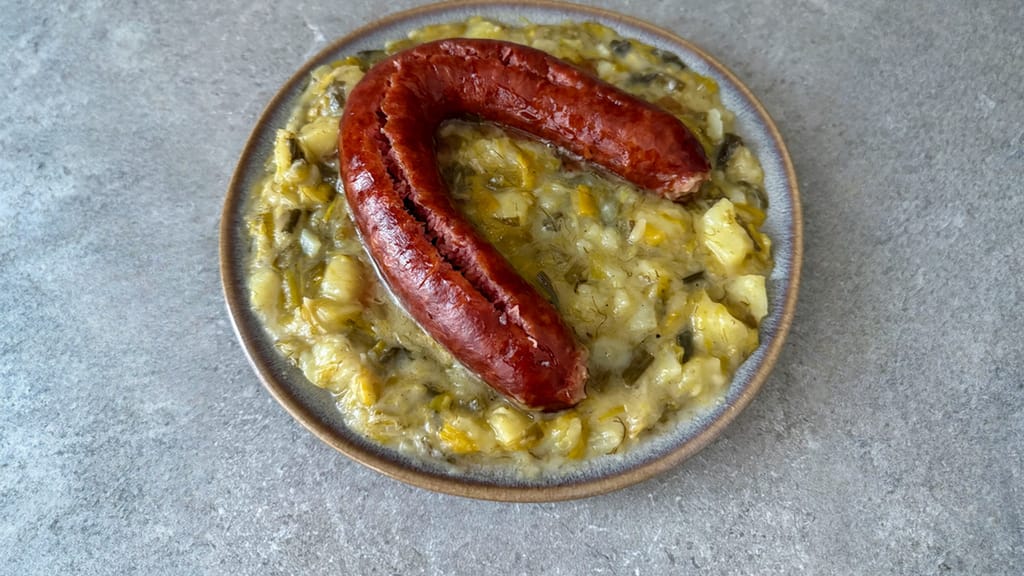
Papet vaudois: swiss cabbage sausage with leeks and potatoes
Papet vaudois: Swiss cabbage sausage with leeks and potatoes for Sunday lunch
We send seasonal cooking and baking plans and recipes made from everyday ingredients. Unsubscribe in one click.
Cook wine sausage whole and serve it with mashed potatoes or sour lentils, or squeeze the meat out and use it in pasta in place of salsiccia. In short:
wine sausage with mashed potatoes
wine sausage with sour lentils
squeezed-out wine sausage instead of salsiccia
Wine sausage (vinná klobása) is a raw sausage of finely ground meat, most often pork, which producers flavor with wine, spices and often soaked bread roll. Some contain beef, and there are turkey versions too. The packaging usually says that it must be cooked and used soon. Cook it over medium heat and covered toward the end: over high heat the thin casing splits and the juices run out. It's done when a thermometer in the center reads 71°C (160°F). The fine, juicy, slightly sweet meat shows at its best with something sour or creamy that soaks up its juices.
Creamy mash is the ideal bed for a juicy sausage, because it soaks up the pan juices. It goes well with smooth, creamy mashed potatoes with nutmeg made from red potatoes, butter, milk and cream. Lay the cooked sausage on top and spoon the pan juices over it.
You'll find more classic sides, from sauerkraut to lokše, in our article on side dishes for meat and holiday roasts. Braised sauerkraut goes especially well with sausage, as its acidity pleasantly lightens the fatty meat.
Sour lentils and fried sausage are a Czech pairing for autumn and winter. The recipe for sour lentils with a fried egg seasons brown lentils with sour cream and vinegar and serves them with fried onion and a fried egg. Instead of the egg, or alongside it, add a fried wine sausage. The sour lentils suit it as well as a pickle suits smoked meat.
Like salsiccia, wine sausage is raw ground meat in a casing, so you can use it in a similar way. Squeeze the meat out of the casing in pieces into a pan, brown it and carry on as you would with a pasta ragù. The flavor will be milder and less spiced than Italian sausage, so taste it and add pepper or herbs if needed.
Sausage gives the most flavor when it is cooked slowly, starting in a cold or medium-hot pan. The fat renders gradually, and the meat doesn't burn before it releases it. A few rules that apply across recipes:
Slice dry-cured chorizo into thin rounds or small cubes and fry briefly, about a minute or two, until it starts to release red fat. Don't cook it further, as it turns tough and bitter.
For a sauce, squeeze raw sausage out of its casing in pieces. Small pieces brown on all sides and cook through faster.
Cook whole raw sausage over medium heat and turn it. High heat burns the surface and splits the casing.
Don't pour away the fat from the pan. It's the most fragrant part of the dish. Fry the onion, shallot or garlic in it before adding liquid.
Add salt only after tasting. Sausage is salty on its own, and the sauce absorbs plenty from it.
If you want a milder sauce, spoon off some of the fat and leave in the pan only as much as you need to brown the onion.
Sausage is best balanced by something sour, sweet or creamy: pickles, mustard, sun-dried tomatoes, squash, leek, cream, potatoes. Acidity and sweetness lighten the richness, and creamy sides soak up the juices.
Sour: pickles, mustard, sauerkraut, sun-dried tomatoes, vinegar in lentils.
Sweet: caramelized onion, roasted squash, braised leek.
Creamy: cream, Parmesan, melted Gouda, mashed potatoes.
Herbs: parsley with chorizo, sage with salsiccia, basil with tomatoes.
How much sausage to use? Going by the recipes above, it varies with the role it plays. As a seasoning in an omelet, 20 g per person is enough. In pasta, count roughly 75 g per person (150 g for two in the tagliatelle). As the main ingredient in gnocchi, about 110 g per person (450 g for four). For the hot dog and papet, it's one whole sausage per serving.
Bacon works much like sausage in the kitchen: a little browned fat flavors the whole dish. You'll find ideas in our article on bacon recipes.
Dry-cured Spanish chorizo, yes. It is cured and ready to eat as you buy it, so you only need to slice it. Fresh Mexican chorizo and soft semi-dry types, however, are raw meat and must be cooked through to the center. If you're not sure, check the packaging: raw sausage is labeled as a product intended for cooking.
The closest substitute is another dry-cured paprika sausage, such as a spicy smoked sausage cut into thin rounds. To make up for the missing paprika flavor, fry a teaspoon of smoked paprika briefly in the fat. Salsiccia or a wine sausage can replace chorizo only in dishes where the sausage is cooked through, such as a pasta sauce.
Sausage splits when the heat is too high: the meat inside heats up quickly, the juices turn to steam and burst the casing. Cook it over medium heat, turn it regularly and cover the pan toward the end. With smoked sausages, it helps to warm them in hot, not boiling, water before cooking.
Usually you don't: the natural casing on salsiccia and wine sausage is edible. It's mainly the tough or artificial casing on dry-cured chorizo that you peel. Natural casing turns crisp when fried. If you want raw sausage for a sauce, slit the casing and squeeze the meat out.
Go by the use-by date on the packaging. Raw sausages have a short shelf life, and producers recommend using them as soon as possible. Store them in the coldest part of the fridge and use an opened pack first. Dry-cured chorizo keeps much longer, but the producer's guidance applies to it too.