Choux Pastry: How to Get the Right Consistency and Why It Collapses After Baking
What Is Větrník? The Czech Caramel Cream Puff, Explained
Updated Nov 20, 2026
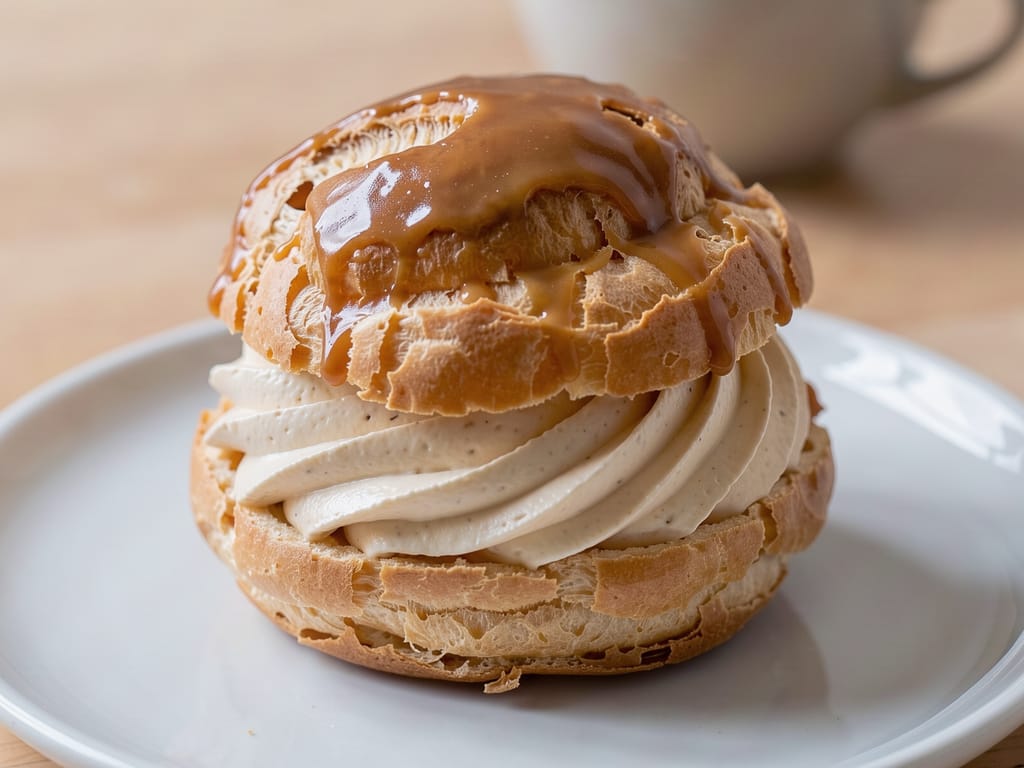
Větrník is a Czech choux pastry: a large puff split in half, filled with vanilla cream and caramel whipped cream, and capped with a lid glazed in caramel fondant. It is related to the French profiterole and the cream puff, but it is bigger, layered, and all about caramel. Here is where it comes from, how it is built, and how it differs from its cousins.
Větrník (plural větrníky) is one of the classic cakes of the Czech cukrárna (pastry shop). It is a choux bun about the size of a small fist, baked until hollow and crisp at the edges, then cut horizontally into a base and a lid.
The base holds two fillings: a dense vanilla custard cream at the bottom and a tall ring of caramel-flavored whipped cream on top. The lid goes back on, glazed with caramel fondant, a soft sugar glaze that sets glossy and light brown.
In Czech kitchens it counts as a special-occasion cake. People buy it at the pastry shop for a Sunday visit, or bake a tray at home for a birthday. It is rich: it starts light and ends filling.
Recipe of the week, one tip that saves you time and one deal from the shop. Unsubscribe in one click.
The next issue goes out on Thursday, November 26.
In everyday Czech, větrník is a windmill, or the paper pinwheel children blow on. English guides to Prague pastries usually translate the cake as “pinwheel”.
Why the cake got that name is not documented. We have not found a Czech source that explains it, so treat any story you read about the windmill shape or the airy dough as a guess, not history.
The dough is French. Choux pastry (Czech odpalované těsto, “scalded dough”) is the same dough used for profiteroles, cream puffs and éclairs, and Czech sources describe the French profiterole as the větrník's predecessor.
The Czech cake itself has no documented inventor or date. Some Czech pastry shops and articles say it goes back centuries to the French royal courts, but that is the history of choux pastry in general, not of větrník. Unlike the indiánek (a cream-filled sponge cake dipped in chocolate), which comes with a story about a Hungarian count's confectioner, větrník has no origin story we could find.
What is certain is that větrník has been a fixture of Czech pastry shops for generations and is still on the counter of almost every cukrárna today. Prague's century-old Cukrárna Myšák sells a well-known version, though we found no source saying it invented the cake.
In outline, a větrník has four layers, built from the bottom up:
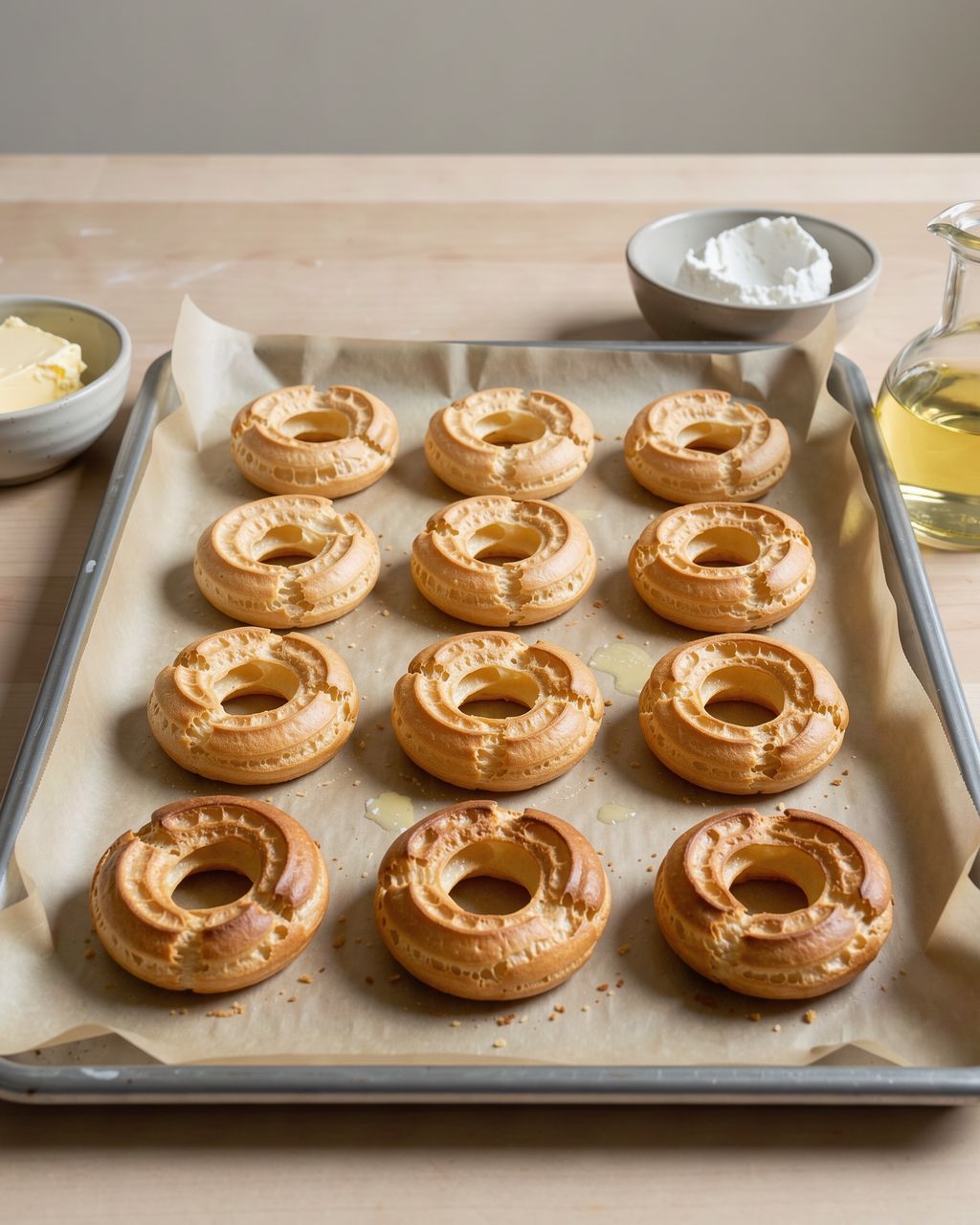
The choux shell. Water or milk, butter and flour are cooked into a smooth paste, eggs are beaten in, and the dough is piped into large mounds. It bakes until it is puffed, browned and dry inside, so it does not collapse as it cools. Our guide to choux pastry consistency and why it collapses covers the dough itself.
Vanilla cream. The bottom half is filled with a cooked vanilla custard cream, often enriched with butter or lightened with cream.
Caramel whipped cream. A thick ring of whipped cream flavored with caramel is piped on top, high enough to show between the halves.
Caramel glaze. The lid is dipped in caramel fondant and set back on top.
The glaze is the part home bakers struggle with most. Our article on caramel glaze for větrníky explains the temperatures and why fondant behaves better than plain caramel.
Bakeries vary the recipe. Some fill with three creams, some add salted caramel, some top it with roasted almonds, and a few cafés make a sliced, layered version.
All three start with the same choux dough. The differences are size, filling and finish.
Větrník: large, split horizontally, two fillings (vanilla cream plus caramel whipped cream), caramel fondant glaze. Eaten with a fork.
Profiterole: small, round, usually filled through a hole with one cream or with ice cream, and often served with chocolate sauce. Eaten in one or two bites.
Cream puff (US): medium to large, filled with whipped cream or pastry cream, usually dusted with powdered sugar rather than glazed.
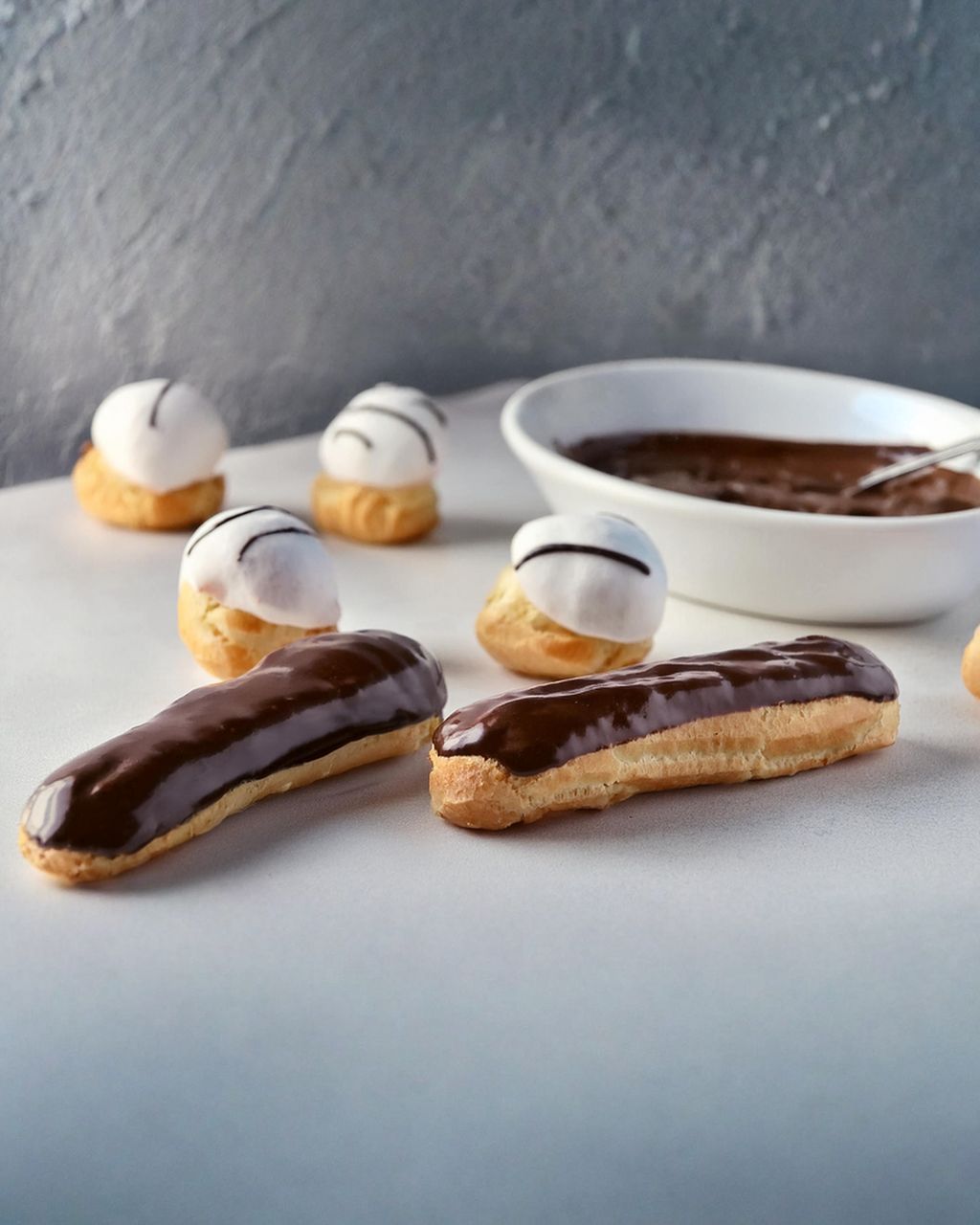
Éclair: the same dough piped long instead of round, filled with pastry cream and topped with a fondant or chocolate glaze.
The closest Czech relative is the věneček (choux ring), smaller and usually glazed with plain white fondant. For more on the French side of the family, see profiteroles vs éclairs.
Caramel first, then vanilla. The glaze is sweet and fudgy, the caramel whipped cream is airy and mild, and the vanilla cream underneath is richer. The shell itself tastes of butter and egg and stays slightly crisp at the edges when the cake is fresh.
A good větrník tastes of real vanilla and cooked caramel. A weak one has a dense, soggy shell and a cream that tastes of flavoring. Czechs eat it with coffee, at a café table or at home on a Sunday afternoon.
Yes, and many Czech families do. It takes most of an afternoon: choux shells, a cooked cream that has to cool, whipped cream and a glaze. The shells can be baked a day ahead and kept dry and unfilled, and the glaze can be warmed when you need it.
A sensible order of work: cook the vanilla cream first and let it cool, covered, in the fridge. Bake the shells and let them cool completely. Glaze the lids, then whip the cream and flavor it with cooled caramel sauce or a thick caramel spread. Fill and assemble last, so the shells stay crisp as long as possible.
Once filled, větrníky go into the fridge, covered, because both creams are dairy-based. For how long cream pastries keep, see our guide to how long věnečky and cream rolls keep.
A větrník is a Czech caramel cream puff. The word itself means a windmill or a pinwheel, but in a Czech pastry shop it means a large choux bun filled with vanilla custard cream and caramel whipped cream and topped with caramel glaze.
No, a větrník is a larger, layered relative of the profiterole. Both use choux pastry, but a profiterole is a small puff with one filling, while a větrník is split, filled with two creams and glazed with caramel fondant.
Větrník tastes of caramel and vanilla, with a soft, slightly eggy choux shell. The glaze is sweet and fudgy, the caramel whipped cream is light, and the vanilla cream underneath is richer and denser.
You can find větrník in almost any Czech cukrárna (pastry shop) and in many Prague cafés. Quality varies a lot, so look for a crisp-edged shell, real vanilla in the cream and a glaze that looks glossy rather than cracked.
The classic topping is caramel fondant, not hard caramel. Fondant sets into a soft, glossy layer you can cut with a fork, while plain cooked caramel sets glassy and turns sticky in the fridge.
One recipe worth heating the oven for, one tip, and one deal from the shop. Nothing else.