Traditional walnut easter lamb cake with chocolate glaze
Types of Nuts for Baking: How They Differ and What Goes Where
Updated Sep 25, 2026
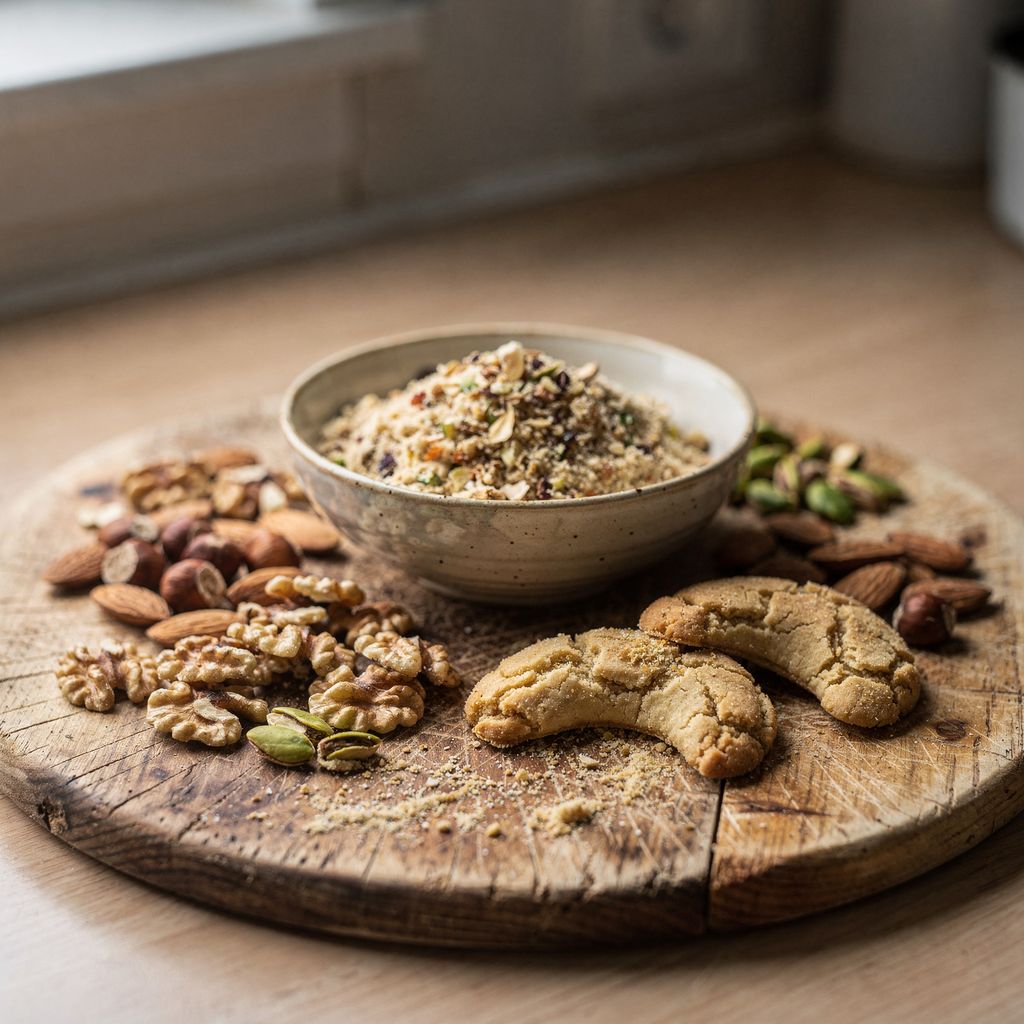
Different types of nuts don't just taste different in baking — each has its own fat content, hardness, and reaction to heat, which is why walnuts behave nothing like almonds in a batter. Walnuts bring a bold, slightly bitter flavour and moistness, hazelnuts add aromatic sweetness, almonds offer a neutral base that grinds beautifully, pistachios contribute colour, and pecans bring buttery sweetness. Below you'll find which nut suits which bake, how to toast and grind them, and how to safely swap one for another.
Seven types show up most often in baking: walnuts, hazelnuts, almonds, pistachios, pecans, cashews, and macadamia nuts (plus peanuts, which are botanically a legume). They differ mainly in three things that shape the result:
Fat content — according to USDA data, nuts contain roughly 44–76g of fat per 100g. More fat means a moister but also greasier batter, and faster burning during toasting.
Hardness — firm almonds and hazelnuts keep their crunch in batter, while soft cashews and macadamias soften once baked.
Skin flavour — the thin brown skin on walnuts and hazelnuts contains tannins that create bitterness. Sometimes that's desirable, sometimes you want it gone.
Quick guide: reach for almonds or hazelnuts when grinding for shortbread-style biscuits, walnuts for fillings and gingerbread flavours, pistachios for colour, and pecans for caramel bakes.
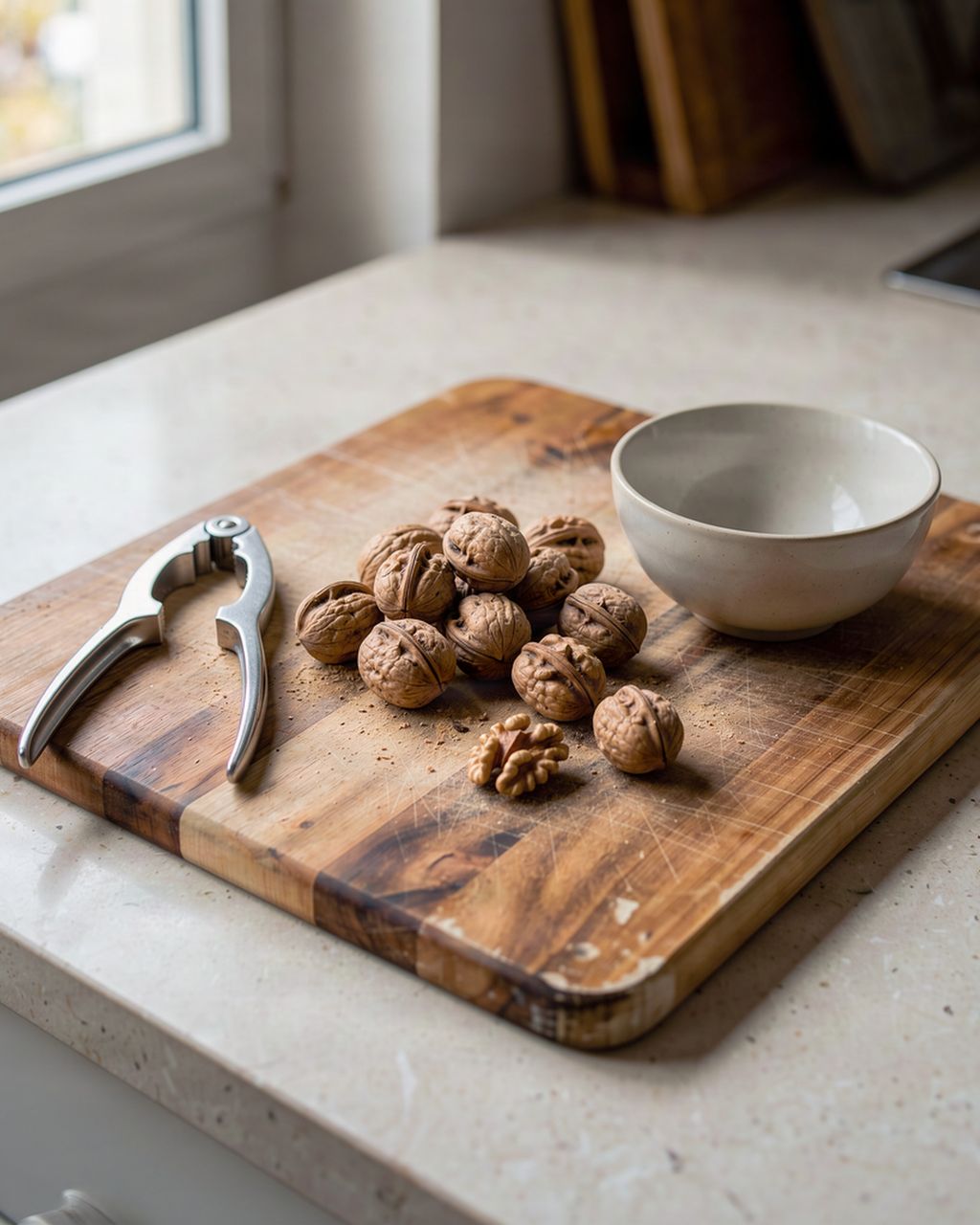
Walnuts are the boldest nut in Czech baking: a full, slightly bitter flavour and around 65g of fat per 100g, which keeps bakes moist.
Where they belong: nut fillings for strudels and cakes, gingerbread, loaf cakes, Easter lamb cake, bread, and banana bread.
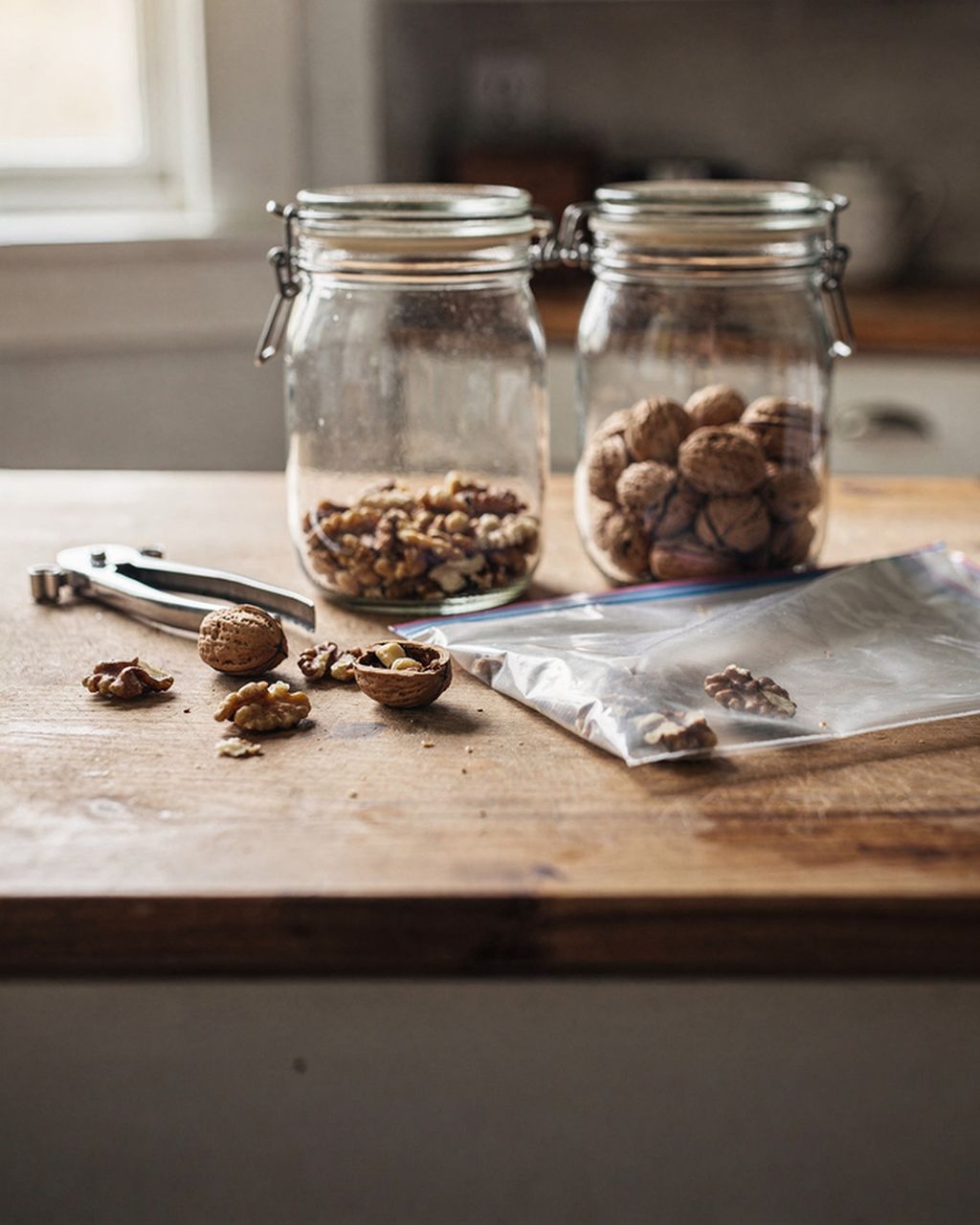
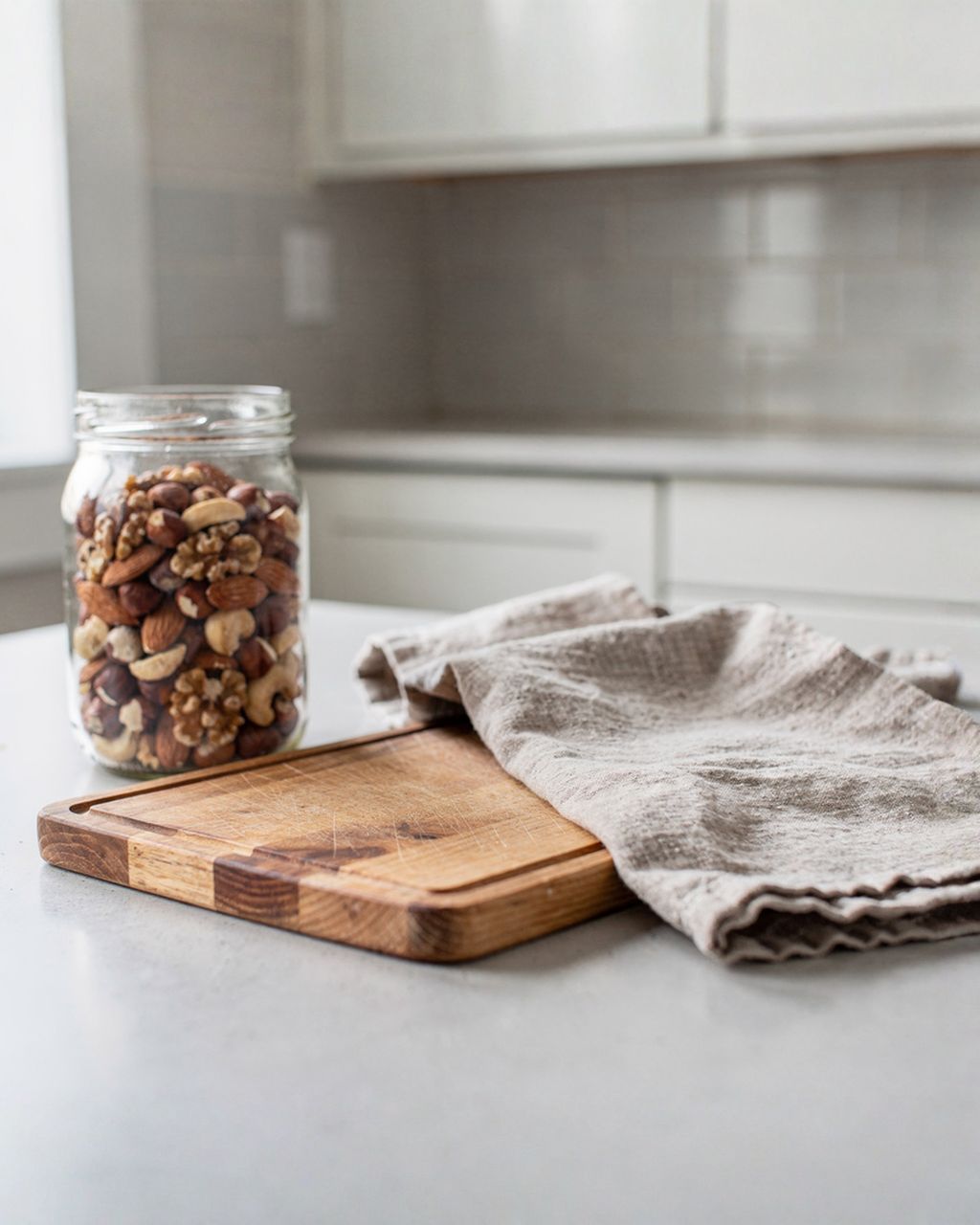
The bitterness mostly comes from the skin. For a milder flavour, toast the nuts briefly and rub them in a tea towel to remove what loosens up — the skin won't come off completely, but the bitterness will noticeably soften.
Watch out for rancidity: walnuts have the highest polyunsaturated fat content of all common nuts, so they turn rancid the fastest. A musty, waxy, or sharp off-taste means it's time to bin them — baking won't mask it.
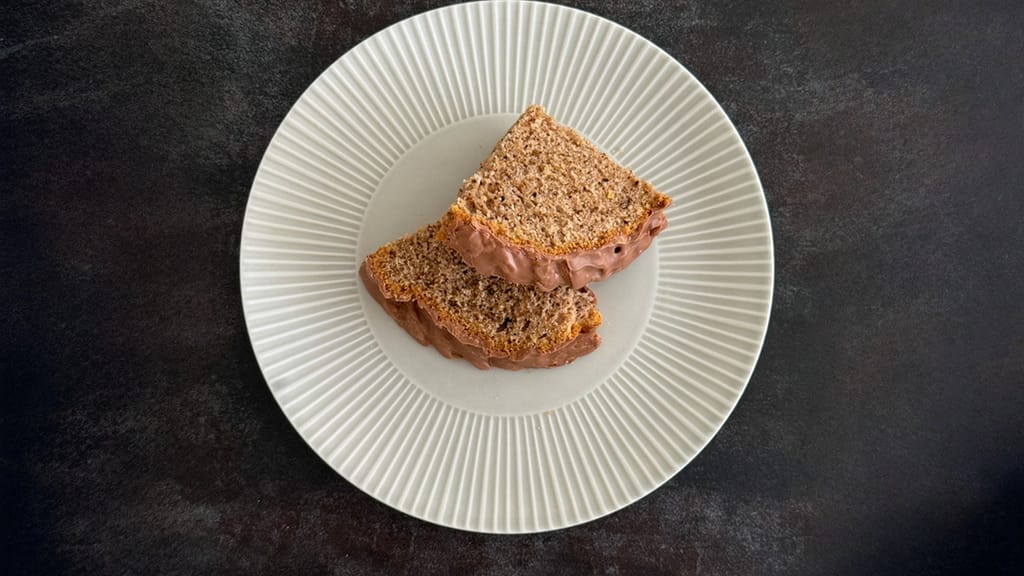
You can see typical use in this traditional walnut Easter lamb cake, where ground walnuts carry both the flavour and moistness of the whole batter.
Traditional walnut easter lamb cake with chocolate glaze
Traditional walnut Easter lamb cake with chocolate icing
Hazelnuts are the most aromatic nut for sweet baking — once toasted they smell like nougat, and paired with chocolate they form the base of gianduja. They contain around 61g of fat per 100g and are firm, so they hold their structure in batter.
Where they belong: shortbread biscuits and crescents, chocolate cakes, pralines, nougat, cookies, and granola.
Always toast them. Raw hazelnuts taste flat, while toasted ones are far more flavourful. While still warm, wrap them in a tea towel and rub firmly — most of the brown skin will come off.
Ground hazelnuts are oilier than almonds, so batters made with them tend to be more delicate and crumbly.
Almonds are the most versatile nut for baking: a mild, faintly sweet flavour, roughly 50g of fat per 100g, and a firm structure that lets them grind into a fine, powdery texture rather than turning into paste as easily as other nuts.
Blanched (skinned) almonds produce a pale, fine flour — perfect for macarons, marzipan, and light-coloured biscuits.
Unblanched almonds have a stronger flavour and darker colour, and work well in gingerbread, cookies, and biscotti.
Flaked almonds are meant for sprinkling on top of bakes — they brown within minutes, so scatter them on the surface just before baking rather than mixing them into the batter.
Almonds in a cake are showcased in this plum and ricotta cake with almonds, and in biscuits, the classic vanilla crescents.
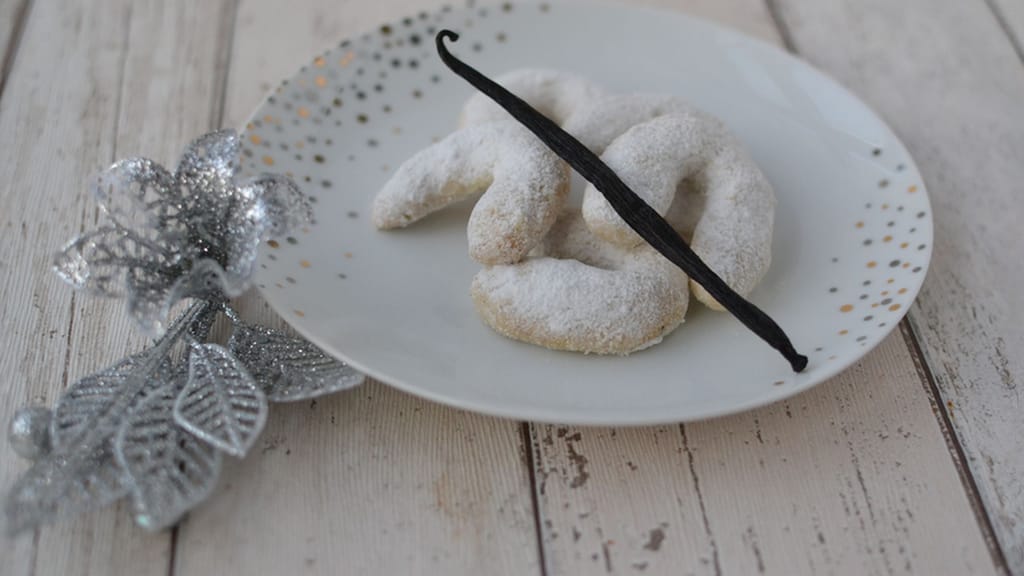
The best christmas cookies? vanilla crescents, of course!
Vanilla crescents with ground nuts — a classic Christmas biscuit
Pistachios are used in baking mainly for their colour and delicate, faintly resinous flavour. They contain around 45g of fat per 100g, making them one of the drier nuts.
The green colour only survives gentle handling: don't toast them, or toast only briefly at up to 150°C. Pistachios toasted longer turn brown and lose their flavour.
Where they belong: crescents and shortbread biscuits, cupcakes, cake frostings, and dessert toppings.
The most vivid green comes from shelled pistachios with the purple skin removed.
See how it looks in practice in these pistachio crescents or this pistachio shortbread.
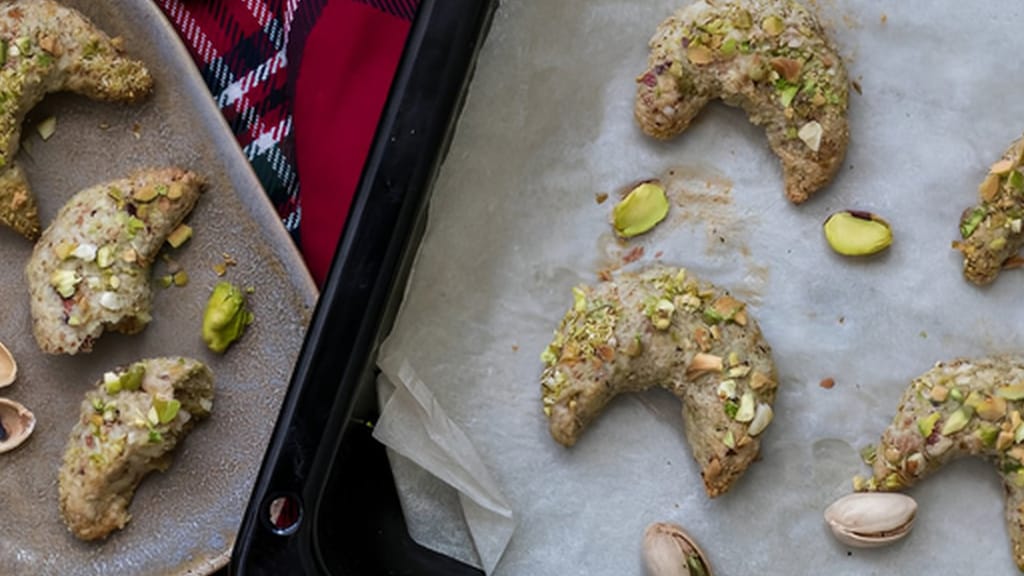
Pistachio crescent cookies
Pistachio crescents — green Christmas biscuits made with ground pistachios
Pecans are walnuts' sweeter, more buttery, less bitter cousin — they contain over 70g of fat per 100g and have a thinner skin, so they lack that typical tannic edge.
Where they belong: caramel and maple syrup pies, brownies, cookies, cinnamon rolls.
You can swap them into any walnut recipe 1:1 — the result will be sweeter and milder.
Because of their high fat content they burn quickly — toast them for a shorter time and keep a close eye on them.
Pecans paired with caramel are showcased in these caramel pecan tartlets.
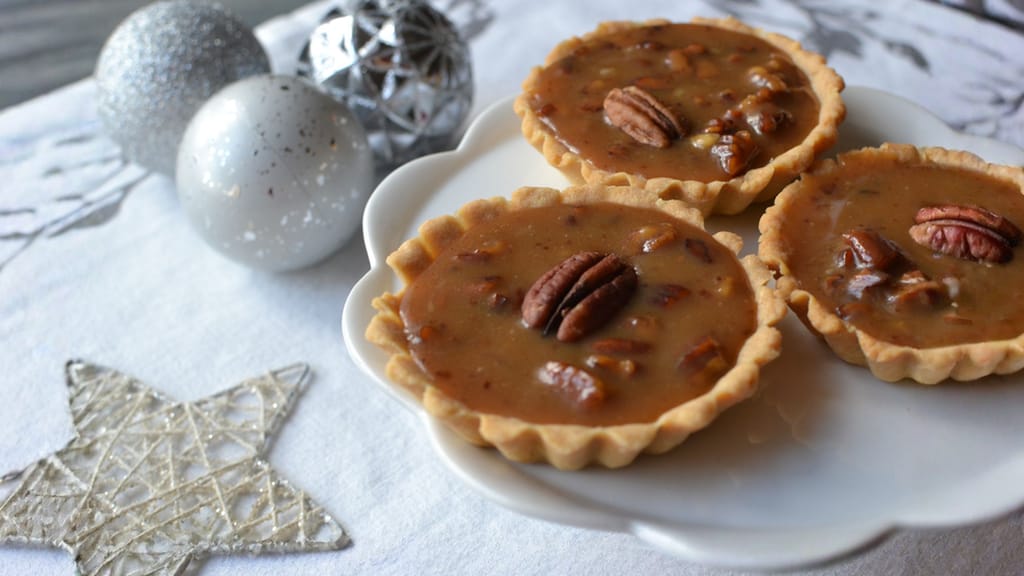
Pecan caramel tartlets
Caramel pecan tartlets
Cashews and macadamias are soft and buttery — they don't stay crunchy in batter but soften and add creaminess; peanuts bring a bold roasted flavour at a low price.
Cashews (around 44g of fat per 100g) have a mild, sweet flavour. They work well in cookies, raw desserts, and soaked and blended into creams in place of dairy.
Macadamia nuts are the fattiest of them all (around 76g of fat per 100g). White chocolate macadamia cookies are the classic pairing. Toast them only briefly — they brown very fast.
Peanuts aren't botanically a nut but a legume. In baking, use them mainly as peanut butter or chopped into cookies and bars. For allergy purposes, they count as a separate allergen.
Toast nuts in the oven at 160–170°C in a single layer on a baking tray for 6–15 minutes, depending on the type, until they smell fragrant and turn lightly golden inside. Toasting drives off residual moisture and kicks off Maillard reactions — that's why toasted nuts taste more intense and stay crunchier in batter for longer.
Approximate times at 165°C:
flaked almonds: 5–7 minutes
walnuts, pecans, cashews, macadamias: 7–10 minutes
whole almonds: 9–12 minutes
hazelnuts: 12–15 minutes
pistachios: don't toast, or max. 5 minutes at 150°C (to preserve colour)
A few rules to stick to:
Shake the tray halfway through so the nuts at the edges don't scorch.
Trust your nose over the timer. Once you catch a strong nutty aroma, there's a minute or two left. Break one open — it should be pale gold inside, not brown.
Tip them off the tray straight away into a bowl. They keep cooking on the hot tray, and even done nuts can burn within two minutes if left on it.
Let them cool completely before grinding, otherwise they'll release their oils.
Ground nuts replace part of the flour and fat in a batter, chopped nuts add crunch, and whole nuts are mainly for decoration — the form matters just as much as the type.
Ground nuts go into shortbread biscuits, crescents, flourless sponges, and fillings. Grind them in short pulses, and add a spoonful of sugar or flour from the recipe — it soaks up the released oil so the nuts don't turn into a paste.
Store-bought almond flour is finer and drier than home-ground almonds (it's often made from defatted or blanched almonds). It's better for macarons, while home-ground almonds are perfectly fine for crescents.
Chopped pieces around 5mm hold up best in loaf cakes and bread — bigger pieces sink and tear the batter around them.
Whole or halved nuts should go on top just before baking, otherwise they'll burn before the batter finishes baking.
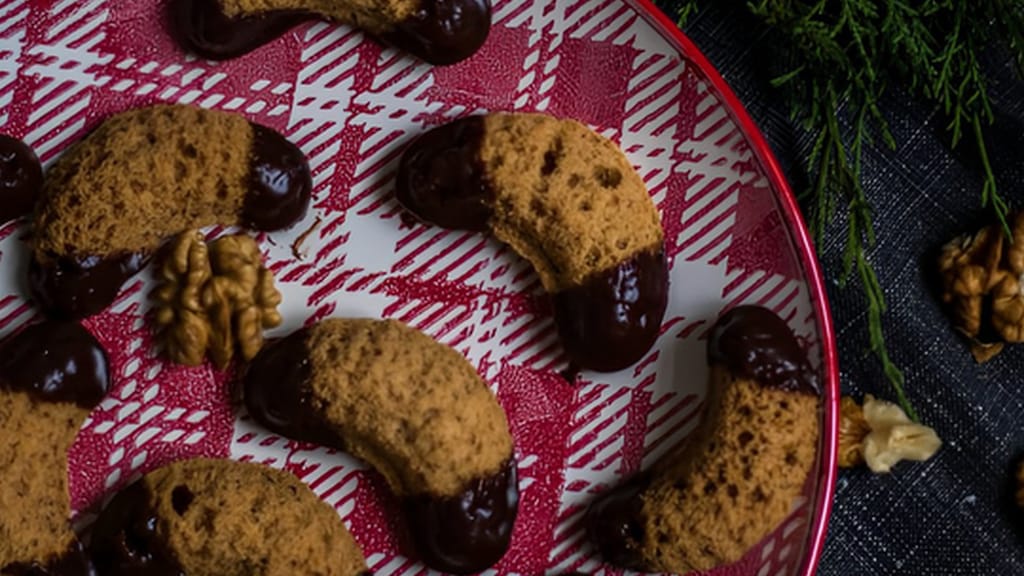
Hollow walnut crescents
Hollow nut crescents made with ground nuts
Nuts can be swapped in a recipe 1:1 by weight, not by volume — it almost always works, just the flavour and texture will shift a little.
Walnuts ↔ pecans: the safest swap — pecans are simply sweeter and less bitter.
Almonds ↔ hazelnuts: works in both biscuits and cakes. Hazelnuts add more aroma and the batter will be a touch more delicate.
Almonds → walnuts: the batter will be moister, darker, and more intense. Don't do this for light-coloured biscuits or macarons.
Anything → cashews or macadamias: only where a softer texture doesn't matter — avoid this for shortbread biscuits, as the batter will spread more.
Pistachios can be swapped for anything, but you'll lose the colour — which is usually the whole point of using them.
To go nut-free entirely (say, for allergies), use shelled sunflower or pumpkin seeds, also 1:1 by weight.
Bitter nuts in baked goods almost always come down to one of three causes: they're rancid, burnt, or it's the skin that's bitter.
Rancid nuts have a sharp, waxy, or paint-like off-taste. Always taste them before adding to a batter — one rancid nut can ruin an entire filling. Find out how to prevent it in our article on how to store nuts so they don't go rancid.
Burnt nuts are dark brown inside. Next time, toast at a lower temperature and pull them out a minute earlier.
Skin bitterness shows up mainly with walnuts and hazelnuts — for hazelnuts, rub it off after toasting; for walnuts, a shorter toast or swapping for pecans will soften the flavour.
Nuts sink when they're too big or the batter is too runny. Chop them into pieces around 5mm and toss them in a spoonful of flour from the recipe before folding them in — the flour gives them grip and keeps them evenly spread through the batter.
Pour boiling water over the almonds, let them sit for 1–2 minutes, drain and rinse under cold water — the skins will then slip off easily when you pinch them between your fingers. Let them dry completely before grinding, ideally briefly in the oven at 100°C, otherwise the flour will clump together.
Sunflower seeds contain chlorogenic acid, which turns green in an alkaline environment created by baking soda or baking powder. It's harmless, just not very appetising to look at — reduce the amount of raising agent or add a splash of something acidic to the batter, like lemon juice.
You can add untoasted nuts to the batter, but they won't actually toast inside it — they'll only reach around 100°C and stay bland and softer. Only use untoasted nuts where the recipe specifically calls for it, or where the nuts sit on the surface and toast on their own.
One recipe worth heating the oven for, one tip, and one deal from the shop. Nothing else.