Quick tomato and bean soup
Tomato Soup: Recipe, Tips and Variations for Perfect Flavour

Updated Jul 19, 2026
Tomato soup is a smooth soup made from blended tomatoes, onion and garlic, finished with herbs and a pinch of sugar to balance the acidity. A good one comes together in about half an hour and works just as well with fresh or canned tomatoes. In this article you'll find a step-by-step method, how to pick the right tomatoes, tricks for balancing flavour (acidity, sweetness, umami), and tried-and-tested variations - from creamy to Italian to vegan. Selected versions link straight through to a real recipe on Yumsto, so you've got something to work from.
You can make tomato soup in five steps: sauté the onion, add the tomatoes and garlic, simmer briefly, blend until smooth and season to taste. The whole thing takes about 30 minutes and needs just a handful of ingredients.
For 4 servings you'll need: 1 kg ripe tomatoes (or 2 tins of peeled tomatoes), 1 large onion, 2 cloves of garlic, 2 tablespoons olive oil, salt, pepper, a pinch of sugar and a handful of fresh basil. For the creamy version, add 100ml of cooking cream.
The base: Finely chop the onion and cook it in olive oil until translucent and just turning golden, 5-7 minutes over medium heat. Slow-cooking the onion draws out its natural sweetness, which forms the backbone of the whole soup's flavour.
Tomatoes and garlic: Roughly chop the tomatoes and add them to the pot, then crush the garlic in only now - so it doesn't burn and keeps its aroma. Burnt garlic turns bitter, which is why it goes in last.
Simmering: Season with salt and pepper, add a splash of water or vegetable stock, and simmer for 15-20 minutes, until the tomatoes have completely softened and released their juices.
Blending: Blend with a stick blender until smooth. For a silky texture, pass the soup through a fine sieve afterwards - this removes the skins and seeds.
Seasoning: Add a pinch of sugar to balance the acidity, taste, and adjust the salt. For a creamy version, stir in the cream away from a rolling boil and just warm it through.
If fresh tomatoes aren't in season where you are (roughly July-September in the UK), don't feel bad about reaching for good-quality canned ones - they often taste better than the pale, watery tomatoes on winter shelves.
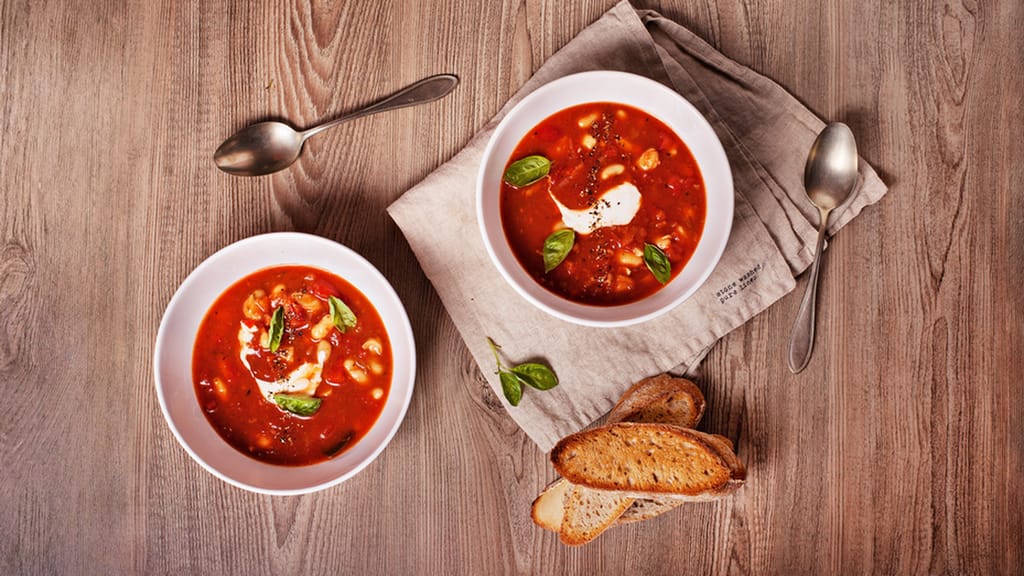
Quick tomato and bean soup
Quick tomato and bean soup - a heartier version for a weeknight dinner
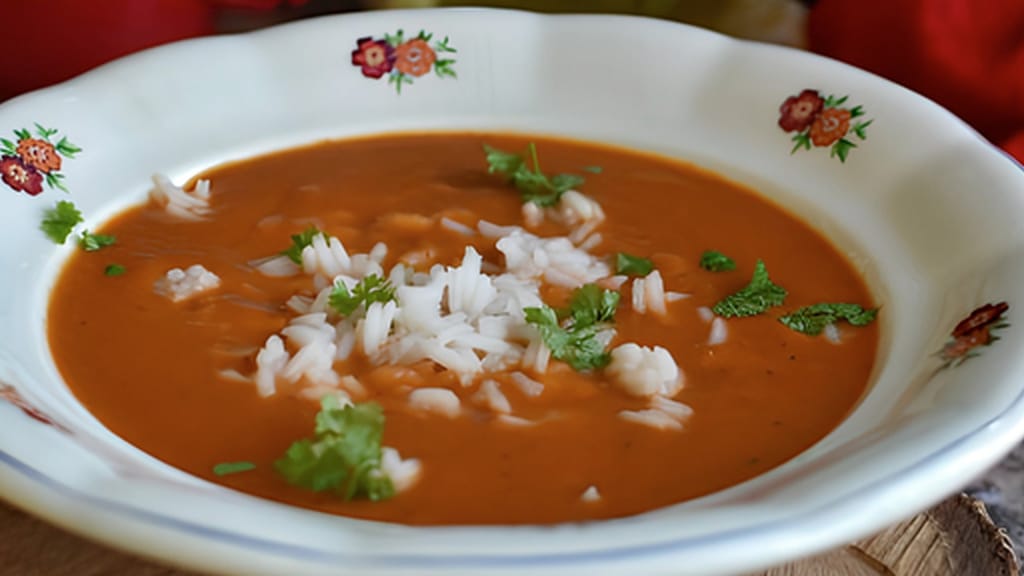
Tomato soup with rice
Tomato and rice soup - a comforting classic take on tomato soup
The best tomato soup is made from ripe, meaty tomatoes with a low water content - San Marzano and Roma varieties are the top choice, since they have dense flesh and an intense flavour, so the soup turns out thick and full-flavoured without needing extra thickening.
Tomatoes are naturally rich in glutamic acid, the compound behind umami flavour - according to food scientists, ripe, vine-ripened tomatoes contain the most of it, especially in the jelly-like part around the seeds. So don't throw that part away when blending: it gives the soup a full, "meaty" flavour even without any meat.
Out of season, good-quality canned (peeled) tomatoes are a better choice than hard, hothouse-grown ones - they're picked ripe and their flavour stays consistent all year round. Go for whole peeled tomatoes in their own juice, ideally San Marzano; chopped tomatoes and passata work well for a quick, smooth soup.
Conversion: 1 tin (400g) of peeled tomatoes is roughly equivalent to 500g of fresh ones. So for 4 servings, plan on 2 tins.
The key to perfect tomato soup is balancing the natural acidity of the tomatoes - the simplest fix is a pinch of sugar, which rounds off the sharpness without making the soup taste sweet. But sugar isn't your only tool - there are more subtle ways too:
Roasting instead of simmering: You can roast the tomatoes and onion in the oven before cooking (200°C, 25-30 minutes). Caramelisation naturally cuts the acidity and adds a deeper, more "restaurant-style" richness.
Fat rounds out the acidity: A spoonful of butter or cream doesn't chemically change the acidity, but it coats the tongue and softens how sharp it tastes - which is why creamy versions taste smoother.
Add umami: A parmesan rind simmered in the soup, a few mushrooms, or a teaspoon of tomato paste will deepen the flavour into savoury territory.
Season with salt at the end: Tomatoes concentrate as they cook, so add salt after blending to avoid over-seasoning.
From the same base, you can conjure up five different soups: creamy with cream, Italian-style with basil and parmesan, vegan with coconut milk, cold gazpacho for summer, and a spicy Mexican-style version with chilli. Pick whichever suits your mood and the season.
You get the creamy version by stirring cooking cream (or a spoonful of butter) into the finished base - the texture turns velvety and the flavour fuller. Add the cream away from the boil and just heat it through so it doesn't split. If you want a thicker soup without cream, simmer a potato together with the tomatoes and blend it in with them.
The Italian version relies on fresh basil, oregano and olive oil, finished with parmesan shavings that melt into the hot soup. Serve with crusty bread or focaccia. For a heartier version with pulses that can stand in as a main meal, see the recipe below.
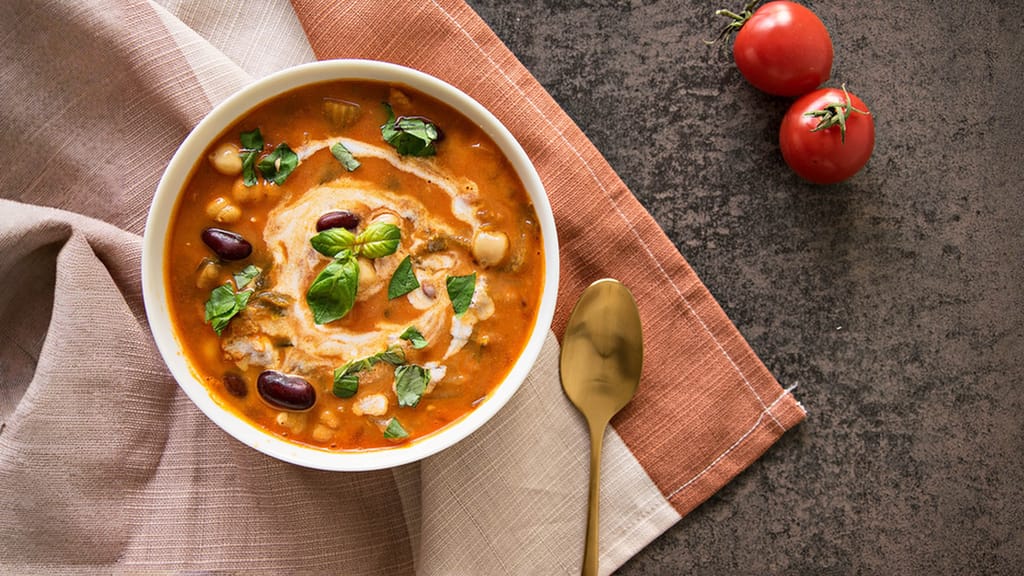
Italian tomato soup with legumes
Italian tomato soup with pulses - hearty and filling
You can make the vegan version without a single animal product: build the base from sautéed onion, garlic and tomatoes in olive oil, then swap the cream for coconut milk or almond cream. Coconut adds a gentle sweetness that pairs beautifully with the tomatoes.
In summer, try your tomatoes cold - Spanish gazpacho is a cold soup made from blended raw tomatoes, cucumber, pepper and garlic with olive oil, which you never cook, just chill. Refreshing and ready in minutes. Fancy an unusual fruity twist? Try watermelon gazpacho.
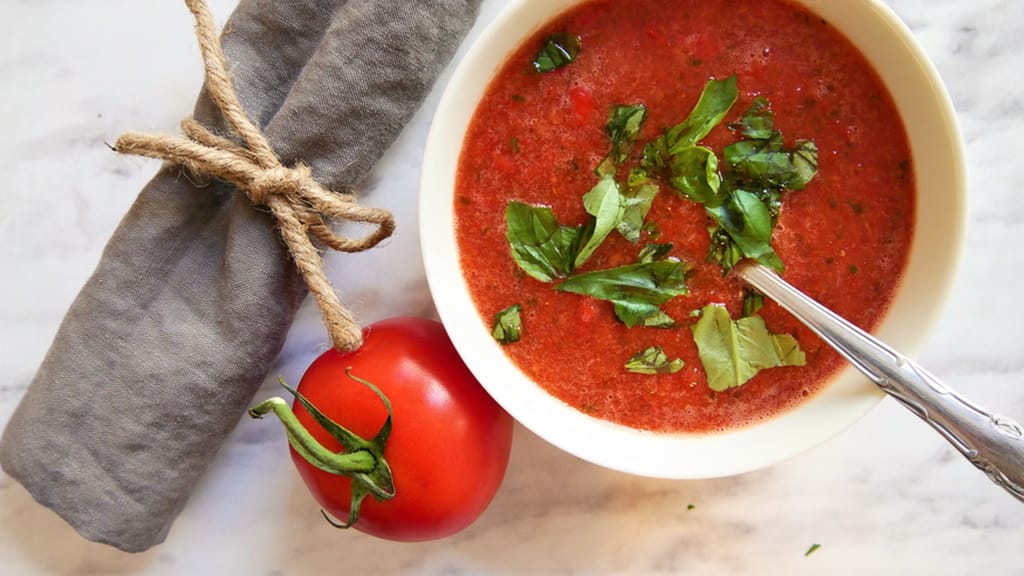
Watermelon gazpacho
Watermelon gazpacho - a summery fruit take on cold soup
The Mexican version adds jalapeños or chilli peppers to the tomato base, along with a pinch of smoked paprika and lime juice. Serve with avocado slices and tortilla chips for crunch and contrast. If you're after something heartier and spicier, the version with pulses and chilli is well worth trying too.
Tomato soup's best friend is something crunchy for dunking - toasted bread, croutons, or a grilled cheese sandwich. Then finish the bowl with:
fresh basil and a few drops of olive oil on top,
parmesan shavings or a swirl of cream,
croutons or toasted bread for texture,
for a more filling meal, a grilled cheese sandwich on the side.
The goal is contrast: a smooth soup alongside something crunchy or salty to set it off.
Tomato soup only really took off once tomatoes made their way from the Americas to Europe - tomatoes were originally grown by the Aztecs in Central America, and the Spanish brought them to Europe in the 16th century. Europeans were wary of them at first (tomatoes belong to the nightshade family and were thought to be poisonous), and they didn't properly enter kitchens until the 18th century, mainly in Italy.
Tomato soup appeared as a dish in its own right in the 19th century, and it became massively popular thanks to Campbell's canned version from the late 1800s. As it travelled the world, it took on regional forms: Spanish cold gazpacho with garlic and pepper, Indian versions with turmeric and garam masala. It's exactly that adaptability that's made it a staple on menus around the world.
In the fridge, homemade tomato soup keeps for 3-4 days in an airtight container, or 2-3 months in the freezer. If you've added cream, eat it sooner rather than later - for freezing, it's better to freeze the base without cream and stir the cream in only after reheating, otherwise it can split. Before freezing, cool the soup quickly and leave about 2cm of headroom in the container for expansion.
The simplest way is to simmer a peeled potato together with the tomatoes and blend it into the soup - it adds body and a velvety texture without flour or gluten. A spoonful of tomato paste, a handful of red lentils, or simply letting the soup simmer longer so it reduces and concentrates all work too.
You don't need to peel them if you blend the soup once it's cooked and then pass it through a fine sieve - the skins and seeds will be strained out and you'll get a smooth texture. If you don't have a sieve and want the soup completely free of skin bits, blanch the tomatoes quickly: score a cross on the base, dunk them in boiling water for about 30 seconds, then straight into ice water - the skin will then slip off easily.
The most common cause is burnt garlic or onion - add the garlic only when the tomatoes go in, not at the start into hot oil. Overheated olive oil, or skins and seeds blended for too long, can also turn bitter; passing the soup through a sieve will get rid of the bitterness. A pinch of sugar will then balance out any remaining sharp acidity.
One recipe worth heating the oven for, one tip, and one deal from the shop. Nothing else.