Easy tomato soup with red lentils
Red Lentil Soup: A Step-by-Step Guide to a Silky-Smooth Bowl

Updated Jul 19, 2026
Red lentil soup comes together in about 30 minutes — no need to soak the lentils beforehand, since they break down on their own into a smooth, velvety texture, often without even reaching for a blender. In this step-by-step guide, we'll walk through the right ratio of lentils to liquid, the correct order for adding ingredients, and why acidic ingredients should always go in last. At the end, you'll find variations ranging from Indian dal to a Czech-style tomato lentil soup, plus answers to the most common questions.
Red lentils are the best choice for soup for three reasons: they cook quickly with no soaking required, they naturally break down into a creamy texture, and their mild flavour pairs well with bold spices.
Speed: they turn tender in just 15–20 minutes and don't need pre-soaking — unlike green, brown, or beluga lentils.
Texture: split red lentils break down as they cook, giving the soup a creamy consistency even without a blender.
Flavour: mild, subtly nutty-sweet, and neutral — equally at home in a Czech-style tomato soup or an Indian dal.
If you want lentils that hold their shape after cooking (for a salad or as a side), reach for green, brown, or beluga lentils. For a creamy soup, you want the exact opposite — which is why split red (sometimes labelled pink) lentils win out.
Red / pink: no soaking needed, 15–20 min, breaks down completely — ideal for creamy soups and dal.
Green and brown: hold their shape, 25–40 min — best for chunky soups and salads.
Beluga (black): holds its shape best of all, ~20–25 min — striking in salads.
For a basic pot serving 4, you'll need 200g of split red lentils, an onion, garlic, a carrot, a tablespoon of oil, cumin and turmeric, an acidic element (tomatoes or lemon), and roughly 1 litre of stock.
Red lentils – 200g, rinsed; no soaking required.
Onion + garlic – the flavour base, finely chopped.
Carrot – grated; adds sweetness and colour.
Cumin and turmeric – 1 teaspoon cumin, ½ teaspoon turmeric; turmeric gives that golden hue.
Tomatoes or tomato paste / lemon – the acidity that balances the carrot's sweetness (add at the very end — see below).
Stock or water with bouillon – ~1 litre; use vegetable stock for a vegan version.
An easy ratio to remember: for a soup that's creamy but still spoonable, aim for roughly 1 part lentils to 4–5 parts liquid. Want it thicker? Use less liquid. Prefer it thinner? Add more stock even after it's finished cooking.
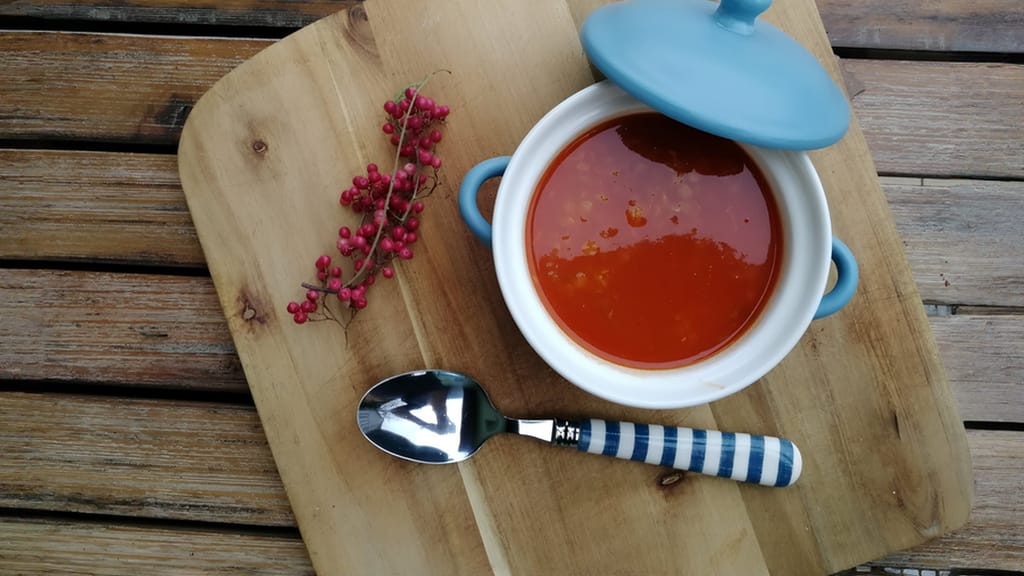
Easy tomato soup with red lentils
Easy tomato red lentil soup – a quick version for busy weeknights
The method has four simple steps: sauté the base and spices, add the lentils and stock, simmer for 20–25 minutes until tender, and finish by seasoning with acidity and salt.
The base (5–7 min): heat a tablespoon of oil and sauté the onion and garlic until translucent, then add the carrot and spices. Briefly toast the cumin and turmeric in the fat — the heat releases their aroma (known as blooming), giving the soup a deeper flavour.
Lentils + stock: tip in the rinsed lentils, coat them in the base, and pour in the stock. Bring to a boil, then reduce to a gentle simmer.
Simmering (20–25 min): cook until tender, stirring occasionally so the lentils don't stick to the bottom. You can skim off any foam that forms at the start.
Seasoning: only now add the tomatoes or lemon, along with salt and pepper. Want it smoother? Blend part or all of the soup with an immersion blender.
The most common mistake is doing this in reverse order — adding acidic ingredients too early and salt too late. That's exactly why the next section is worth paying attention to.

From the same base recipe, you can create three variations: an Indian-style dal with coconut and chilli, a Czech-style tomato lentil soup, or a heartier sweet potato curry.
Indian-style dal: add garam masala, ginger, and finish with coconut milk — the lentils and coconut create a silky-smooth texture.
Tomato lentil soup: use more tomatoes, a pinch of sugar to balance the acidity, and fresh basil.
Sweet potato curry: simmer diced sweet potato together with the lentils; it sweetens and thickens the soup.
A greener version: stir in a handful of spinach at the end, add a squeeze of lemon, and finish with good olive oil on top.
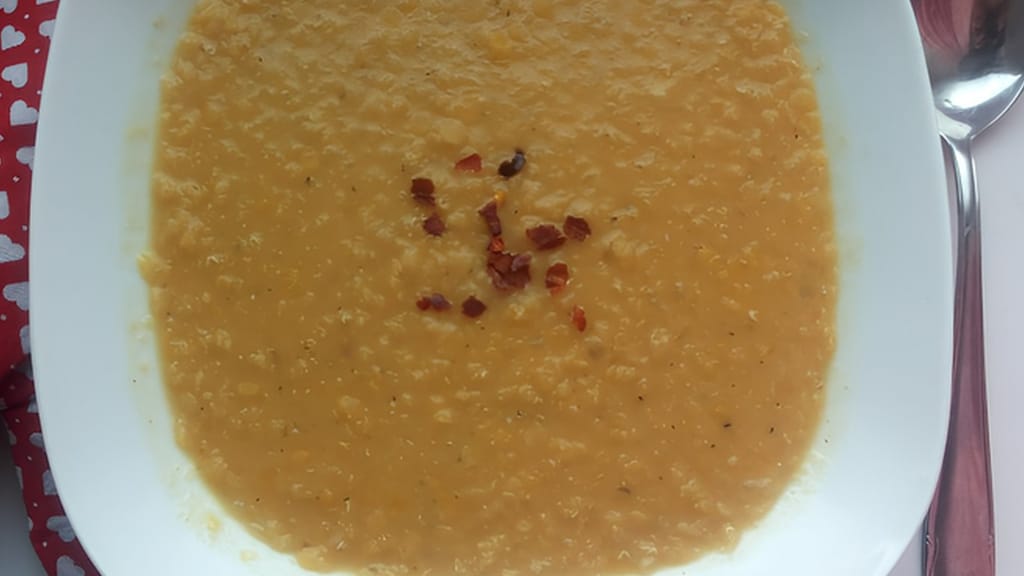
Red lentil soup with coconut milk and chilli
Red lentil soup with coconut milk and chilli – Indian dal-style
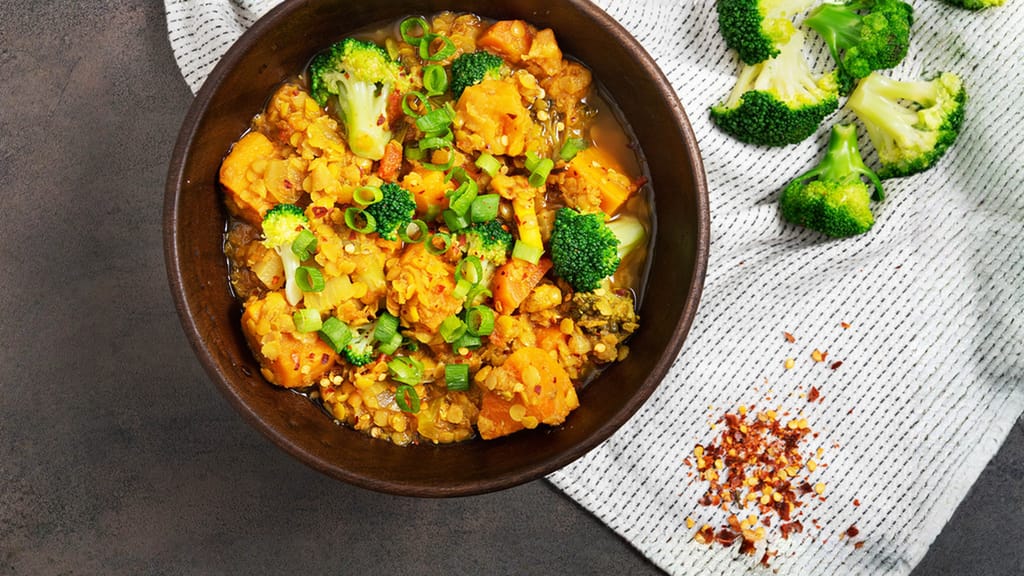
Sweet potato curry with red lentils
Sweet potato and red lentil curry – a heartier one-pot version
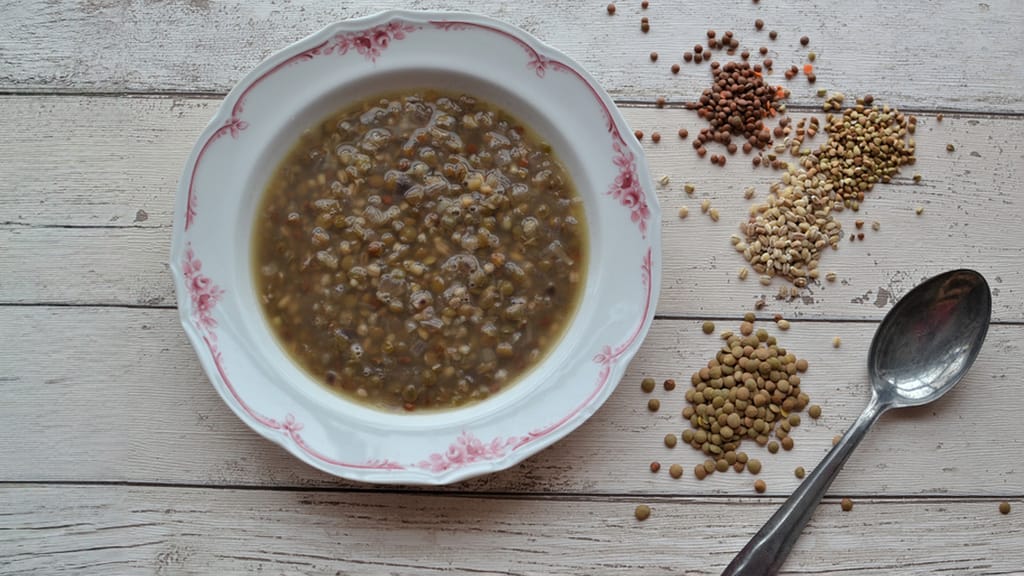
Perfect handful-style lentil soup
The perfect chunky lentil soup – a Czech classic made with green and brown lentils
This creamy soup pairs beautifully with something crunchy and a touch of acidity on top. Fresh bread or croutons, a spoonful of yoghurt or coconut milk, and fresh herbs all work brilliantly.
Bread: fresh bread, toasted baguette, or garlic croutons.
Toppings: coriander or parsley, a squeeze of lemon, sour cream or coconut milk, and toasted pumpkin seeds.
For a lighter lunch: serve alongside a green salad with lemon dressing for contrast against the rich, thick soup.
Yes — red lentils are a substantial plant-based source of protein, fibre, and iron, and they belong to a food group linked to better digestion and healthier blood sugar levels. According to nutritional databases, raw red lentils contain around 24g of protein, roughly 11g of fibre, and about 7mg of iron per 100g; once cooked, these values are diluted by water absorption (cooked lentils have around 9g of protein per 100g).
Protein and fibre: keep you full and support digestion — a solid meat alternative in any meal.
Iron and folate: plant-based iron is absorbed better alongside vitamin C, which is why lemon or tomatoes are such a good match.
Blood sugar: legumes have a low glycaemic index, releasing energy slowly and steadily.
Studies also link legumes to better heart health and lower cholesterol. Think of it as part of a varied diet, not a cure-all.

No, split red lentils don't need soaking. Just rinse them under cold water and cook straight away — they'll be tender in 15–20 minutes. It's mainly green, brown, and beluga lentils that benefit from soaking.
The most common culprit is an acidic environment — tomatoes, lemon, or vinegar added too early slow down how quickly legumes soften. Add them only once the lentils are already tender. Hard water and older lentils (which naturally take longer to cook) can also play a role.
For a thicker soup, simmer it longer with less liquid, or blend part of it with an immersion blender. If it turns out too thick, simply loosen it with a splash of hot stock or water and season with salt again to taste.
Yes, it freezes beautifully — up to 2–3 months in the freezer, or 3–4 days in the fridge in a sealed container. Reheat it gently after thawing and add a little water if needed, since it thickens as it cools. Coconut milk versions may separate slightly after freezing; just give it a good stir.
The closest substitute is split yellow lentils (mung dal), which behave the same way and break down into a creamy texture. Split peas or chickpeas will also work, though they hold their shape more, so you'll likely need to blend the soup afterward. Green and brown lentils will give you a thick soup, but not a creamy one.
Yes, red lentils themselves are naturally gluten-free, so as long as you use a gluten-free stock, the soup will be too. It's also great for kids thanks to its mild flavour — for younger children, it's best to blend the soup until smooth and set aside their portion before adding extra salt.
One recipe worth heating the oven for, one tip, and one deal from the shop. Nothing else.