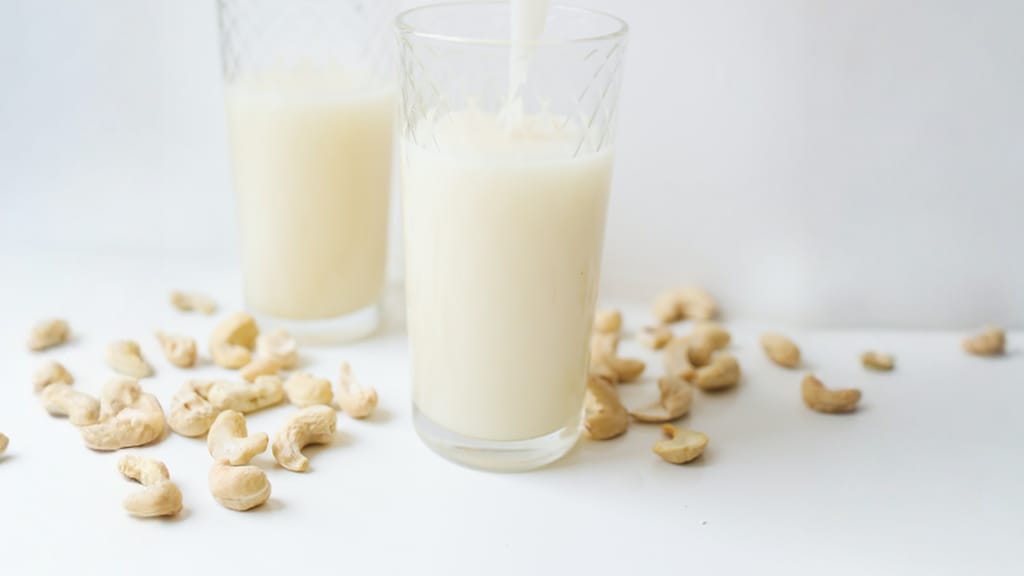
Cashew-coconut milk
Arroz Doce: The Secret to Real Portuguese Rice Pudding
Updated Jul 19, 2026
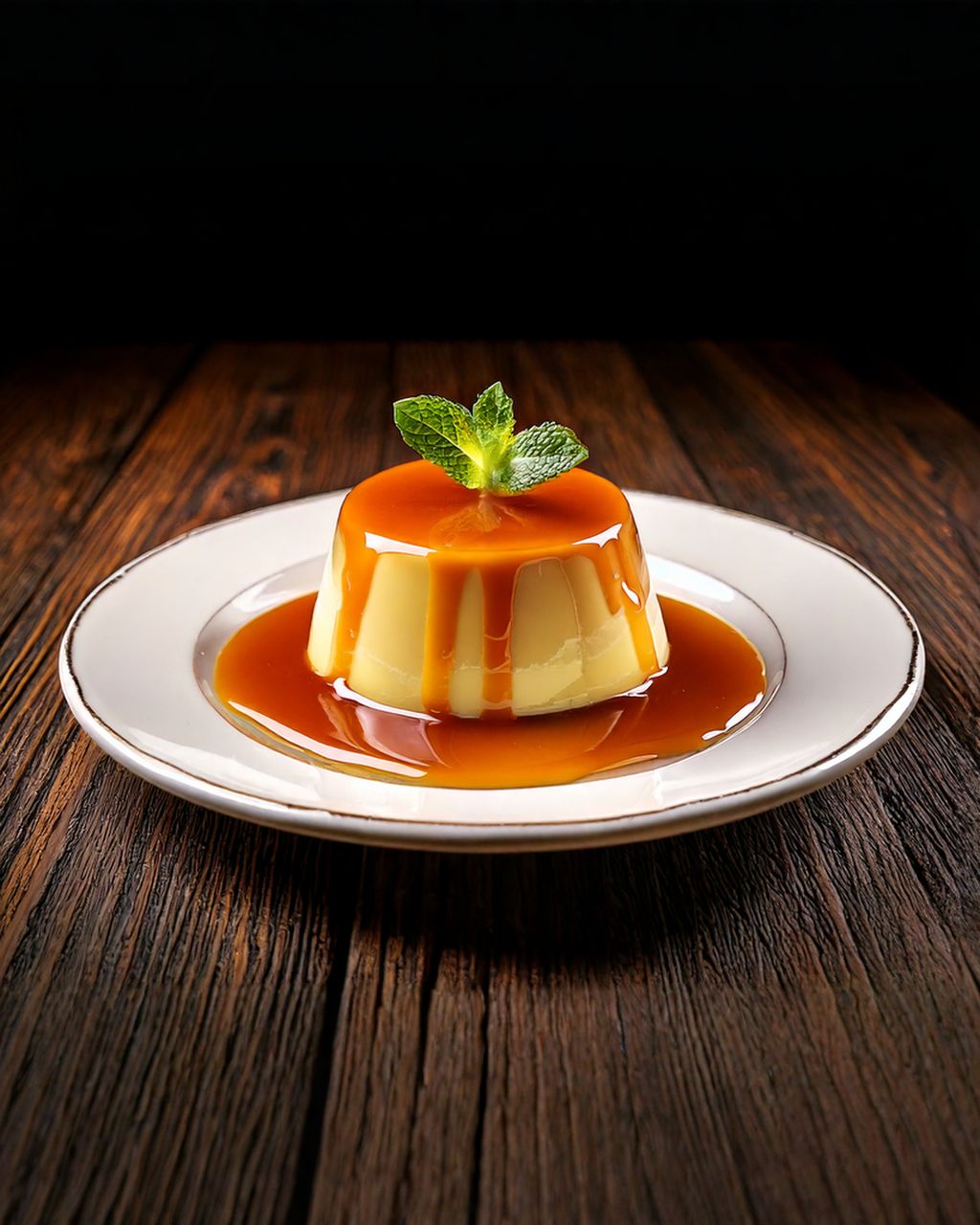
Arroz doce is a traditional Portuguese rice pudding made by simmering short-grain rice in milk with cinnamon and lemon zest, then enriching it at the end with egg yolks — it's the yolks that give it that golden colour and velvety creaminess. This is nothing like a boxed instant pudding: in Portugal it's served at Christmas, at weddings, and at Sunday lunch, spread thin on a plate and dusted with cinnamon in lace-like patterns. Here you'll find the true ratio of ingredients, a step-by-step method, and the trick for stirring in the yolks so they never curdle.
Arroz doce has its roots in the rice that Arab settlers brought to the Iberian Peninsula during Moorish rule — along with cinnamon and the custom of sweetening dishes with sugar. According to food historians, rice didn't really take off in Portugal until the 16th century, when it turned from a costly luxury into an everyday ingredient.
Arroz doce owes its golden colour and creaminess to Portugal's convent confectionery tradition (doçaria conventual), where nuns thickened their desserts with generous amounts of egg yolks. It's the yolks that set the Portuguese version apart from plain milk rice — they transform the base into a silky pudding, somewhere between a custard and a cream.
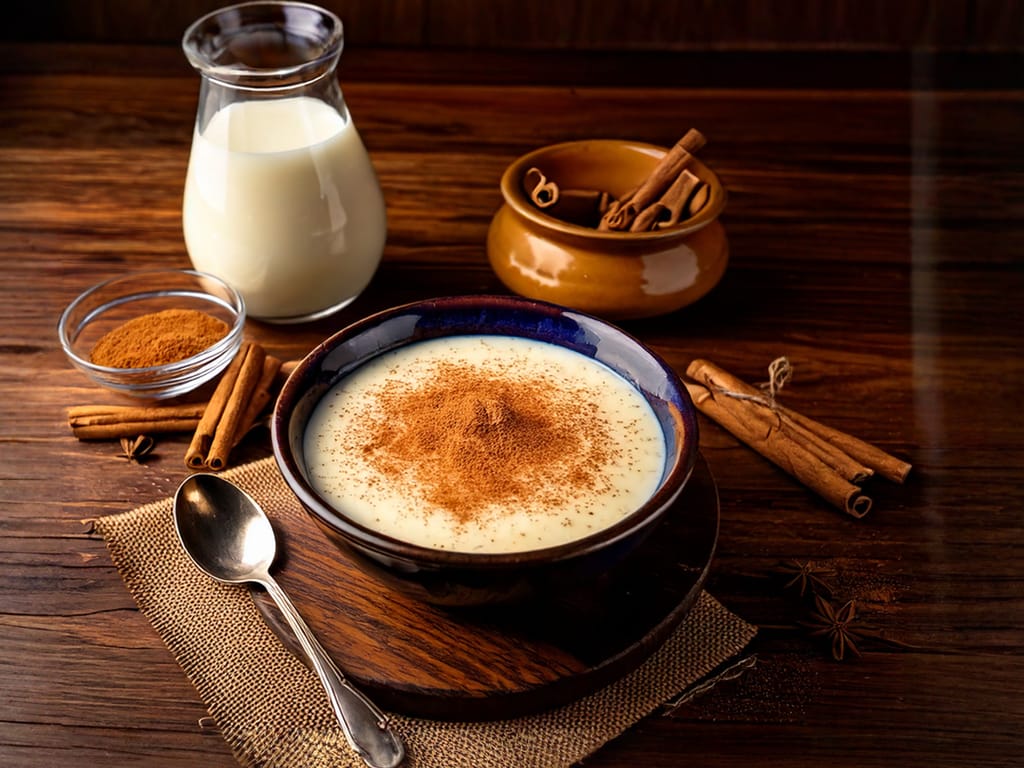
It remains a special-occasion dish to this day. It's traditionally served on large platters or shallow plates, the surface hand-decorated with ground cinnamon in patterns reminiscent of lace. Every Portuguese family has its own ratio and its own little secret, handed down from generation to generation.
Seasonal baking plans, tested recipes and kitchen tricks that save you time. Unsubscribe in one click.
To make genuine arroz doce you need just six ingredients: short-grain rice, full-fat milk, sugar, lemon zest, whole cinnamon, and egg yolks. Nothing more is needed — the magic lies in the ratio and the method.
Rice: Portuguese carolino, or here at home, arborio or another short-grain risotto rice works best. The short grain releases starch and holds the creaminess; long-grain or basmati simply won't do the job here. You'll need 200 g.
Milk: full-fat, 1 litre. The fat carries the flavour and gives the pudding its velvety texture. Lower-fat milk will give a thinner, less rich result.
Sugar: white sugar, roughly 120–150 g per 200 g of rice. It's added only once the rice has softened — adding sugar too early slows down how quickly the grains soften.
Lemon zest: peeled from one lemon, with none of the white pith (which turns bitter). It's cooked with the rice and removed before the final sweetening.
Whole cinnamon: one stick simmered in the milk for a subtle fragrance; you'll sprinkle ground cinnamon over the finished pudding.
Egg yolks: 3–4. These are what give arroz doce its golden colour and creamy texture. They're stirred in right at the end, off the heat.
It's also worth adding a pinch of salt (to bring out the sweetness) and sometimes a knob of butter or a piece of vanilla pod for a fuller flavour.
You can absolutely make arroz doce without cow's milk — just bear in mind the flavour and colour will change. For a lactose-free version, simply swap in a lactose-free milk in a 1:1 ratio; the texture stays practically the same.
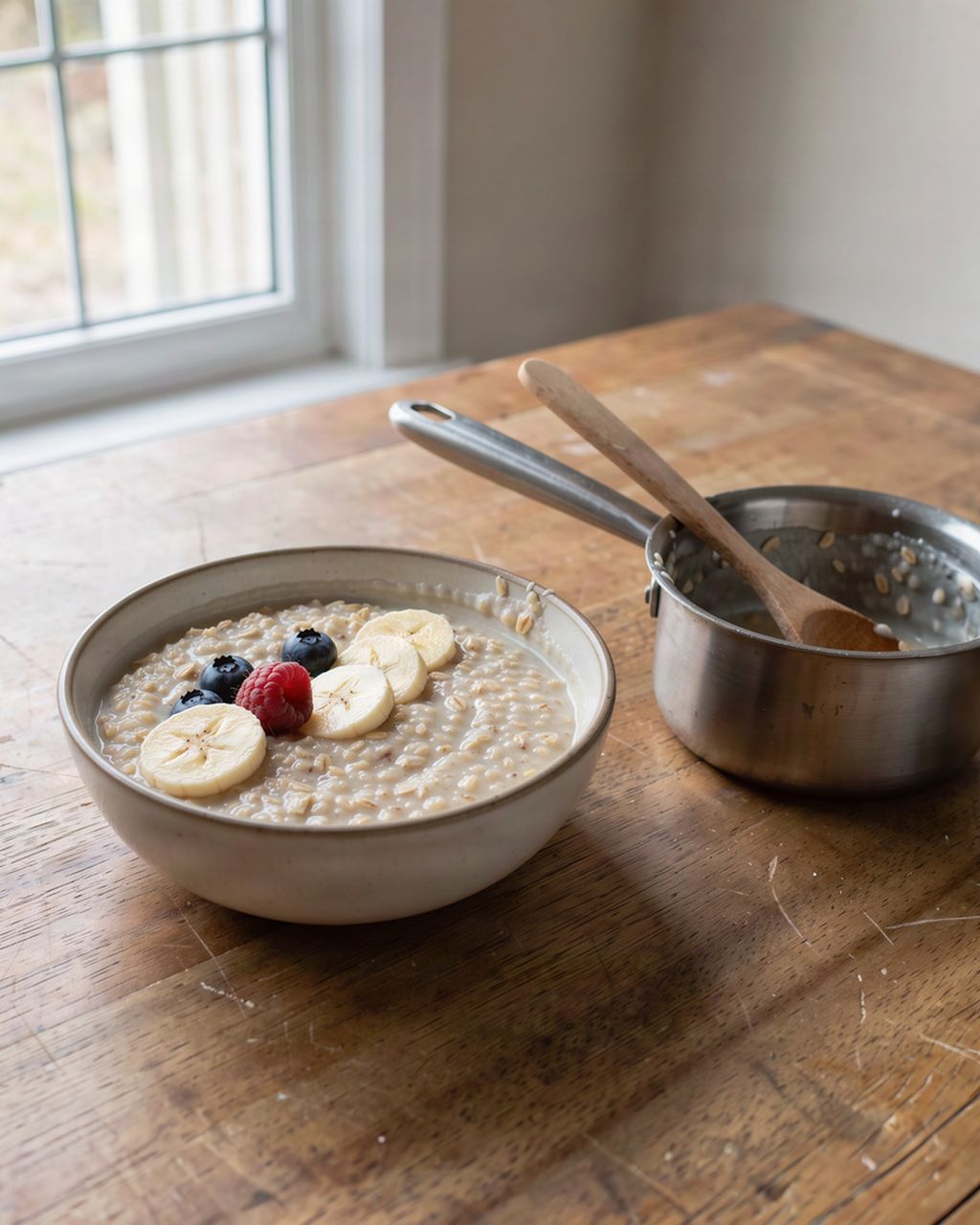
For a vegan version, reach for a richer plant-based milk — coconut milk gives a distinctive flavour, oat milk a milder, more neutral one. Skip the egg yolks and make up the creaminess with a longer simmer and a spoonful of plant-based fat; the colour, though, won't be golden — expect more of a creamy white.
If you want to cut back on sugar, sweeteners like erythritol or stevia can be used. Just keep in mind that sweeteners don't caramelise and won't give the same body as sugar, so the result tends to be a bit thinner.
Cashew-coconut milk
Homemade cashew-coconut milk as a plant-based base for vegan arroz doce
Arroz doce is cooked in two stages: first the rice is simmered in a little water, then gently cooked until tender in milk with cinnamon and lemon, and finally thickened with sugar and tempered egg yolks. The whole process takes about 40–50 minutes, and there's really just one key rule — low heat and frequent stirring.
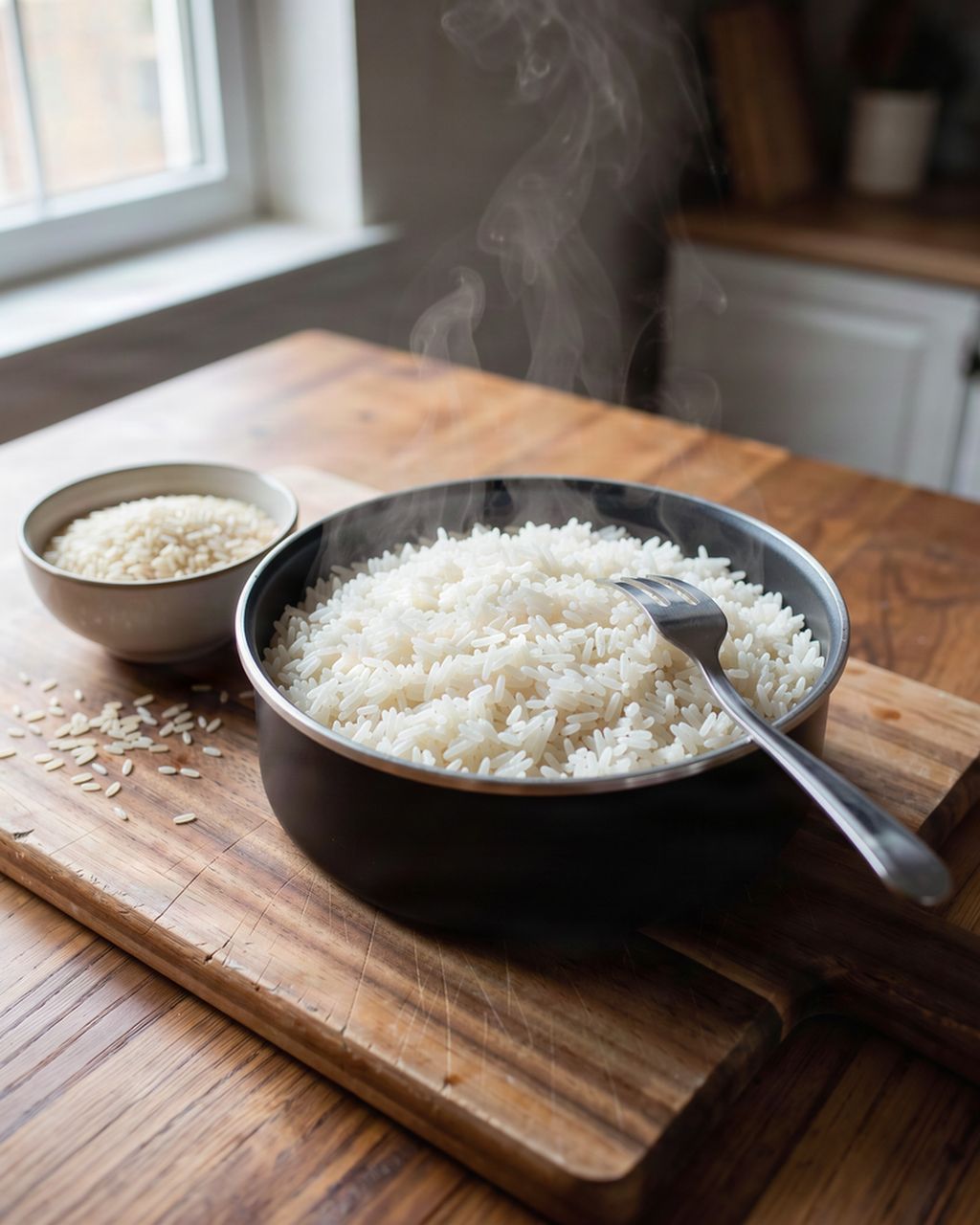
Pre-cook the rice in water. Pour about 300 ml of boiling water with a pinch of salt over 200 g of rice and simmer gently until the water is almost fully absorbed (5–8 minutes). This gets the grain going so the milk doesn't have to do all the work.
Add the milk and aromatics. Pour in 1 litre of hot milk, add the lemon zest and cinnamon stick. Bring to a gentle simmer, then turn the heat right down.
Simmer slowly, stirring often. Cook gently for 25–35 minutes, stirring regularly, especially at the bottom, so the rice doesn't catch. It's ready when the rice is tender and the pudding is creamy but still slightly runny.
Sweeten it. Remove the zest and cinnamon stick, stir in 120–150 g of sugar, and cook for a further 3–5 minutes until dissolved.
Temper the yolks. Take the pot off the heat. Whisk the egg yolks, then, whisking constantly, ladle in a little of the hot pudding spoonful by spoonful before pouring the yolks back into the pot. Warm through briefly without letting it boil — two minutes is enough for it to thicken.
Serve and decorate. Spoon into bowls or onto shallow plates, let it settle, then dust the surface with ground cinnamon. Serve lukewarm or chilled.
The pudding thickens as it cools, so take it off the heat while it's still a touch runnier than you want the final result to be.

The creaminess of arroz doce comes down to the starch released from the rice and slow cooking — not to piling in cream. These five things make the difference between a silky pudding and a dull one:
Use short-grain rice. Arborio or carolino release starch that naturally thickens the pudding. Long-grain rice stays separate and watery.
Cook slowly and stir often. Low heat and frequent stirring release the starch evenly and stop it catching on the bottom.
Add sugar only once the rice has softened. Both sugar and the acidity from the lemon slow down how quickly the grain softens; add them once the rice is tender.
Don't let it cook dry. Take it off the heat while it's still slightly runny — it will thicken considerably as it cools.
The yolks build the body. Tempered yolks stirred in at the end give the colour and creaminess that milk alone simply can't achieve.
Sweet rice cooked in milk exists in nearly every cuisine, but arroz doce sets itself apart from its relatives with egg yolks and that citrus-cinnamon fragrance. Its closest cousin is Spanish arroz con leche, which shares the milk, sugar and cinnamon but often adds vanilla and leaves out the yolks. Indian kheer plays in a completely different register — fragrant with cardamom, enriched with almonds or pistachios, and often made with coconut milk. Central European milk rice, by contrast, tends to be simpler, with no egg yolks, just butter and cinnamon.
Each version has its own charm; if that spiced, Indian-style approach appeals to you, try the similarly fragrant pudim abade de Priscos and other Portuguese sweets, or pair your arroz doce with traditional Portuguese biscuits.
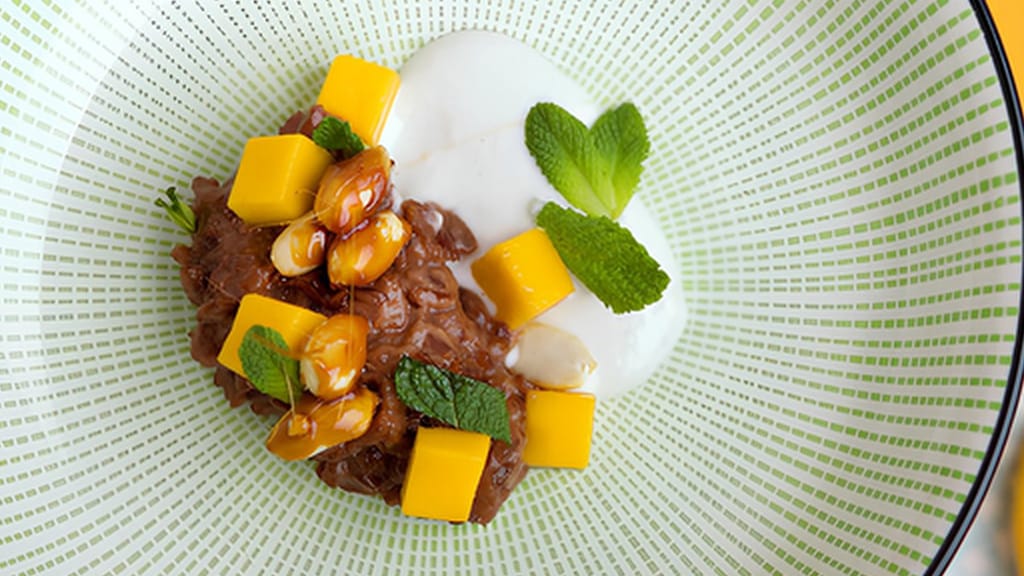
Cardamom rice with coconut cream and mango
Cardamom rice with coconut cream and mango — a spiced take on sweet rice, in the spirit of Indian kheer
Not strictly, but the yolks are what make arroz doce truly arroz doce — they give it that golden colour and creamy body. Leave them out and you'll end up with fairly plain milk rice; you'd then need to make up the creaminess with longer cooking and good short-grain rice.
Arroz doce is traditionally served lukewarm or chilled, never piping hot. As it cools it thickens to just the right consistency and the flavours come together, which is why most Portuguese cooks let it rest and only dust it with cinnamon right before serving.
Stored in a sealed container, arroz doce keeps in the fridge for about 3 days. The pudding will thicken further over time, so loosen it with a splash of milk before serving; because of the egg yolks, don't leave it sitting at room temperature for long.
The most common cause is adding the yolks to pudding that's too hot, or letting the mixture boil after they've gone in — high heat curdles them into little egg flecks. Always take the pot off the heat first, temper the yolks with a spoonful of the hot pudding, then gently reheat just until it thickens, without letting it boil.
The closest substitute is orange zest, which gives a sweeter, milder note. A vanilla pod or a few drops of vanilla extract also work well; the key is to infuse the milk while it cooks, then remove the zest or pod before the final sweetening.
One recipe worth heating the oven for, one tip, and one deal from the shop. Nothing else.