Tartlets with light ricotta and curd cheese cream
Sfogliatella: How to Make Naples' Famous Pastry at Home
Updated Oct 24, 2026
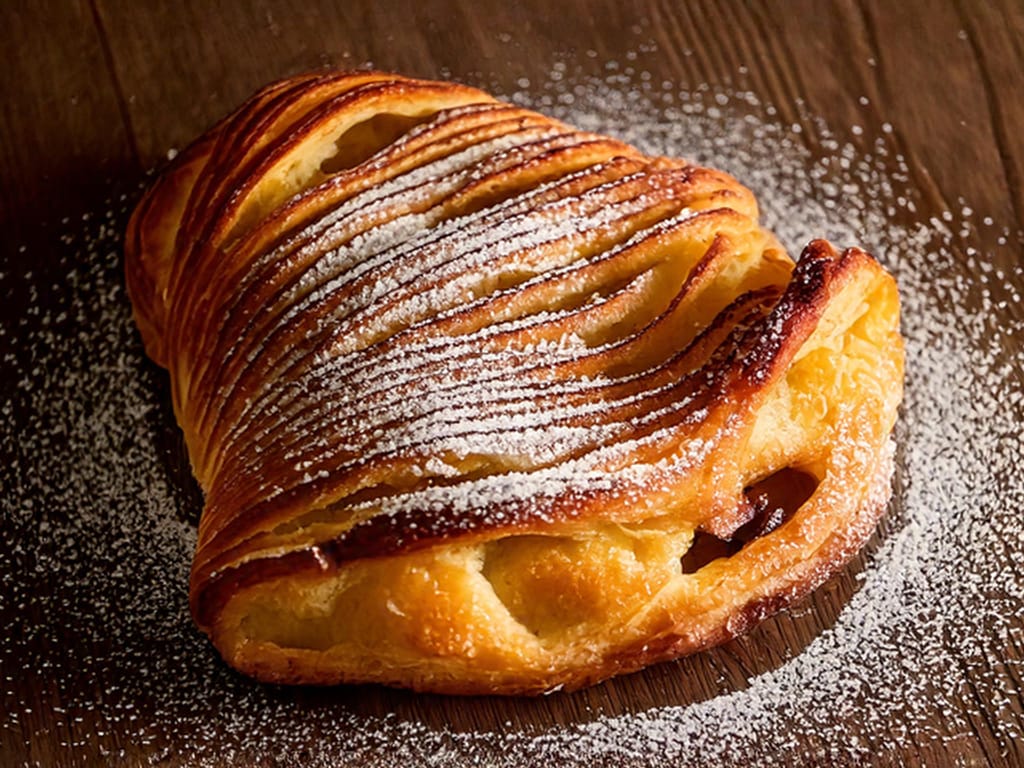
Sfogliatella is a Neapolitan pastry made of dozens of paper-thin layers of dough, filled with a ricotta and semolina cream flavored with candied citrus peel and cinnamon. It comes in two forms: the crisp, shell-shaped *riccia* and the softer *frolla*, made with shortcrust pastry. At home it's a challenge, but a manageable one once you understand why each step works. Plan on 1.5–2 days (about 3 hours of hands-on work) and expect 10–12 pastries from one batch. Here's the whole process, from dough to filling to baking: a timeline, stretching the dough and opening the shells step by step, and what to do when something goes wrong.
Sfogliatella is a layered Neapolitan pastry filled with a sweet ricotta and semolina cream, scented with candied citrus peel and cinnamon. The name comes from the Italian sfoglia, meaning "leaf" or "sheet", and that's just what it looks like: dozens of paper-thin layers of dough stacked on top of one another. The plural is sfogliatelle.
According to tradition, it was created in the 17th century at the Santa Rosa convent in Conca dei Marini on the Amalfi Coast. The story goes that one of the nuns didn't want to throw away leftover semolina, so she mixed it with sugar, dried fruit and citrus liqueur and wrapped it in dough. The recipe reached Naples through the pastry chef Pasquale Pintauro, who began selling it in his shop in 1818, and ever since, sfogliatella has been one of the symbols of Neapolitan pastry-making.
Seasonal baking plans, tested recipes and kitchen tricks that save you time. Unsubscribe in one click.
Sfogliatella comes in two basic forms: riccia is crisp and layered, while frolla is smooth and tender. They differ in the dough, not the filling: inside both you'll find the same ricotta and semolina cream.
Sfogliatella riccia ("curly"): dough that is stretched and rolled, brushed with fat, rolled into a log and sliced. In the oven the layers fan open into the typical shell with delicate ridges.
Sfogliatella frolla: a quicker version made with shortcrust dough (pasta frolla) that is filled like a turnover. It has no layers, is softer, and is closer to a buttery little cake.
If you're baking it for the first time, start with frolla, which is more forgiving. Riccia is the goal you work your way up to.
Sfogliatella Santa Rosa and coda d'aragosta are two Neapolitan variations with the same layered riccia shell: Santa Rosa is the historic predecessor with pastry cream and amarena cherries, and coda d'aragosta is a modern elongated version filled with cream.
Sfogliatella Santa Rosa is the forerunner of today's sfogliatella, named after the convent in Conca dei Marini where, according to tradition, it originated. Under the layered shell it has the same semolina filling, but it's also crowned with a spoonful of pastry cream (crema pasticcera) and amarena cherries in syrup.
Coda d'aragosta ("lobster tail", lobster tail in the US) is a modern variation with an elongated shape: choux pastry is piped into a shell of riccia dough before baking, and in the oven it puffs up and leaves a hollow inside. Once cooled, the hollow is filled with pastry cream or whipped (diplomat) cream, which makes it sweeter and lighter than the classic sfogliatella.
Authentic sfogliatella rests on five ingredients: semolina, fat (traditionally lard), ricotta, candied citrus peel and cinnamon. Nothing exotic, but quality matters. The amounts below make 10–12 pastries (a log about 12–15 cm / 5–6 in long, cut into 1 cm / ½ in slices). For what to expect from each Italian ingredient and how to choose it, see the article ingredients for Italian desserts: ricotta, mascarpone and more.
For the riccia dough you need just high-gluten flour, water, salt, a teaspoon of honey and 100–150 g of lard for brushing the layers.
High-gluten fine flour (00 or bread flour): about 250 g
Water: roughly 90–100 ml, enough to make a stiff, not sticky, dough
Salt: 5 g (a scant teaspoon)
Honey or sugar: 1 teaspoon (about 10 g), which helps the color when baking
Lard (strutto) for brushing the layers: 100–150 g, softened, or clarified butter
For brushing before baking: 1–2 tablespoons melted lard or clarified butter
For dusting: powdered sugar
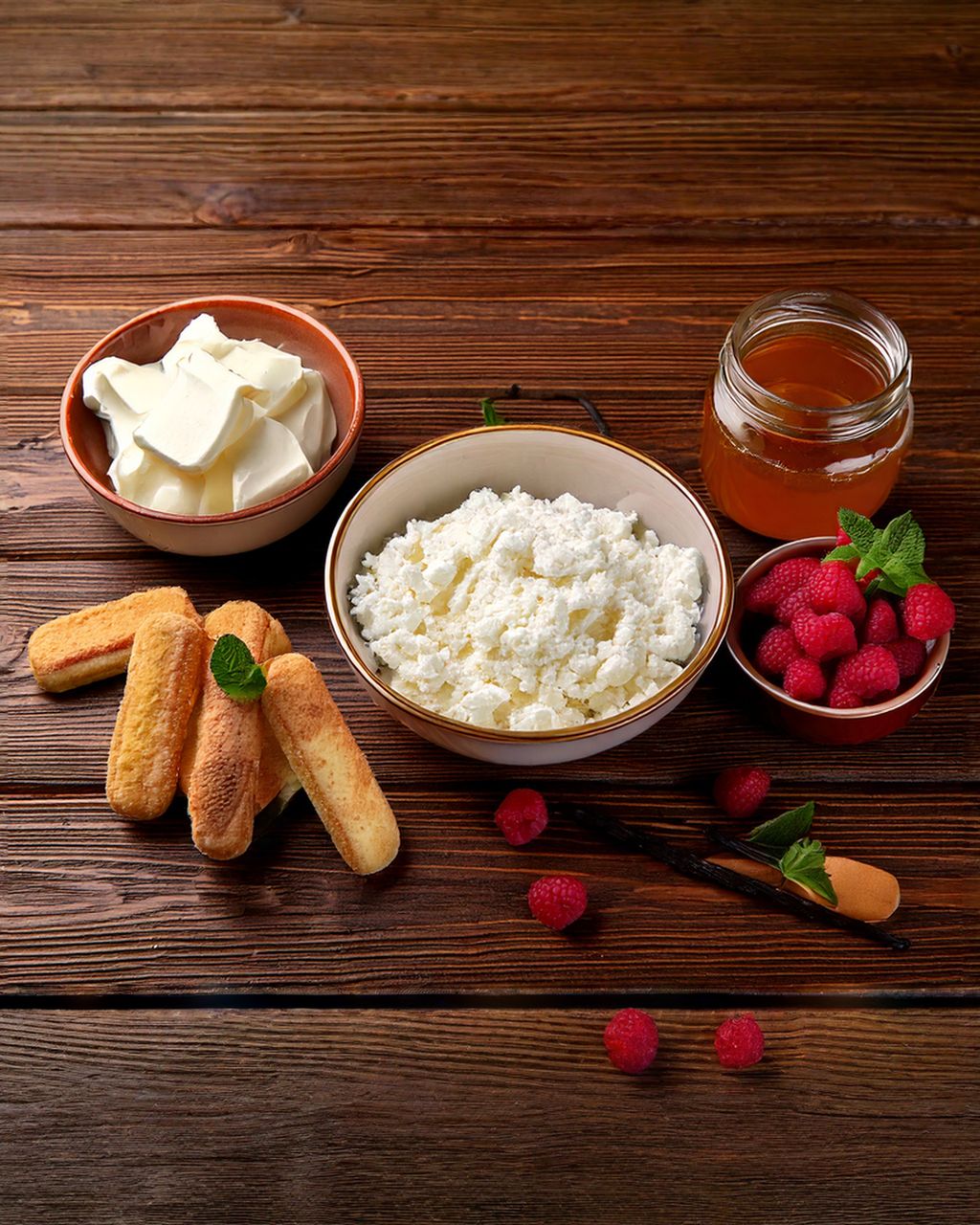
The filling is made of well-drained ricotta and a thick porridge of semolina cooked in milk, flavored with sugar, egg, candied peel, cinnamon and vanilla.
Ricotta: 250 g, well drained
Durum wheat semolina (semola): 80 g, cooked in 250 ml milk into a thick porridge
A pinch of salt for the porridge
Sugar: 80–100 g, to taste
1 egg (or just the yolk for a thicker filling)
Candied orange or citron peel: 40 g, finely chopped
A pinch of ground cinnamon and the seeds from half a vanilla pod
Optional: a teaspoon of grated zest from an unwaxed orange
Almost every sfogliatella ingredient can be swapped for a more common alternative. Just expect a slight change in texture or flavor.
Durum wheat semolina can be replaced by ordinary baby-cereal semolina, though the filling will be a bit softer.
Lard can be replaced by clarified butter or ghee, but the layers will be a little less crisp (more in the FAQ below).
Ricotta can be replaced by well-drained quark or mascarpone; with mascarpone, cut back on the sugar, since it's sweeter and richer.
Candied peel can be replaced by freshly grated orange or lemon zest for a fresher flavor.
Sfogliatella riccia takes roughly 1.5–2 days, but the hands-on work is only about 3 hours. The rest of the time the dough is resting and chilling. The most convenient schedule: dough and log on the first day, filling, shaping and baking on the second.
Dough: 15–20 minutes of mixing and kneading.
Dough rest: at least 2 hours in the fridge (2–4 hours), or overnight if you like. The longer it rests, the more the gluten relaxes and the thinner the dough will stretch, until it's translucent.
Stretching and rolling: 45–60 minutes (more like an hour and a half the first time).
Chilling the log: at least 4–6 hours, ideally overnight (12–24 hours) in the fridge. The fat has to set completely, or the slices will stick together when you shape them.
Filling: 30 minutes of work and at least 1 hour of chilling (the ricotta also needs to drain for 1 hour up to overnight, so you can let it drain while the log chills).
Shaping the shells: 30–40 minutes for 10–12 pastries.
Baking: 20–25 minutes at 200–210°C (390–410°F), plus 10 minutes of cooling so the filling can settle a little.
Total: about 3 hours of work spread over 1.5–2 days.
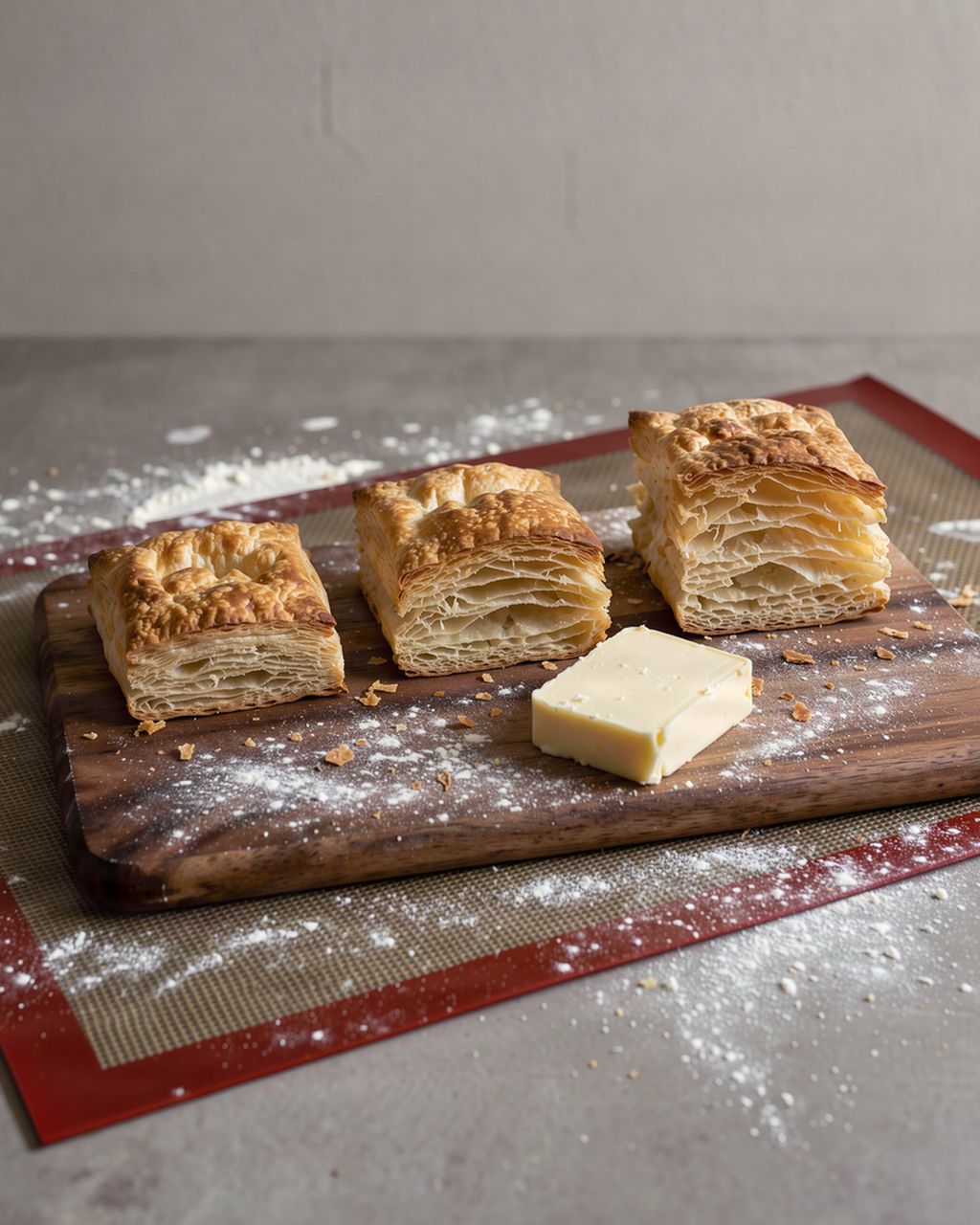
The magic of riccia is in the lamination: the dough is stretched until translucent, brushed with fat, rolled into a log and sliced. In the oven the fat between the layers melts and separates the leaves, and the water in the dough turns to steam and fans them open into crisp ridges. Here's how:
Make a stiff dough from flour, water, salt and a teaspoon of honey. Knead for 8–10 minutes, until smooth and elastic like an earlobe. Wrap it and let it rest for at least 2 hours, or overnight if you like. The gluten relaxes and the dough will stretch thinner.
Stretch it until translucent. Divide it into portions and run them through a pasta machine from the thickest to the thinnest setting, until you can see the work surface through the sheet. You can do it by hand too; it just takes more work.
Brush with fat. Spread each sheet generously with softened lard. This is the layer that later separates the leaves.
Roll into a log. Join the sheets one after another and roll them into a firm, dense log about 6–7 cm (2½ in) in diameter. Wrap it in plastic and chill it in the fridge for at least 4–6 hours, ideally overnight.
Slice and shape. Cut the log into slices about 1 cm (½ in) thick and, with your thumbs, press each one into a cone, pushing the layers apart in the middle to make a pocket for the filling.
Two of these steps make or break the pastry: stretching and rolling the log, and opening the slice into a shell. That's why we describe them separately below. If lamination tempts you for other pastries too, the comparison puff pastry: store-bought, homemade or rough puff shows where you can save time and where you can't.
The goal is a single long, paper-thin strip, wound so tightly that no air is left between the layers, only a thin film of lard.
Divide the dough into 3–4 portions and run each one through the pasta machine, first on the thickest setting. Fold it in half and run it through again 3–4 times, until smooth. Then work gradually down to the thinnest setting. The strip will be 80–100 cm long and as wide as the machine's rollers (about 14 cm), and that width determines the length of the finished log.
Finish stretching by hand. Lay the strip on a large surface (ideally a table covered with a floured cloth) and gently thin it with the backs of your fingers, working from the center to the edges. It's right when you can read a newspaper through it and the dough doesn't tear. A small hole is fine; a big one isn't.
Brush with room-temperature lard. It should have the consistency of soft butter, not liquid oil. Spread it with your hand or a brush in a thin, even layer. Your fingers should glide, not drag.
Start rolling from the shorter end. Make the first few turns as tight as you can, because they form the center of the future shell. With every turn, pull the loose strip toward you and out to the sides so it thins out even more. This is traditionally called "pulling", and it's what creates the ridges.
Join on more strips. Lay a new strip over the end of the previous one with a 2–3 cm (1 in) overlap, press it down and keep rolling. Brush the outside of the log with lard as you work.
Check the shape. The finished log is 6–7 cm (2½ in) across, firm to the touch, and if you were to cut into it now, you'd see tight concentric rings with no gaps. Wrap it tightly in plastic and put it straight in the fridge for at least 4–6 hours, ideally overnight.

Opening the shell means shifting the layers, not stretching the dough: the layers slide past each other like a telescope extending, and a flat disc turns into a cone.
Trim the ends off the log (they tend to be uneven) and cut slices about 1 cm (½ in) thick with a sharp knife, using a slicing motion rather than pressure. The log needs to be cold and firm, but if the slices crack at the edges, let them sit on the board for 5 minutes.
Grease your hands with lard. It helps the layers glide and stops sticking.
Hold the slice between your thumbs and index fingers with your thumbs in the middle. Push the center apart with your thumbs while turning it outward, so the layers from the center to the edge slide out over one another.
Work in a circle. Turn the slice a little and repeat until it's a cone about 3–4 cm (1–1½ in) deep. A good cone is evenly thin, the layers show on the outside like steps, and there's no hole anywhere.
Fill right away. Put 1 heaping tablespoon (about 35–40 g) of filling in the cone and gently press the edges together so the shell closes.
What to look for: the layers should slide easily with slight resistance. If they drag and tear, the slice is too cold or not greased enough. If they spread and stick together, it's too warm, so put it back in the fridge for 10 minutes.
The ideal filling is thick, smooth and holds its shape, never runny. The base is cooked semolina porridge mixed with well-drained ricotta. Here's how:
Drain the ricotta through a fine sieve or cloth for at least an hour, or overnight in the fridge. Excess whey is the most common reason the filling leaks out during baking.
Cook the semolina in milk with a pinch of salt into a thick, setting porridge, stirring constantly for 3–5 minutes, until it pulls away from the sides of the pot. Transfer it to a bowl, cover with plastic wrap pressed right onto the surface and let it cool.
Beat everything together: ricotta, semolina, sugar, egg, candied peel, cinnamon and vanilla. The filling should be thick but supple, holding on the spoon without running off.
Want a variation? A spoonful of cocoa makes a chocolate version, lemon zest gives a fresher note in place of orange, and a handful of chopped almonds or pistachios adds crunch. Leave the basic ratio of semolina to ricotta alone, though. It's what holds the filling together.
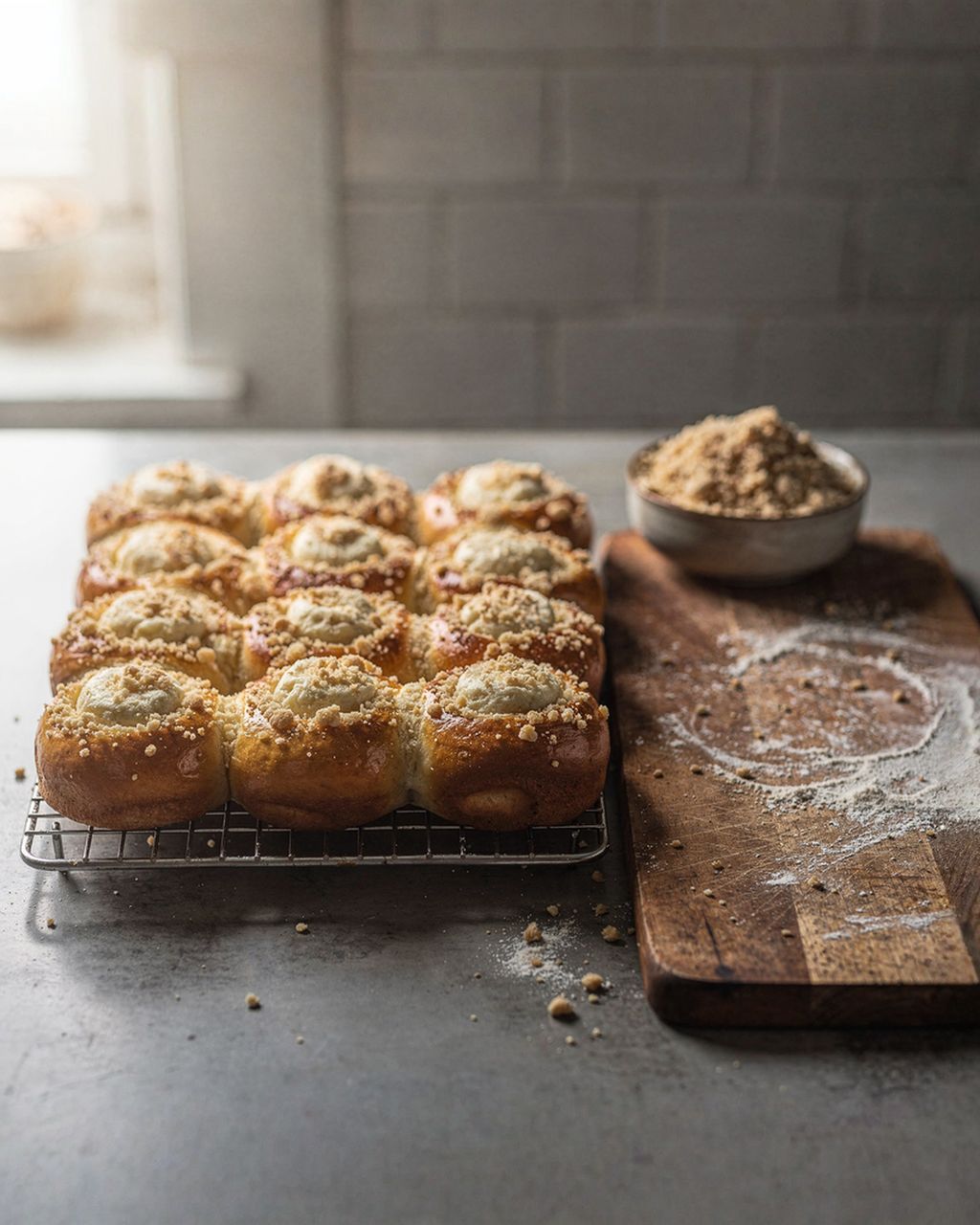
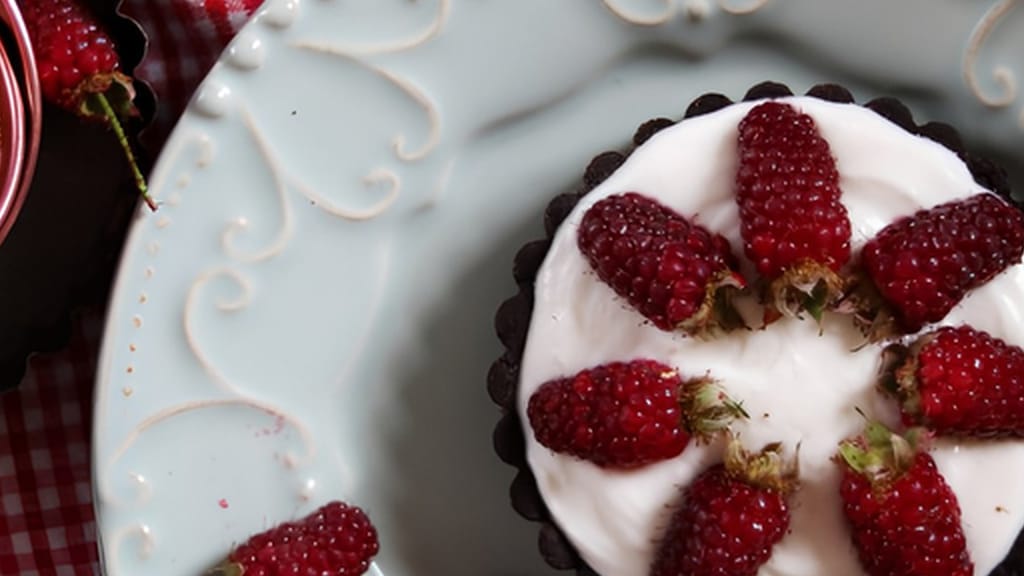
Tartlets with light ricotta and curd cheese cream
Tartlets with ricotta and quark cream: an easier way to enjoy a ricotta dessert without laminating dough.
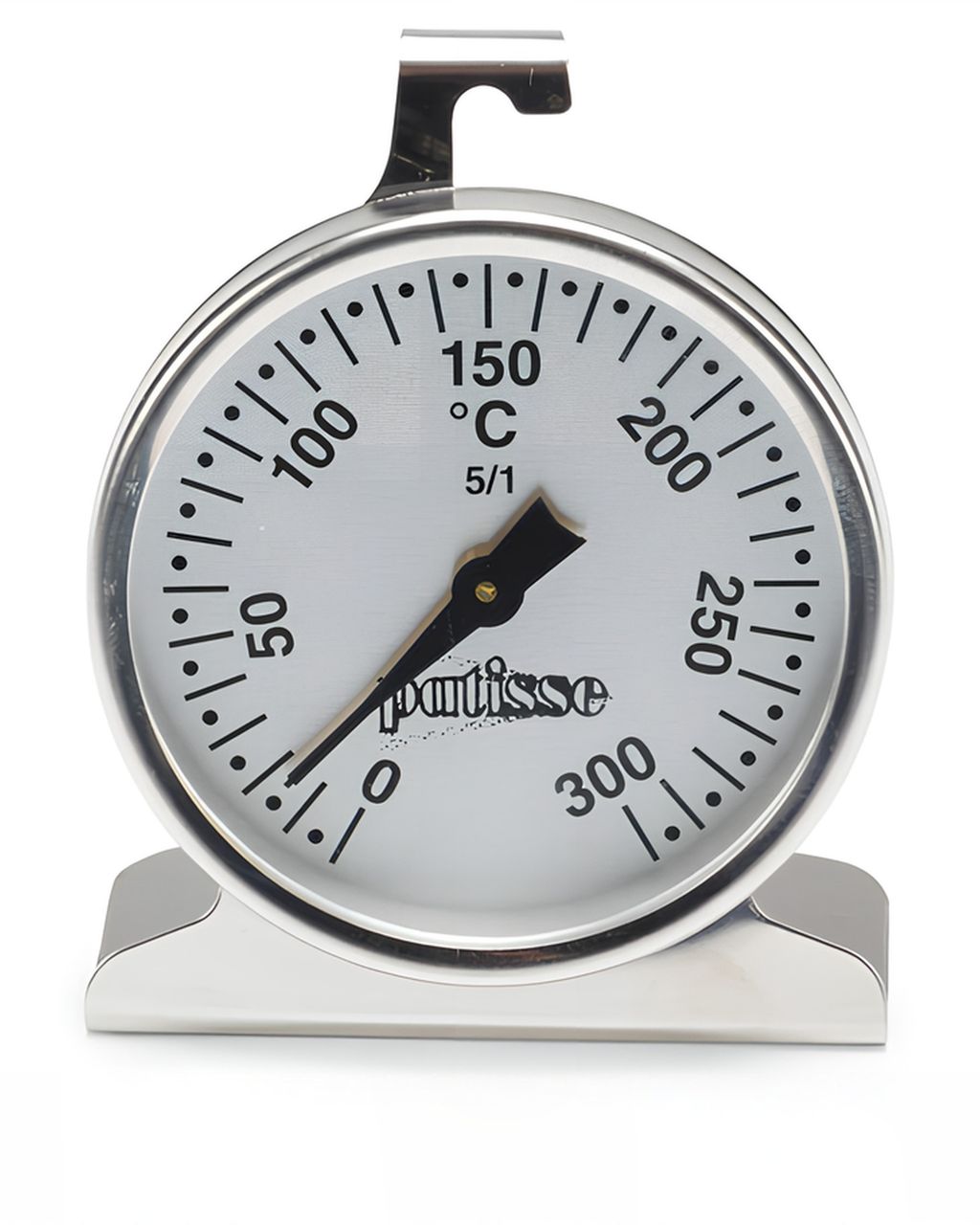
Bake sfogliatelle hot and fast: in a preheated oven at 200–210°C (390–410°F) for roughly 20–25 minutes, until deep golden and the ridges have fanned open. The high temperature is key, because it quickly turns the water in the dough to steam, which together with the melted fat opens up the layers. Home ovens often differ from the set temperature by 10–20°C, so it pays to check with a separate thermometer; you'll find that and other tools among the baking pans and bakeware.
Place the filled cones on a baking sheet lined with parchment, seam side down, and leave space between them, because they puff up as they bake.
Brush the surface with melted lard or clarified butter for shine and color.
In a fan oven, lower the temperature by 10–15°C (about 25°F) compared with a conventional oven and keep an eye on the pastries from minute 18, because thin layers go quickly from golden to brown.
You can tell they're done by the sound: tap one and you should hear a hollow, crisp note.

Most failures come down to one of four causes: too little fat, too much heat from your hands, a wet filling or a low oven temperature. Cause → fix:
The layers don't open up (the shell stays flat and smooth). Cause: dough stretched too thick, too little lard between the layers, or a loosely rolled log with air in it. Fix: stretch the dough until translucent, brush it over the whole surface and keep the strip taut as you roll. Cut slices about 1 cm (½ in) thick.
The filling leaks out. Cause: undrained ricotta, thin semolina porridge or an overfilled shell. Fix: drain the ricotta for at least an hour, cook the semolina until thick and put only 35–40 g of filling in each cone; press the edges of the shell together gently.
The shell falls apart while shaping (the layers separate, the cone tears). Cause: the log isn't chilled enough, or it's so cold that the lard is brittle. Fix: chill the log for at least 4–6 hours, ideally overnight, let the slices warm up for a moment before shaping and grease your hands with lard. Stretch in a circle and gradually, not in one pull.
It isn't crisp. Cause: low oven temperature, ordinary butter instead of lard, or baking on damp parchment, where the base steams. Fix: bake at a true 200–210°C (390–410°F), checked with a thermometer, and choose lard or clarified butter. If the riccia goes soft on day two, bring back the crispness with 5 minutes at 180°C (350°F).
Sfogliatelle freeze best shaped, filled and unbaked, and you bake them straight from the freezer, with no thawing.
The dough log keeps wrapped in plastic in the fridge for 2–3 days, or in the freezer for up to 2 months (thaw overnight in the fridge).
The filling can be made up to 2 days ahead; keep it in a covered bowl in the fridge.
Unbaked shells: freeze them loose on a parchment-lined baking sheet (about 2 hours), then transfer them to a bag or container. They keep for 1–2 months.
Baking from frozen: brush with fat and bake at 200°C (400°F) for 5–10 minutes longer than fresh, so about 25–35 minutes. Thawed shells would go soft and the layers would stick together, so put them in the oven frozen.
Sfogliatella is eaten fresh and best lukewarm, within a few hours of baking, when it's at its crispest. Dust it with powdered sugar before serving.
In Naples it goes with breakfast alongside a strong espresso, but it also works as an after-dinner dessert, with coffee, sweet wine or a liqueur like limoncello. Riccia is all about the contrast between the crisp shell and creamy filling, so serve it as fresh as you can; frolla stays soft longer.
If lamination still puts you off, start with a simpler Italian dessert and work your way up to sfogliatella.
Panna cotta: a simple italian dessert ready in no time
Panna cotta: a simple Italian dessert that's ready in no time when you're not in the mood for laminating dough.
Yes. Clarified butter or ghee can stand in for lard, but the layers will be a little less crisp. Lard (strutto) gives the crispest result and the best layer separation, while clarified butter and ghee both handle the high baking temperature. Regular butter contains water, so the layers separate less and go soft faster.
Store baked sfogliatella loosely covered at room temperature, and warm it for 5 minutes at 180°C (350°F) before serving. In a sealed container it steams and goes soft. It's best within 24 hours, because on day two the riccia softens as moisture from the filling seeps into the layers.
As an emergency shortcut, yes, but it won't be true riccia. Store-bought puff pastry won't form the shell's characteristic concentric ridges and tends to be more buttery. It works better for a quick turnover with ricotta filling than for an authentic result.
Yes. You can roll and stretch the dough by hand; it just takes longer. Roll it as thin as you can with a rolling pin, then stretch it over a floured tablecloth using the backs of your fingers until it's translucent. Work with smaller portions so the dough doesn't dry out.
Sfogliatella is a layered Neapolitan pastry baked in the oven with a semolina and ricotta filling. Cannoli are Sicilian fried tubes filled with ricotta only after frying. So you bake sfogliatella with its filling inside, while cannoli are filled just before serving.
One recipe worth heating the oven for, one tip, and one deal from the shop. Nothing else.