Why Are My Scones Dry or Hard? Flour, Liquid, Baking Time and Storage
Scones vs Biscuits: UK Scones, US Biscuits and the Cookie Confusion
Updated Nov 20, 2026
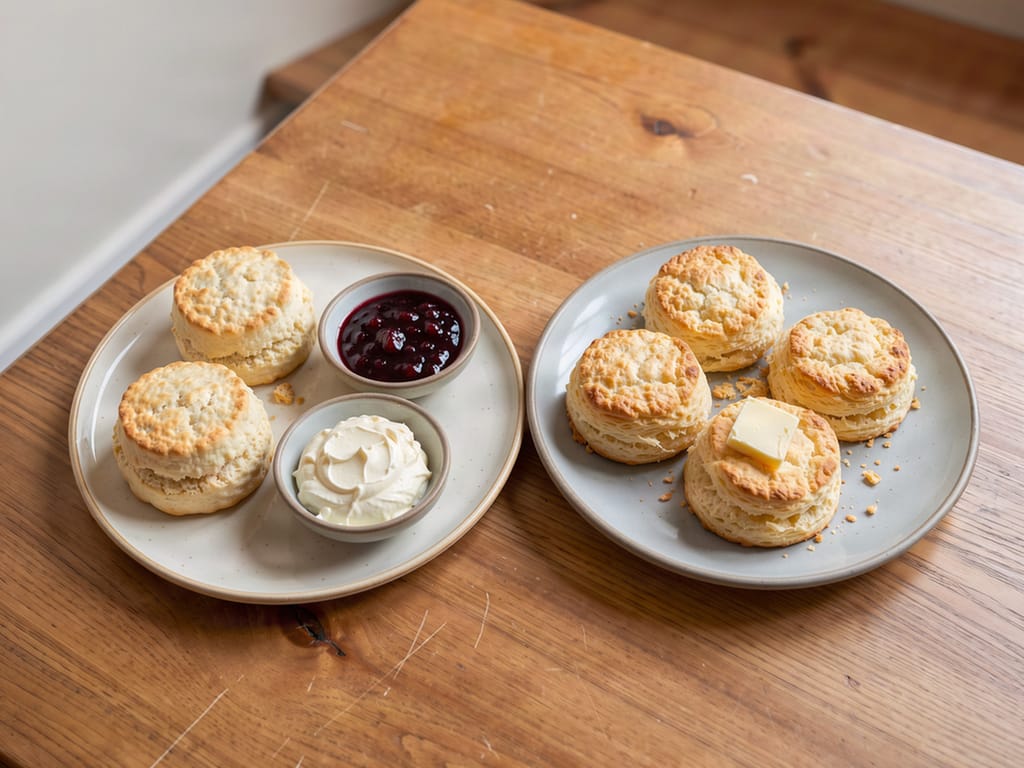
A British scone and an American biscuit are close cousins: both are quick breads raised with baking powder, but the scone is usually a little sweeter, sometimes made with egg, and eaten with jam and cream, while the biscuit is unsweetened, richer in fat, flakier and usually eaten savory. The confusion is in the words: in the UK, Ireland, Australia and New Zealand a biscuit is what Americans call a cookie. Here is how the bakes and the names line up.
Think of them as two regional versions of the same idea: a small, tender bread made quickly with flour, fat, liquid and a chemical raising agent, no yeast and no rising time.
The British scone leans sweet. It is eaten at teatime, split and spread with jam and cream.
The American biscuit leans savory. It is eaten at breakfast or dinner, with butter, gravy or fried chicken.
Between them sits a third bake that adds to the confusion: the American scone, which is sweeter and richer than either.
Recipe of the week, one tip that saves you time and one deal from the shop. Unsubscribe in one click.
The next issue goes out on Thursday, November 26.
King Arthur Baking describes the modern British scone as white flour, sugar, a leavener, butter and milk.
Fat: butter, rubbed into the flour, in modest amounts.
Liquid: milk or buttermilk; some recipes add an egg for richness and color.
Sugar: a little, enough to taste rather than to make the scone sweet. Savory cheese scones skip it.
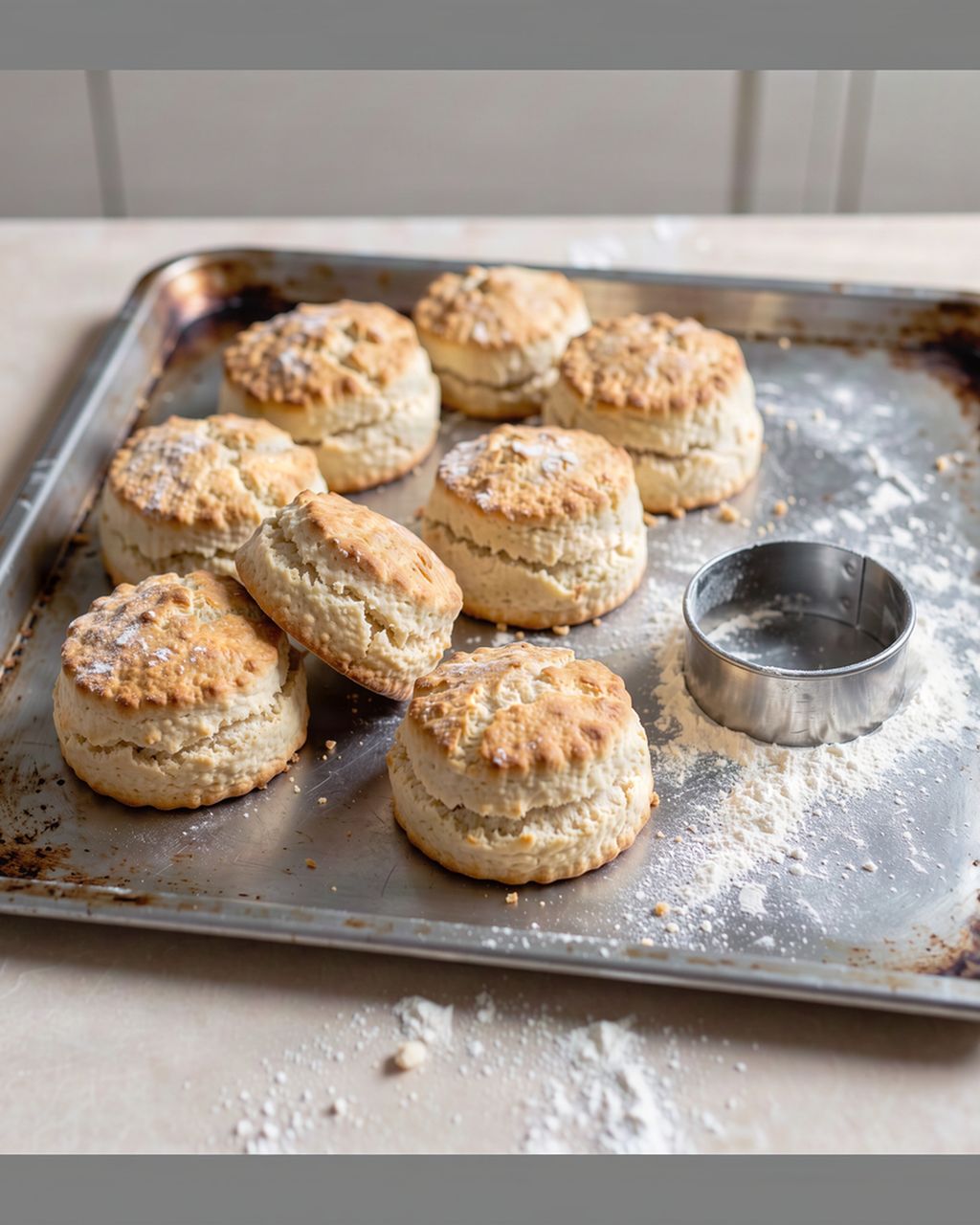
Shape: round, cut with a fluted or plain cutter, tall, with a soft, cakey crumb and a natural split around the middle.
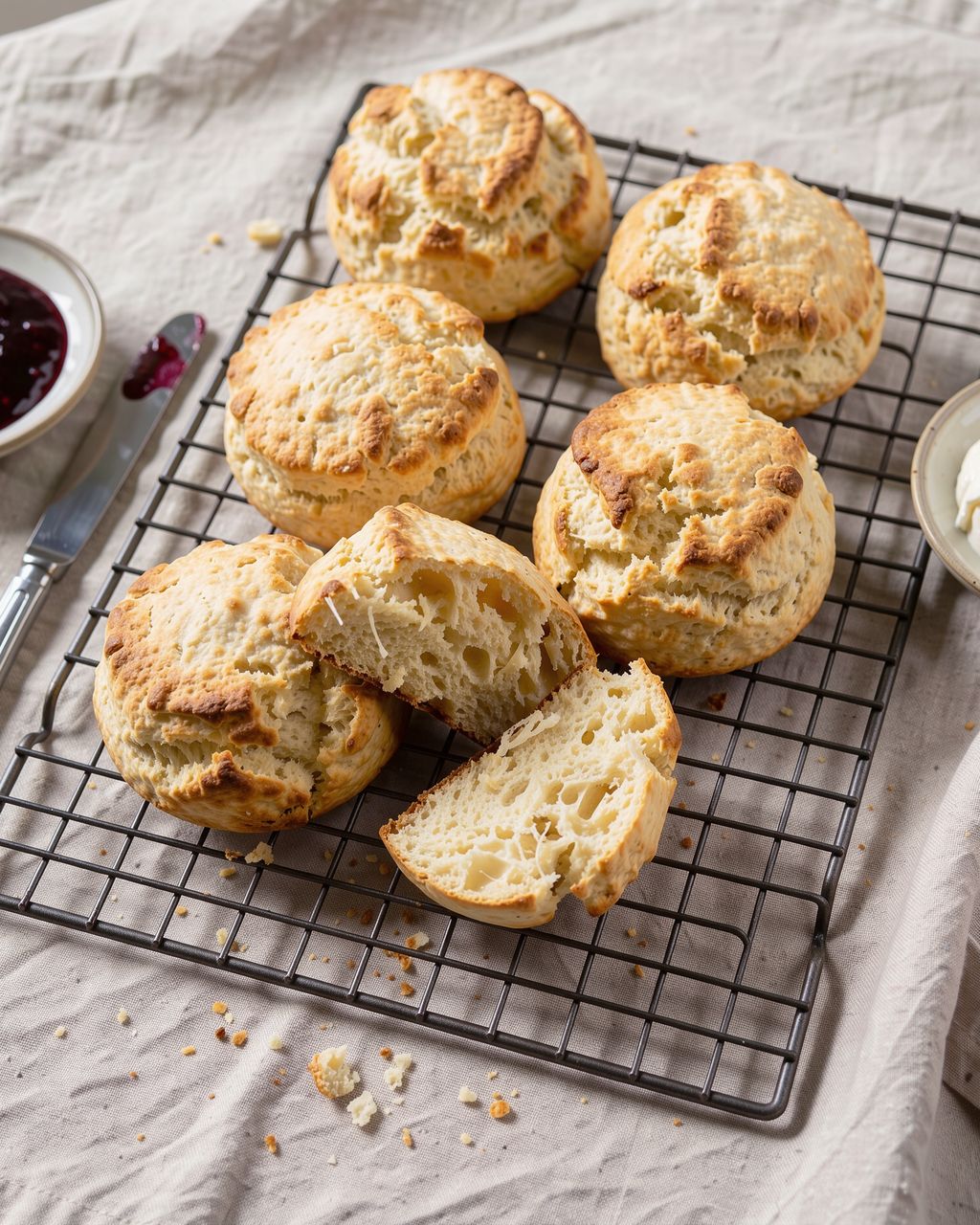
Served: split, with jam and clotted cream, often with tea. In Devon and Cornwall, the order of jam and cream is a famous, good-humored argument.
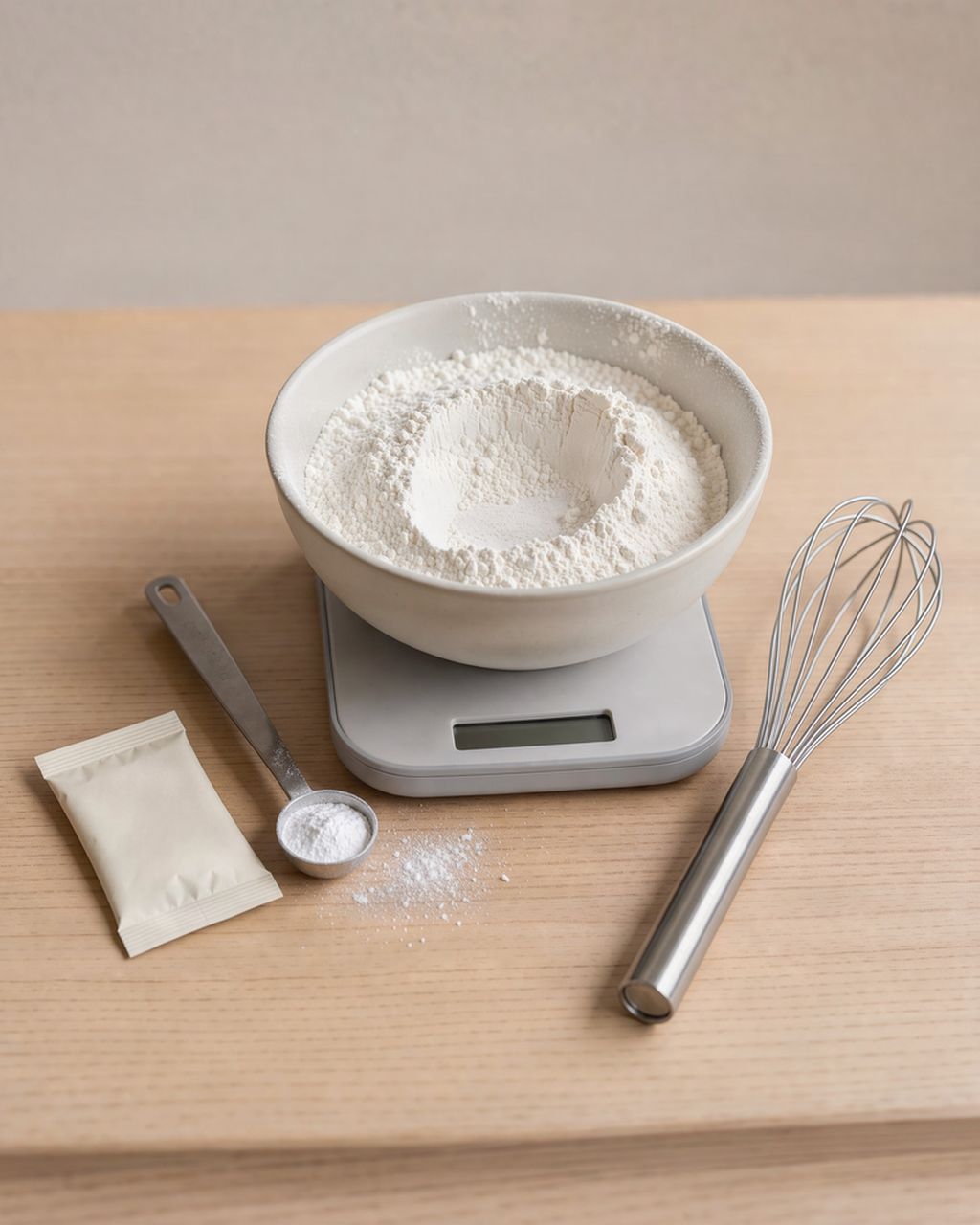
Many British recipes use self-raising flour, which has the baking powder already mixed in. Outside the UK, plain flour plus baking powder does the same job.
The American biscuit, especially the Southern buttermilk biscuit, is built for flakiness rather than cake-like softness.
Fat: more of it, and always a solid fat: butter, shortening, lard or a mix. King Arthur notes that biscuits always use a solid fat, while scones can even be made with cream alone.
Liquid: usually buttermilk, with baking soda alongside the baking powder.
Sugar: little or none.
Egg: rarely.
Method: many bakers fold the dough over itself a few times to build flaky layers that peel apart.
Served: warm, with butter and honey, split under sausage gravy (biscuits and gravy), or next to fried chicken.
US recipes measure butter in sticks; our guide to a stick of butter in grams helps if you bake from them in Europe, and buttermilk substitutes covers what to use where cultured buttermilk is hard to find.
If you order a scone in an American coffee shop, you get something different from a British teatime scone:
Richer: King Arthur notes they are often enriched with egg, plus butter and/or heavy cream, and calls them a hybrid of biscuit, soft cookie and cake.
Sweeter: more sugar in the dough, often a glaze or coarse sugar on top.
Shaped differently: usually cut from a round into triangles.
Loaded: blueberries, chocolate chips, cranberries and orange, or cinnamon.
They are eaten on their own, not with jam and clotted cream. So a British baker following an American scone recipe gets a sweeter, cakier bake, and an American following a British recipe may find the scones plain until the jam and cream go on.
The same word means different things on each side of the Atlantic:
Biscuit in the UK, Ireland, Australia and New Zealand: a small, flat, sweet, usually crisp bake. Digestives, shortbread, ginger nuts. This is what Americans call a cookie.
Biscuit in the US and much of Canada: the soft, flaky quick bread described above.
Cookie in the UK: usually a bigger, chewier, American-style cookie, such as a chocolate chip cookie.
Scone: the same word everywhere, but a slightly different bake in the US.
So a British recipe for "biscuits" will give you cookies, and an American recipe for "biscuits" will give you something like a plain scone. When a recipe's origin is unclear, the method tells you: creaming butter and sugar and baking until crisp means cookies; rubbing cold fat into flour and baking hot for 10–20 minutes, depending on size, means scones or biscuits.
Czech has its own split. Everyday packaged biscuits are sušenky, while the small Christmas cookies baked at home are cukroví; our guide to types of Czech Christmas cookies lists twenty classics.
Roughly, yes. Both start with cold fat cut into flour and a raising agent, so you can move from one to the other by adjusting the ratios:
Scone to biscuit: leave out the sugar and egg, use more cold butter or some shortening, switch the milk to buttermilk with a pinch of baking soda, and fold the dough a few times for layers.
Biscuit to scone: add a little sugar, use milk or a beaten egg with milk, and handle the dough less; skip the folding.
When you convert between UK and US recipes, measures change too: British recipes weigh in grams, American ones use cups and sticks. Our guide to converting European recipes to US measures has the key figures, such as about 120–130 g of all-purpose flour per US cup (236.6 ml) when the flour is spooned in and leveled, and up to about 140 g if you scoop it straight from the bag.
A British scone is usually lightly sweetened, sometimes enriched with egg, and served with jam and cream, while an American biscuit is unsweetened, made with more solid fat and buttermilk, flakier, and served savory. Both are quick breads raised with baking powder.
In the UK, a biscuit is what Americans call a cookie: a small, flat, usually crisp sweet bake such as a digestive or shortbread. The closest British bake to an American biscuit is a plain scone.
Americans call them scones too, but an American scone is usually richer and sweeter than a British one, often made with egg and cream, cut into triangles and sometimes glazed. The American bake closest to a plain British scone is the biscuit.
The method is nearly the same: cold fat is rubbed or cut into flour with a raising agent, liquid is added, and the dough is patted out, cut and baked hot. The differences are in the ratios of fat, sugar and egg, and in how much the dough is folded for layers.
Yes, in Australia and New Zealand, as in the UK and Ireland, sweet cookies are usually called biscuits, often shortened to bikkies in Australia. Scones there are the same as British scones.
One recipe worth heating the oven for, one tip, and one deal from the shop. Nothing else.