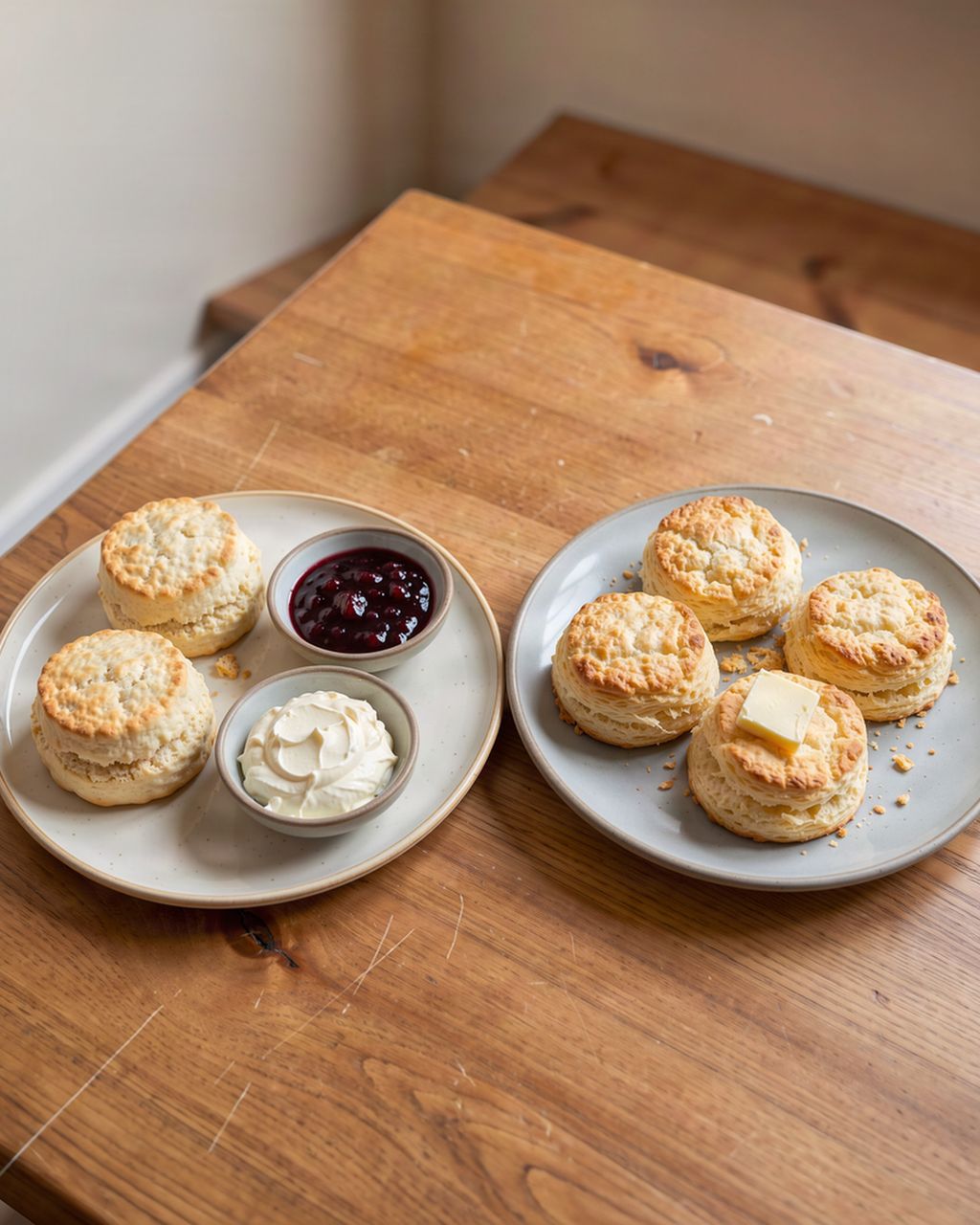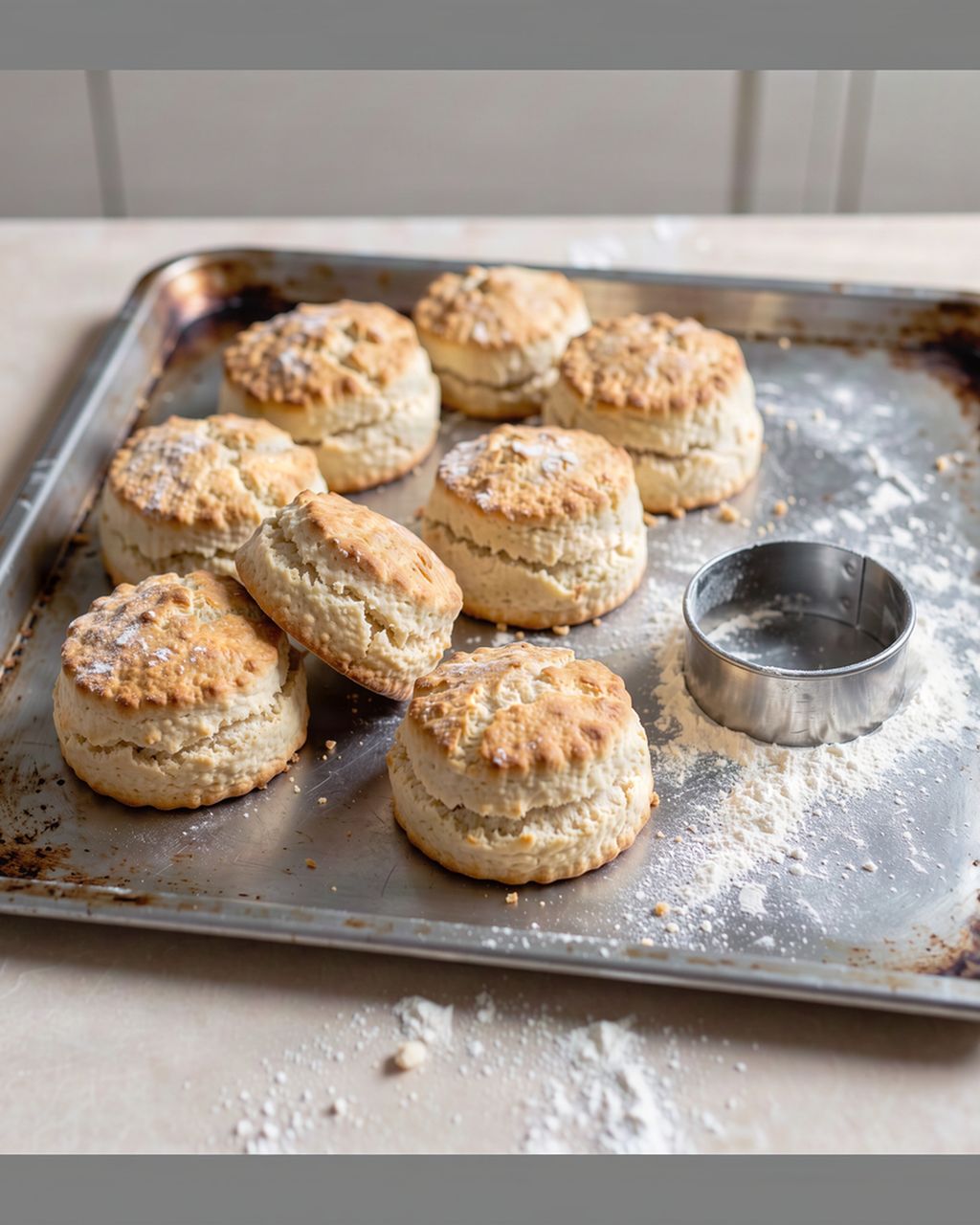
Why Are My Scones Flat? Five Reasons Scones Don't Rise
Why Are My Scones Dry or Hard? Flour, Liquid, Baking Time and Storage

Updated Nov 20, 2026
Scones turn out dry or hard when the dough has too much flour or too little liquid, when they bake a few minutes too long, or when they sit uncovered after baking. Scone dough should be soft and slightly sticky, and the scones should come out just golden. Even scones that dried out overnight can be refreshed in a warm oven.
Dry, hard scones come from four things, often more than one at once:
Too much flour, from scooped cups or a heavily floured worktop.
Too little liquid, so the dough is stiff before it even goes in.
Overbaking, even by three or four minutes.
Poor storage, with the scones left uncovered as they cool or overnight.
Overmixing adds to all of these, because a worked dough bakes tough. If your scones are also flat, look at the butter temperature, the cutter and the oven too.
Scones have little fat and sugar to keep them moist, so a little extra flour shows immediately.
Weigh the flour if you can. In cups, our tool uses about 125 g per US cup (236.6 ml) and 132 g per metric cup (250 ml) of all-purpose flour, spooned and leveled; King Arthur Baking counts 120 g per US cup, so expect about 120–125 g. A cup scooped straight from the bag holds more. The cup of flour in grams page has the figures.
Go easy on the worktop. Dust lightly, and brush off any loose flour from the dough before cutting.
Do not keep adding flour to stop the sticking. Scone dough is meant to be soft and a little tacky. Floured hands work better than a floured dough.
Reroll the scraps only once. Each time you gather the trimmings, they take in more flour and get tougher.
A soft dough makes a soft scone. As a reference point, BBC Good Food's ultimate scones use 225 g of self-raising flour, 50 g of butter and about 185 ml of liquid (125 ml of buttermilk plus 4 tablespoons of milk). That is roughly 80 ml of liquid per 100 g of flour.
Your flour may absorb more or less, so:
add about three-quarters of the liquid first, mix with a knife, then add the rest little by little
stop when there is no dry flour left and the dough is soft and slightly sticky
if it feels firm and dry, add a spoonful more milk before you tip it out
The type of liquid matters too. Buttermilk gives a tender crumb; cream, used in some American scones, adds fat and makes them richer and softer. In Europe, look for cream with at least 30% fat (US heavy cream is 36% or more); our guide to heavy cream in Europe shows what to buy. For buttermilk swaps, see buttermilk substitutes.
Scones need a hot oven but a short time. BBC Good Food bakes its ultimate scones at 220 °C (about 425 °F) in a conventional oven, or 200 °C fan, for 10–12 minutes. A few minutes too long, and the outside hardens and the inside dries.
Check at the shortest time. Scones are done when they have risen, are golden on top and sound hollow when tapped underneath.
Bake on the middle shelf. Too near the top, the tops harden and brown before the middle is done.
Do not lower the temperature and bake longer to stop browning. That dries them out. Move the tray down a shelf, or lay a sheet of foil loosely over the tops for the last few minutes; a lighter tray or baking paper helps if the bottoms are browning too fast.
Wrap them as they cool. Put the hot scones in a clean tea towel or a basket lined with one. The trapped steam keeps the crust soft. Scones cooled bare on a rack get a harder, drier crust.
Recipe of the week, one tip that saves you time and one deal from the shop. Unsubscribe in one click.
The next issue goes out on Thursday, November 26.
Scones are at their best on the day they are baked; they stale quickly as they cool. To keep them as soft as possible:
Store them airtight once they are completely cool, in a tin or a container, rather than on a plate.
Keep plain scones out of the fridge; the cold makes bread-like bakes go stale faster.
Freeze for longer. Scones freeze well. Wrap them individually or pack them in a freezer bag with the air pressed out as soon as they are cool. Our guide to storing food in the freezer covers packing.
Scones served with cream and jam, as in a British cream tea, are assembled at the table, never stored filled.
A short warm-up brings back much of the softness.
Lightly dry scones: warm them in a low oven for 5–8 minutes. We use about 150–160 °C conventional (300–320 °F), or a little lower with a fan.
Very dry scones: brush or sprinkle the tops with a little water or milk first, then warm them the same way. The water turns to steam and softens the crumb.
Frozen scones: thaw them at room temperature, wrapped, then warm as above, or warm them straight from frozen a few minutes longer.
Eat them while they are warm; refreshed scones dry out again quickly as they cool. For other ways to warm baked goods, see how to reheat food without a microwave.
Dry, crumbly scones usually have too much flour or too little liquid, often from scooping flour with a cup or adding extra flour on the worktop. Weigh the flour and keep the dough soft and slightly sticky.
A hard crust usually means the scones baked too long or were left to cool uncovered on a rack. Take them out when just golden and wrap them loosely in a clean tea towel while they cool to keep the crust soft.
Scone dough should be soft, a little sticky and only just hold together. BBC Good Food's ultimate scones recipe uses about 185 ml of buttermilk and milk for 225 g of self-raising flour, roughly 80 ml of liquid per 100 g of flour.
Warm them in a low oven for a few minutes, or sprinkle them lightly with water first if they are quite dry. Eat them straight away, since they dry out again quickly as they cool.
Dense, dry scones usually come from overmixing, too much flour and old baking powder together. Mix only until the dough comes together, weigh the flour and test your baking powder in hot water.
One recipe worth heating the oven for, one tip, and one deal from the shop. Nothing else.