How to Convert US Recipes to Metric: Cups to Grams, Sticks, °F and Pans
How to Convert European Recipes to US Cups, °F and Pan Sizes
Updated Nov 18, 2026
To convert a European recipe to US measures, turn grams into US cups by ingredient (125 g all-purpose flour, 200 g sugar or 227 g butter per US cup), milliliters into cups at 236.6 ml each, and °C into °F, checking first whether the oven is fan or conventional. Pan sizes, yeast cubes and baking sachets need their own small translations. Here is how we do it when a Czech or German recipe lands in an American kitchen.
European recipes weigh dry ingredients. American recipes measure them by volume. A cup is a volume, so how many grams fit in it depends on the ingredient: a US cup of flour weighs far less than a US cup of sugar.
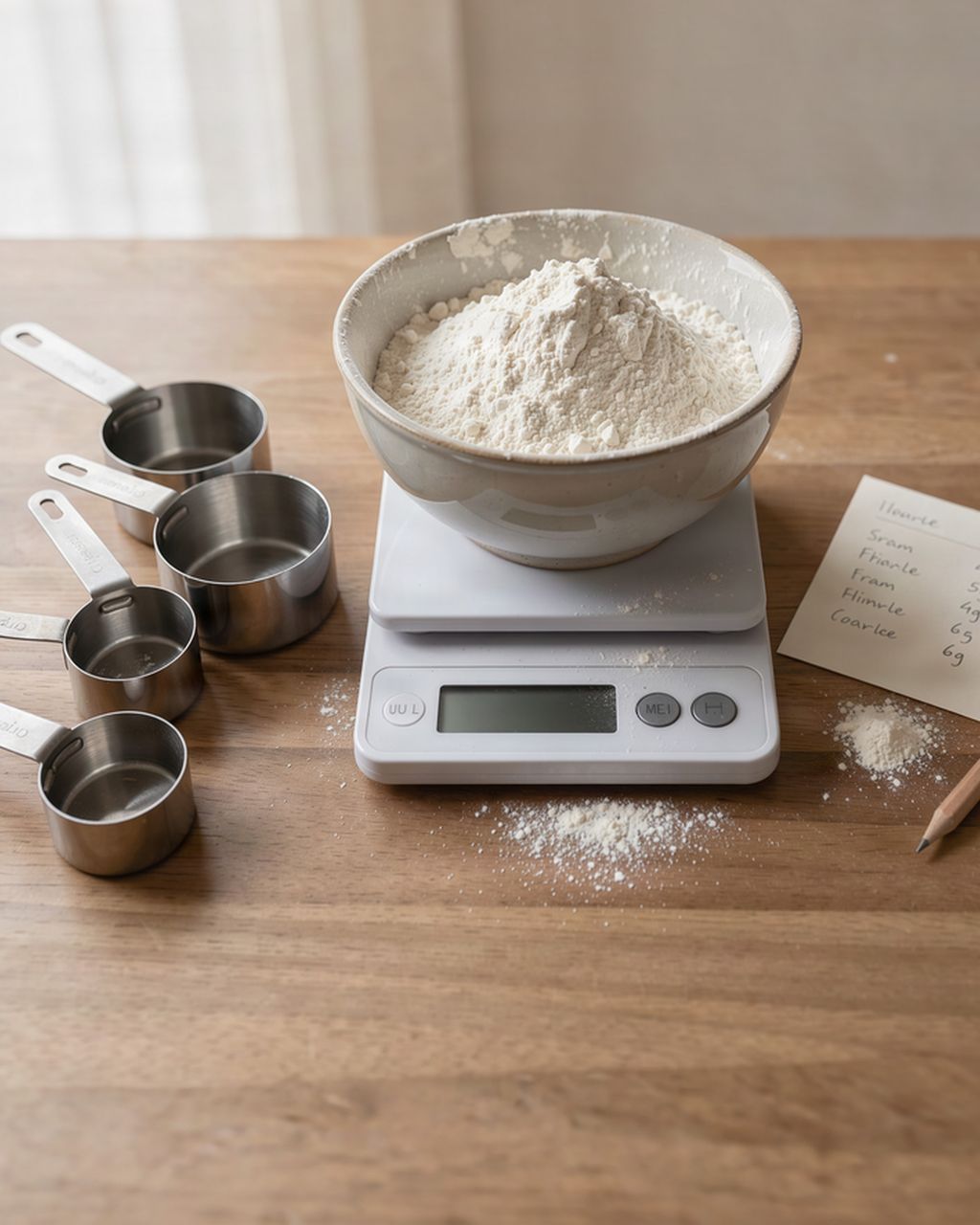
That is why there is no single grams-to-cups figure. You need one per ingredient. These are the ones we use, and they match our cups and spoons to grams calculator:
All-purpose flour: 125 g per US cup (236.6 ml), 132 g per metric cup (250 ml), 7.9 g per level tablespoon.
Granulated sugar: 200 g per US cup, 211 g per metric cup.
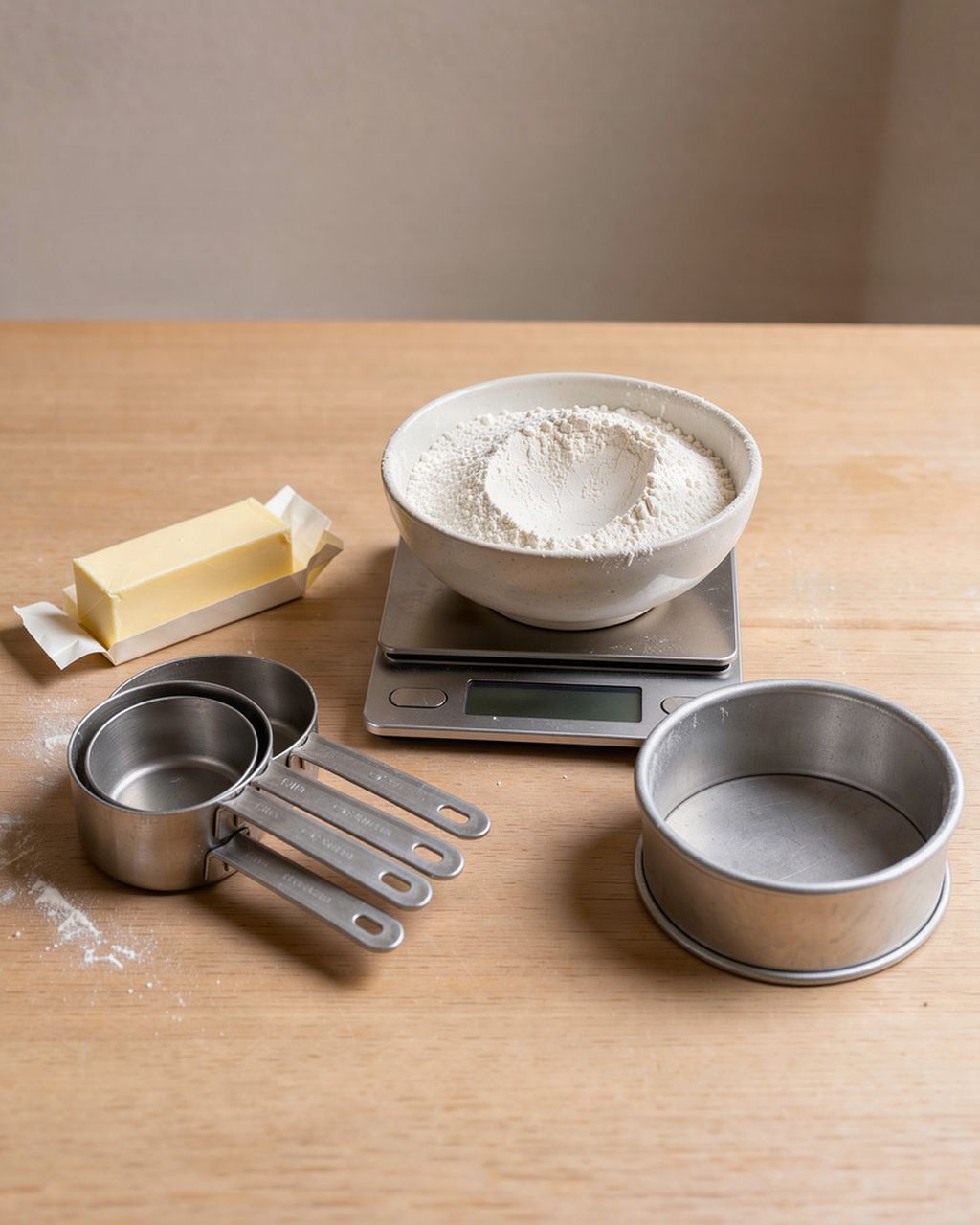
Butter: 227 g per US cup. A US stick is 113 g (4 oz, 8 tablespoons), and a tablespoon is about 14 g.
Honey: about 21 g per tablespoon.
Flour figures assume you spoon the flour into the cup and level it with a knife. Scooping straight from the bag packs it down and can add a lot more, often a quarter or more.
Seasonal baking plans, tested recipes and kitchen tricks that save you time. Unsubscribe in one click.
A few amounts come up again and again in Czech and German baking:
500 g flour = 4 US cups. 250 g flour = 2 US cups. 100 g flour = ¾ US cup plus about 1 tablespoon.
200 g sugar = 1 US cup. 100 g sugar = ½ US cup. 150 g sugar = ¾ US cup.
250 g butter (the standard Czech block) = 2 sticks plus about 1½ tablespoons. 125 g butter = 1 stick plus about 1 tablespoon.
1 tablespoon of honey = about 21 g, so 100 g honey is a little under 5 tablespoons.
Powdered sugar, cocoa, ground nuts and grated cheese all weigh differently again, so look each one up rather than reusing the flour figure. The calculator covers the common baking ingredients.
Liquids are the easy part, because both systems measure volume. A US cup is 236.6 ml, a US tablespoon about 14.8 ml and a teaspoon about 4.9 ml.
100 ml = about 6¾ tablespoons, or ⅓ US cup plus about 1½ tablespoons.
250 ml = 1 US cup plus about 1 tablespoon.
500 ml = 2 US cups plus about 2 tablespoons.
1 liter = about 4¼ US cups.
If a recipe was written in metric cups (250 ml), a US cup holds about 13 ml less. For one cup that hardly matters. For four cups of milk in a dough, add a few tablespoons.
Watch the Czech word hrnek (mug). Older Czech recipes use it as a measure, and it was never a fixed size. If the recipe counts in hrnky, use the same mug for every ingredient and the ratios will hold, or see our guide to converting cup and mug recipes to grams.
Converting the number is simple: multiply by 9, divide by 5, add 32. The trap is the oven type.
Most European home ovens have a fan setting, and many Czech recipes are written for it. They say horkovzduch (Czech) or Umluft (German) for fan, and horní a spodní ohřev or Ober-/Unterhitze for conventional top and bottom heat. A fan oven bakes hotter at the same dial setting, so we allow about 20 °C between the two.
180 °C conventional = 356 °F. Set 350 °F.
160 °C fan = about 180 °C conventional, so also 350 °F in a regular US oven.
200 °C conventional = 392 °F. Set 400 °F.
180 °C fan = about 200 °C conventional, roughly 390–400 °F.
If your US oven has a convection setting, treat it like a European fan oven and use the fan figure. If the recipe doesn't say which mode it means, assume conventional and check the bake a few minutes early. The oven temperature converter does both modes and gas marks.
Czech and German cakes are usually baked in round springform pans measured in centimeters across:
20 cm = about 7.9 in (an 8-inch pan)
22 cm = about 8.7 in
24 cm = about 9.4 in
26 cm = about 10.2 in (the most common size in Czech recipes)
28 cm = about 11 in
The gap between 26 cm and a US 9-inch pan looks small, but the area is about 30% bigger. Put a 26 cm batter into a 9-inch pan and it sits deeper, bakes longer and may dome or overflow. Either use a 10-inch pan or scale the batter down.
Sheet cakes are trickier. Czech recipes often say na plech, meaning the deep tray that came with the oven, and those trays vary by brand. Measure yours against the recipe if it gives dimensions. The cake pan size converter works out how much to scale the batter for any round, square or rectangular pan.
European recipes often count yeast and leavening in packages rather than spoons.
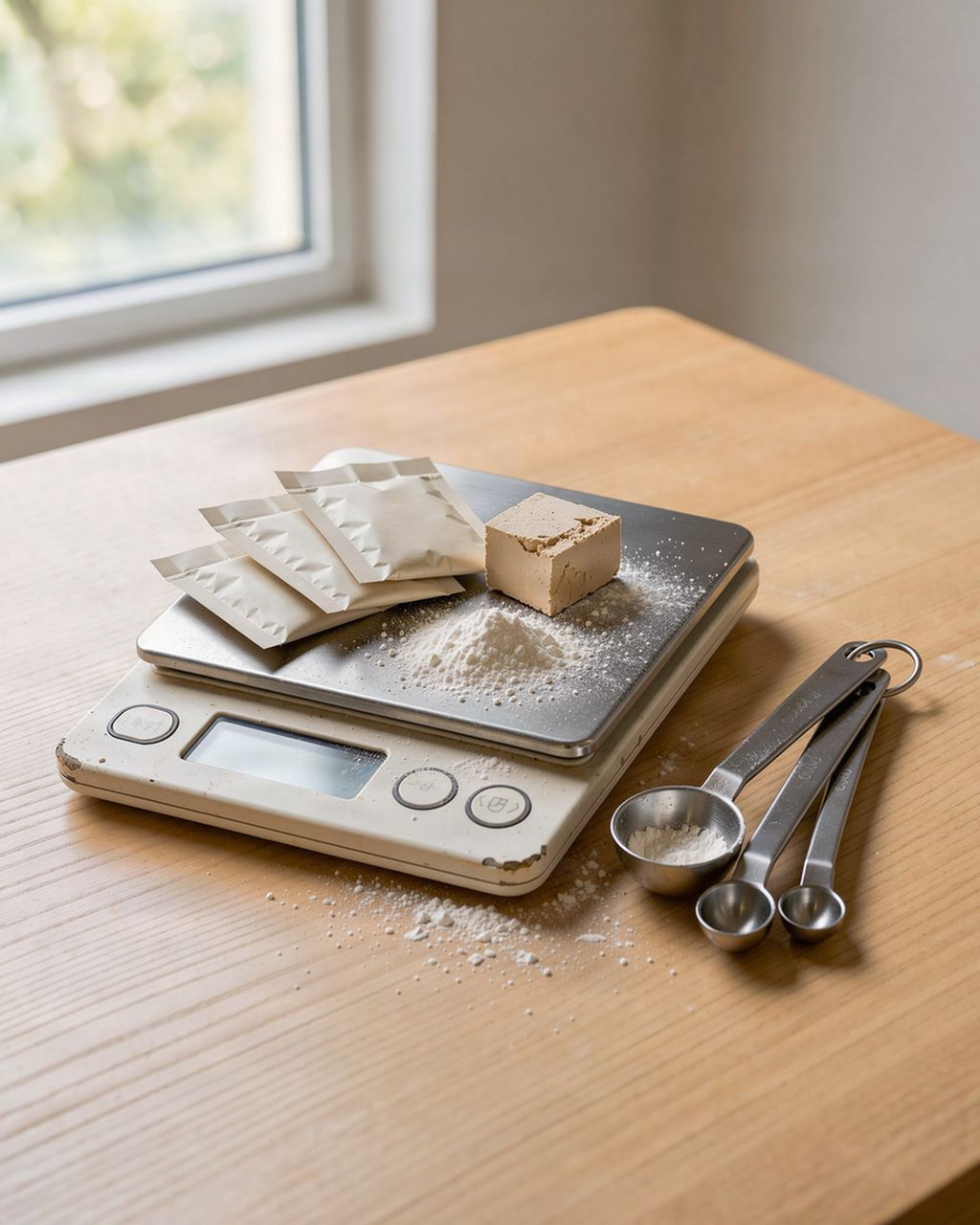
Fresh yeast comes in 42 g cubes. Recipes say 1 kostka (one cube) or ½ kostky (half a cube). Fresh yeast is hard to find in US supermarkets, so swap in instant (dry) yeast at about one third of the weight: a whole cube becomes about 14 g of instant yeast, half a cube about 7 g. If you use active dry yeast, add a little more, about 17–20 g per cube. The yeast converter handles other amounts.
Dry yeast sachets are 7 g in Czech shops, the same as many US packets.
Baking powder in Czech recipes is often 1 prášek do pečiva, one sachet. Dr. Oetker's Czech sachet is 12 g and is meant for 500 g of flour. Sachet sizes differ by country and brand, so check the recipe's origin.
Vanilla sugar (vanilkový cukr, Vanillezucker) is a small sachet of sugar flavored with vanilla or vanillin. Its size also varies by brand, so check the label of the one the recipe is likely to mean.
Some Czech ingredients don't have a perfect US twin. In brief:
Hladká mouka (fine wheat flour) is the closest to all-purpose flour (plain flour in the UK).
Polohrubá mouka (semi-coarse flour) and hrubá mouka (coarse flour) are grinds, not protein grades. All-purpose flour works in most recipes. Our guide to flour numbers explains the European labels.
Tvaroh is a soft, crumbly fresh cheese, close to German quark. US farmer's cheese is usually drier, so it may need a spoonful of sour cream or yogurt to loosen it.
Smetana is any cream. Smetana ke šlehání is whipping cream (usually 30–33% fat in Czech shops; US heavy cream is at least 36%), and zakysaná smetana is sour cream. Check which one the recipe means before you buy.
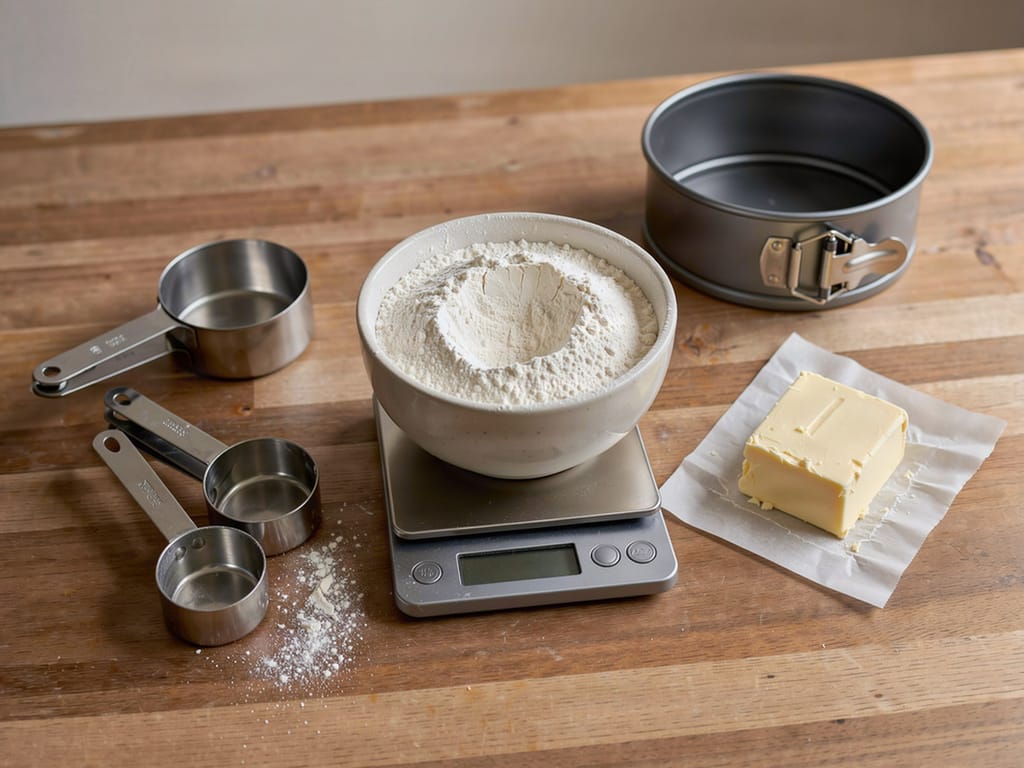
Every figure above is an average. Flour settles, sugar crystals differ, and two people filling the same cup can be 20 g apart. A basic digital kitchen scale, often around $15, removes all of it: set the bowl on the scale, press tare, and add 250 g of flour.
With a scale you can follow a Czech recipe exactly as it was written, which is the surest way to get the texture the author intended. You also wash fewer cups. If you cook from European recipes more than a couple of times a year, it is the best few dollars you will spend in the kitchen.
A US cup (236.6 ml) of all-purpose flour weighs about 125 g when spooned in and leveled. A metric cup (250 ml) holds about 132 g, and one level tablespoon about 7.9 g.
180 °C is 356 °F, so set a US oven to 350 °F if the recipe means a conventional oven. If the recipe says fan (horkovzduch, Umluft), 180 °C fan is about 200 °C conventional, which is roughly 390–400 °F.
A 26 cm springform is about 10.2 inches across, so a 10-inch pan is the closest US match. In a 9-inch pan the batter would sit about 30% deeper and need longer in the oven.
A 42 g cube of fresh yeast is replaced by about 14 g of instant (dry) yeast, which is two standard 7 g sachets. We use a 3 to 1 ratio of fresh to instant yeast by weight; with US active dry yeast, use a little more, about 17–20 g per cube.
Yes, a digital scale is the most accurate way to cook from a European recipe because it removes the conversion step. Cup weights vary with how you fill the cup, while 250 g is always 250 g.
One recipe worth heating the oven for, one tip, and one deal from the shop. Nothing else.