European Butter vs American Butter: Fat, Water and Baking Differences
How Many Grams Is a Stick of Butter? US Sticks vs European Blocks
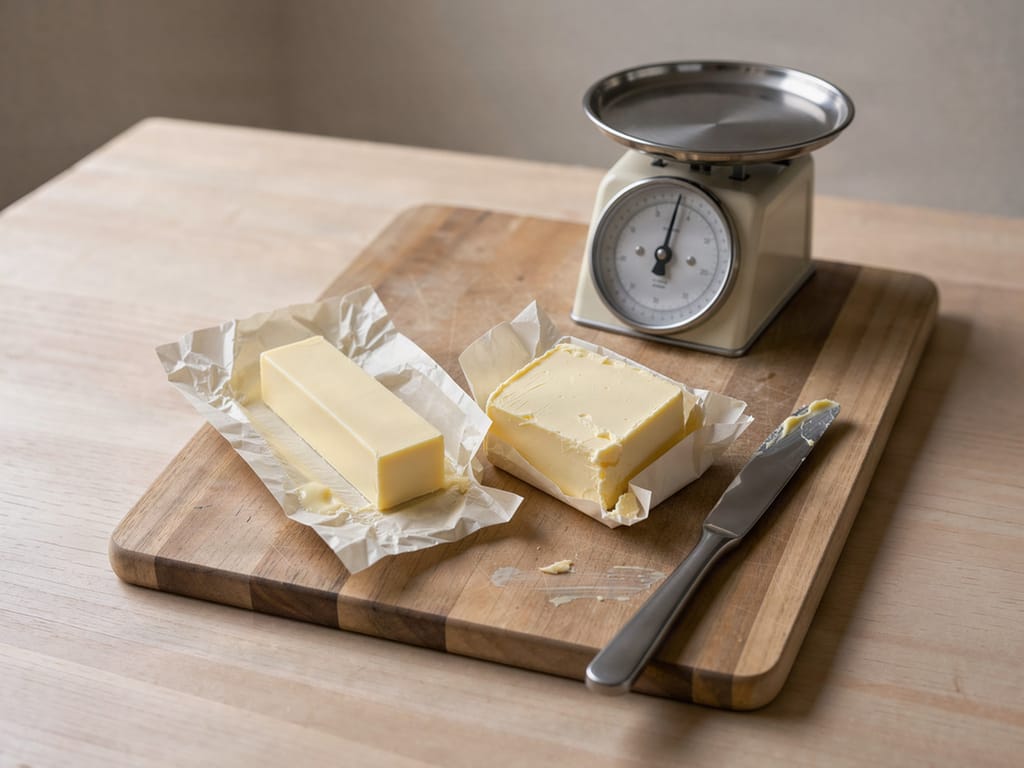
Updated Nov 18, 2026
A US stick of butter weighs 113 g: 4 ounces, 8 tablespoons or half a US cup (about 118 ml). A US cup of butter is 227 g, two sticks. In Europe, the UK and Australia butter comes in 250 g blocks, which is about 2 sticks plus 1⅔ tablespoons.
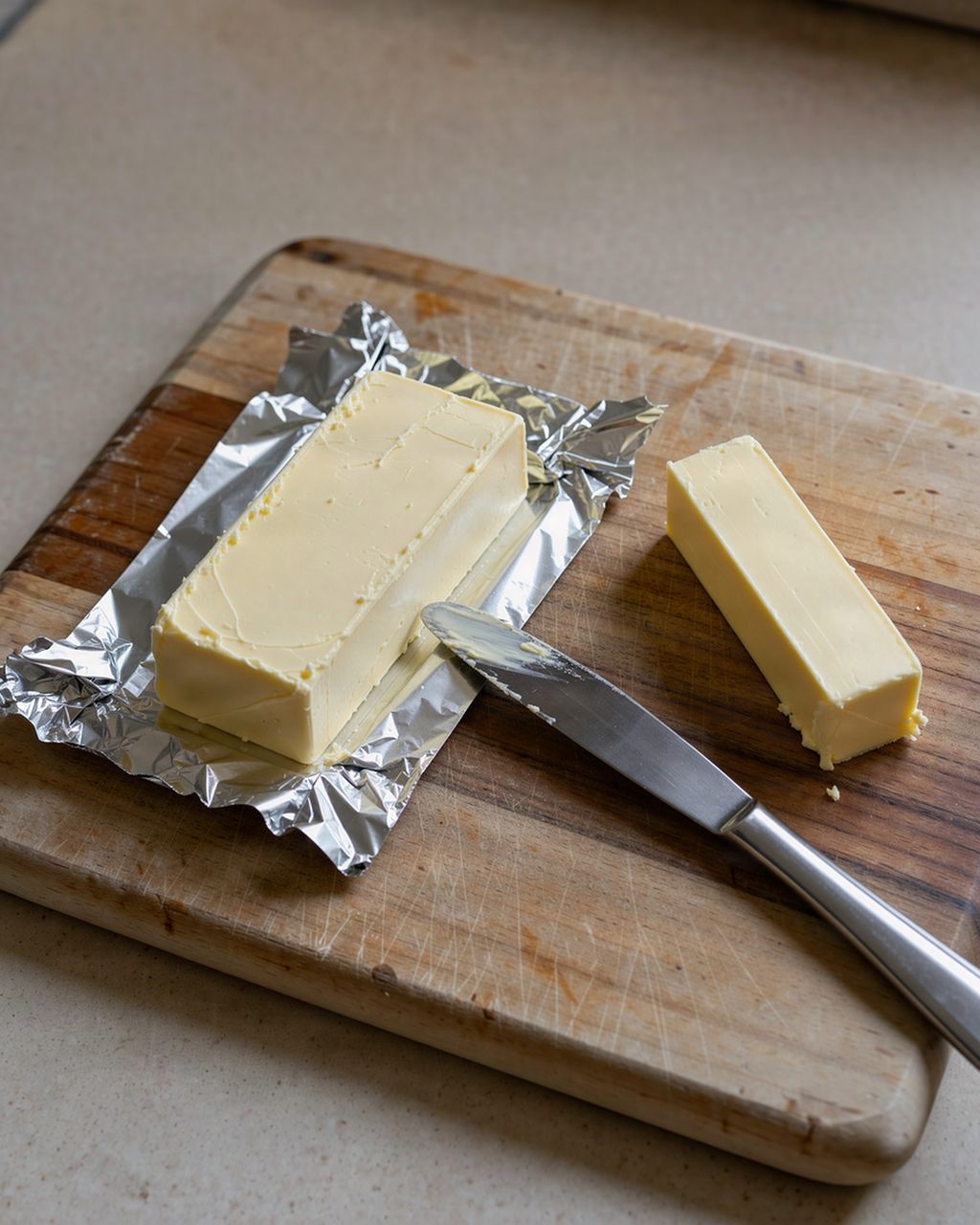
A US stick of butter is:
113 g
4 ounces (a quarter of a pound)
8 tablespoons, about 14 g each
½ US cup (about 118 ml)
Four sticks make a pound (454 g), which is how butter is usually packed in the US. Two sticks make a US cup of butter, 227 g.
These are the figures USDA FoodData Central lists for butter, and they are the ones our cups and spoons to grams calculator uses. For single tablespoons, see 1 tablespoon of butter in grams.
If you have bought butter on both sides of the US, you have seen two shapes. They hold the same 113 g.
Elgin stick (East Coast and most of the country): long and narrow, about 5 inches long and 1¼ inches square at the end. The name comes from Elgin, Illinois, once a major butter-making center.
Western stubby (West of the Rockies): short and wide. West Coast dairies built their own packing machines when production grew in the mid-20th century, and they made a shorter, fatter stick.
The only practical difference is the butter dish: many dishes are sized for Elgin sticks. Weight, tablespoon markings and baking results are the same.
Outside North America, butter is sold in blocks, not sticks.
Czech Republic and Germany: 250 g is the standard block. Czech shops also sell 125 g half blocks, and Czech recipes sometimes say půl kostky másla (half a block of butter), meaning 125 g.
United Kingdom: 250 g blocks from most brands.
Australia: 250 g and 500 g blocks.
New Zealand: mostly 500 g blocks.
So a Czech or German recipe that says "1 block of butter" or "1 máslo" means 250 g. That is a bit more than two US sticks: 2 sticks are 227 g, so you need about 23 g (a generous 1½ tablespoons) on top. In New Zealand, and sometimes Australia, check the recipe's grams, since a block there may be 500 g.
Using 113 g per stick and about 14 g per tablespoon:
50 g = about 3½ tablespoons
100 g = about 7 tablespoons (a stick minus 1 tablespoon)
125 g (half a European block) = 1 stick plus about 1 tablespoon
150 g = 1 stick plus about 2½ tablespoons
200 g = about 1¾ sticks (1 stick plus 6 tablespoons)
250 g (one European block) = 2 sticks plus about 1⅔ tablespoons
500 g = 4 sticks plus about 3 tablespoons, a little over a pound
Going the other way, from US recipes to grams:
½ stick = 57 g
1 stick = 113 g
1½ sticks = 170 g
2 sticks or 1 US cup = 227 g
1 pound = 454 g
For cakes and cookies, rounding to the nearest tablespoon is fine. For laminated doughs and shortbread, where butter is a large share of the dough, weigh it.
American recipes measure butter in sticks or US cups (236.6 ml), and a US cup of butter is 227 g.
Australian and New Zealand recipes sometimes measure butter in metric cups (250 ml). Scaled from the US figure, a metric cup of butter is about 240 g. That is close to a 250 g Australian block, but not the same, and New Zealand blocks are usually 500 g, so where a recipe gives both, trust the grams.
Measuring solid butter in a cup is awkward in any country. If a recipe says "1 cup of butter, melted", measure it solid, then melt it, or simply weigh it.
Recipe of the week, one tip that saves you time and one deal from the shop. Unsubscribe in one click.
The next issue goes out on Thursday, November 26.
A little, mostly in fat content.
US: federal law requires butter to be at least 80% milk fat. Standard supermarket brands sit close to that.
EU: butter must be 80–90% milk fat, with at most 16% water. Czech law uses the same 80% floor. In practice most butter sold in Czech and German shops is 82%, and that number is often printed on the pack.
European-style butter in the US: brands sold under this label are usually 82% or more.
Two percent more fat means slightly less water. Most cakes, cookies and sauces will not show it. You may notice it in very buttery doughs such as shortbread, croissants or puff pastry, which can turn out a little richer with 82% butter. For creaming butter with sugar, temperature matters far more than fat content; see creaming butter and sugar.
One more difference: Czech butter is almost always unsalted unless the pack says otherwise. If a Czech recipe says máslo, use unsalted butter. If you only have salted butter, cut back on any added salt.
One US stick of butter is 113 g, which is 4 ounces, 8 tablespoons or half a US cup. Both the long East Coast sticks and the short West Coast sticks weigh the same.
A US cup (236.6 ml) of butter is 227 g, the same as two sticks. A metric cup (250 ml) of butter is about 240 g.
250 g of butter is about 2¼ US sticks, or more usefully 2 sticks plus about 1⅔ tablespoons. A European 250 g block is the size most Czech, German, British and Australian recipes are built around.
A tablespoon of butter is about 14 g, which is why a 113 g stick is marked in 8 tablespoons. Many US wrappers print the tablespoon lines, so you can cut by eye.
Usually a little: most butter sold in Czech and German shops is 82% fat, while US butter must be at least 80% and standard brands sit close to that. The legal minimum in the EU is also 80%, so the gap comes from what is sold, not from the law.
One recipe worth heating the oven for, one tip, and one deal from the shop. Nothing else.