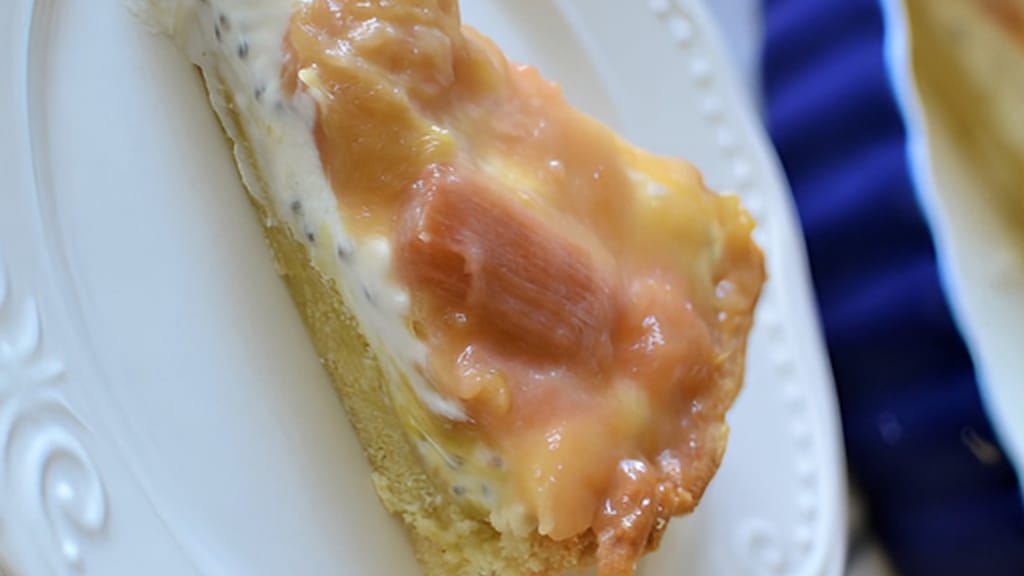
Rhubarb pie with curd cheese and chia seeds
Rhubarb in the Kitchen: Sweet and Savoury Recipes, and How to Prepare It Right
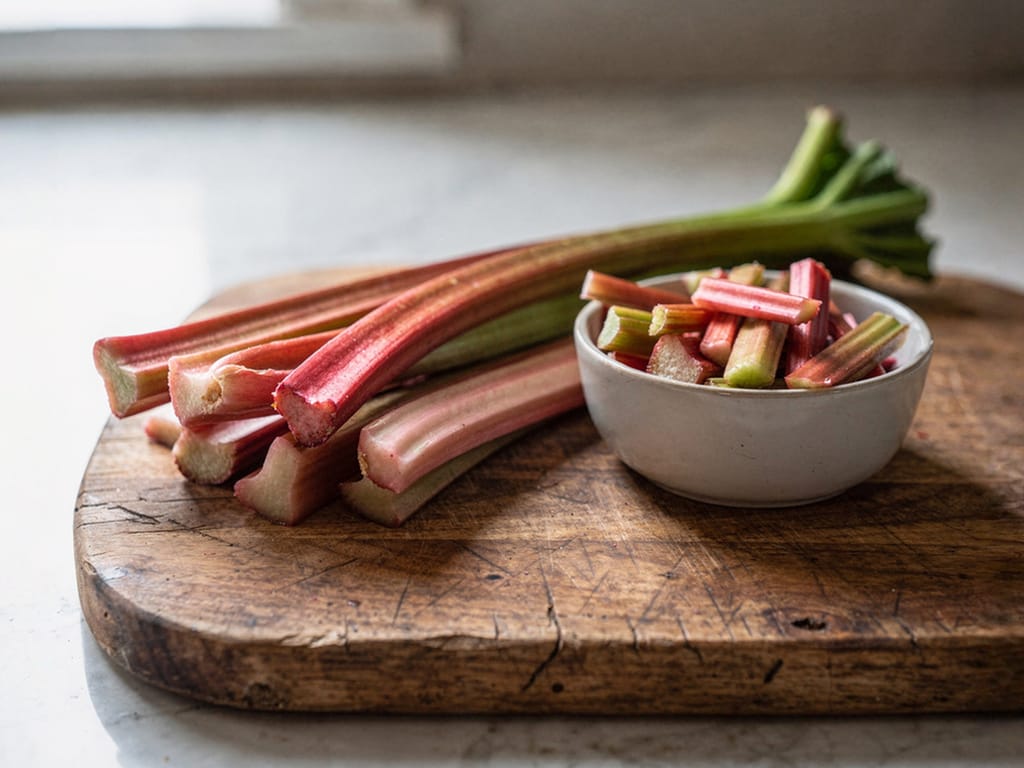
Updated Aug 30, 2026
Rhubarb is a spring stalk vegetable you can turn sweet or savoury — into a cake, a crumble, jam, but also into chutney for pork or a marinade for chicken. The season is short, from April to the end of June, and that's the whole window you have to work with it fresh. Below you'll find how to prep it (and why you usually don't need to peel it), how to cook it so it doesn't collapse into mush, and exactly what to make with it.
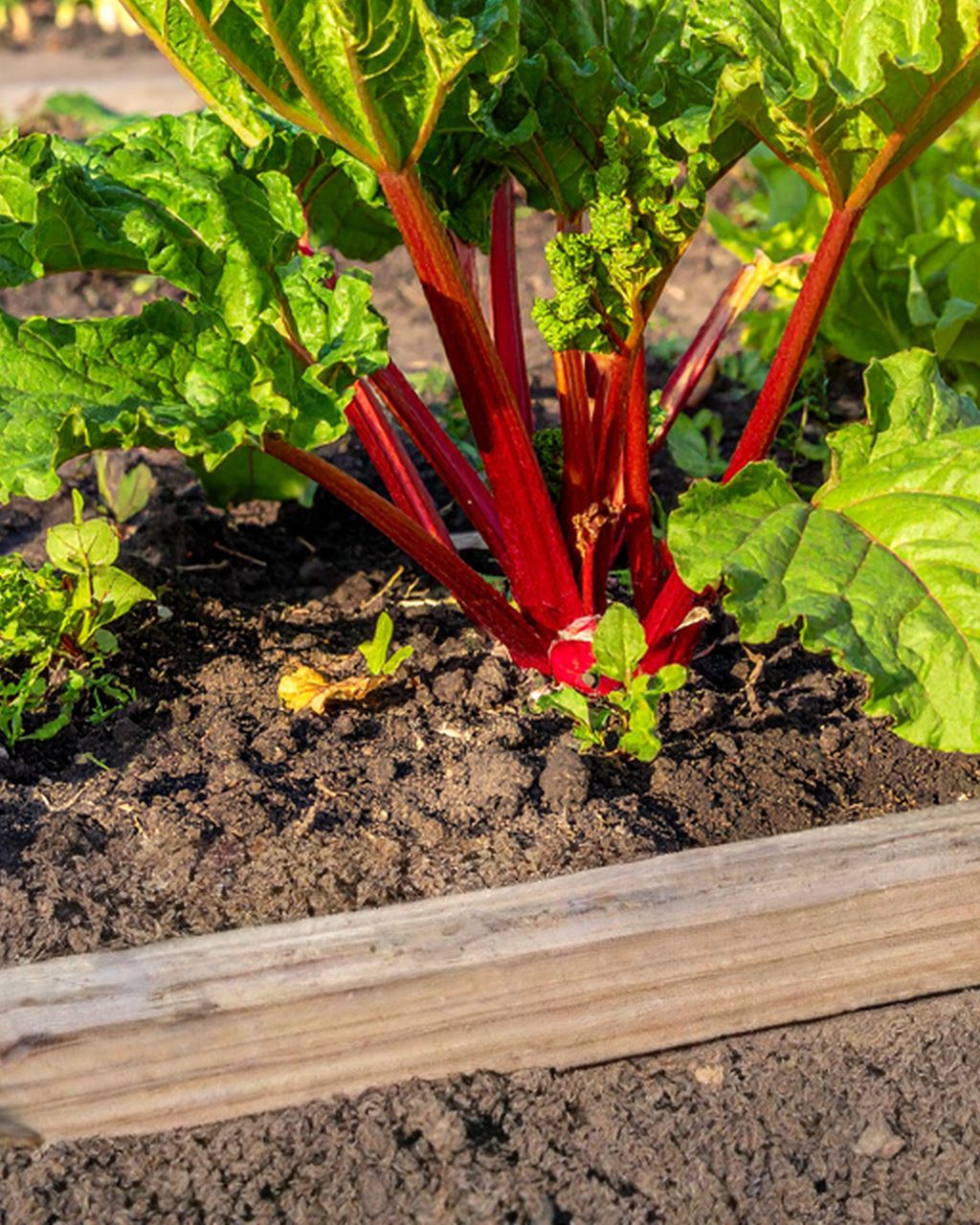
In our climate, rhubarb is in season from April to the end of June. The traditional rule is that the last stalks get picked around Midsummer's Day (24 June); after that, harvesting stops so the plant has time to build up reserves for next year — and by then the stalks have gone woody and harshly sour anyway.
What this means for cooking:
April to mid-May:the thinnest, most tender and most pink stalks. No need to peel them — they're great baked, cut into batons, where you want the shape to hold.
Late May to June:the stalks are thicker and stringier. Best suited to jam, stewed fruit, chutney, and anything that's going to cook down anyway.
After Midsummer's Day:let the plant rest. Build up your stock in the freezer instead of harvesting late.
The colour of the stalk tells you nothing about ripeness — only about the variety. Sourness varies between varieties too, but you can't tell that from the colour either. What colour does tell you reliably is how it'll look once cooked: green rhubarb turns an unappetising khaki, red turns pink. For a cake, that's a big difference in how it looks.
Recipe of the week, one tip that saves you time and one deal from the shop. Unsubscribe in one click.
The next issue goes out on Thursday, November 26.
Don't peel young rhubarb — you'll lose most of the pink colour and a good chunk of the flesh along with it. Only peel old, thick stalks where you can see tough fibres in the cut end. The old advice "always peel your rhubarb" is one of the most common mistakes: on a thin spring stalk, you lose both the colour and part of the flesh, leaving you with a pale core.
The process is quick:
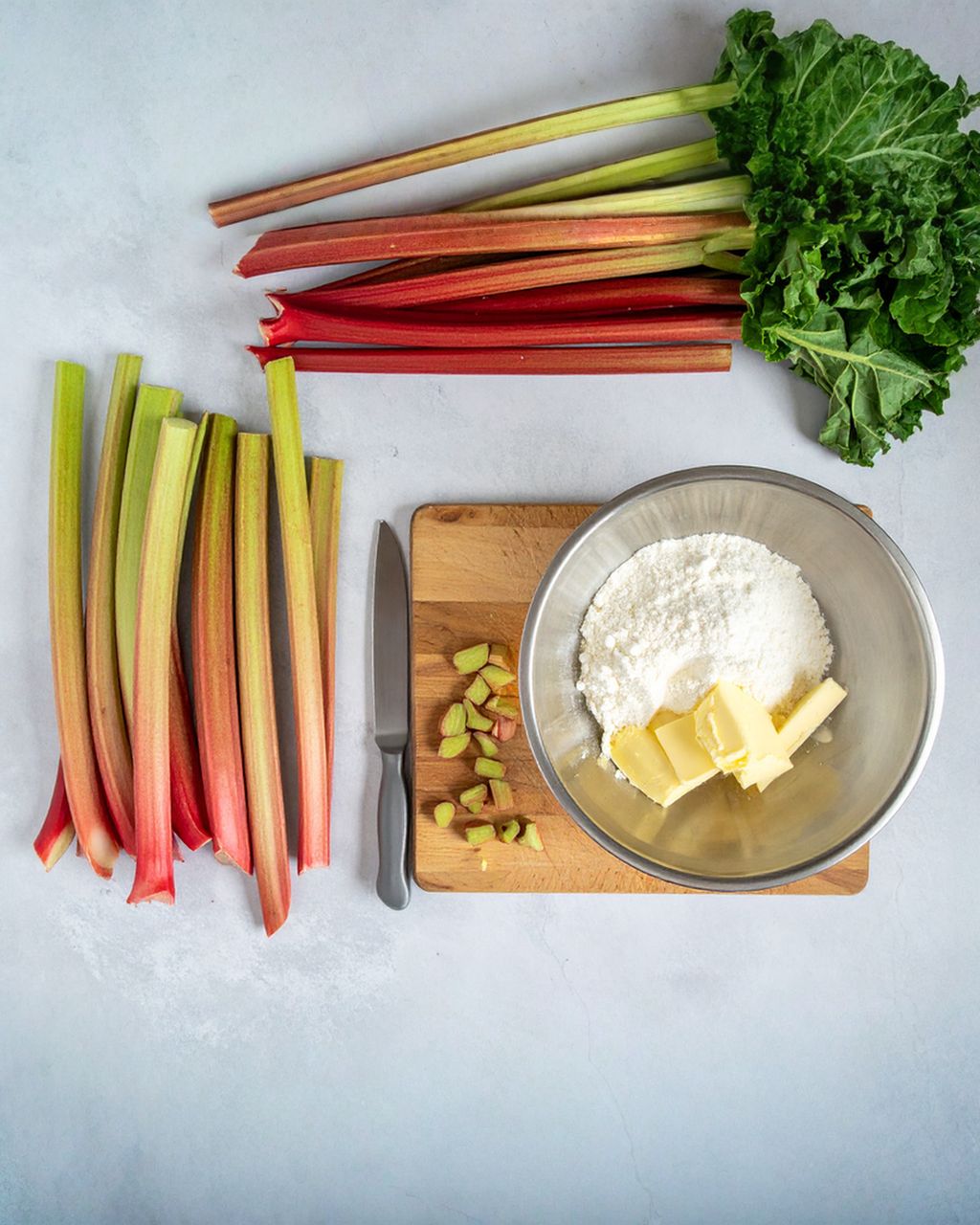
Cut off the leavesand the whole join where the stalk meets the leaf. The leaves go in the compost, not the pot (more on why below).
Trim the dry endat the base of the stalk.
Wash and dry it.Wet rhubarb steams instead of roasting in the oven.
Check the fibres.Catch the edge of a cut with a knife and try to pull the membrane away. If it comes off easily and feels tough, strip it off. If it tears and the stalk feels tender, leave it be.
Cut into evenly sized pieces— 2–3 cm for cakes and jam, 4–5 cm for roasted batons. Same length means the same softening time.
Rhubarb has a pH of around 3, making it more acidic than an orange and roughly halfway to lemon. It reacts with aluminium and unenamelled cast iron — if you're cooking a large batch, use stainless steel or an enamelled pot, or you'll end up with a metallic taste and a grey tinge.
Roast rhubarb covered with foil at 180°C for 20–30 minutes and don't stir it — that way the pieces stay whole. Rhubarb has almost no firm structure; it's held together only by cell walls, and once those soften, a single stir with a wooden spoon is all it takes to turn it into mush. Handling matters more here than timing.
Three methods, and what each is good for:
Oven-roasted rhubarb(180°C, 20–30 minutes, covered with foil) — pieces stay whole; good for cakes, yoghurt toppings and as a side.
Stewed rhubarb in a pot(8–10 minutes on low heat) — it breaks down into a pulp; good for stewed fruit, sauce and jam.
Raw pickled rhubarb(20 minutes in sugar and vinegar) — stays crunchy; good for salads and savoury dishes.
I'll go into each of these in more detail below.
Arrange the cut batons in a baking dish in a single layer, sprinkle with sugar (roughly 80–100 g per 500 g rhubarb), cover with foil and roast at 180°C. The foil traps steam, so the rhubarb cooks through evenly and the surface doesn't dry out before the inside softens. After 20 minutes, test with the tip of a knife: it should give slight resistance, not fall apart. Check thin stalks as early as 12–15 minutes in.
Don't shake or stir the dish. Let it cool in its own juices — that liquid is a concentrated syrup, great stirred into lemonade or prosecco, or drizzled over yoghurt.
Stew rhubarb in a pot with sugar and two tablespoons of water for 8–10 minutes over low heat — it breaks down into a pulp, perfect for stewed fruit and sauce. Put the rhubarb, sugar (roughly 80–100 g per 500 g rhubarb) and two tablespoons of water in a pot, bring to the boil, then simmer on low. Rhubarb releases plenty of its own liquid, so don't add extra water "just in case it catches" — you'll only dilute the flavour. Season the finished mixture right at the end: vanilla, ginger, orange zest, or a pinch of salt, which tames the sourness better than more sugar would.
Raw rhubarb sliced thinly on a mandoline and left to sit for 20 minutes in a little sugar with vinegar or lemon juice stays crunchy and loses its harsh sour edge. It's the fastest way to bring it into a savoury dish — it works just like pickled red onion, only pinker.
With sweet rhubarb you can make a curd cheese cake, a custard tart, a strawberry-rhubarb strudel, a strawberry cake with almonds, and a soufflé — all the recipes are right below this paragraph. Its sourness needs balancing with fat and dairy: dough and sugar alone won't cut it, which is why so many rhubarb cakes are built on curd cheese, buttery dough and crumble — and why strawberries pair with it so well.
Two things that can ruin your cake even if you get the dough right:
Rhubarb's liquid can turn the base soggy.Let the cut pieces sit in sugar for 20 minutes, then drain off the juice (save it for lemonade), or sprinkle the base with a spoonful of semolina, ground almonds or breadcrumbs.
Judge the sugar by the stalks, not by the recipe.Red rhubarb picked in April needs noticeably less sugar than green rhubarb from late June. Taste a raw piece — if your face screws up, add 20% more sugar.
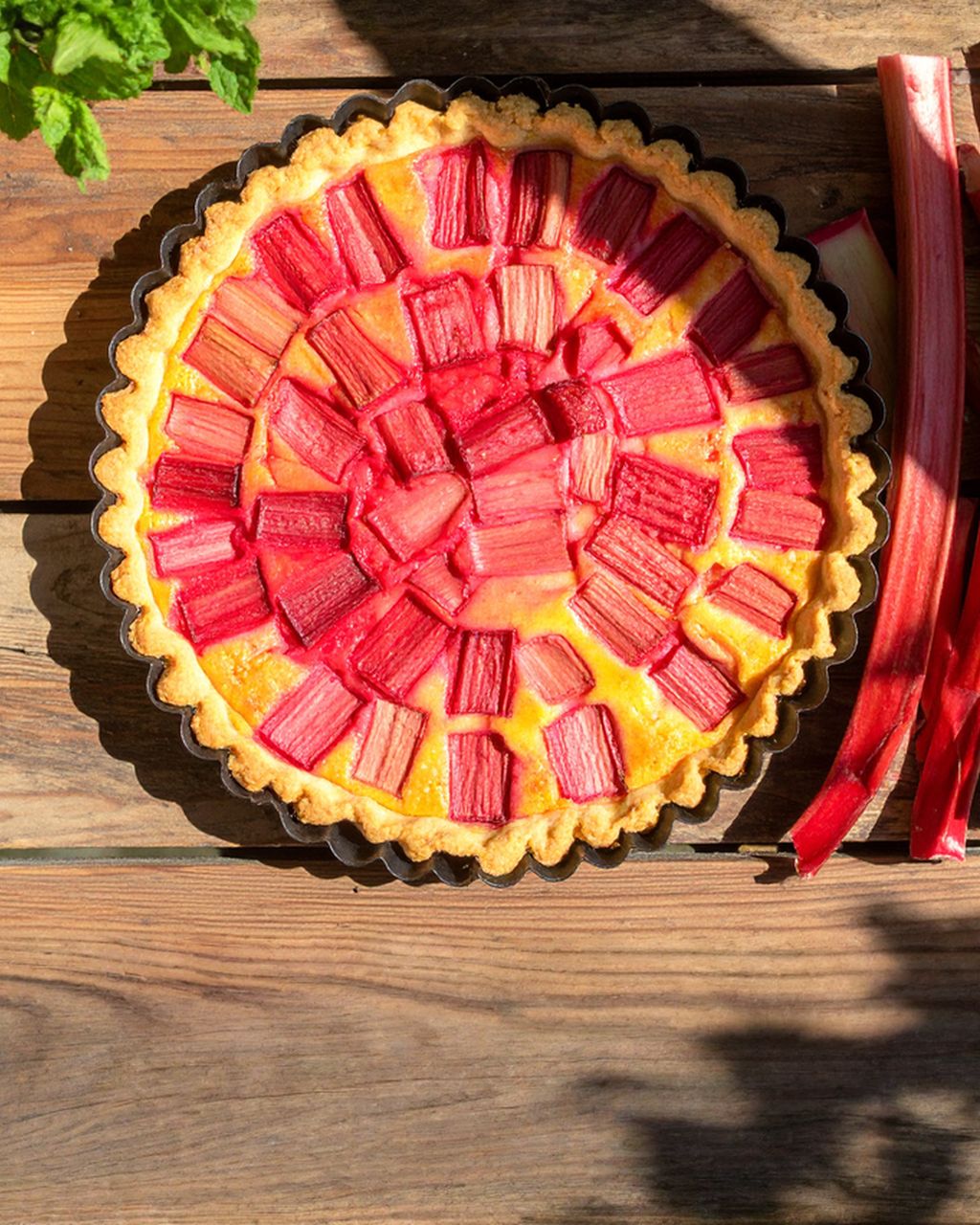
Rhubarb pie with curd cheese and chia seeds
Rhubarb cake with curd cheese and chia seeds — the cheese balances the tartness and the chia soaks up the juice
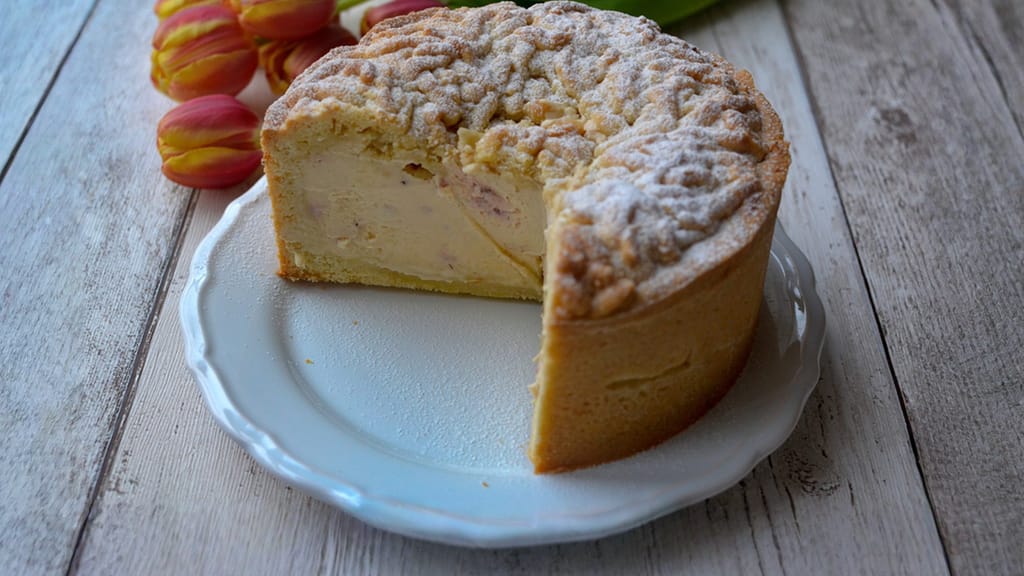
Rhubarb cake with custard and curd cheese
Rhubarb custard tart with curd cheese, for when you want a Sunday dessert out of rhubarb
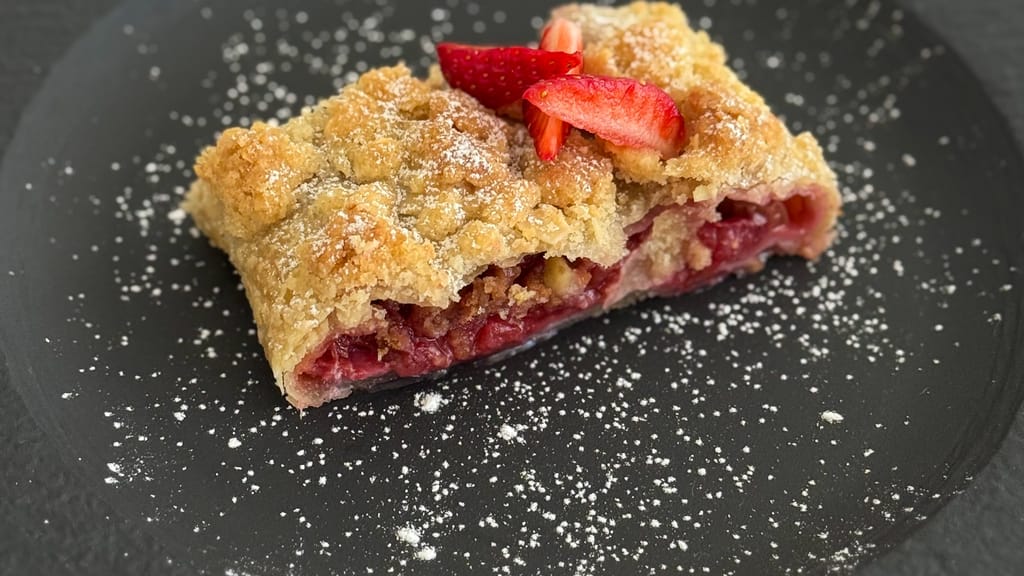
Strawberry-rhubarb strudel with buttery crumble
Strawberry-rhubarb strudel with a buttery crumble — the classic pairing of rhubarb and strawberries
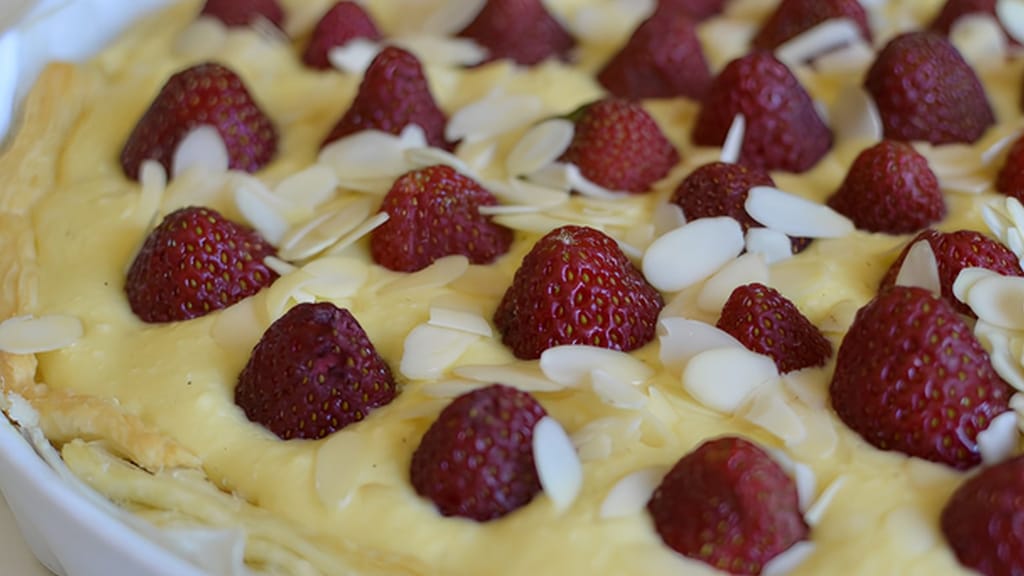
Strawberry rhubarb tart with almond flakes
Strawberry cake with rhubarb and flaked almonds
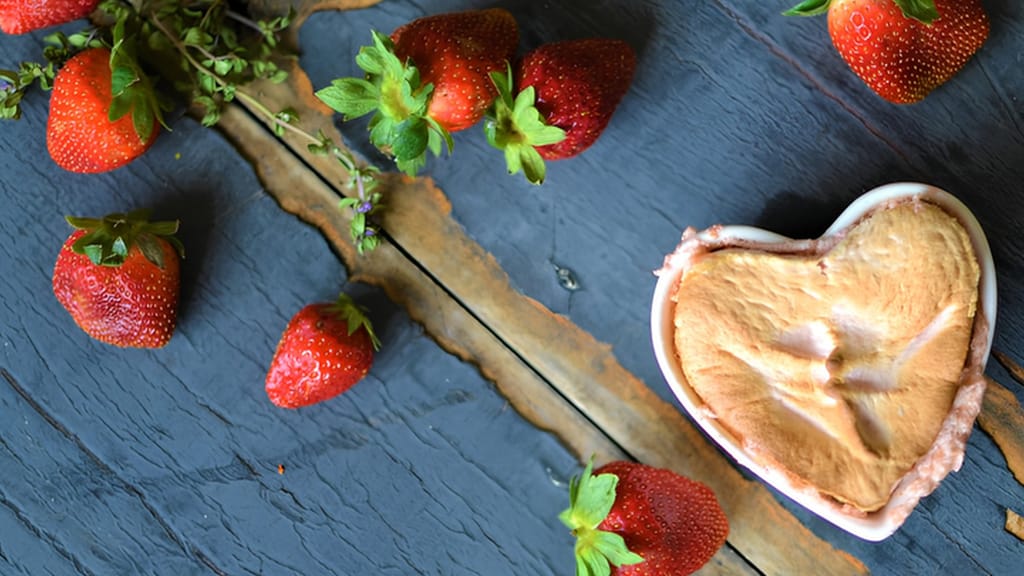
Fluffy strawberry-rhubarb soufflé
Light, airy soufflé with juicy strawberries and rhubarb, for the more adventurous bakers
There are four ways to bring rhubarb into a savoury dish: as chutney for pork, as a glaze for duck, as a marinade for chicken, and as pickled slices in a salad with cheese. The principle is the same every time — its tartness cuts through fat just like cranberries or pickled vegetables would.
If you're just starting out, stick to two rules: go lighter on sugar than you'd expect when using rhubarb in a savoury dish (you want a tangy counterpoint, not a dessert sauce), and add salt before sugar — you'll often find you don't need any more sugar after that.
Rhubarb chutney is the most versatile savoury use for rhubarb: stew it with chopped red onion, a piece of ginger, vinegar and a modest amount of sugar until it breaks down and thickens. The finished chutney keeps in the fridge for a week and is exactly the thing that lifts roast pork knuckle or duck breast out of heavy, one-note territory.
Rhubarb glaze for duck is the same mixture thinned with roasting juices and brushed onto the skin in the last ten minutes of cooking.
Rhubarb belongs raw and pickled in a salad, not cooked — cooked, it just falls apart. Pickle thin slices for 20 minutes in sugar and vinegar, drain, then toss with rocket, walnuts and feta or grilled goat's cheese.
A good base to build on is a salad with grilled goat's cheese, apples and walnuts — just swap the apples for pickled rhubarb and cut the honey in the dressing by half.
Blended raw rhubarb with olive oil, honey, mustard and soy sauce makes a marinade that caramelises beautifully on the grill. One thing to keep in mind, though: acid doesn't tenderise meat— it only breaks down the surface, and over a long marinating time it can turn that surface mealy. Marinate chicken breasts in rhubarb marinade for an hour at most; chicken thighs can go up to three hours.
A ratio to start with: 100 g blended rhubarb, 3 tablespoons oil, 1 tablespoon honey, 1 teaspoon mustard, 1 tablespoon soy sauce. Take the method and cooking times from chicken breasts in herb marinade and just swap the herbs for this mixture.
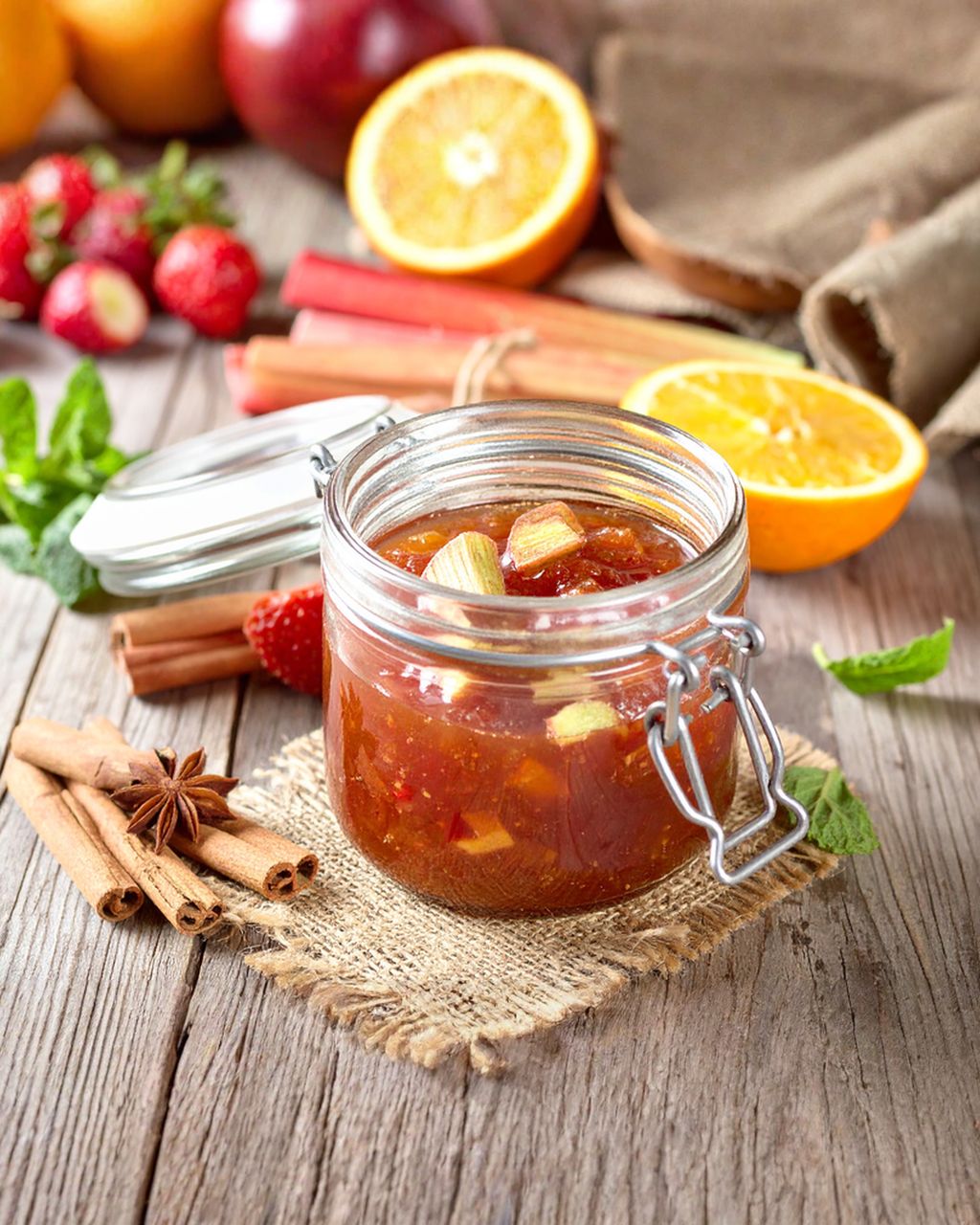
Rhubarb won't set on its own — it's low in pectin, so without help you'll end up with a thick sauce rather than a jam. That's not a recipe fault, it's just the nature of the ingredient, and there are three ways round it:
Jam sugar(2:1 or 3:1) — the most reliable and fastest option; just follow the instructions on the pack.
Strawberries, redcurrants or appleadded to the mix — they bring their own pectin. Rhubarb and strawberry works well flavour-wise too, at a ratio of 2:1 in favour of rhubarb.
Longer boilingwith ordinary sugar — the flavour will be the most concentrated, but expect it to reduce in volume, with a risk of scorching.
Lemon juice belongs in jam every time. It's not just about flavour: pectin needs an acidic environment to set, and the juice of one lemon per kilo of fruit reliably provides that.
The saucer testtells you when you're done: drop a teaspoon of the mixture onto a saucer chilled in the freezer, wait a minute, then run your finger through it. If the surface wrinkles and doesn't flow back together, it's ready. Test earlier rather than later — you can't undo oversweetening or overcooking.
Sterilise jars in the oven at 120–140°C for about 15–20 minutes; it's better to briefly boil the lids, since the rubber seal can be damaged in the oven. Fill jars with the hot mixture right to the brim and seal immediately. Turning sealed jars upside down for a few minutes helps them seal properly.
Wrapped in a damp tea towel or bag, fresh rhubarb keeps in the fridge for about a week — unwrapped, it wilts within two days because the stalks lose water fast. Don't cut it ahead of time; a whole stalk keeps much longer than pieces that have already been chopped.
For longer storage, freezing is by far the best route, and rhubarb handles it better than most fruit:
Cut into piecesthe size you'll actually use later.
Freeze loose firston a tray, and only transfer the frozen pieces into a bag once solid. Otherwise you'll end up with one solid frozen block.
Don't blanch it.There's no point with rhubarb — it just loses its texture.
It keeps for 6–12 monthsand you add it to cakes, jam and stewed fruit straight from the freezer, no need to thaw first.
A third option is preserving it as stewed rhubarb in jars — handy if you're short on freezer space, but expect the pieces to be softer once preserved this way.
Rhubarb is low in calories (around 20 kcal per 100 g of raw stalks) and a good source of vitamin K — according to nutrition tables (USDA), roughly 29 µg per 100 g, or about 39% of the reference intake. It also contains fibre (around 1.8 g per 100 g) and anthocyanins, which give red varieties their colour. Values vary between varieties and with the age of the stalks, so treat these as approximate.
Two facts people bring up most often about rhubarb:
Calcium and oxalates.Rhubarb does contain calcium (around 86 mg per 100 g), but it's also one of the foods high in oxalates.
It's low in vitamin C.Around 8 mg per 100 g, a fraction of what you'd get from peppers or citrus fruit. And since rhubarb is almost always cooked, that figure drops even further.
Dairy is rhubarb's best flavour partner — curd cheese, cream, yoghurt: milk fat rounds off the tartness beautifully.
Botanically, rhubarb is a vegetable — what we eat is the leaf stalk, not a fruit. In the kitchen, though, it's treated like a fruit because it's tart and works beautifully in desserts. You can use it just as well in salads, chutneys and marinades as you can in a cake.
A bitter or metallic aftertaste is usually down to the cookware or the age of the stalks. Rhubarb reacts with aluminium and unenamelled cast iron, so cook it in stainless steel or enamel instead. The other culprit is a late harvest — overgrown stalks picked after Midsummer's Day turn woody and harshly sour. And always trim off the whole join where the stalk meets the leaf, not just the leaf itself.
No — don't harvest rhubarb in its first year after planting. Let the plant build up strength first, and start picking from the following season onwards. The same rule applies as at the end of the harvest: if you strip the leaves before the plant has stored up reserves, you weaken it for years to come. Even afterwards, only take some of the stalks from any one clump and let the rest keep growing.
Normal kitchen-sized portions of the stalks are perfectly fine for a healthy person — a slice of cake or a bowl of stewed rhubarb works out to roughly 100–150 g. The risk isn't the stalks; it's the leaves, which shouldn't be eaten at all.
Gooseberries come closest in flavour and texture, followed by tart redcurrants or sour apples brightened with lemon juice. The swap works well in cakes and crumbles; for chutneys and marinades, reach for tart apples with a spoonful of vinegar instead. The safest bet, though, is to freeze your own rhubarb in June — it keeps for 6–12 months.
Properly sterilised and sealed, a jar of rhubarb jam keeps for about a year stored somewhere dark and cool. Once opened, keep it in the fridge and use it within two to three weeks. Jams made with 3:1 jam sugar contain less sugar, so they don't keep as long once opened as classic 1:1 preserves — and if mould appears on the surface, throw out the whole jar, not just the top layer.
One recipe worth heating the oven for, one tip, and one deal from the shop. Nothing else.