Rhubarb pie with curd cheese and chia seeds

Updated Jul 19, 2026
Rhubarb is a low-maintenance perennial that gives you crisp, tart stalks from April through June — and only the stalks belong in the kitchen, never the leaves. In this article you'll find out how to grow and harvest it so it keeps producing for years, why the leaves are poisonous, and what to bake or cook with it. No filler, just what you actually need in the garden and at the oven.
Plant rhubarb in a sunny spot with well-drained soil enriched with compost, ideally in autumn or early spring — your first full harvest won't come until the second year. It's a perennial that can stay put in the same spot for up to ten years, sprouting reliably every spring, so it's worth thinking carefully about where you plant it.
Rhubarb wants sun and deep, well-drained soil. Choose a spot with at least 6 hours of sun a day; it'll tolerate light partial shade, but growth slows and stalks stay thinner in shadier spots.
The soil should be sandy loam and deep — the roots really do go down a long way. Before planting, dig plenty of compost or well-rotted manure into the bed, and space plants roughly 90 cm apart, since the clumps spread out nicely as they mature. Keep the crown just at or barely below the soil surface, not buried deeper.
Rhubarb is tough and actually benefits from frost — it needs a cold spell to trigger fresh growth in spring. It handles mild winters and summer heat well; in extremely dry, hot summers, though, mulch it and water more, or the stalks will turn woody.
Every 5–6 years or so, divide the clump in autumn with a spade into sections with buds and replant them — this rejuvenates the plant and gives you free new stock.
Water regularly and generously, especially in dry spells, but avoid constant waterlogging — the roots rot in soggy soil. Feed with compost or a nitrogen-rich fertiliser in spring, as rhubarb is a fairly hungry feeder. Keep the area around the clump weed-free and mulched; mulch locks in moisture and warmth.
The most common problems are slugs, aphids, and powdery mildew in damp conditions. A barrier of crushed eggshells or a beer trap in a dish near the plant works against slugs; rinse off aphids with a soapy water solution sprayed onto the leaves. Prevent powdery mildew (a white coating on the leaves) by not overcrowding the clump and ensuring good air circulation. Yellow or rotting stalks at ground level usually point to waterlogging rather than pests.
Harvest rhubarb from April through the end of June, once the stalks are 25–45 cm long and firm. Never cut it with a knife — grip the stalk low near the ground and twist it sideways until it comes free. A cut wound at the base tends to rot; twisting is gentler on the clump and lets it regrow faster.
A ripe stalk is firm, fleshy and roughly 25–45 cm long. Colour doesn't indicate ripeness — depending on the variety, stalks can be deep red, pink or green, and green varieties can actually be sweeter than red ones. Go by thickness and firmness instead, and always leave at least half the stalks on the clump so the plant keeps growing.
Grip the stalk low near the base and gently twist it sideways until it separates from the crown. Trim off the leaf blade at the top right away and never put it in food. Don't take more than a third to a half of the stalks from one clump at a time, so the plant has enough left to keep growing.
You can harvest repeatedly from spring through to about the end of June, leaving the clump a few weeks to recover between pickings. Traditionally, harvesting stops after Midsummer's Day (24 June) — stalks turn woodier later on, and oxalic acid content is said to rise. This lets the plant build up strength for next year.
Only rhubarb's leaves are poisonous — the stalks are not. The leaf blade contains a high amount of oxalic acid, which is why it isn't eaten; the leaf stalks we use in the kitchen are entirely safe. According to available sources, oxalic acid binds calcium in the body into insoluble crystals and, in large amounts, can strain the kidneys — and there's far more of it in the leaves than in the stalks.
Rhubarb stalks are low in calories yet a decent source of fibre, vitamin C, vitamin K and potassium. According to nutrition sources, fibre supports digestion, vitamin C supports immunity, and vitamin K supports blood clotting and bone health. Its sharp tartness comes from malic and oxalic acid, so it almost always needs sugar or a sweeter partner when cooked. Think of this as a nice bonus to the flavour, not a cure-all.
There's a lot you can make with rhubarb: a cheesecake-style curd cake, a delicate strudel, a clafoutis-style bake, homemade jam and marmalade, a sweet-tart syrup, or a chutney to serve with meat. It works best paired with something sweet to balance its tartness — strawberries, curd cheese, vanilla or custard. Cut it into 1–2 cm pieces; the thinner you slice it, the faster it softens.
The safest classic is rhubarb with curd cheese — tart stalks and mild curd complement each other perfectly. Here are tried-and-tested recipes from Yumsto to try right away:
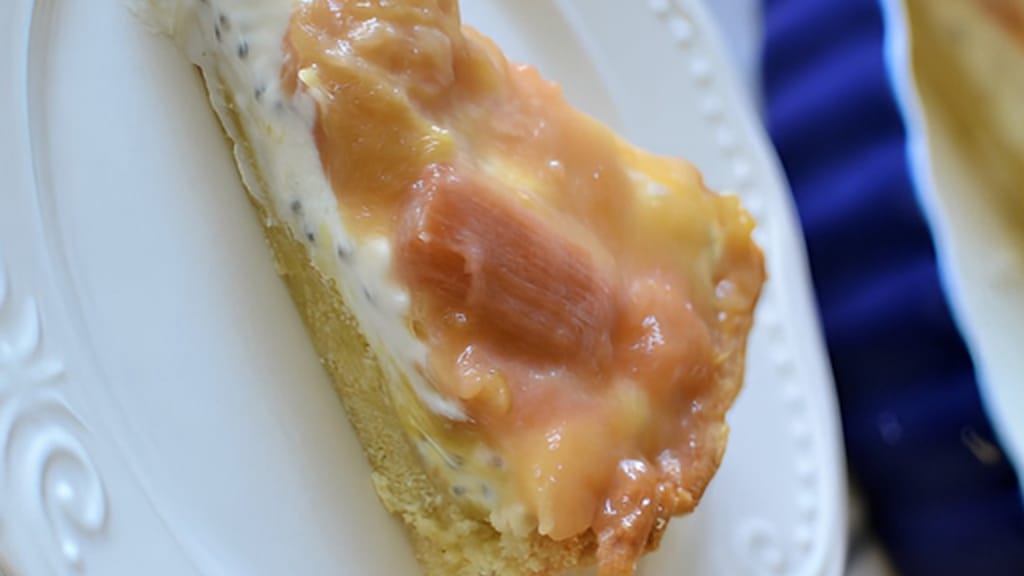
Rhubarb pie with curd cheese and chia seeds
Rhubarb Cake with Curd Cheese and Chia Seeds – tart rhubarb and mild curd cheese
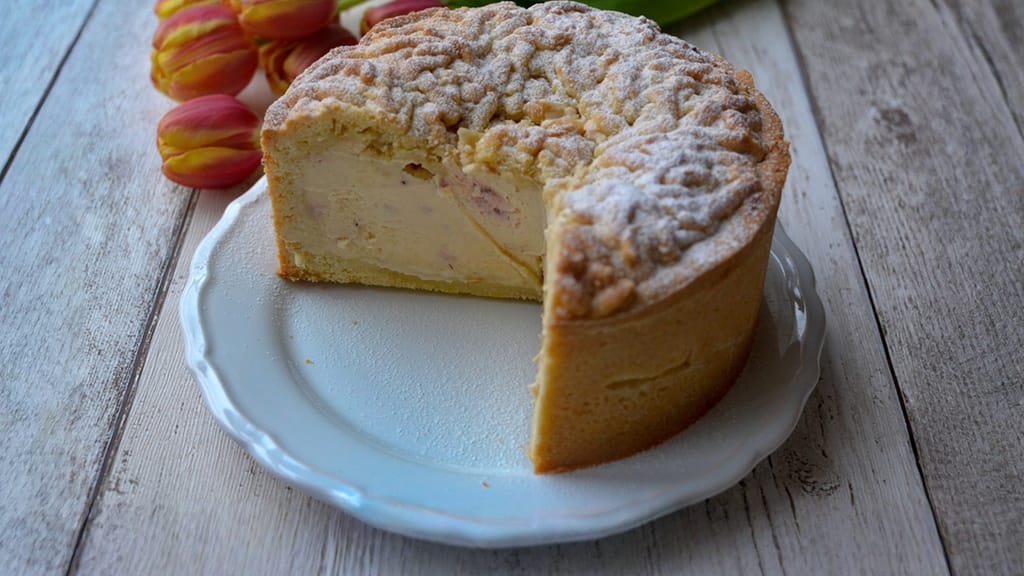
Rhubarb cake with custard and farmer's cheese
Rhubarb Cake with Custard and Curd Cheese – moist and quick to make
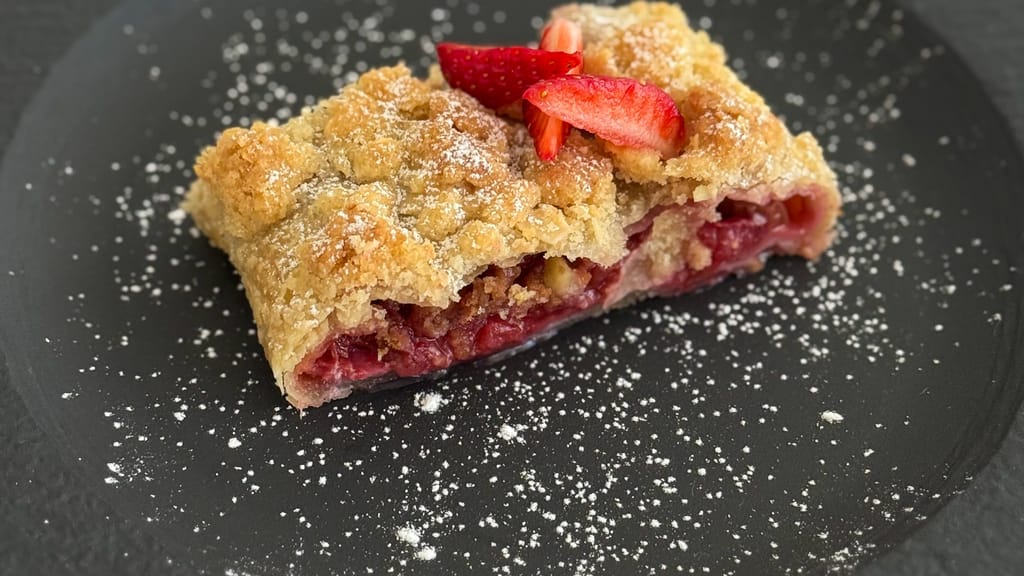
Rhubarb & strawberry strudel with buttery crumble
Rhubarb and Strawberry Strudel with Buttery Crumble
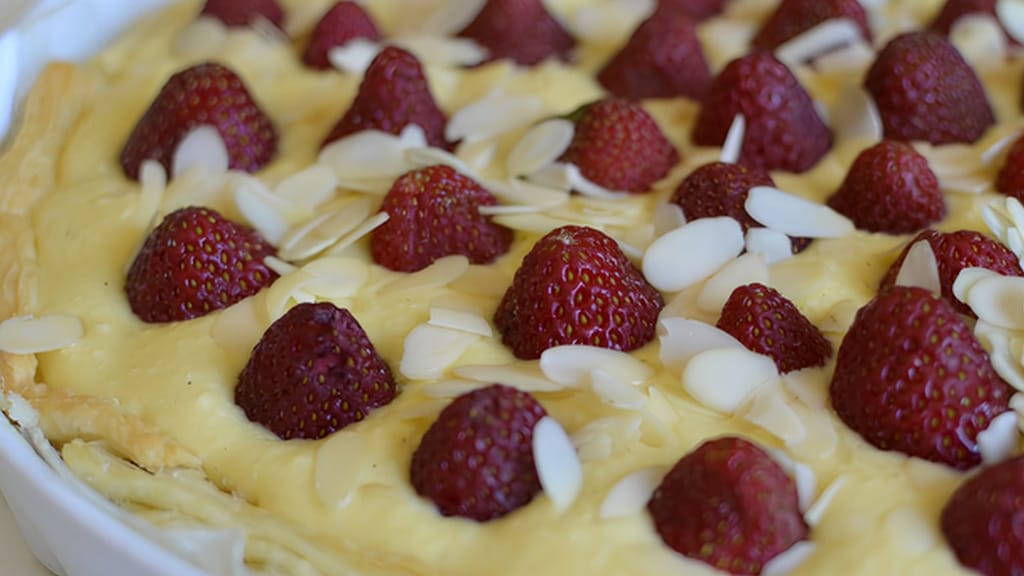
Strawberry and rhubarb tart with almond flakes
Strawberry Cake with Rhubarb and Almond Flakes
Besides baking, rhubarb also works wonderfully in a fruit clafoutis-style bake and for preserving. For a clafoutis, chop it finely and toss it lightly in sugar so it releases less juice. For a sweet-tart syrup, simmer the stalks with sugar and water, then strain; for jam, simmer them with sugar and lemon juice until thickened. If you like a bit of spice, try our cinnamon rhubarb marmalade.
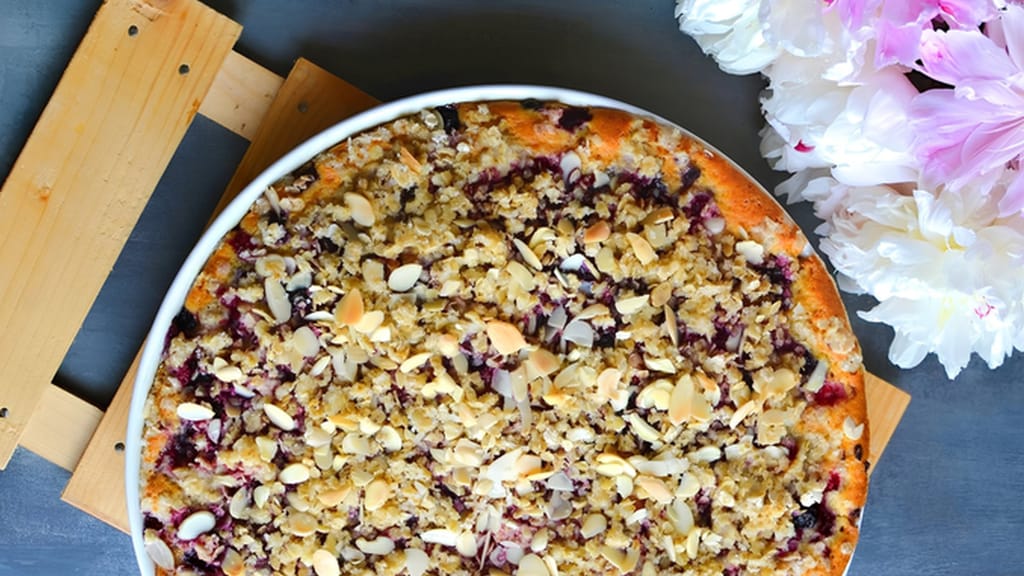
Bublanina with summer fruit and crunchy crumble
Summer Fruit Clafoutis with a Crunchy Crumble Topping – add chopped rhubarb
Rhubarb is an easy-going perennial: give it sun, well-drained soil and compost, and it'll keep producing for years. Harvest from April to the end of June by twisting the stalks free, always discard the leaves because of their oxalic acid, and use only the juicy stalks in the kitchen. Then balance it out with sugar — it's at its best in a curd cheese cake, a strudel, a clafoutis or a syrup.
Botanically speaking, rhubarb is a vegetable — we eat its leaf stalks, not a fruit. In the kitchen, though, it behaves like a fruit: it's paired with sugar in cakes, compotes and syrups, and the EU even officially classifies it as a fruit for jam-making purposes.
Yes, you can eat raw rhubarb, but because of its sharp tartness and oxalic acid content, only in small amounts. Thin slices dipped briefly in sugar soften up and taste better; for larger portions, it's best to cook it first.
You don't need to peel young spring rhubarb stalks — the skin softens as it cooks. With thicker, older stalks later in the season, strip off the tough fibrous strings, or they'll stay stringy and chewy in the finished dish.
Rhubarb freezes beautifully: chop the stalks into pieces, spread them on a tray, freeze, then transfer to a bag — it'll keep for about a year. Add it straight from frozen into a cake or crumble, no need to thaw. Fresh stalks keep in the fridge for about a week.
The best substitutes for rhubarb are other tart fruits — gooseberries, tart apples, redcurrants or quince. Just keep in mind you'll need to adjust the sugar, since rhubarb is noticeably more sour.
One recipe worth heating the oven for, one tip, and one deal from the shop. Nothing else.