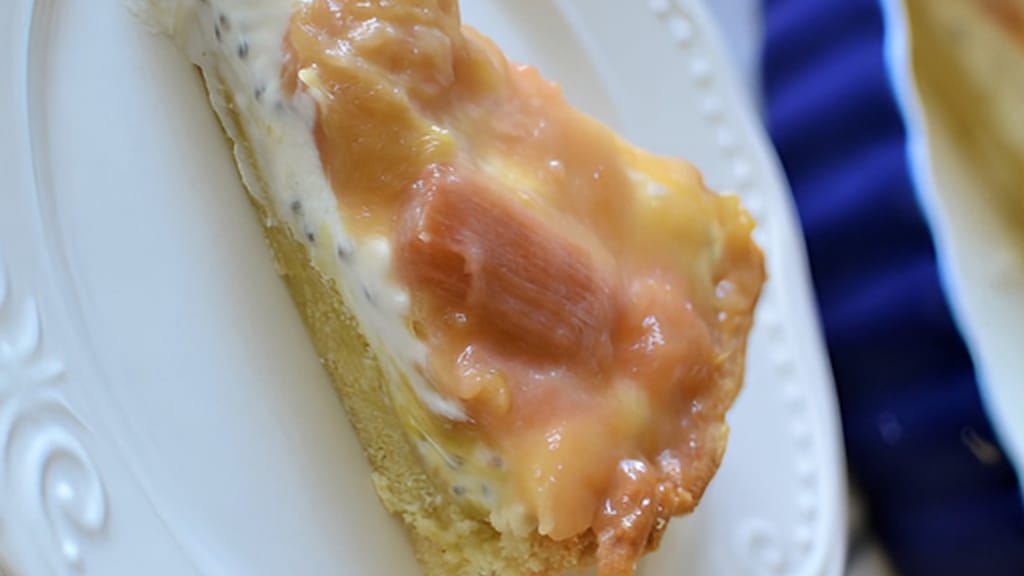
Rhubarb pie with curd cheese and chia seeds
When and How to Harvest Rhubarb: A Complete Picking & Storage Guide

Updated Jul 19, 2026
Rhubarb is ready to pick from May through the end of June, right up until the plant starts to flower — that's when the stalks are at their crispest, juiciest and best-tasting. You can't tell it's ready by the calendar, only by the stalk itself: it should be sturdy, 25–45 cm long and evenly coloured all the way along. In this guide you'll learn exactly when to start (and stop) picking, how to pull the stalks so the crown stays strong for next year, why you should never eat the leaves, and how to keep your harvest going right through winter.
Rhubarb season runs about eight weeks, from May through the end of June. In a temperate Central European climate, you can pull the first stalks in early May, the harvest peaks through May and June, and you should stop picking around the end of June to early July so the crown has time to build up strength for next year.
The exact timing shifts depending on weather and location:
Warmer lowland areas with mild winters: you can start as early as April.
Cooler and mountainous regions: wait until the end of May.
Forced (covered) rhubarb: is ready even earlier — more on that below.
Don't harvest at all in the first year after planting — the plant needs the whole season to put down roots and build up a strong rootstock. In year two, pick just a handful of the sturdiest stalks, and save the full harvest for year three onward. The payoff is a crown that can keep producing for ten years or more.
You can spot a ripe stalk by its thickness and length, not the calendar: it should feel firm, measure 25–45 cm, and be evenly coloured along its whole length.
Length and firmness: 25–45 cm, firm and crisp to the touch — it should snap cleanly when bent, rather than bend rubbery.
Colour: even and consistent along the whole stalk. Note that colour tells you the variety, not the ripeness — red cultivars stay red, and green ones stay a fresh green even at full ripeness. So don't judge readiness by whether the stalk is red.
What to avoid: thin, wilting or already-woody stalks, and anything turning brown or yellow.
Stop harvesting around the end of June to early July, as soon as the plant starts sending up a flower stalk — mainly so the crown has time to store energy in the rootstock for next spring, not because of any toxin. Snap off flower stems as soon as you see them, so the plant doesn't waste energy on seed production instead.
There's a persistent myth that oxalic acid builds up to dangerous levels in the stalks by late summer. Gardening and food-safety sources both debunk this: the acid concentrates mainly in the leaves, while the stalks contain a harmless amount all season long. As long as you trim off the leaves, the stalks are safe to eat from spring right through summer. The real reason to stop picking in summer is the plant's health — an overharvested crown will only send up weak, thin stalks the following spring.
To harvest rhubarb, grip the stalk near the base, twist it gently to one side and pull it out whole, base and all. Pulling is gentler on the plant than cutting: it leaves no stump behind that could rot at the base and spread decay into the crown.
Choose a sturdy, ripe stalk from the outer edge of the crown.
Grip it low near the base, twist to one side and pull — it should come away with a small white heel attached.
Don't take more than a third of the stalks from any one crown at a time; the plant needs the remaining leaves for photosynthesis.
Trim off the leaves (into the compost) and the base heel right away, then keep the stalks somewhere shaded.
If you have sensitive skin, wear gloves — the oxalic-acid-rich sap can be irritating.

Forcing gives you tender, pale pink and surprisingly sweet stalks up to a month ahead of schedule. In late winter, cover the crown with a tall pot, bucket, or a special light-blocking terracotta forcing pot — the plant will send up delicate, pale, milder-tasting stalks, ready to harvest in about 7–8 weeks.
Forcing takes a real toll on the crown, though, so never force the same plant two years running. It's best to keep several crowns and rotate which one you force each year, so each gets time to recover.
Fresh rhubarb keeps in the fridge for about a week, in the freezer for up to a year, or you can turn it straight into compote, jam or syrup to see you through winter. Whichever way you go, trim off the leaves first.
Wrap the unwashed stalks in a damp tea towel, or pop them in a bag with a few small air holes, and store them in the salad drawer. They'll stay fresh for up to seven days this way. Wash them only right before use — moisture speeds up wilting during storage.
Rhubarb freezes beautifully and doesn't need blanching first. Chop the stalks into roughly 2cm pieces, spread them on a tray so they're not touching, freeze until solid, then transfer to airtight freezer bags. This way the pieces won't clump together, so you can grab exactly as much as you need — add frozen rhubarb straight into batter or compote, no need to thaw first.
Preserving is the longest-lasting way to keep rhubarb. For jam, try adding strawberries or raspberries for extra sweetness and pectin; for compote, keep an eye on the sugar-to-fruit ratio and add a pinch of citric acid to keep the colour and flavour bright. You'll find the full method in our guide to cinnamon-spiced rhubarb jam

Rhubarb shines in cakes, tarts and strudels, but also in compote, syrup for lemonade, or as a tangy side to roast meat. Its sweet-tart flavour pairs especially well with shortcrust pastry and crumble toppings — and combining it with quark or cream adds calcium, which helps counteract the oxalic acid.
Rhubarb pie with curd cheese and chia seeds
Rhubarb cake with quark and chia seeds — the quark's calcium helps neutralise the oxalic acid
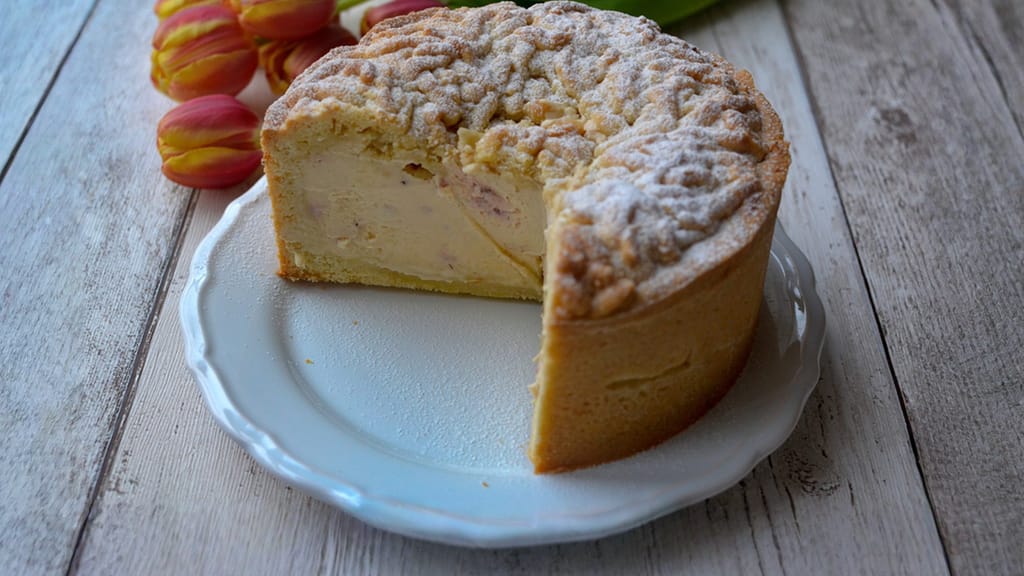
Rhubarb cake with custard and curd cheese
Rhubarb cake with custard and quark, perfect for a Sunday coffee
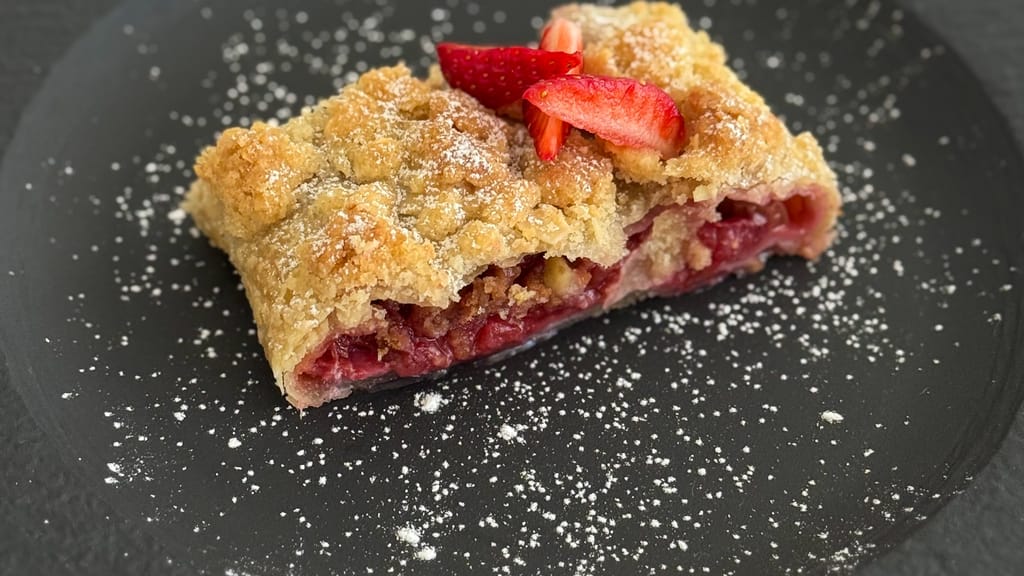
Strawberry-rhubarb strudel with buttery crumble
Rhubarb and strawberry strudel with buttery crumble — the classic spring pairing of rhubarb and strawberries
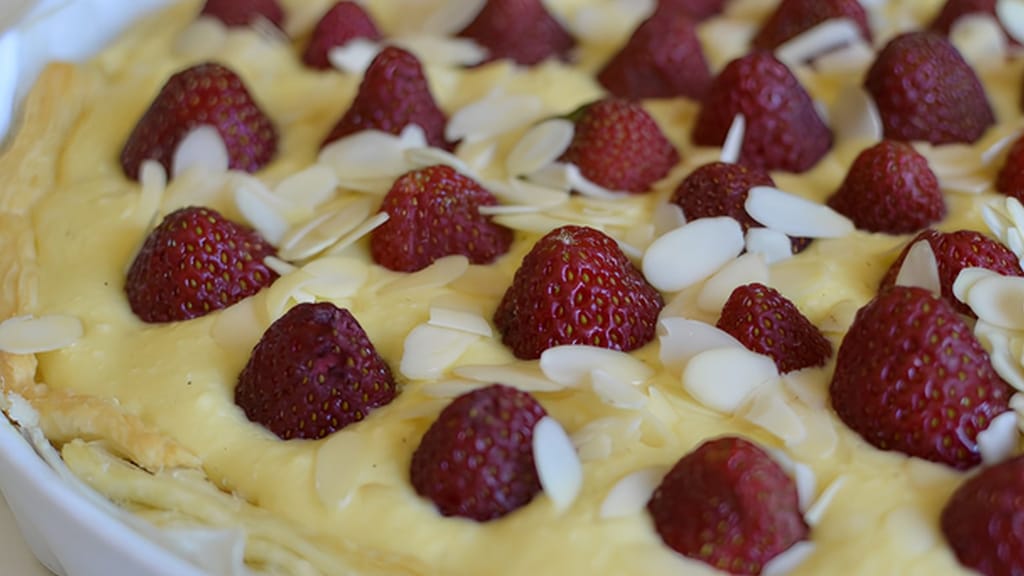
Strawberry rhubarb tart with almond flakes
Strawberry cake with rhubarb and flaked almonds
A few simple additions can really lift rhubarb's sweet-tart flavour — try vanilla or ground ginger in a cake, or cinnamon and lemon zest in a compote. For something different, try braising it with honey and a splash of balsamic vinegar for a caramelised side dish to serve with roast pork or chicken.
You can eat raw rhubarb stalks in small amounts, but they're extremely sharp and puckery, so most people only really enjoy them once they've been cooked with sugar. Never eat the leaves, raw or cooked — they're poisonous. If you're prone to kidney stones, it's best to go easy on raw rhubarb.
Rhubarb is low in calories and packed with fibre, vitamin C and potassium, but it's also one of the vegetables highest in oxalic acid. Eaten in excess, this acid can bind calcium and contribute to kidney stones, so anyone with kidney problems, gout or a tendency to stones should be careful with it. Experts note that pairing rhubarb with a calcium-rich dairy ingredient — like quark or cream — helps offset the acid's effect.
A healthy rhubarb crown can stay put for ten years or more, but it's worth dividing it roughly every five to six years, either in autumn or early spring. Dig up the rootstock, cut it into sections with one or two buds each, and replant them — rejuvenated plants reward you with sturdier stalks.
Woody, fibrous rhubarb stalks aren't a lost cause: peel away the tougher fibres, chop finely and stew them longer than usual — they're best turned into compote, syrup or purée. If you want neat, distinct pieces for a cake, though, young spring stalks are the better choice.
Yes — because of the oxalic acid, rhubarb leaves are toxic to dogs, cats and poultry too, so never feed them to animals or leave them somewhere pets can graze. Trimmed leaves should go straight to the compost heap, out of animals' reach.
One recipe worth heating the oven for, one tip, and one deal from the shop. Nothing else.