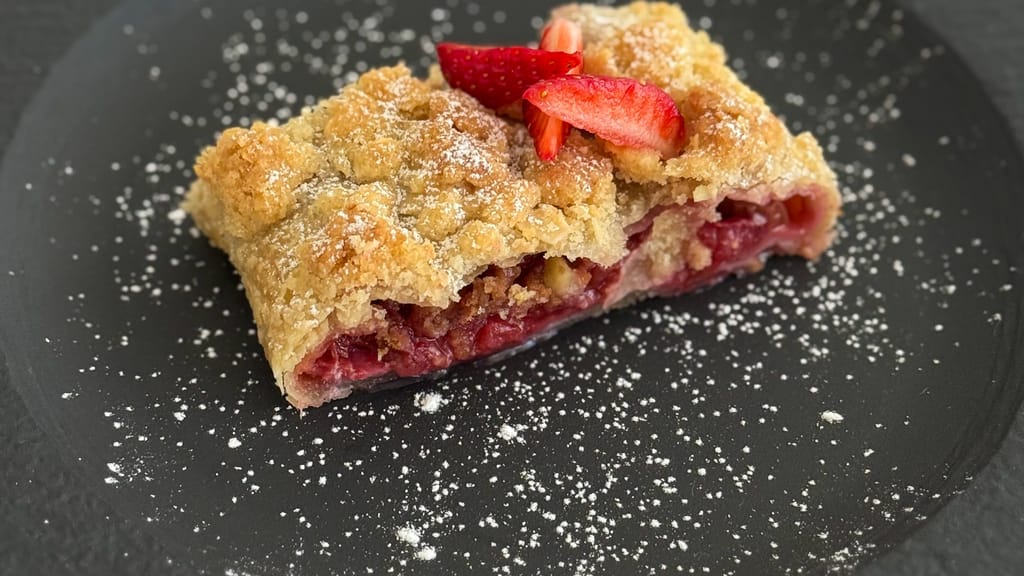
Rhubarb & strawberry strudel with buttery crumble

Updated Jul 19, 2026
Rhubarb is that tart spring stalk vegetable we treat like fruit in the kitchen – baked into pies, simmered into compotes, or boiled down into syrups. Getting it ready is a four-step job: harvest the stalks at the right time, remove the poisonous leaves, chop the stalks, and decide whether to bake, cook or store it. In this guide we'll walk through each step – from garden to plate – including why you should never eat the leaves and how to enjoy rhubarb's flavour even out of season.
Rhubarb (Rheum rhabarbarum) is a perennial vegetable that we use like a fruit because of its distinctly tart flavour. Only the thick stalks are edible – they're where the sourness comes from (mainly malic and oxalic acid), giving rhubarb that bright, tangy edge. That tartness balances beautifully against sugar, which is why rhubarb works so well in pies, compotes, syrups and even savoury sauces for meat.
It originally comes from Asia, from the region that is now China and Tibet, where historical sources suggest it was used as a medicinal plant thousands of years ago. It didn't reach Europe until the 17th century, and only there did it become a proper kitchen ingredient. Flavour-wise, it pairs beautifully with strawberries, apples and vanilla – the sweetness of the fruit rounds out its sharpness, so you need less added sugar.
Harvest rhubarb from April through June, when the stalks are at their juiciest. Well-watered plants can start producing as early as March and keep going into summer. Pick it gradually rather than all at once – that way the plant keeps producing right through spring.
You can tell rhubarb is ready by the length and firmness of the stalk, not its colour – harvest stalks that are at least 25–30 cm long, firm and crisp enough to snap. The common belief that green stalks are unripe is a myth: colour is mostly down to variety and has little bearing on ripeness or flavour (red varieties just tend to be a touch sweeter and look prettier baked into a pie). Only take a third to half of the stalks from each clump so the plant has enough left to keep growing. Once a flower stalk starts to shoot up, the plant's energy shifts to flowering and the stalks turn woody and bitter – snap the flower stalk off right away and wind down harvesting for the season.
Don't cut rhubarb with a knife – twist it out instead. Grip the stalk near the base, give it a gentle twist, and pull upward to release it from the crown. Cutting at ground level leaves a stump that can easily rot; a cleanly twisted-out stalk leaves no wound and encourages further growth. Snap off the leaves right there and leave them in the garden – we'll explain why below.
Prepping rhubarb comes down to three steps: wash the stalks, remove the leaves, and chop the stalks into 1–3 cm pieces. Usually that's all you need to do.
Washing: rinse the stalks under running water, scrubbing off any dirt with a soft brush, then pat them dry. Rhubarb grows low to the ground, so it's often muddy.
Peel it, or not? Young, thin spring stalks don't need peeling – the skin is delicate and holds its colour well. For thick, stringy late-season stalks, use a sharp knife to strip off the tough outer fibres, or you'll end up with chewy strands in your dish.
Chopping: cut the stalks crosswise into 1–3 cm pieces, depending on the recipe. Smaller pieces break down into a sauce or compote, while larger chunks hold their shape in a pie.
To keep a rhubarb pie from turning watery or overly sour, watch two things: moisture and sugar ratio. Toss the chopped rhubarb with sugar and let it sit for 20–30 minutes to draw out the juice (macerating); then either drain that juice off or thicken the filling with a spoonful of starch (cornflour or potato starch) so it doesn't soak the base. Balance the tartness with sugar – for 500 g of rhubarb, 80–120 g is usually enough, depending on how sweet your pastry is. It pairs wonderfully with strawberries, raspberries, vanilla and a pinch of cinnamon. Bake at around 180°C until the pastry turns golden and the filling starts to bubble.
For exact ratios and method, though, stick to tried-and-tested recipes – here are a few of our favourite rhubarb bakes:
Rhubarb & strawberry strudel with buttery crumble
Rhubarb and strawberry strudel with buttery crumble – a spring classic
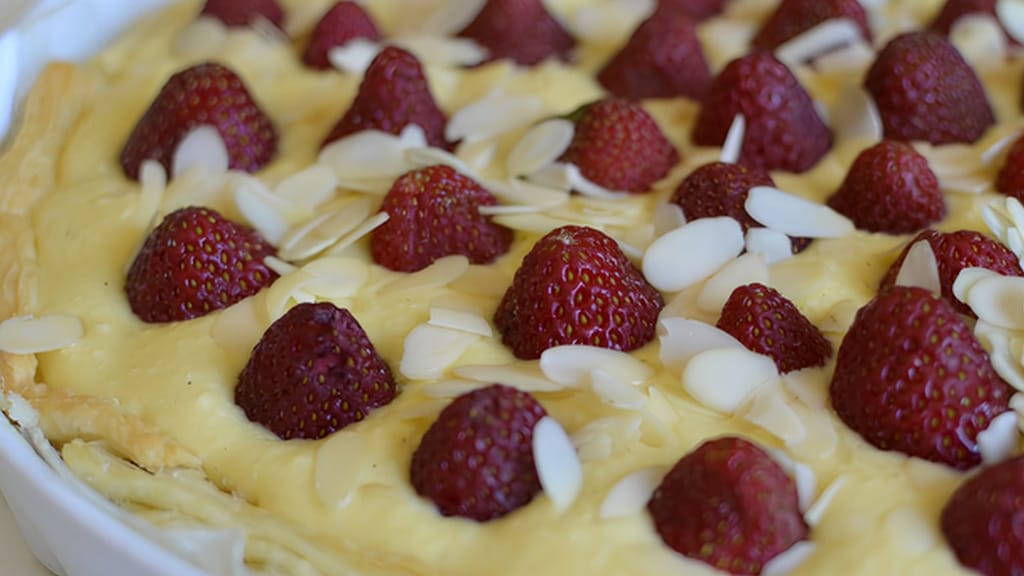
Strawberry and rhubarb tart with almond flakes
Strawberry pie with rhubarb and flaked almonds
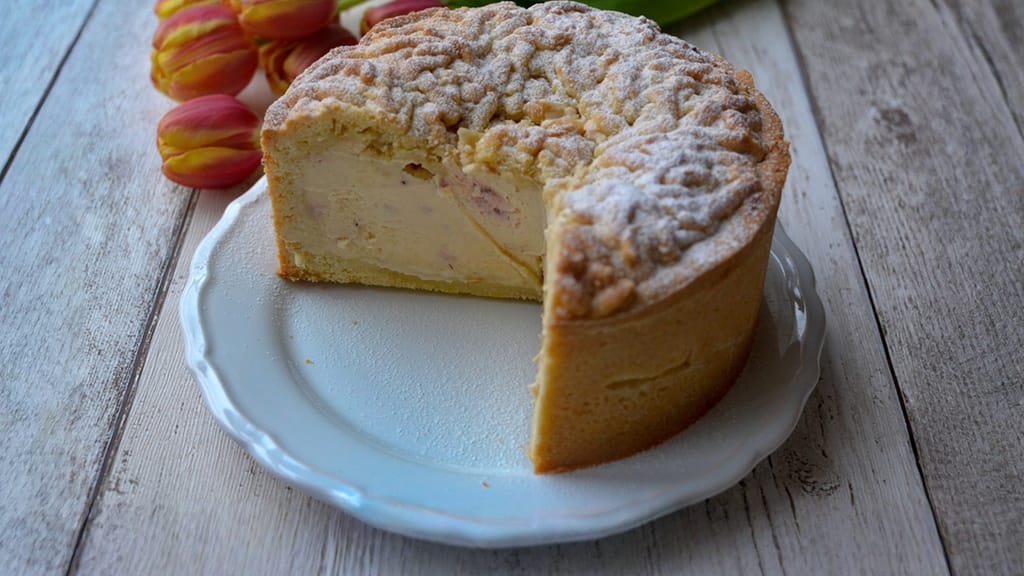
Rhubarb cake with custard and farmer's cheese
Rhubarb cake with custard and curd cheese
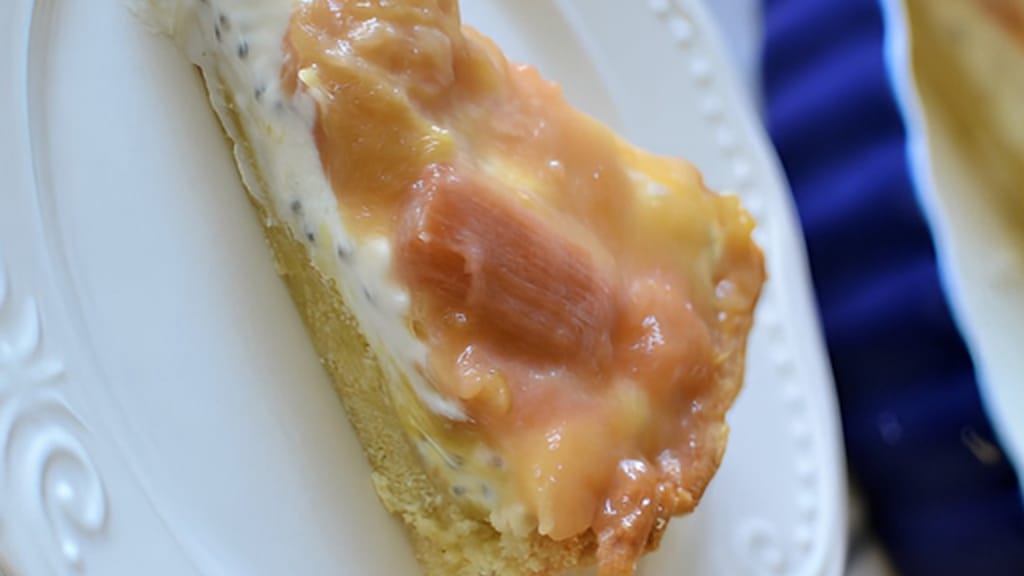
Rhubarb pie with curd cheese and chia seeds
Rhubarb pie with curd cheese and chia seeds – a lighter version
Rhubarb is naturally light – about 20 kcal per 100 g – and, according to nutritional data, a good source of fibre, vitamin K and antioxidants; a single cup of cooked rhubarb covers a significant chunk of your daily vitamin K needs. What usually makes it "unhealthy" is the amount of sugar used to sweeten it. Here are a few ways to cut back:
Sweeten with fruit instead of sugar: simmer ripe strawberries, pear or apple together with the rhubarb – the fruit's natural sweetness tones down the tartness.
Use natural sweeteners in moderation: honey or maple syrup add flavour, but treat them like sugar, not as an unlimited "healthy" swap.
Steam it: steam rhubarb pieces for 5–7 minutes. It keeps more colour and nutrients this way, and works well as a light side for fish or tossed into a salad.
Sugar-free compote or purée: simmer rhubarb briefly with a little water and vanilla – lovely with yoghurt, curd cheese or on pancakes.
For a lighter gluten-free or vegan option, try it as a smoothie: blend a handful of rhubarb with strawberries and a plant-based milk. And if you want a dessert that doesn't feel heavy, go for a soufflé:
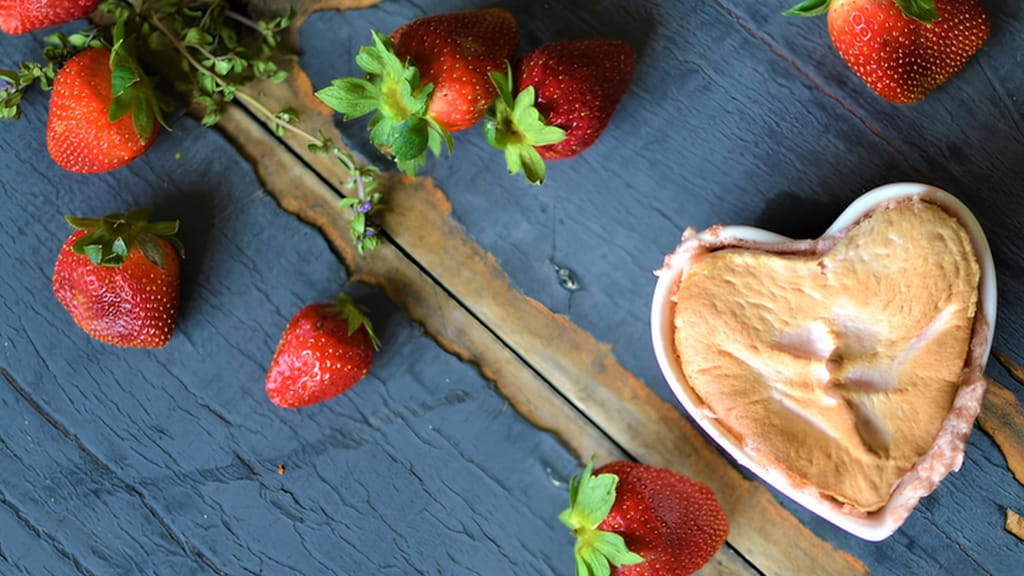
Fluffy strawberry-rhubarb soufflé
Fluffy soufflé with juicy strawberries and rhubarb – a light spring dessert
The best way to keep rhubarb is to freeze it – raw, chopped pieces keep in the freezer for 6–12 months, and you can use it straight from frozen in pies or compotes, no need to thaw.
Freezing: spread 2–3 cm pieces in a single layer on a baking-paper-lined tray and flash-freeze for 1–2 hours. Then transfer to bags or containers and label with the date – this way the pieces won't clump together and you can take out exactly as much as you need. No need to blanch first.
In the fridge: fresh, unwashed stalks wrapped in a tea towel or bag will keep for about a week.
Drying: dry thin slices in a dehydrator or oven at around 50°C for several hours, until crisp. Store in an airtight jar away from light; great in granola, tea blends or baking.
You can also lock rhubarb's flavour in for months by turning it into syrup, compote or jam.
Rhubarb leaves don't belong on a plate – but they're great for the compost heap. They're toxic, yes, but they break down easily and enrich compost beautifully. The oxalic acid breaks down during decomposition, so the finished compost won't harm your plants; feel free to chop up the leaves and toss them onto the pile.
You'll also sometimes hear that a leaf infusion makes a good aphid spray, but its effectiveness isn't well proven, and the liquid from the leaves is toxic to you too – it's best avoided on anything you plan to eat. If you're handling a large amount of leaves, wear gloves and keep them well away from children and pets.
You can eat a raw rhubarb stalk, but it's extremely tart and contains oxalic acid, so only nibble a small amount. Most people prefer to briefly cook it or dip it in sugar first. Never eat the leaves, raw or cooked – they're poisonous.
Young, thin spring stalks don't need peeling – the skin is delicate and keeps its colour. Only peel thick, stringy stalks from later in the season: strip off the tough outer fibres so you don't end up with chewy strands in the finished dish.
The closest match is a combination of tart fruits – gooseberries or sour apples with a splash of lemon juice work well. A mix of strawberries and lemon can also stand in, though the result will be sweeter and less sharp than real rhubarb.
Rhubarb releases a lot of juice as it bakes because it's mostly water. Let the chopped pieces sit with sugar for 20–30 minutes to draw out the liquid, drain it off, then thicken the filling with a spoonful of starch – that keeps the base dry and the filling holding its shape.
Rhubarb leaves are toxic to dogs and cats because of their oxalic acid content, so keep them well out of reach. A small piece of cooked stalk usually won't cause harm, but rhubarb has no place in a pet's diet – if your pet eats the leaves or a large amount, contact your vet.