Easter jidáše with honey and lemon zest

Updated Jul 19, 2026
Regional Easter specialties in the Czech Republic differ from area to area: in Moravia, the air fills with the scent of jidáše (Judas buns) and mazanec (Easter sweet bread); in Valašsko and Silesia, kyselica soup simmers on the stove; in South Bohemia, carp reigns supreme; and in the Krkonoše Mountains, potato sejkory take centre stage. This guide takes you through five regions, explaining why each dish is made the way it is and which day of Easter it belongs to. For the classics, you'll find a link straight to a tried-and-tested recipe.
Two sweet yeasted classics symbolise Moravian Easter — jidáše and mazanec. They're baked all across the Czech Republic, but in Moravia they're among the most deeply rooted Easter customs, and each has its own precise place in the holy week.
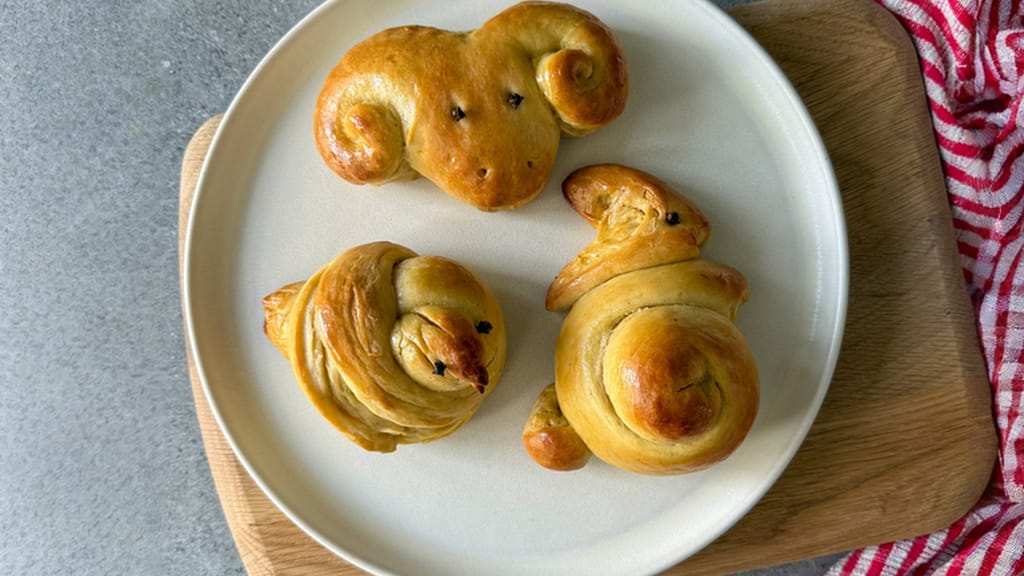
Jidáše are sweet yeasted buns baked on Maundy Thursday and brushed with honey once out of the oven. Their looped, twisted shape recalls the rope on which, according to the Gospel, Judas Iscariot hanged himself — hence the name.
According to folk belief, eating jidáše first thing on Maundy Thursday morning, ideally before sunrise, was said to bring health and protection for the whole year ahead. The honey glaze symbolises the sweetness of forgiveness and new beginnings.
The dough itself is simple: plain flour, milk, butter, eggs, sugar and yeast, scented with lemon zest. The secret to light, fluffy jidáše is well-risen, soft dough and patience — rushing yeasted dough never pays off.
Easter jidáše with honey and lemon zest
Easter Jidáše with Honey and Lemon Zest — Yeasted Buns for Maundy Thursday

Mazanec is a sweet yeasted bread studded with raisins and almonds, shaped into a round loaf with a cross scored into the top. It's baked on Holy Saturday or Easter Sunday and is often the first sweet treat cut into at the festive table after the fast.
Its origins reach back to the Middle Ages, when white flour, butter and dried fruit made it a luxury reserved for holidays. It differs from vánočka in both shape and ingredients — it's round, less rich in eggs and fat, and isn't braided, just marked with a cross as a symbol of blessing.
Let the raisins plump up in rum beforehand, and scent the dough with lemon zest and a pinch of nutmeg. Before baking, brush the mazanec with beaten egg and scatter over almond flakes for shine and a crisp crust. To stop the almonds burning, cover the top with foil halfway through baking.
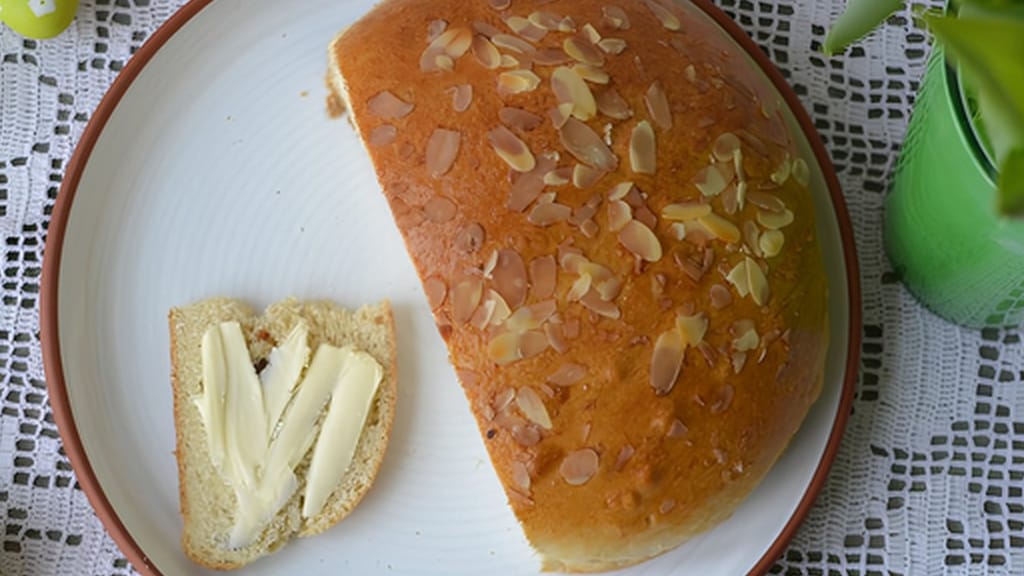
Easter classic: fragrant mazanec bread
An Easter classic: fragrant mazanec with raisins and almonds
In eastern Moravia — Valašsko and Silesia — no Easter table is complete without soup: hearty kyselica made from sauerkraut, and a light chicken broth with homemade noodles. While in Bohemia the spotlight tends to fall on pomlázka whipping and painted eggs, here the holiday revolves mainly around sharing a meal at one table.
Spring wouldn't be complete without kraslice (decorated eggs) either — if you fancy dyeing yours naturally this year, check out our guide to natural egg dyeing.
Kyselica is a filling soup made from sauerkraut, potatoes and smoked meat, originating in Valašsko and equally popular in Silesia. It belongs to the same family as zelňačka (cabbage soup) and Slovak kapustnica — moving southeast, one blends seamlessly into the other.
The base is sauerkraut along with a splash of its brine, potatoes and smoked sausage or smoked meat. It's seasoned with salt, pepper, caraway, marjoram, bay leaf and allspice, and thickened with grated raw potato or a light flour-and-fat roux, traditionally even with bread starter. Some cooks stir in cream to soften the tang; elsewhere the soup stays sharply sour.
Originally this was a humble fasting dish for the poor — cheap, warming and filling. Historians also note that sauerkraut was one of the main sources of vitamin C through the long winter months, which made it valuable long before anyone understood what vitamins were.
Chicken noodle broth is a clear, fragrant soup made from a proper poultry stock, with freshly cooked homemade noodles stirred in. On the Easter table, it symbolises the return of abundance and energy after winter.
The secret lies in time: the broth is simmered slowly, just barely bubbling, so it stays clear. It's finished with fresh parsley and lovage for a burst of spring flavour. The noodles are cooked separately and added to each bowl at the last moment, so they don't cloud or overcook in the broth.
In South Bohemia, in the fish-pond country around Třeboň, carp rules the Easter table — carp soup and fried carp fillets — rounded off with sweet boží milosti pastries. The fish isn't there by chance: it was traditionally eaten on Good Friday, a strict fasting day when meat was forbidden but fish was allowed.
Carp soup is the hearty backbone of the South Bohemian Easter feast, made from carp, root vegetables and spices. It's seasoned with pepper and allspice and softened with a little cream; in some households, carp roe or milt and whisked blood are added for thickness and colour.
Fried carp fillets are the second classic. Pieces of carp are left to marinate briefly in lemon juice with salt and pepper, then coated in the classic flour-egg-breadcrumb fashion and fried until golden. They're served with potato salad or fresh bread. Watch out for small bones — check the fillets by hand before coating and pull out any stray bones with tweezers.
Boží milosti are delicate fried pastries dusted with icing sugar. The dough — plain flour, egg yolks, cream, a knob of butter and lemon zest — is often enriched with white wine or rum, rolled out thin, cut into diamonds and fried until golden.
They're among the oldest recorded Czech sweets — the recipe appears as far back as Magdalena Dobromila Rettigová's cookbook from 1826. Traditionally they were fried on Easter Monday as the final festive pastry, and related sweets are still made in Scandinavia today (Danish and Icelandic klejner, Swedish klenät). The key to their delicate crunch is thin dough and properly hot fat — in lukewarm oil they soak up grease and turn heavy.
Easter cooking in the Krkonoše Mountains is simple and hearty — perfectly suited to the cooler mountain spring. Centre stage goes to potato sejkory pancakes and sauerkraut with smoked sausage.
Sejkory are potato pancakes made from raw grated potatoes, flour, eggs and salt, fried in lard or oil until golden. Season the potato mixture with salt and fry it quickly so it doesn't turn grey; for a bolder flavour, add crushed garlic and marjoram.
They're excellent served alongside sauerkraut or on their own with a little lard or sour cream. Their charm lies in simplicity — just a handful of ingredients every mountain household had close to hand.
Sauerkraut with sausage forms the backbone of the Krkonoše festive table. The cabbage is shredded, salted with caraway and left to ferment for several weeks until it develops its characteristic tang. It's braised gently at home and served with smoked sausage or pork.
Homemade fermented sauerkraut beats the shop-bought kind in both flavour and aroma — it's fuller-bodied and less vinegary. When braising it, give it time and go easy on the salt, since the fermentation has already seasoned it.

West Bohemian Easter cooking bears the mark of its German neighbours — from beer at the festive table to shapes and baking techniques that crossed the border long ago. The best-known sweet symbol of the holiday here is the lamb cake.
The Easter lamb cake is a light sponge or creamed-batter cake baked in a special mould shaped like a lying lamb. It symbolises spring, new life, and in Christian tradition, Christ himself — the Lamb of God.
For a clean release after baking, grease and flour the mould thoroughly; once baked, let the cake rest a few minutes before turning it out. It's decorated with icing sugar or chocolate glaze, with a ribbon tied around its neck. We've covered it in detail in our article on how to make the perfect Easter lamb cake.
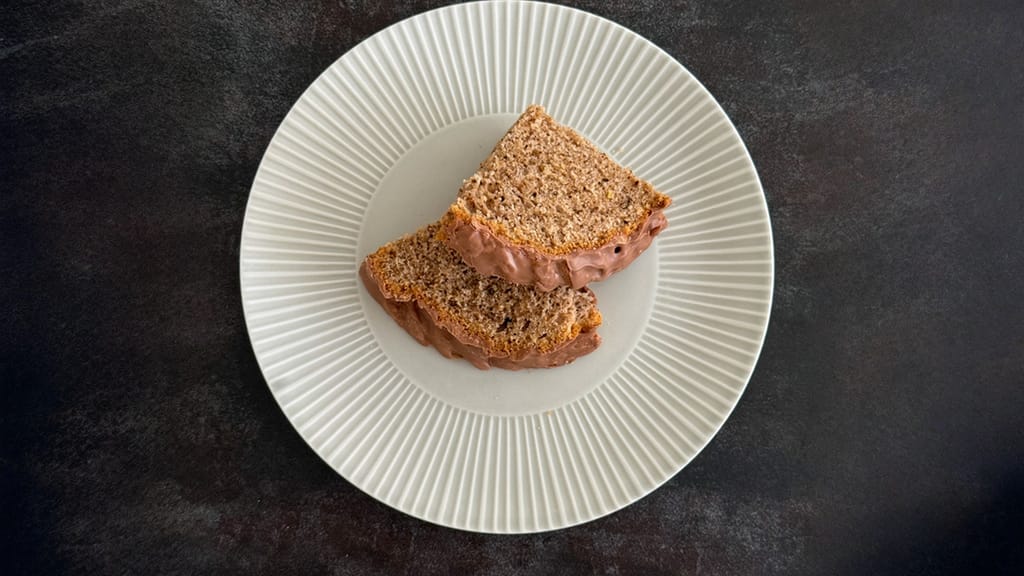
Traditional walnut easter lamb cake with chocolate glaze
Traditional walnut Easter lamb cake with chocolate glaze
One savoury classic ties the Czech Easter table together across every region: Easter nádivka, a baked bread-and-egg pudding. It's made mainly on Maundy Thursday and Easter Sunday from bread, eggs, smoked meat and a handful of spring herbs like nettles, parsley or young spring onion. It's a dish that turns the whole country into a single story — hearty, fragrant, and pieced together from whatever spring happens to offer.
Whether you go for Moravian jidáše, Valašsko kyselica, South Bohemian carp or Krkonoše sejkory, each of these dishes is a living piece of its region's tradition. Pick one to start with — the rest of your festive table will follow naturally.
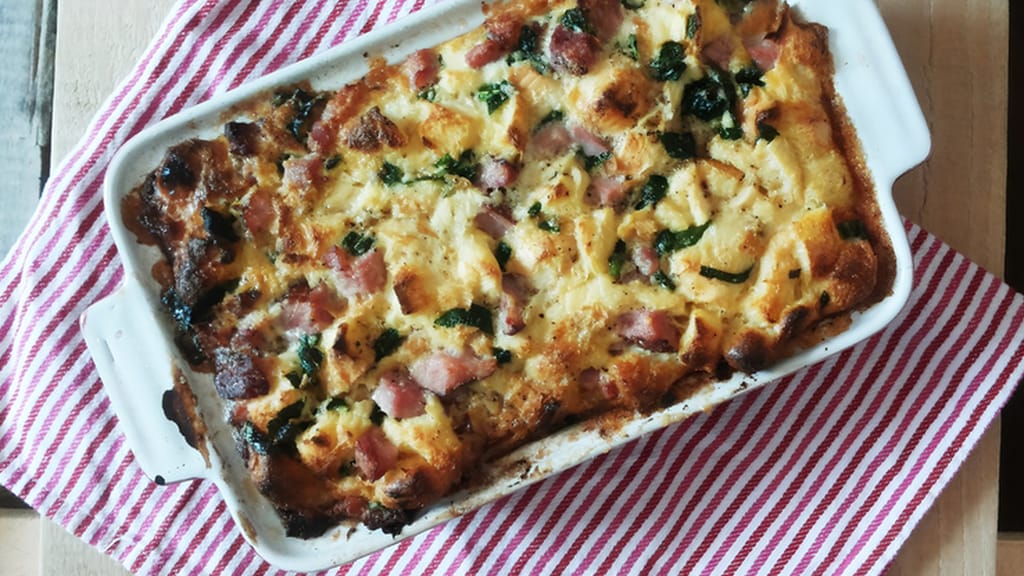
Easter stuffing
Easter nádivka with smoked meat and spring herbs
Jidáše are baked on Maundy Thursday, mazanec on Holy Saturday or Easter Sunday, fish (carp) belongs on the fasting day of Good Friday, and boží milosti (sweet fried pastries) were traditionally fried on Easter Monday. Easter nádivka (savoury bread pudding) is mainly made on Maundy Thursday and Easter Sunday. This timing follows the pre-Easter fast, which peaks on Good Friday and only ends with the holiday celebrations.
Mazanec is a round loaf with a cross cut into the top, while vánočka is braided into a plait from several strands of dough. Mazanec tends to be less rich in eggs and fat and is baked for Easter, whereas vánočka is a Christmas bread with a sweeter, more buttery dough. Both, however, share the same base: a raisin-and-almond-studded yeasted dough.
Maple syrup or agave syrup work well as a glaze instead of honey, as does a thick sugar syrup with lemon. The pastries will lose their signature honey aroma but will still get a similarly glossy, sticky finish. For soft, fluffy jidáše, well-risen dough matters more than which sweetener you use.
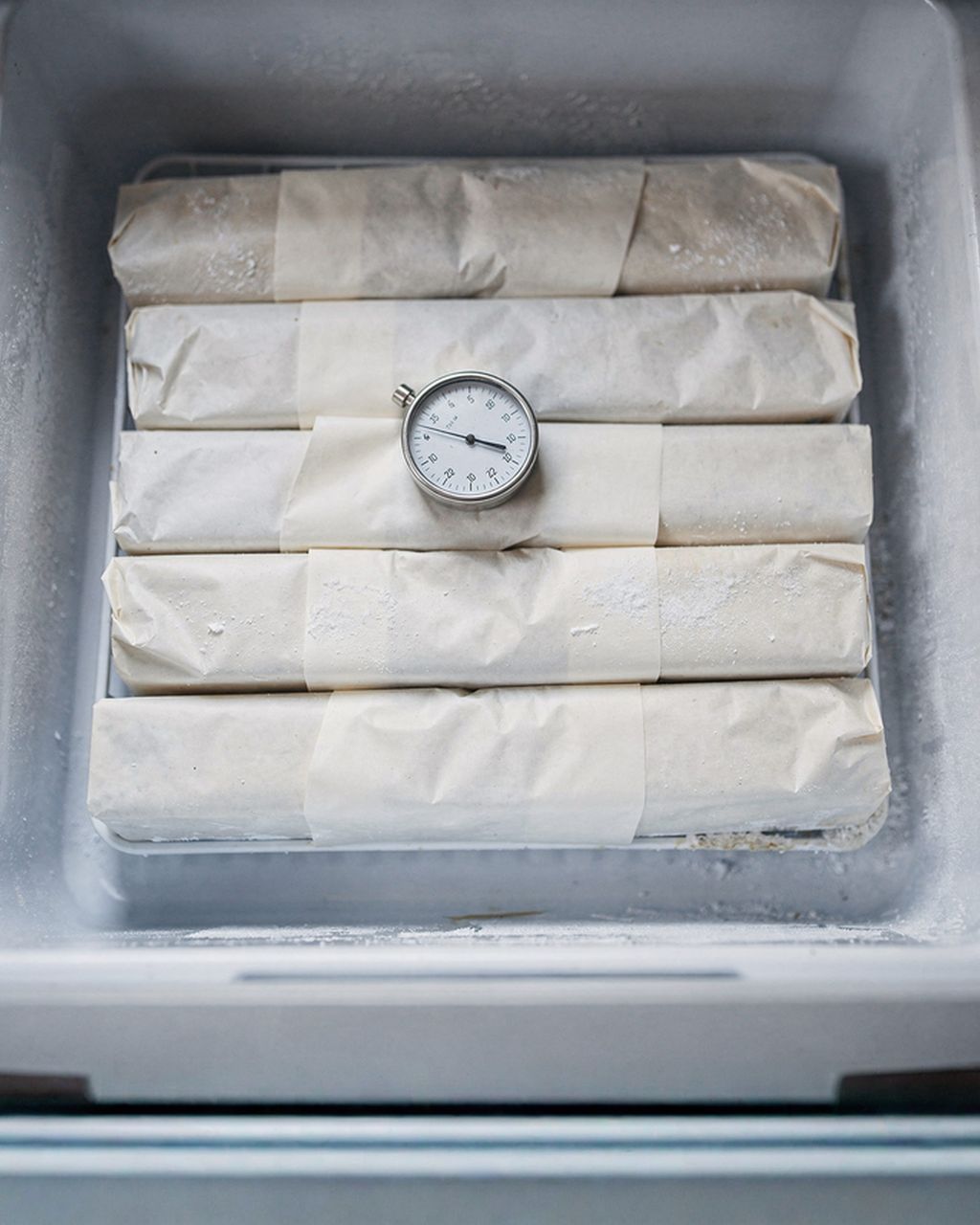
Yeasted Easter pastries stay soft for about 2–3 days if wrapped in a tea towel or paper bag and kept at room temperature. Don't put them straight into a plastic bag — they'll sweat and the crust will turn soggy. For longer storage, the freezer works well: slice them up, freeze, and warm briefly after thawing.
Fish is traditionally eaten on Good Friday, a strict fasting day when meat from warm-blooded animals was forbidden — but fish counted as fasting food. In fish-farming regions like South Bohemia, carp naturally became the Easter classic, giving rise to carp soup and fried carp fillets.
In the Czech Republic, boží milosti are fried both during Shrovetide and at Easter — it's the same delicate dough coated in sugar either way. At Easter, they were traditionally made on Easter Monday as the last festive pastry of the season. The recipe is one of the oldest on record, appearing as far back as Magdalena Dobromila Rettigová's cookbook from 1826.
One recipe worth heating the oven for, one tip, and one deal from the shop. Nothing else.