Prague ham with warm lentil salad
Easter Around the World: Traditional Food and Customs Across Continents

Updated Jul 19, 2026
Easter around the world takes a thousand different shapes, but almost everywhere it ends at a table full of food. From Italian colomba to South African pickled fish to Finnish mämmi, every country has its own Easter dish — yet the same themes keep coming back: spring, the end of fasting, and food meant to be shared. We'll travel the globe continent by continent, tasting the signature dish at each stop and comparing it with what we know at home: ham, mazanec sweet bread, the Easter lamb cake, and stuffing. Take it as inspiration — maybe this year you'll add something new to your own table.
Easter is celebrated on every continent, but the centerpiece dish changes depending on what the region has to offer and how strict the fasting tradition was. Here's a quick preview of where we're headed:
Czech Republic and Central Europe – boiled or glazed ham, stuffing, mazanec sweet bread, lamb-shaped cake, judas buns.
Italy – colomba di Pasqua, a sweet bread shaped like a dove.
Spain – torrijas, slices of bread fried after soaking in sweetened milk.
Northern Europe – marinated herring, new potatoes, curd-cheese pascha, and Finnish mämmi.
South America – bacalhau made from salt cod in Brazil, empanadas in Argentina.
South Africa – Cape Malay-style pickled fish, traditionally eaten on Good Friday.
Asia – more spring renewal festivals (Hanami, Qingming) than Western-style Easter, which is mainly kept alive in the Philippines.
Everywhere you look, the same themes return: spring, the end of fasting, and food meant to be shared.
In the Czech Republic, Easter ham symbolizes the end of Lent — after weeks without meat, a hearty smoked leg of pork was the first festive bite and a sign of abundance. To this day it forms the heart of the festive plate alongside stuffing, eggs, and potato salad.
In Christian tradition, ham marks the end of the forty-day fast and the return of meat to the table on Easter Sunday. It used to be a genuine luxury: the pig was slaughtered in autumn, the leg was smoked over winter, and the finest piece was saved specifically for Easter. That's how it became a symbol of abundance and reward after self-denial.
The way it's prepared varies from region to region in the Czech Republic. In Moravia, ham is more often roasted and brushed with a honey glaze until crisp, while in Bohemia it tends to be slow-boiled with spices — bay leaf, allspice, pepper, sometimes onion and garlic for a fuller flavor. Both roads lead to the same destination: juicy meat that slices thinly with ease.
At home, Easter ham is prepared one of two ways: either slow-boiled in a spiced broth, or roasted and brushed with a honey-mustard glaze until golden. Both methods share the same rule — take your time and keep the temperature low, so the meat doesn't overcook and stays juicy and easy to slice thinly. Don't pour out the cooking broth — it's a great base for Easter soup or for stuffing.
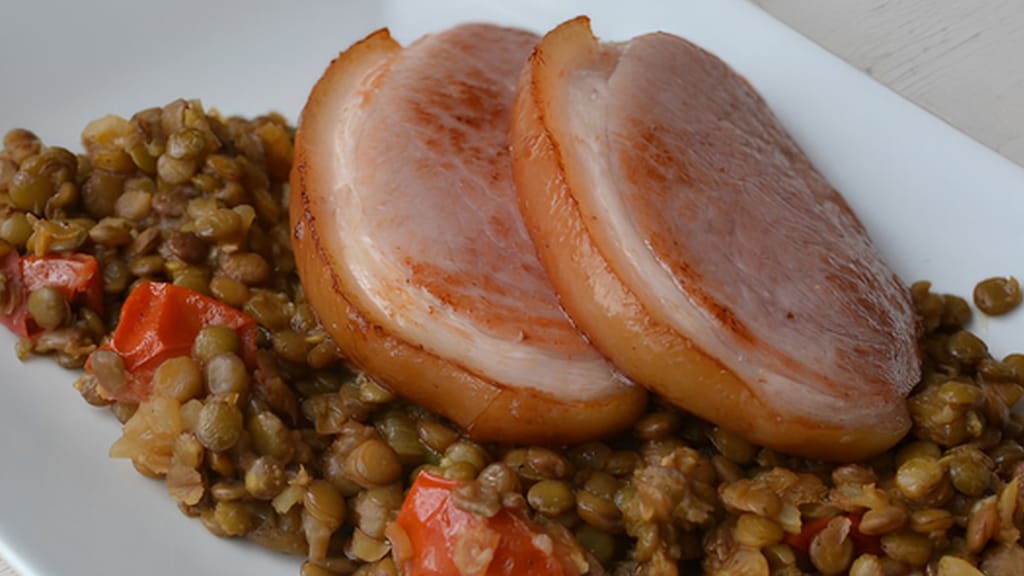
We're preparing a full recipe for glazed ham as a separate guide. Until then, you'll find an honest, no-frills ham for the festive table below, and for a regional comparison, check out regional Easter specialties from the Czech Republic.
Prague ham with warm lentil salad
Prague-style ham with warm lentil salad – honest ham as the base of the Easter table
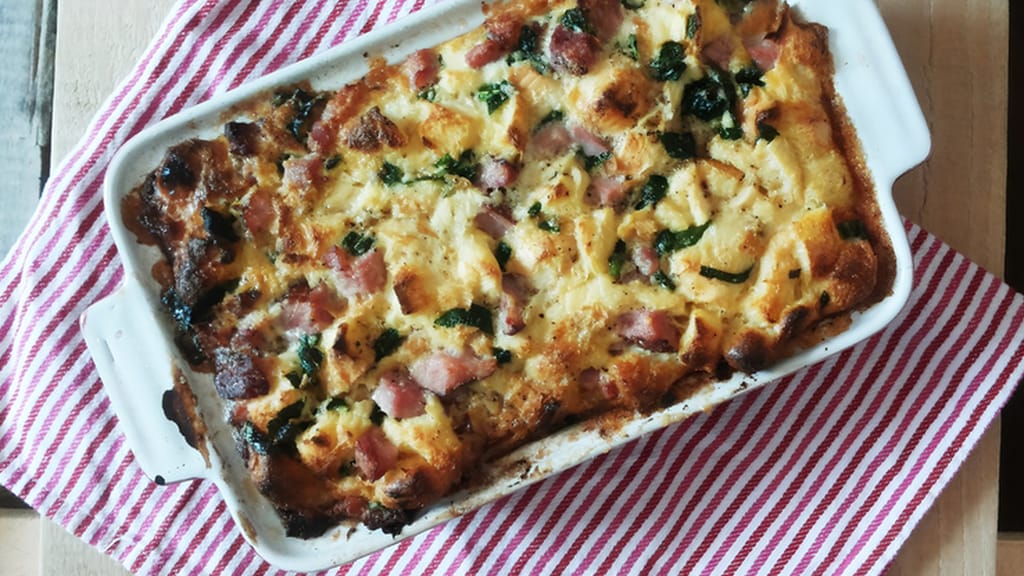
Easter stuffing
Easter stuffing – the traditional side for ham and eggs
European Easter tables are united by sweet leavened bread and lamb. From Italy to Scandinavia, the same symbols repeat — the dove, the lamb, spring renewal — just in local dress.
Colomba di Pasqua is Italy's dove-shaped Easter bread — a cousin of our own mazanec, just made from a richer, buttery dough. It comes from Lombardy, and historians credit Dino Villani of the Motta company with giving it its modern form in the 1930s, baking it from the same dough used for Christmas panettone. Unlike mazanec, it usually skips raisins in favor of candied citrus peel, topped with pearl sugar and almonds. The dove shape symbolizes peace and the Holy Spirit.

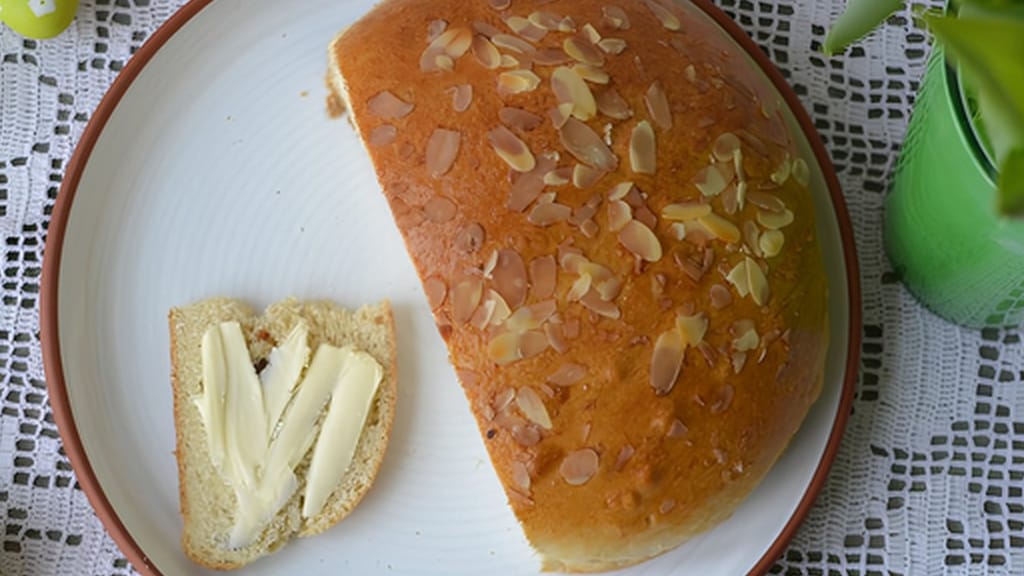
Easter classic: fragrant mazanec bread
Fragrant mazanec – the Czech cousin of Italy's colomba
Torrijas are Spain's Holy Week Easter treat: slices of day-old bread soaked in milk (or wine) with sugar and cinnamon, dipped in egg, and fried golden. The result is a lot like French toast or our own chudí rytíři (poor knights) — crisp on the outside, soft within. It's also a clever way to use up stale bread.
Lamb — both the animal and the sweet cake version — is Europe's strongest shared Easter thread. The lamb symbolizes Christ and appears everywhere from the Balkans to Scandinavia; here at home it takes the form of a baked sponge-cake lamb. Alongside it come judas buns, honey-brushed rolls twisted into a rope shape. Both carry the same symbolism of spring and renewal that we share with most of Christian Europe.
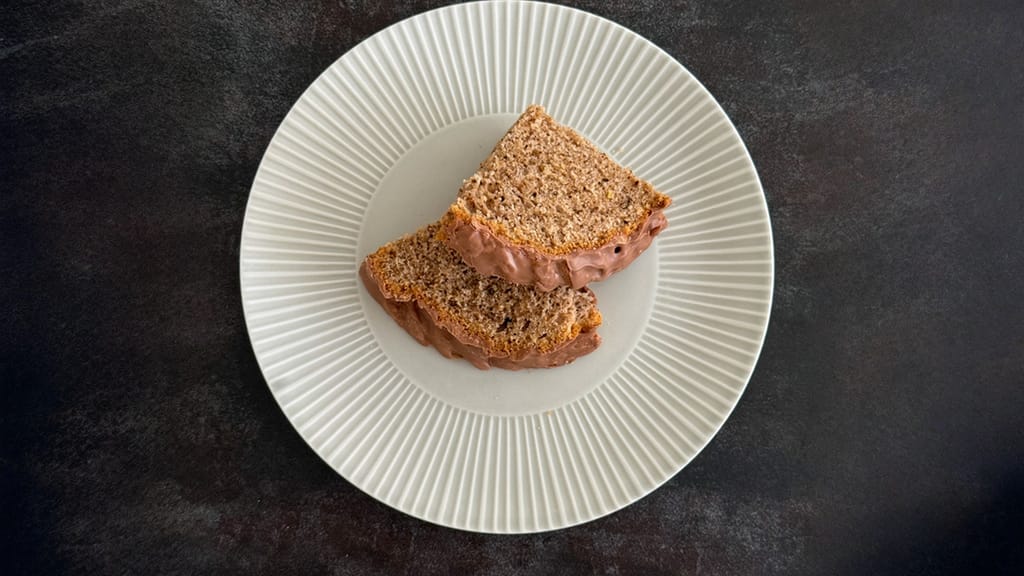
Traditional walnut easter lamb cake with chocolate glaze
Traditional walnut Easter lamb cake with chocolate icing
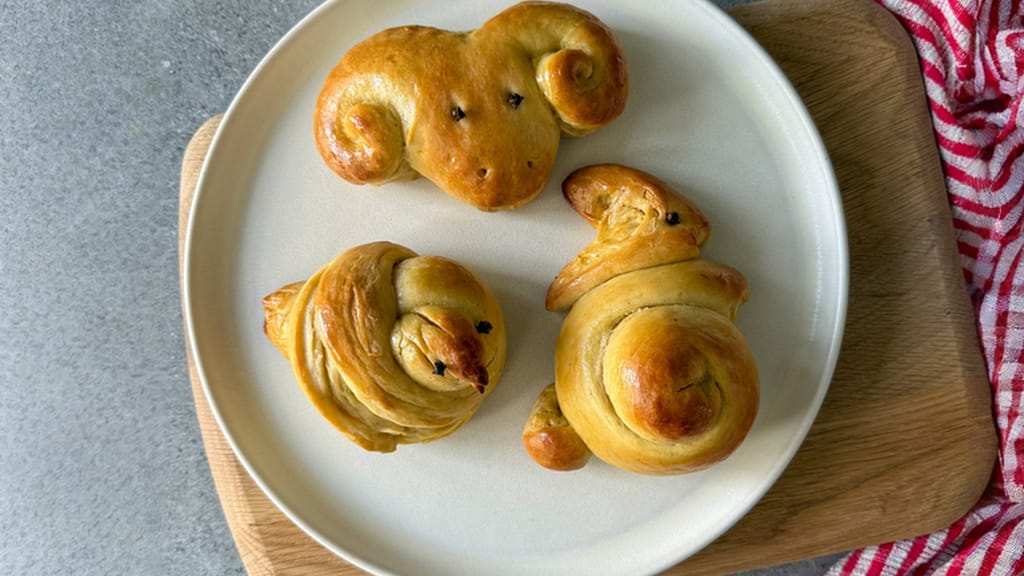
Easter jidáše with honey and lemon zest
Easter judas buns with honey and lemon zest
Nordic Easter tables run on simplicity and fish. Instead of an overflowing spread, you get a handful of honest staples: marinated herring, buttered new potatoes, curd-cheese pascha, and in Finland, dark mämmi.
Marinated herring sits at the heart of the Scandinavian Easter table — fillets are cured in a vinegar brine with sugar and spices, then served cold as a starter or part of the main spread. Alongside it come young potatoes prepared with almost nothing added, often just butter, salt, and dill. If you want to try the same principle at home, start with marinated salmon (gravlax), made in a similar way.
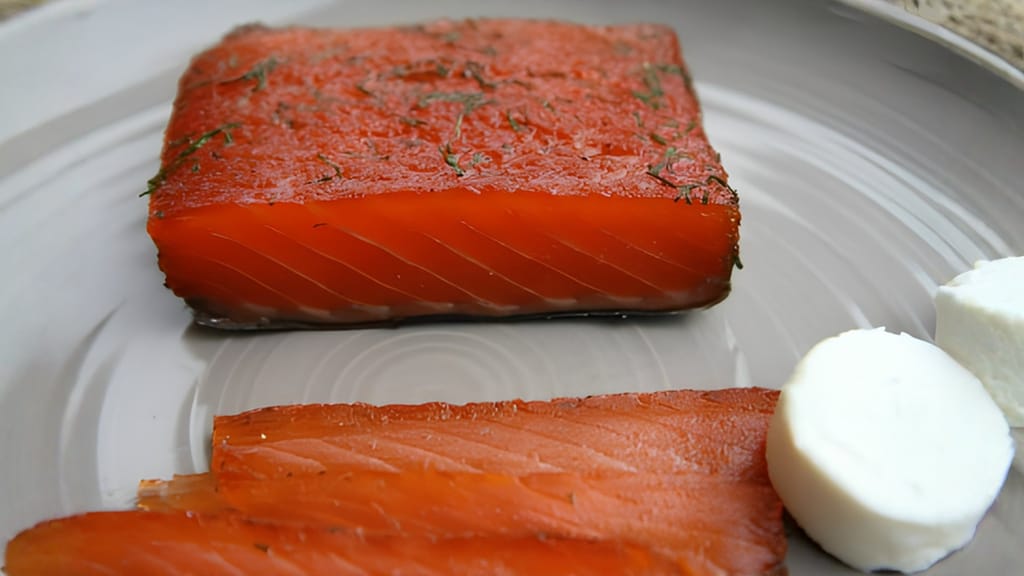
Marinated salmon – gravad lax
Marinated salmon – gravad lax, the Nordic take on pickled fish
Pascha is a light curd-cheese dessert with raisins and almonds, popular in both Finland and Sweden; in texture and flavor it's not far from our own tvarohový koláč (curd-cheese cake). Finland's signature dish is mämmi — a dark porridge made from rye flour and malted grain. It began as a Good Friday fasting dish, from a time when cooking and lighting fires were forbidden, and according to ethnographers, its sweetness comes from the enzymatic malting of the grain, not added sugar. It's served cold with cream or milk.
In Catholic South America, meat is off the table on Good Friday, so fish takes the lead role — especially bacalhau, a dish made from dried, salted cod. The salted cod is soaked overnight in water to soften and shed its salt, then baked with potatoes, onion, garlic, and olive oil. Compared to sweet Czech mazanec or the lamb cake, it's a distinctly salty, hearty dish. In Argentina, meanwhile, Easter means empanadas — pastries filled with meat, cheese, or vegetables; the closest match at home would be savory pirohy or puff-pastry pockets.

In South Africa, the traditional Easter dish is Cape Malay-style pickled fish — fried fillets steeped in a vinegar, onion, and curry brine, served cold on Good Friday. The dish originated in the Cape Malay community as a way to preserve fish without refrigeration, and today people of all faiths eat it on Good Friday, often alongside buttered hot cross buns. Besides fish, the table also features spiced lamb seasoned with cumin, coriander, and cinnamon. Compared to the Czech table, where mazanec and stuffing reign, the African menu leans hard into bold spice and pickling — and it's a great source of inspiration for livening up your own spread.
Across most of Asia, Easter never really took root as a Christian holiday, but spring renewal festivals have their own strong traditions there. Japan celebrates Hanami — the season of picnicking beneath blooming cherry blossoms, marking the arrival of spring and new beginnings. In China, spring brings the Qingming festival, a time for honoring ancestors and tending graves. Genuine Western-style Easter is kept alive mainly in the Philippines, thanks to strong Catholic influence: Palm Sunday processions and Passion Week reenactments are common there. Indonesia's Christian minority marks the holiday with church services and family gatherings. What ties it all together is the theme of nature's renewal — universal, even without a single Easter egg in sight.
Some Easter specialties can really catch you off guard — from fermented rye porridge to eggs with a developed embryo inside. Finland's mämmi looks unappetizing at first glance, but it's a beloved fasting-season classic. In the Philippines, balut — a boiled duck egg with a developed embryo — is eaten as a delicacy, something most Europeans would struggle to even picture eating. And in Norway there's «påskekrim»: at Easter, people read crime novels while nibbling on marzipan eggs and chocolate bunnies — more ritual than dish. Next to that, Czech judas buns and mazanec look downright tame.
Easter isn't only about food — beyond the table, it's celebrated with processions, games, and playful traditions. In Greece, Good Friday brings night processions with icons and candles. In Mexico, streets fill with piñatas stuffed with sweets for children to break open. And here at home? Easter Monday belongs to the pomlázka, a braided willow whip meant to symbolically bring health and youthfulness, along with decorating kraslice eggs using techniques from wax-resist to scratch-etching. Every region has its own ritual — and sometimes that reveals more about a culture than the menu ever could.
Whether you're eating colomba, bacalhau, or an honest Czech ham, it's all pointing at the same thing: welcoming spring and gathering around one table after a period of fasting. The simplest way to broaden your horizons this year is to add one new element to your traditional menu — maybe torrijas instead of the usual sweet bun, or fish on Good Friday. Leave the rest to the people sitting around your table.
In 2026, Easter Sunday falls on April 5th. The date shifts each year because Easter is a movable feast — it's celebrated on the first Sunday after the first full moon following the spring equinox, so it always lands somewhere between March 22nd and April 25th.
Easter ham is typically smoked pork leg or shoulder, slow-cooked or roasted. If you want something lighter, smoked turkey breast works well too; for a meat-free table, a baked Easter stuffing with eggs and herbs makes just as fitting a centerpiece.
In many countries, Good Friday means a meat-free table with fish taking center stage: Brazilian bacalhau made from salt cod, South African pickled fish, or Nordic marinated herring. On the sweet side, there's Spanish torrijas or Finnish mämmi.
The lamb has long symbolized Christ and innocence, which is why lamb (and, in our case, the sweet baked lamb-shaped cake) appears on Easter tables across Europe. The tradition echoes the Jewish Passover and older spring rites involving the sacrifice of young lambs.
Swap in fresh cod, hake, or another firm white fish — you'll just skip the long soaking step, since fresh fish isn't salted. To get closer to the original flavor, bake it with potatoes, onion, garlic, and olive oil.
One recipe worth heating the oven for, one tip, and one deal from the shop. Nothing else.