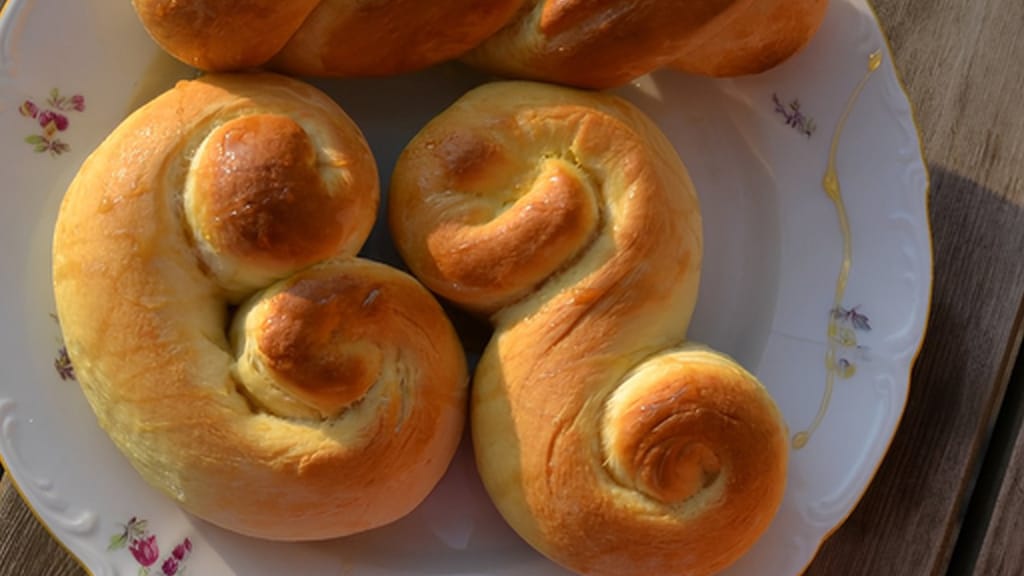
Judas buns: traditional easter pastries
Easter Judas Buns: How to Bake Them Perfectly, Step by Step

Updated Jul 19, 2026
Easter Judas buns (jidáše) are sweet yeasted pastries twisted into a spiral, traditionally baked on Maundy Thursday and brushed with honey the moment they come out of the oven. Three things make them perfect: a soft, well-risen dough, a tightly shaped spiral, and honey applied only after baking. This guide walks through every step — from the starter to shaping to that golden crust — plus the most common mistakes that leave jidáše dense or make them unravel.
Easter Judas buns (jidáše) are sweet yeasted pastries made from flour, milk, butter, eggs and yeast, shaped into a spiral or knot and brushed with honey once baked. They're one of the oldest Czech Easter treats, traditionally baked on Maundy Thursday.
The name refers to the apostle Judas Iscariot, who according to the Bible betrayed Jesus. The twisted spiral shape is said to represent the coiled rope on which Judas, according to tradition, hanged himself after the betrayal — hence that distinctive spiral. The honey brushed over the pastry symbolises the sweetness of forgiveness and new beginnings, while the knots and S-shapes are said to ward off evil. Beyond the symbolism, jidáše have a very practical charm too: soft, lightly sweet dough and a glossy honey crust that every generation ends up loving.

Judas buns: traditional easter pastries
Our basic recipe for Easter Judas buns made from yeasted dough
Seasonal baking plans, tested recipes and kitchen tricks that save you time. Unsubscribe in one click.
Traditionally, jidáše are baked on Spy Wednesday or early on Maundy Thursday morning and eaten before sunrise. Folk belief held that eating honey-brushed jidáše first thing in the morning would ensure good health for the whole year and protect against danger — even things like snake bites or wasp stings.
These days nobody's watching the clock so closely, but Maundy Thursday is still the day Czech kitchens smell the best. Feel free to bake them whenever suits you — the tradition is a nice framework, not a rulebook.
The right dough for jidáše is soft, pliable and stretchy — never stiff. It's a rich yeasted dough, enriched with butter and eggs, so it needs a slightly gentler touch than a plain bread dough.
Four things that make the difference:
Milk and butter should only be lukewarm, never hot.Yeast is a living organism and dies above roughly 50°C (122°F); the ideal liquid temperature is around 37°C (98°F) — just warm to the touch. Never add yeast to hot milk.
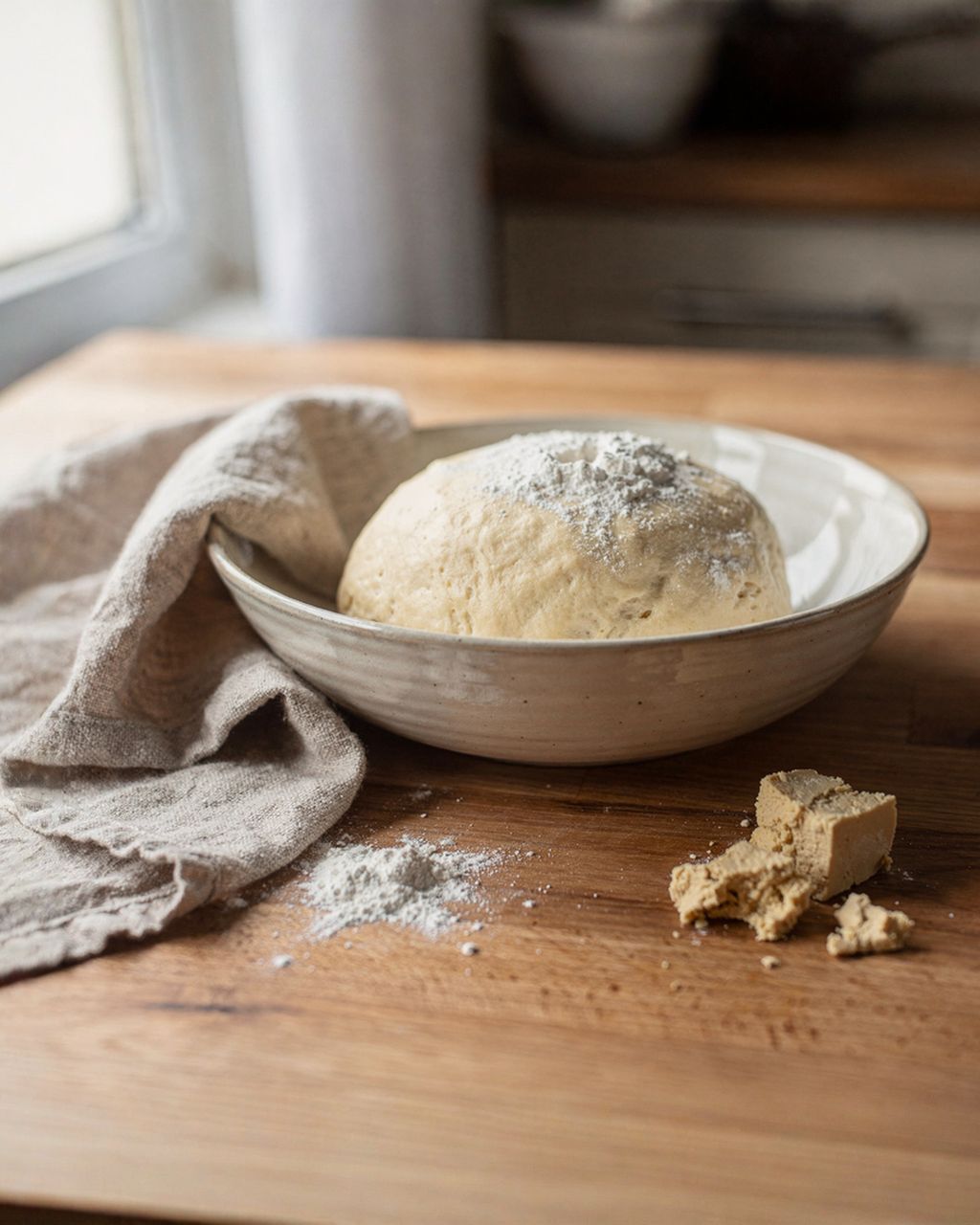
Start with a starter (kvásek).Mix a little lukewarm milk, a spoonful of sugar, a bit of yeast and a handful of flour into a starter, then let it sit for 10–15 minutes. If it foams up, the yeast is alive and the dough will rise properly.
Consistency over precision.Flour absorbs liquid differently every time, so judge the dough, not just the recipe. If it's too stiff, add milk a spoonful at a time; if it's sticky, add a little extra flour.
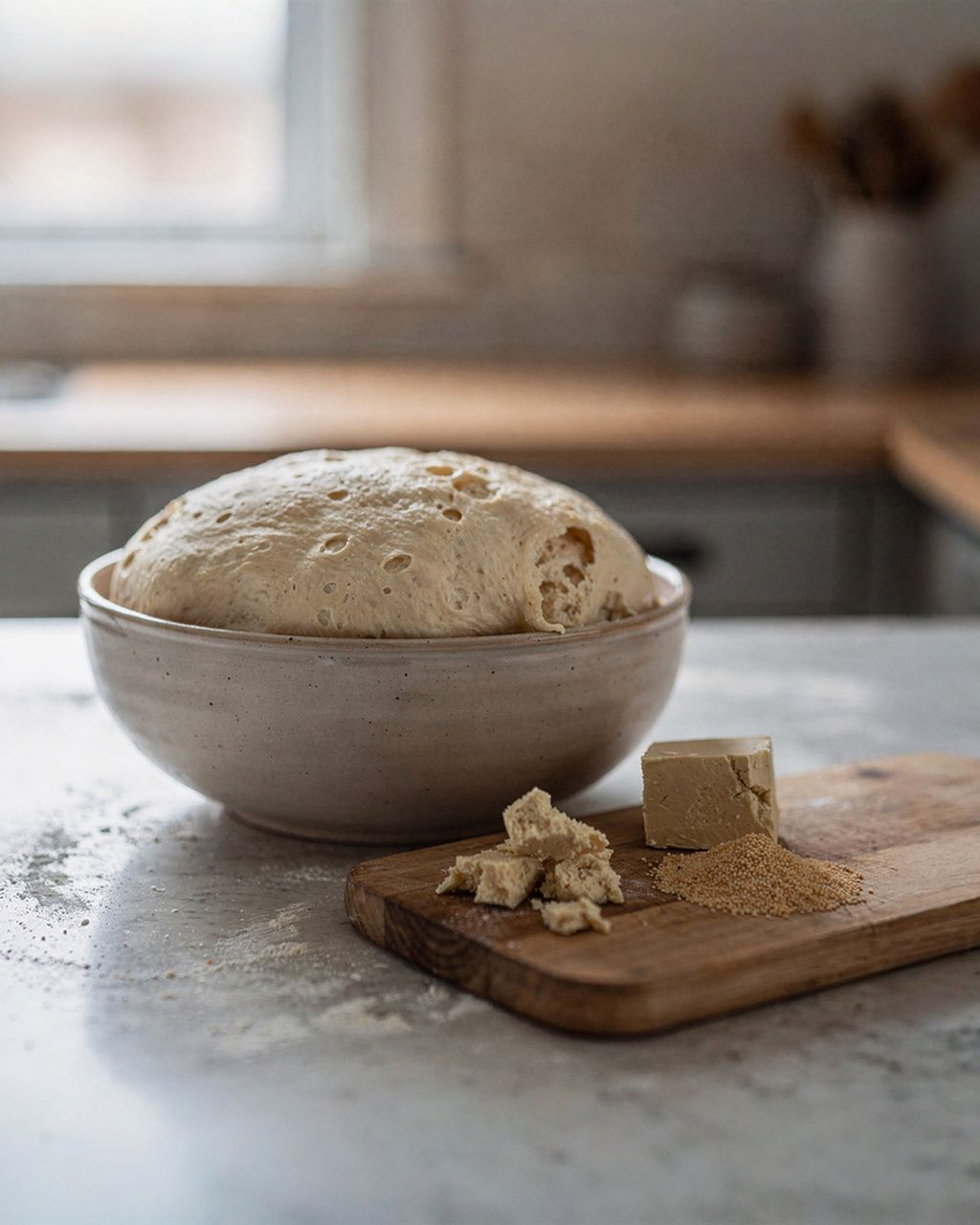
Let it double in size.Let the dough rise somewhere warm and draft-free until it doubles in volume — usually 45–60 minutes. Rushing the rise is the most common reason jidáše turn out dense and dry.
A well-shaped jidáš comes down to two things: properly risen dough and firmly sealed ends. Risen dough is stretchy and easier to shape, so let it finish rising before you start shaping. Then follow these steps:
Divide the dough into equal portions.Equal sizes mean even baking. One strand is enough for a classic twisted spiral; for a braid, split it into three.
Roll out the strands.Roll each portion out on a lightly floured surface into a smooth strand about 20–25 cm long. Thinner strands make a tighter, sharper spiral; thicker ones give a fluffier pastry.
Twist or braid.The simplest method is to coil the strand into a spiral (a 'snail' shape). For a sturdier structure, braid three strands together or tie a double knot.
Seal the ends.Press the end of the strand firmly and tuck it underneath the shape. Unsealed ends are the number one reason buns come undone in the oven.
Let them rise again, then bake.Leave the shaped buns on the tray for another 15–20 minutes to rise, brush with beaten egg, and bake in a preheated oven at around 180°C (350°F) until golden, about 15–20 minutes.
Work quickly so the dough doesn't lose its stretch, and flour the surface only lightly — too much flour stops the strands from sticking together properly.

Most baking failures come down to one of five causes — and all of them are easy to fix:
The dough is too stiff.Not enough liquid, or overworked dough. Add milk a spoonful at a time until it's soft and pliable.
The buns turn out dense and dry.Not enough rising time. Let the dough double in size, and give the shaped buns a second rise before baking.
The dough won't rise at all.The yeast is old, or it was killed by hot milk. Always start with a starter — if it doesn't foam up, the yeast is dead and you need a fresh batch.
The buns come apart in the oven.Unsealed ends or under-proofed shapes. Tuck the ends underneath properly and let the pastries rise fully before baking.
Burnt on the bottom, raw in the middle.The oven's too hot. Bake at around 180°C (350°F) with the tray in the middle of the oven; golden and done takes about 15–25 minutes.
Honey should always go on after baking — if you brushed it on beforehand, the sugars would scorch in the oven and burn the surface before the inside is properly baked through. You'd end up with a dark, sticky crust instead of that glossy golden one.
Adding honey only at the end also means you're in control of the sweetness — you can spread it evenly without risking oversweetening. Here's how: let the buns cool for a few minutes after baking so they're warm rather than hot — honey brushed onto a piping-hot surface loses its aroma. Use a pastry brush (or the back of a spoon) to apply a thin layer. Want more shine and richer flavour? Let the first layer set slightly, then brush on a second coat.
Traditional jidáše rely on just a handful of ingredients — plain flour, milk, butter, eggs, yeast and honey — and are all about soft, lightly sweet dough. Recipes get passed down through generations, always prized for that tender, pillowy texture.
Modern versions play around with this base. Gluten-free bakers use a blend of gluten-free flours with a bit of psyllium or xanthan gum to help the dough hold together. Nuts, rum-soaked raisins, or lemon and orange zest sometimes get added for extra flavour. Instead of white sugar, some bakers use maple syrup or work honey straight into the dough, giving a slightly less sweet, differently scented pastry. Whether you go classic or experiment a little, the principle stays the same: soft, well-risen dough and honey added right at the end.
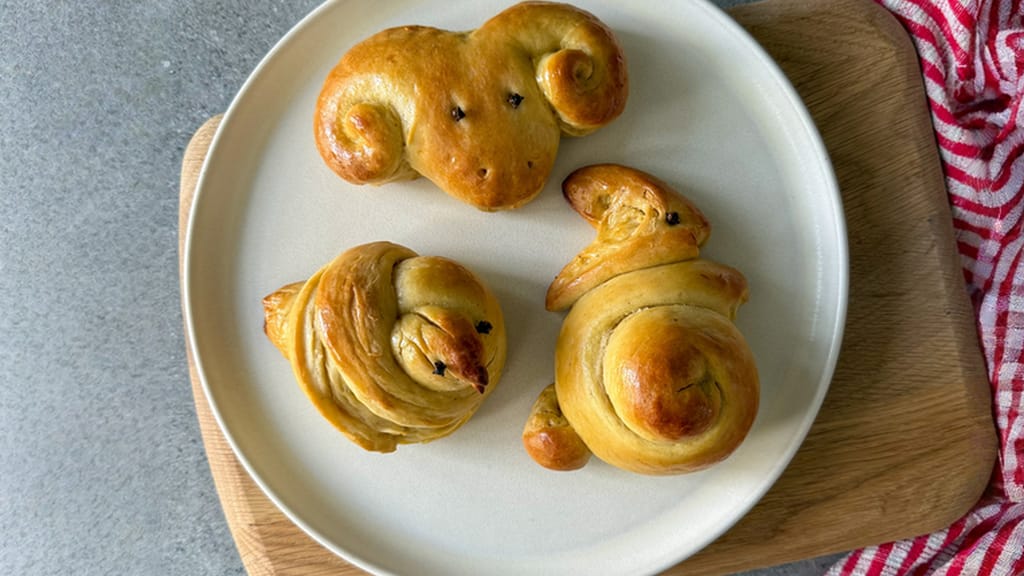
Easter judas buns with honey and lemon zest
A fragrant twist: Easter Judas buns with honey and lemon zest
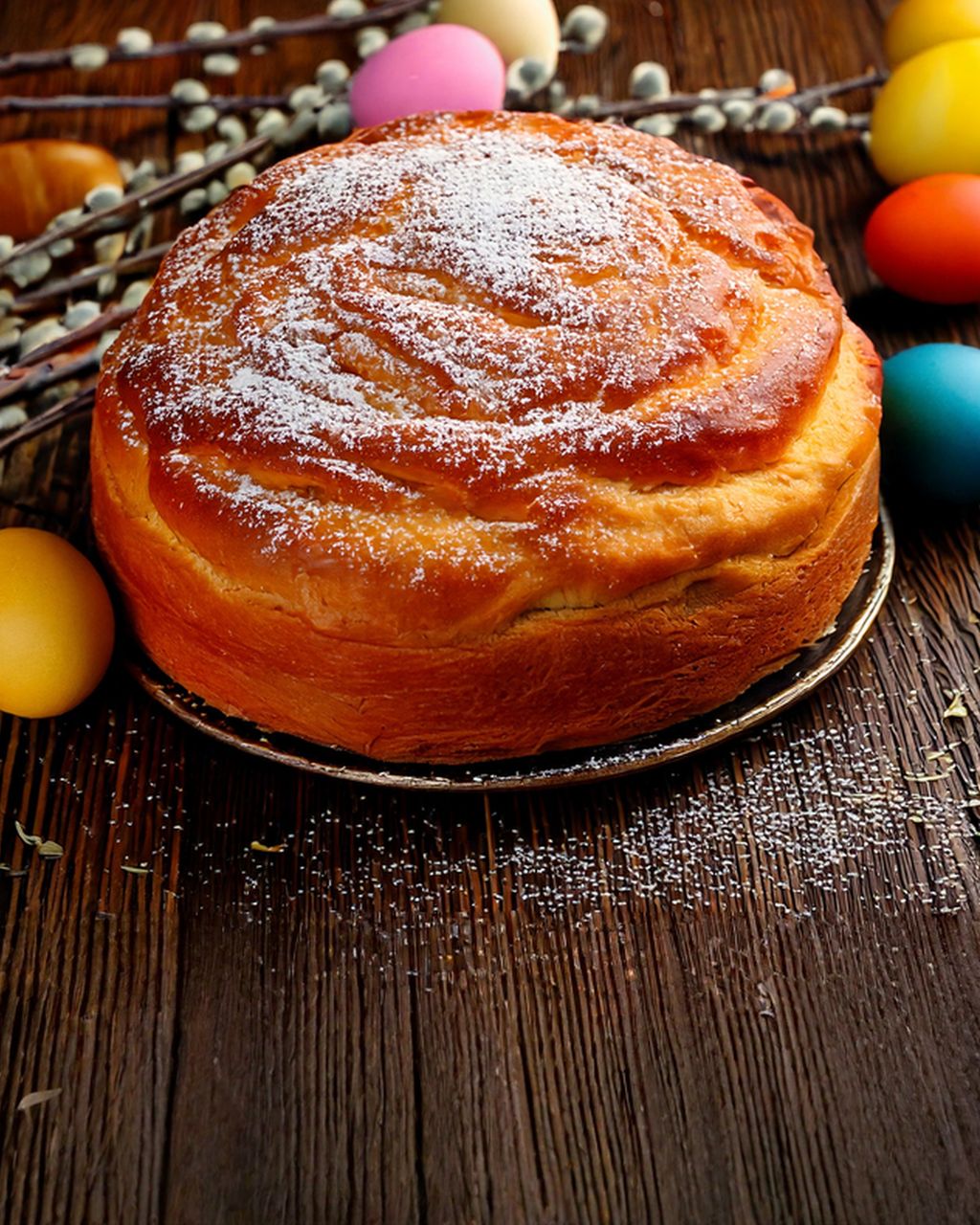
A few other classics belong on the Easter table alongside jidáše. The closest relative is mazanec, made from a similar sweet yeasted dough, while a savoury Easter stuffing (nádivka) is perfect for the festive lunch.
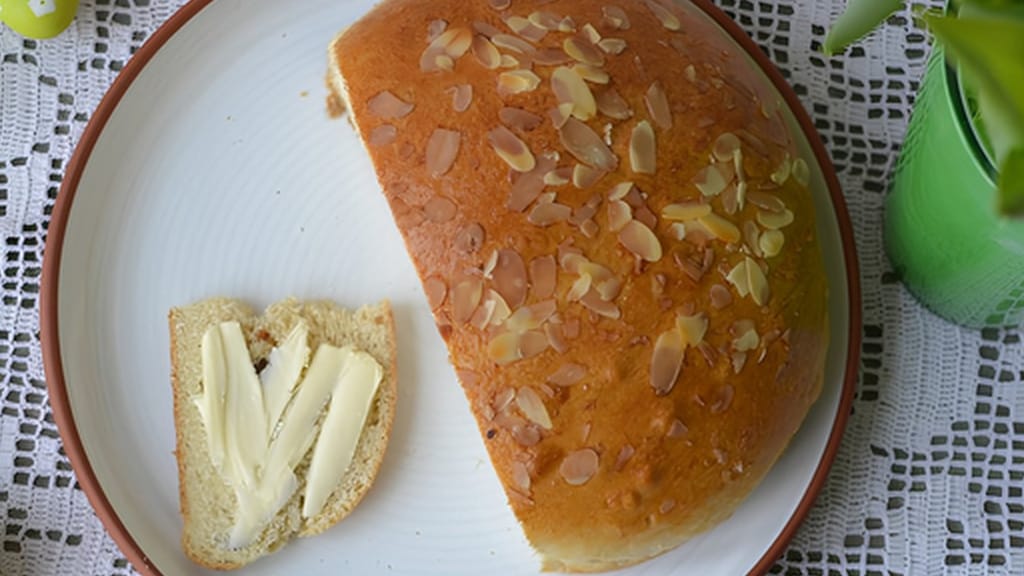
Easter classic: fragrant mazanec bread
An Easter classic: fragrant mazanec made from yeasted dough
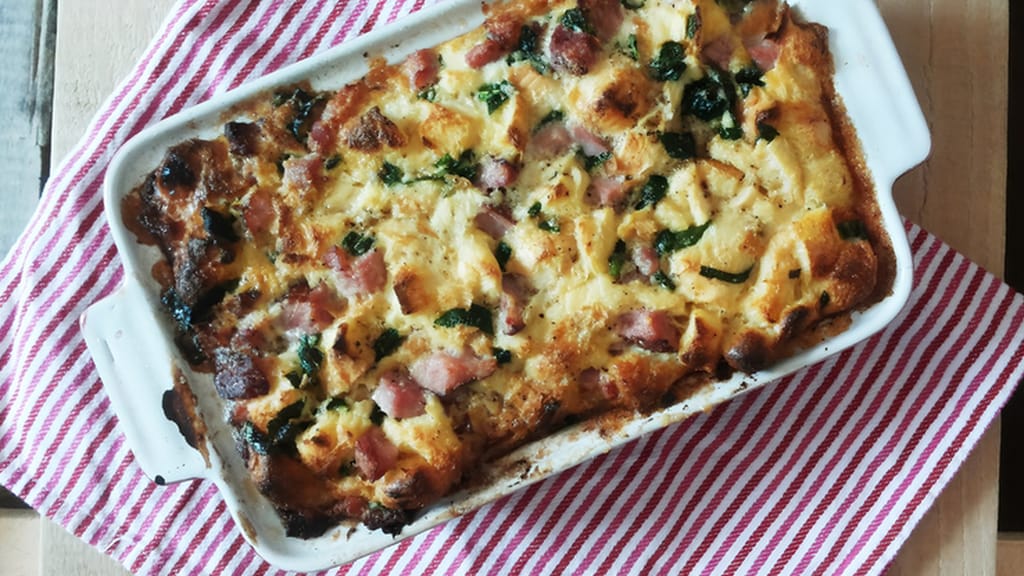
Easter bread stuffing
Savoury Easter stuffing for your festive lunch
Once cooled, keep them in a sealed container or paper bag at room temperature, where they'll stay soft for 2–3 days. Don't refrigerate them — cold speeds up how quickly yeasted bakes go stale and dry out. If they've firmed up, warm them briefly in the oven and they'll soften right back up.
Yes, they freeze very well. Let them cool completely — ideally before brushing with honey — then wrap each one individually and freeze for up to 3 months. Thaw at room temperature, warm briefly in the oven, and brush with honey only at the very end.
You can brush them with a simple sugar syrup instead — equal parts sugar and water, simmered until the sugar dissolves. Maple syrup or melted butter also work well. Sugar syrup is also the safer choice for buns meant for children under one year old, who shouldn't be given honey.
Both fresh and dried yeast work well for jidáše — the main difference is in handling. Fresh (cake) yeast gives that classic aroma and is used to make a starter; dried yeast keeps longer and, with some types, can be mixed straight into the flour. A 42 g cake of fresh yeast is roughly equivalent to 14 g (2 sachets) of dried yeast.
One recipe worth heating the oven for, one tip, and one deal from the shop. Nothing else.