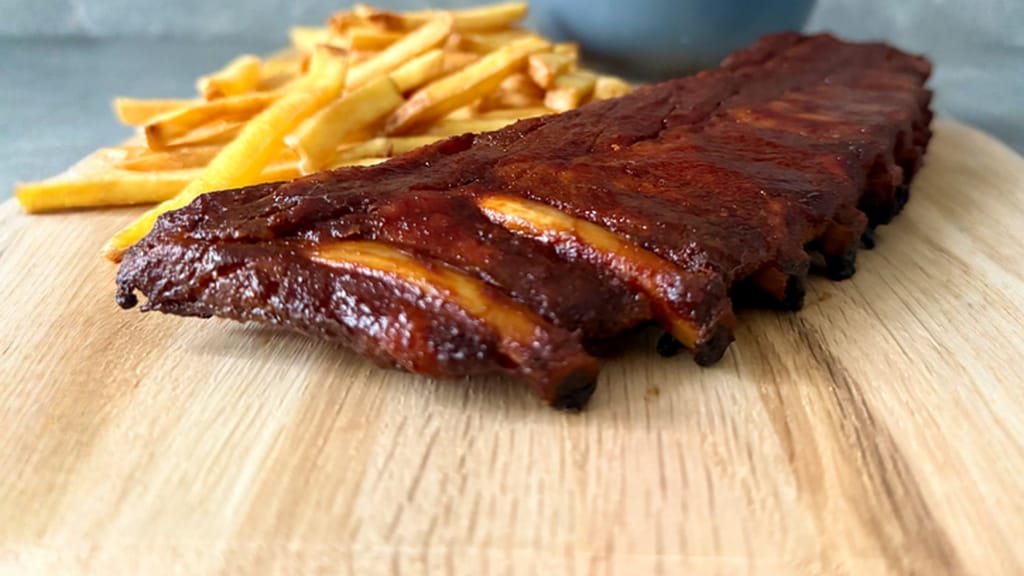
Oven-baked pork ribs with apple cider and bbq sauce
Oven-Baked Ribs: What Temperature and How Long for Fall-Off-the-Bone Meat
Updated Nov 17, 2026
Oven-baked ribs turn out best when cooked low and slow: covered with aluminum foil at 300°F (150°C), about 2.5–3 hours for a standard rack, then uncovered and brushed with glaze at 425°F (220°C) for another 15–20 minutes. The low temperature melts the tough connective tissue between the meat and the bone, so the ribs come away cleanly. A short blast of heat at the end gives them a glossy, lightly caramelized crust. Below you'll find times by type of rib, a faster method, a honey glaze, the answer to whether you should parboil ribs, and a test that tells you when they're done.
The most reliable method is 300°F (150°C) covered with foil, then 400–425°F (200–220°C) uncovered with glaze. Depending on how much time you have, choose one of three approaches:
Low and slow, 265–285°F (130–140°C): 3.5–4 hours covered. This gives the juiciest result, with meat that nearly falls off the bone on its own.
Standard, 300°F (150°C): 2–3.5 hours covered depending on the type of rib (more for the ones further down), and about 2.5–3 hours for an ordinary rack. This is the best balance of time and results, and all the times below are based on this method.
Fast, 355°F (180°C): 1.5–2 hours covered. The ribs get tender, but they'll have more bite and the edges dry out more.
The finish is always the same: take off the foil, brush on the glaze and bake at 400–425°F (200–220°C), or under the broiler, for 15–20 minutes, until the surface sets and caramelizes.
Why so low? Ribs are full of collagen, a tough connective tissue that only turns into gelatin when it is held at a high internal temperature for a long time. High heat tightens and dries out the meat before the collagen has a chance to melt.
Seasonal baking plans, tested recipes and kitchen tricks that save you time. Unsubscribe in one click.
At 300°F (150°C) under foil, plan on 2–2.5 hours for slim baby back ribs and 2.5–3.5 hours for wide spare ribs. Then add 15–20 minutes in the oven with the glaze.
Baby back ribs (known in Czech as hřbetní or kotletová): shorter, more curved and leaner. They get tender fastest.
Spare ribs (from the belly): wider, flatter, with more fat and cartilage. They need the longest, but they're also the juiciest.
Thick, meaty ribs with a layer of belly on top: plan toward the upper end, even 3.5 hours.
The time is only a guide. What matters is the thickness of the meat and how full the pan is, not the clock. So start checking the ribs at the lower end of the range, using the test in the section "How to tell when ribs are tender and done".
The method has five steps: remove the membrane, season, bake covered and slow, uncover and glaze, then let them rest briefly.
Remove the membrane from the underside. The shiny membrane on the bone side doesn't break down during baking and leaves a rubbery layer. Slip a knife under it at one bone, grab it with a paper towel and pull it off in one piece.
Season. Salt (about 1 teaspoon per 2 lb of meat), pepper, sweet paprika and garlic are enough. If you have time, leave the seasoned ribs in the fridge overnight. The salt gets deeper into the meat and it holds its juices better.
Bake covered. Place the ribs bone side down in a roasting pan, add about 100–150 ml (⅓–⅔ cup) of liquid (water, beer, apple juice) and cover the pan tightly with foil or a lid. The steam keeps the meat tender and essentially braises it in its own juices.
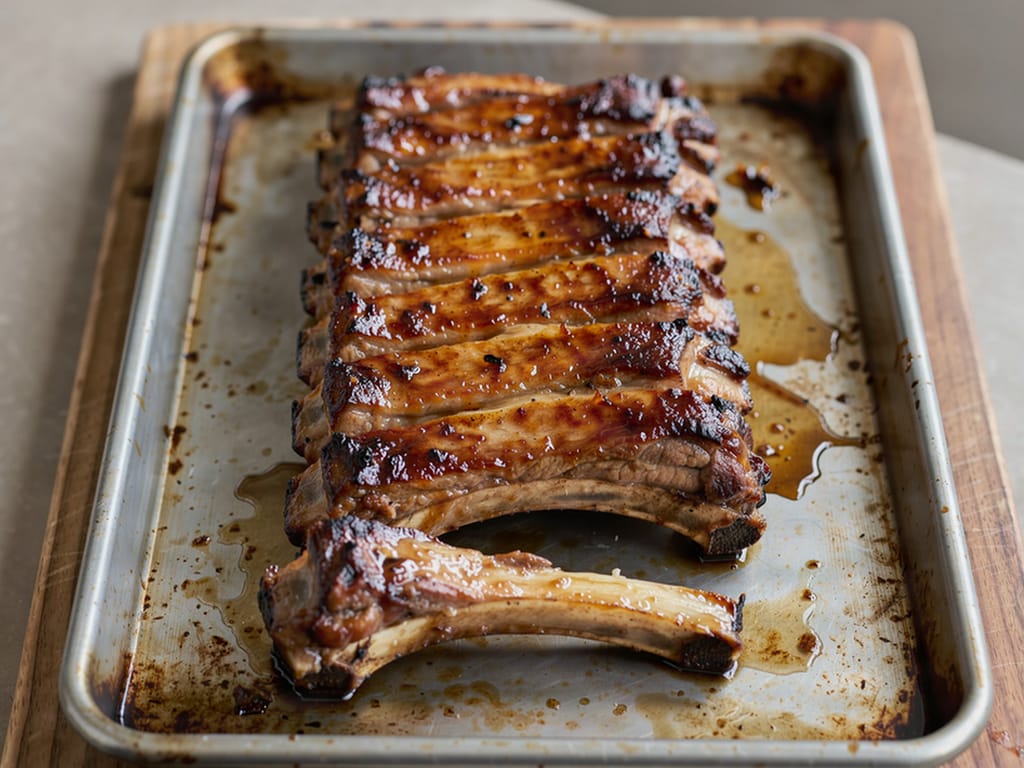
Uncover and glaze. Once the ribs pass the tenderness test, take off the foil, brush them with glaze and raise the temperature to 400–425°F (200–220°C). About halfway through, after 8–10 minutes, brush them once more.
Let them rest for 5–10 minutes before cutting between the bones. The juices settle and won't run out onto the cutting board.
You'll find the full method with apple cider and barbecue sauce in the recipe for baked pork ribs with cider and BBQ sauce.
Oven-baked pork ribs with apple cider and bbq sauce
Oven-baked pork ribs with apple cider and BBQ sauce
Add honey glaze only for the last 15–20 minutes, on uncovered ribs at 400–425°F (200–220°C). Honey is almost pure sugar, and after three hours in the oven it would turn black and bitter.
A good glaze needs to balance the sweetness. Honey is the base, and you add something salty, something sour and something sharp:
salty: soy sauce or a little salt,
sour: apple cider vinegar or lemon juice,
sharp: mustard, garlic, chili or ginger.
If the glaze seems too thin, simmer it for a few minutes in a small saucepan. It will thicken and cling better. Brush it on in two layers and let the surface set in between. As soon as the edges start turning a dark amber, take the ribs out. From caramel to burnt is a minute or two.
You don't need to parboil ribs. Baking them under foil with a little liquid does the same job, without leaching flavor into the water. When you boil ribs they do get tender, but some of the flavor and fat stays in the water, and the meat often ends up more boiled than roasted.
Parboiling makes sense in two situations: when you're in a hurry, or when you want broth from the ribs as well. In that case, keep to three rules:
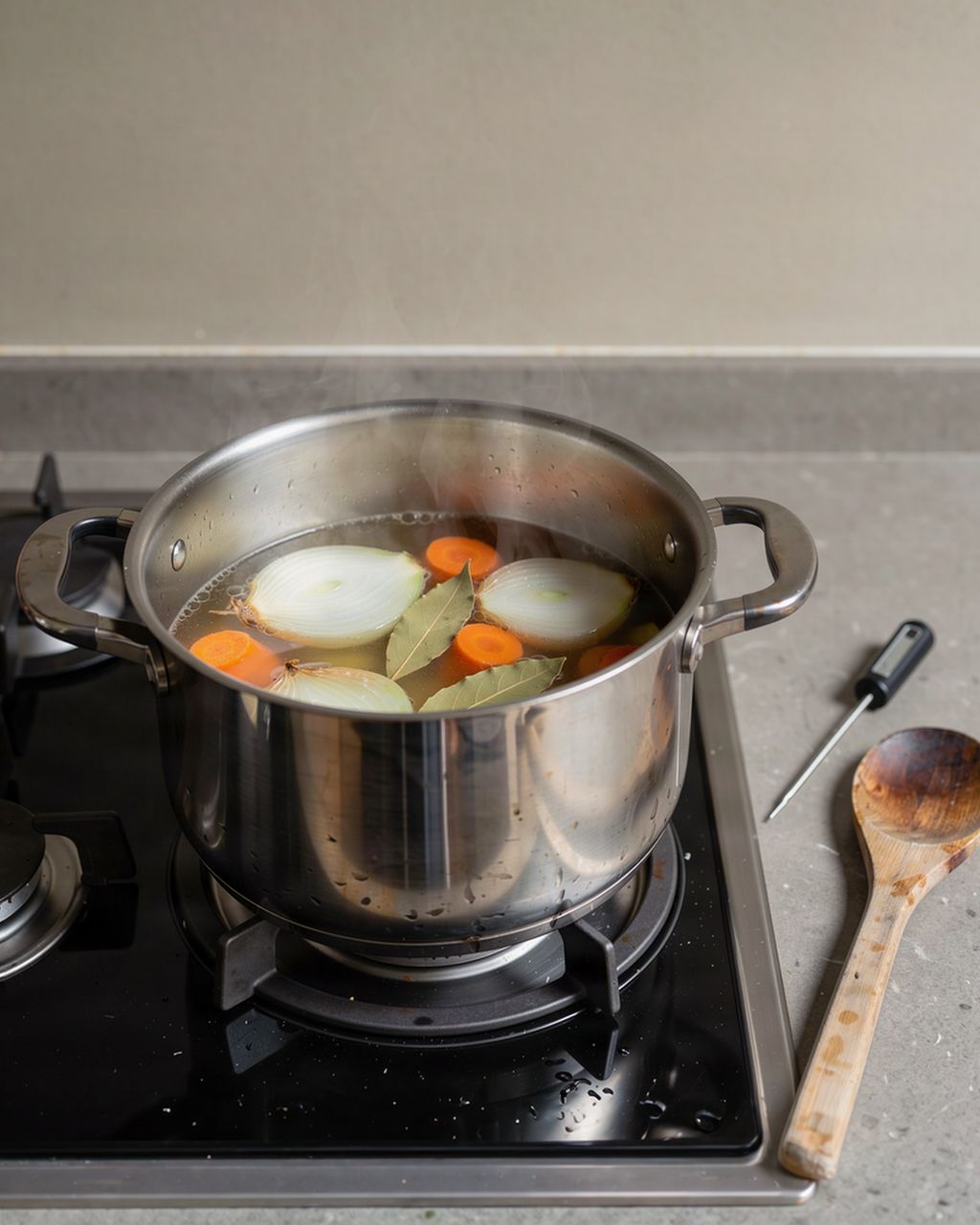
Don't boil hard. Keep the ribs at a gentle simmer, just below boiling point, with a lid on, along with onion, carrot, a bay leaf and peppercorns. A rolling boil tightens the meat and dries it out.
Cook for 60–90 minutes, until the meat starts to loosen at the ends of the bones. Don't cook them until they fall apart, or they'll disintegrate in the oven.
Don't pour the broth away. It holds the flavor the ribs released. Use it for soup or to baste the ribs while they finish in the oven.
After parboiling, simply pat the ribs dry, brush them with glaze and bake them uncovered at 400–425°F (200–220°C) for about 20–30 minutes.
Ribs are done when the meat has pulled back about 1 cm (⅜ in) from the ends of the bones and a bone twists easily in the meat. Try these three tests:
Bend test: lift the whole rack in the middle with tongs. Done ribs sag almost to a right angle and the meat on the surface cracks.
Toothpick test: push a toothpick or thin knife between the bones. It should slide in like butter, with no resistance.
Bone test: grab one bone and twist it. If it moves freely and pulls out, they're done.
If you have a thermometer, safety takes very little: according to USDA FSIS, pork is safe at an internal temperature of 63°C (145°F) followed by a 3-minute rest. Tenderness comes much later, though, and barbecue practice aims for roughly 90–95°C (195–205°F) inside. That's where the collagen finally melts.
If ribs are tough, they aren't overcooked, they're undercooked. Put them back in the oven covered and check them every 20–30 minutes. If yours have dried out instead, here's how to rescue dried-out meat from the oven.
Cooked ribs keep 3–4 days in the fridge and 3–4 months in the freezer. That's the guidance from the US agency USDA FSIS for cooked leftovers. The freezer keeps food safe for longer, but after that time flavor and texture suffer.
Room temperature: according to USDA FSIS, put leftovers in the fridge within 2 hours at the latest (within 1 hour if it's above 32°C / 90°F). Cut them into smaller pieces in a shallow container so they cool quickly.
Fridge: 3–4 days in a sealed container (USDA FSIS).
Freezer: 3–4 months for best quality, wrapped tightly with no air (USDA FSIS).
Reheating: according to USDA FSIS, reheat leftovers to 74°C (165°F) inside, or until steaming hot throughout. It works best in a roasting pan under foil with a spoonful of water at 150°C (300°F), then uncovered and brushed with glaze at the end.
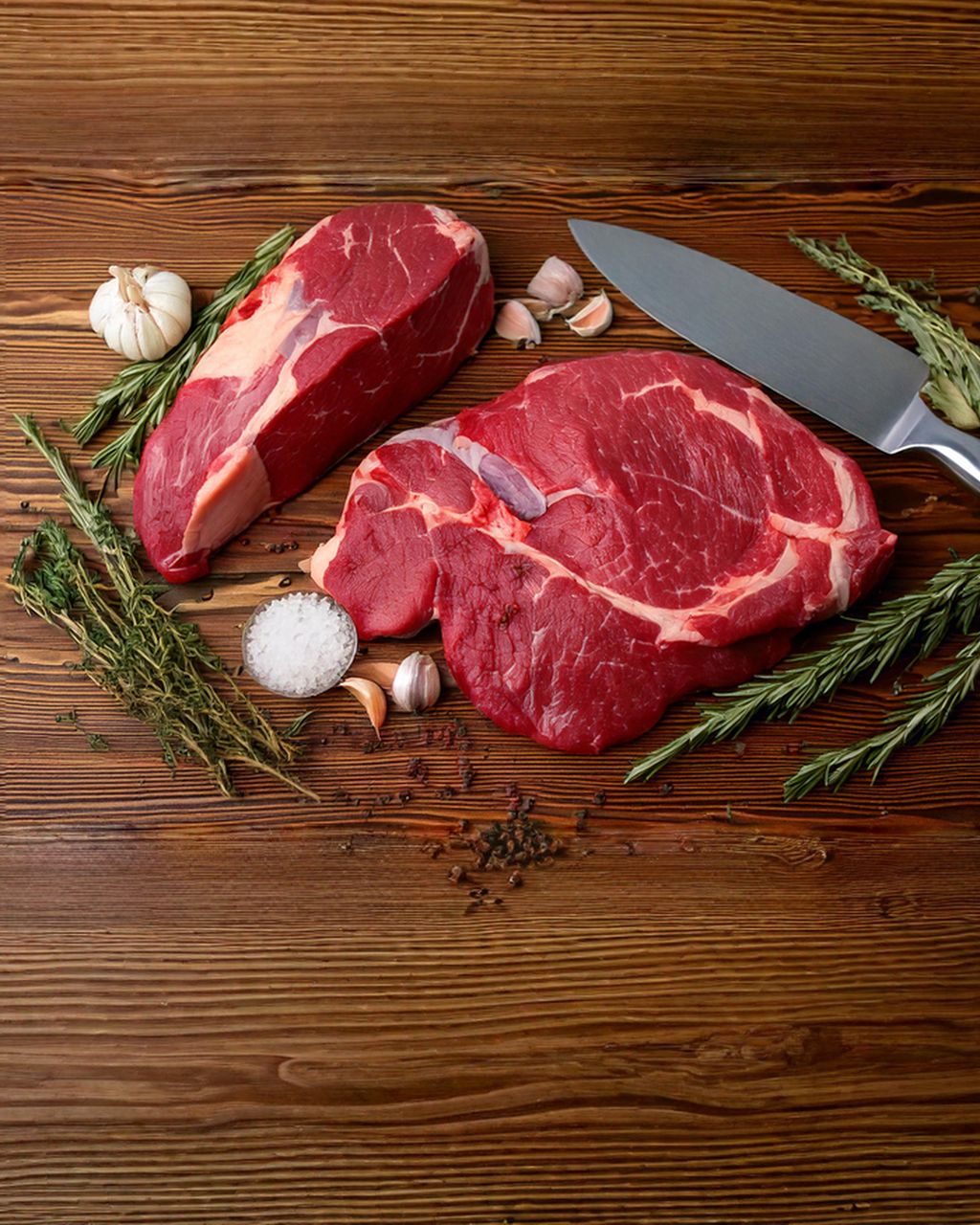
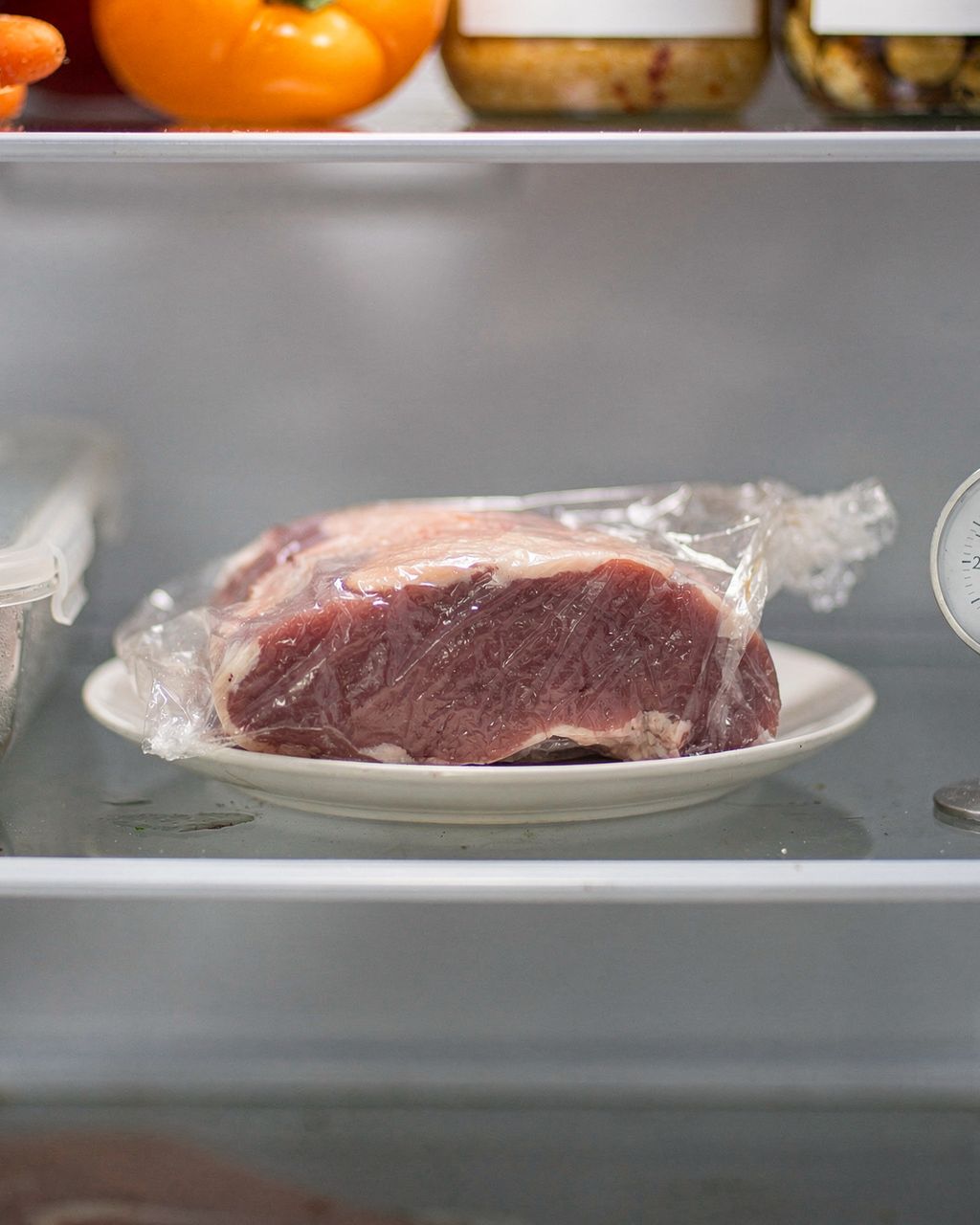
To find out how long raw ribs keep before you get around to baking them, see the article how long pork keeps in the fridge. If you bake with a fan, read up on when to use convection and when to use conventional heat. And if you enjoy slow roasting with beef too, take a look at how to use beef chuck for long braising and roasting.
Yes, you can bake ribs without foil, but only slowly and with some checking. Bake them at 140–150°C (285–300°F), add a little liquid to the roasting pan and baste the ribs with the pan juices every 30–40 minutes. Uncovered ribs dry out more easily, though, and the edges can turn hard. If you don't have foil, a roasting pan with a lid works just as well.
In a convection (fan) oven, bake ribs about 10–20°C (20–35°F) lower than in a conventional oven, so roughly 130–140°C (265–285°F), covered. Circulating air cooks faster and dries out the surface more, which makes the foil or lid even more important. For the final glaze, 190–200°C (375–400°F) is enough.
In a pressure cooker, ribs get tender in roughly half an hour under pressure. Check the manufacturer's instructions for the exact time for bone-in pork. Add a little water or vegetable broth, and once the pressure is released, pat the ribs dry, brush them with glaze and bake for 15–20 minutes at 200–220°C (400–425°F). That gives them a crust that pressure cooking alone can't.
As a main course, plan on about 400–500 g (14–18 oz) of raw bone-in ribs per person, up to 600 g (1.3 lb) for big eaters. Bones and the fat that renders during cooking make up a large part of the weight, so only about half ends up as meat on the plate. If you're serving a hearty side dish, the lower amount is enough.
One recipe worth heating the oven for, one tip, and one deal from the shop. Nothing else.