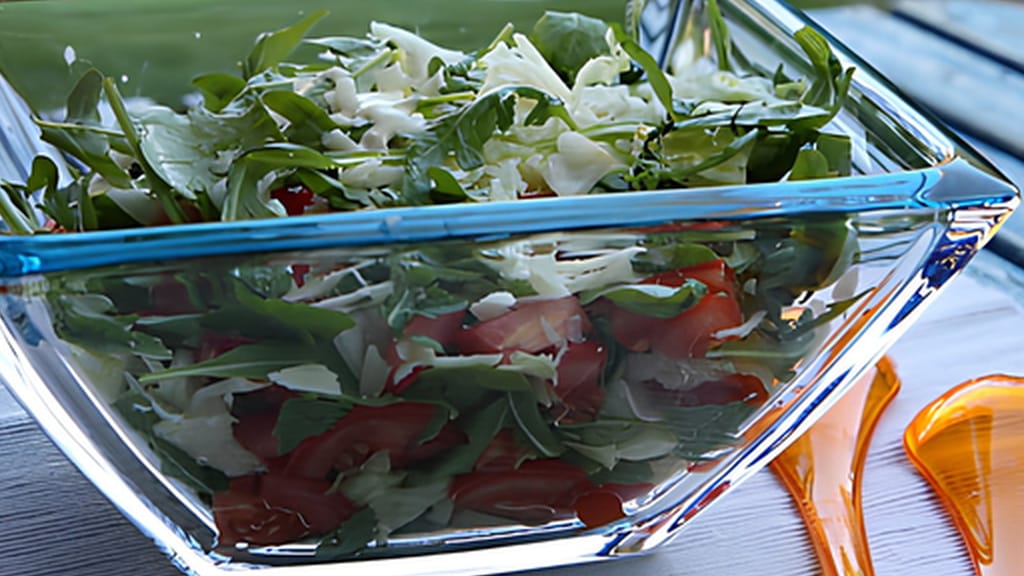
Arugula salad with tomatoes and parmesan
Mustard Salad Dressing: The Basic Recipe and Tasty Twists

Updated Jul 19, 2026
Mustard salad dressing comes together from four ingredients you probably already have at home: oil, vinegar, mustard, and honey — the basic ratio is roughly 3:2:1 (oil : vinegar : honey) plus a tablespoon of mustard. Mustard isn't just there for flavor; it acts as an emulsifier, so the dressing stays blended instead of splitting straight into oil and vinegar. In this article you'll find the basic recipe with exact ratios, which mustard to pick, variations from creamy to spicy, and tips on which salads it pairs with and how to store it.
Mustard dressing is a cold emulsion of oil, an acid (vinegar or citrus juice), and mustard, typically seasoned with honey, salt, and pepper. The base is built from three components: oil gives it body and smoothness, vinegar brings acidity, and mustard adds a peppery kick — while also holding the whole mixture together.
Mustard is the real secret behind a stable dressing. It contains natural lecithin and plant mucilage that act as an emulsifier: according to food chemistry, one part of its molecules binds fat while the other binds water, so tiny droplets of oil stay suspended in the vinegar instead of separating back into two layers. Without mustard, a classic vinaigrette will split within minutes; with it, a creamy dressing stays blended much longer.
The ratio determines the character. The classic base is 3 parts oil to 1 part vinegar; if you like a sharper, zestier dressing, go for 2:1. Honey and salt then just fine-tune the balance between tang and bite.
You can make a basic mustard dressing in two minutes from four ingredients: mix 3 tablespoons olive oil, 2 tablespoons apple cider vinegar, 1 tablespoon Dijon mustard, and 1 tablespoon honey, then season with salt and pepper.
Ingredients: - 3 tablespoons extra virgin olive oil - 2 tablespoons apple cider vinegar (or white wine vinegar) - 1 tablespoon Dijon mustard - 1 tablespoon honey - salt and freshly ground black pepper
Method: 1. In a small jar with a screw-top lid, combine the mustard, honey, vinegar, salt, and pepper, and whisk briefly — mix the acidic base before adding the oil. 2. Pour in the oil and seal the jar tightly. 3. Shake for 20–30 seconds, until the dressing thickens and turns a lighter, creamy color. You can also do this with a whisk: add the oil slowly while whisking constantly. 4. Taste and adjust — more honey for sweeter, more vinegar for a sharper edge, a pinch of chili for heat.
This makes enough for roughly two to three salads for two people. Add the dressing to the salad just before serving so the leaves don't wilt.
Dijon mustard is the top choice — it's mildly spicy, smooth, and emulsifies well. That said, the mustard you pick will noticeably change the result:
Dijon — mildly spicy, smooth, an all-purpose base. The best pick if you're not sure what to choose.
Wholegrain (coarse-ground) — with whole seeds, it gives the dressing texture and a milder, slightly sweet flavor.
English mustard — noticeably sharper and hotter; use less of it, or it will overpower everything else.
Classic yellow mustard — mild and slightly sweet, great in creamy dressings and potato salad variations.
Whichever one you choose, mustard also does double duty as the emulsifier, so without it the dressing won't come together as easily.
The base of oil, vinegar, mustard, and honey takes well to plenty of twists. Four worth trying: a creamy yogurt version, a spicy chili version, a fresh citrus version, and an herb version.
Stir 2 tablespoons of plain yogurt into the finished base — it softens the mustard's sharpness and gives the dressing a thicker, creamier texture. It's great on leafy salads and also works as a dip for roasted potatoes or vegetables. Greek yogurt holds together better and won't thin out.
Add a pinch of cayenne pepper or a finely chopped fresh chili. This fiery version pairs well with grilled meat and salads with bold flavors. Add it gradually and taste as you go — the heat builds in the oil after a few minutes.
Replace half the vinegar with lemon or lime juice. Citrus brightens the other flavors and makes the dressing lighter — perfect for summer salads with fruit or arugula. Add a little grated zest too for extra aroma.
Stir a tablespoon of chopped fresh parsley, dill, chives, or basil into the finished dressing. Add herbs at the very end and use within two days — they turn dark quickly in an acidic dressing.
Mustard dressing works with almost anything where you want a peppery contrast: leafy greens, pasta salads, and potato salads. Here are three tried-and-true combinations.
It really shines on bitter, peppery leaves like arugula, spinach, and lamb's lettuce. Round them out with tomatoes, cucumber, bell pepper, and something rich to balance the bite: avocado, toasted seeds, or a bit of cheese. Add the dressing just before serving, or the leaves will wilt. A reliable go-to is an arugula, tomato, and Parmesan salad, or for a meat-free option, a lentil salad.
Arugula salad with tomatoes and parmesan
Arugula, tomato, and Parmesan salad — a great base for mustard dressing
In a pasta salad, mustard dressing works as a bold unifying element — it coats the pasta without drying it out the way mayonnaise can. Reach for fusilli or penne, which hold onto the sauce well, and add grilled vegetables, chickpeas, or chicken.
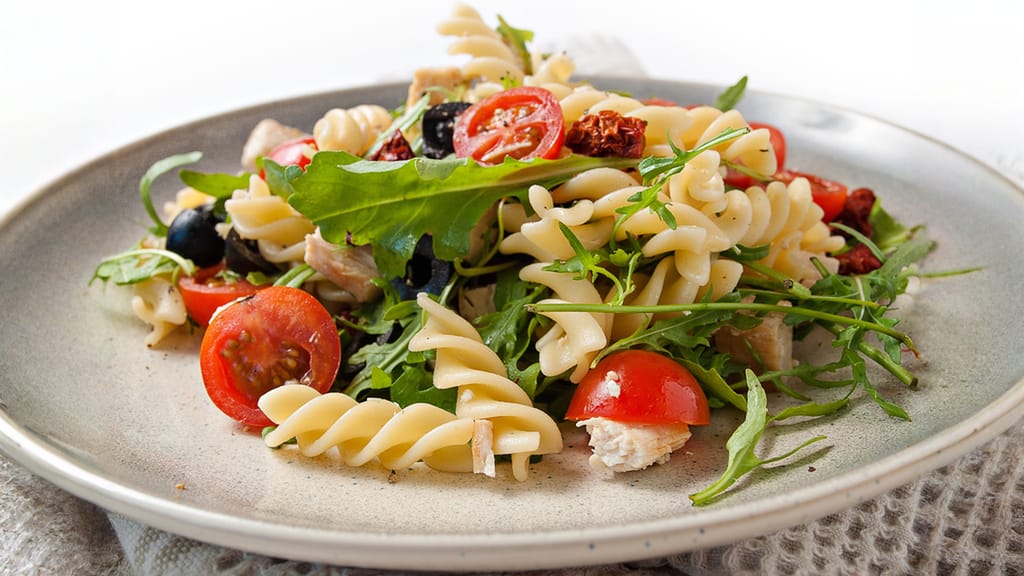
Pasta salad with chicken strips, tomatoes and arugula
Pasta salad with chicken strips, tomatoes, and arugula in mustard dressing
A lighter, oil-based mustard dressing makes a fresh alternative to a mayo-heavy potato salad. Warm boiled potatoes soak up the dressing best — toss them with pickled cucumber, spring onion, and capers.
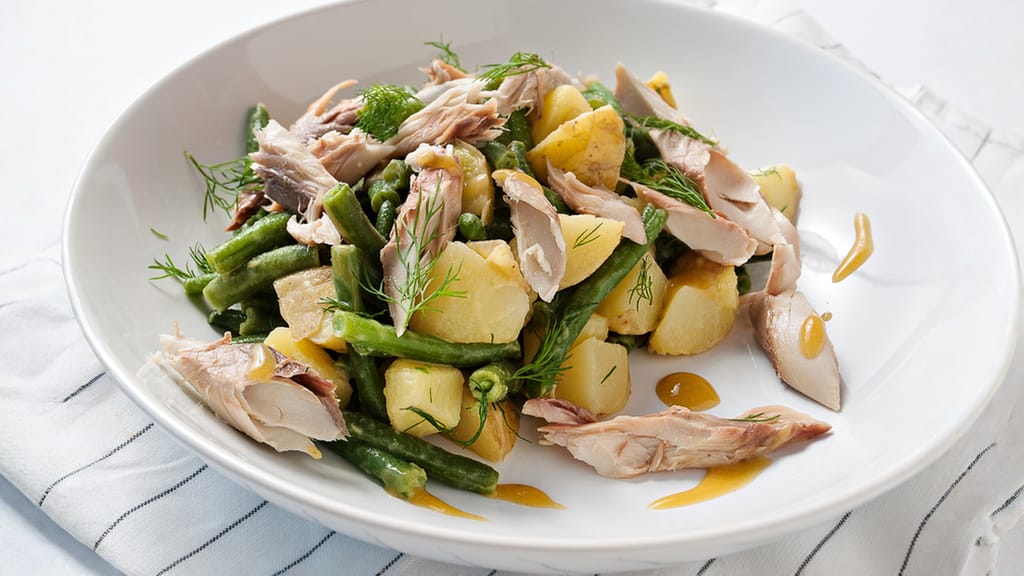
Potato salad with green beans and smoked mackerel
Potato salad with green beans and smoked mackerel — also great with mustard dressing instead of mayonnaise
Store homemade mustard dressing in an airtight jar in the fridge at around 4°C (39°F), and use it within roughly one to two weeks. It has no preservatives, so its shelf life depends on how fresh the ingredients are:
An airtight jar limits oxidation and keeps it from picking up odors from the fridge.
Cold storage around 4°C slows spoilage; don't leave the dressing sitting out at room temperature.
A plain dressing without fresh garlic or herbs keeps for 1–2 weeks. With fresh garlic, yogurt, or herbs, use it within 2–3 days.
Always give it a sniff and a shake before using. A sour or musty smell, or a change in color, means it's time to toss it.
If the dressing thickens up in the fridge, that's just the olive oil solidifying in the cold — let it sit at room temperature for a few minutes and give it a shake, and it'll turn creamy again.
Homemade dressing has one big advantage over store-bought: you know exactly what's in it. No hidden sugars, thickeners, or preservatives, and you control the amount of oil, salt, and sweetener yourself.
A base of good-quality olive oil also supplies monounsaturated fats and antioxidants. According to an approved health claim from the European Food Safety Authority (EFSA), polyphenols in olive oil help protect blood lipids from oxidative stress (with a daily intake of around 20g of oil). Mustard itself is nearly calorie-free.
That said, homemade dressing is still oil at its core — factor in roughly the energy content of the oil you use, and lightly drizzle it over your salad rather than drowning it.

The best substitute for mustard in a dressing is a teaspoon of mayonnaise or a bit of honey — what you really need is an emulsifier to bind the oil and vinegar together. A pinch of grated horseradish (sharper) or a teaspoon of miso comes close in flavor too. Without an emulsifier, expect the dressing to separate, so give it a good shake before each use.
Yes — just skip the honey, or swap it for maple syrup, agave syrup, or a pinch of sugar, and the flavor will be almost the same. With a plant-based sweetener the whole dressing becomes vegan; most standard mustards and vinegars are already free of animal ingredients anyway.
Thicken a mustard dressing by adding another teaspoon of mustard, or a tablespoon of yogurt or mayonnaise — both act as emulsifiers and add body. Pouring the oil in more slowly while whisking constantly also helps: the finer the droplets, the thicker the emulsion. A short chill in the fridge will tighten up the texture even more.
Freezing isn't recommended for mustard dressing — the emulsion breaks down once thawed and the oil separates from the vinegar. It's better to just whip up a small fresh batch; the four-ingredient base takes only two minutes. In the fridge, a dressing without fresh herbs or garlic keeps for 1–2 weeks.
For a salad serving two, count on roughly 3–4 tablespoons of mustard dressing. The rule is "lightly coat, don't drown" — the leaves should just glisten, not swim in dressing. Add it right before serving, and it's always better to add a little more than to overdo it.
One recipe worth heating the oven for, one tip, and one deal from the shop. Nothing else.