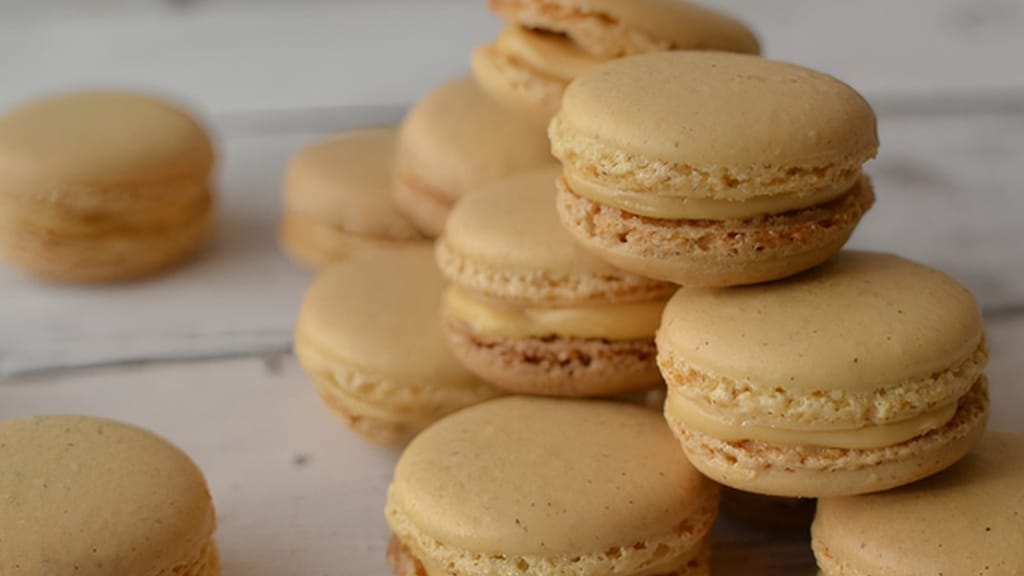
Salted caramel macarons
Macarons vs. Meringue: Spotting the Differences in Technique, Flavour and Result

Updated Jul 19, 2026
Macarons and meringues look like close cousins, and in a way they are — but the difference is clear: a macaron is a sandwich of two almond shells joined with a filling, while a meringue is simply whipped egg whites and sugar, baked until bone-dry. Here's the bit most people miss: a macaron shell is essentially a meringue with almond flour folded in — so this isn't really a rivalry, it's a family tree. We'll walk through the history, the ingredients, the technique (including all three types of meringue), the classic mistakes, and when to reach for which.
A macaron is a sandwich made of two almond shells joined with a filling; meringue is simply whipped egg whites and sugar, baked until completely dry. Here's the key to understanding it: a macaron shell is essentially meringue with almond flour and icing sugar folded in. So meringue isn't the opposite of a macaron — it's its foundation.
Quick comparison:
Base: meringue = egg whites + sugar; macaron = meringue + almond flour + icing sugar
Shape: meringue can be any shape (rosettes, dollops); a macaron is a precise 3–5 cm round made from two shells and a filling
Baking: meringue is slow-dried at a low temperature (90–100°C / 195–210°F, 1.5–2 hours); a macaron bakes briefly at a higher heat (150°C / 300°F, 15–17 minutes)
Flavour: meringue is purely sweet; a macaron is more complex thanks to its filling
Difficulty: meringue forgives mistakes; a macaron demands precise technique
Seasonal baking plans, tested recipes and kitchen tricks that save you time. Unsubscribe in one click.
A macaron is a French confection made of two delicate almond shells joined by a creamy filling — though its roots are actually Italian. The word comes from the Italian maccherone (meaning fine paste), and the earliest almond biscuits of this type appeared in Europe as far back as the Middle Ages.
According to a popular story, the recipe was brought to France by Catherine de' Medici when she married the future King Henry II in 1533. Historians treat this legend with a healthy dose of scepticism — no record of an Italian pastry chef has ever turned up in Catherine's household. What is certain is that the macarons of that era were plain almond biscuits, with no filling and no colouring.
The modern macaron — two shells joined by a filling — didn't appear until the early 20th century, and is credited to Pierre Desfontaines of the Parisian patisserie Ladurée. Since then it's become a symbol of French pâtisserie from Paris to Tokyo.
Meringue is baked egg white foam whipped with sugar — light, crisp, and purely sweet. The origin of the name is uncertain; it first appears in print in François Massialot's 1692 cookbook. A popular legend links it to the Swiss town of Meiringen, though there's no real evidence for it.
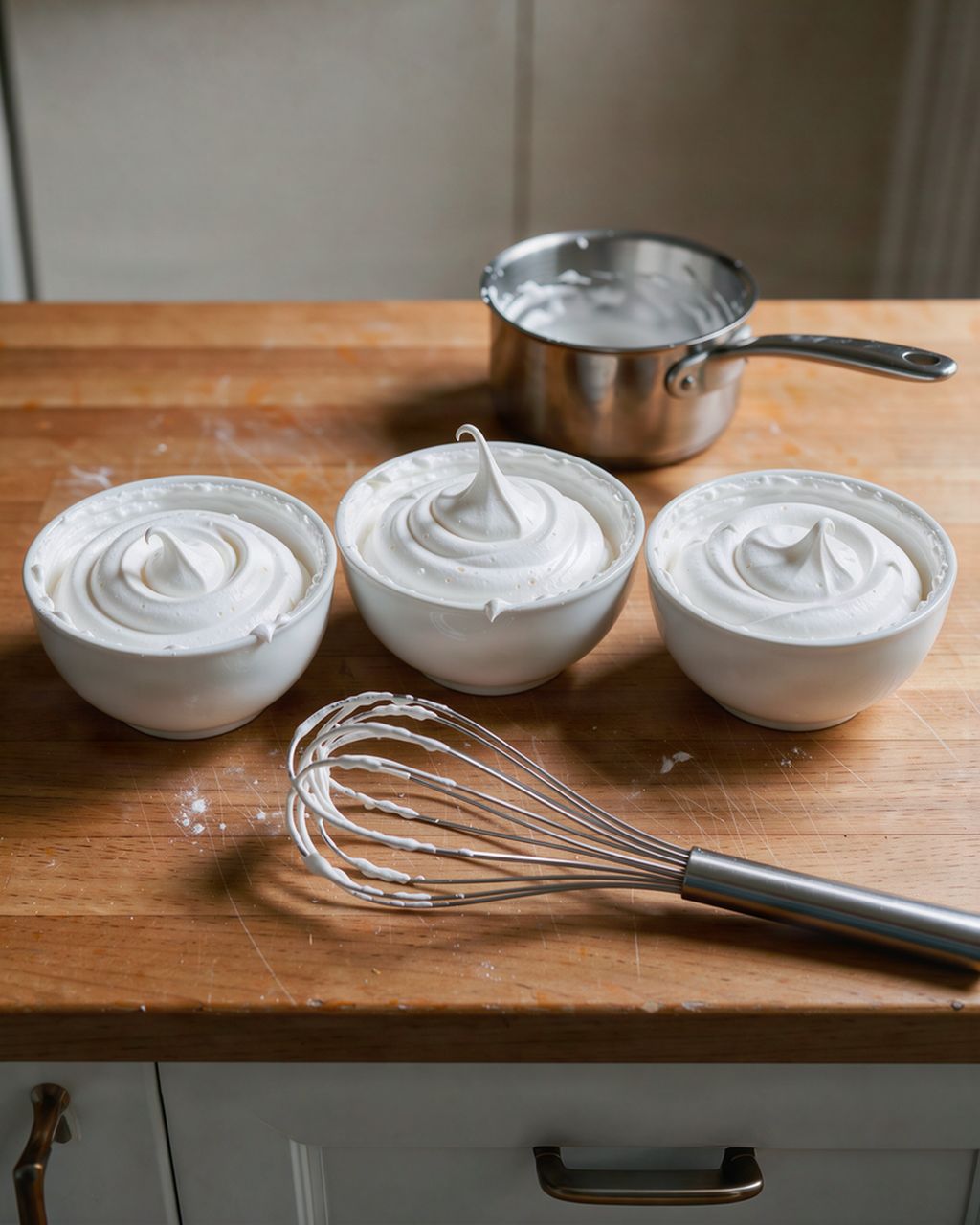
More important than the name's origin are the three techniques used to make meringue (and therefore macarons too) — they differ in how the sugar is worked into the egg whites:
French meringue: caster sugar is whipped directly into raw egg whites. The quickest method and the least stable. The classic choice for homemade meringues.
Italian meringue: a hot sugar syrup cooked to 118°C (245°F) is poured into the egg whites while whipping continuously. The most stable and safest method (the hot syrup effectively cooks the whites). A favourite for macarons.
Swiss meringue: egg whites and sugar are warmed over a water bath to around 50–55°C (120–130°F), then whipped. Thick, glossy, and silky.
For homemade meringues, French meringue is usually all you need. If you want reliably successful macarons, it's worth learning the Italian method.
Macarons need just four ingredients: fine almond flour, icing sugar, egg whites, and caster sugar — plus optional gel food colouring. Each plays a specific role:
Almond flour gives the shell its structure and nutty flavour. It needs to be truly fine and well-sifted — lumps mean a cracked, bumpy surface. Tip: mix it with the icing sugar, blitz briefly together, then sift.
Icing sugar is mixed with the almond flour and helps create a smooth batter.
Caster sugar stabilises the whipped egg whites (for the Italian method, it's cooked into a syrup instead).
Egg whites give the shell its lightness. Let them "age" in the fridge for a few days, then bring to room temperature before whipping — older, thinner whites whip more reliably.
Gel or powdered food colouring adds colour without thinning the batter. Avoid liquid food colouring — it waters down the batter and causes the shells to crack.
Measure by weight, not by eye: the classic starting ratio is 1:1:1:1 — almond flour : icing sugar : egg whites : caster sugar (for example, 100g of each). A kitchen scale is your best friend here.
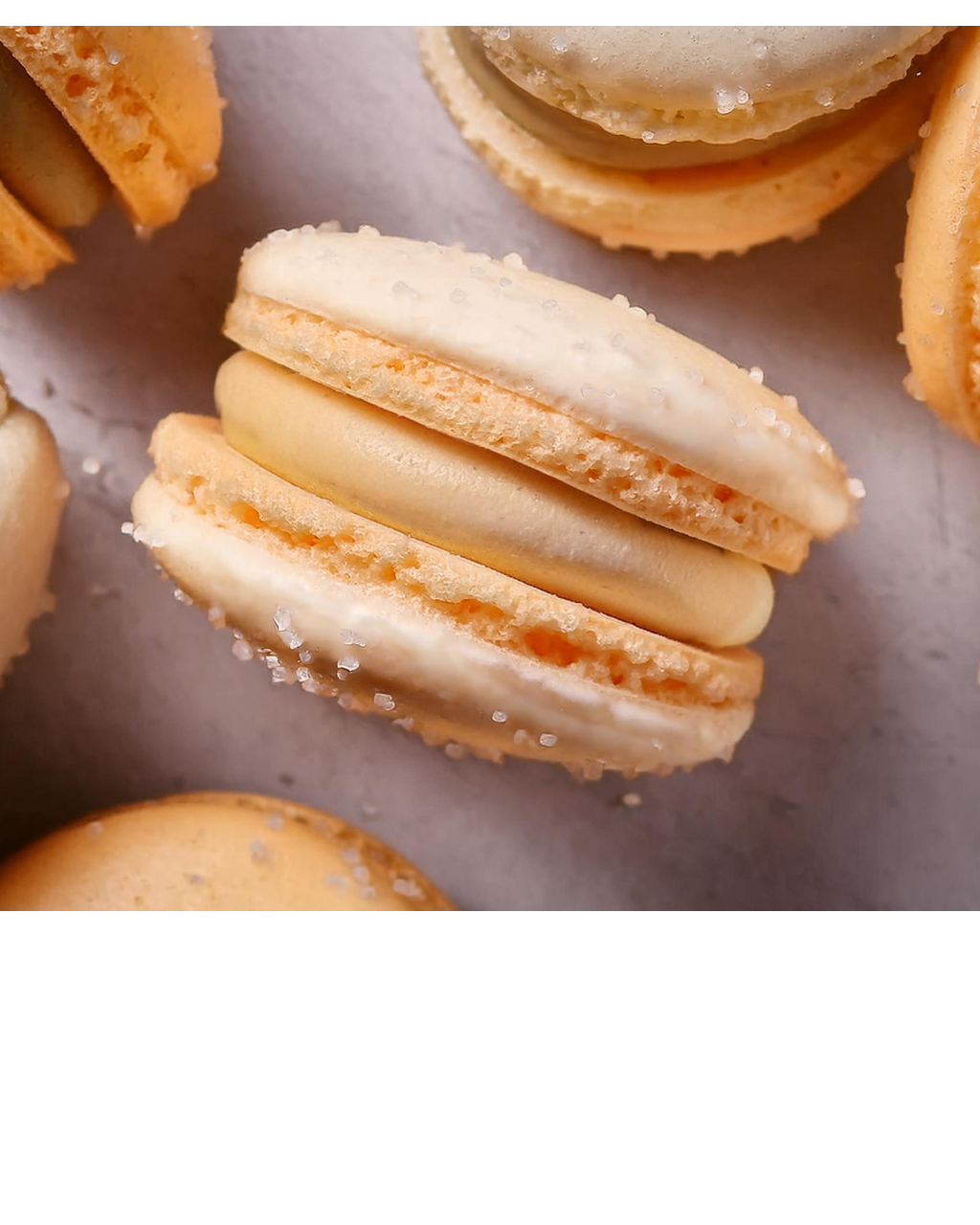
Salted caramel macarons
Salted Caramel Macarons — A Perfectly Balanced Ratio of Ingredients and Filling
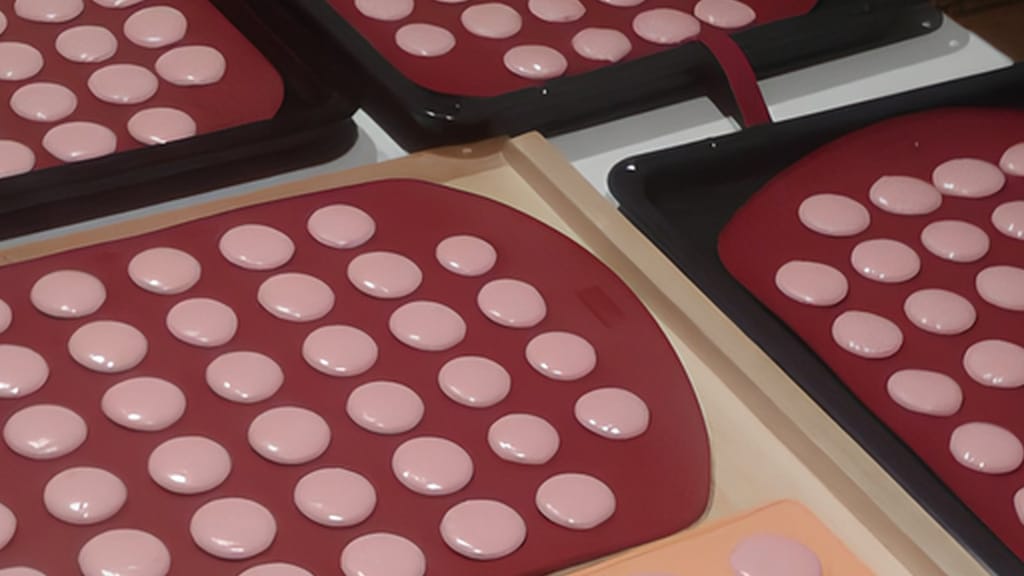
Macarons with vanilla and chocolate cream
Vanilla and Chocolate Cream Macarons, Step by Step
Meringue relies on just two ingredients — egg whites and sugar — plus one small but crucial detail that determines stability: a pinch of acid. Nothing more is needed.
Egg whites: fresh, at room temperature, and completely free of any trace of yolk (fat prevents proper whipping). If you'd rather avoid eating them semi-raw, or you're cooking for children, use pasteurised egg whites.
Sugar: fine caster sugar or icing sugar, added gradually, a spoonful at a time. It dissolves faster and stabilises the foam better. A typical ratio is roughly double the weight of sugar to egg whites.
A pinch of salt, vinegar, or a few drops of lemon juice: the acid strengthens the bonds between the egg proteins, giving a glossy foam that holds its shape. (Cream of tartar does the same job.)
Weigh everything precisely — with meringue, even a small deviation means either a runny batter or a dry, crumbly result.
Macarons come together in five steps: whip a firm, glossy meringue, fold in the sifted almond mixture using the macaronage technique, pipe the rounds, let them rest, and bake at 150°C (300°F).
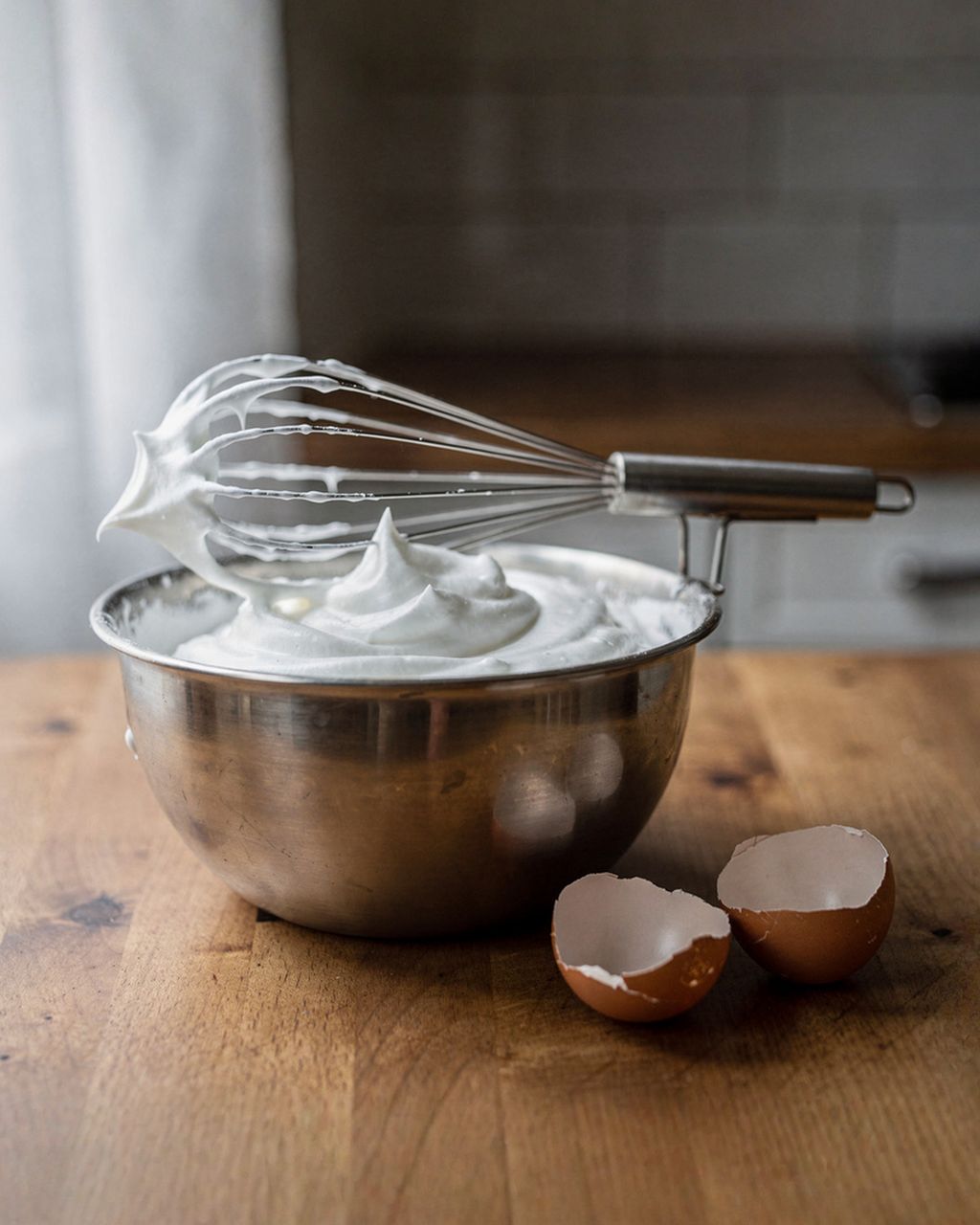
Meringue: whip room-temperature egg whites to soft peaks, then gradually add the sugar until the meringue is firm, glossy, and holds a stiff peak.
Macaronage: fold in the sifted almond flour and icing sugar. Use a spatula to fold the batter until it flows in a continuous ribbon and has a lava-like consistency — a line drawn through it should smooth out within about 10 seconds. Undermix and you'll get a bumpy surface; overmix and the batter turns thin and runny. This is the step that makes or breaks your macarons.
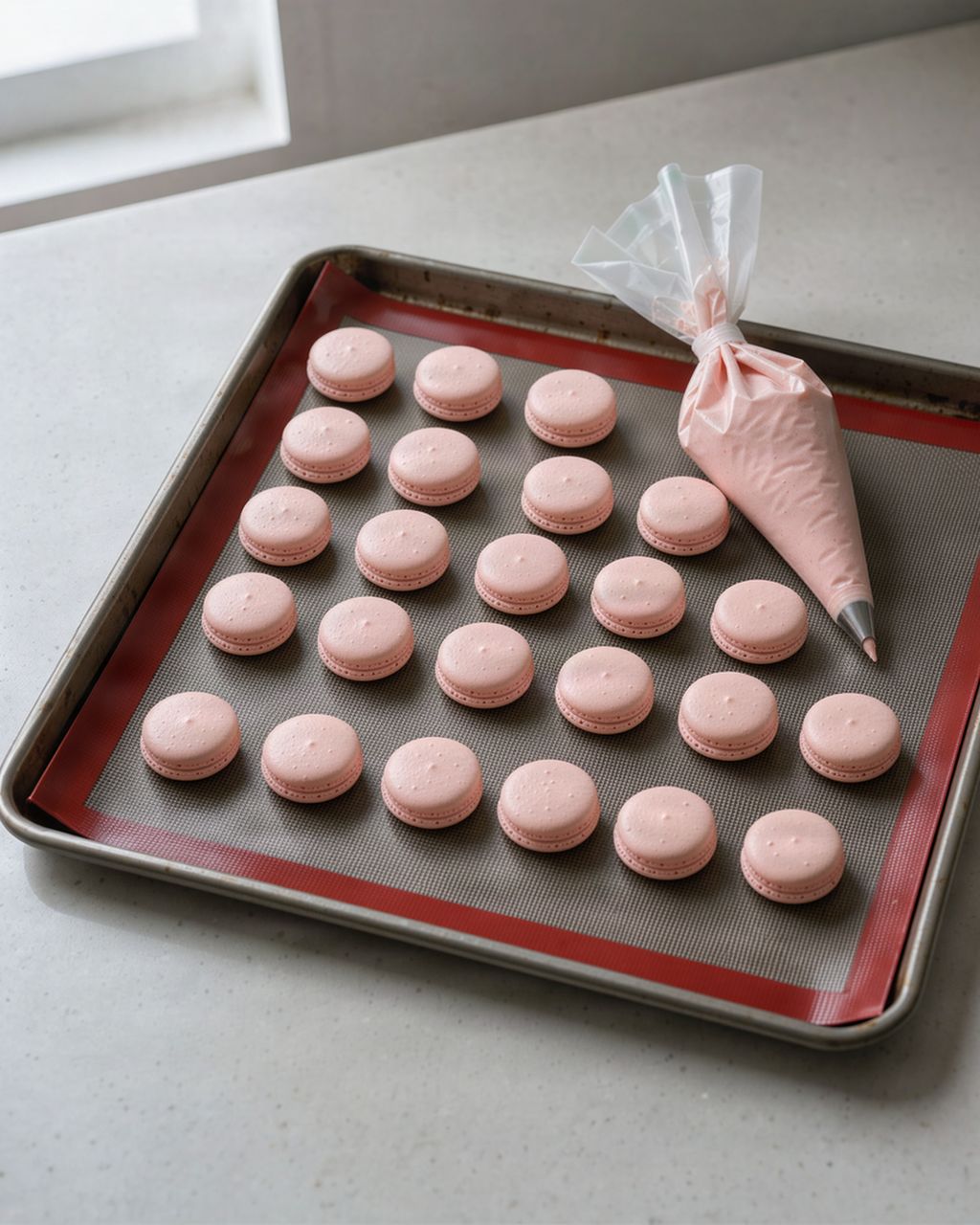
Piping: use a piping bag fitted with a round tip and pipe 3–4 cm rounds, evenly spaced. Then tap the baking tray firmly against the counter to release any air bubbles.
Resting (a crucial step that's often skipped): let the rounds rest for 20–40 minutes, until the surface turns matte and dries into a thin skin that no longer feels sticky to the touch. This resting stage is exactly what creates the shells' signature smooth surface and "feet."
Baking: 150°C (300°F) for 15–17 minutes. A properly baked shell will lift cleanly off the baking paper.
We covered baking in detail in our article The Secrets to Baking Perfect Macarons.
Perfect meringues start with a firm, glossy foam piped onto baking paper and slowly dried at a low temperature (90–100°C / 195–210°F, 1.5–2 hours) — they're dried, not really "baked."
Whip gradually: start the mixer on low, add a pinch of salt or a few drops of lemon juice once it starts foaming, then add the sugar a spoonful at a time. Keep whipping until you reach firm, glossy peaks.
Don't overwhip: overwhipped meringue turns grainy and dull, and starts to weep liquid — the result is meringues that crack and crumble. You'll notice it losing its gloss. You can rescue it by carefully folding in another egg white.
Shape and dry: use a star tip for rosettes, then rely on low heat and time. Low heat dries rather than bakes — which is why meringues stay white and don't crack. Once dried, let them cool inside the oven with the door slightly ajar.
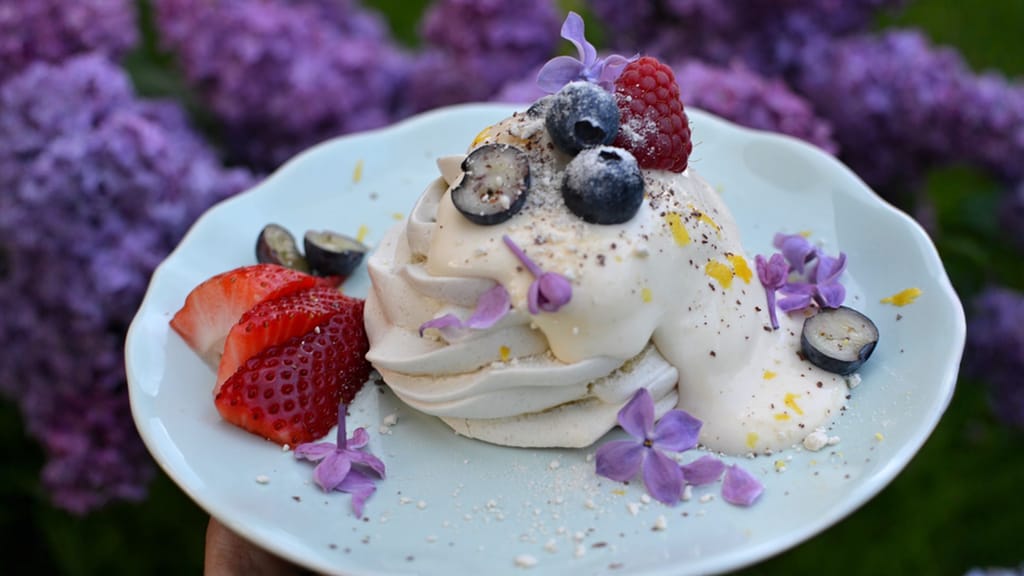
Lilac meringue kisses with lemon curd cream and fresh fruit
Lilac Meringues with Lemon Curd and Fresh Fruit
Most macaron failures come down to three causes: poor macaronage, skipping the resting step, and humidity. Specifically:
No feet / flat shells: the meringue wasn't whipped properly, or the batter was overmixed. The meringue needs to be firm, and the batter should flow like lava.
Cracked shells: the rounds didn't rest long enough (or at all) — the skin never fully formed. Or the oven was too hot.
Hollow shells: overwhipped meringue or too high a temperature; sometimes dropping the oven by 10°C and baking a bit longer helps.
Lopsided, spreading rounds: thin batter from overmixing, or liquid food colouring.
Humid weather: macarons hate humidity. On rainy days or in a steamy kitchen, the shells dry more slowly and are more prone to cracking — let them rest a bit longer in these conditions.
A macaron tastes complex, a meringue tastes purely sweet — and the filling is what makes the difference. A macaron shell is crisp on the outside, chewy inside, and on its own is just mildly, almondy-sweet; its character comes from the filling — think salted caramel cream or white chocolate and coffee cream, ganache, buttercream, or a fruit filling: chocolate, vanilla, raspberry, pistachio, mango, matcha. The result is a balance of sweetness against sharper or nuttier notes.
A meringue stays true to a single note: crisp, melts on the tongue, and tastes purely sweet, at most with a hint of vanilla or a touch of fruit. That's exactly why it works so well as a crunchy element in other desserts — think Pavlova or Eton mess.
Reach for macarons when you want visual impact and colour; reach for meringue when you want lightness and simplicity.
Macarons are perfect for a wedding table, a dessert buffet, or as a cake decoration — they can match the colour scheme and flavour of the occasion and look genuinely luxurious. They also make a great contrast to a strong coffee or espresso.
Meringues work beautifully as an airy garnish, a crunchy element in softer desserts, or alongside fresh fruit. Their delicacy pairs well with green tea and herbal teas.
It really comes down to the occasion and personal taste — and there's nothing stopping you from serving both.
Macarons belong in the fridge, meringues belong somewhere dry — moisture is the enemy of both.
Macarons: keep in an airtight container in the fridge for 3–5 days. Freshly filled macarons actually taste best after "maturing" in the fridge for 24 hours, once the filling has had time to soften the shell slightly. They also freeze well (up to roughly 1 month) — just thaw them in the fridge.
Meringues: store airtight at room temperature, somewhere dry — they'll keep for weeks. Never put them in the fridge, as they'll turn soft and sticky. Don't store them alongside moist desserts either.
No — a macaron is a sandwich of two almond shells joined with a filling, while a meringue is just whipped egg whites and sugar baked dry. Don't confuse French macarons with coconut "macaroons" (a different biscuit entirely, despite the similar name).
Yes, neither contains wheat flour — macarons are built on almond flour, and meringues are just egg whites and sugar, so both are naturally gluten-free. Always check the labels on individual ingredients (colourings, decorations), though, in case they were made in a facility that also handles gluten.
The closest substitute is another finely ground nut flour, most often hazelnut; for a nut-free version, ground sunflower or pumpkin seeds also work. Expect a shift in flavour and colour though, and bear in mind no substitute holds the shell together quite as reliably as almonds.
They absorb moisture from the air — meringues are hygroscopic. Bake them on a dry day, let them cool in the oven with the door slightly ajar, and transfer them straight to an airtight container; never store them in the fridge.
Only if you're making Italian meringue — the sugar syrup needs to hit exactly 118°C (245°F), and you won't nail that reliably without a thermometer. French meringue doesn't need one, but it's a bit less stable as a result.
One recipe worth heating the oven for, one tip, and one deal from the shop. Nothing else.