Almond nut milk

Updated Aug 30, 2026
A food allergy is your immune system misfiring against a protein in food, and the most reliable way to spot it is timing: symptoms typically appear anywhere from a few minutes to two hours after eating, they show up every single time you eat that food, and even a tiny amount can trigger them. What actually happens varies — hives, swollen lips, vomiting, coughing, and in the worst case, anaphylaxis. Here you'll find what the individual symptoms look like, how an allergy differs from an intolerance, what diagnosis at an allergist actually involves, and what you can realistically do about it in your own kitchen. But the diagnosis itself has to come from a doctor — not from an article, and not from a test you found online.
A food allergy shows up in five main areas: skin (hives, swelling, itching), mouth and throat (itchy lips and palate, swollen tongue), breathing (coughing, wheezing, tightness in the throat), digestion (stomach pain, vomiting, diarrhoea), and circulation (paleness, dizziness, collapse). With IgE-mediated allergy, symptoms usually appear within minutes, and no later than two hours after eating (alpha-gal syndrome takes longer).
Two things matter more for judging symptoms than which type they are:
How many systems are involved at once. Hives on their own are a different situation from hives plus vomiting plus coughing. Doctors call it anaphylaxis when skin symptoms are joined by breathing difficulty, a drop in blood pressure, or severe digestive symptoms (repeated vomiting, cramping stomach pain) — or when a known allergen triggers a sudden drop in blood pressure, throat tightness, or bronchospasm even without a rash.
How fast it's progressing. A reaction that's getting worse over ten minutes is more urgent than one that's stayed at the same level for an hour.
An allergic reaction is also reproducible — it happens again and again after the same food. Feeling unwell just once after a food you normally tolerate fine is almost always something else.
The skin is the most common place a food allergy announces itself. The classic sign is hives — itchy welts that move around: one patch fades within an hour and pops up somewhere else. Alongside that you can get angioedema, a deeper, non-itchy swelling, most often on the lips, eyelids, or backs of the hands.
Watch out for two common mix-ups:
Eczema flaring up after eating tends to be slower and less clear-cut than hives. In children with atopic eczema, it neither confirms nor rules out an allergy on its own.
A rash just around the mouth in young children after tomato, strawberries, or citrus fruit is often just skin irritation from the fruit's acidity, not an immune reaction.
Itching and tingling of the lips, palate, and throat within minutes of eating raw fruit or vegetables is the classic picture of oral allergy syndrome. It usually stays confined to the mouth and settles within tens of minutes.
The proteins that trigger oral allergy syndrome break down with heat — which is why the literature typically describes these reactions after raw fruit and vegetables, not cooked ones. What applies in your specific case is for an allergist to assess. It's almost always linked to pollen allergy — more on that in the cross-reactivity section below.
Respiratory symptoms in a food allergy mean the reaction has gone beyond the skin, and they're taken more seriously. These include a dry, irritating cough, wheezing, hoarseness, a change in voice, and a sense of tightness or a
Medical guidance also lists stridor (a whistling sound on breathing in) and a persistent cough with no cold behind it as warning signs. People with asthma tend to have statistically worse outcomes with food reactions — asthma is a recognised risk factor for a severe course.
Digestive symptoms of an allergy come on fast — repeated vomiting typically within an hour of eating, cramping stomach pain, diarrhoea. The key word is repeated: vomiting once is different from vomiting that recurs several times within half an hour.
This is where telling it apart from intolerance is hardest, because the symptoms look similar. The best clues remain timing (allergy within two hours, intolerance often not for half a day or more) and whether anything is happening on the skin or with breathing at the same time.
Paleness, cold sweat, dizziness on standing up, a racing pulse, or sudden drowsiness in a child are symptoms that have nothing to do with a "sensitive stomach" anymore. They mean the reaction has hit the circulatory system.
In young children this often doesn't show up as a complaint but as a change in behaviour: unusual listlessness, floppiness, a sudden loss of interest in their surroundings. Together with skin or breathing symptoms, these form the picture of anaphylaxis.
Anaphylaxis is a fast-onset allergic reaction that hits several body systems at once and can be life-threatening. In practice, medical guidance describes it as skin symptoms combined with breathing or circulatory problems — or as a sudden drop in blood pressure after contact with a known allergen.
Worth knowing in advance:
It doesn't copy previous reactions. Someone who's only ever had hives before can have a much worse reaction next time. A mild history is no guarantee.
Amount isn't a reliable predictor. For highly sensitive allergy sufferers, a trace amount is enough.
It can come back. A biphasic reaction is reported in roughly 5 to 7% of patients, depending on the definition and study type: symptoms subside and then flare up again, with a median onset of around 11 hours, and a reported range from about 15 minutes to 72 hours. That's exactly why medical observation is required after anaphylaxis, not just "I feel fine now."
Some reactions need a cofactor. Some people tolerate a given food fine on its own, but not combined with physical exertion, alcohol, or anti-inflammatory medication.
An allergy is an immune system reaction to a protein; an intolerance is a problem digesting or processing a substance and doesn't involve the immune system at all. Everything else follows from that:
Trigger. An allergy is triggered by a protein; an intolerance is most often caused by a missing enzyme (lactase, in the case of lactose) or by an excess of a substance the body can't break down fast enough.
Dose. With an allergy, traces are enough; with an intolerance, the amount usually matters — half a pot of yoghurt is fine, a litre of milk isn't.
Timing. Allergy within two hours; intolerance often after several hours to days.
Risk. Intolerance is unpleasant but doesn't kill. Allergy can escalate into anaphylaxis.
Symptoms. Intolerance stays confined to digestion (bloating, cramps, diarrhoea). Hives, swollen lips, or breathing difficulty aren't part of the picture.
The most common example is lactose intolerance — covered in detail in the article Lactose: What It Is and How Much Is in Milk, Cheese and Yoghurt. Don't confuse it with a cow's milk protein allergy: that one involves casein and whey proteins, is immune-mediated, and lactose-free milk won't help because the protein is still there.
Third on the list is coeliac disease. It does involve the immune system, but it's an autoimmune condition that damages the gut lining, not a classic wheat allergy — and it's diagnosed with completely different tests.
EU Regulation No. 1169/2011 lists 14 allergen groups that must be highlighted in the ingredients list (for example in bold or a different background colour):
Cereals containing gluten — wheat, rye, barley, oats, spelt, kamut and their hybrid strains
Crustaceans — prawns, crab, lobster
Eggs
Fish
Peanuts (groundnuts)
Soybeans
Milk including lactose
Tree nuts — almonds, hazelnuts, walnuts, cashews, pecans, Brazil nuts, macadamia nuts, pistachios
Celery
Mustard
Sesame seeds
Sulphur dioxide and sulphites at concentrations above 10 mg/kg or litre
Lupin
Molluscs — mussels, octopus, snails
Watch out for three things this flat list doesn't spell out. First: a peanut is a legume, not a nut, and the two are listed as separate items — an allergy to one doesn't automatically mean an allergy to the other. Second: the list is a legal one, not a biological one. You can be allergic to kiwi, apple, or pork too, but manufacturers aren't required to highlight those. Third: Annex II of the regulation contains exemptions where the allergen doesn't need to be highlighted — wheat-based glucose syrups and maltodextrins, fish gelatine used as a carrier for vitamins, fining agents in beer and wine, or fully refined soybean oil.
Since 13 December 2014, the same requirement has applied to loose (non-packaged) food and to catering — restaurants, canteens, and fast-food outlets must make allergen information available, whether on the menu or on request from staff.
Warnings like "may contain traces of nuts" are voluntary and unregulated — unlike the mandatory labelling of the 14 allergens. The European Commission itself acknowledges this gap and is working on harmonising it: under its initiative No. 16653 (DG SANTE), an implementing regulation is planned for adoption by the end of 2027 (Q4). Even after adoption, there's a transition period before it actually shows up on packaging.
In practical terms, that phrase currently tells you nothing about the real quantity present. It can appear on a product where the risk is genuine, or on one where the manufacturer is simply covering themselves. Part of the food industry works with the VITAL system, which sets reference doses based on clinical exposure testing — but it isn't mandatory.
The takeaway: for a mild allergy, "may contain" is usually an acceptable risk; for an anaphylactic allergy, it isn't. Where that line sits in your case belongs in an allergist's office, not in an article.
Four groups are the best documented: birch and fruit, latex and fruit, dust mites and shellfish, and alpha-gal and mammalian meat. Cross-reactivity happens when the immune system can't tell the difference between two similarly shaped proteins from different sources — here's what each group looks like in practice:
Birch and fruit (birch–fruit syndrome, allergen Bet v 1). Review papers on pollen-food syndrome report that people allergic to birch commonly cross-react with apple, pear, cherry, peach, plum, apricot, almond, hazelnut, celery, carrot, potato, kiwi, and mango. The apple protein Mal d 1 belongs to the same family as birch's Bet v 1.
Latex and fruit (latex-fruit syndrome). The core foods here are banana, avocado, kiwi, and chestnut, and less often papaya, peach, and tomato; reviews report that 30–50% of people allergic to natural latex also react to one of these foods.
Dust mites and shellfish (tropomyosin). Tropomyosin acts as a shared allergen across dust mites, cockroaches, and shellfish — which is why people allergic to dust mites are often reported to cross-react with prawns.
Alpha-gal and red meat. After certain tick bites, some people develop an allergy to the alpha-gal sugar found in mammalian meat. It's notable for its delay: the reaction typically appears 2 to 6 hours after eating, which is why it often goes unrecognised for a long time.
How strongly cross-reactivity plays out varies from person to person, and testing positive for sensitisation doesn't mean you'll actually react to that food. This is covered in depth in the article Cross-Reactive Allergies: Why an Apple Makes Your Mouth Itch and What to Do About It.
Diagnosis rests on a combination of medical history and testing — and the 2023 EAACI European guidelines stress that a positive test means sensitisation, not automatically an allergy. What matters is whether the result matches what actually happens to you after eating.
Before you see an allergist, bring them data. The most useful thing you can do yourself is keep a symptom diary: what you ate (including ingredients and brand), how long it took for symptoms to appear, exactly what showed up, how long it lasted, and what else you were doing at the time (exercise, alcohol, medication). This piece of paper will speed up diagnosis far more than any test ordered blind.
A skin prick test checks for sensitisation: the doctor places a drop of allergen extract on your forearm or back and lightly pricks the skin with a needle; the result is read 15 to 20 minutes later based on the size of the wheal compared with a control.
Worth knowing: antihistamines suppress the result, so they're stopped before the test in agreement with your doctor. The test can also be done as a prick-to-prick with fresh food directly, which is especially useful for fruit and vegetables, where commercial extracts often fall short.
A blood test measures the level of IgE antibodies against a specific food and, according to EAACI, is an equally valid first-choice option alongside the prick test. It's useful when the skin is affected by eczema, when antihistamines can't be stopped, or when the risk of a reaction is too high.
A more refined version is component-resolved diagnostics, which pinpoints exactly which protein you're reacting to. That has real practical implications: IgE against the peanut protein Ara h 2 signals a different level of risk than a reaction to a protein related to birch pollen. Similarly, testing for omega-5 gliadin is recommended for unexplained anaphylaxis in adults.
A lab number alone doesn't settle anything: a higher level raises the likelihood of a true allergy, but it doesn't tell you how severe the reaction will be. The exception is allergens with validated high cut-off values — for peanut, a specific IgE of ≥15 kU/L or a prick test wheal of ≥8 mm can be enough to confirm the diagnosis without an oral food challenge. These thresholds come from classic studies on 95% predictive values, validated mainly in children; whether an oral challenge is needed in your case is for your allergist to decide.
An allergy is confirmed or ruled out with an oral food challenge: under medical supervision, increasing amounts of the food are given and the reaction is monitored. In routine practice, the reference approach is the open food challenge; the double-blind, placebo-controlled food challenge (DBPCFC) remains the gold standard, but it's reserved for unclear results and for research. It's carried out only where anaphylaxis can be managed safely — never at home.
An elimination diet usually comes first: the suspect food is removed for a few weeks and then reintroduced in a controlled way. This, too, belongs under the supervision of a doctor or dietitian — long-term elimination on your own carries two risks:
Nutritional gaps. Milk, yoghurt, and cheese are sources of calcium; if you cut them out long-term, discuss a replacement with a dietitian.
How long elimination lasts. Elimination that drags on longer than necessary isn't risk-free — how long it should last, and when and how to reintroduce the food, is for a doctor or dietitian to decide.
IgG and IgG4 food panels, hair analysis, bioresonance, and kinesiology have no proven value for diagnosing food allergy. Professional allergy bodies keep repeating this warning:
IgG and IgG4 "food intolerance" panels — IgE antibodies simply reflect what you regularly eat, not an allergy
Hair analysis
Bioresonance, kinesiology, drop-of-blood tests at shopping centres
What they usually produce is a long list of "forbidden" foods, ending in a needlessly restricted diet. The money and the foods you give up are real — the information isn't.
Most of the work of managing a confirmed allergy is organisational, not medical: reading ingredient lists, watching for cross-contamination, and being able to communicate your allergy in a way the other person takes seriously.
Check the ingredients every single time, even on a product you've bought for years — recipes change without warning, and it's rarely visible on the packaging. A highlighted allergen in the ingredients list is easy to spot; it's harder to recognise it under a different name:
Milk hides as casein, caseinate, whey, lactalbumin, ghee, dried cream
Eggs as albumin, lysozyme (common in ripened cheeses and wines), ovalbumin
Soy as soy lecithin (E322 can also be soy-derived), textured vegetable protein, hydrolysed vegetable protein
Wheat and gluten — look for wheat under names like seitan, couscous, bulgur, spelt, kamut. Barley malt flavouring is barley, not wheat: it doesn't affect someone with a wheat protein allergy, but it has no place in a gluten-free diet, since barley is also a gluten-containing cereal
Peanut as peanut flour, or "vegetable fat/oil" on products from outside the EU
Labelling terms can be misleading too: "lactose-free" doesn't mean free of milk protein, "plant-based" doesn't mean nut-free, and "gluten-free" doesn't mean free of wheat starch — a gluten-free product is allowed to contain wheat starch as long as it's been stripped of gluten down to below 20 mg/kg.
Cross-contamination is when an allergenic protein transfers from one food to another via shared utensils, surfaces, or cooking fat — in a home kitchen you avoid it with separate utensils and by getting the order of prep right. The weak spots are predictable:
Shared butter, jam, and spreads — bread crumbs are the most common way gluten and nuts sneak into a "safe" jar. The fix is your own separate tub and a strict "never dip the knife back in" rule.
Graters, sieves, grinders, and toasters — porous, fiddly tools are hard to clean properly; for a severe allergy, it's worth having your own set.
Wooden boards and scratched plastic — protein gets trapped in the grooves, and rinsing won't get it out.
Deep-fry oil — everything gets fried in it; breaded fish fingers and chips end up sharing the same fat.
Order of cooking. Cook the allergen-free dish first, on a clean surface, and only then move on to the rest.
For hands, soap and water or a damp wipe actually work — published measurements (Perry, 2004) showed that plain water and hand sanitiser gel alone don't reliably remove the peanut allergen Ara h 1 from hands. On surfaces, the same study found dish soap performed worst — it left allergen behind on 4 of 12 tables tested, while ordinary surface cleaners and wipes cleared it fully. A dry wipe with a cloth is never enough — it just smears the protein around.
Mention your allergy when you order, not after, and phrase it as a medical restriction, not a preference: "I have a nut allergy, even a trace amount is a problem for me" works better than "could you leave the nuts out, please." Ask specifically about things the menu doesn't cover — breading, dressings, the oil in the deep fryer, and whether dessert is prepared on the same line as everything else.
The riskiest kitchens are ones where an allergen is used across the board: peanuts and cashews in Southeast Asian and Thai cooking, sesame in Middle Eastern food, fish and shellfish via fish sauce or Worcestershire sauce in almost any cuisine. Buffets and banquets are their own category — shared tongs and serving spoons between dishes practically guarantee cross-contact.
For travel, it's worth preparing two things in advance: a card explaining your allergy in the local language of your destination, and enough food for the first day, until you can work out how packaging is labelled there. Within the EU, the same rule of 14 highlighted allergens applies everywhere; outside it, that's not guaranteed.
There are five things most commonly swapped out in cooking: cow's milk, eggs, wheat flour, soy sauce, and nuts. For all of them, the substitute has to work functionally, not just carry the right name — and it must not introduce a different allergen. What actually works:
Cow's milk: oat, rice, soy, or coconut drink, swapped in 1:1. Oat is the most neutral choice for savoury sauces, coconut works well for baking. For babies under one year, plant-based drinks are not a substitute for milk — infant formula alternatives should be determined by a doctor.
Eggs in baking: 1 tablespoon ground flaxseed or chia seeds + 3 tablespoons water per egg (let it sit for 10 minutes to thicken), or 60g mashed banana, or 60g apple puree. For whipped egg whites, aquafaba (the liquid from cooked or canned chickpeas) works: 2 tablespoons of aquafaba per egg white, 3 tablespoons for a whole egg (1 tablespoon is roughly equivalent to a yolk).
Wheat flour: rice flour on its own is powdery and crumbly; a blend works better, for example rice and corn flour in a 2:1 ratio with a teaspoon of psyllium per 300g to help bind the dough.
Soy sauce: coconut aminos, or tamari (careful — tamari can also contain wheat, so check the label).
Nuts for baking and toppings: dry-toasted sunflower and pumpkin seeds, or roasted buckwheat groats for crunch.
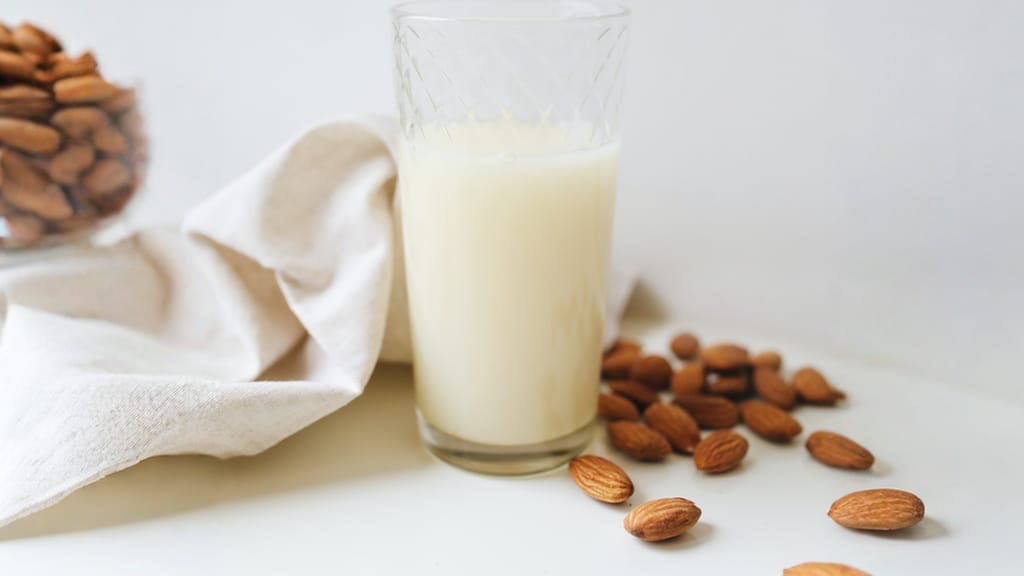
One substitution needs to be said out loud: almond and other nut milks are a substitute for milk, not a substitute suitable for someone with a nut allergy. They're a great choice for people who need to avoid dairy — anyone with a tree nut allergy should reach for oat or rice instead.
Almond nut milk
Homemade Almond Milk as a Cow's Milk Substitute (Not Suitable for Tree Nut Allergies)

Gluten-free banana bundt cake with chocolate
Gluten-Free Chocolate Banana Bread That Actually Holds Together

Zucchini fritters with no flour at all
Flourless Courgette Fritters for a Gluten-Free Diet
Milk and egg allergies are often outgrown; peanut, tree nut, fish, and shellfish allergies usually last a lifetime. Around 79% of children outgrow a milk allergy by age 16, and roughly 68% outgrow an egg allergy — newer prospective cohort studies (CoFAR) put the figure at around half of children by age 5 to 6.
Two related points worth mentioning:
The baked form of milk and eggs. Long baking changes the structure of milk and egg proteins. Whether a child can tolerate the baked form is a decision for an allergist alone, based on an oral food challenge — never try this at home.
Introducing allergens in infancy. Guidance on introducing peanuts into infant diets changed after 2015. When and how to introduce an allergen for your child is a question for a paediatrician or allergist.
In adults, the reverse can also happen. Allergies to shellfish, fish, nuts, or alpha-gal commonly appear for the first time in adulthood, after years of eating those foods without any issue.
Allergen immunotherapy is the controlled administration of increasing doses of an allergen under an allergist's supervision. It's a medical treatment led by an allergist; what to expect from it, and whether it suits your case, belongs in a consultation, not in an article. Availability of products is shifting across Europe — the manufacturer of the only licensed peanut allergy treatment has announced it's discontinuing the product; no new patients will start it in the EU after 31 March 2026, and EU marketing ends on 31 March 2027. Always discuss current options with your allergist.
Your auto-injector belongs in your carry-on, not in checked luggage — in the hold you can't reach it during a reaction, and it gets exposed to cold. For check-in, it helps to carry a doctor's letter confirming it's prescribed, so you're not stuck arguing at airport security. How many auto-injectors to bring and how to store them in flight (away from direct sun and from freezing temperatures) is something to sort out with your allergist beforehand. Rules on declaring an allergy and on in-flight meals vary by airline — check them when you book, not at the check-in desk.
A reaction from a kiss or from cooking fumes is possible, but for the vast majority of people it stays mild and localised — not anaphylaxis. Contact reactions after kissing are mainly described in medical literature for severe peanut and tree nut allergies. Brushing your teeth or chewing gum won't reliably clear the allergen from saliva. In studies, the best results came from combining a wait of several hours with eating something free of the allergen — though even that's no guarantee. Reactions from fumes are rarer and mostly reported with cooking fish and shellfish, where protein escapes into the air with the steam; the smell of food alone won't set off a reaction.
An allergy to one type of tree nut doesn't automatically mean you're allergic to all of them — an allergist decides how far the exclusion needs to go. Cross-reactivity between some tree nuts is high (typically cashew and pistachio, or walnut and pecan), and low between others. Peanuts, meanwhile, are a legume, not a nut, and are listed separately under European labelling rules. The practical complication is that nuts are often processed together in the same facilities, so even once one type is cleared, cross-contamination risk remains.
Classic IgE-mediated allergy doesn't show up that late — it kicks in within two hours. A reaction that's delayed by many hours or even days is more likely a food intolerance, though there are also delayed immune reactions: alpha-gal syndrome (typically 2 to 6 hours after eating mammalian meat) or FPIES in young children, where repeated vomiting typically hits 1 to 4 hours later. Write down the time, the food, and the symptoms, and bring that record to your doctor.
Yes — this is a reaction with a cofactor, and the best-known example is wheat-dependent, exercise-induced anaphylaxis. Wheat on its own causes no trouble, but combined with physical exertion, alcohol, or anti-inflammatory medication it can trigger a severe reaction, typically 30 to 60 minutes after eating. The most common cofactor is physical exertion — in the largest published cohort, it applied to 80% of patients, with alcohol involved in about a quarter and NSAIDs in under a tenth. Diagnosis relies on testing specific IgE against omega-5 gliadin.
One recipe worth heating the oven for, one tip, and one deal from the shop. Nothing else.