Pancakes Without Milk: Water, Oat Milk and Other Swaps
Why Are My Pancakes Flat or Rubbery? Causes and Fixes
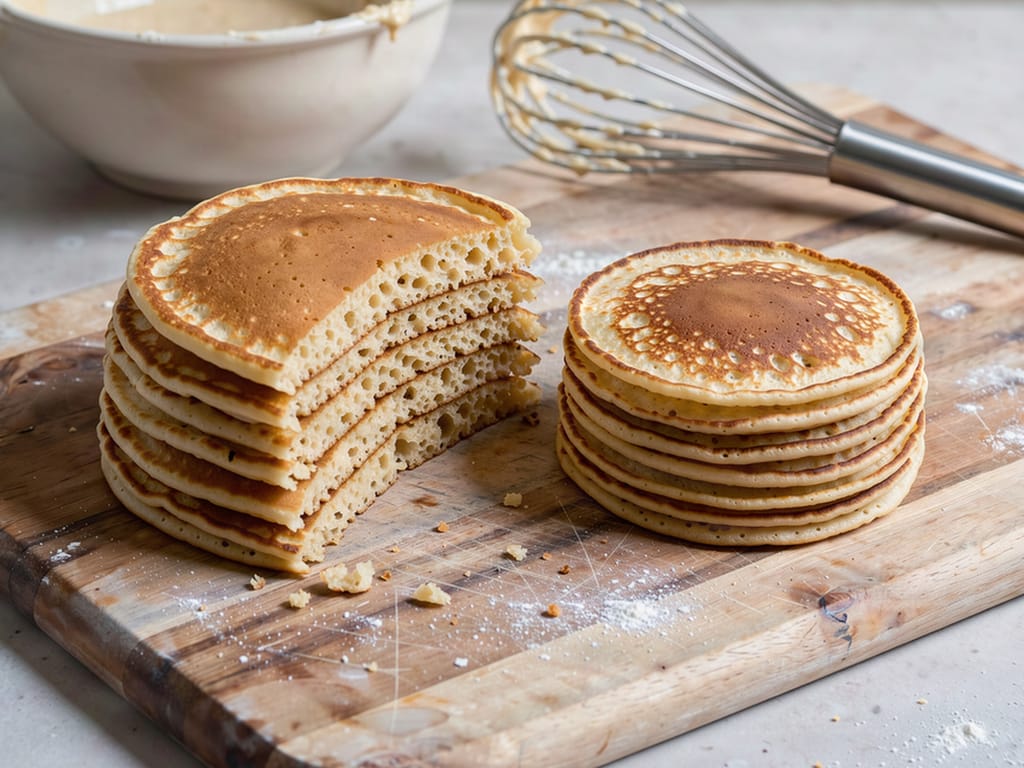
Updated Nov 21, 2026
Pancakes come out flat when the baking powder is old, the batter is too thin, or it sat too long before cooking; they turn rubbery when the batter is overmixed or has too much egg or too little fat. Dense, gummy pancakes usually mean too much flour or a pan that was too hot. Each cause has a simple fix, and most of them are about how you mix and measure.
A pancake rises in a minute or two on the pan. The baking powder makes gas, the batter traps it, and the heat sets the batter around the bubbles. Anything that weakens the gas, lets it escape, or makes the batter tough instead of tender gives you flat or rubbery pancakes.
The usual causes, roughly in order of how often we see them:
overmixing the batter
old or too little baking powder
batter that is too thin, or too thick from too much flour
too much egg, or too little fat
the wrong pan temperature
batter that sat too long, or a pancake pressed flat with the spatula
Flat and tough usually points to overmixing or old baking powder. Flat but tender points to thin batter. Thick but gummy points to too much flour or too much heat.
Seasonal baking plans, tested recipes and kitchen tricks that save you time. Unsubscribe in one click.
Wheat flour contains proteins that form gluten when they are wet and stirred. In bread you want a lot of it. In pancakes you want as little as possible, because gluten makes them chewy and rubbery. It also knocks out the gas the baking powder has started to make.
Mix wet into dry with a fork, spatula or whisk, and stop as soon as no dry flour shows. That takes about 10 to 15 strokes.
Leave the lumps. Small lumps are a sign you stopped in time. They hydrate while the batter rests.
Don't use a blender or stand mixer for thick American-style pancakes. They are fine for thin crêpe batter, which rests long enough for the gluten to relax.
Use all-purpose flour (plain flour), not bread flour. Bread flour has more protein and makes chewier pancakes. Our guide to types of flour explains the difference.
Baking powder loses strength once the tin is open, especially in a humid kitchen. Old powder gives flat, dense pancakes however well you mix.
The quick test: stir half a teaspoon of baking powder into a little hot water. A strong fizz means it is fine. A few lazy bubbles mean a new tin. Our baking powder page explains how it works.
Other rising problems:
Buttermilk recipe, plain milk. A recipe that uses baking soda needs an acid such as buttermilk. With plain milk the soda doesn't react. Our buttermilk substitutes guide has easy swaps.
Batter left too long. Baking powder starts working as soon as it is wet. A short rest helps, but batter left for an hour or more, or overnight, gives flatter pancakes. Mix the batter shortly before you cook it.
Out of baking powder? See what to use instead of baking powder.
The thickness of the batter decides how tall the pancake stands.
Too thin: the batter spreads across the pan before it can set, and you get thin, flat pancakes. Add flour a spoonful at a time.
Too thick: the pancake can't spread or rise, the middle stays raw while the outside browns, and the crumb turns dense and gummy.
Too-thick batter usually comes from scooping flour with the measuring cup, which packs it. A US cup (236.6 ml) of all-purpose flour should weigh about 125 g. Scooped, it can be noticeably heavier. Spoon the flour into the cup and level it, or better, weigh it. The cups and spoons to grams calculator converts American recipes.
The right batter pours slowly from a ladle, holds a soft mound for a moment, then spreads a little.
Egg protein sets firm when it cooks. A little gives structure. Too much makes pancakes springy and rubbery, closer to an omelet.
Large eggs instead of medium, or an extra egg added "for richness", can be enough to tip a batch. For a batch made with about 125 g of flour, one egg is typical.
Too little fat makes pancakes tough and dry. Butter or oil coats the flour and keeps the crumb tender. Don't leave it out of the batter, even when you grease the pan.
Low-fat swaps such as skim milk or extra egg whites make leaner, chewier pancakes.
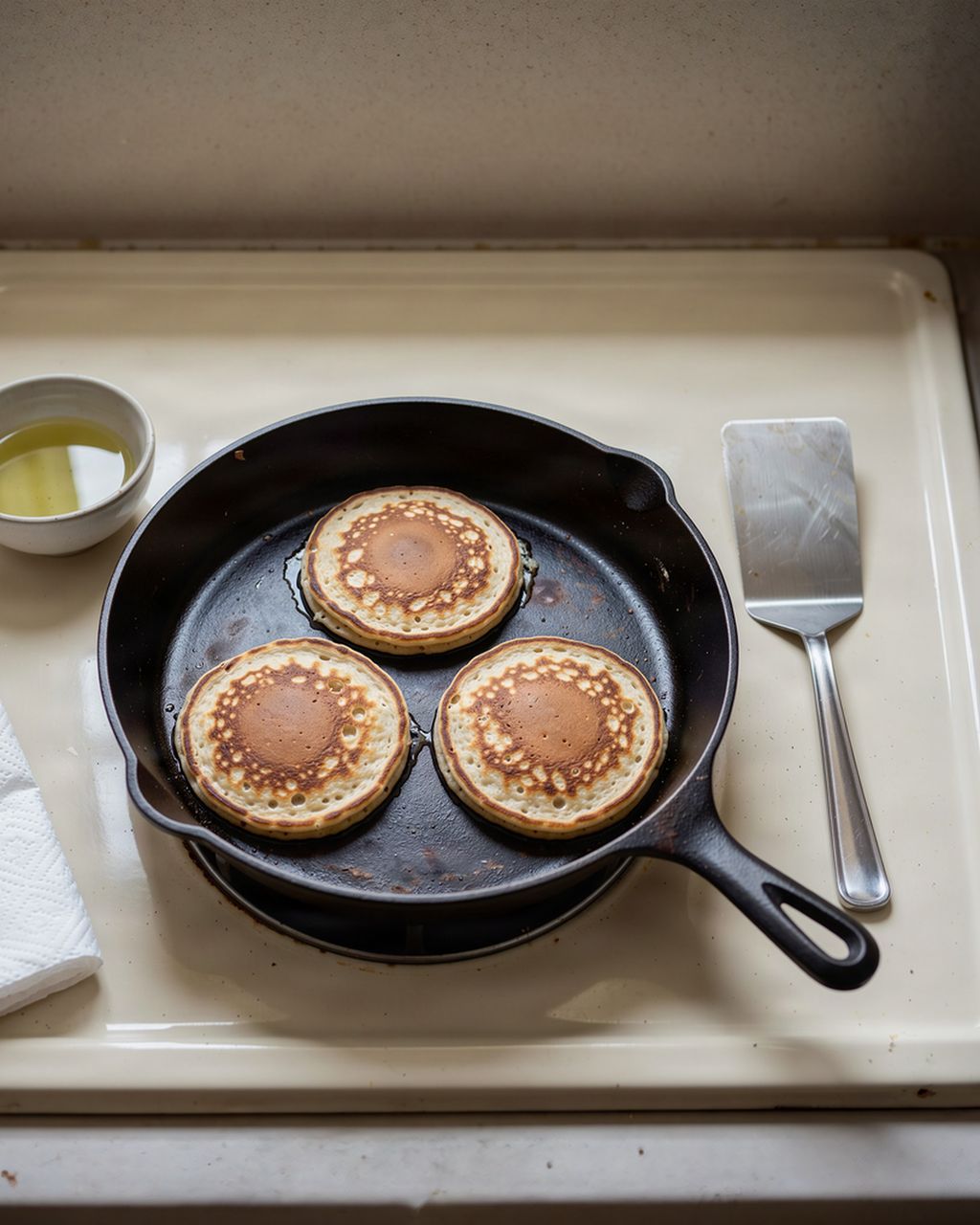
The pan has to be hot enough to set the pancake while the bubbles are still in it.
Too cool: the batter spreads, the gas escapes before the pancake sets, and you get flat, pale and slightly tough pancakes.
Too hot: the outside browns and sets before the middle can rise, so the pancakes are dense and raw or gummy inside.
Medium heat is right for most stoves. On an electric griddle, around 190 °C (375 °F) is a common setting. On a dry pan, a few drops of water flicked onto it should ball up and skitter, not just sit there or hiss away. In an oiled nonstick pan, skip the water, which spits in hot oil, and cook a small test pancake instead.
When you flip:
Wait for the signs: bubbles across the surface and edges that look dry and matt.
Flip once. Turning back and forth deflates the pancake.
Never press it down with the spatula. It squeezes out the air.
If the middle is wet when the outside is done, lower the heat and make smaller pancakes. Don't serve pancakes that are still raw in the middle: put them back on the pan until they are cooked through.
Pancakes turn rubbery when the batter is overmixed, which develops gluten, or when it has too much egg or too little fat. Stir only until no dry flour shows, leave the small lumps, and keep enough butter or oil in the batter.
Pancakes go flat when the baking powder is old, the batter is too thin, the batter sat too long after mixing, or a buttermilk recipe was made with plain milk. Test the baking powder in hot water and make the batter thick enough to pour slowly from a spoon.
Yes, a few small lumps are a good sign. They mean you stopped mixing before the gluten developed. The lumps hydrate as the batter rests and cook out in the pan.
Dense, gummy pancakes usually have too much flour, often from scooping it with the cup, or were cooked on a pan so hot that the outside set before the middle could rise. Weigh the flour and cook over medium heat.
For fluffy pancakes, use fresh baking powder, a thick batter, gentle mixing that leaves small lumps, a short rest, and a preheated pan at medium heat. Flip once, and never press the pancake down with the spatula.
One recipe worth heating the oven for, one tip, and one deal from the shop. Nothing else.