How to Convert European Recipes to US Cups, °F and Pan Sizes
European Baking Sachets in Grams: Baking Powder, Vanilla Sugar, Yeast
Updated Nov 18, 2026
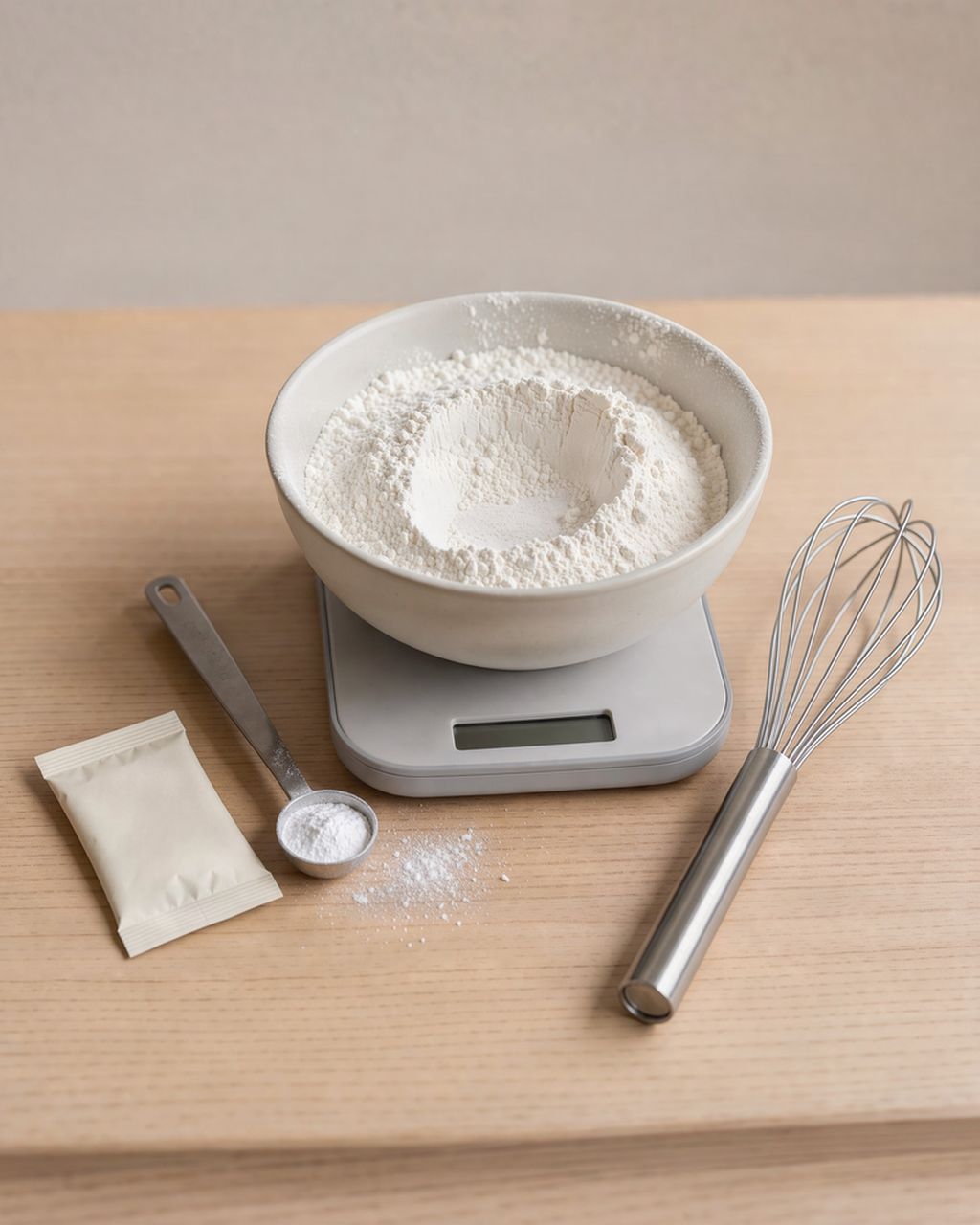
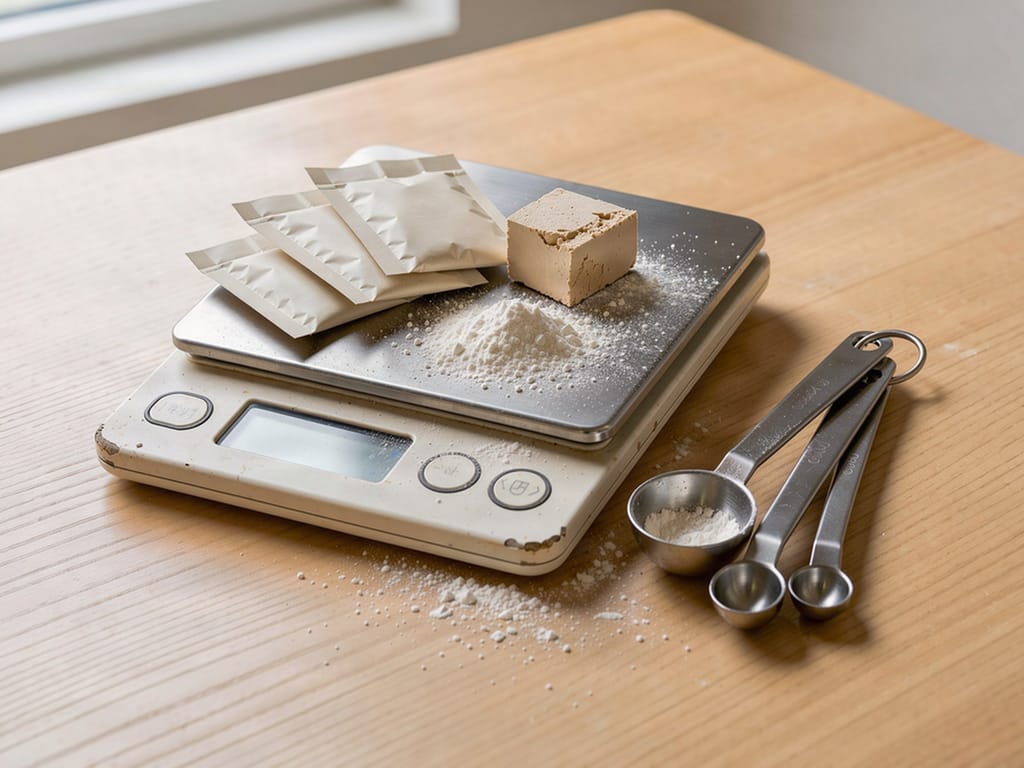
A Czech sachet of baking powder holds 12 g (about 2½ US teaspoons), a German one about 16 g, a vanilla sugar sachet 8 g or 20 g, a dry yeast sachet 7 g, a fresh yeast cube 42 g and a pudding powder sachet 37–40 g. Czech and German recipes often just say "1 sachet", because everyone there buys the same packets. Here is what each one weighs, what it equals in US spoons and what to use if you cannot buy it.
In Czech and German kitchens, a few baking ingredients are sold in small paper sachets, each sized for one batch: usually 500 g of flour or 500 ml of milk. Recipes are written around them. A Czech recipe will say 1 prášek do pečiva (one baking powder) or 1 vanilkový cukr (one vanilla sugar) and never give a weight, because everyone has the same packets in the drawer.
If you are cooking from such a recipe in the US, UK or Australia, the sachet is the missing number. The good news is that it is always a weight, and a small one, so a kitchen scale or a set of level measuring spoons gets you there. The list below covers the five sachets you will meet most: baking powder, vanilla sugar, dry yeast, fresh yeast and pudding powder.
Czech sachet (prášek do pečiva): 12 g, labeled for 500 g of flour. This is the Dr. Oetker size sold in every Czech supermarket.
German sachet (Backpulver, Backin): about 16 g, also for 500 g of flour. German shops sell it in packs of 10 sachets totaling 160 g.
Other sizes: some brands and special versions differ. Dr. Oetker's cream-of-tartar powder comes in 10 g sachets, and Czech gingerbread raising powder (prášek do perníku) in 20 g sachets. Check the packet the recipe author probably used.
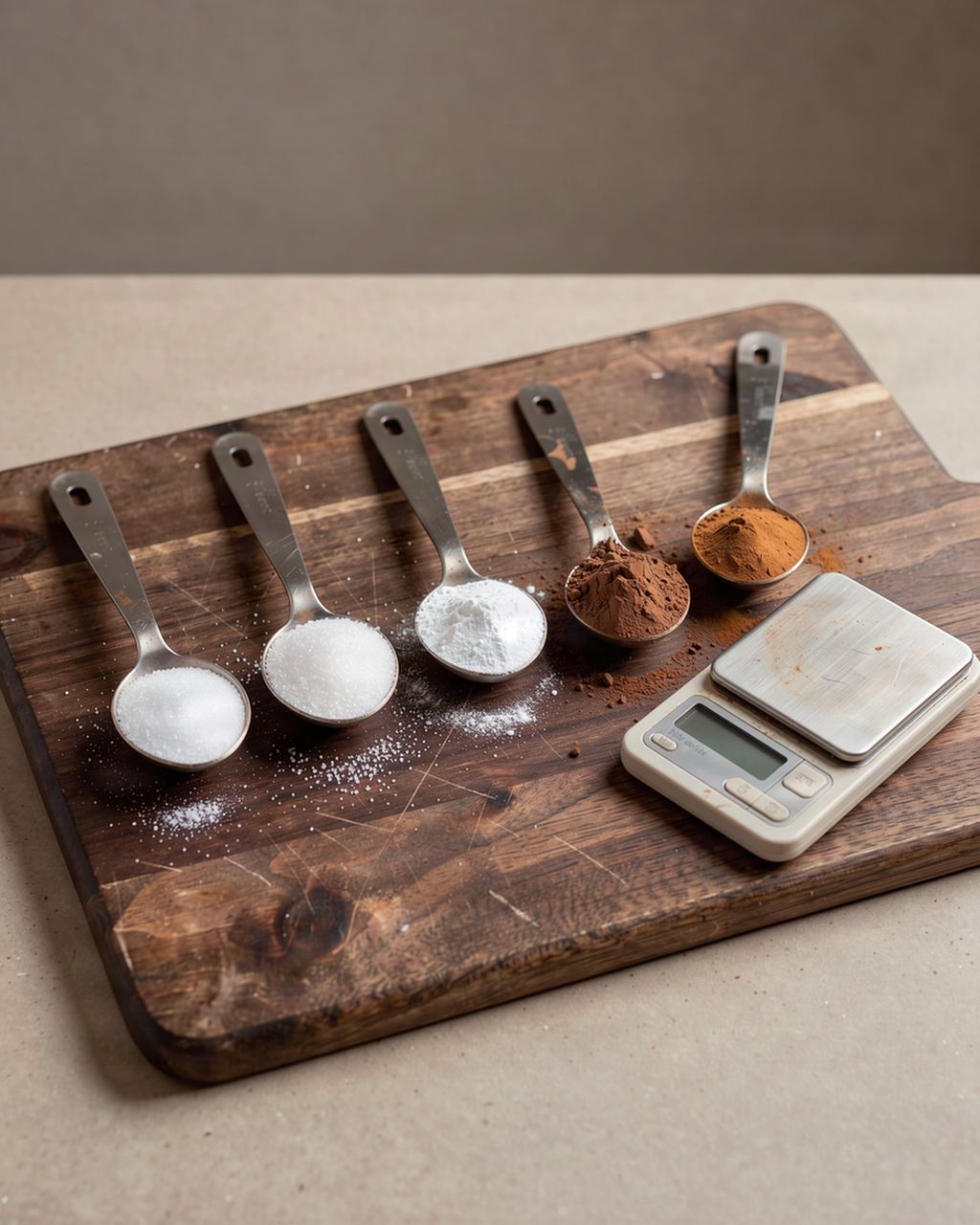
In US spoons, baking powder weighs about 4.6 g per level teaspoon (USDA FoodData Central). So a 12 g Czech sachet is about 2½ level US teaspoons, and a 16 g German sachet about 3½ teaspoons.
Do not swap baking soda for it. Baking soda is several times stronger and needs an acid in the dough. If you are out of baking powder, our guide on what to substitute for baking powder has the ratios.
This one has two sizes, and it matters which one the recipe means.
Czech vanilinový cukr (vanillin sugar): 20 g. Sugar flavored with vanillin, the main flavor compound of vanilla, made without the pod.
Czech vanilkový cukr and German Vanillezucker or Bourbon-Vanillezucker (vanilla sugar): 8 g. Sugar with real ground vanilla pod or vanilla extract.
German Vanillin-Zucker: also 8 g.
Czech home cooks use the two names loosely, so an older recipe that says 1 vanilkový cukr may have been written with either packet. The difference is mostly flavor, not structure: even a 20 g sachet is too little sugar to change a cake. The vanilla sugar vs vanillin sugar article covers when you can taste the difference.
In spoons, granulated sugar is about 4.2 g per level US teaspoon (USDA), so an 8 g sachet is about 2 teaspoons and a 20 g sachet about 5 teaspoons, or a little under 2 US tablespoons.
Vanilla sugar is not sold everywhere outside Central Europe. These swaps are our kitchen rule of thumb, not a manufacturer's figure:
For an 8 g sachet: about 1 teaspoon of vanilla extract plus 2 teaspoons of granulated sugar. Retailers that sell Dr. Oetker vanilla sugar abroad give a range of 1–2 teaspoons of extract per sachet, so start with one and taste.
For a 20 g vanillin sugar sachet: about 1 teaspoon of vanilla extract plus 1½ tablespoons of sugar.
In a dry mix or a dusting sugar: use the sugar and a pinch of ground vanilla or the seeds of a short piece of pod, so the mix stays dry.
Add the extract with the wet ingredients and the sugar with the rest of the sugar. You can also make vanilla sugar at home: rinse a used vanilla pod, let it dry completely for a day or two, then bury it in a jar of sugar and keep the jar closed.
A European sachet of dry yeast (sušené droždí, Trockenhefe) holds 7 g and is labeled for 500 g of wheat flour. The Czech Dr. Oetker packet says one sachet equals about half a cube of fresh yeast.
That is the same as a US yeast packet: ¼ ounce, 7 g, about 2¼ teaspoons. So when a Czech recipe says 1 sáček droždí, use one US packet.
Two things to check on your packet:
Instant or active dry. Instant yeast is mixed straight into the flour. Active dry yeast is usually stirred into warm liquid first. The Czech Dr. Oetker packet is mixed straight into the flour, like instant yeast; for other brands, the packet says which one you have.
Canada. Some Canadian packets are 8 g. The difference is small for one loaf.
USDA lists active dry yeast at about 4 g per teaspoon, a little more than the packet math (7 g in 2¼ teaspoons, about 3 g each). Yeast settles and packs differently, which is why we weigh it.
A cube of fresh yeast (kostka droždí, Würfel Hefe) weighs 42 g in Czech and German shops. Czech packets say one cube raises about 1 kg of flour, so a recipe for 500 g of flour usually asks for about half a cube, roughly 21 g.
Fresh yeast is hard to find in many US supermarkets. Where it is sold, it often comes as a small cake of about 0.6 oz (17 g, USDA), so one European cube is about two and a half US cakes.
To swap fresh for dry, the European packets work on about 1 part dry to 3 parts fresh by weight: 7 g of dry yeast for roughly 21–25 g of fresh, depending on the brand. Our yeast converter does the math for any amount, and dried vs fresh yeast explains how each one behaves in dough.
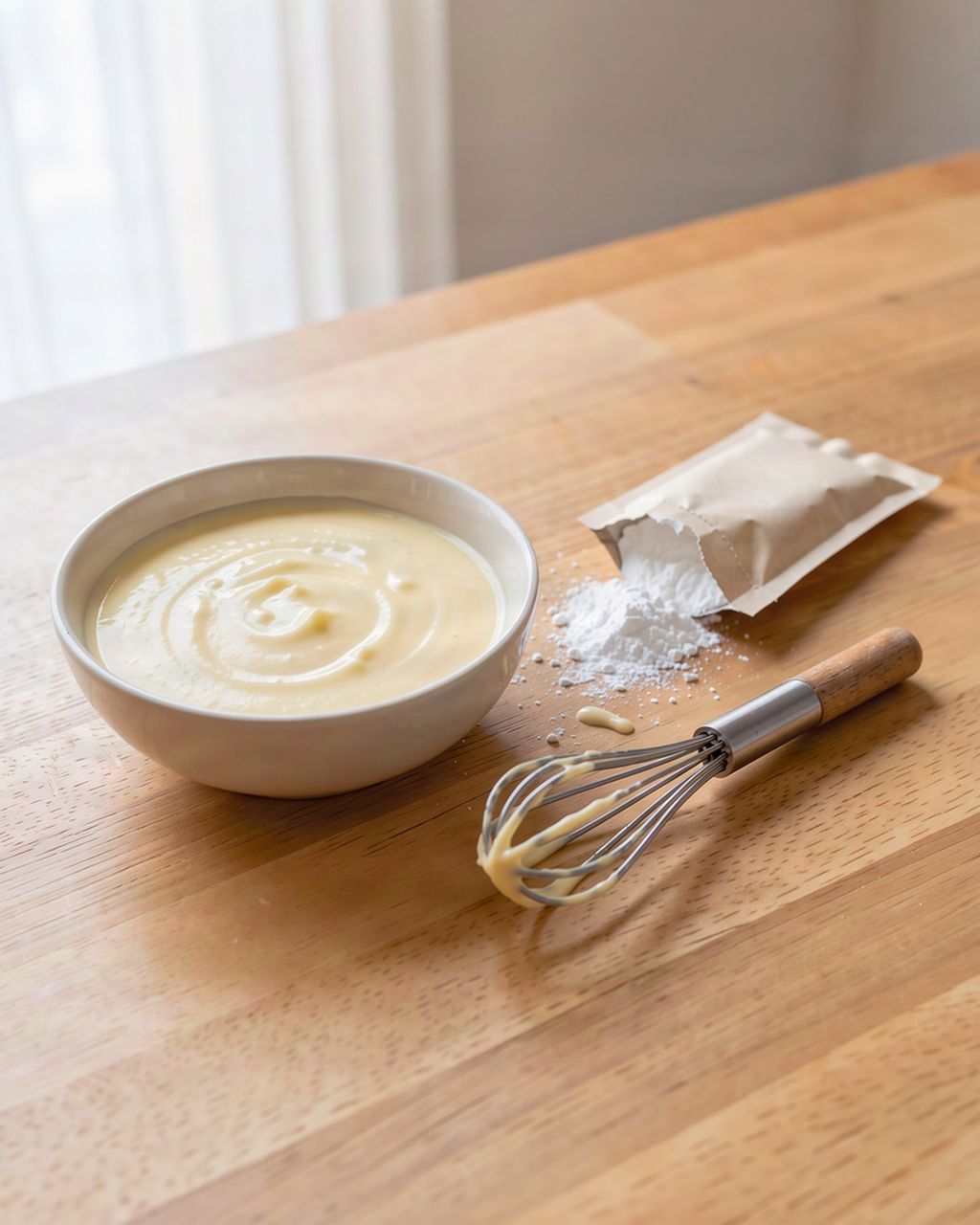
A European pudding powder sachet (pudinkový prášek, Puddingpulver) holds about 37–40 g, depending on brand and country, and sets 500 ml of milk (about 2 US cups). Czech recipes for cakes, fillings and buttercreams use it constantly, often as 1 vanilkový pudink.
The standard Dr. Oetker vanilla pudding is mostly cornstarch, with flavoring and color. That makes it easy to replace:
About 40 g of cornstarch (about 5 level US tablespoons; USDA puts cornstarch at about 128 g per US cup, so 8 g per tablespoon)
1 teaspoon of vanilla extract, stirred in after cooking
Sugar to taste, since the European powder is unsweetened and the recipe will tell you how much sugar to add
US pudding mixes are not a one-to-one swap. They come in larger boxes, usually contain sugar, and instant versions set without cooking. Our guide to homemade pudding from scratch covers the cooked version.
Recipe of the week, one tip that saves you time and one deal from the shop. Unsubscribe in one click.
The next issue goes out on Thursday, November 26.
Baking powder, Czech: 12 g, about 2½ US teaspoons, for 500 g flour
Baking powder, German: about 16 g, about 3½ US teaspoons, for 500 g flour
Vanilla sugar (vanilkový cukr, Vanillezucker): 8 g, about 2 US teaspoons
Vanillin sugar, Czech (vanilinový cukr): 20 g, about 5 US teaspoons
Dry yeast: 7 g, about 2¼ US teaspoons, the same as one US packet
Fresh yeast cube: 42 g, raises about 1 kg flour; about half a cube for 500 g
Pudding powder: about 37–40 g, for 500 ml milk
For flour, sugar and butter in the same recipe, our cups and spoons to grams calculator converts both ways, with US cups (236.6 ml) and metric cups (250 ml).
A Czech Dr. Oetker baking powder sachet holds 12 g and is meant for 500 g of flour. The standard German Dr. Oetker Backin sachet is a little bigger, about 16 g, also for 500 g of flour.
A 12 g Czech sachet of baking powder is about 2½ level US teaspoons, and a 16 g German sachet is about 3½. This uses the USDA figure of about 4.6 g per teaspoon of baking powder.
About 1 teaspoon of vanilla extract plus 2 teaspoons of sugar replaces an 8 g sachet of vanilla sugar. For a 20 g Czech vanillin sugar sachet, use about 1 teaspoon of extract plus 1½ tablespoons of sugar.
A European sachet of dry yeast holds 7 g, the same as a US ¼-ounce packet, which is about 2¼ teaspoons. One sachet is meant for 500 g of flour.
A standard cube of fresh yeast in Czech and German shops weighs 42 g and, according to the packet, raises about 1 kg of flour. About half a cube, roughly 21 g, is the usual amount for 500 g of flour and roughly matches one 7 g sachet of dry yeast.
A European pudding powder sachet holds about 37–40 g and sets 500 ml of milk. It is mostly cornstarch with flavoring and color, so about the same weight of cornstarch plus vanilla can stand in for it.
One recipe worth heating the oven for, one tip, and one deal from the shop. Nothing else.