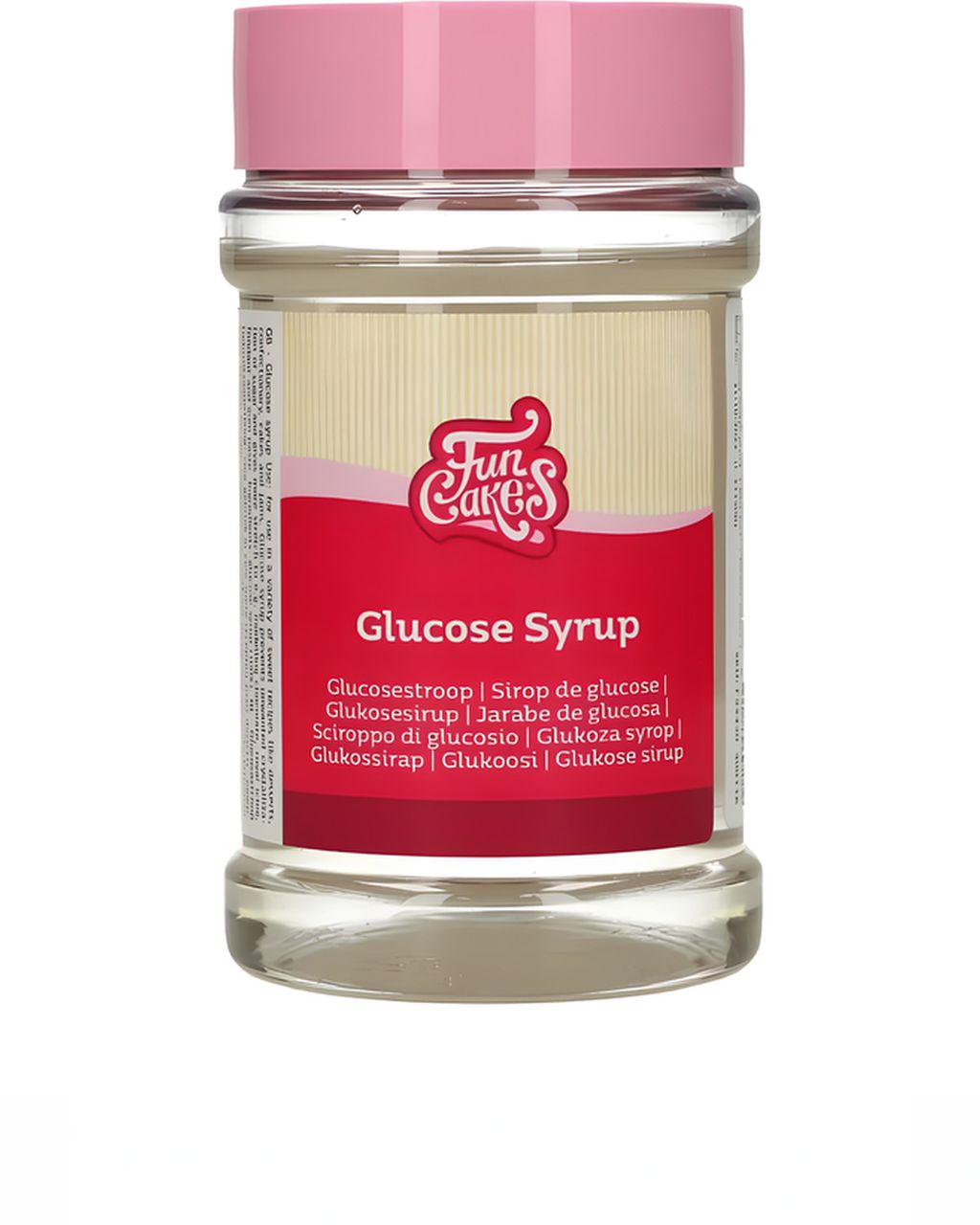
FunCakes Glucose Syrup (375 g)
How to Make Fudge That Isn't Grainy
Updated Oct 15, 2026
Fudge turns grainy when the sugar starts to crystallize too early and forms large crystals that feel like sand on your tongue. Three things fix it: dissolve the sugar completely before the mixture boils, cook it to 113–115 °C (235–239 °F), and don't start beating until it has cooled to about 45–50 °C (113–122 °F). Creamy fudge crystallizes too. Its crystals are just so tiny that your tongue can't pick them out. Below you'll find why that is, how to tell when it's time to beat the fudge, and how to rescue a batch that didn't work out.
Fudge is grainy because the sugar has formed a few large crystals instead of millions of tiny ones. Making fudge is controlled crystallization: from a supersaturated sugar syrup, you want as many crystals as possible, as small as possible. Large crystals form for three reasons:
Undissolved sugar. A few grains on the side of the pan or on the spoon are enough. They fall into the syrup and crystals start growing on them.
Stirring while it boils. Movement creates crystal seeds in the hot syrup, where they grow fastest.
Beating too early. According to the food chemistry as explained by Ricardo Cuisine, few seeds form in hot syrup and sugar attaches to them easily, so they grow into large crystals. In a thicker, cooled syrup, beating creates a huge number of seeds all at once, and the crystals stay small.
We cover the same principle that makes caramel grainy in detail in our article on why caramel crystallizes and how to rescue grainy caramel. With fudge, you simply turn it to your advantage: you don't ban crystallization, you just delay it until the right moment.
Cook fudge to 113–115 °C (235–239 °F). This is called the soft-ball stage. Sources differ by only a degree or two: Ricardo Cuisine gives 114–115 °C, while ThermoWorks recommends 113 °C. Here's what the differences mean:
Below 112 °C: too much water stays in the mixture, so the fudge won't set and stays sticky.
113–115 °C: it cuts cleanly and melts in your mouth.
Above 116 °C: the mixture is too thick, hardens quickly when beaten, and the fudge turns crumbly.
Temperature measures how much water has evaporated, so there's no judging this by eye. You need a probe-style candy thermometer that you can dip into the syrup, not an oven thermometer. Check it in boiling water before you start. If it reads 98 °C instead of 100 °C, lower your target fudge temperature by the same 2 °C. This check also covers altitude, since water boils at a lower temperature higher up.
Keep the probe in the syrup, not touching the bottom of the pan. The bottom is hotter, and the thermometer would read higher than the mixture really is.
Stir until the sugar is completely dissolved. Once the mixture starts to boil, stop. The whole method in five steps:
Dissolve the sugar over low heat. Stir until the spoon no longer scrapes against the bottom of the pan. Then scoop up some syrup with a spoon and hold it up to the light to check that there are no grains in it.
Wash down the sides of the pan. Use a damp brush to sweep any leftover crystals from the sides into the syrup. You can also cover the pan for 2–3 minutes so the steam washes them down.
Cook without stirring. Put in the thermometer and let the mixture boil until it reaches 113–115 °C. The cream can scorch near the bottom, so just swirl the pan gently and keep the spoon out of the syrup.
Take it off the heat and leave it alone. Place the butter and vanilla on top and don't stir. Leave the thermometer in the mixture. Don't shake the pan or pour the fudge out.
Let the mixture cool to about 45–50 °C. Ricardo Cuisine gives 43–50 °C, ThermoWorks 46–50 °C. Start beating at roughly 45–50 °C. Depending on the size of the batch, this can easily take half an hour or longer. Go by the thermometer, not the clock.
Start beating only once the mixture has cooled to about 45–50 °C. Stop the moment it thickens and loses some of its shine. This is the moment a glossy syrup turns into fudge:
Beat with a wooden spoon, hard and without breaks. By hand it takes roughly 5–10 minutes, and you'll work up a sweat. You can also use a hand mixer with dough hooks on low speed.
Signs that it's done: the surface stops being so shiny, the mixture thickens, stops running off the spoon, and starts to hold its shape.
Pour it into the pan right away. Fudge sets fast. If you beat for even one minute too long, it will set in the pot. Line a 20 × 20 cm (8 × 8 in) pan with parchment paper beforehand.
Don't scrape the leftovers from the sides of the pot into the pan. They often contain large crystals, which would carry over into the finished fudge.
Glucose syrup slows crystallization, so fudge made with it turns grainy far less often. Its molecules get in the way of the sucrose, which then has a harder time forming large crystals. The fat from butter and cream does the same thing, which is why fudge made with cream is creamier than fudge made with water. In our ratio it's 30 g to 400 g of sugar. More glucose makes the fudge softer and stickier. You'll find glucose syrup and other confectionery sweeteners among the sugars and syrups.
What you can use instead:
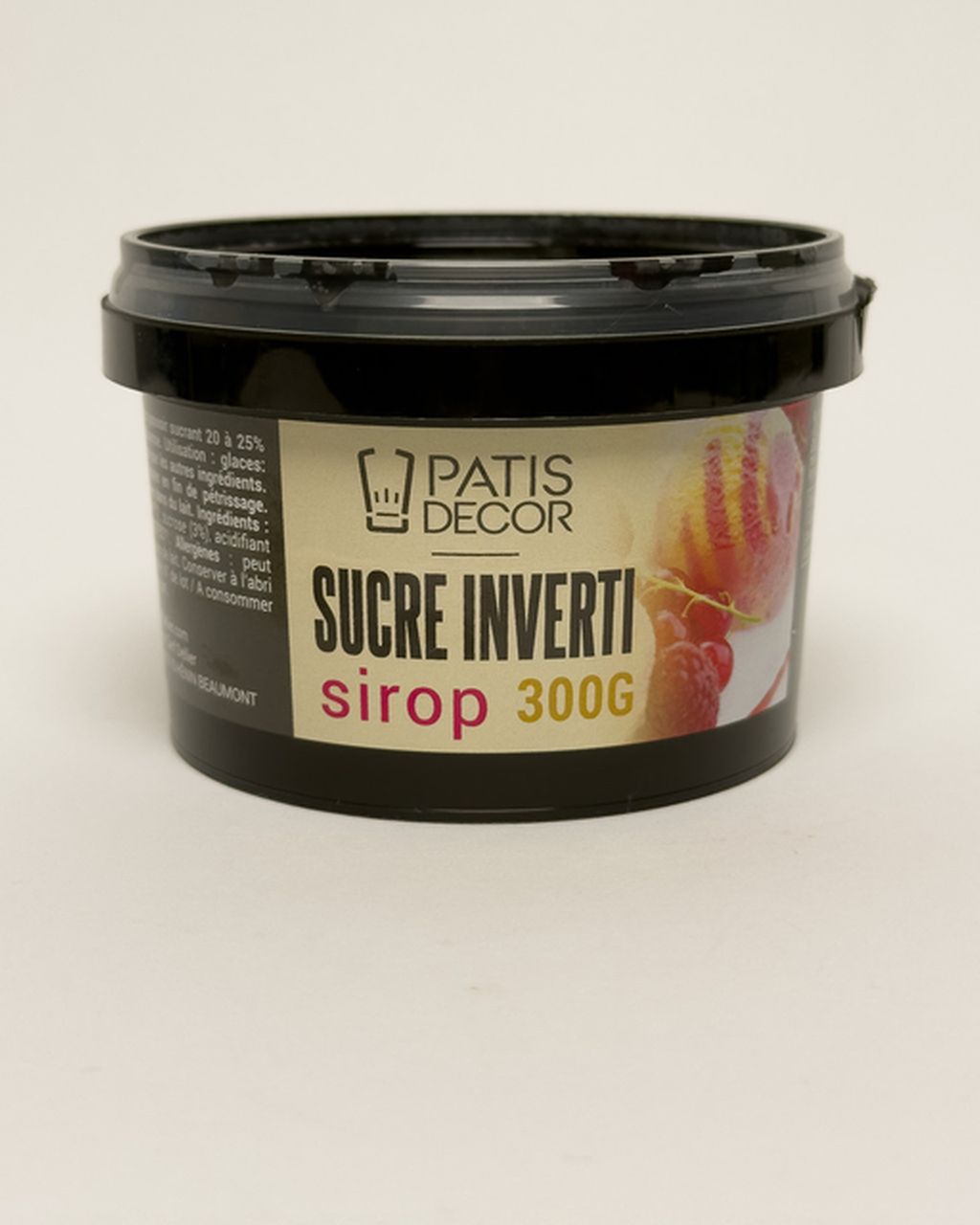
Invert sugar. It works similarly, but it attracts more moisture, so the fudge will be a bit softer. We explain exactly what it does in our article invert sugar: what it is and why pastry chefs use it.
Corn syrup. The American classic for fudge, and it works just like glucose. It's harder to find in the Czech Republic, though, so we don't use it here.
Honey. It also slows crystallization, but it brings its own flavor to the fudge and browns faster.
You can make fudge without any syrup at all, but it's much less forgiving of mistakes in the method. Glucose won't save you if you stir while it boils. It only gives you a bigger margin for error. You'll find more substitutes and their ratios in our article on what to use instead of glucose syrup.
For a 20 × 20 cm (8 × 8 in) pan, use 400 g sugar, 250 ml whipping cream (33% fat), 50 g butter, 30 g glucose syrup, 1 vanilla bean, and a pinch of salt. This is a starting ratio for the method above, not a recipe to memorize:
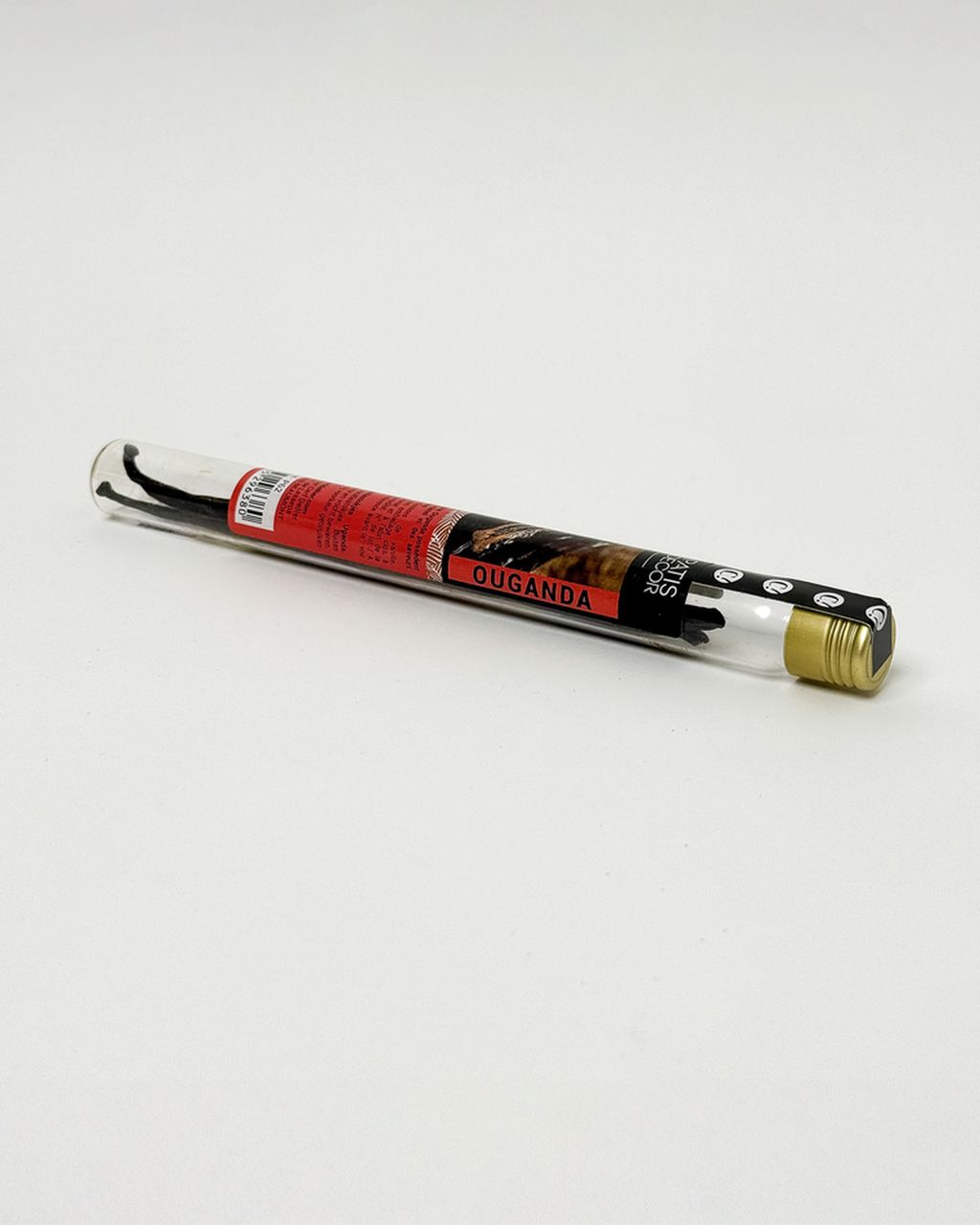
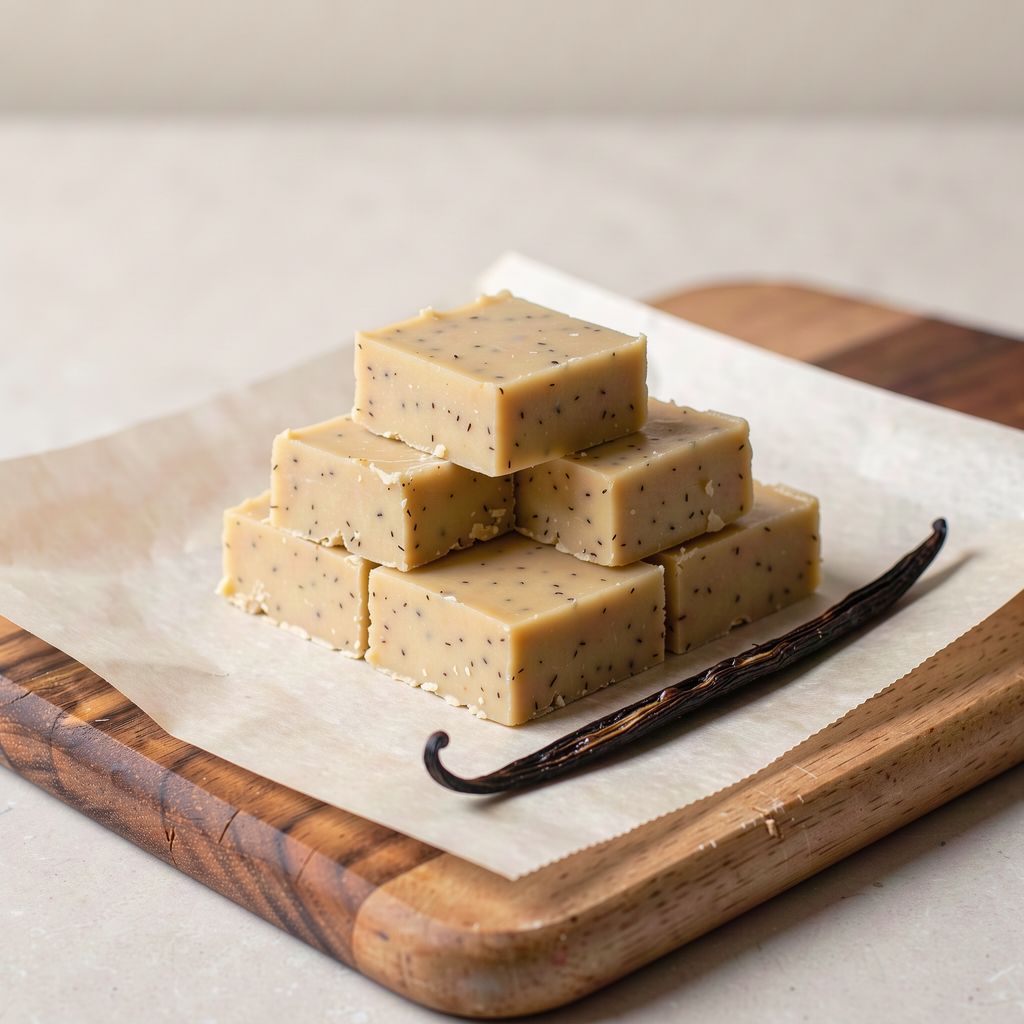
Vanilla: split the bean lengthwise and let it steep in the warm cream. Remove it before cooking. Add the scraped seeds only with the butter after cooking. A real vanilla bean gives fudge a different depth than bottled vanilla flavoring: you'll see dark flecks in the fudge, and the aroma lingers into the next day.
Sugar: white granulated. If you swap part of the sugar for cane sugar, the fudge will taste more caramelly and have a stronger flavor.
Salt: a pinch, or 1–2 g. Without it, fudge tastes only sweet.
If it's mainly the chewy caramel texture you're after rather than fudge, head to homemade caramels: how to cook and cut them. They're cooked in a similar way, they just aren't beaten.
Cooked chocolate fudge is true fudge with a crystalline structure. The quick version made with condensed milk and chocolate is a chocolate mass in which nothing crystallizes. Both are good, they're just different things:
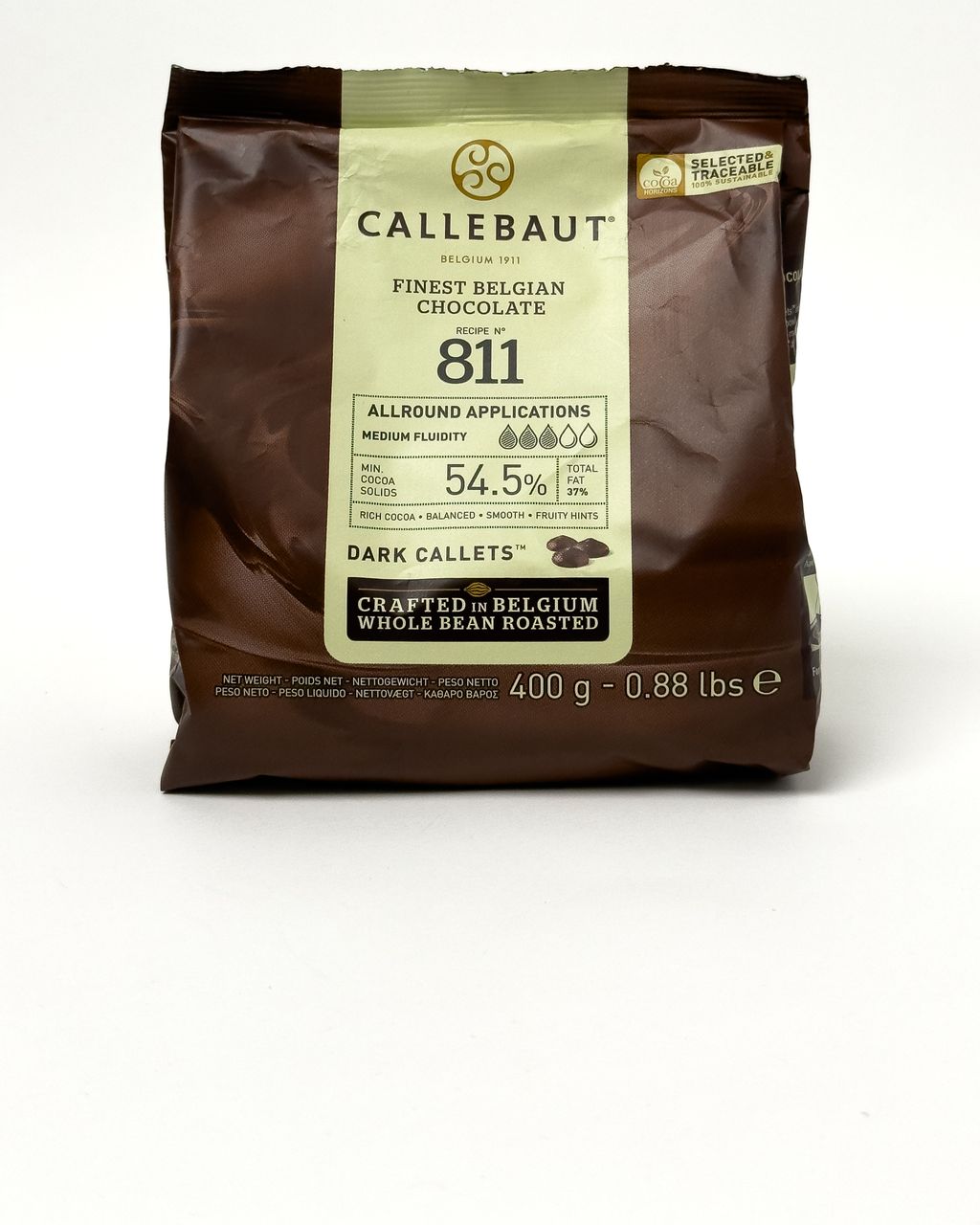
Cooked chocolate fudge. You follow the same method as above, except you put the chopped chocolate in the pot with the cream right at the start, so it melts before the syrup begins to boil. Add roughly 100 g of dark chocolate to the basic ratio. A tried-and-tested choice is Callebaut 811 callets: it has 54.5% cocoa, and the callets melt evenly. Cocoa butter also slows crystallization, so chocolate fudge tends to be smoother. It still needs beating, though.
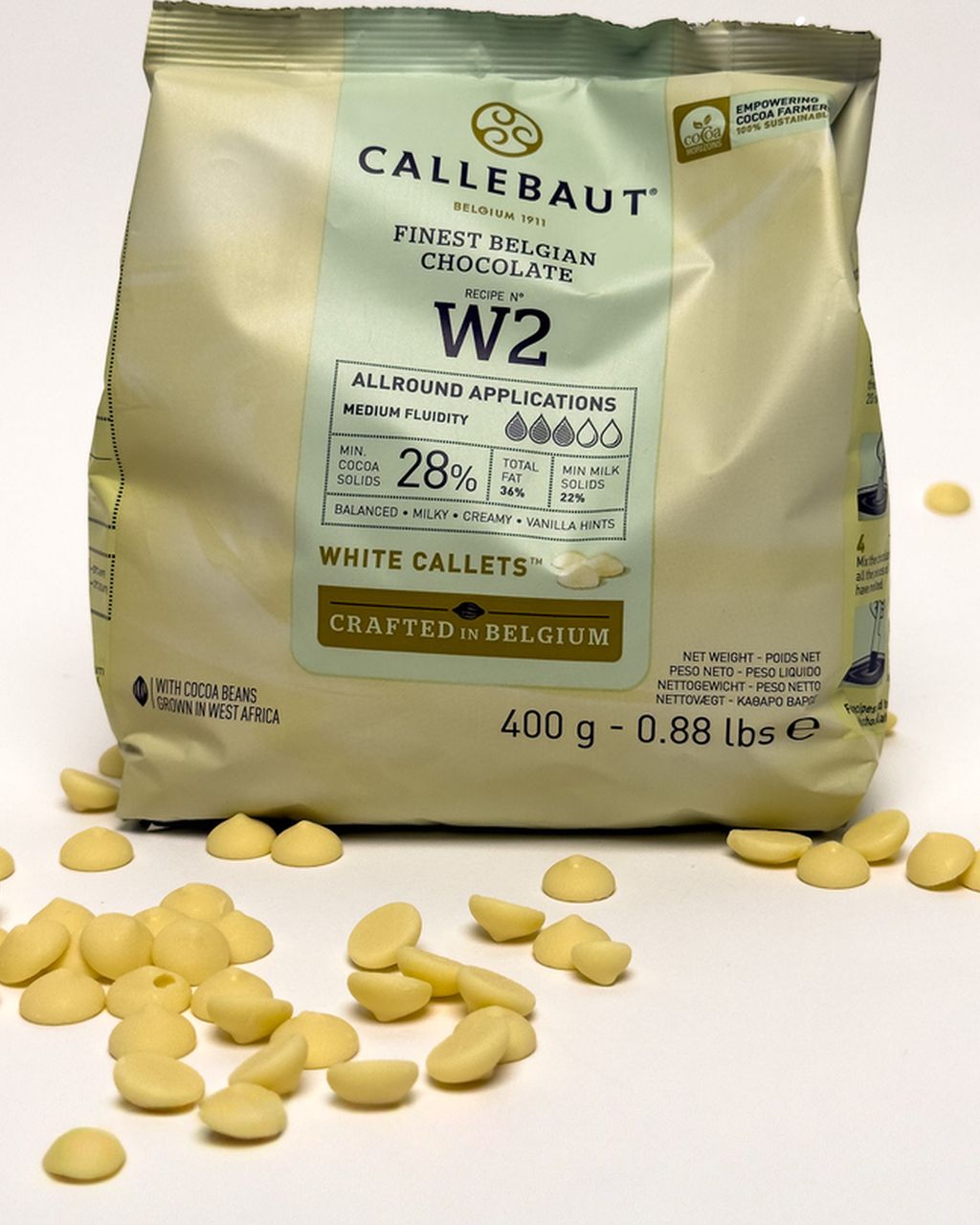
Quick no-cook fudge. You melt chocolate with sweetened condensed milk and leave it to set. You don't need a thermometer and it can't turn grainy, because no controlled crystallization takes place. It's softer and stickier. With white chocolate, such as Callebaut W2, you get a creamy white base for flavoring. Just watch out for overheating: white chocolate easily seizes over gentle heat.
If you want "real" fudge that crumbles into fine grains in your mouth, cook it. If you need a gift in 15 minutes, choose the quick version.
You can rescue grainy fudge by melting it down again and recooking it. The crystals aren't a fault of the ingredients but of the method, and the method can be repeated:
Put the cut or crumbled fudge back in the pot.
Add about 100–150 ml of cream or water for a batch made with 400 g of sugar.
Stir over low heat until everything has dissolved completely and not a single grain remains in the mixture.
Wash down the sides of the pot and carry on as the first time: cook without stirring to 113–115 °C, cool to 45–50 °C, then beat.
The added water evaporates again during cooking, so the result won't be thinner. The flavor may caramelize a little more. If the fudge is soft and hasn't set, the method is the same, but you don't need to add as much liquid: 2–3 tablespoons is enough to keep it from scorching.
Store fudge in a tightly sealed tin at room temperature, in a dry place away from sunlight and heat sources. Separate the layers with parchment paper so the pieces don't stick together. Air is the main enemy: fudge dries out in it and keeps crystallizing on the surface, so over time it turns coarse.
The fridge tends to dry fudge out, and moisture condenses on it when you take it out, so it doesn't need the fridge unless your home is hot. Homemade fudge is best while it's fresh, so make it only a few days before you plan to give it away. If fudge turns damp, changes smell, or develops mold, throw it away.
Use the soft-ball test: drip a little syrup into a glass of ice-cold water. If you can shape it into a soft ball with your fingers and it flattens straight away in your palm, the fudge is ready. Repeat the test every minute. It's much less accurate than a thermometer, so expect your first batch to turn out a little softer or firmer than intended.
Fudge separates when butter and cream are boiled over too high a heat, or when the mixture gets a sudden temperature shock, so the fat breaks out of the emulsion. Cook over medium heat and add the butter only after you take the pan off the heat. To rescue a separated mixture, melt it again over low heat with 2–3 tablespoons of hot cream and stir until smooth.
Yes, fudge made with milk works, but it takes longer to cook and scorches more easily. Milk has more water and less fat, so the fudge comes out firmer and a little less creamy. The thermometer and the method stay the same. Keep a close eye on the bottom of the pan.
Wait until the fudge has set completely at room temperature, ideally for several hours. Use a large knife that you dip in hot water and wipe dry. Lift the whole block out of the pan by the parchment paper and cut from the top with one firm press, not a sawing motion.
One recipe worth heating the oven for, one tip, and one deal from the shop. Nothing else.