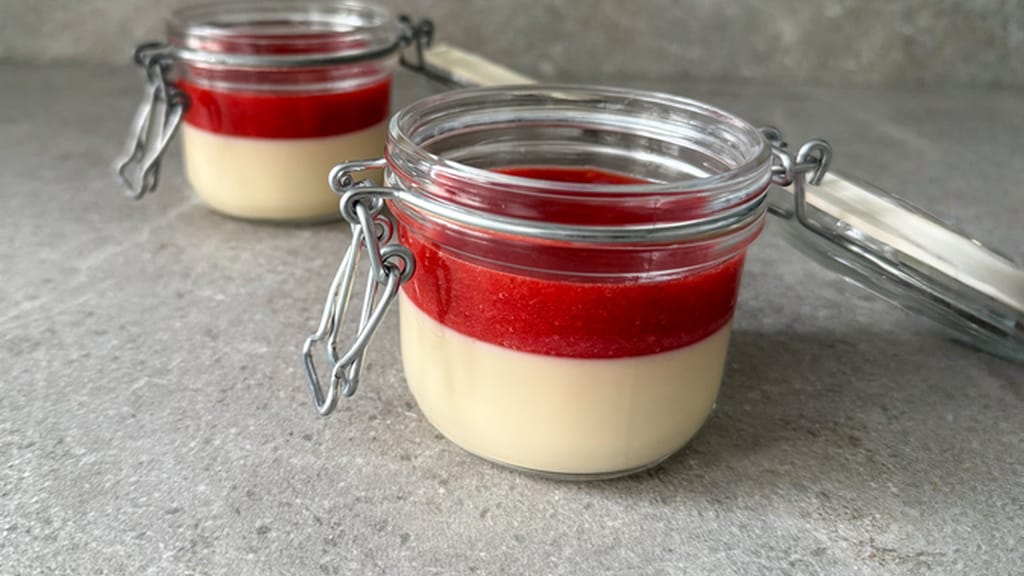
Panna cotta: a simple italian dessert ready in no time
How to Use Gelatine: Sheet vs Powder, Soaking & Ratios
Updated Oct 4, 2026
How to use gelatine: soak it in cold water, dissolve it at 50–60°C (120–140°F) — never boil it — stir it into a mixture that isn't ice-cold, and let it set in the fridge for at least 4 hours. That's the whole process. Everything else — whether to reach for sheet or powdered gelatine, how to convert between them, how many grams to use in a cream, and why your pineapple jelly never sets — you'll find below. The figures in this article are based on gelatine with a strength of 200 Bloom, the common standard in pastry work.
Gelatine always follows the same four steps: soak → dissolve → bring to the same temperature as the mixture → let it set. Whether you're using sheets or powder only changes the first step.
Soak in cold water for 5–10 minutes. The gelatine absorbs water and swells. Dry gelatine would clump up in warm liquid.
Dissolve at 50–60°C (120–140°F). Just stir it into warm liquid, or warm it briefly on its own. Never let it boil.
Stir into a mixture that's at room temperature or lukewarm. If the mixture is ice-cold, first blend a little of it into the gelatine, then fold in the rest.
Let it set in the fridge. It'll hold its shape after 4–6 hours, but reaches full firmness after about 12 hours.
Sheet and powdered gelatine work exactly the same way, as long as they have the same Bloom strength and you weigh out the same amount in grams. The real difference is just convenience and precision.
Sheet gelatine: you don't have to measure the soaking water, you just squeeze out the excess. The downside is that sheets vary in weight between brands, so "3 sheets" in a recipe doesn't actually tell you much.
Powdered gelatine: you can measure it to the gram, it's easy to convert between recipes, and it keeps for a long time. The catch is you need to weigh the soaking water too.
If you bake by weight, powder is the better bet. Powdered gelatine usually lists its strength on the pack, so you know exactly what you're working with (see our overview of gelling and binding ingredients).
Bloom is gelatine's strength rating: the higher the number, the firmer the gel from the same amount. It's measured in a lab, based on how much force it takes to press into a standard gel.
Sheet gelatine is often labelled by colour:
bronze: around 125–155 Bloom
silver: around 160 Bloom
gold: around 190–220 Bloom
platinum: around 235–265 Bloom
If the Bloom isn't listed on the pack, run a small test batch first. A recipe written for 200 Bloom will set softer with weaker gelatine and firmer with stronger gelatine.
At the same Bloom strength, the conversion is 1:1 by weight: 1 g of sheet gelatine = 1 g of powdered gelatine. Always work in grams, not sheets.
Find out how much one sheet weighs. Divide the pack weight by the number of sheets. Standard sheets weigh 1.7–3.3 g. If a recipe just says "4 sheets" with no further detail, assume about 2 g per sheet, so 8 g total.
Same Bloom: use the same number of grams of powder as the sheets weighed. Example: 3 sheets at 2 g each = 6 g of powder.
Different Bloom: gelatine manufacturers and pastry sources recommend a square-root formula over simple division for accuracy: new grams = original grams × √(original Bloom ÷ new Bloom). Example: a recipe calls for 10 g of 160 Bloom gelatine and you have 200 Bloom → 10 × √0.8 ≈ 9 g.
When the Bloom values differ by only a few points (up to about 20), the difference in grams is usually negligible. For a bigger gap, recalculate: in the example above, a 40-point difference works out to roughly 10% of the weight, and that's noticeable in a panna cotta or cream that needs to hold a clean slice.
Soak sheets in a large amount of cold water; sprinkle powder over 5–6 times its weight in cold water. Either way, 5–10 minutes is enough.
Sheets: submerge them one at a time so they don't stick together, in a bowl of cold water (ice is fine, since warmth makes them start to break down). After 5–10 minutes they'll feel like wet fabric. Lift them out, squeeze gently, and don't worry about how much water you used.
Powder: sprinkle it onto the surface of cold water, not the other way round. For 10 g of gelatine, use 50–60 ml of water. After 5–10 minutes it turns into a firm, rubbery mass. Count that water as part of the recipe's liquid — it's extra.
The water needs to be cold. In warm water, the outside of the granules dissolves before the inside can absorb water, leaving lumps with a dry centre.
Dissolve soaked gelatine at 50–60°C (120–140°F) and fold it into the cream gradually, starting with just a little cream. This avoids the two most common disasters: a weak gel and rubbery strands.
Into a warm liquid (milk for panna cotta, fruit purée): take the pot off the heat and just stir in the squeezed sheets or swollen powder. The warmth of the liquid is enough on its own.
Into a cold cream (whipped cream, mascarpone, curd cheese): dissolve the gelatine separately, in the microwave in 5–10 second bursts or over a water bath, until it's clear and liquid. Then stir in 2–3 tablespoons of the cream to cool and dilute it. Only then fold this mixture into the rest.
Why not boil it: boiling or prolonged heating breaks down gelatine's protein chains, so the gel ends up softer.
Why not add it straight to ice-cold cream: hot gelatine sets instantly on contact with a cold mixture, leaving you with rubbery strands and lumps instead of a smooth gel.
For 500 g of cream going into a cake that needs to hold a clean slice, use 7.5–10 g of 200 Bloom gelatine — roughly 1.5–2% of the weight. In general, the more a dessert needs to hold its shape, the higher the percentage. Calculate the percentage from the total weight of the mixture, including liquids.
Lightly set, wobbly (panna cotta, cream in glasses): 1–1.5% → 5–7.5 g per 500 g
Cream or mousse for a cake that holds a slice: 1.5–2% → 7.5–10 g per 500 g
Firm, sliceable fruit jelly: 2–3% → 10–15 g per 500 g
Marshmallows and gummy sweets: significantly more — follow the specific recipe
Add a bit more (roughly a quarter extra) if the mixture is very acidic, such as lemon or redcurrant, or if the cake will sit out at room temperature. Use less if you want a delicate panna cotta that barely holds its shape on the plate. Gelatine melts below body temperature, around 30–35°C (86–95°F), which is why it melts in your mouth and even a firm gelatine cream feels creamy on the tongue. The more you add, the more it turns rubbery.
Gelatine most often fails to set because of fresh fruit enzymes, boiling, or simply not using enough. Here's how to spot each cause:
Fresh fruit with enzymes: breaks down gelatine (see the box below).
Overheated gelatine: the gel is soft and sticky even if you measured correctly.
Not enough gelatine or too low a Bloom: typically happens when a recipe calls for "sheets" and your sheets are lighter than the author's.
Not enough time: after 2 hours in the fridge, a cream is only set on the surface. Give it at least 4–6 hours, or overnight for a cake.
Undissolved granules: powder that hasn't swollen or fully dissolved won't set properly. Dissolved gelatine should look completely clear.
At home, this usually happens with no-bake cheesecakes and fruit tarts. If your cream doesn't set, it's not necessarily ruined: gelatine can be dissolved again. Gently warm the mixture until it's liquid, add more soaked, dissolved gelatine, and let it set again. This doesn't work for whipped cream mixtures, though, since reheating would make them split.
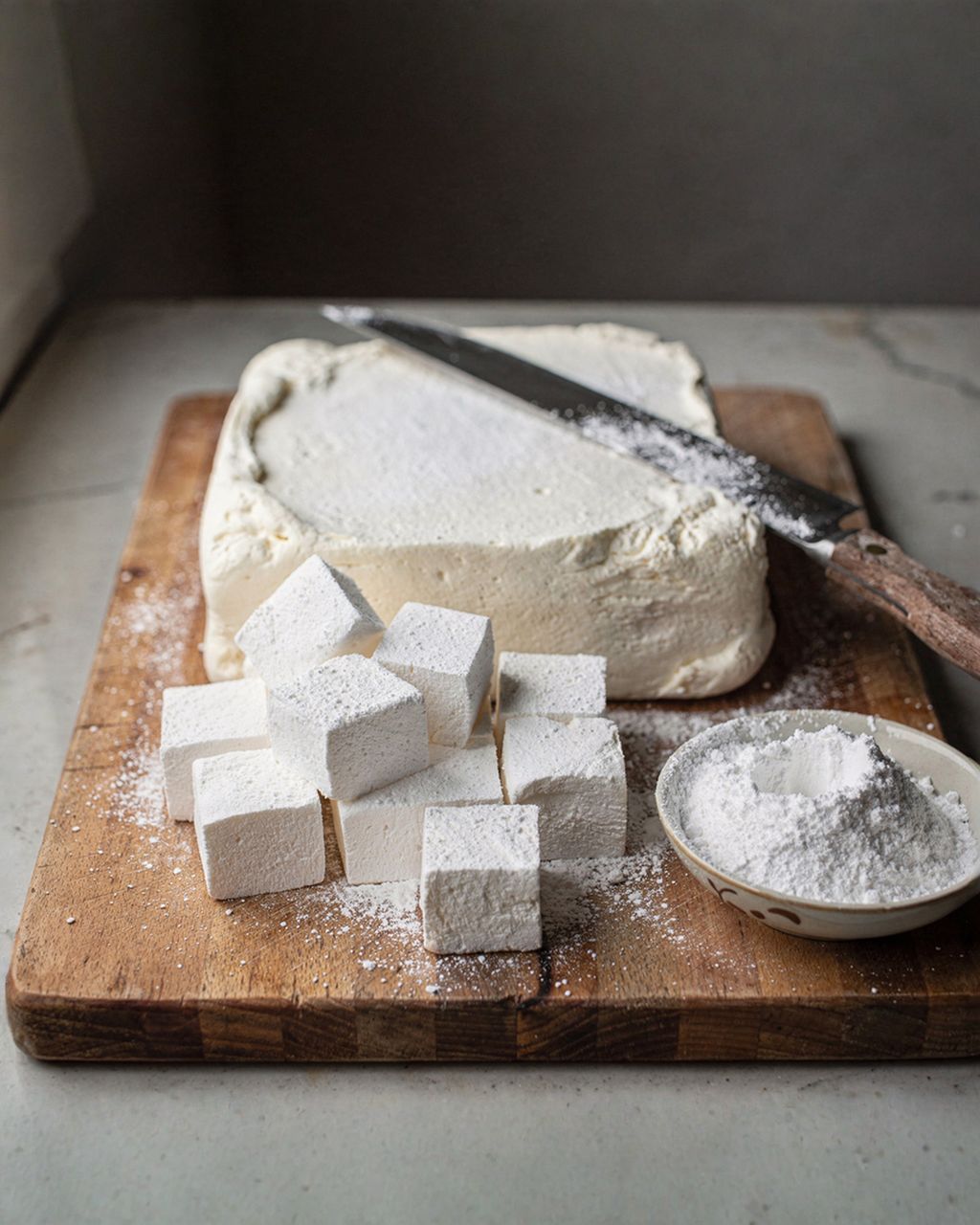
Panna cotta is the best place to practise with gelatine, because it's just sweetened cream, usually with vanilla, and gelatine — no whipping or layering to hide mistakes, so you'll know right away if you got the ratio right. Once you've got the hang of it, try a layered strawberry panna cotta with mint jelly, which combines a soft creamy layer with a firmer jelly in one dessert. For a completely different texture, where gelatine holds up whipped foam, try making homemade marshmallows.
Panna cotta: a simple italian dessert ready in no time
Panna cotta: the best dessert for learning how gelatine works
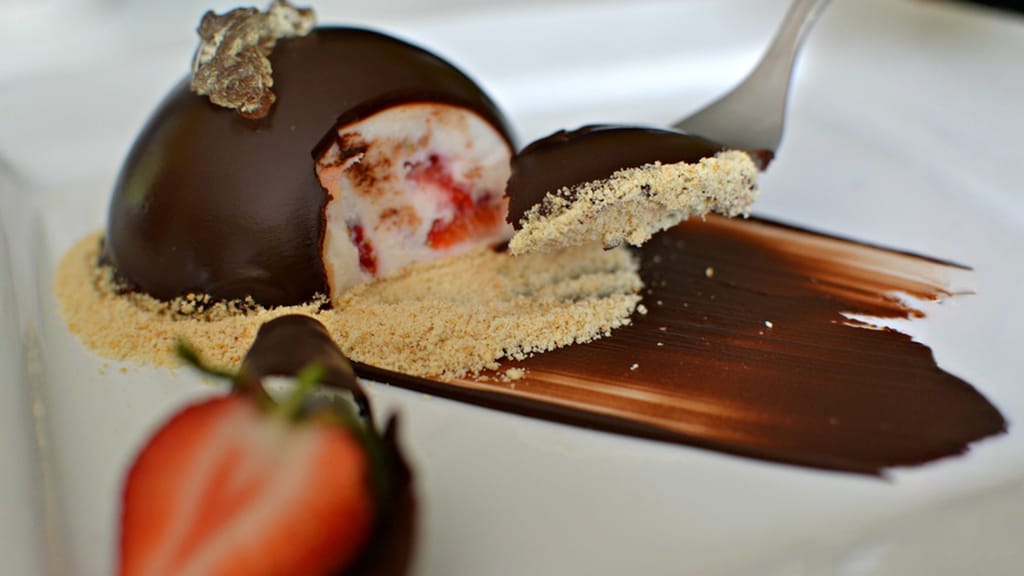
Strawberry panna cotta with chocolate and mint jelly
Strawberry panna cotta with chocolate and mint jelly: layers with different gelatine firmness
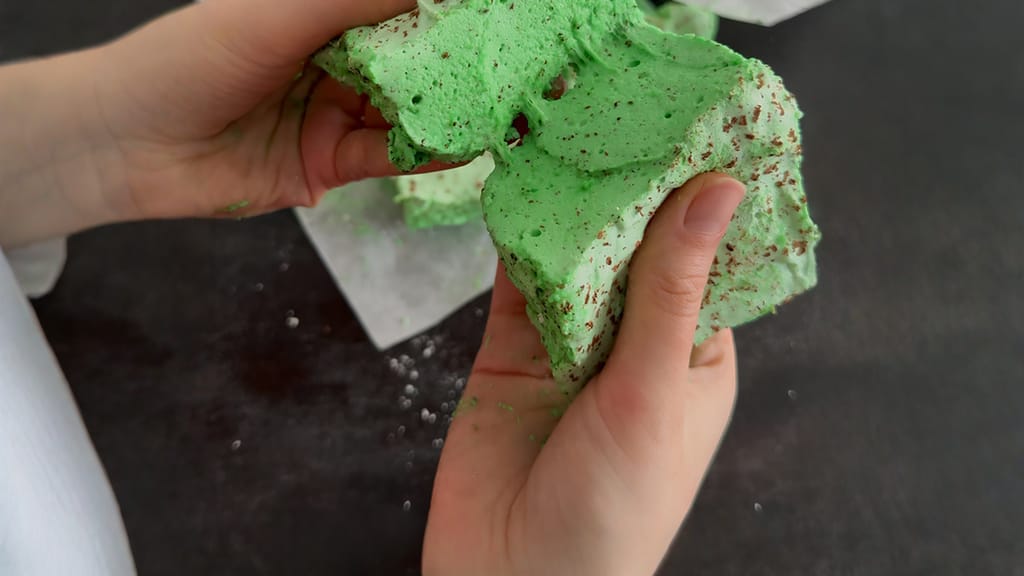
Homemade mint chocolate marshmallows
Homemade mint marshmallows with chocolate: gelatine that holds whipped foam
The usual swap for gelatine is agar, a plant-based setting agent made from seaweed. Unlike gelatine, agar needs a brief boil, sets at a much higher temperature (around 35–40°C), and its gel is firmer and more brittle — it snaps rather than wobbles. Strength varies by brand, but as a rough guide you need several times less agar than gelatine, so check the packaging and run a small test first.
Mousses and cream-based cakes made with gelatine freeze well, since the gelatine helps them hold their shape after thawing. Thaw them slowly in the fridge. Don't freeze plain fruit jelly or panna cotta, though: ice crystals disrupt the gel, so once thawed it weeps water and turns grainy.
A gelatine dessert typically keeps for 2–3 days in the fridge, covered so it doesn't dry out or pick up odours. Shelf life mostly comes down to the other ingredients rather than the gelatine itself: cream, curd cheese or fresh fruit spoil faster. Plain fruit jelly without dairy keeps a bit longer, but will eventually start weeping water and turning rubbery.
At the same Bloom strength, beef and pork gelatine behave essentially the same in the kitchen: you dose, soak and dissolve them identically. The real difference comes down to who can eat them. Choose beef gelatine if you're baking for someone who doesn't eat pork. Neither one is vegetarian.
Yes, gelatine will set in a reasonable amount of alcohol, for example in a cream with a splash of liqueur or a wine jelly. Just don't bring the alcohol to a boil together with the gelatine, and add a bit more gelatine if the alcohol content is higher, since the gel tends to be softer.
One recipe worth heating the oven for, one tip, and one deal from the shop. Nothing else.