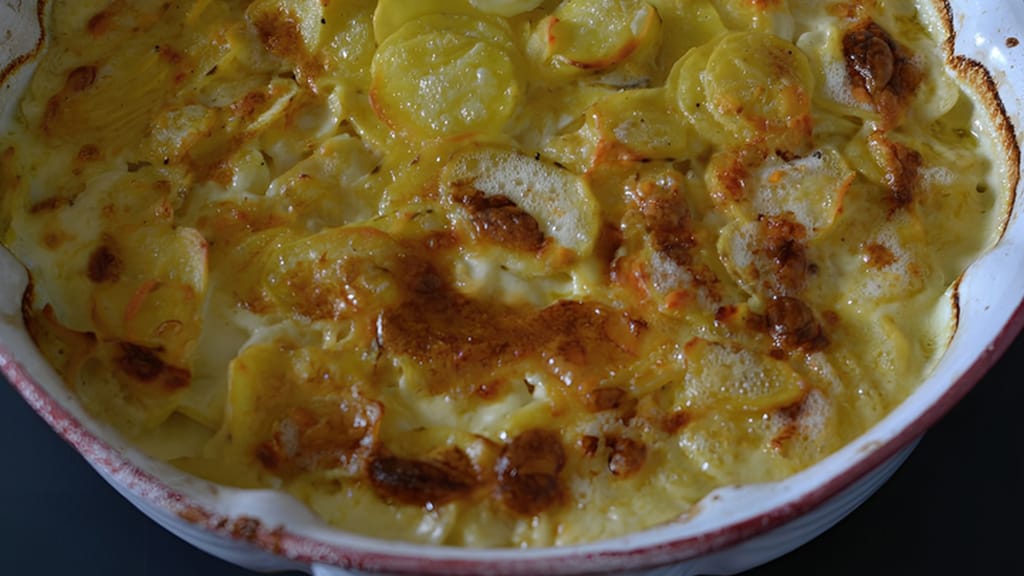
Divine potato gratin

Updated Jul 19, 2026
Kitchen tools make the difference between cooking being a joy or a chore — and you don't need dozens of them, just a handful of well-chosen ones. The essentials boil down to three things: a sharp chef's knife, a solid cutting board, and a digital scale. Beyond those, smart helpers like a mandoline, spiralizer, or sous-vide setup come in handy, along with electrics like a blender, stand mixer, and steamer pot. In this guide, we'll walk through what's actually worth buying, what to look for when choosing, and what to avoid.
There are four essentials every kitchen needs: a sharp chef's knife, a stable cutting board, a digital scale, and a set of measuring cups. With these you can handle about 90% of everyday cooking — everything else is a bonus. Let's go through each one.
A chef's knife (18-20 cm) is the one tool that's not worth skimping on — it handles 80% of the work at the cutting board. Look for a well-balanced blade made of hardened steel with a hardness of roughly 56-62 HRC: lower values are easier to sharpen, higher values hold an edge longer but are more brittle. The handle should feel comfortable in your hand, with the blade flowing smoothly into the grip so it doesn't dig into your palm during longer prep sessions.
Watch out for cheap, 'tinny' imitations — if the blade bends easily and the manufacturer doesn't state a hardness rating at all, leave it on the shelf. That's the most common mistake people make when buying a knife.
Sharpness comes down largely to maintenance: wash by hand, dry immediately, store it in a block or on a magnetic strip (not tossed loose in a drawer), and realign the edge regularly with a honing steel between sharpenings. We covered this in detail in our article How to Sharpen a Knife Properly at Home.
For cutting, reach for a wooden or bamboo board — it's gentler on your knife's edge and more hygienic than plastic. That might sound surprising, but it's backed up by a classic study from the University of Wisconsin-Madison: on wood, most bacteria applied to the surface die off within minutes, whereas bacteria survive in the scratches of worn plastic boards even after washing. Plastic also sheds microparticles into your food as you cut.
Wood needs a bit of care in return: wash it by hand (never in the dishwasher), don't let it soak in water, and oil it occasionally with a food-safe (e.g. mineral) oil to prevent cracking. Keep a separate board for raw meat, ideally a different colour, so you don't cross-contaminate ingredients.
A digital scale is the cheapest route to consistent results, especially in baking, where dough can tell the difference even from an extra 10 g of flour. Weigh rather than measure by volume: a 'cup of flour' weighs something different every time, but 120 g is always 120 g. Choose a scale with a tare function (to zero out the weight of the container) and 1 g precision. A set of stainless steel measuring cups is handy too, for liquids and quick, by-eye cooking.
Once you've got the basics covered, these three tools open up new techniques: a mandoline for fast, even slicing, a spiralizer for vegetable 'noodles', and a sous-vide setup for precisely cooked meat. None of them is essential — but each does something a knife simply can't match.
A mandoline slices vegetables into perfectly even pieces faster and more precisely than a knife — ideal for gratins, chips, or courgette carpaccio. Even thickness (say, 1-2 mm) means even cooking and a nicer-looking plate.
Divine potato gratin
Heavenly Gratin Potatoes — a great showcase for your mandoline
A spiralizer turns courgette, carrot, or celeriac into long noodles in seconds — a cheaper, lighter alternative to pasta. Just sauté courgette 'spaghetti' briefly (2-3 minutes), otherwise it releases water and falls apart. It picks up sauce beautifully, so it works anywhere you'd normally reach for pasta.
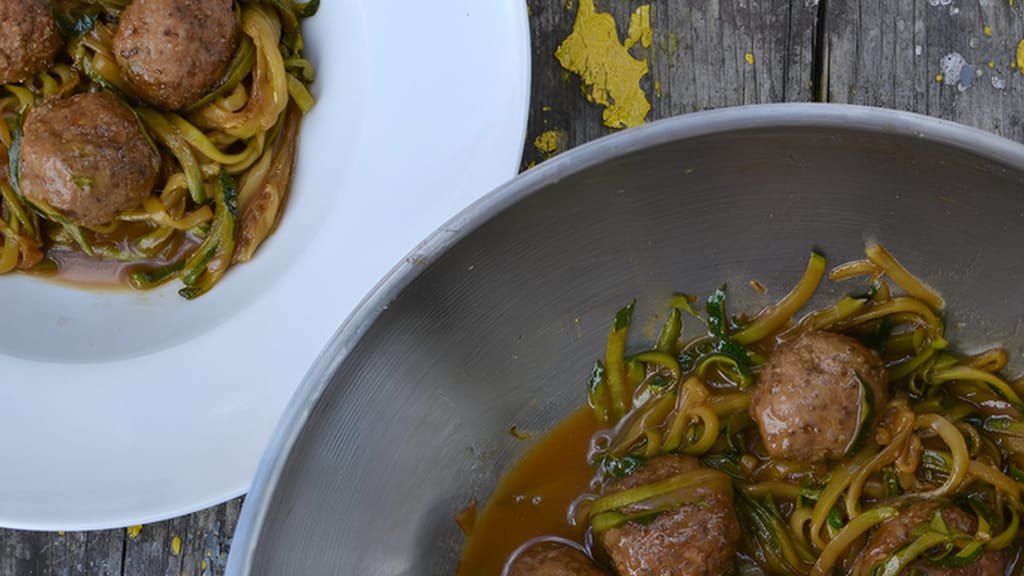
Slightly spicy meatballs with zucchini noodles
Lightly Spicy Meatballs with Spiralized Courgette Noodles
Sous-vide cooks vacuum-sealed food in a water bath at a precise temperature, so it's practically impossible to overcook your meat. For a medium-rare steak, hold it at 54-56°C for roughly 1-2 hours depending on thickness, then sear it quickly in a hot pan just to build a crust. For food safety, cooking guidelines recommend not holding meat below 54°C for longer than about 2.5 hours. You can use the same technique for salmon or root vegetables.
Three appliances get the most use in a typical household: a blender for smoothies and creamy soups, a stand mixer for dough and whipping, and a steamer pot for gentle cooking. For all three, what matters is power and how easy they are to clean — anything that can't be taken apart and washed quickly will end up gathering dust.
A blender handles smoothies, creamy soups, sauces, and even nut butters. For silky-smooth smoothies, look for a motor of at least 600-1000 W with multiple speed settings; for hot soups, an immersion (stick) blender is more practical, letting you blend straight in the pot. Rinse the blades right after use — dried-on residue is much harder to clean and shortens the appliance's lifespan.
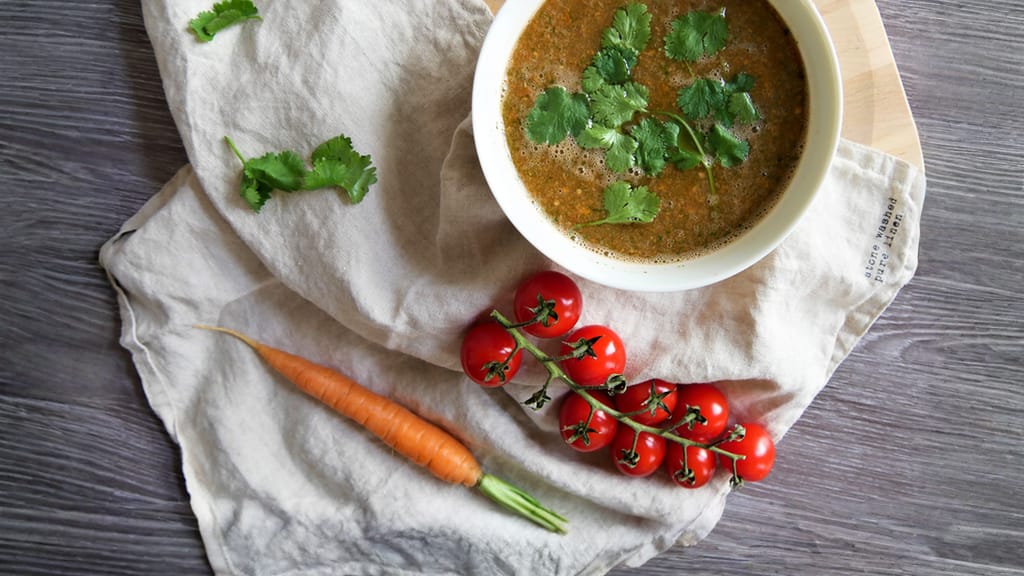
Asian carrot and coriander smoothie
Asian-Style Smoothie with Carrot and Coriander — a quick job for your blender
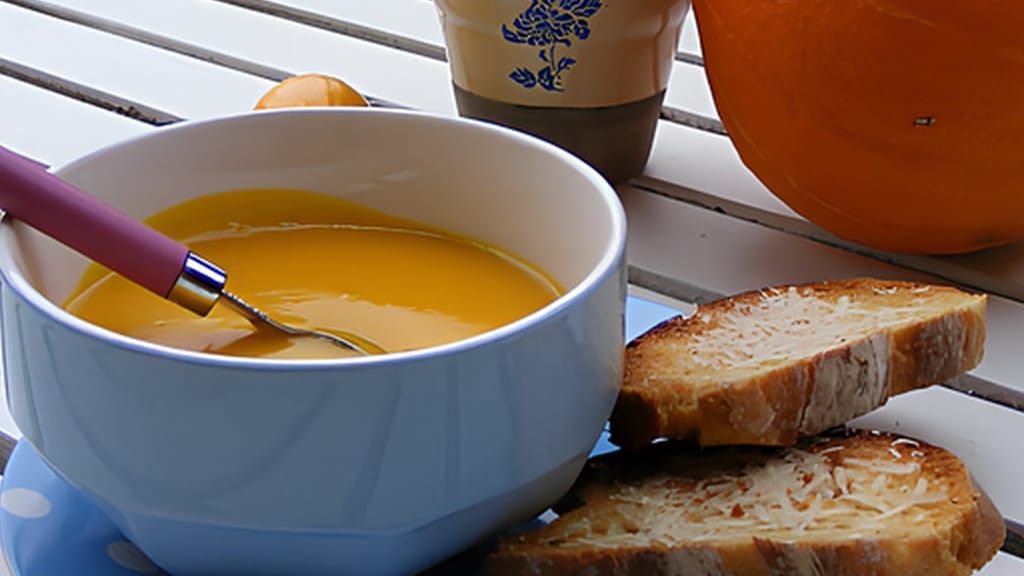
Pumpkin soup – the tastiest soup in autumn colors
Creamy Pumpkin Soup — a velvety soup your blender will nail
A stand mixer kneads even heavy dough, whips cream and egg whites, and with the right attachments can replace a meat grinder or juicer. It's especially worth it if you bake — kneading yeasted dough by hand gets old fast. Check the motor power and bowl capacity (3-5 litres for a typical household), and how many attachments come included. Wash the removable parts regularly to keep it running at full power.
A steamer pot cooks gently: steam preserves more vitamins and colour than boiling in water. According to nutrition sources, boiling broccoli in water can destroy over 70% of its vitamin C, while steaming loses only around 10-15% — because water-soluble nutrients don't leach out into a cooking liquid. Bonus: nothing burns under steam, and with a timer you can cook multiple tiers at once — rice, fish, and vegetables together.
A tidy kitchen mostly comes down to using vertical space well and giving every tool a proper home. Four tried-and-tested tricks:
Drawer organisers — divide up a drawer for cutlery, utensils, and odds and ends, so you're not digging around every time.
Magnetic knife strip — saves drawer space, protects the blade edges, and keeps your knives within easy reach.
Spice rack — a rotating or wall-mounted one frees up counter space.
Hooks and wall shelves — hang up pots and pans and reclaim your worktop.
Want to cut down on single-use plastic? Most kitchen items have a durable alternative that pays off financially in the long run too:
Silicone baking mat instead of parchment paper — reusable, heat-resistant, and totally non-stick.
Wooden or bamboo cutting board instead of plastic — a fast-renewing material that's gentler on your knife's edge.
Glass and stainless steel instead of plastic containers — they don't leach anything into food, hold on to smells better, and are fully recyclable.
Beeswax wraps instead of plastic film — they mould with the warmth of your hands and keep food just as fresh.
There's no point buying everything at once. The priority is clear: start with one good chef's knife, a wooden cutting board, and a digital scale — that trio will cover most of your cooking. Then add on based on what you actually cook: baking a lot? get a stand mixer. Focused on healthier sides? a steamer pot or spiralizer. Chasing the perfect steak? go for sous-vide. Buy quality gradually, rather than a pile of cheap gadgets you'll throw out within a year.
A full sharpening is usually only needed 1-3 times a year, depending on how much you use the knife. In between, just realign the edge with a honing steel — do it before any longer cooking session if you like. Honing doesn't sharpen the blade, it just straightens the microscopically bent edge, so the knife stays sharp longer. Reach for the sharpener only once the knife stops gliding smoothly through a tomato.
No, wooden or bamboo boards don't belong in the dishwasher. Hot water and prolonged soaking make the wood swell and then dry out, causing it to crack and warp. Wash it by hand, quickly, and dry it right away; oil it occasionally with food-safe (e.g. mineral) oil so it lasts for years.
A sharp knife and a bit of patience can stand in for a mandoline, or a vegetable peeler for thin slices and ribbons. Instead of a spiralizer, you can make veggie noodles with a regular peeler (wide 'pappardelle'-style strips) or a coarse grater. The result won't be as uniform, but it's more than good enough for a single meal.
It's worth it if you often cook steak, poultry, or fish and want the guarantee that you won't overcook it. Immersion sous-vide circulators are cheaper now than they used to be and take up very little drawer space. If you mostly cook soups and simple side dishes, a good knife or a steamer pot is a more practical investment.
No — one well-chosen mid-range chef's knife will outperform an entire cheap set. What matters is hardened steel with a stated hardness (around 56-62 HRC), good balance, and how it feels in your hand — not the logo on the blade. Better to put your money into one quality knife and a honing steel than a block of ten mediocre ones.
One recipe worth heating the oven for, one tip, and one deal from the shop. Nothing else.