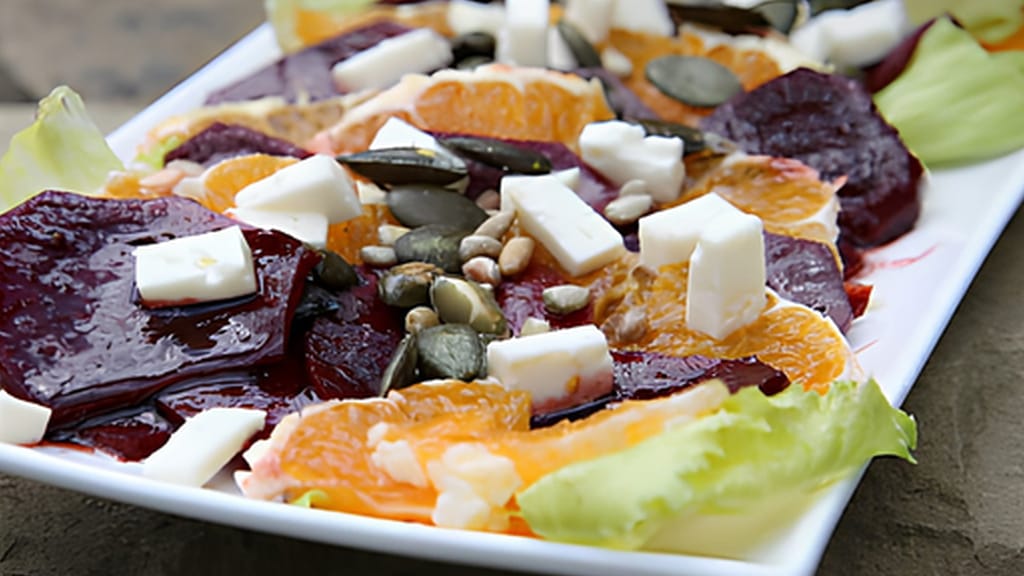
Red beet and orange carpaccio

Updated Jul 19, 2026
You can sharpen a knife at home in 10–15 minutes on a whetstone: hold the blade at a 15–20° angle, run long strokes alternating between both sides, working from a coarser grit down to a fine one, until you feel a slight burr along the edge, then finish it off on the fine stone. No workshop or professional service needed. A sharp knife doesn't just make cutting faster – it's also safer, since it won't slip off the skin of whatever you're cutting and force you to push harder. In this guide we'll walk through the whole process step by step: the right angle, choosing your tool and stone, stroke technique, common mistakes, and how to keep that edge as long as possible.
You can sharpen a knife at home on a whetstone in six steps:
Soak the stone. Submerge a Japanese water stone for 5–10 minutes, until bubbles stop rising; a diamond stone just needs a splash of water.
Find the 15–20° angle between the blade and the stone and hold it steady the whole time – this is the single most important part of sharpening.
Run long strokes from the heel of the blade to the tip, as if you were shaving a thin slice off the stone, with light, even pressure.
Alternate sides on the coarser grit (around 400–1000) until you can feel a fine burr with your fingernail running the full length of the edge on the opposite side – that's the sign a new edge has formed.
Move to a fine grit (3000–6000) and use the same strokes to remove the burr and polish the edge.
Check the result. A clean cut through a sheet of paper, or through a ripe tomato that slices under the knife's own weight, means you're done.
The whole process takes 10–15 minutes. If the edge isn't catching the first time, it's usually because the angle wandered – slow down and watch the angle rather than pressing harder.
Sharpening and honing are not the same thing: sharpening removes metal and creates a brand-new edge, while honing removes no metal at all – it just straightens a microscopically bent edge back into line. Most knives that seem "blunt" aren't actually worn down; their edge has simply folded over to one side.
That's why the practical rule in professional kitchens is simple: run the knife over a honing steel two or three times a week before cooking, but you only need to actually sharpen it on a stone about once or twice a year – depending on how often you cut and what surface you cut on. A pull-through sharpener sits somewhere in between: it restores an edge fast, but removes more material and doesn't let you choose your own angle.
Most kitchen knives are sharpened at 15–20° per side. European and American knives (Wüsthof, Zwilling) traditionally sit around 20°, while Japanese knives like the santoku or gyuto tend to be sharpened finer, around 15°, since they're made from harder steel that can support a thinner edge.
How to estimate the angle without a gauge: lay the blade flat against the stone (0°), tilt it up to a vertical half-turn (roughly 45°), then halve that height again – you're now at about 20°. A stacked coin or a plastic angle guide can help you keep it consistent. As a rule, a smaller angle gives a sharper but more delicate edge, while a larger angle is more durable but coarser.
There are three tools you can use to sharpen a knife at home – a whetstone, a pull-through sharpener, and an electric sharpener:
Whetstone – the most precise and gentlest option, giving you full control over angle and grit. It takes a bit of practice.
Pull-through sharpener – the fastest option; you just pull the knife through the slots. The angle is fixed and it removes more metal.
Electric sharpener – the most convenient option, capable of handling even very blunt blades. It's pricier and strips the most material off the blade.
If you're serious about cooking, it's worth learning to use a stone – it lasts for years and is the gentlest option for your knives.
A whetstone is the most versatile tool, and it's the only one that gives you full control over both the angle and the fineness of the edge. It comes in various grits, so a single double-sided stone will take you from coarse sharpening all the way through to final polishing. In exchange for that precision, it asks for a bit of patience and practice – the edge is shaped by your hand, not a machine.
A pull-through sharpener is built for quickly restoring an edge without any real skill required: pull the knife through the preset-angle slots a few times, and within seconds it's cutting better. It's a great quick fix before cooking, but it can't match the precision of a stone, and its ceramic or carbide slots strip more material off the blade – so don't use it every day.
An electric sharpener bets on speed and convenience, and it's especially good for reviving heavily dulled blades. It usually has several stages, from coarse grinding to a fine finish. Just be ready for a higher price tag, and know that the spinning wheels remove more metal from the blade than any other method – it's best to avoid this one on expensive or thin Japanese knives.

For home use, one double-sided stone with roughly 1000/3000 grit is enough – the coarser side sharpens, the finer side polishes. Your main options are Japanese water stones and diamond stones.
Japanese water stones are soaked in water before sharpening and produce a very fine, sharp edge – they're the top choice if you want maximum sharpness and don't mind a bit of upkeep. Diamond stones cut faster and more aggressively, can handle hard steel, and don't need soaking, which makes them great for quick maintenance and tougher blades. In short: water stone for fineness, diamond stone for speed and hard knives.
Grit describes how coarse the sharpening surface is – the higher the number, the finer it is. As a guide:
200–400: repairing a chipped or very blunt edge and reshaping the blade.
800–1000: the standard sharpening grit that most sharpening sessions start with.
3000–6000: polishing and final sharpness for smooth, clean cuts.
8000 and up: a mirror-polish finish, mainly appreciated on Japanese knives.
Don't skip grits: jumping straight from 400 to 3000 means the fine stone has to smooth out all the deep scratches by itself, which means more work, not less.
A stone will last for years if you rinse it after use, clear off the metal swarf, and let it air-dry freely. With a diamond stone, also give it an occasional scrub with a soft brush under running water to loosen any metal buildup on the surface. Water stones tend to dish out in the middle with use – flatten them from time to time with a flattening stone (or coarse sandpaper on a flat surface), otherwise a dished stone will throw off your angle.
These are the most common mistakes that ruin the result:
An inconsistent angle – even a slight wobble of the hand will round the edge instead of sharpening it. Keep the same tilt throughout, using a guide if it helps.
Too much pressure – heavy pressure doesn't speed up sharpening, it just damages the edge. Let the stone do the work and add only light pressure.
Skipping grits – work through the grits in order, from coarse to fine, so the fine stone doesn't have to smooth out deep scratches.
Not removing the burr – if you don't strip the burr off on the fine side after sharpening, the edge folds over quickly and the knife soon feels "blunt" again.
A dry water stone – without water it clogs with metal swarf and stops cutting. Keep splashing it as you go.
The same advice applies across the board: slow down, watch the angle, and check the edge as you go – patience matters more than force here.
An edge lasts longest when you wash the knife by hand, store it separately from other dishes, and cut on wood or plastic rather than glass or stone. That way you'll need to sharpen it much less often.
Wash the knife by hand after every use in warm water with a bit of mild dish soap, and dry it right away with a soft cloth. Skip the dishwasher – hot water, harsh detergent tablets, and knocking against other dishes damage both the edge and the handle, and leave marks on the blade.
Store knives so the edge never touches other metal. A magnetic wall strip, a wooden knife block, or a plastic edge guard are all ideal – knives tossed loosely into a drawer knock against each other and dull quickly.
Between sharpenings, maintain the edge with a honing steel: a few strokes two or three times a week straighten the bent edge and put off the need for sharpening. Check the knife's condition now and then by cutting paper or a tomato – once the knife starts skidding off the skin and you have to push, it's time to hit the stone again.

You'll notice the difference between a sharp and a dull knife most where thin, clean cuts matter – carpaccio, paper-thin vegetable slices, finely chopped herbs, or filleting fish. A dull knife will crush herbs and tear slices instead, letting both juice and flavor escape. Technique plays a big role here too: take a look at how to properly chop an onion, and a sharp knife will make that job even more enjoyable.
Red beet and orange carpaccio
Beetroot and orange carpaccio – paper-thin slices like these really show off just how sharp a knife can be.
A regular household knife only needs a proper sharpening on a stone about once or twice a year. In between, keep it aligned with a honing steel two or three times a week – that just straightens the edge rather than removing metal, so it puts off the need for sharpening. If you cook and cut a lot every day, you'll need to sharpen more often; let the knife tell you, by how easily it slips off the skin of what you're cutting.
You can't sharpen a serrated knife on a flat stone in the usual way – the edge sits inside each individual tooth. At home, you can revive it by sharpening each tooth separately with a tapered ceramic or diamond rod, angled to match the bevel of the teeth. Since serrated knives dull very slowly, most people can go years without needing to sharpen theirs at all.
The unglazed ceramic ring on the bottom of a mug works as an emergency honing surface and can freshen up a knife in a pinch, but it won't create a real edge and will scratch up the mug. Never sharpen a knife against another knife – you'll just ruin both edges. For a proper result, you need a whetstone or a sharpener.
It depends on the type of stone. Japanese water stones should soak for 5–10 minutes, until bubbles stop rising from them, and you keep splashing them with water as you sharpen. Diamond and oil stones aren't submerged – just splash a diamond stone with water, and wipe an oil stone with a drop of oil. Without any liquid, the surface clogs up with metal swarf and stops cutting.
The most common culprit is cutting on a hard surface – glass, stone, and ceramic will dull an edge within just a few cuts. Switch to a wooden or plastic board, wash the knife by hand instead of in the dishwasher, and hone it with a steel between sharpenings. A too-thin angle on cheaper, softer steel can also be to blame, since that kind of steel simply can't hold an edge for long.
One recipe worth heating the oven for, one tip, and one deal from the shop. Nothing else.