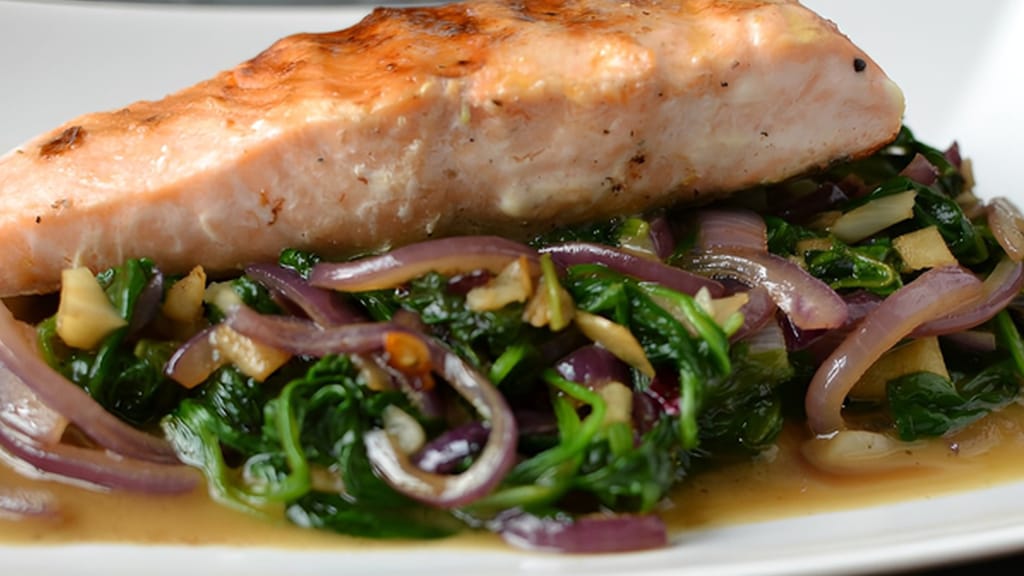
Smoky salmon with quick wilted spinach

Updated Jul 19, 2026
The right kitchen knife depends on the job: a sturdy blade for meat, a light santoku or chef's knife for vegetables, a serrated blade for bread, and a holed or wire knife for cheese. To get started, three knives are really all you need: a large chef's knife (or santoku), a small paring knife, and a serrated bread knife. In this article, we'll cover how blades differ, which steel and length to choose, and how to keep a knife sharp — because a sharp knife not only works better, it's also safer than a dull one.
For a typical household, three knives are enough to cover roughly 90% of the work:
Chef's knife or santoku (7–8 in / 18–20 cm) — an all-rounder for meat, vegetables, and herbs.
Paring knife (3–4 in / 8–10 cm) — for peeling, trimming, and detailed in-hand work.
Serrated bread knife (8–10 in / 20–25 cm) — for bread, but also great for tomatoes and soft fruit.
Everything else — filleting, butcher's, cheese, nakiri — is a specialty knife you buy once you actually need it. If you'd rather get by with just one knife, check out our guide on how to choose an all-purpose kitchen knife.
For meat, you choose your blade by the task: a butcher's or slicing knife for large cuts and portioning, a filleting knife for fish and boning, and a cleaver for bones and cartilage. A good all-purpose chef's knife will handle most everyday boneless meat cutting.
Butcher's / slicing knife — a long (8–10 in / 20–26 cm), narrow blade for smooth, single-stroke slicing of roasts or steaks, no "sawing" needed.
Filleting knife — a thin, flexible blade (6–7 in / 15–18 cm) that follows the contours of bones and skin; perfect for fish and poultry.
Cleaver — a heavy, tall blade; its weight does the work when breaking down bony cuts. Don't use it as an all-purpose vegetable knife, even though it might look the part.
Boning knife — shorter and stiffer than a filleting knife, for separating meat from bone.

A longer blade lets you make one smooth, continuous stroke through a whole piece of meat, so you're not tearing it with repeated cuts. But steel and its hardness (measured on the HRC scale) matter more: softer European steel (54–56 HRC) sharpens more easily and is more forgiving, while harder Japanese steel (58–62 HRC) holds its edge longer but is more brittle and harder to straighten. Stainless steel resists corrosion and needs little upkeep; carbon steel tends to get sharper but rusts if not dried right away. Cutlers typically sharpen Japanese blades to around 15° per side, and European blades to around 20° — a flatter angle cuts better, a steeper one is more durable.
Smoky salmon with quick wilted spinach
Smoky-flavored salmon with quick sautéed spinach — a fish dish where a filleting knife really shines.
For vegetables, a light knife with a thin blade works best: a santoku for quick slicing and chopping, a chef's knife for all-purpose rocking-motion work, and a paring knife for detailed in-hand tasks. The thinner and sharper the blade, the cleaner the cut and the less crushed the flesh.
A santoku has a straight edge and a sheepsfoot tip — you cut with it by pushing straight down, not rocking it. It's usually shorter (5–7 in / 13–18 cm) and nimble, great for onions, carrots, and herbs. A chef's knife has a curved belly, so it naturally rocks on the board (the "rock cut"), letting you quickly chop through a big pile of vegetables.
Many santoku knives have scalloped indentations (granton edge) along the blade — air pockets between the edge and the food that stop things from sticking. This makes the biggest difference with starchy vegetables like potatoes or beets, and with slicing, where slices would otherwise cling to the side of the blade.
Material determines how much upkeep a knife needs: stainless steel is virtually maintenance-free, while carbon steel holds a sharper edge but needs to be dried and occasionally given a drop of oil. For hard vegetables (squash, celery), choose a sturdier, thicker blade so the edge doesn't chip.
You slice bread without crushing it by using a serrated knife with a long sawing motion, not downward pressure. The serrations act like a little saw: they bite into the crust and cut through it without you having to squash the crumb. A straight blade tends to crush the crust and squish the loaf instead.
Fine, tightly spaced serrations — give a cleaner cut on soft bread: baguettes, rolls, pastries, tomatoes.
Coarse, pronounced serrations — bite through tough crusts more easily, like rye, whole-grain bread, or a crusty sourdough.
An ideal blade length is 8–10 inches (20–25 cm), so you can cut across a whole loaf in one stroke. Serrated knives are trickier to sharpen than straight ones — either have them professionally sharpened, or use a sharpener with a tapered rod designed to reach into each individual tooth. Wash by hand and dry immediately.
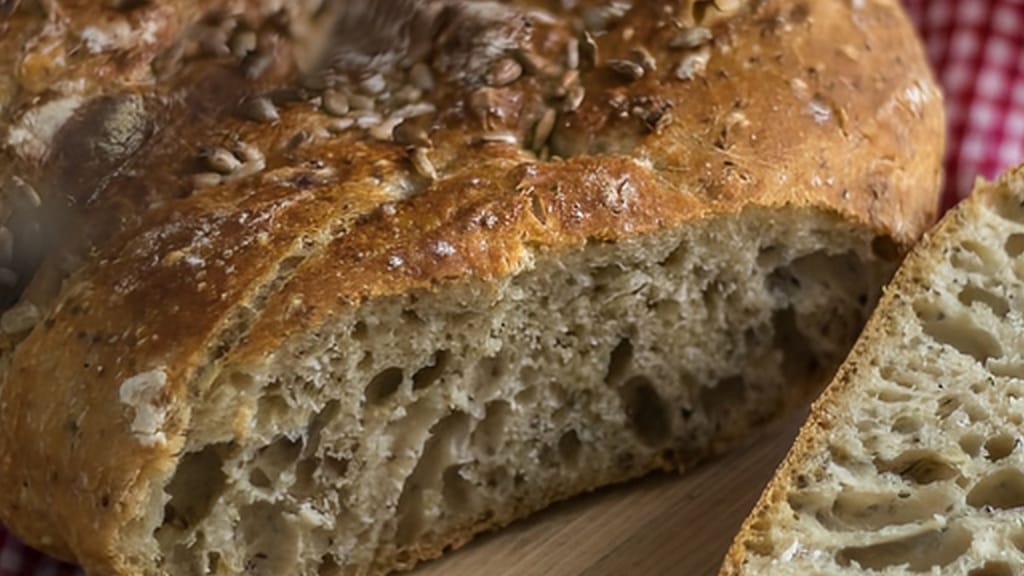
Homemade bread
Homemade bread — a fresh loaf that will really show off a good bread knife.
How you cut cheese depends on its firmness: for soft cheeses (brie, camembert) use a holed or wire knife that won't stick, for hard cheeses (parmesan, pecorino) use a short, pointed knife that you use to break off pieces rather than slice through. Semi-hard cheeses (edam, gouda) can be cut with any sharp knife.
A holed blade (with holes or grooves) reduces the surface area touching the steel, so creamy cheese doesn't stick and the slice stays intact. For especially sticky cheeses, a wire cutter works even better — the thin wire glides through with minimal friction.
Hard cheeses aren't sliced but broken: with a short, pointed knife (a cheese pick), you dig into the block and snap off a natural chunk — this actually shows off parmesan's texture better than a flat-cut slice would. For grating, reach for a grater, not a knife.

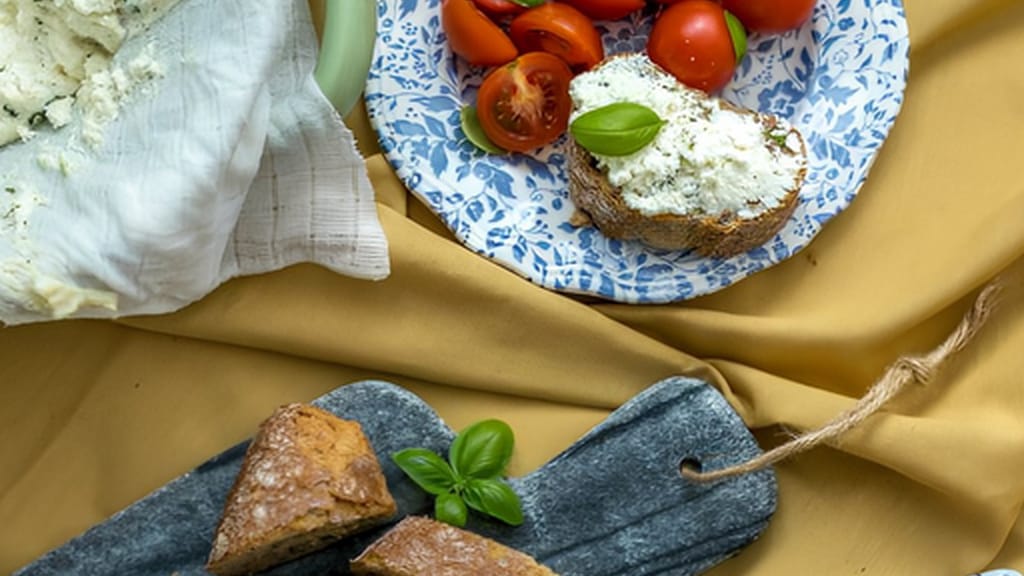
Homemade herb cheese from just two ingredients
Homemade herb cheese from just two ingredients — perfect for a cheese board.
You keep knives sharp with three habits: straighten the edge with a honing steel before any serious chopping session, sharpen on a whetstone or sharpener a few times a year, and wash by hand and store the knife so the blade never knocks against anything. A honing steel doesn't actually sharpen — it just straightens the bent micro-edge; true sharpening removes material.
Sharpen at a consistent angle (roughly 20° for European knives, about 15° per side for Japanese ones), running the blade from heel to tip. A whetstone is something you can manage at home; for precision sharpening or for serrated and damaged blades, it's worth using a professional service. You'll find a full step-by-step guide in our article on how to sharpen a knife at home properly.
Don't put knives in the dishwasher — harsh detergents and bumping against other dishes ruin the edge and damage the handle. Wash by hand and dry immediately, especially with carbon steel. Store knives on a magnetic strip or in a knife block, not loose in a drawer where the blade knocks against cutlery and gets dull. And always cut on wood or plastic — glass, stone, and ceramic will wreck your edge.
Meat: a butcher's/slicing knife for portioning, a filleting knife for fish, a cleaver for bones.
Vegetables: a santoku or chef's knife, with a paring knife for detailed work.
Bread: a serrated blade, long sawing strokes, not pressure.
Cheese: a holed or wire knife for soft cheeses, a pointed knife for hard ones.
Maintenance: hone regularly, sharpen a few times a year, wash by hand, store on a magnet or in a block.
No, don't put good-quality kitchen knives in the dishwasher. Hot, harsh detergents and knocking against other dishes dull the edge and damage the handle; carbon steel will also rust. Wash your knife by hand and dry it immediately.
Wood and soft plastic are the gentlest, as they give slightly and don't crush the edge. Glass, stone, ceramic, and steel boards, on the other hand, blunt a blade quickly and chip away at the micro-edge, so it's best to avoid them.
A dull knife slides across a tomato's skin instead of slicing through it, squashes soft bread, and forces you to press down harder. Quick test: a sharp knife should glide into a sheet of paper held upright on its own — if it just tears, it's time to sharpen.
For most households, a chef's knife with an 8-inch (20 cm) blade is the sweet spot. It handles both portioning and fine chopping without feeling unwieldy; if you have smaller hands or a smaller board, go for a 7-inch (18 cm) blade.
Yes — a good chef's knife or santoku can handle about 90% of kitchen work: boneless meat, vegetables, and herbs alike. The only practical extras are a small paring knife and a serrated bread knife.
I send one like it every week. A recipe, a tip, one deal — nothing else.