Fresh tuna salad with sun-dried tomatoes
The All-Purpose Kitchen Knife: One Knife for Everyday Cooking

Updated Jul 19, 2026
An all-purpose kitchen knife has a blade of roughly 12–20 cm and, on its own, covers most of your everyday kitchen work – chopping vegetables and herbs, slicing meat, breaking down smaller cuts. Instead of a whole block of specialised knives you'll only ever touch half of, all you need is one blade that feels right in your hand. In this article you'll find out how to choose one, how to cut with it properly, and how to look after it so it lasts for years.
An all-purpose kitchen knife is a versatile knife with a blade around 12–20 cm, capable of handling most everyday tasks – chopping vegetables and herbs, slicing meat, and breaking down smaller cuts. It's a happy medium between a small paring knife and a large chef's knife: big enough to handle almost anything, yet still nimble in the hand.
In practice, three formats fill the role of the "one knife for the kitchen". Pick one and you've got about 90% of the work covered:
Chef's knife – 20–25 cm blade with a gently curved edge for a rocking cut. The most versatile choice for anyone who cooks a lot.
Santoku – a Japanese all-rounder with a 16–18 cm blade and a straighter edge suited to a vertical "push" cut. Lighter and more agile, and excellent for vegetables.
Utility knife (all-purpose in the narrower sense) – 12–15 cm, something between a paring knife and a chef's knife. Great for smaller hands and finer tasks.

The blade of the vast majority of all-purpose knives is made from stainless steel – it resists corrosion and holds an edge well under normal use. Hardness is measured in HRC: European knives typically sit around 56–58 HRC, while Japanese knives tend to be harder, at 58–66 HRC. Harder steel holds its edge longer but is more brittle and trickier to sharpen at home.
Ceramic blades stay sharp for a very long time and don't react with food, but they're brittle – any twisting, prying, contact with bone, or a drop on tile can chip them. For that reason, I wouldn't recommend one as your only kitchen knife.
The handle determines both comfort and safety. Wood feels great in the hand and looks good, but it can't take the dishwasher or long soaking. Plastic and composites (like Pakkawood) are lightweight, hygienic, and low-maintenance. Metal handles look striking but tend to be heavier and can get slippery when wet.
Compared to a full set of specialised knives, one good all-purpose knife saves you time, space, money, and maintenance. Specifically:
Time – no switching tools between ingredients; one knife takes you through vegetables, herbs, and meat alike.
Space – one knife instead of a block of eight, half of which you'd never actually pick up.
Money – one quality knife works out cheaper than a bargain set that dulls in no time.
Maintenance – you're sharpening and washing one blade, not eight.
Knife sets look tempting in the shop, but most households really only ever use two or three knives. Put your money into one knife that fits your hand, rather than a wooden block full of filler.
A good all-purpose knife comes down to five things: blade length, the steel and its hardness, balance, handle material, and how it feels in your hand. Spec sheets can point you in the right direction, but the final say belongs to your grip – always hold the knife before you buy it.
Want to dig deeper into choosing by specific tasks? Check out our guide to choosing the right knife for every kitchen job.
A shorter blade (12–16 cm) gives you more control for fine work – fruit, herbs, garlic. A longer one (18–25 cm) can get through cabbage, melon, or a larger cut of meat in a single pass. For one all-purpose knife, the sweet spot is 18–20 cm: long enough for bigger ingredients, still easy to control.
For your first knife, go for stainless steel around 56–58 HRC – it holds a decent edge and is easy to sharpen at home. Harder Japanese steel (60+ HRC) is something to appreciate once you're confident with a sharpening stone: it holds its edge longer but forgives less – no prying, twisting, or cutting through bone.
A well-balanced knife has its centre of gravity roughly where the blade meets the handle. Pick it up – it should sit naturally in your hand, without tipping forward or straining your wrist. A heavier knife lends momentum when cutting through tough vegetables, while a lighter one feels quicker over long stretches of work. Personal preference matters more here than any spec sheet.
A sharp knife glides smoothly through a sheet of paper held upright, without tearing. In the shop, also check how the handle feels in your grip – one that's too big or too small will start to strain and tire your hand after a while. A dull or uncomfortable knife isn't just annoying – it's a hazard: it slips and forces you to push harder.
Four habits keep an all-purpose knife in shape: wash it by hand, hone it regularly with a honing steel and sharpen it occasionally, store it so the blade never knocks against anything, and cut only on wood or plastic – never glass or stone. Glass, stone, and ceramic plates blunt an edge faster than almost anything else.
These are two different things: honing with a steel just realigns the edge (fine to do before every cooking session), while sharpening on a stone actually removes material and restores the edge (do this every few weeks to a few months, depending on use). Keep the angle consistent – roughly 15–20° per side for European knives, 10–15° for Japanese ones; makers like Wüsthof now even recommend narrower angles around 14–15°. We break this down step by step in our guide on how to sharpen a knife at home.
Wash your knife by hand right after use, in warm water with a bit of washing-up liquid, and dry it immediately– water left sitting on the blade will mark even stainless steel over time. Skip the dishwasher entirely: harsh detergent tablets, heat, and knocking against other dishes wreck both the edge and the handle. With a wooden handle, the dishwasher is a sure way to end up with cracked wood.
Don't leave a knife loose in a drawer among cutlery – the edge gets knocked about, and it's dangerous if you reach in without looking. A magnetic strip a wooden knife block, or a plastic blade guard (saya) are all good options. Store it somewhere dry, away from direct sunlight and damp.
The basics are simple: a sharp knife, a stable cutting board, a "claw" grip on the ingredient, and guiding the blade along your knuckles. Beyond that, it's really just two techniques – a rocking cut for vegetables and long strokes for meat. Put a damp cloth under your board so it doesn't slide around.
The tip of the knife stays on the board while the blade rocks up and down – the cut becomes smooth and even. Halve an onion first, set it cut-side down (so it stays put and doesn't roll), and only then start slicing. Keep the hand holding the ingredient in a "claw": knuckles forward, fingertips tucked away. We cover onions in detail in our guide on how to cut an onion properly.
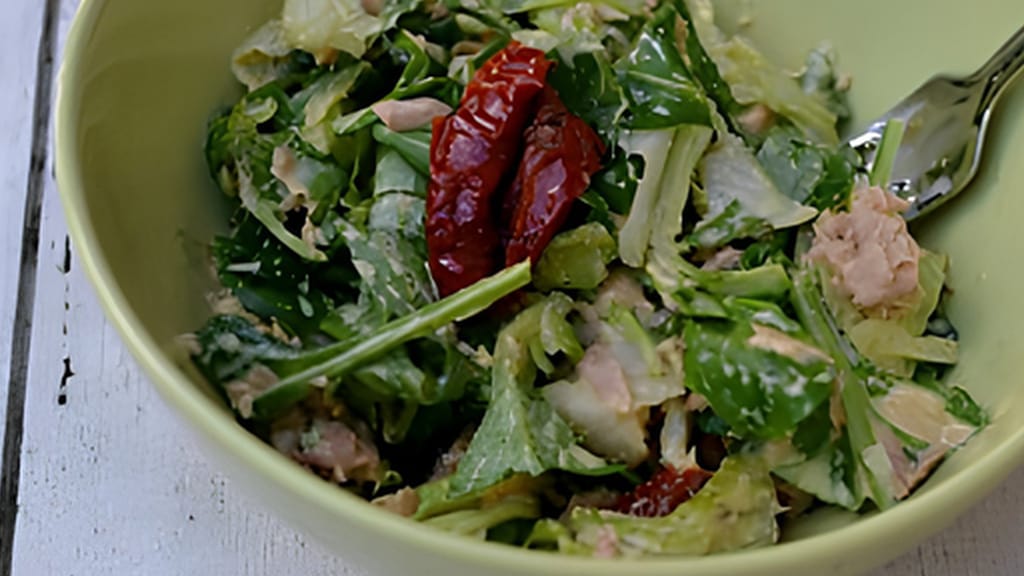
Fresh tuna salad with sun-dried tomatoes
Fresh tuna salad with sun-dried tomatoes – great for practising your vegetable cuts
Slice meat with long, smooth strokes – don't press straight down; drawing the knife through the meat gives you a clean cut without tearing. The key with beef and chicken breast alike: cut against the grain (perpendicular to the direction of the muscle fibres), and the slices will stay tender instead of chewy. Tilt the blade slightly for thinner slices.
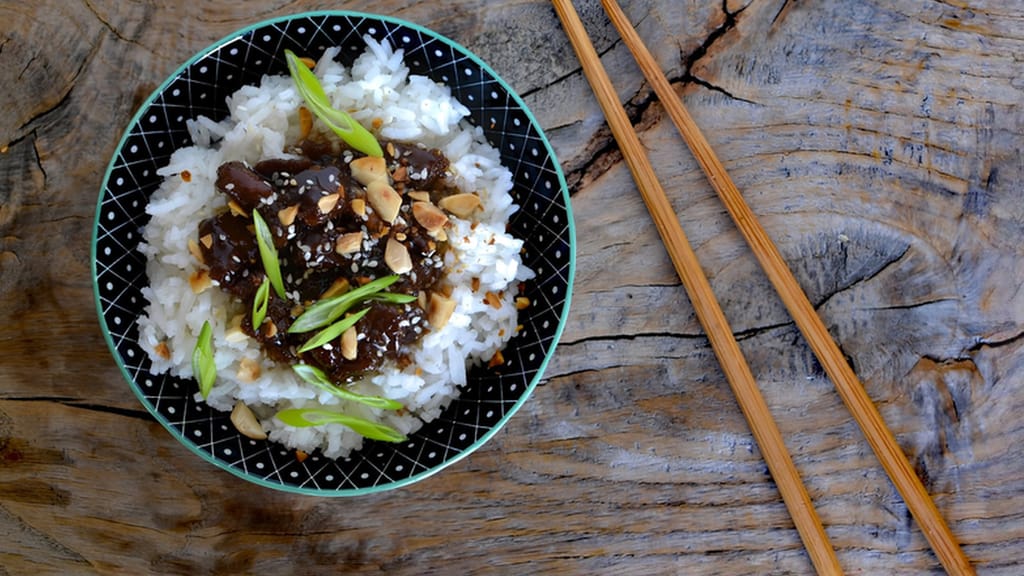
Fragrant and bold mongolian beef
Mongolian beef sliced thin – a good example of cutting meat against the grain
If you can only buy one knife, get a chef's knife or santoku with an 18–20 cm blade, in stainless steel around 56–58 HRC, that feels genuinely comfortable in your hand. Add a honing steel, a wooden or plastic cutting board, and the habit of washing the knife by hand – and you'll have everything you need to handle almost any home cooking. Once you eventually hit its limits (bread, boning, cleaning fish), you can add a narrowly specialised knife. But it's best to start with one good one.
It'll cut through soft rolls fine, but for a crusty loaf you're better off with a serrated bread knife. A straight edge tends to skid off a hard crust and crush the crumb, whereas serrations saw through it without needing much pressure. If you bake bread often, this is one of the few extra knives genuinely worth owning.
No – don't use an all-purpose knife on frozen food, bones, or tough roots like pumpkin or squash. The thin, hard edge will chip or bend against them, and with Japanese steel it can even crack. Bones need a cleaver or butcher's knife, and meat should be at least partially thawed before you cut it.
A decent all-purpose knife that'll last for years typically runs from about £25 to £80. Below that, you're usually looking at soft steel that dulls fast; above it, you're mostly paying for brand name, Japanese steel, and finishing. For a first knife, a sensible mid-range option beats both the cheapest set and a premium Japanese blade you're not yet confident sharpening.
A dull knife won't glide through a ripe tomato or a sheet of paper – it skids and you end up pressing harder. Quick test: carefully run the pad of your thumb across the edge (never along it) – a sharp knife will grip slightly, a dull one just slides. If honing with a steel doesn't bring the edge back, it's time for a proper sharpening stone.
For everyday cooking, usually not – an all-purpose knife covers the vast majority of tasks. It's worth adding three specialists once you actually hit their limits: a small paring knife for fine work and peeling, a serrated knife for bread, and a flexible boning or filleting knife for meat and fish. An eight-piece knife set, though, is something almost no household actually puts to full use.
One recipe worth heating the oven for, one tip, and one deal from the shop. Nothing else.