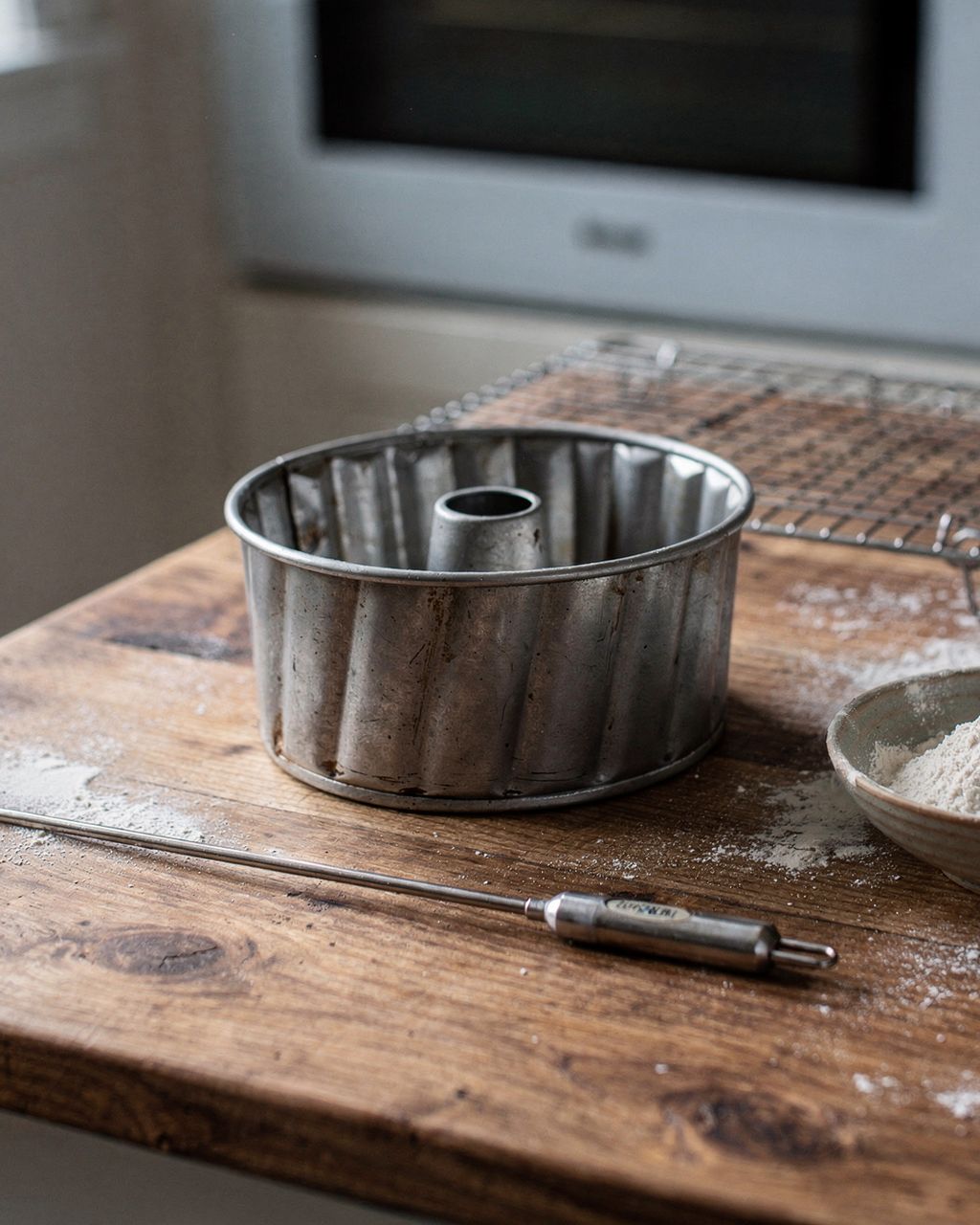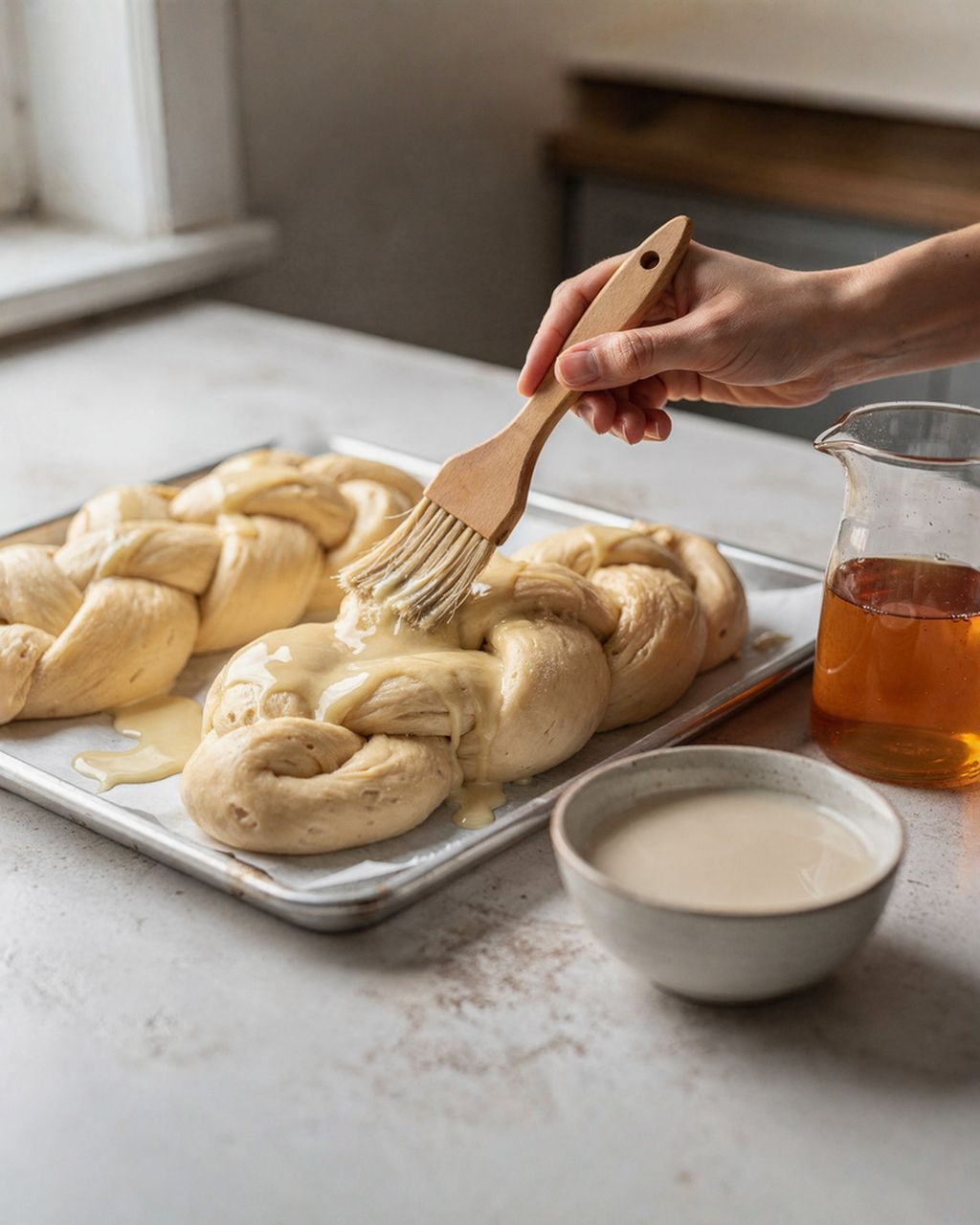
Apple bundt cake with coconut fat
Updated Sep 5, 2026
The most common egg substitutes in bundt cake are applesauce (60 g per egg), mashed banana (60 g), soaked ground flaxseed (7 g + 45 ml water), aquafaba (45 ml), or plain yogurt (60 g). Which one is right depends on what the egg was actually doing in your recipe — holding the batter together, lifting it, or keeping it moist. And there's one limit that rarely gets mentioned: you can swap out two eggs in a bundt cake and barely notice, but five is a different story entirely.
You can replace one egg (medium/size M, about 50 g without the shell) in a bundt cake with any of these amounts. In brackets is what that substitute actually does — and what it doesn't:
Unsweetened applesauce — 60 g (moisture, mild binding; won't add lift)
Mashed ripe banana — 60 g (moisture and binding; noticeable in flavour)
Pumpkin purée — 60 g (moisture, colour; more neutral in flavour than banana)
Plain yogurt or sour cream — 60 g (moisture plus acidity, which activates baking soda)
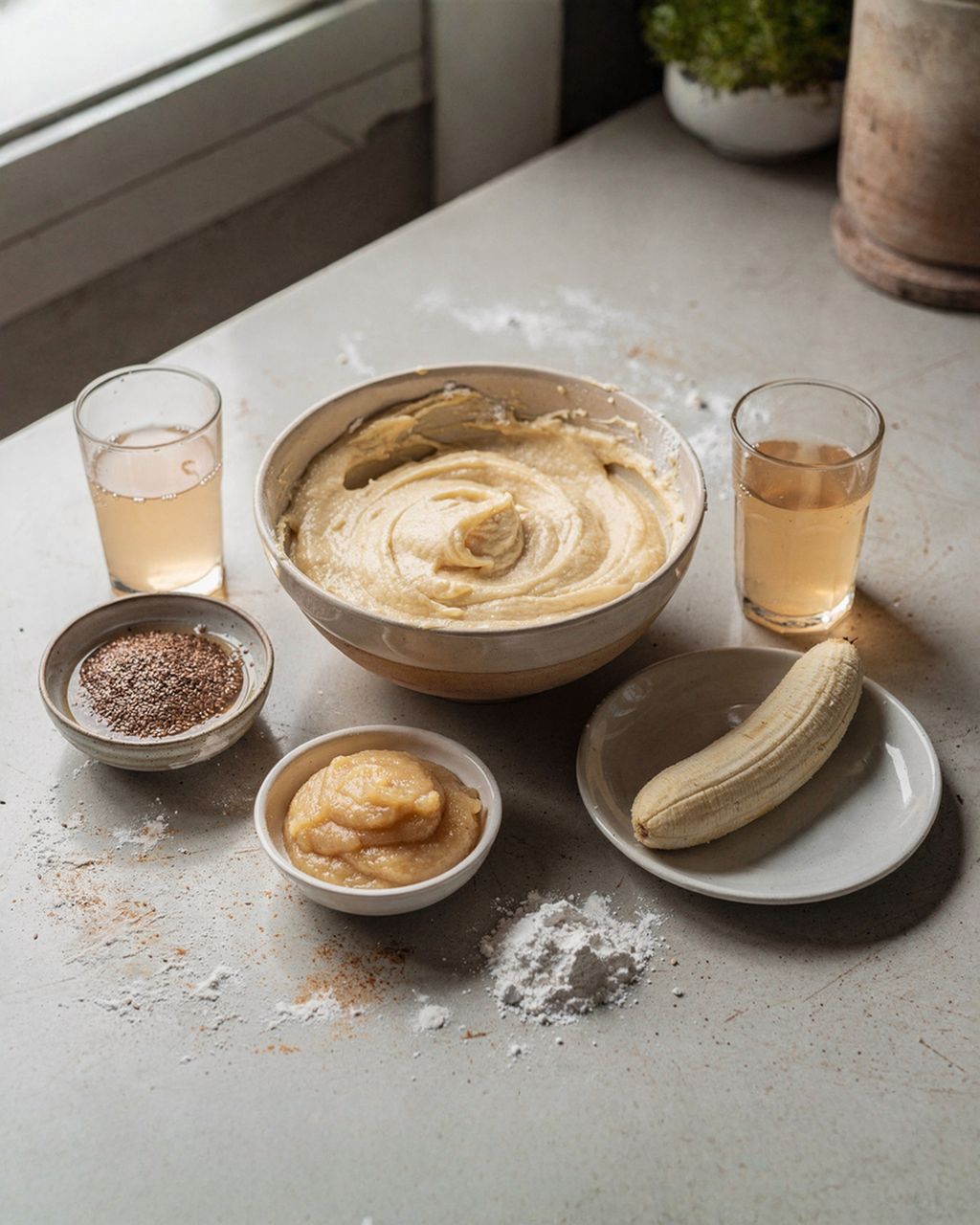
Ground flaxseed — 7 g + 45 ml warm water (binding; let it sit and swell for 10 minutes)
Ground chia — 10–12 g + 45 ml water (binding, holds even firmer than flax)
Aquafaba, chickpea brine — 45 ml (lift, partial binding)
Silken tofu, blended completely smooth — 60 g (binding and density; makes the batter heavier)
Cornstarch or potato starch — 10 g + 30 ml water (binding, the cheapest option)
Vinegar or lemon juice 15 ml + baking soda 2 g (lift only, only for one egg)
Sparkling water — 60 ml in place of some of the milk (lift only)
None of these is a true one-to-one swap in every respect. An egg does several jobs in the batter at once, and each of these ingredients only covers part of them — that's why it's almost always worth combining two substitutes in a bundt cake.
An egg in a bundt cake does four jobs: it holds the structure, it leavens, it adds moisture, and it contributes colour and flavour. That's exactly why there's no single universal substitute — each ingredient only covers part of it:
Structure. Egg proteins set in the oven (egg white starts around 62°C/144°F) and form a network that, together with the starch in the flour, holds the crumb together. This is the part substitutes handle worst.
Leavening. Air whipped into the eggs expands in the oven and lifts the cake. In batters where the whites are whipped separately into a foam, this accounts for a large part of the total volume.
Moisture and smoothness. The yolk contains lecithin, a natural emulsifier — it holds fat and water together so the batter stays smooth and the crumb stays tender, not greasy or coarse.
Colour and flavour. Proteins and sugars react on the surface to give the cake its golden crust. Without eggs, a bundt cake tends to be paler and flatter in flavour.
Once you work out which of these four jobs matters most in your recipe, you've basically made your choice. A cake loaded with fruit or vegetables mainly needs binding. A light, sponge-style cake mainly needs leavening — and that's the hardest one to replace.
You can swap out one to two eggs with barely any compromise. Three is the point where it's still salvageable with a combination of substitutes, and four or more usually means you need a different recipe, not a different substitute.
The reason is purely down to numbers. A classic bundt cake calls for three to five eggs, which is 150 to 250 g of mass — in a typical recipe with 250 g of flour, that's a quarter to a third of all the liquid in the bowl. Take out one egg and the other three still hold the batter together fine; you'll barely notice a difference. Take out all five, and there's nothing left to set the crumb — the cake either collapses or stays gummy in the middle.
A practical rule worth following:
1 egg: pick anything from the table above — even just applesauce on its own.
2 eggs: one substitute for binding (flax, chia, starch) and one for moisture (purée, yogurt).
3 eggs: three different substitutes, each covering a different job — the method is below.
4 or more: go straight for a recipe that's designed to be eggless from the start.
The most reliable substitutes for an egg's binding power are ground flaxseed, chia, starch, and silken tofu — all four bind the batter with a gel, just from different sources.
Flaxseed — 7 g ground + 45 ml warm water. Stir it, let it sit for ten minutes, and wait until the gel strings off the spoon like raw egg white. Grind the seeds just before using them — whole seeds won't release the gel and will stay in the cake as hard little bits. Flax adds a subtly nutty flavour that cocoa or cinnamon will fully mask, though it's slightly noticeable in a plain vanilla cake. Two flax eggs in one batter is the ceiling — beyond that, the cake starts turning rubbery.
Chia — 10–12 g ground + 45 ml water. Works the same way as flax and holds even a bit firmer, but chia gel is denser, so it weighs the batter down faster. Always grind it: whole chia seeds show up in a white cake as black flecks.
Starch — 10 g cornstarch or potato starch + 30 ml water. The cheapest option and completely flavour-neutral. Starch gelatinises in the oven and locks in moisture, which holds the crumb together. Downside: it adds no fat or volume at all, so on its own it makes the cake drier. Pair it with purée or yogurt.
Silken tofu — 60 g, blended completely smooth. Brings binding and moisture at once, which sounds ideal, but it also makes the batter noticeably heavier. Treat it as a substitute for one egg, not two, and make sure there isn't a single lump left in the blender — in the finished cake, that lump would show up as a white spot.
Lift is handled by aquafaba (45 ml per egg), a vinegar-and-baking-soda combo (15 ml + 2 g), and sparkling water (60 ml). None of these bind the batter, so never use them on their own.
Aquafaba — 45 ml of brine from canned chickpeas. As chickpeas cook, proteins, carbohydrates, and saponins leach into the liquid — and it's their combination that holds a foam. It's more delicate than egg white foam, though, and doesn't handle fat or heat as well. Fold it into a heavy, buttery batter right at the very end, gently, and expect some of the volume to deflate anyway. Think of it as insurance, not magic. Drain the brine, don't salt it, and use chickpea brine specifically — brine from other beans tends to taste noticeably beany.
Vinegar and baking soda — 15 ml vinegar or lemon juice plus 2 g baking soda. The acid and soda react instantly and release carbon dioxide, which lifts the batter. It works well, but only for one egg and only at this ratio: 15 ml of 8% vinegar neutralises roughly 2 g of soda, and anything above that dose stays unreacted in the batter — and unreacted soda means a soapy aftertaste and a greenish tinge. If you want more soda, you need more acid too: for 5 g of soda you'll need roughly 45 ml of 8% vinegar. Mix the soda into the dry ingredients, the vinegar into the wet ones, and as soon as you combine them, pour the batter straight into the pan and into the oven. Every minute you wait means more bubbles escaping into the air instead of into the cake.
Sparkling water — 60 ml in place of some of the milk. The gentlest of the three, but free: the bubbles lift the batter while the water also replaces the liquid the egg would have brought. Same rule as with soda — pour and bake immediately.
Applesauce, mashed banana, pumpkin purée, plain yogurt, or sour cream all add moisture in place of an egg — figure 60 g per egg for any of them. This is the most important group for bundt cake, because dryness, not a collapsed crumb, is the most common problem once eggs are gone.
Unsweetened applesauce — 60 g. The most versatile substitute of all: it disappears into the flavour, holds moisture, and offers a little binding too. Buy the unsweetened kind, or you'll be adding roughly 4–6 g of extra sugar to the cake, and the crust will darken before the crumb finishes baking through. Purée is wetter than egg, so cut 15 ml of milk for every egg you replace this way.
Mashed ripe banana — 60 g, roughly half a large banana. Binds and moistens, and adds sweetness too, so you can cut 10 g of sugar. The trade-off is that the cake will taste like banana — great in a cocoa or nut cake, but in a vanilla one it takes over everything else. The banana needs to be truly ripe, with dark spots; a green one will leave chunks in the batter.
Pumpkin purée — 60 g. Behaves like applesauce, but is more subtle in flavour than banana and adds a warm colour that nicely disguises the paleness of an eggless cake.
Plain yogurt or sour cream — 60 g. Besides moisture, they bring acidity that activates the baking soda in the recipe — a bonus neither applesauce nor banana offers. Sour cream also adds fat that's otherwise missing once the yolks are gone. Full-fat versions work better than low-fat ones.
Important: none of these substitutes will give the cake any lift. Always pair them with either a leavening substitute or an extra 3 g of baking powder.
You replace three eggs in a bundt cake with three different substitutes — each covering a different job. Take a standard recipe (250 g plain flour, 150 g sugar, 120 g softened butter, 3 eggs, 120 ml milk, 10 g baking powder) and adjust it like this:
Binding: 7 g ground flax + 45 ml warm water, let it swell for 10 minutes.
Moisture: 60 g unsweetened applesauce.
Lift: 45 ml aquafaba whipped to soft peaks.
Increase the baking powder from 10 g to 15 g. The rule is 3 g per replaced egg, which for three eggs would come to 19 g — but the ceiling for 250 g of flour is 15 g, and above that the cake starts tasting bitter. The whipped aquafaba makes up the rest of the lift.
Reduce the milk from 120 ml to 105 ml. That 15 ml is only deducted for the applesauce; the water in the flax gel and the aquafaba is already accounted for in their own measurements, so you don't subtract anything extra for those.
Increase the butter from 120 g to 135 g. Three yolks contain roughly 15 g of fat that would otherwise be missing from the batter, leaving the cake drier.
Method: cream the butter and sugar until pale, mix in the flax gel and applesauce, then alternate adding the dry ingredients and the milk. Fold in the whipped aquafaba with a spatula right at the end, in three additions, gently from the bottom up.
Bake at 170°C (340°F) for roughly 55–65 minutes.
The same logic works for any recipe: count the eggs, split them between binding, moisture, and lift, then fine-tune the liquid and fat.
For every egg you replace, cut 15 ml of liquid; for every yolk you skip, add 5 g of fat; add 3 g of baking powder per egg; and mix the batter as little as possible. In detail:
Cut back the liquid. Purée, banana, and yogurt are all wetter than egg. For every egg replaced with purée or banana, cut 15 ml of milk.
Add fat. Every yolk you skip means roughly 5 g less fat. For two replaced eggs, add 10 g of butter or oil, or the cake will be dry by the next day.
Add 3 g of baking powder per replaced egg, but cap it at 15 g per 250 g of flour — so for three replaced eggs, stop at 15 g, not 19 g. Above that ceiling, the cake starts tasting bitter and turns coarse and holey.
Mix less, not more. This is the most common mistake. Without egg proteins, the structure relies almost entirely on gluten from the flour, so every extra second of mixing means a rubbery crumb. Stop as soon as the last streak of flour disappears.
One more small thing most guides leave out: an eggless bundt cake browns much less. If you care about the crust, brush the pan and the top of the batter with a little plant-based milk, or sprinkle with coarse sugar.
Bake at 10°C (18°F) lower and for 10 to 15 minutes longer than the original recipe calls for, and let the cake rest in the pan for at least 15 minutes after baking before turning it out.
Both come down to the same reason. A crumb without eggs sets later and at a lower temperature, because there's no egg protein to firm it up — structure is left entirely to the starch in the flour, and that needs both time and moisture. A higher temperature sets the crust before the inside has finished baking, and you end up with exactly the gummy cake you'll later blame on the egg substitute.
A few extra things worth knowing:
The skewer test isn't reliable. Eggless batter holds more water, so a skewer will come out looking damp even on a fully baked cake. Go by the edges pulling away from the pan and the surface springing back when pressed with a finger.
Grease the pan thoroughly. Eggless batter is stickier and clings more readily to a shaped pan. Grease every groove properly, then dust with breadcrumbs or flour.
Don't unmould it hot. A hot eggless cake hasn't set its structure yet and will break apart when turned out. Fifteen minutes in the pan is the minimum; twenty is safer.
Store it airtight. Without the fat and protein from eggs, it dries out faster, so wrap it up as soon as it's cooled.
Bundt cakes that already have plenty of moisture in the batter — from fruit, vegetables, or purée — go eggless most easily. An ingredient that's already in the recipe does half the work for you, leaving you to sort out just binding and lift. These four are a good starting point for converting:
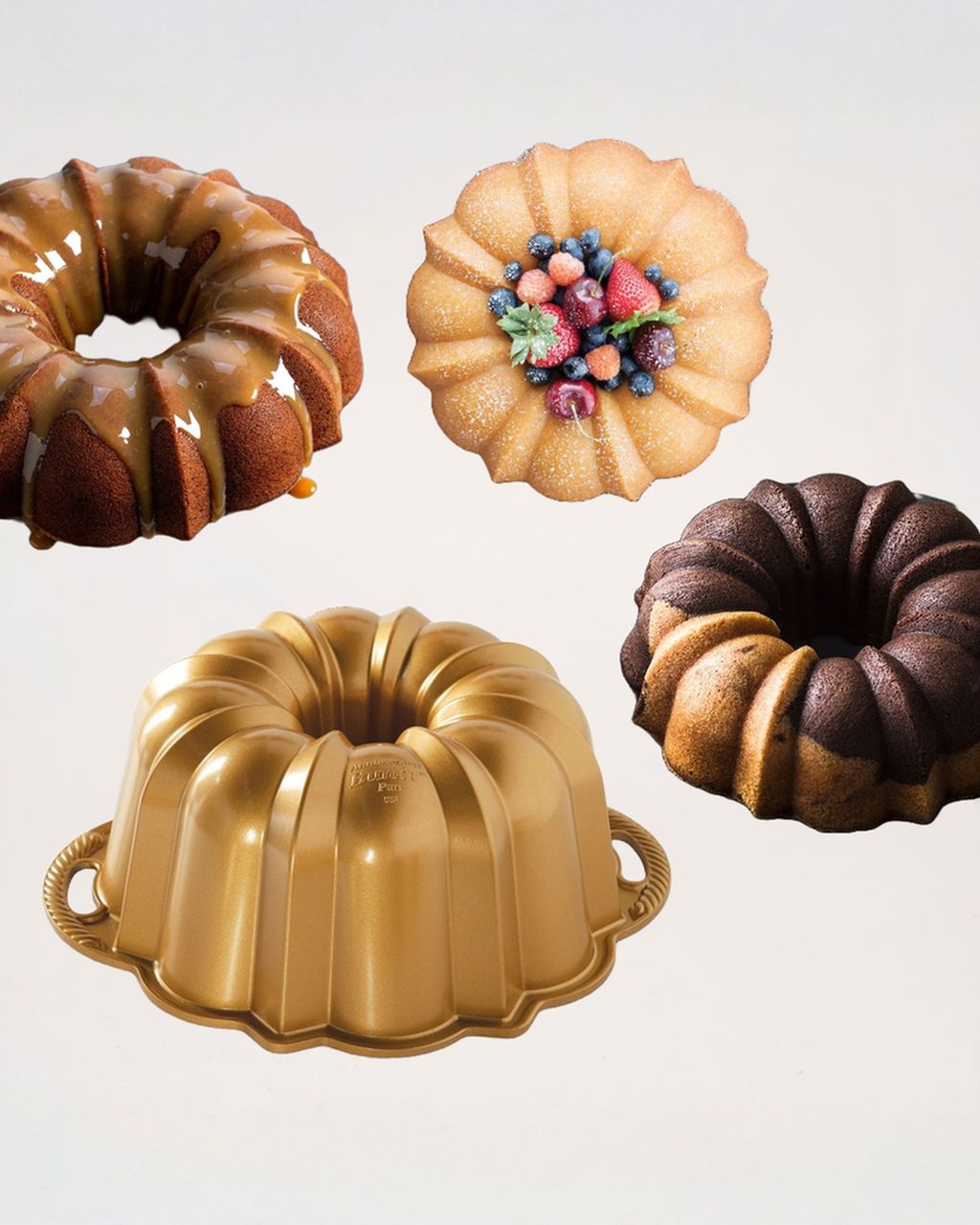
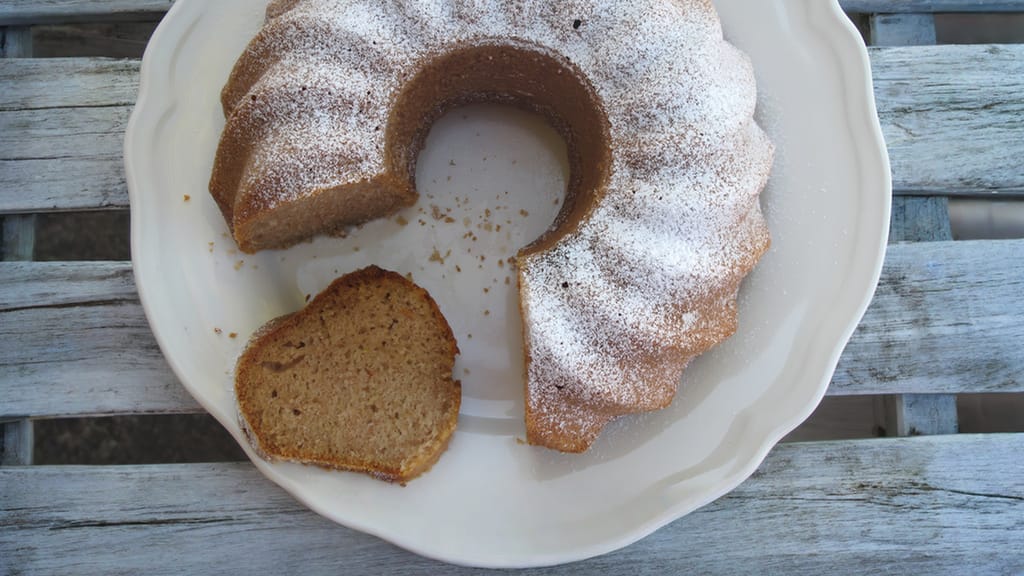
Apple bundt cake with coconut fat
Apple bundt cake with coconut oil — a moist batter that handles the eggless conversion best
Zucchini bundt cake
Zucchini bundt cake — grated zucchini adds moisture, so you only need to sort out binding and lift
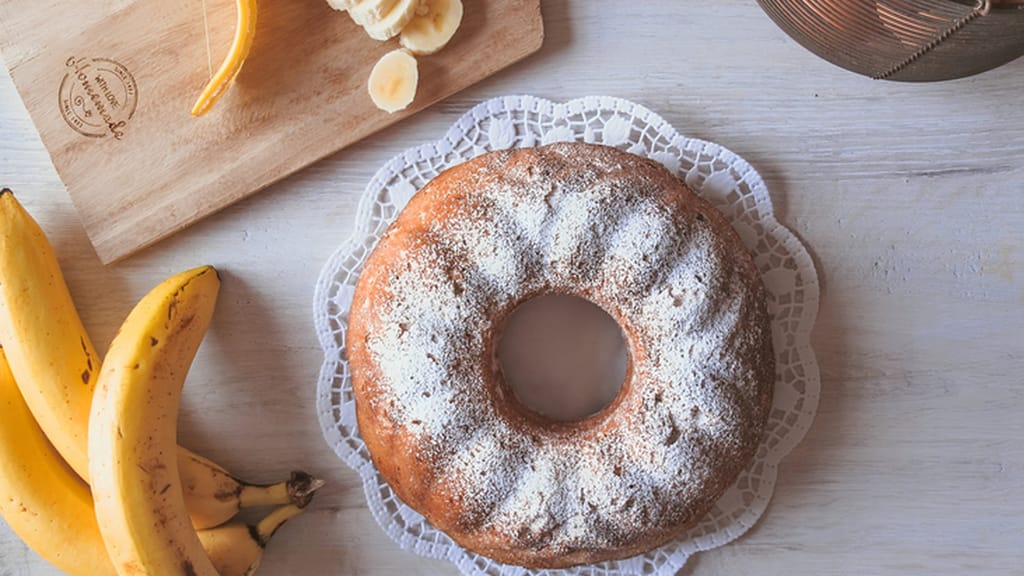
Gluten-free banana bundt cake with chocolate
Gluten-free banana chocolate bundt cake — the banana's already doing the egg's job
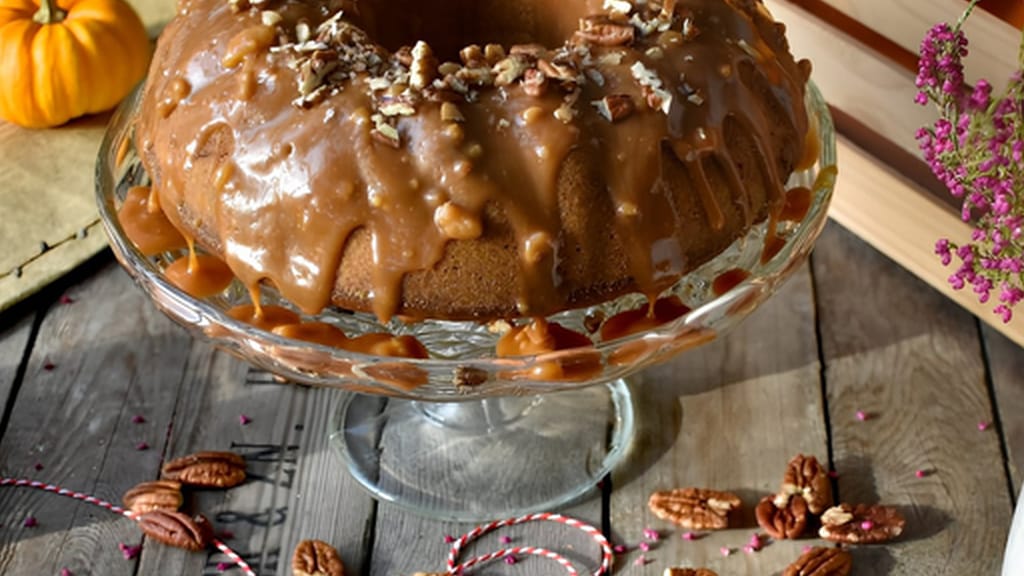
Autumn pumpkin bundt cake with creamy caramel glaze
Autumn pumpkin bundt cake with cream caramel — pumpkin purée is basically an egg substitute in itself
Yes: one egg white can be replaced with 30 ml aquafaba (2 tbsp), one yolk with 15 g silken tofu or 15 g sour cream. An egg white (about 33 g) is mainly water plus foaming power, so whip the aquafaba if the recipe relies on it for lift. A yolk (about 17 g) is mainly fat and emulsifier, not structure — besides tofu and sour cream, 5 g starch mixed with 15 ml water plus 5 g extra fat also works.
In a sealed container at room temperature it keeps for two to three days — slightly less than a bundt cake made with eggs, since it lacks the fat and protein from the yolks and dries out a bit faster. Freezing works fine: let it cool completely, slice into portions, layer with parchment, and it'll keep for three months in the freezer. Thaw at room temperature, or give a slice ten seconds in the microwave.
Yes, and they're actually more reliable than homemade substitutes, since they're usually a blend of starches and leaveners together. Stick to the dosage on the package — typically 10 g of powder plus 30 ml water per egg. Just keep in mind that almost none of them bring any fat, so add 5 g of butter or oil for every egg you replace anyway.
Per egg, use a quarter cup (about 60 ml) of purée, banana, yogurt, or tofu, three tablespoons of aquafaba, or one tablespoon of ground flax with three tablespoons of water. Volume measures work well for egg substitutes because they're mostly water — unlike flour, where the same cup can vary by 30 g depending on how you scoop it.
Yes, and it shows most in the colour. Without eggs, the crumb is paler and the crust lighter, because you lose the proteins that gave it that golden tone. Taste-wise, applesauce, pumpkin purée, starch, and aquafaba are all neutral; banana, on the other hand, is quite noticeable, and flax adds a slightly nutty note. If you want to bring the colour back, reach for pumpkin purée or a cocoa-based recipe — nobody will spot the difference there.
One recipe worth heating the oven for, one tip, and one deal from the shop. Nothing else.