Vanilla Pudding Powder: What It Is, How Czechs Use It and Substitutes
Custard Powder vs Cornstarch: What's in It and How to Substitute
Updated Nov 21, 2026
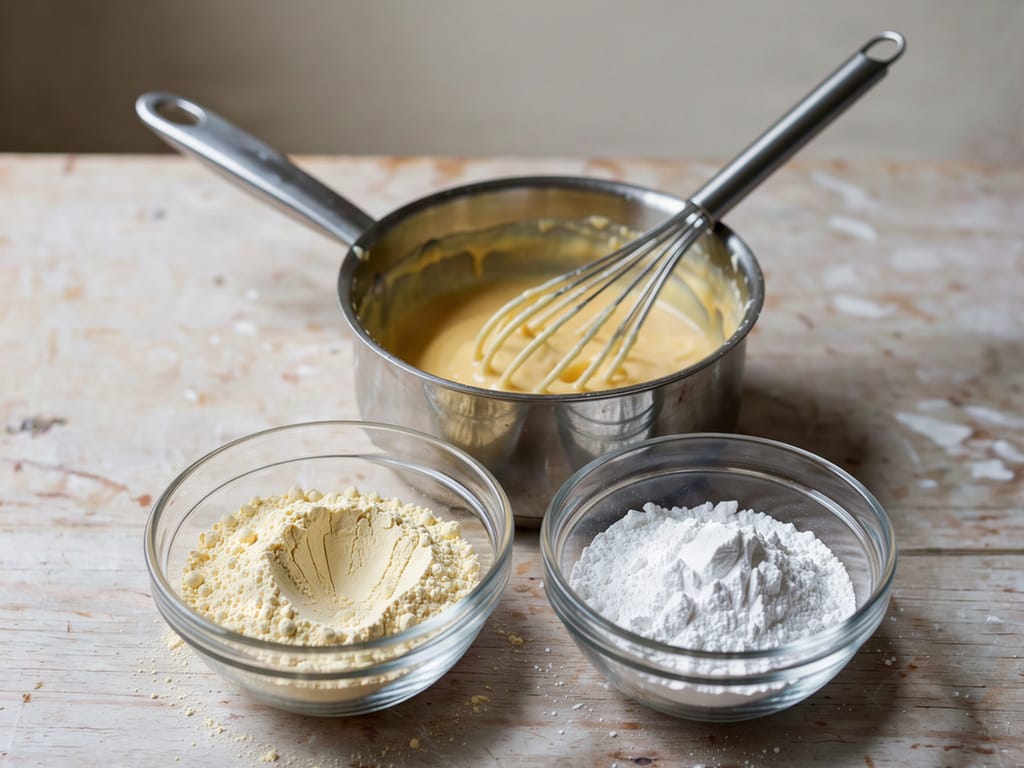
Custard powder is mostly cornstarch, with salt, vanilla-type flavoring and a yellow color added, so plain cornstarch can replace it gram for gram if you add vanilla and a little color. It contains no egg in its classic form. Here is what each one does, how to swap them both ways, and what to use in Nanaimo bars.
Custard powder is a British pantry staple: a fine, pale yellow powder that you whisk into milk with sugar and cook into a smooth vanilla custard sauce. The usual story is that Alfred Bird created it in Birmingham in 1837 so his wife, who could not eat eggs, could have custard.
The UK original lists just four ingredients: maize starch, salt, flavoring and a color (annatto). In other words, it is cornstarch dressed up to look and taste like egg custard. Formulas differ by market, and some packs carry a "may contain milk" warning, so check the label if allergies matter.
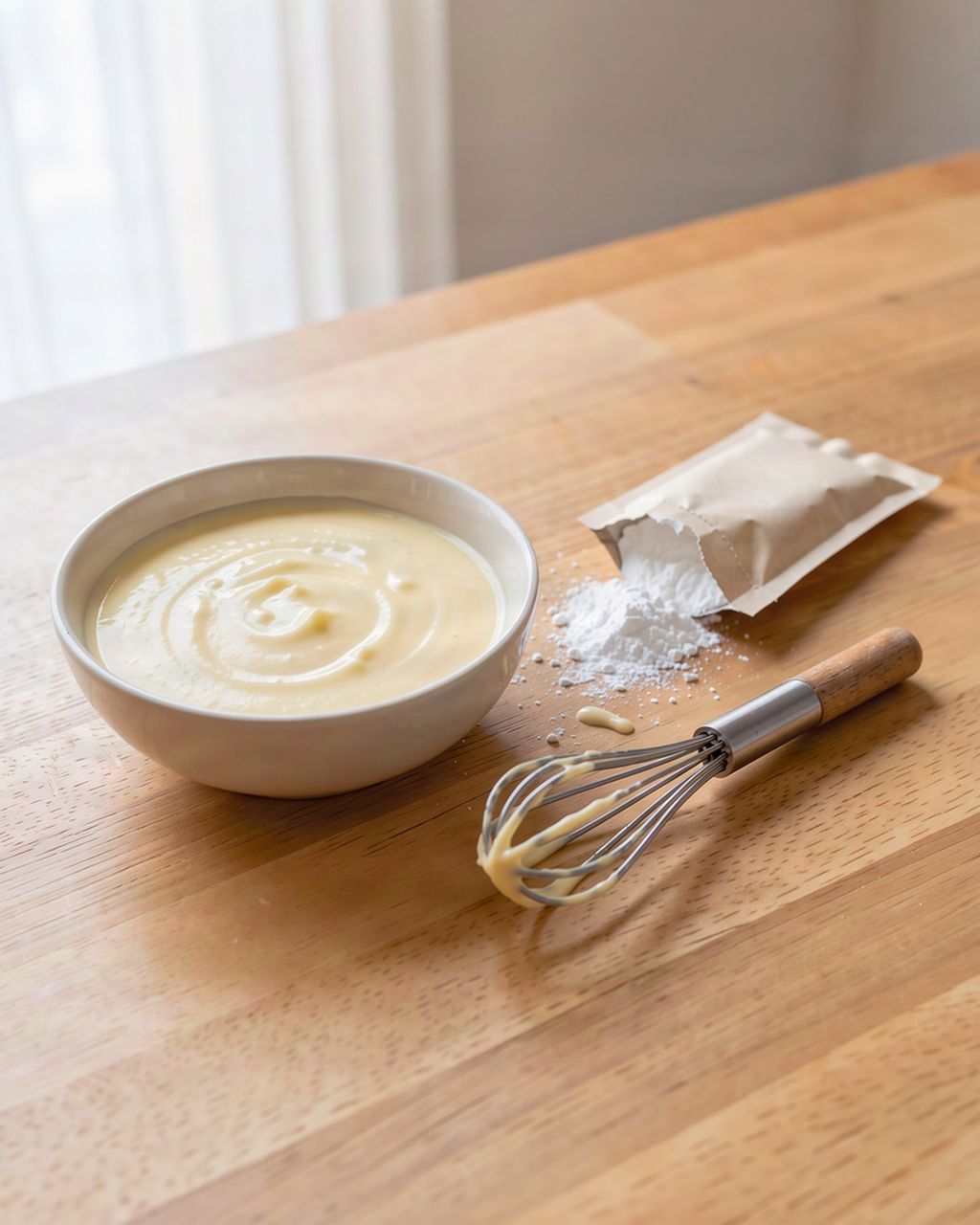
In Central Europe, the closest cousin is pudink (vanilla pudding powder): a cornstarch-based powder with flavoring and color that Czech cooks boil with milk and sugar. See vanilla pudding powder.
Recipe of the week, one tip that saves you time and one deal from the shop. Unsubscribe in one click.
The next issue goes out on Thursday, November 26.
Cornstarch (cornstarch, called cornflour in the UK and Australia): pure starch extracted from corn. White, flavorless, used to thicken sauces, puddings, fillings and pie fruit.
Custard powder: cornstarch plus salt, vanilla-type flavoring and yellow color. It thickens exactly like cornstarch, but brings the taste and color of a vanilla custard with it.
So in any recipe, they do the same thickening work. The only differences are flavor and color.
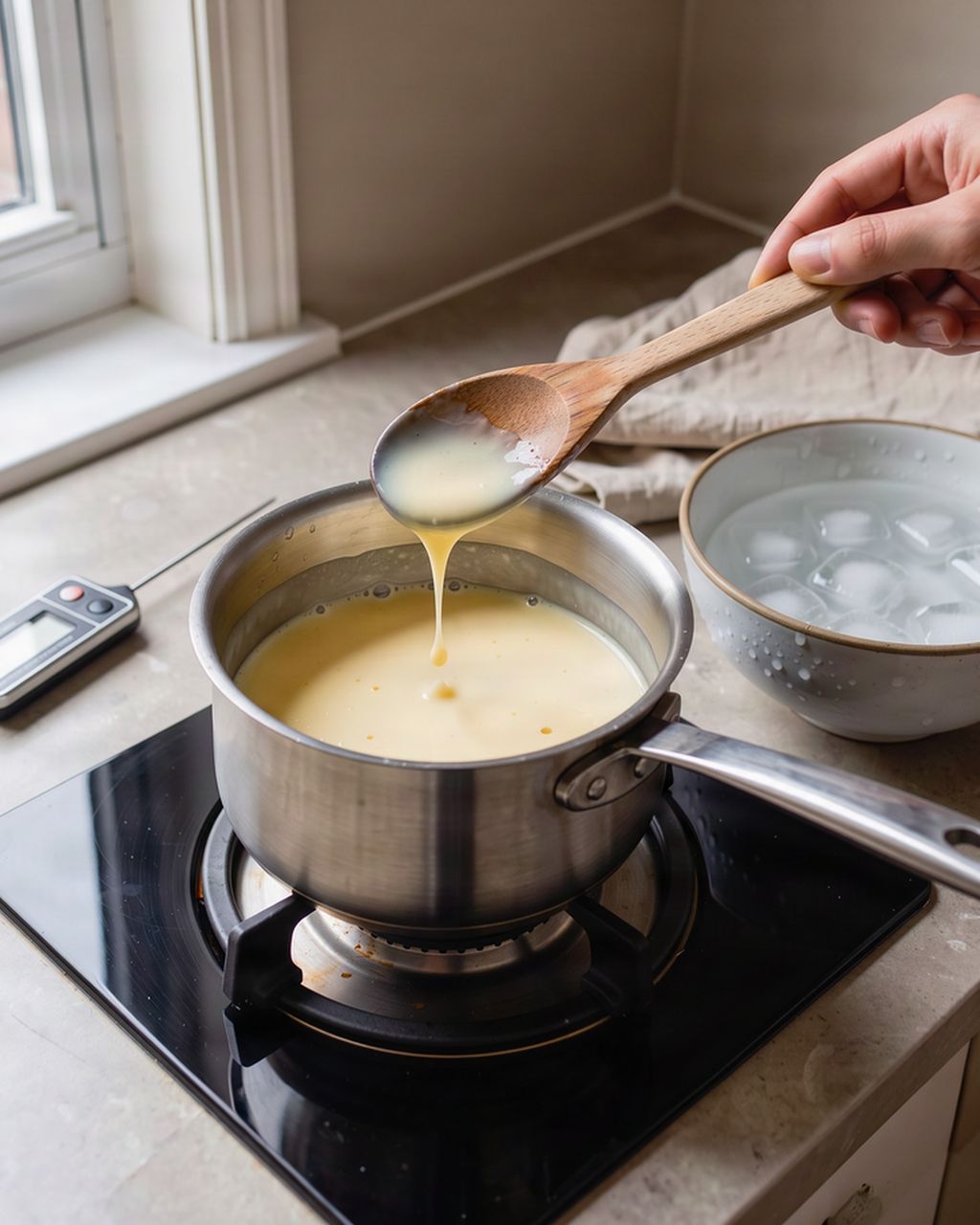
Both need heat to thicken. Cornstarch only thickens fully once the liquid comes to a simmer or gentle boil, about 95 °C (203 °F), so custard made from either has to bubble briefly. Our guide to thickening without flour covers cornstarch in more detail.
Swap them 1:1 by weight. If your custard powder lists sugar among its ingredients, as some non-UK versions do, it has a little less starch per gram, so use slightly less cornstarch or expect a slightly thicker result. Then put back what the powder had and the cornstarch hasn't:
Flavor: add vanilla extract, vanilla paste or vanilla sugar to taste. A good start is about 1 teaspoon of extract per 500 ml of milk. Our guide to vanilla substitutes has exact swaps.
Color (optional): a very small pinch of ground turmeric gives the familiar yellow without a noticeable taste. Saffron works too.
Salt: a pinch.
Richer option: whisk in an egg yolk or two with the cornstarch. That turns it into a true egg custard, closer to a pastry cream. With yolks in, it is a cooked egg dish: FDA advises cooking dishes containing eggs to 71 °C (160 °F). Bringing the custard to a brief boil, as the starch needs anyway, gets you well past that.
For the full stovetop method, see homemade pudding from scratch.
Custard powder can replace cornstarch 1:1 by weight wherever its vanilla flavor and yellow color fit: fruit pie fillings, sweet sauces, cake fillings, shortbread and some cookies, where it adds a buttery color and a slightly crumbly texture.
Don't use it in savory dishes or stir-fry sauces, where vanilla and yellow coloring would be odd. Keep plain cornstarch for those.
In Nanaimo bars, the Canadian no-bake bar, custard powder flavors the middle butter layer rather than thickening a liquid. Options:
Instant vanilla pudding mix: the most common swap, used in the same amount. It is already sweetened, so you can cut the icing sugar slightly, and the layer will be cream-colored rather than yellow.
Cornstarch plus vanilla: the same amount of cornstarch with a little extra vanilla extract. Paler and plainer, but it works.
Vanilla pudding powder (*pudink*): in Central Europe, a cooked pudding powder used dry here behaves much like custard powder.
Because this layer is not cooked, the powder is there for flavor, color and body, not to thicken a liquid, so any of these swaps works without changing the method.
Custard made from powder is thickened by starch, not by egg. That gives it some practical advantages: it doesn't curdle, it tolerates a full boil, and it is quick. It sets firmer as it cools and can be reheated: USDA FSIS advises reheating leftovers to 74 °C (165 °F), checked with a food thermometer, and eating refrigerated leftovers within 3 to 4 days.
Egg custard, such as crème anglaise, is thickened by yolks alone. It tastes richer and silkier, but it must be cooked gently, because it curdles if it gets too hot.
Whichever you make, custard is a perishable milk dish. Serve it, or cool it quickly and refrigerate it covered; USDA FSIS advises not leaving perishable food out of the fridge for more than 2 hours (1 hour above 32 °C / 90 °F).
If you bake with custard powder often and can't buy it, you can mix your own. Keep it in an airtight jar in a cool, dry place, as you would cornstarch.
Per 100 g of cornstarch, stir in:
Vanilla: 1–2 teaspoons of ground vanilla or vanilla powder, or a few tablespoons of vanilla sugar. Liquid extract would make it clump, so add that to the milk instead.
Color: a small pinch of ground turmeric. Start tiny; too much tastes of turmeric.
Salt: a pinch.
Use it exactly like shop-bought powder, weight for weight. Shake the jar before each use, because the turmeric and vanilla settle.
Common questions about using it:
Lumpy custard? Mix the powder and sugar into a few spoonfuls of cold milk to a smooth paste before adding hot milk.
Too thin? It didn't bubble. Bring it back to a gentle boil, whisking.
Too thick or gluey? Too much powder. Whisk in a splash of hot milk.
Classic custard powder is maize starch (cornstarch) with salt, flavoring and a yellow color such as annatto. The UK original lists exactly those ingredients and no egg. Recipes and brands vary by country, so check the label, including any "may contain milk" warning.
Yes, use the same weight of cornstarch as custard powder, then add vanilla and, if you want the color, a tiny pinch of turmeric. The texture will be the same, because custard powder is almost all cornstarch. Only the flavor and color need replacing.
Instant vanilla pudding mix is the usual substitute for custard powder in the middle layer of Nanaimo bars, used in the same amount. Cornstarch with a little extra vanilla also works, though the filling will be paler and plainer in flavor.
No. Custard powder must be cooked with milk to thicken, while instant custard mixes usually contain milk powder and a pre-cooked starch and thicken with hot water alone. Check the pack instructions before you swap one for the other.
Classic custard powder does not contain eggs; it gets its yellow color from a food coloring, not from yolks. Some products do differ, so always check the ingredient list and allergen warnings on the pack.
One recipe worth heating the oven for, one tip, and one deal from the shop. Nothing else.