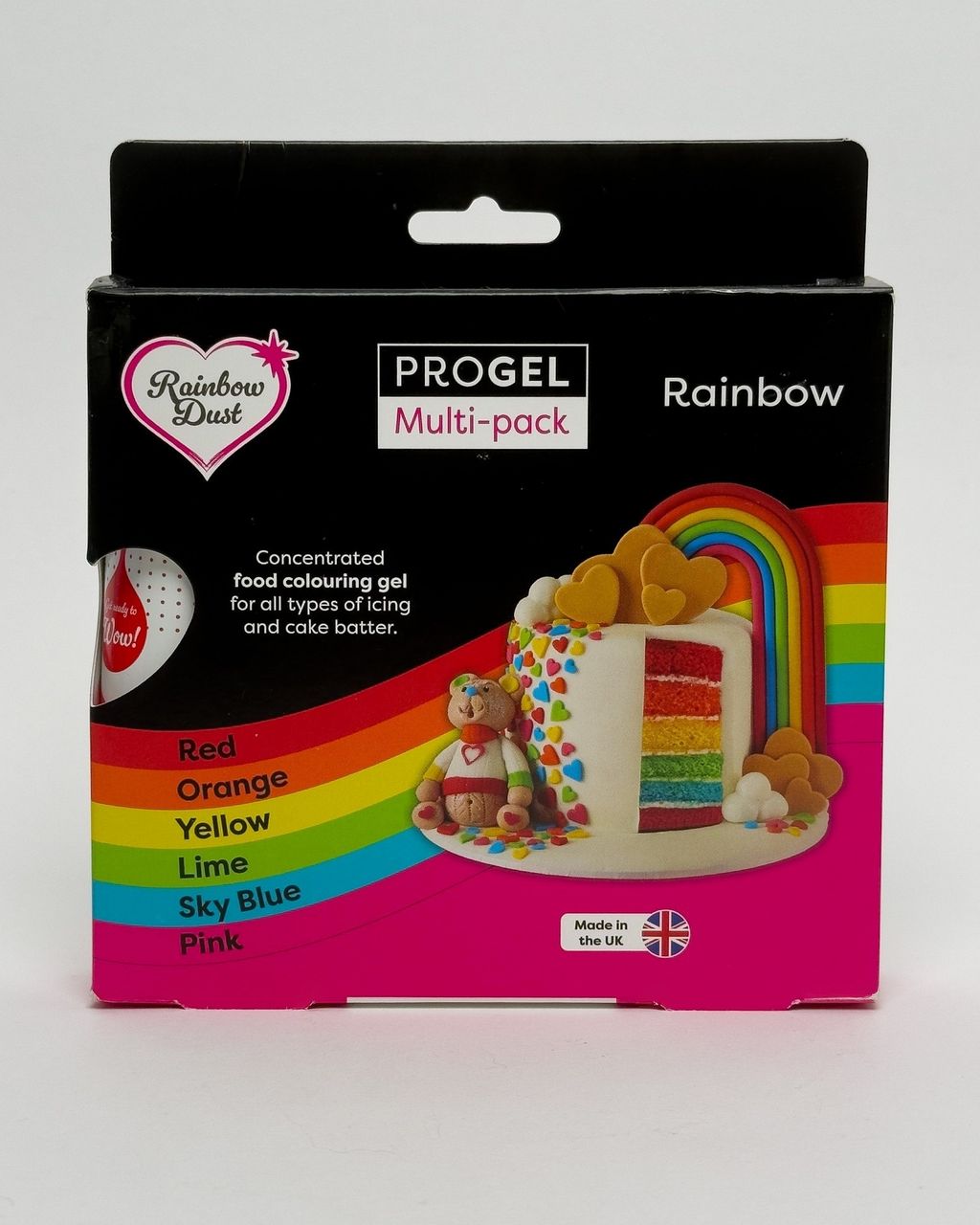
ProGel Gel Food Colouring Rainbow Set of 6
Colored Cookies: How to Color Dough So the Color Survives Baking
Updated Oct 15, 2026
Colored cookies keep their color in the oven if you do three things: tint pale butter dough with gel color, go one shade deeper than you want on the plate, and bake at 160–170 °C (320–340 °F) so the cookies don't brown. Everything else is detail. Below you'll find gram measurements, a recipe for a Christmas red that doesn't drift toward burgundy, and step-by-step methods for pinwheels and checkerboards so your pattern comes out crisp.
Four things affect the color of cookies in the oven: browning of the surface, the yellowish base from egg yolks and butter, dark ingredients in the dough, and a slight softening of the pigment from heat. Most of the time browning is to blame, not the coloring.
Maillard reaction and caramelization. Sugar and proteins in the dough start to brown noticeably from around 140 °C (285 °F), and the hotter it gets, the faster it goes. It happens first on the edges and bottom, which is why your green tree suddenly has beige edges.
Egg yolks and butter. Dough made with yolks is yellowish to begin with. Red and yellow don't mind, but blue turns greenish in it and purple turns gray.
Brown ingredients. Brown sugar, honey, cinnamon or gingerbread spice darken the dough even before baking. For colored cookies, use the lightest base you can.
Baking softens the color. You'll find how to account for that in the section on amounts.
Use gel color in cookie dough. It's concentrated, so you need very little and it won't thin the dough. Liquid drops from the supermarket add water: the dough turns sticky, spreads in the oven, and you still won't get a deep shade.
What works in dough and what doesn't:
Gel color (for example ProGel by Rainbow Dust): vivid, a fraction of a gram is enough, and at the usual amount you can't taste it. The most reliable choice for cookies.
Liquid drop coloring: fine for pastel shades, but not for deep red or black.
Cocoa: the best route to brown and near-black, and it tastes good too. Replace 10–15% of the flour with it.
Matcha: naturally green, but it turns a dull olive in the oven and you can taste it. That may even be a plus.
Beetroot powder or freeze-dried fruit powder: looks lovely in raw dough, but heat turns it brown or fades it. It isn't suited to baked dough and works better in icing.
The differences between gel, powder and oil-based colors are covered in detail in the article Food Coloring for Baking: Gel, Powder and Chocolate Colors. Here, stick to one rule: gel for dough. The gel colors we have in stock are in the food colors and dyes category.
For 250 g of dough, about 0.2–0.5 g of gel color gives a pastel and 1–2 g gives a deep shade. Red and black need the most, yellow and green the least. Always start with less and add more.
Add the color with a toothpick, not straight from the bottle into the bowl. Make a small well in the dough, dab the color into it, and fold the dough over it so you don't dye the whole counter.
Knead only until the color is even. Butter dough warms up with long kneading and starts to crumble. If it gets sticky, knead it through plastic wrap.
Rest the dough in the fridge for 20–30 minutes. Gel color keeps deepening in the dough, so judge the shade after resting, not right after mixing.
Baking takes away roughly one shade. Raw dough should be a step darker than you want the finished cookies to be.
If you're planning several colors at once, the ProGel rainbow set is worth it (6 shades, 25 g each: red, orange, yellow, lime green, sky blue and pink). For how to mix shades by ratio, see the article How to Mix Frosting Colors: A Shade Chart from Pastel to Dark. The ratios apply to dough too, just keep in mind that egg yolks add a little yellow.
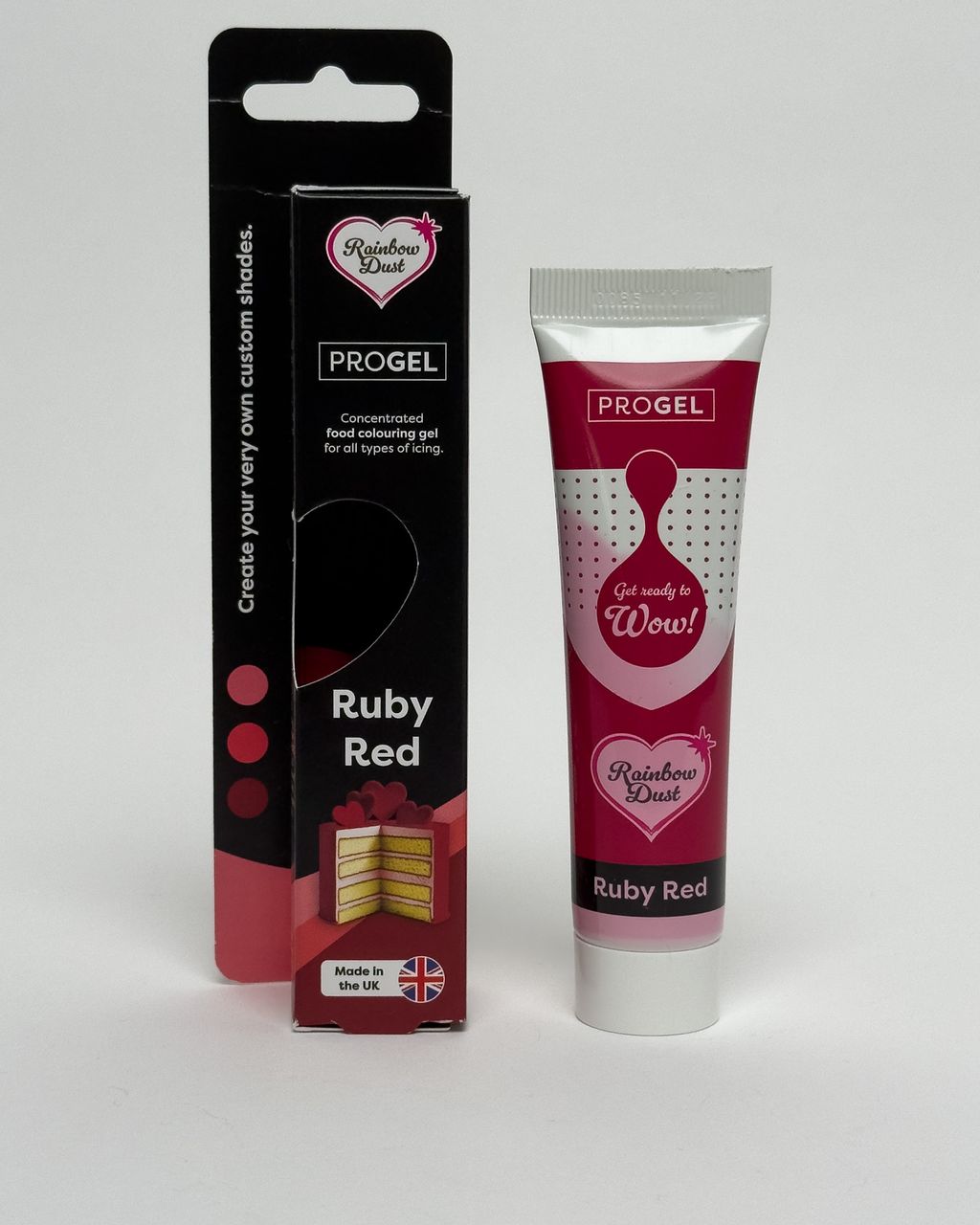
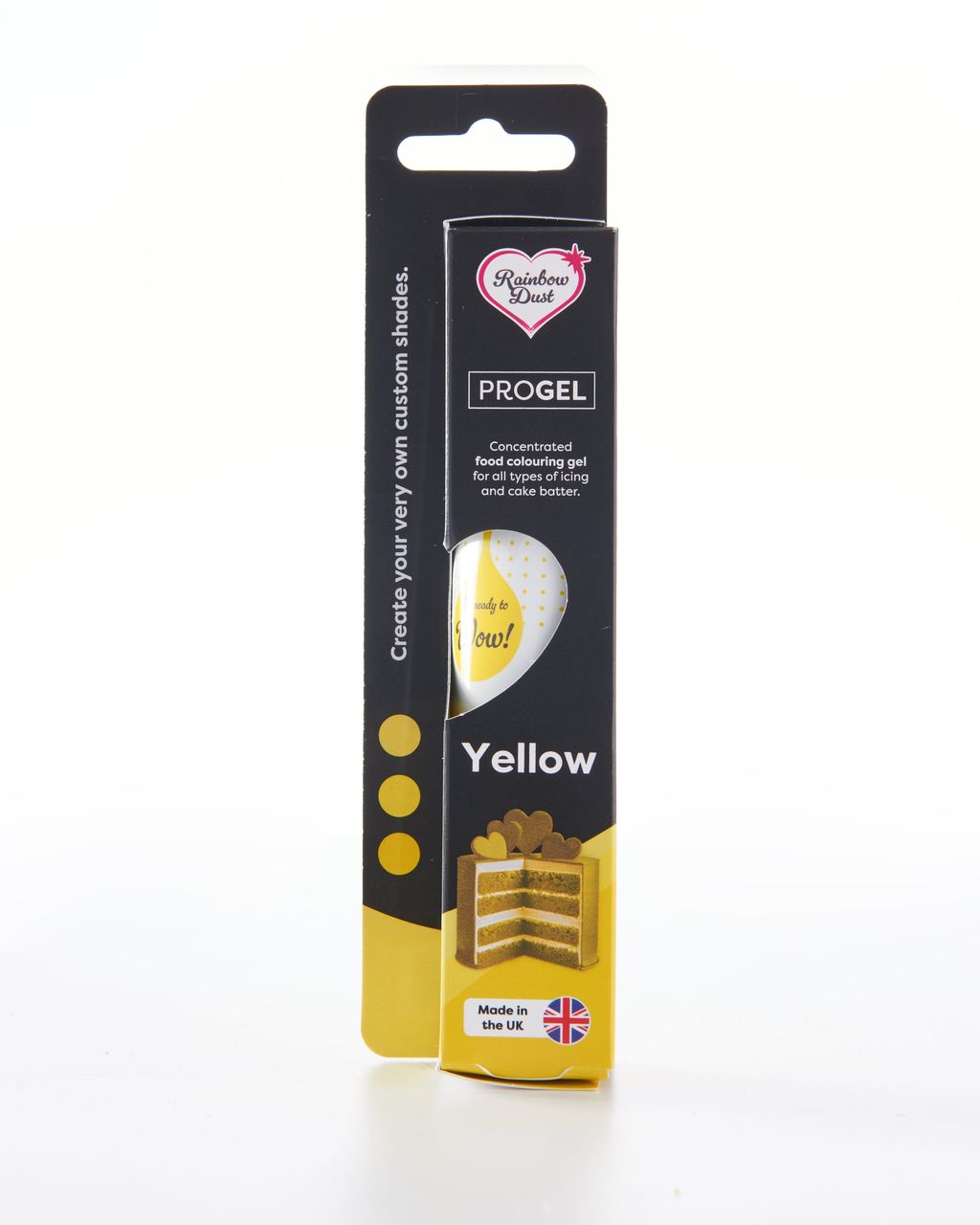
You get a rich Christmas red by mixing ProGel Ruby with a drop of ProGel Yellow. Ruby on its own is a deep ruby with a slight burgundy undertone, so by itself it won't give you a classic Christmas red.
Base: 1–1.5 g Ruby per 250 g of dough.
Warming the shade: add Yellow at roughly 1 part to 4 parts Ruby and mix well. The burgundy undertone disappears and the color moves toward a bright, warm red.
Want a dark, velvety red? Use Ruby on its own. For burgundy stars or hearts, that undertone is actually an advantage.
Watch for browning. Red dough browns at the edges first and then looks brick-colored. Bake it at the low end of the temperature range and take it out early.
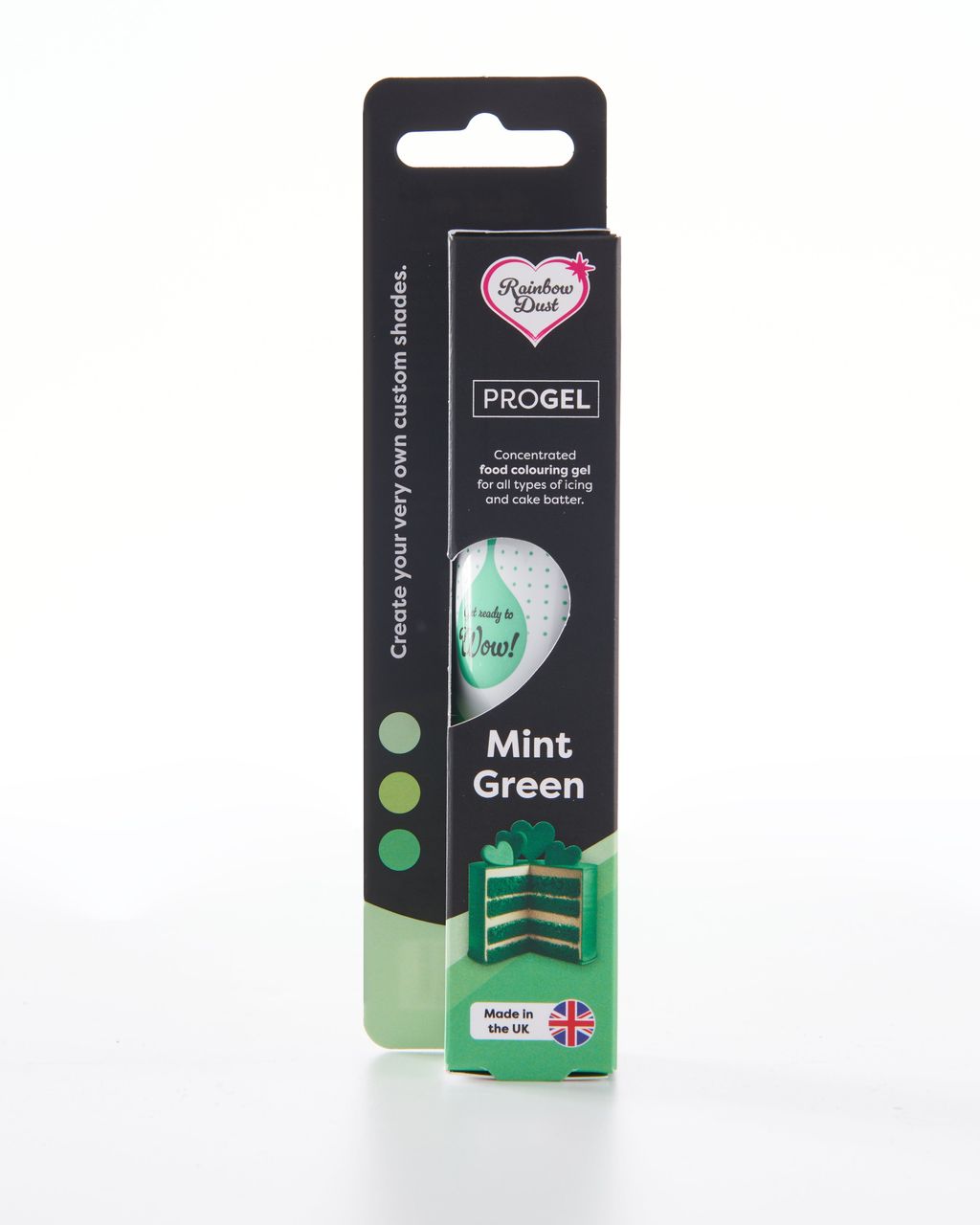
Green for trees is simpler: ProGel Mint Green gives a fresh green in plain dough, and a drop of Yellow nudges it toward a springier, grassy shade.
Bake colored cookies at 160–170 °C (320–340 °F), or 150–160 °C (300–320 °F) with a fan, and take them out as soon as the surface looks dry and the edges haven't picked up color. That's usually 1–3 minutes sooner than classic cookies.
Oven temperature. Ovens often differ from the set temperature by 10–20 °C. With colored cookies it matters more than anywhere else, so check it with an oven thermometer.
Baking sheet and liner. A dark sheet bakes the bottoms faster. A light-colored sheet with parchment or a perforated silicone mat gives more even heat.
Thickness. Roll to 3–4 mm. Thinner cookies bake through before the edges brown.
Cold dough into the oven. Put cut-out cookies in the fridge for 10–15 minutes. They hold their shape and heat reaches them more slowly, so the edges don't race ahead.
Watch the bottom, not the top. Lift one cookie with a spatula. If the bottom is golden, they're done.
Classic Christmas Cookies: Tender Linzer Shortbread makes a good base. It's buttery, pale, unspiced and holds its shape well in the fridge. Just keep in mind that the yolks give the dough a slightly yellowish base. That doesn't matter for red, yellow and green, but blue comes out turquoise.
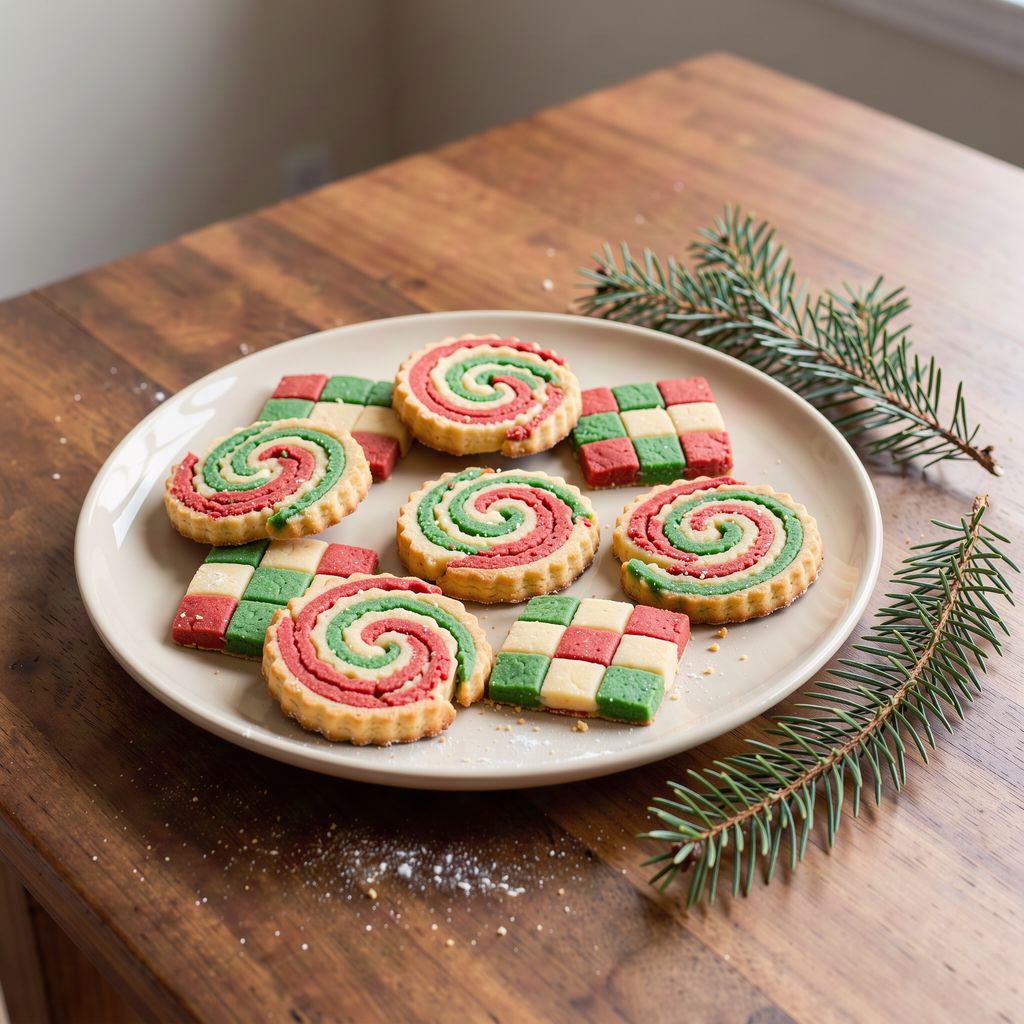
For pinwheel cookies, roll out two different-colored doughs into sheets of the same size, stack them, roll up tightly, chill until firm and slice into rounds. What matters most is that both layers are the same thickness and the log is well chilled.
Roll both sheets between sheets of parchment to 3–4 mm, about 20 × 25 cm. The paper stops sticking, and you don't need dusting flour, which would dull the colors.
Chill the sheets for 15 minutes, then peel off the top paper and lay one sheet over the other. Run a rolling pin lightly over them so they stick together. If the dough doesn't hold, brush the bottom sheet with a very thin layer of egg white.
Trim the edges with a knife. On the long side where you start rolling, cut the top sheet 5 mm shorter. The center of the spiral then closes neatly with no hole.
Roll tightly, using the paper to help, with no air pockets. Wrap the log in plastic wrap and chill it for 1 hour in the fridge or 20–30 minutes in the freezer.
Slice with a sharp knife into rounds 5–6 mm thick. Turn the log a quarter turn after each cut so it doesn't flatten into an oval.
Bake at 165 °C (325 °F) for about 9–11 minutes. The pinwheels should stay pale.
For a nicer edge, you can roll the log in colored sugar before slicing. How to color it at home is covered in Colored Sprinkling Sugar: How to Dye It at Home with Gel Color.
For checkerboard cookies, roll two colored doughs into sheets of equal 1 cm thickness, cut them into 1 × 1 cm strips and stack them alternately in a 2 × 2 or 3 × 3 pattern. Only equal thickness and well-chilled dough give you a crisp pattern.
Weigh both doughs to the gram. Equal weight means equal-sized sheets and no leftover dough of one color.
Roll each into a sheet exactly 1 cm thick. A pair of guide strips or a rolling pin with spacer rings helps. Chill the sheets for at least 30 minutes so they're firm.
Cut 1 × 1 cm strips with a long knife in one stroke, not by sawing. If a strip gets distorted, put it back in the fridge.
Stack them alternately: light–dark on the bottom row, dark–light on the next. Brush each layer with a very thin coat of egg white or water so the strips stick together and don't separate during baking.
Wrap the block in plastic wrap and gently square it up on all sides with your palm. Then chill it for 1 hour.
Slice into 5–7 mm slices and bake at 160–165 °C (320–325 °F) for about 10–12 minutes.
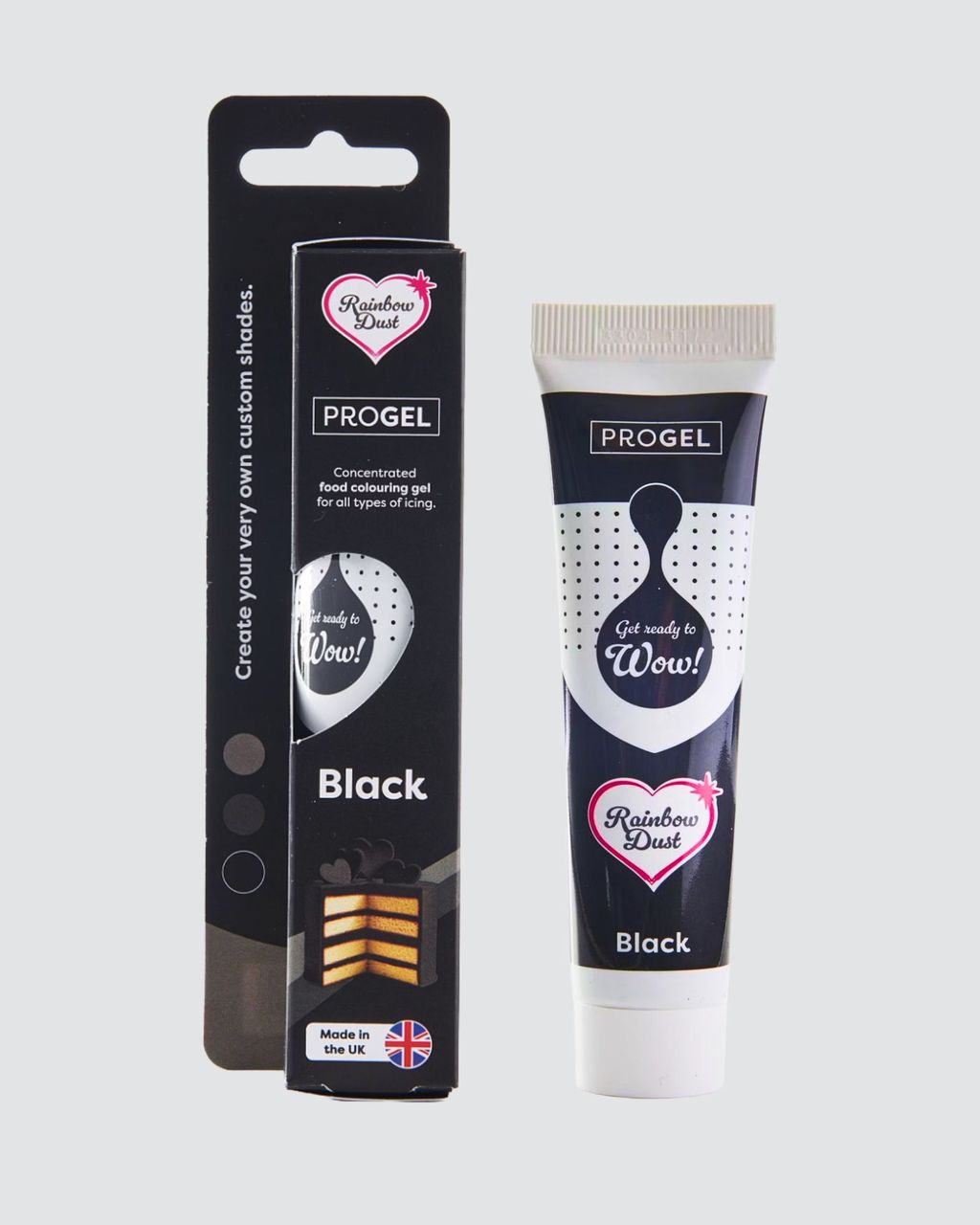
The classic combination is plain and cocoa dough. Cocoa gives you a dark shade with no coloring, and it tastes good. For a Christmas checkerboard, try red with green, or white with mint. If you want near-black, color the cocoa dough with ProGel Black as well: on a dark base, a third of the amount you'd otherwise put in light dough is enough.
Color the dough when you want the color to show in the cross-section (pinwheels, checkerboards, marbling). If a colored surface is enough, color the icing, because it isn't baked and stays vivid.
Colored dough: a pattern inside, with an even color throughout each cookie.
Colored icing: the richest colors and fine detail. The base is royal icing for cookies, which you can color with the same gel colors.
Combination: a light green tree from dough with deep green icing on top looks dimensional, and you don't have to re-color the dough.
If you're also baking gingerbread to hang on the tree, read Gingerbread Ornaments: How to Bake Them So They Last and Don't Crack on the String. Gingerbread dough is dark, so don't color it. Add color with icing instead.
Yes. Colored butter dough keeps in the freezer for 2–3 months, and the color doesn't change. Wrap it tightly in plastic wrap so it doesn't dry out. You can also freeze pinwheel logs and checkerboard blocks already shaped. Thaw them overnight in the fridge and slice while still cold.
At the usual amount of 1–2 g per 250 g of dough, you won't taste gel color. Only large amounts of red or black can leave a slightly bitter aftertaste. That's why it's best to build dark shades on cocoa dough and use gel only to fine-tune them.
Colored cookies keep their color longest in a tin, in a cool, dark place. Pigments fade mainly in daylight, so save the glass jar on the windowsill for cookies that will be eaten right away.
Soap and a little oil will get gel color off your hands, and dish soap or baking soda will lift it from a laminate countertop. Prevention is easier: knead colored dough wearing disposable gloves or through plastic wrap.
Yes, gel color works in any dough. Vegan dough made with plant-based fat is often even paler, so the colors come out cleaner. Gluten-free dough breaks more easily, so for pinwheels and checkerboards roll it a little thicker and chill it longer.
One recipe worth heating the oven for, one tip, and one deal from the shop. Nothing else.