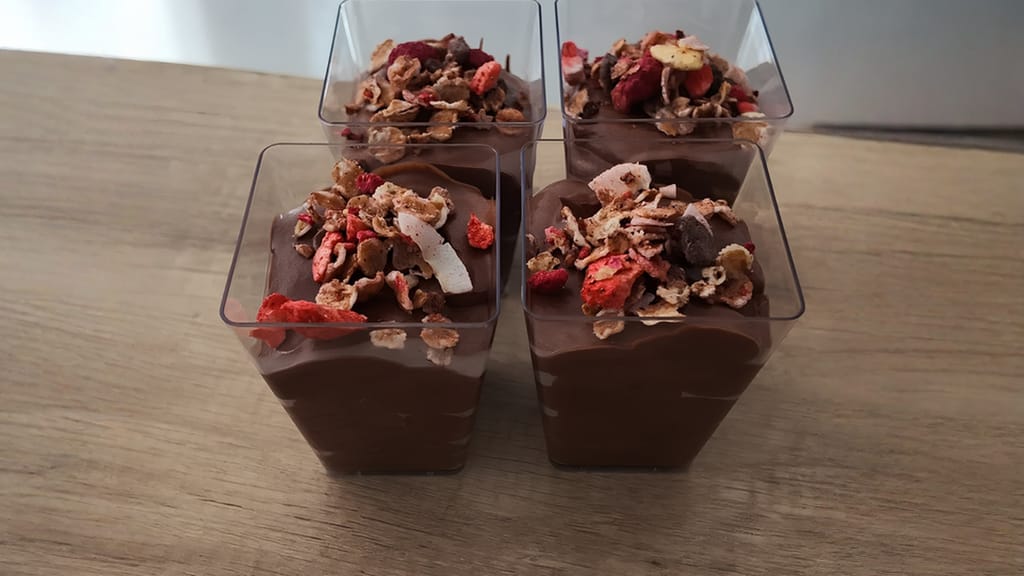
Chocolate mousse
Chocolate Mousse (Mousse au Chocolat): The Classic With Eggs and Without
Updated Oct 15, 2026
Chocolate mousse (French: mousse au chocolat) is simply melted chocolate with air folded in. In the classic version that air comes from whipped egg whites; other versions use whipped cream, aquafaba or even just water. What holds it together is the cocoa butter as it sets, so the quality and temperature of your chocolate matter more than anything else. Below you'll find how to make the classic with eggs, how to make it safely with egg white powder, three egg-free methods, and how much gelatin to add when the mousse has to hold its shape in a layered cake.
Chocolate mousse holds together thanks to two things: air bubbles (from whipped egg whites or cream) and cocoa butter, which firms up in the fridge and locks those bubbles in. That's why a mousse looks loose right after mixing and only turns firm after 4–6 hours of chilling.
Three rules follow from this, and you'll come back to them again and again:
More cocoa butter = firmer mousse. Dark chocolate sets better than milk chocolate, and white chocolate is the softest.
The chocolate must be warm, but not hot. Around 35–45 °C (95–113 °F) when you fold. Cooler chocolate seizes into little flecks, and with hot chocolate the egg whites deflate.
Air is folded in, not whisked in. Use a spatula, working from the bottom up, in two or three additions – every bit of unnecessary stirring knocks out bubbles.
A classic French chocolate mousse is just chocolate, eggs, a pinch of salt and a little sugar – no cream. The yolks give creaminess, the whites give air. As a rough guide, use about 1 egg per 35–40 g of dark chocolate; for a tested method with exact quantities, see the Chocolate Mousse recipe.
The method in brief:
Melt the chocolate over a bain-marie or in the microwave in 20–30 second bursts, ideally to 45–50 °C (113–122 °F).
Stir in the egg yolks one at a time. The mixture will thicken and turn glossy – that's exactly right.
Whip the egg whites with a pinch of salt to soft or medium peaks, adding a spoonful of sugar at the end. Stiff, dry whites are harder to fold in and leave white lumps in the mousse.
Fold in the whites in three additions. Be a bit brisker with the first third (it loosens the chocolate), then fold the rest in gently with a spatula.
Pour into glasses and chill for at least 4 hours, ideally overnight.
If you'd like a fluffier, silkier mousse, you can replace part of the whites with heavy cream (30–40% fat) whipped to soft peaks – the route most pastry-chef recipes take.
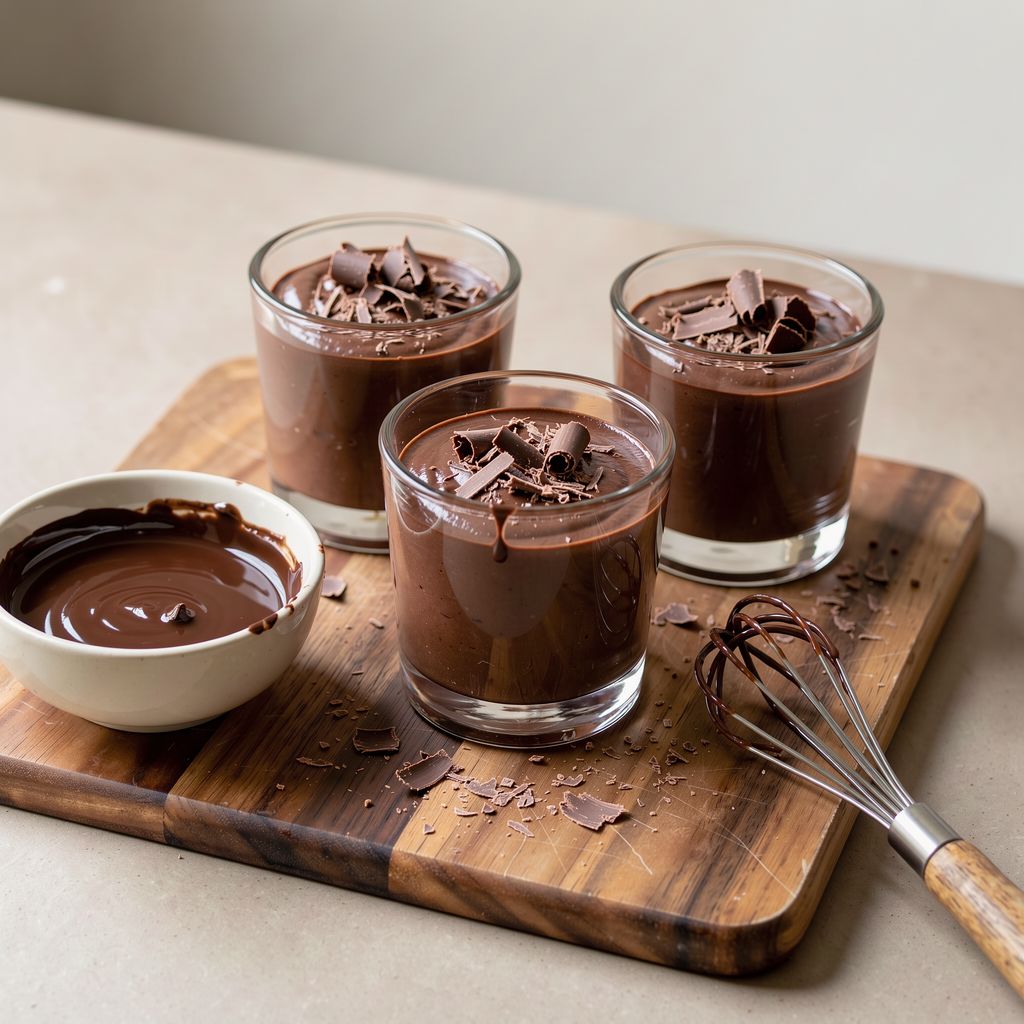
Chocolate mousse
Classic chocolate mousse with eggs – a tested step-by-step recipe
For chocolate mousse, use real chocolate with 50–70% cocoa. A cocoa-flavored coating or a fat-based coating made with vegetable fat instead of cocoa butter won't set the mousse and tastes flat. What counts is the ingredient list, not just the name: it must contain cocoa butter and no other vegetable fat. On the label, look for "chocolate" or "dark chocolate", or for couverture – Czech law calls couverture with at least 31% cocoa butter "čokoládová poleva" (literally "chocolate coating"). Watch out for "cocoa coating" and "fat-based coating": those are substitutes made with vegetable fat. You'll find the full range of real chocolates among our baking and cooking chocolates.
Dark, around 55% – the all-round choice. Callebaut 811 (54.5% cocoa solids, according to the manufacturer), for example, gives a mousse with a distinct chocolate flavor that isn't bitter, and the callets melt quickly and evenly.
Dark, 64–72% – more intense, less sweet and firmer. If you use dark chocolate above 64%, add a little more sugar to the egg whites, or soften the mousse with a spoonful of cream.
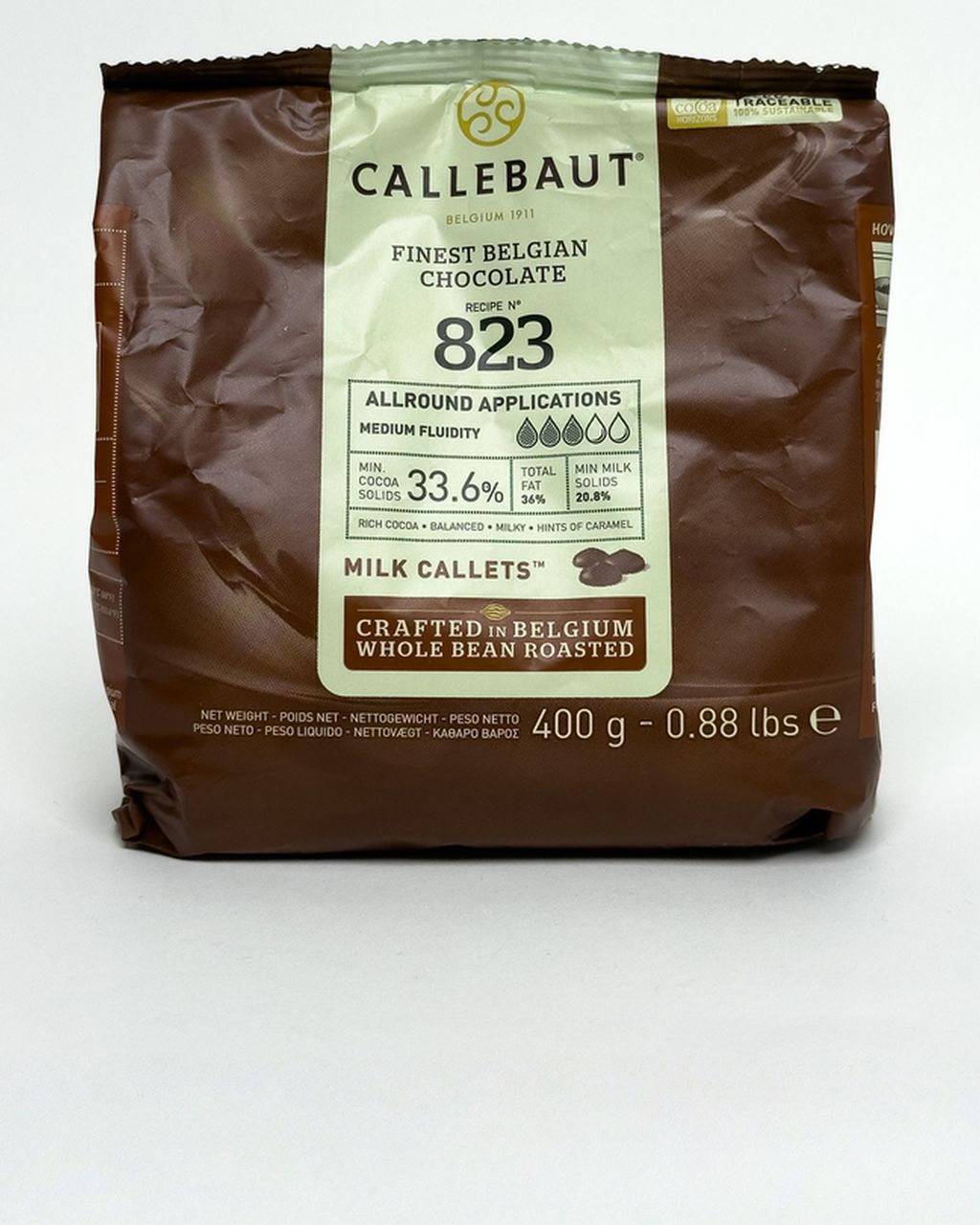
Milk – Callebaut 823 (33.6% cocoa), for example, is creamy, with caramel notes, and popular with children. But it has less cocoa butter and more sugar, so the mousse is noticeably softer. Use roughly a third more chocolate than you would with dark, or add a little gelatin (see below).
White – the sweetest and softest; without gelatin or whipped cream it barely sets. A tested option is this white chocolate mousse.
A blend often works best: two thirds dark 811 and one third milk 823, for example, gives a mousse that tastes like proper chocolate without being bitter.
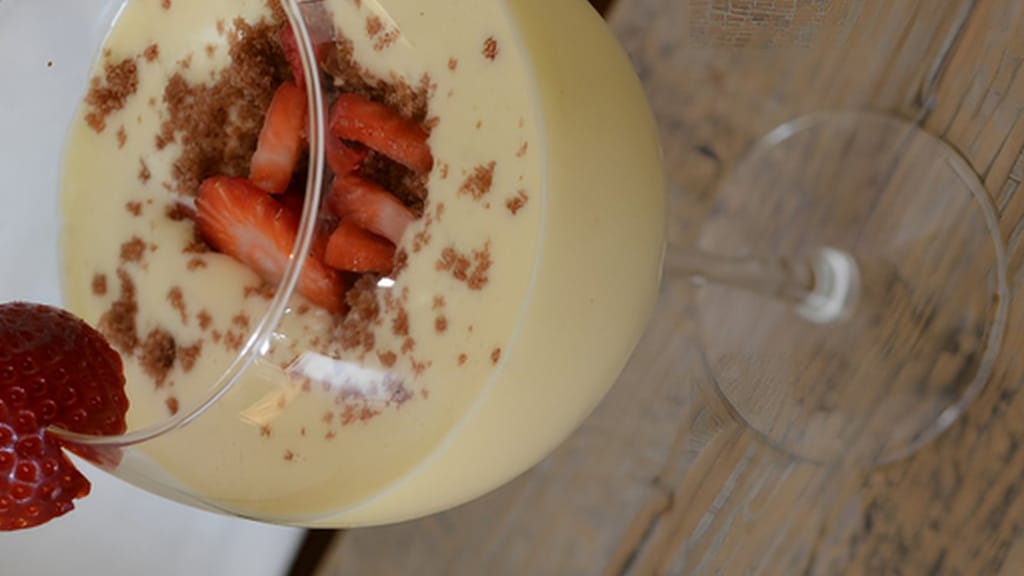
White chocolate mousse – light and fluffy
White chocolate mousse – a delicate, fluffy take on chocolate mousse
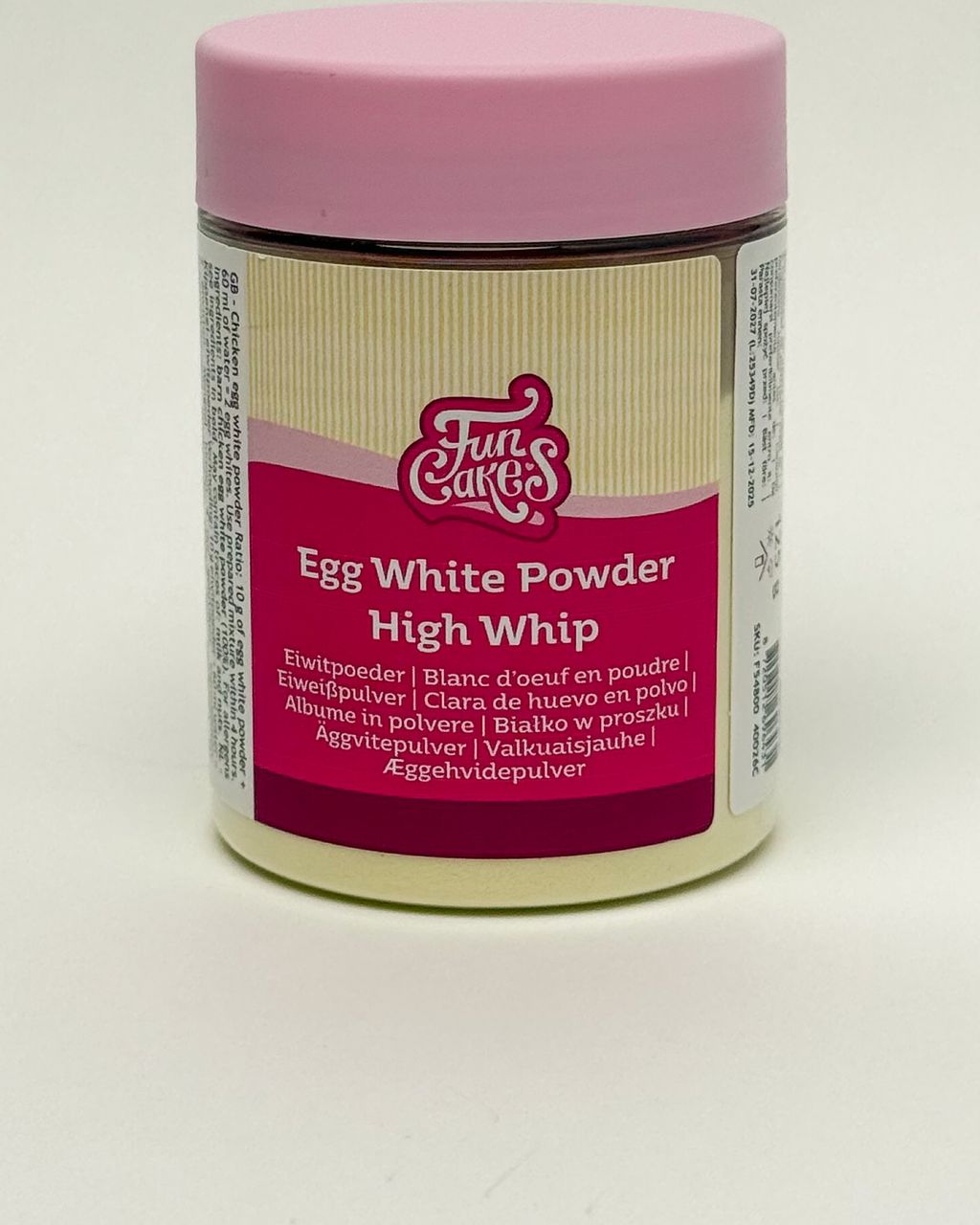
Egg white powder is pasteurized, so you can whip it into a meringue-style foam without the risk of raw egg, and the mousse tastes and sets just like the classic. For FunCakes egg white powder, the manufacturer's ratio is 10 g of powder to 60 ml of water = 2 egg whites, so about 5 g and 30 ml per egg white. Let the mixed powder rest for a few minutes to hydrate, then whip it like regular egg whites and use it within 4 hours.
That leaves the yolks. You can either leave them out and replace each yolk with 2–3 tablespoons of cream (the mousse will be lighter and paler), or heat them: whip them with sugar and a little hot sugar syrup into a thick, pale mixture (pâte à bombe), the way pastry chefs do. You can also heat-treat the whites another way: Swiss or Italian meringue is cooked and holds up beautifully in a mousse – our article on French, Swiss and Italian meringue explains the difference between them.
There are three ways to make chocolate mousse without eggs: with whipped cream, with aquafaba, or with just water. Each gives a different texture.
With whipped cream – the simplest and most common. Whip cream (33–40% fat) to soft peaks and fold it into chocolate that has cooled to 35–40 °C (95–104 °F). As a rough guide, use about equal weights of chocolate and cream for dark chocolate, and more chocolate for milk. The mousse is creamier and heavier than the egg version.
With aquafaba – the liquid from a can of chickpeas whips up like egg whites, and the mousse is vegan (if you use vegan chocolate). About 2–3 tablespoons of aquafaba replace one egg white; add a pinch of cream of tartar or a drop of lemon juice to help the foam hold. The faint chickpea smell disappears in the finished mousse.
With just water (chocolat chantilly) – a trick from the French chemist Hervé This: melt the chocolate in water (roughly 225 g dark chocolate (around 70% cocoa) to 200 ml water) and whisk it in a bowl set over ice water until it thickens like whipped cream. It gives the purest chocolate flavor, but you need to keep an eye on it. If you overwhip it and it turns grainy, warm it briefly so the chocolate melts again, then whisk once more.
For chocolate mousse in a layered cake, add 0.5–1 g of powdered 200 Bloom gelatin per 100 g of finished mousse – without it, the mousse won't hold its shape inside the cake ring. You don't need gelatin for mousse served in glasses. Use the lower amount for dark chocolate and a cake that should stay soft when sliced, and the higher amount for milk and white chocolate or for a cake that will sit out of the fridge.
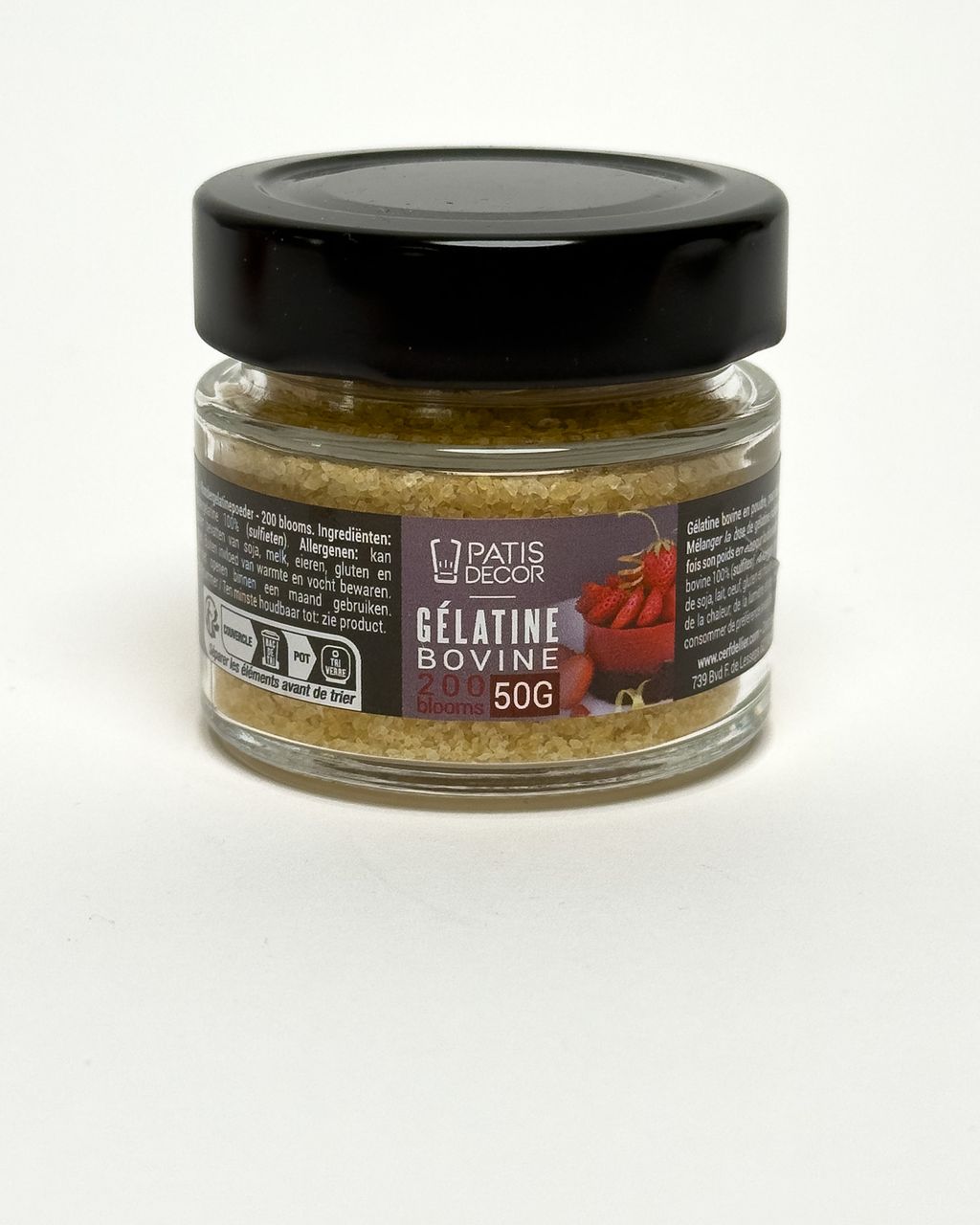
Sprinkle the gelatin (for example powdered beef gelatin, 200 Bloom) over 5–6 times its weight in cold water and let it bloom for 10 minutes.
Dissolve it in warm chocolate (around 45 °C / 113 °F) or in a little heated cream – never boil it.
Fold in the air (whipped cream or egg whites) and fill the mold right away; the gelatin starts to set within 10–15 minutes.
If you're building a cake with a whipped cream layer, the principle is the same as for a firm whipped cream frosting with gelatin.
A grainy mousse almost always means cold chocolate; a runny mousse almost always means deflated air or too little cocoa butter. In detail:
Tiny dark flecks or lumps – the chocolate was below about 30 °C (86 °F) when you folded it in, or you added ice-cold whipped cream. It set before it could combine. Next time fold it in warmer, and let the cream take the chill off for a bit.
The chocolate seized while melting and turned into a clump – a drop of water or steam got into it, or it overheated. A spoonful of hot cream can rescue it, but the mousse won't be as glossy.
The mousse is still runny after a night in the fridge – too little chocolate for the amount of air, a chocolate that's too soft (milk or white) without gelatin, or overmixed egg whites.
White lumps of egg white – the whites were whipped too dry, or you folded them in all at once. Whip only to soft peaks and fold in the first third briskly.
A sour or "eggy" aftertaste – too little salt and sugar in the whites, or older eggs. A pinch of salt really lifts the chocolate flavor.
Mousse made with raw eggs keeps in the fridge for 1–2 days, while versions made with whipped cream or egg white powder keep for 2–3 days. Keep it covered and below 5 °C (41 °F), because chocolate easily picks up smells from the fridge. That makes it a great make-ahead dessert – you'll find more ideas in our article on [Christmas dessert cups](/cs/articles/vanocni-dezerty-ve-sklenicce).
Yes, chocolate mousse can be frozen for up to a month, and the versions made with whipped cream or gelatin freeze best. Thaw it slowly in the fridge overnight. An egg mousse without gelatin loosens a little after thawing, but it's also lovely eaten half-frozen, like a parfait.
Yes, 1–2 tablespoons of rum, orange liqueur or strong espresso per 200 g of chocolate will deepen the flavor nicely. Stir it into the warm chocolate along with the egg yolks rather than at the end, and don't overdo it – extra liquid makes the mousse softer.
You can, but it won't be a true chocolate mousse, because cocoa powder contains much less cocoa butter (cocoa powder 10–22%, dark chocolate around 30–40%) and so can't hold the mousse together. Cocoa powder, sugar and cream make more of a cocoa whipped cream, and to hold its shape it needs gelatin or a stabilizer. For the real flavor and texture, there's no substitute for chocolate.
Allow 80–120 g of mousse per person, about one small glass. It's rich – 200 g of chocolate usually makes 4–6 servings.
One recipe worth heating the oven for, one tip, and one deal from the shop. Nothing else.