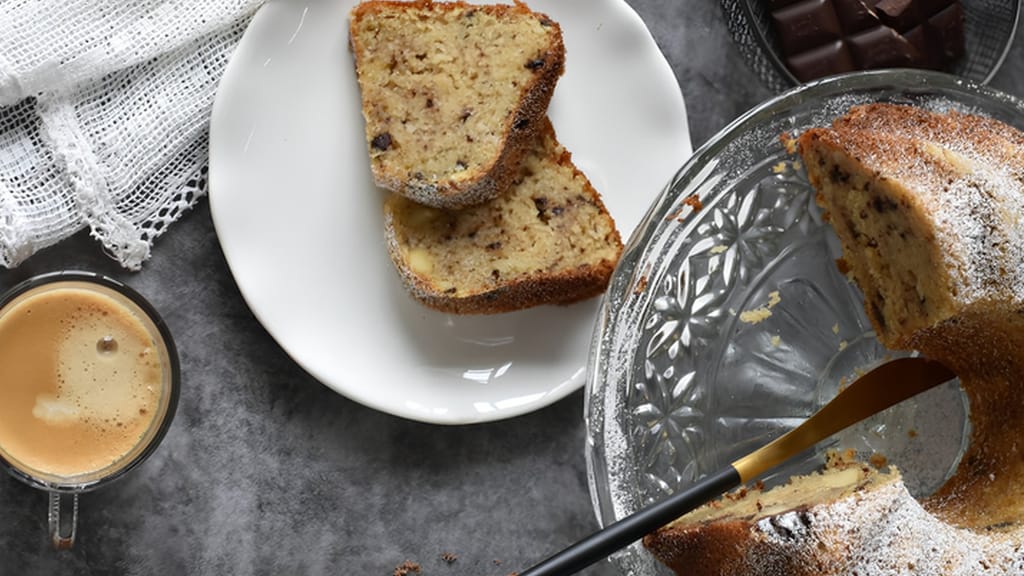
Two-fifty curd cheese bundt cake with chocolate and almonds
Baking in a Remoska: Bundt Cake, Sponge and Cake Layers – Which Pan and How Long
Updated Nov 17, 2026
A Remoska (a Czech countertop electric roaster with a heating element in the lid) can handle a bundt cake, a sponge and a cake layer: put the bundt batter in a metal pan at least 3–4 cm (about 1½ in) narrower than the bowl, skip the preheating, and bake it for roughly 45–50 minutes. Bake the sponge straight in the bowl, lined with parchment paper, for about 25–30 minutes. The whole trick is that the Remoska heats only from the lid. The top gets more heat than the bottom, and once you plan around that, you have a small oven that never needs to preheat.
A bundt cake in a Remoska bakes in roughly 45–50 minutes, and a sponge or cake layer baked straight in the bowl takes 25–30 minutes. You don't need to think about temperature: according to the Remoska® manufacturer's instructions, the inside of the bowl stays at 160–180°C (320–355°F) and there is no way to adjust it.
Creamed or quark bundt cake in a tube pan: about 45–50 minutes, with a first check at 40 minutes.
Yeast bundt cake: we don't give a fixed time, as it depends on the pan and the height of the batter. Test it with a skewer and start checking earlier than you would for a creamed bundt cake.
Sponge / cake layer baked straight in the bowl with parchment paper: 25–30 minutes (based on recipes for a Remoska about 30 cm across), with a check at 25 minutes.
Cocoa cake layer or mug-style cake in the bowl: a little longer than a sponge, 25–35 minutes depending on the height of the batter.
Treat the times as a starting point, not a rule. The 2 l Remoska (R21, 400 W) and the 4 l Grand (R22, 580 W, both per the manufacturer's label) differ in power and in how far the lid sits from the batter, and the closer the batter is to the lid, the faster the top bakes. For regular oven times, see our article on what temperature and how long to bake a bundt cake.
Seasonal baking plans, tested recipes and kitchen tricks that save you time. Unsubscribe in one click.
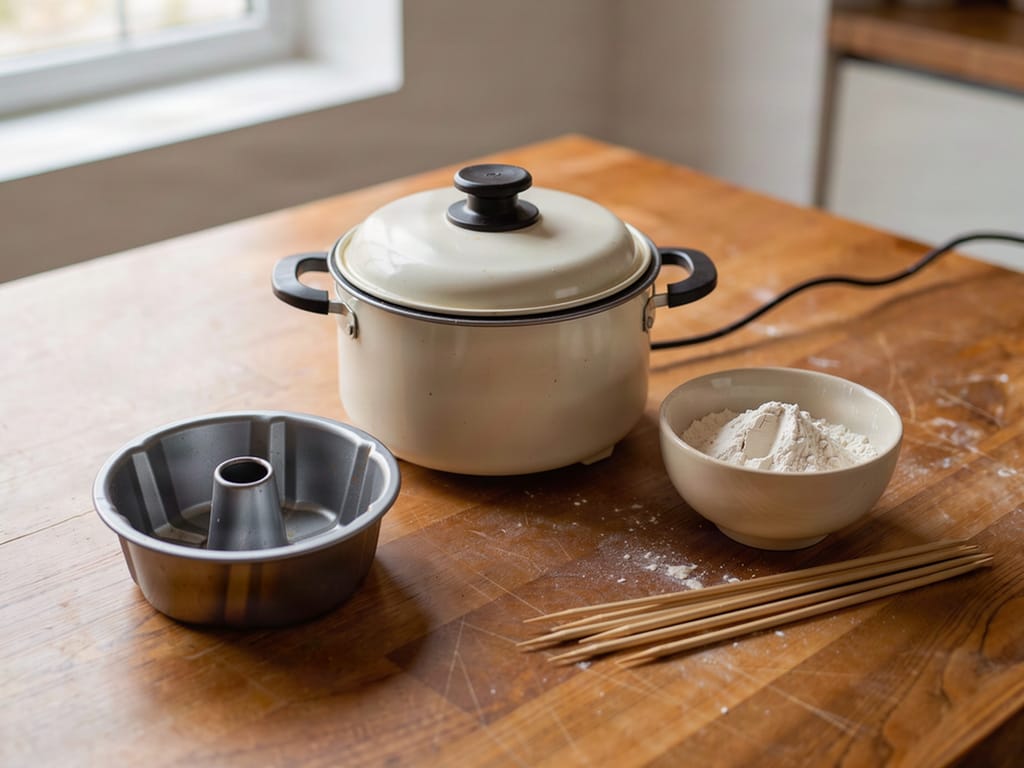
You need a metal pan at least 3–4 cm (1½ in) narrower than the bowl, and low enough that the batter never reaches the lid even after rising. For the 4 l Grand (R22) with a bowl of about 29 cm, that means a pan of 25 cm at most (according to Dokonalé vaření). For the 2 l Remoska (R21) with a 22 cm bowl, it means about 18 cm.
Height: for the Prima Remoska, Dokonalé vaření recommends a pan no taller than 6.5 cm (2 l) and 7.5 cm (4 l). The manufacturer itself advises filling the bowl only up to the rivets of the handles, so the food doesn't touch the heating lid and scorch.
Material: dark metal or enameled steel. Heat has to reach the batter from below as well, through the walls of the bowl, and metal conducts it best. Silicone insulates, so the bottom stays pale and damp.
Center tube: you want one in a bundt cake, because it lets heat into the middle, which is where it arrives most slowly. In the 2 l Remoska (R21), though, a classic tube bundt pan often doesn't fit. There, bake a lower cake in a shallow cake pan or straight in the bowl.
Bowl instead of a pan: the simplest solution for a sponge or cake layer. Line the bottom and sides with parchment paper and turn the finished layer out with the paper. The manufacturer forbids cutting in the bowl or touching it with metal utensils, as the nonstick coating wouldn't survive.
For your first bundt cake in a Remoska, try the Dvěstěpadesátka quark bundt cake with chocolate and almonds (quark, tvaroh, is a Czech fresh curd cheese). Quark batter is moister, and the Remoska's gentle heat suits it. For a smaller pan, use about two thirds of the batter and bake the rest as muffins.
Grease and flour the pan more carefully than you would for the oven, because a bundt cake from a Remoska has a damper bottom and sticks more. For how to do it with metal and silicone pans, see our article on how to grease a baking pan.
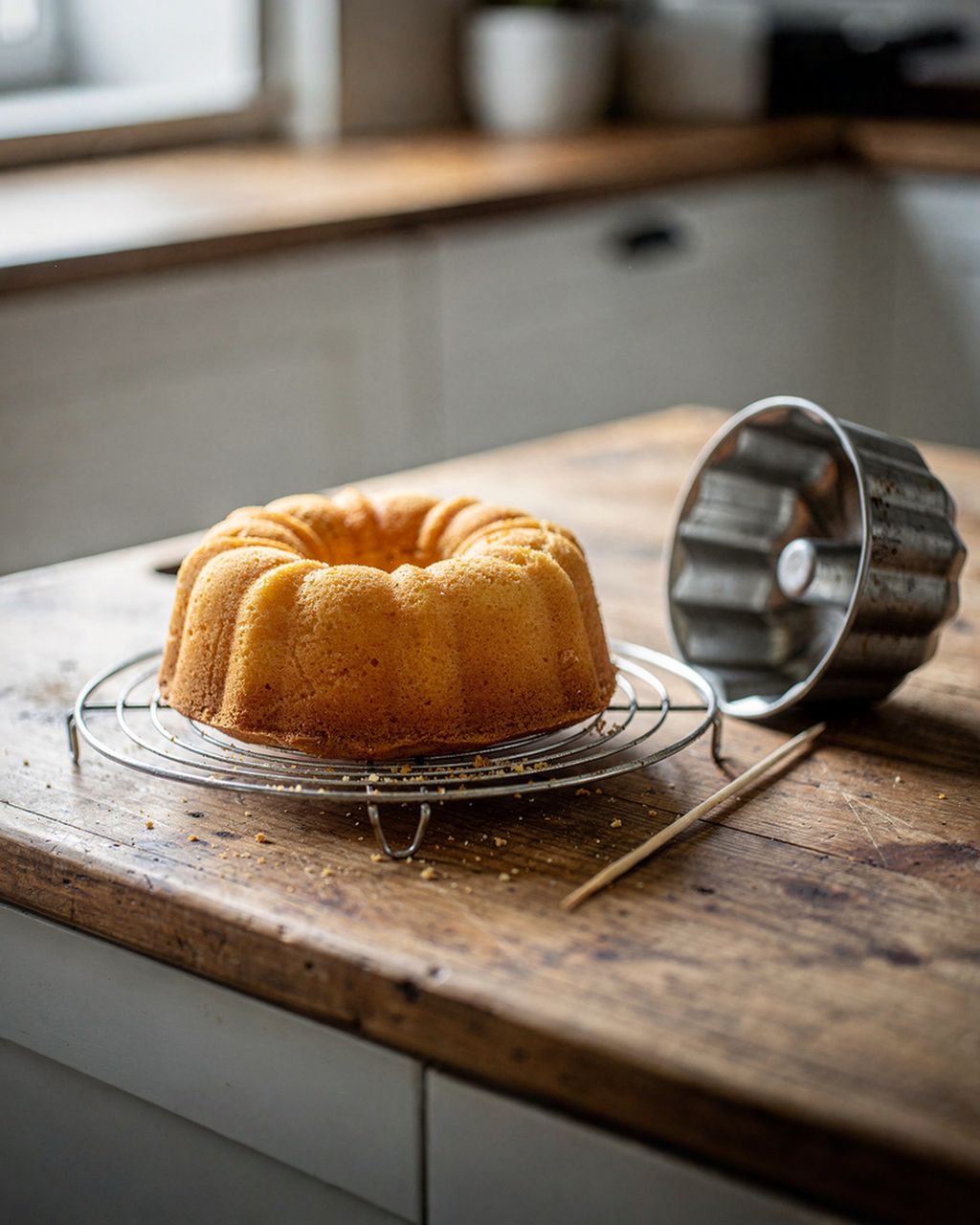
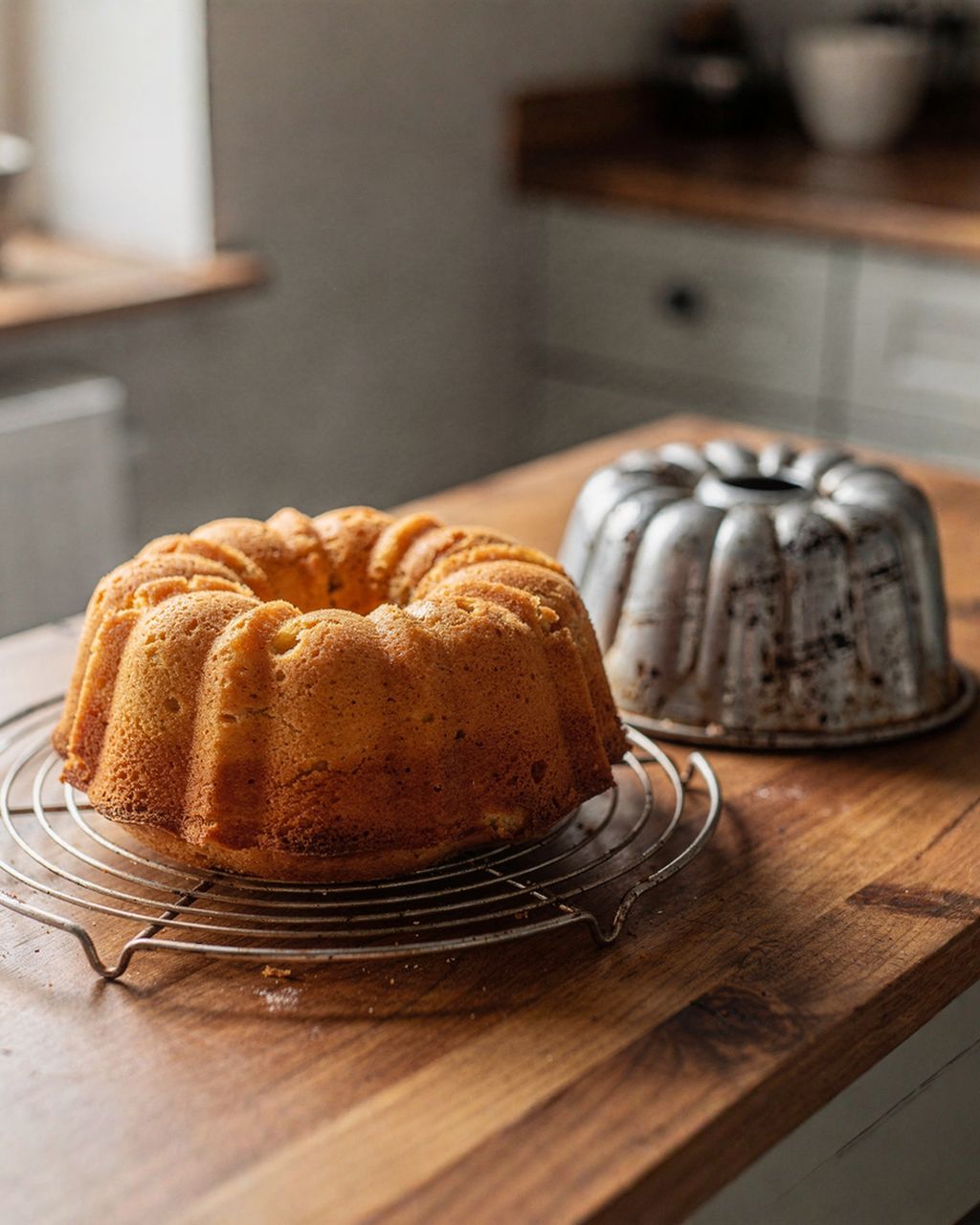
Two-fifty curd cheese bundt cake with chocolate and almonds
Dvěstěpadesátka quark bundt cake – a moist batter that suits the Remoska
No, and you must not preheat an empty Remoska. The manufacturer's instructions state explicitly that neither the heating lid nor the whole Remoska should be preheated without food.
The method is therefore the reverse of the oven: put the pan with batter into the cold bowl, put on the lid and plug it in. The batter warms up gradually along with the bowl.
The Remoska has its heating element only in the lid, so the top gets direct radiant heat, while the bottom gets only what travels through the walls of the bowl and pan. That's why the top browns and cracks while the base and center are still pale and damp. In an oven, it's like baking with the top element only. The article fan oven or conventional explains the difference between oven modes.
What to do about it:
Fill the pan less than you would for the oven, to about halfway. A thinner layer of batter bakes through before the top darkens.
Cover the pan with aluminum foil from the start, with a small opening above the center tube so steam can escape (a tip from Dokonalé vaření). If you missed that, add the foil as soon as the top is golden.
Stick a few pieces of hollow macaroni into the batter. They carry steam out of the center, so the middle bakes through faster. Pull them out after baking.
Don't open the lid for at least the first 25 minutes (ideally 30 for a bundt cake). The manufacturer warns that lifting the lid often dries the food out, and with a sponge every opening means a drop in temperature and a risk that it sinks.
Set the metal pan directly on the bottom of the bowl, with no rack between them. Every centimeter of air under the pan is more insulation.
A cracked top is almost certain in a Remoska, because the crust sets before the bundt cake finishes rising. For exactly why a bundt cake cracks and bulges, see why a bundt cake cracks or doesn't rise.
Push a wooden skewer into the highest point of the batter, for a bundt cake between the center tube and the edge. If it comes out dry, with just a few dry crumbs, it's done. If wet batter clings to it, cover the top with aluminum foil and bake another 5 minutes, then test again (method from Dokonalé vaření).
Don't rely on the color of the top in a Remoska: a dark crust here doesn't mean the center is baked. Additional signs:
the edge of the batter starts to pull away from the walls of the pan,
the top springs back when lightly pressed with a finger and doesn't leave a dent,
the Remoska smells of baked batter, not raw eggs.
If you slice the bundt cake and the center is still gooey, it's not too late. What to do with an underbaked bundt cake is covered in a separate article.
Sponge and cake layers bake best in a Remoska straight in the bowl lined with parchment paper, for about 25–30 minutes, with the lid kept closed for at least the first 25 minutes. A sponge relies on whisked eggs and air: lift the lid too early and the temperature drops and the layer sinks.
Pour the batter in low, about 3–4 cm (1½ in). A taller sponge bakes unevenly in a Remoska and the top darkens before the center is done. For a taller cake, bake two thinner layers one after the other.
Turn it out onto a rack with the paper and peel the paper off once the layer has cooled a little. The underside will be paler than in an oven, which doesn't matter for a layer that will be filled with cream.
For the sponge layer, try the recipe for a fluffy Génoise sponge layer: half the batch in the bowl of the 2 l Remoska (R21), the whole batch in the 4 l Grand (R22).
The Remoska isn't the only small appliance you can bake a cake in. If you also have an air fryer, or you're in a hurry with a microwave, see baking in an air fryer and bundt cake and sponge in the microwave. Every appliance heats differently and needs a different pan.
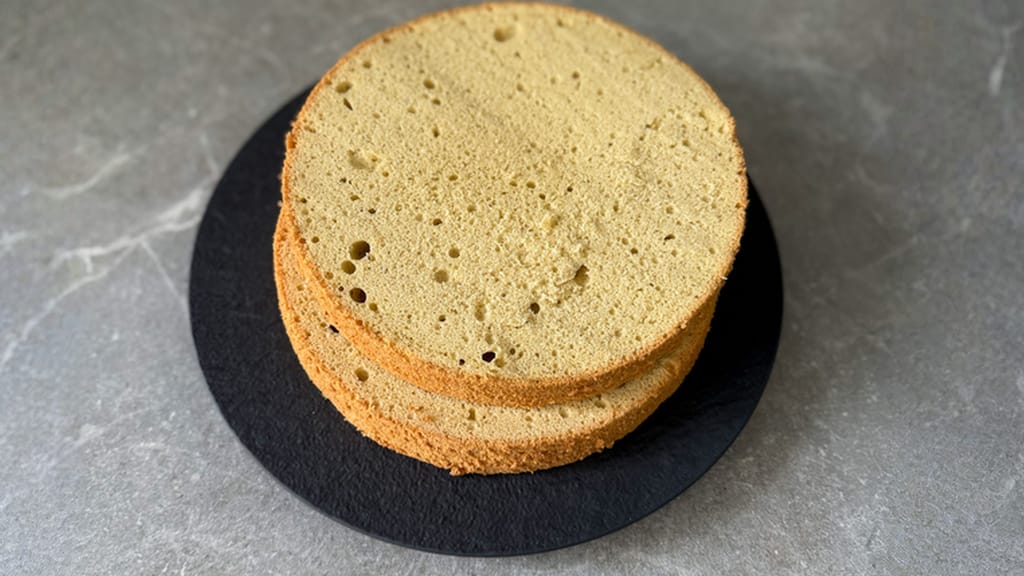
Light and airy génoise sponge cake
Fluffy Génoise sponge layer – a base you can bake in a Remoska too
You can bake a bundt cake in a silicone pan in a Remoska if you fill the pan only halfway and allow 5–10 minutes more baking time, checked with a skewer. If you have the choice, go for a metal pan instead.
You can bake an oven bundt cake recipe in the Remoska without changing the ingredients. Just fill the pan only about halfway, so the batter never reaches the lid even after it rises. For the 2 l Remoska (R21), that is roughly two thirds of a standard batch, so bake the rest as muffins. You don't need to worry about temperature, as the Remoska has no adjustable setting.
A sponge cake most often collapses in the Remoska because the lid was lifted too early and the temperature dropped before the egg foam had set. Keep the lid closed for at least the first 25 minutes. Other common culprits are a layer of batter that is too thick and doesn't bake through in the center, or a foam that deflated too much while the flour was folded in.
Let a yeast bundt cake rise right in its pan in a warm place, but only until the batter reaches half to two thirds of the pan's height. Otherwise it will rise up to the lid as it bakes.
The 4 l Grand (R22) is more practical for cake layers: its bowl is about 29 cm across, so you can bake a layer of roughly 26–28 cm, a standard cake size. The 2 l Remoska (R21) has a 22 cm bowl, so the layer comes out at about 20 cm, a cake for two to four people. The smaller one also has a lower lid, so the batter has to be poured in thinly.
One recipe worth heating the oven for, one tip, and one deal from the shop. Nothing else.