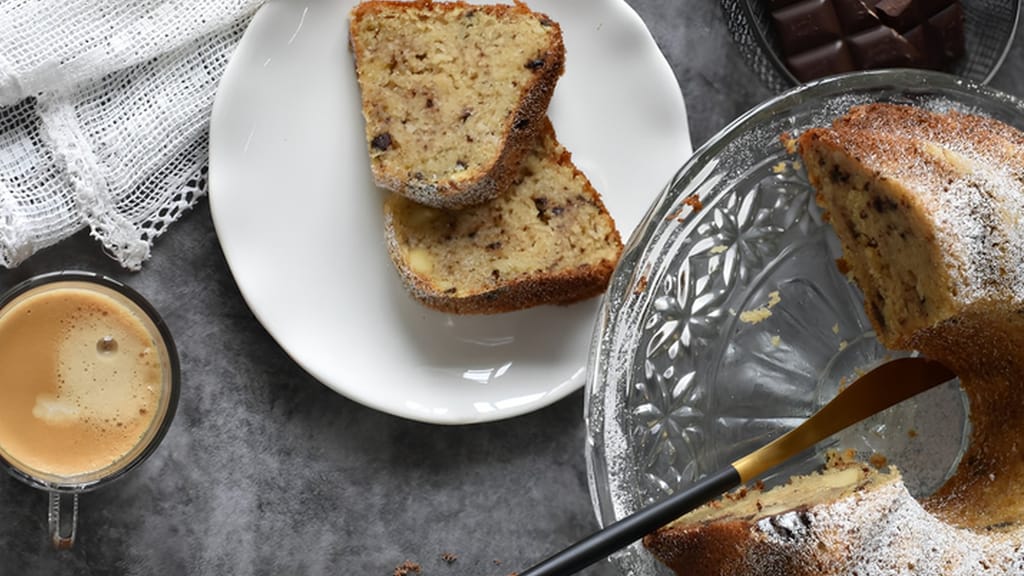
Grandma's two-fifty cottage cheese bundt cake
Bundt Cake: When to Turn It Out So It Doesn't Break or Stick
Updated Oct 6, 2026
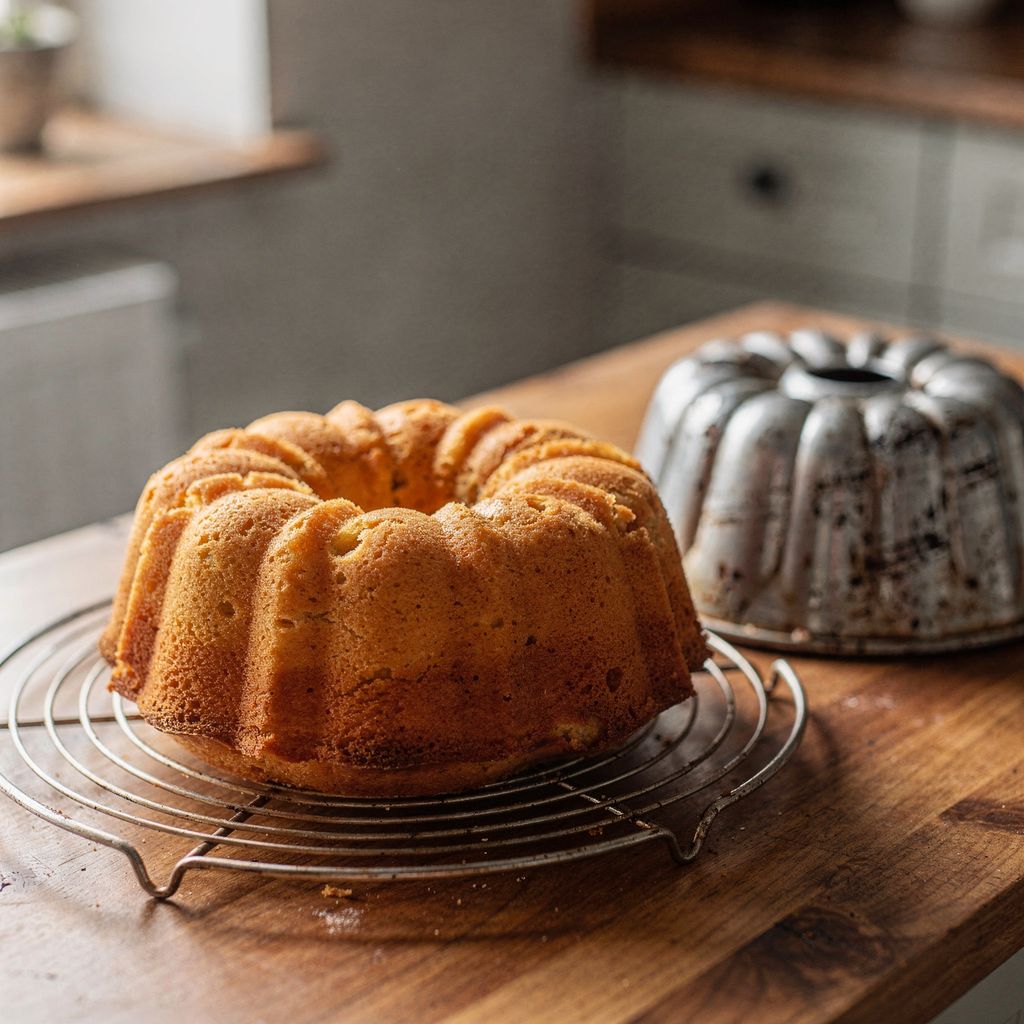
When should you turn a bundt cake out of the pan? About 10–15 minutes after taking it out of the oven, while it's still warm but no longer hot. Too soon and it breaks apart, because the crumb hasn't firmed up yet; leave it in the pan until completely cool and the sugar and fat on the surface harden and glue it right back in. Below you'll find exact timings by pan and batter type, a step-by-step method, and what to do if the cake won't come out.
Turn a classic bundt cake out 10–15 minutes after taking it out of the oven. Set the pan on a wire rack, let it rest a few minutes, then flip it while it's still warm, not hot.
Under 5 minutes: too soon — the cake is still fragile and will crack.
10–15 minutes: the sweet spot for most bundt cakes baked in a metal pan. Pan maker Nordic Ware recommends 10 minutes.
Over 30 minutes: you risk it sticking to the pan, with a soggy bottom.
Count the time from when you take the pan out of the oven, not from when you switch the oven off. A baked bundt cake should never be left to cool inside the oven. If you're not sure it's fully done, check before you attempt to turn it out — an undercooked centre will tear no matter how long you wait.
Turn it out too early and it falls apart; too late and it sticks. That 10–15 minute window sits right between the two.
Straight out of the oven, the crumb is still full of steam and the starch hasn't set yet. The cake only holds its shape because of the pan. Flip it now and its own weight will tear it apart, usually at the narrowest point near the central tube, leaving the fluted bottom (which becomes the top once turned out) stuck in the pan.
A few minutes later, some of that steam escapes, the crumb firms up, and the cake shrinks away from the sides just slightly — that's the moment it releases on its own.
Leave it to cool in the pan, though, and things work against you. Steam with nowhere to go condenses on the sides, leaving the bottom damp. Sugar that caramelised on the surface and the fat used to grease the pan harden and act like glue, and the decorative fluting then locks the cake in place.
10–15 minutes for metal pans, 15–20 minutes for ceramic, and 15–20 minutes — or until just warm — for silicone. Each material conducts heat and supports the cake differently.
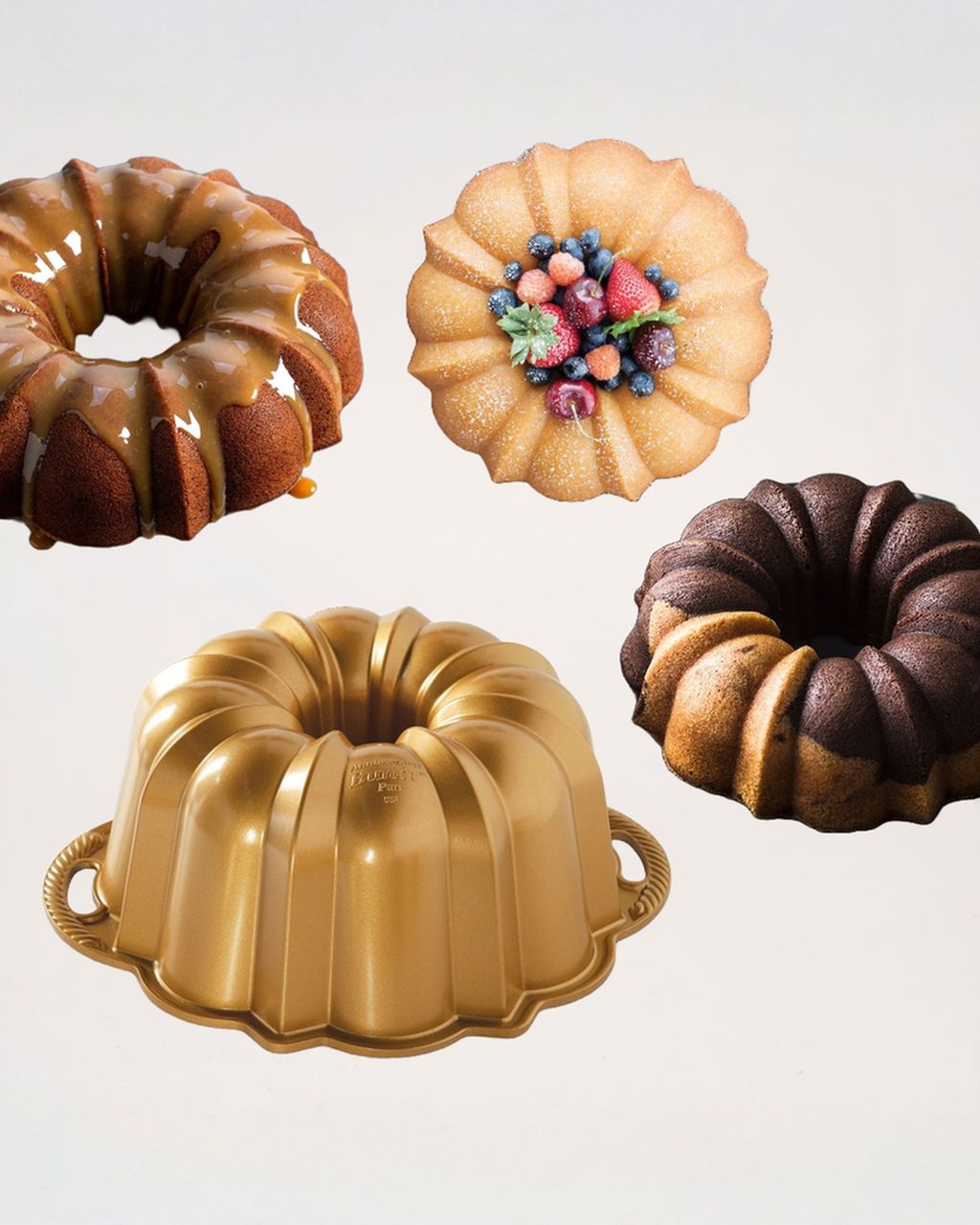
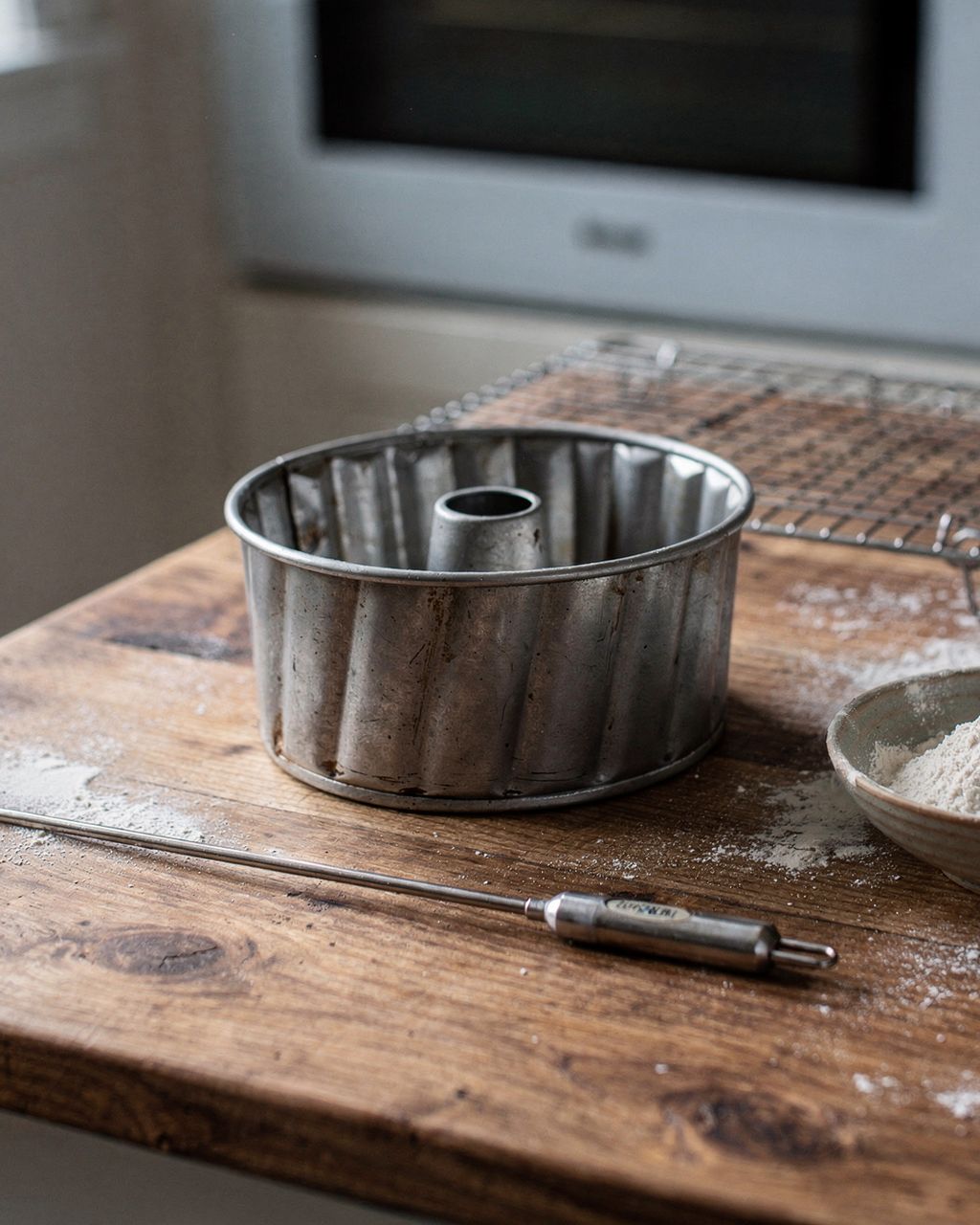
Metal (aluminium, cast aluminium, enamelled or non-stick tin): 10–15 minutes. Metal heats up and cools down fast, so the cake firms up soonest. A cast-aluminium pan with deep fluting likes 10 minutes, no more — the longer it waits, the more those grooves "bite in".
Ceramic (clay, porcelain): 15–20 minutes. Ceramic holds heat for a long time, so the cake keeps gently baking inside it and sets more slowly. Don't rush it.
Silicone: 15–20 minutes, or even until just warm. Silicone won't stick, but it's soft, and a hot cake will flex along with the pan if you bend it. Give it time to firm up, then gently peel the edges away from the pan before turning it out.
We cover what each pan does well, and what to watch out for, in Bundt cake pans: ceramic, silicone, cast iron, or Nordic Ware?.
Creamed or poured-batter cakes 10–15 minutes, yeasted 10 minutes, curd-cheese 15 minutes, fruit 15–20 minutes, mini bundts 5–8 minutes. The wetter and heavier the batter, the longer it needs to firm up.
Creamed or poured-batter bundt cake: the standard, 10–15 minutes.
Yeasted bundt cake: 10 minutes. Yeasted dough is springier and holds together better, but still turn it out on time or the bottom will soften from trapped steam.
Curd-cheese (tvaroh) bundt cake: 15 minutes. The curd cheese adds moisture, so the hot crumb is soft. A classic like Grandma's curd-cheese bundt cake, the "250" genuinely needs that extra moment in the pan.
Fruit bundt cake (raspberries, blueberries, plums): 15–20 minutes. Fruit juice caramelises against the sides and sticks the most, so loosen the edges with extra care.
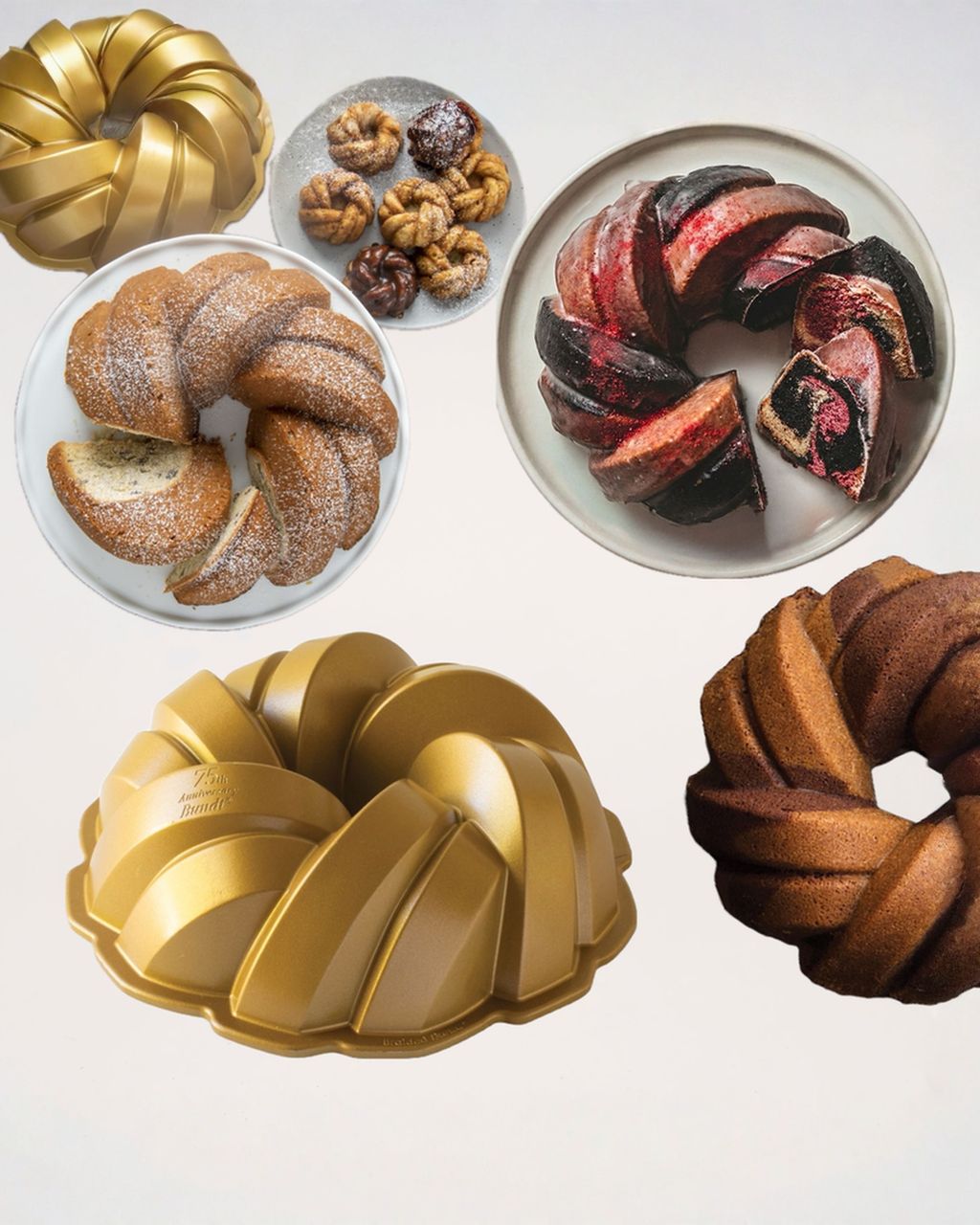
Mini bundt cakes: 5–8 minutes. Small pieces firm up — and cool down — quickly.
Set the pan on a wire rack, wait 10–15 minutes, loosen the edges, give it a shake, cover with the rack, flip, tap and wait a moment, then lift the pan straight up.
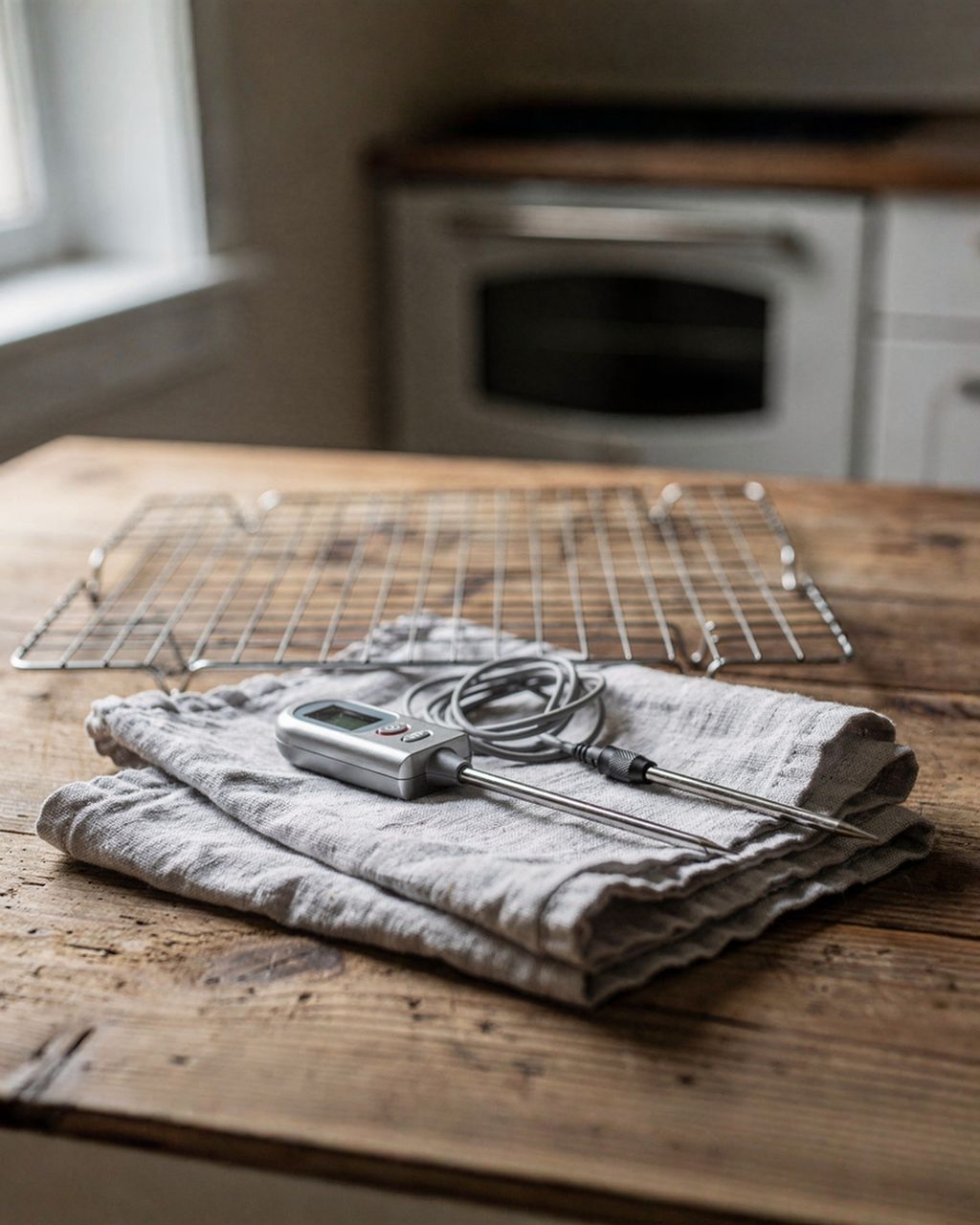
Set the pan on a wire rack. Air circulating underneath draws heat away from the base too, so the cake doesn't go steamy.
Count out 10–15 minutes (adjust per the pan and batter guidance above).
Loosen the edges. Run a thin wooden or silicone spatula, or a skewer, around the outer edge and the central tube. Skip metal knives on a non-stick pan — they'll scratch it, and it'll stick even more next time.
Give it a shake. Gently rock the pan side to side. You'll hear or feel the cake shift inside.
Cover the pan with a rack or plate, grip both with oven mitts, and flip in one smooth motion. Hesitating halfway through the flip is the most common reason bundt cakes break.
Tap and wait. Tap the base of the pan and let it sit for a minute or two. Gravity does the rest.
Lift the pan straight up, not at an angle, so the fluting doesn't scrape.
Then let the cake cool completely on the rack — ideally 1–2 hours — before dusting it, glazing it, or slicing it.
Don't pry at it. Pop it back into a warm oven for a few minutes, or wrap the pan in a cold, damp tea towel, and try again. A stuck bundt cake can almost always be coaxed out — not forced.
Stuck because it cooled too long: put it in the oven at 150°C/300°F for 5 minutes. The fat and sugar on the sides soften again and the cake releases.
Grandma's tea-towel trick: soak a tea towel in cold water, wring it out, and wrap it around the pan for 10 minutes. The condensing steam is said to help the cake pull away from the sides. It doesn't work every single time, but it's worth a try.
Only sticking in spots: turn it back over, run the spatula through again right where it's holding, and try once more.
And if it breaks anyway? Patch it up: pop out the piece left behind in the pan, press it back into place, and bond it with a little glaze or jam. Nobody will spot it once it's dusted with sugar or glazed. If the cake hasn't just broken but is gummy inside, the problem isn't the turning-out — it's the baking. For that, see Undercooked bundt cake: why it happens and what to do about it.
Half the battle is won before baking even starts: grease the pan thoroughly with soft butter and dust it with flour. Good timing takes care of the rest.
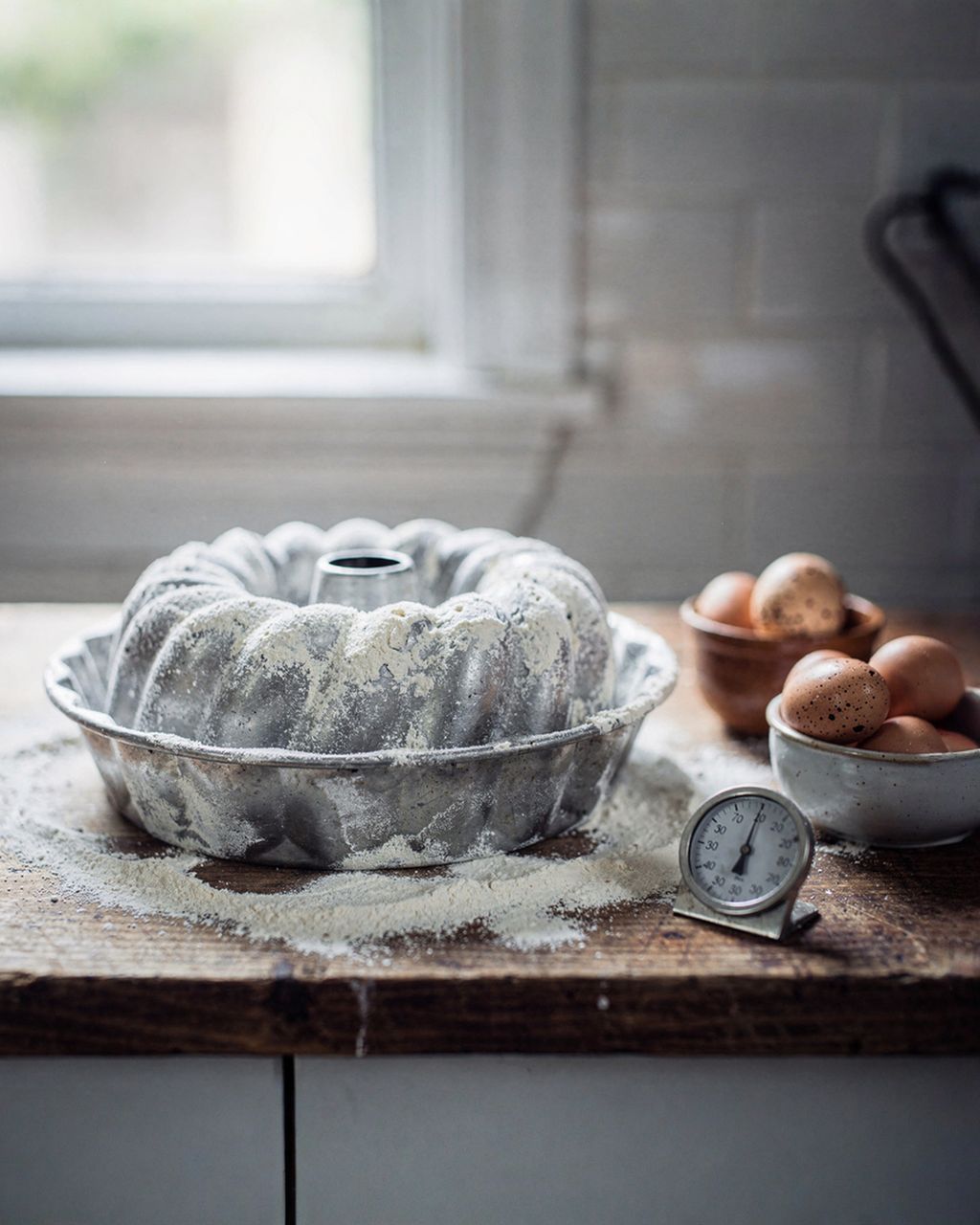
Use soft butter, not melted. Work it into every groove and around the central tube with a pastry brush. Melted butter runs straight to the bottom and leaves the upper edges bare.
Dust with coarse flour, breadcrumbs, or ground nuts, then tap out the excess. For what works best and why, see What to dust a bundt pan with so it doesn't stick.
Keep an eye on your pan's condition. A scratched non-stick surface grips like Velcro. If the cake sticks even with thorough greasing, it's time for a new pan. Browse our bundt cake pans — metal ones with deep fluting release most reliably.
Don't overbake. An overbaked bundt cake develops a dark, caramelised crust that sticks to the sides even more. For the right temperature and timing, see Bundt cake: what temperature and how long to bake it.
You'll get the most practice at turning out a bundt cake with a curd-cheese or fruit version, since they need the longest time in the pan. The curd-cheese cake wants a little extra patience; the fruit one needs careful edge-loosening.
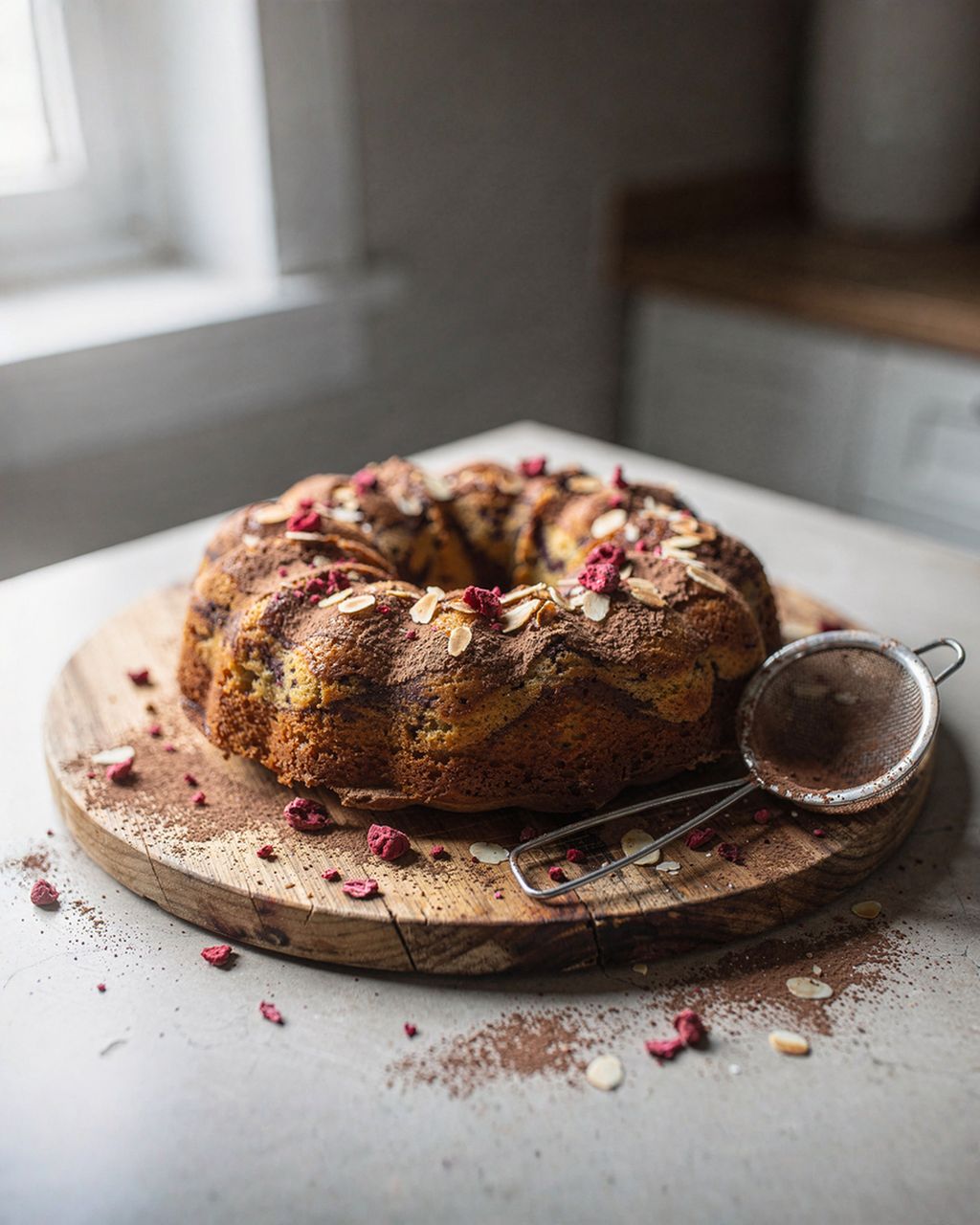
Grandma's two-fifty cottage cheese bundt cake
The "250": Grandma's curd-cheese bundt cake — leave it in the pan for 15 minutes
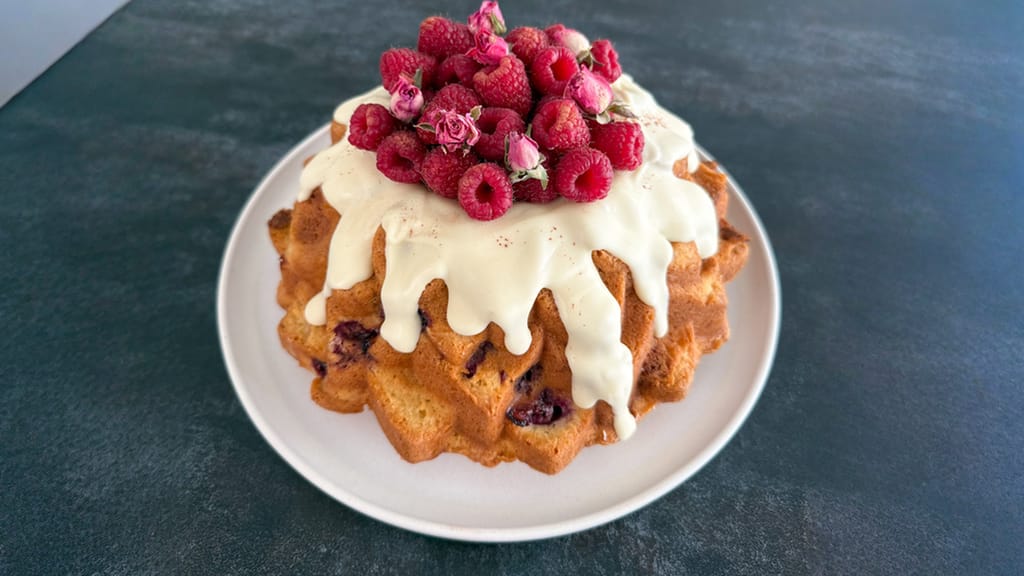
Raspberry bundt cake with white chocolate and sour cream
Raspberry bundt cake with white chocolate: a fruit bundt cake where you need to loosen the edges carefully before turning it out
Wait until the bundt cake is completely cool, usually 1–2 hours after turning it out. A warm crumb is still moist and the knife will squash and tear it; once cooled, it sets properly and slices cleanly.
Dust with icing sugar only once the cake has fully cooled, otherwise the sugar will dissolve and vanish. Pour chocolate glaze over a cooled cake too, so it doesn't all run straight down. The exception is syrup or a lemon soak — those actually absorb better into a still-warm cake.
Don't leave a bundt cake in the pan overnight — it'll steam itself soggy, the bottom will turn damp, and it'll stick. Turn it out after 10–15 minutes, let it cool completely on a wire rack, and only cover it once it's cold.
Once cooled, cover the bundt cake with a cake dome or wrap it in cling film and keep it at room temperature — it'll stay moist for 2–3 days. Only refrigerate it if it contains curd cheese, cream, or fresh fruit; otherwise the cold will just dry it out faster.
One recipe worth heating the oven for, one tip, and one deal from the shop. Nothing else.