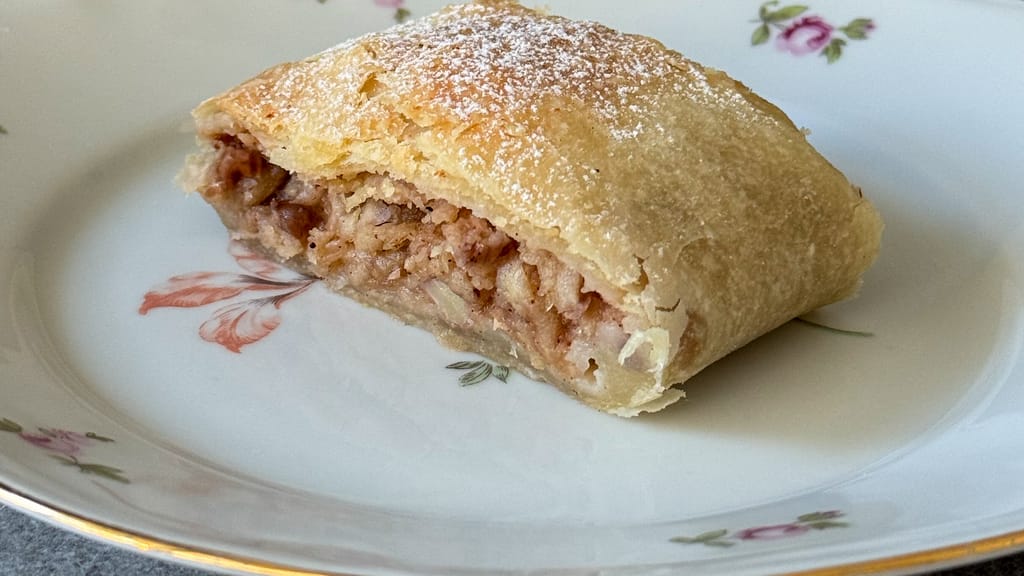
Apple strudel with homemade stretched pastry
Strudel Dough: How to Make It Step by Step

Updated Jul 19, 2026
Perfect strudel dough comes down to three things: strong enough flour, a splash of vinegar, and a proper rest. Get those right, and you can stretch the dough paper-thin without it tearing — and once baked, it stays beautifully crisp. Below you'll find the whole process step by step: the ratio of ingredients, kneading, resting, and stretching it over the backs of your hands — plus the most common mistakes and how to dodge them. Whether this is your first strudel or your fifth this month, there's something new to pick up here.
Classic stretched strudel dough needs just five ingredients. Here's a tried-and-tested ratio for one large strudel:
Flour – 250 g plain flour with a higher protein content (around 12%). It's the gluten that makes the dough stretchy, so this is one time you don't want a weak flour.
Warm water – about 125 ml, lukewarm. Warm water helps develop the gluten and keeps the dough supple.
Fat – 2–3 tablespoons of oil (sunflower or rapeseed) or melted butter. Oil makes the dough easier to stretch, while butter adds richer flavour — feel free to combine both.
Vinegar – 1 tablespoon (white or apple cider). The acid relaxes the gluten so the dough can be pulled paper-thin.
Salt – a pinch. It sharpens the flavour, even in a sweet strudel.
Let's bust a common myth right away: for stretched dough, you don't want a weak, low-protein flour. Quite the opposite — you need enough gluten to stretch the dough paper-thin without it tearing; the vinegar's acidity and a good rest then let it relax. Richer, rolled-out versions of the dough (with a higher proportion of butter or lard, even 100 g per 250 g of flour) turn out flakier, but can't be stretched anywhere near as thin.
The process has five steps, and from mixing to fully stretched dough takes about an hour — most of which is just resting time:
Mix the dough. Put the flour and salt in a bowl, make a well in the centre, and pour in the lukewarm water, oil, and vinegar.
Knead it. Knead for 8–10 minutes until the dough is smooth, supple, and no longer sticky. Thorough kneading isn't extra hard work for nothing — it builds the gluten that lets the dough stretch to near-transparency later on.
Let it rest. Wrap it in plastic or cover with a warm bowl and leave it somewhere warm for at least 30–60 minutes. Cold dough is much harder to stretch.
Roll it out. On a floured surface, roll the dough into a rectangle a few millimetres thick.
Stretch it by hand. Move the dough onto a floured cloth and, working from underneath, gently pull it outward in all directions using the backs of your hands (not your fingertips), until you can read a newspaper through it. The cloth will also help you roll up the finished strudel.
The most common mistake is trying to get paper-thin dough with a rolling pin alone. The rolling pin only does the groundwork — the final thinness comes from stretching by hand, not rolling.

Apple strudel with homemade stretched pastry
Apple strudel made from homemade stretched dough – the full recipe, step by step
Stretched dough relies on one trick: build the gluten first, then relax it.
Vinegar (acid) breaks down and loosens the gluten strands. In baking practice, this stops the dough from springing back, so you can pull it thinner without it tearing.
Warm water and kneading do the opposite — they develop the gluten, forming long, elastic strands strong enough to withstand stretching.
Resting is the most underrated step. After kneading, the tense gluten needs 30–60 minutes to relax; only then can the dough be stretched translucent without holes.
It's all about balance: too little gluten and the dough tears; too-strong flour without a rest gives you a rubbery, stubborn sheet. Strong flour, acid, and time are the three levers you use to strike that balance.
Four mistakes ruin strudel dough most often: too little water, too much flour, not enough resting, and cold ingredients. Here's each one, with the fix.
The dough tears while stretching. Usually it's too dry or hasn't rested enough. Add water gradually, give the dough a full 30–60 minutes in a warm spot, and stretch with the backs of your hands, working from the centre outward.
The dough is tough and rubbery. There's likely too much flour in it, or it never got its rest. Weigh the flour instead of eyeballing it, and always let the dough relax after kneading.
Holes appear in the middle of the sheet. These come from nails and fingertips. Stretch using the flat backs of your hands, and ease off the pressure near the thicker edge.
Cold ingredients. Cold water and cold fat slow down gluten development. Use lukewarm water and softened butter for a more elastic dough.
The traditional method is stretched dough, pulled paper-thin by hand — it's exactly what gives strudel its signature paper-thin layers. If you're short on time or not ready to try stretching it yourself, there are some legitimate shortcuts and variations:
Store-bought filo or puff pastry are fair shortcuts. Filo is closest to traditional stretched dough (brush each layer with butter individually), while puff pastry gives a puffier, more "pie-like" result.
Gluten-free version. Without gluten, dough simply can't be stretched paper-thin — gluten is exactly what makes that possible. Use a ready-made gluten-free flour blend with a pinch of psyllium or xanthan gum, and expect a thicker, more rolled-pastry-style sheet.
Vegan version. Swap butter for oil or another plant-based fat; classic stretched dough never needed eggs anyway.
These variations aren't just for special diets — they're also a good way to get a feel for strudel before you tackle fully stretched dough.
Almost anything that holds its shape and doesn't release too much liquid works in a strudel: apples with cinnamon, curd cheese with blueberries, chocolate with nuts, and even savoury fillings like braised cabbage. One rule applies across the board — dust the base with breadcrumbs or ground nuts so the filling's juices don't turn the dough soggy.
Classic apple. Tart apples (Granny Smiths work well), thinly sliced, with sugar, cinnamon, and a splash of lemon. The most traditional and foolproof choice.
Curd cheese with blueberries. Curd cheese with vanilla sugar and fresh or frozen blueberries — fresh and creamy; known in Vienna as Topfenstrudel.
Chocolate with nuts. Melted dark chocolate with chopped hazelnuts or almonds.
Savoury. Strudel doesn't have to be sweet — try it with braised cabbage and bacon.
You can play further with spices like cinnamon, cardamom, or ginger. Just keep flavour and moisture in balance so the pastry stays crisp.
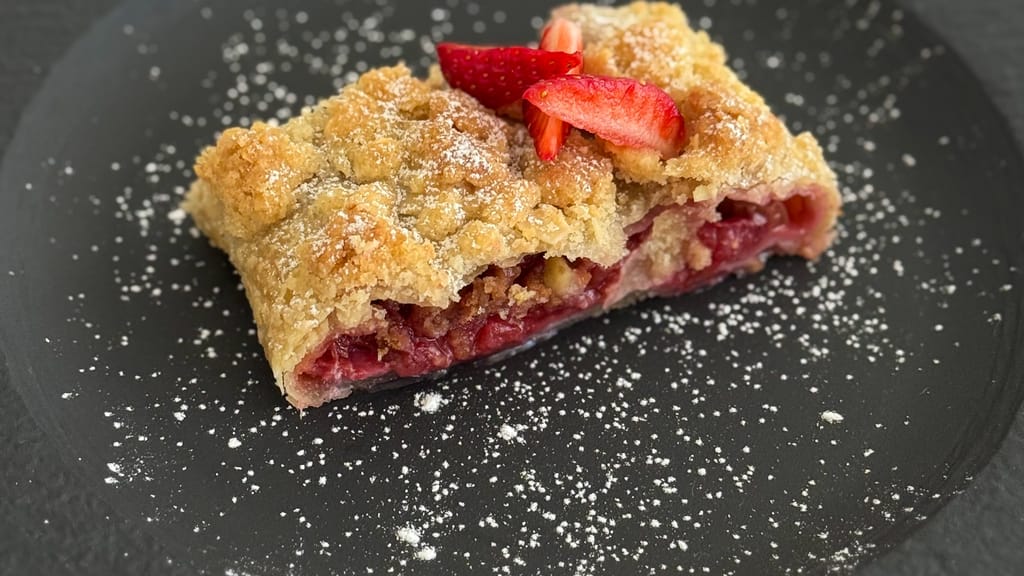
Strawberry-rhubarb strudel with buttery crumble
Rhubarb and strawberry strudel with crumble topping — another spring fruit filling idea
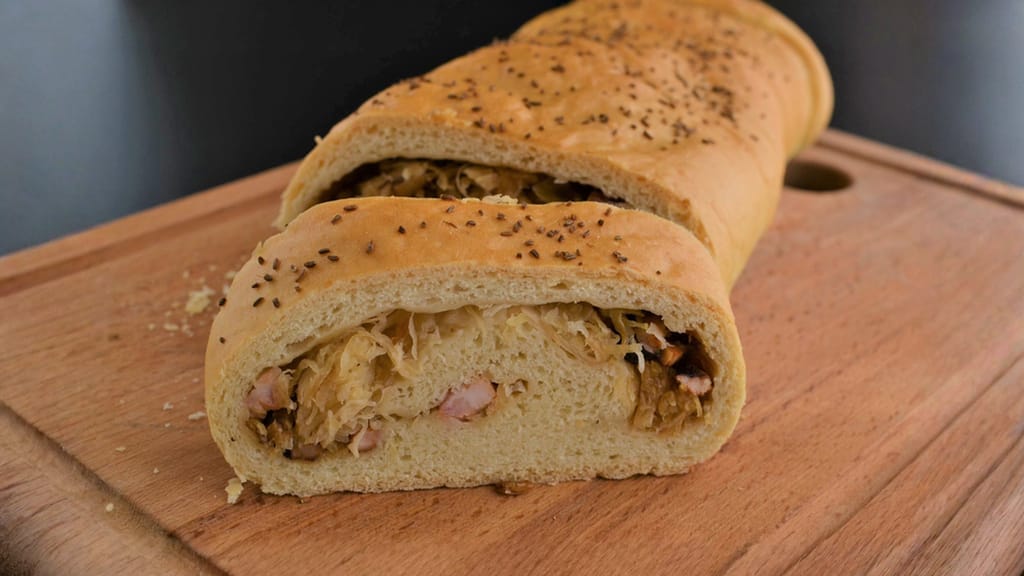
Autumn cabbage and bacon strudel
A savoury autumn strudel with cabbage and bacon — proof that strudel doesn't have to be sweet

Strudel grew out of thin stretched dough, which arrived in Central Europe via Hungary from Ottoman cuisine — making it a relative of baklava. The oldest surviving strudel recipe dates back to 1697 and is held in the Vienna City Library (Wienbibliothek im Rathaus).
By the 18th century, strudel had swept across the Austro-Hungarian monarchy and become a symbol of Viennese coffeehouse culture. Today it still comes in two classic forms: Apfelstrudel (apple, considered Austria's national dish) and Topfenstrudel (curd cheese); in Hungary it's known as rétes. It settled so naturally into Czech kitchens that baking strudel has become a grandmother-to-grandchild family tradition.
Baked strudel keeps for 2–3 days covered in the fridge or in a sealed container. It's best on day one; on day two, warm it briefly in the oven at 150°C (300°F) to crisp the pastry back up — the microwave, by contrast, will just make it soggy.
Yes. Once kneaded, the dough keeps in the fridge, wrapped in plastic, for 1–2 days; let it come back to room temperature before stretching, or it won't cooperate. You can also freeze the assembled, unbaked strudel and bake it straight from frozen, just adding a few extra minutes.
Yes, both work as a shortcut. Filo is the closest match to traditional stretched dough — just brush each layer with butter. Puff pastry gives a puffier, more pie-like result that tastes noticeably different from a true stretched strudel.
A soggy bottom comes from filling juices soaking into the dough. Before filling, dust the stretched dough with breadcrumbs, crushed sponge cake, or ground nuts to soak up the excess liquid. It also helps to pat sliced apples dry and to bake the strudel on a lower shelf in the oven.
No. Classic stretched dough is just flour, water, fat, vinegar, and salt — no eggs required. Some cooks add a single egg yolk for extra softness, but it's not essential, and a vegan version comes together easily without it.
One recipe worth heating the oven for, one tip, and one deal from the shop. Nothing else.