At a glance
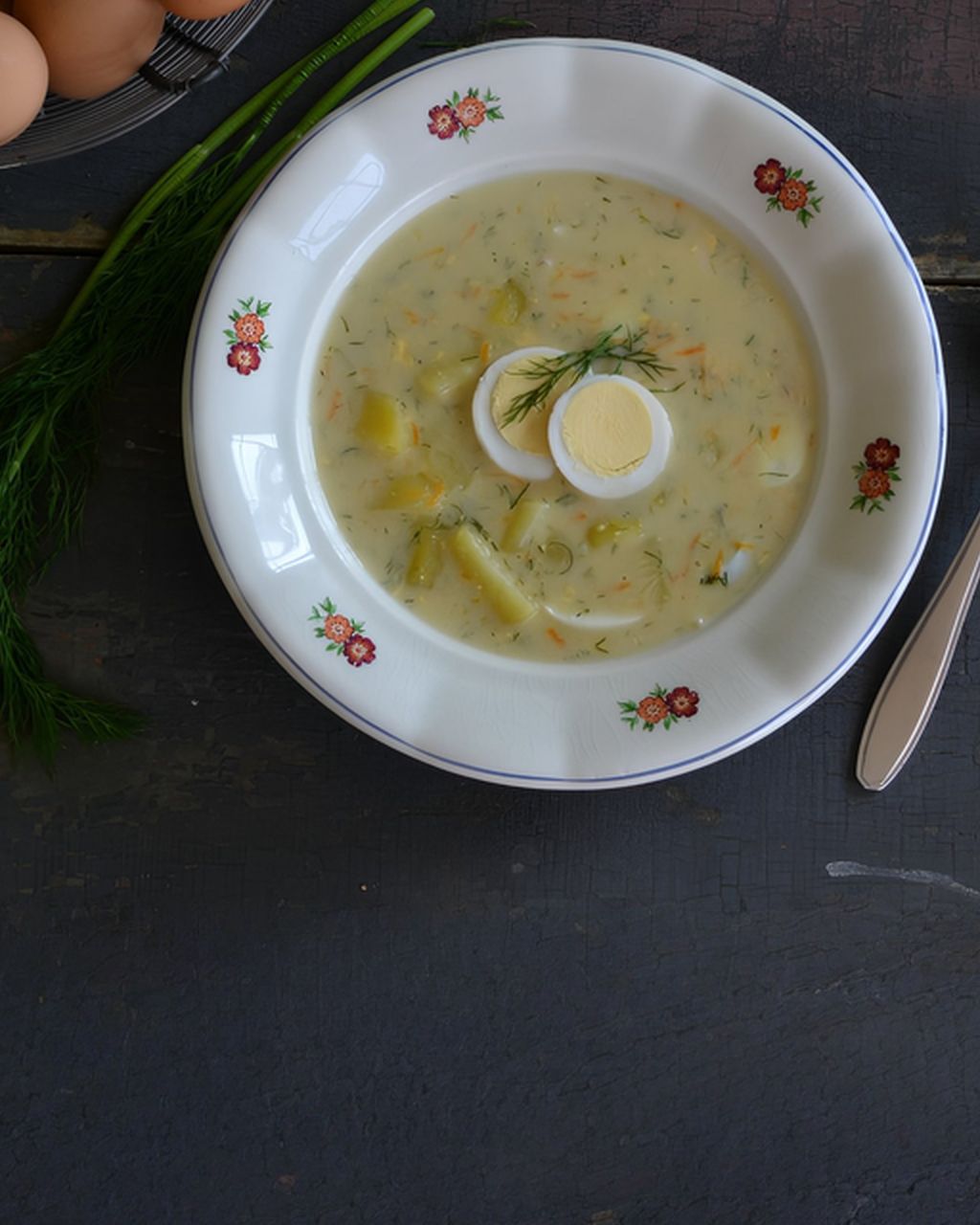
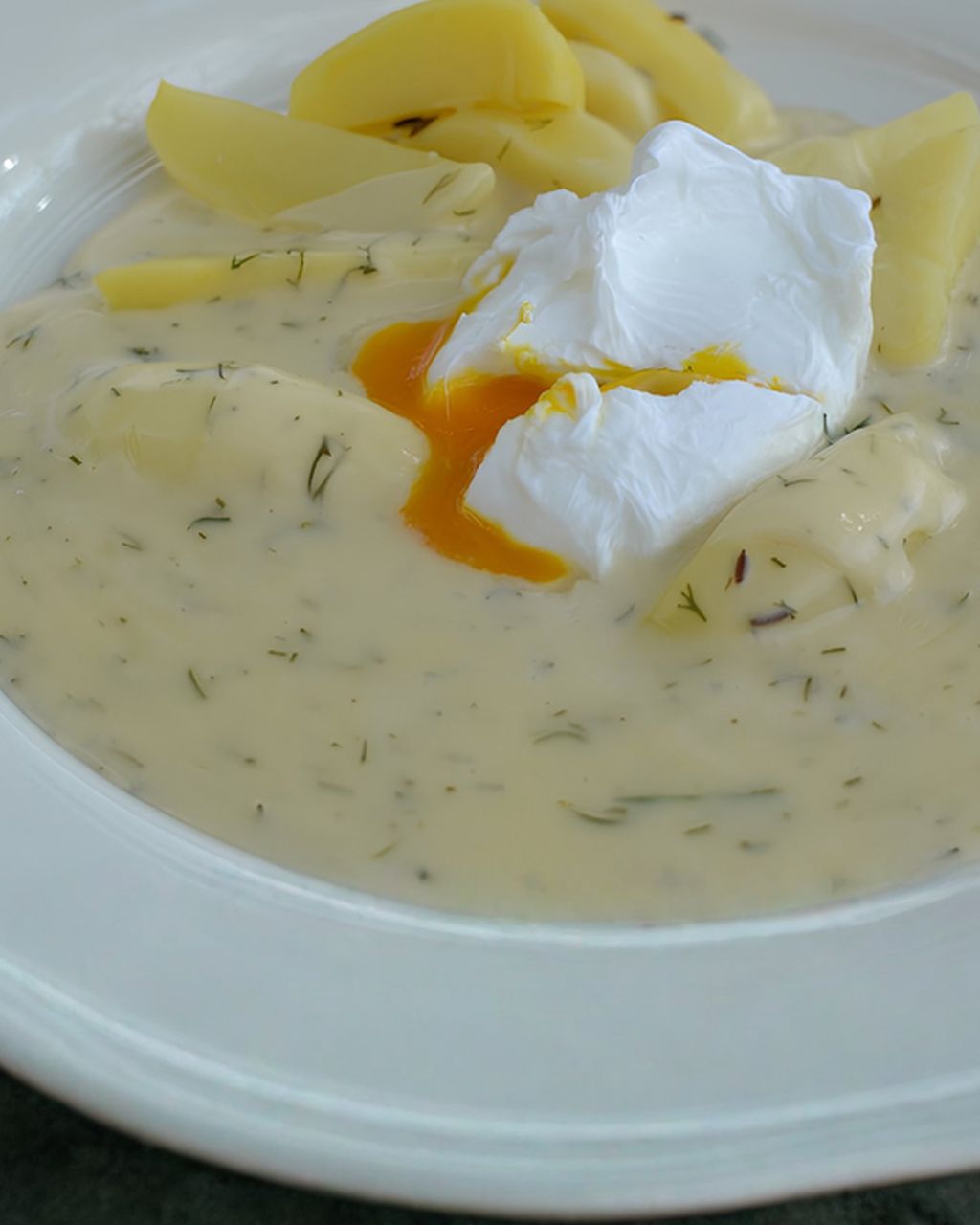
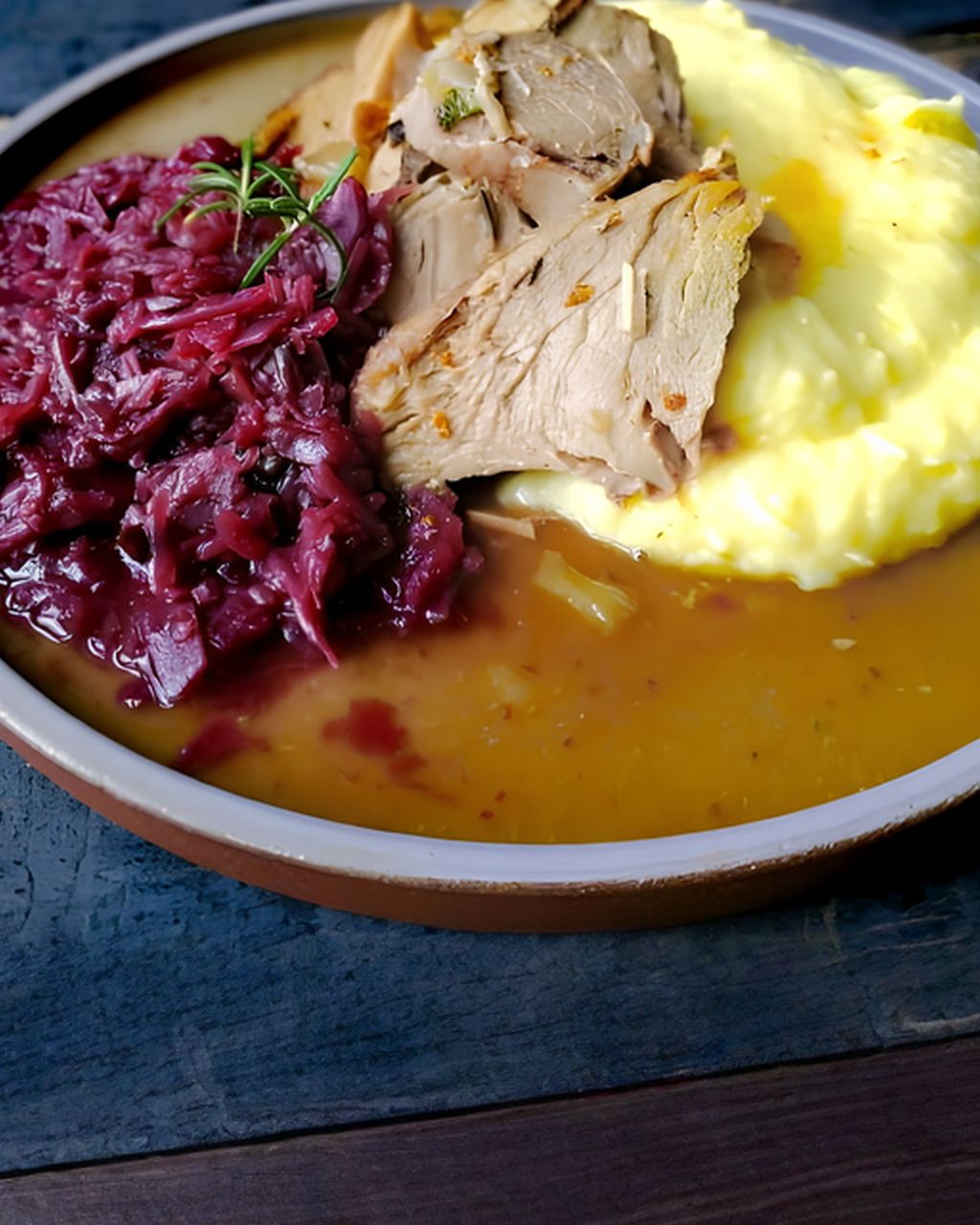
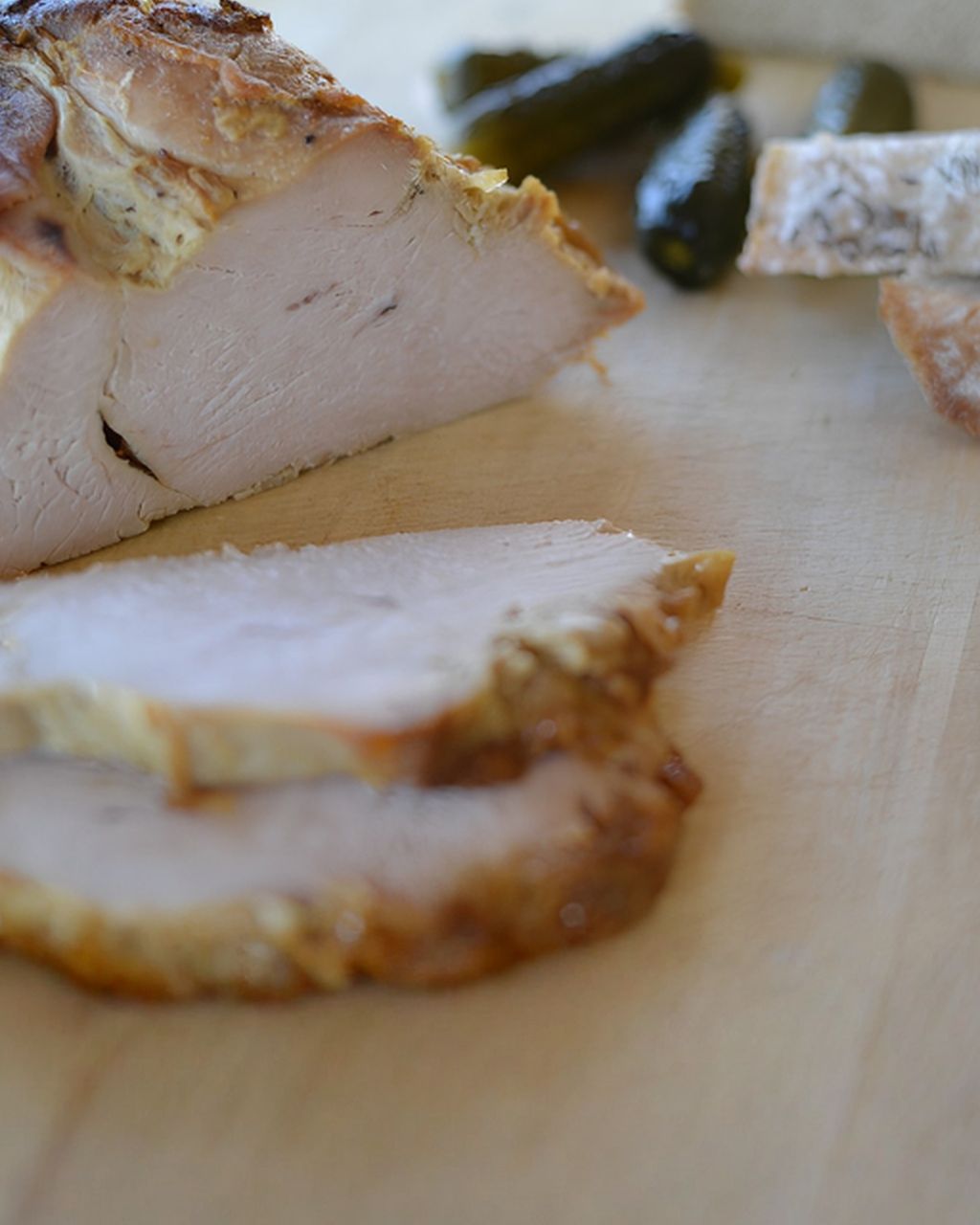
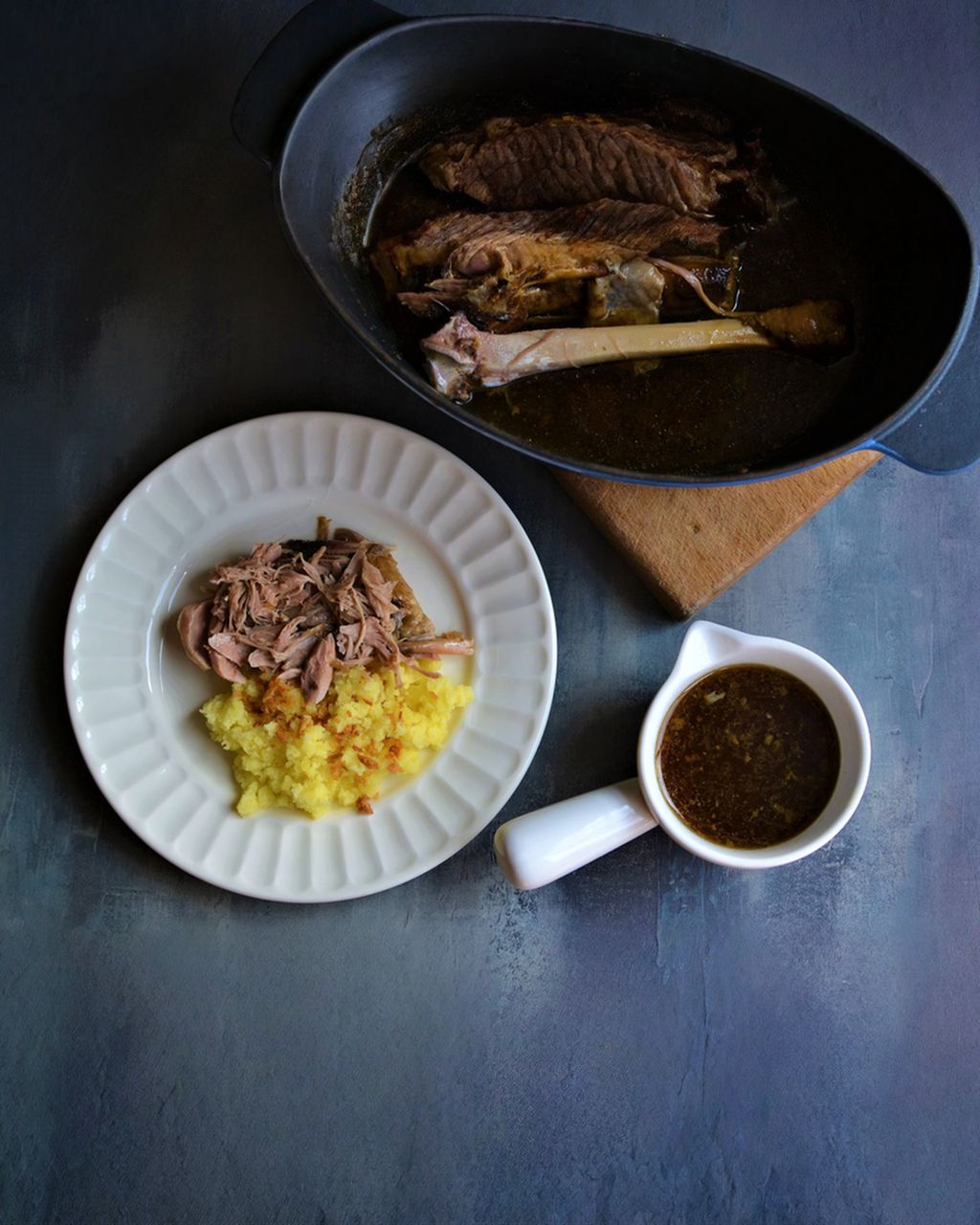
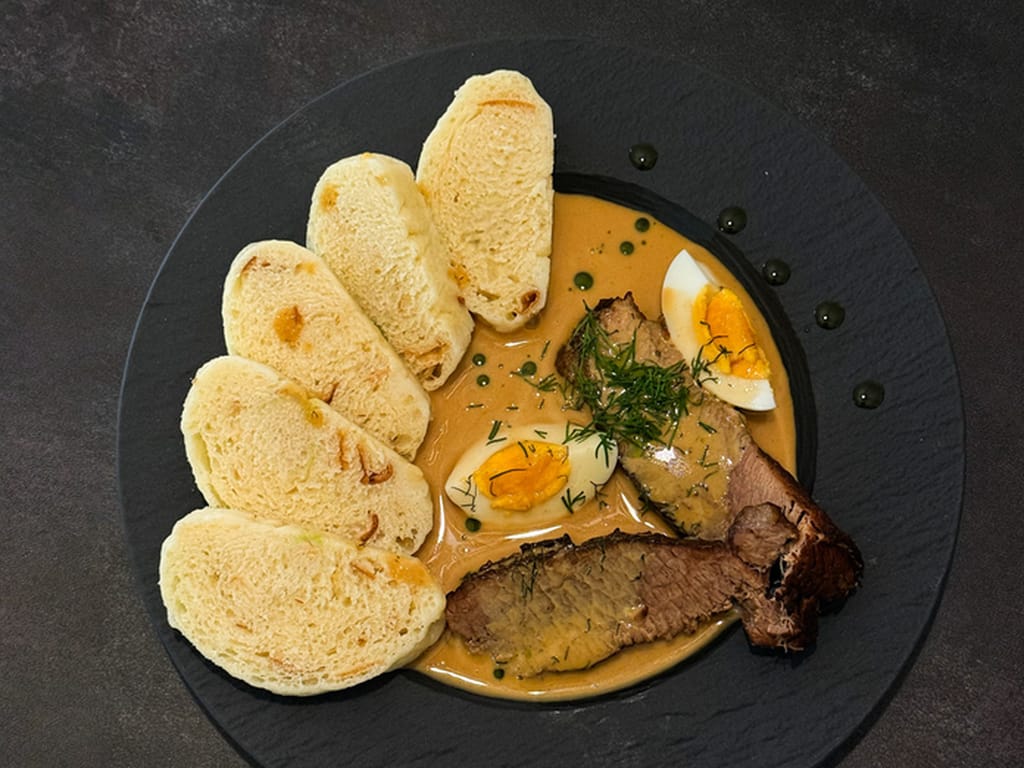
This modern take on a Czech classic combines tender, melt-in-your-mouth slow-roasted beef with a silky dill sauce and a vibrant green dill emulsion that brings unexpected freshness to the dish. Fair warning: the beef needs 4–5 hours in a low oven, and the dill oil requires a 2-hour draining period, so plan ahead for this impressive showstopper.
1/9
Making the vibrant green dill emulsion
Dip the whole dill, stems included, into boiling salted water for 15 seconds. Immediately cool it down in a bowl of ice water to lock in the colour. Pat it thoroughly dry with paper towels. This step is the key to that vibrant colour!
For this step
0/12/9
Blending and straining the dill oil
Put the dried dill into a blender with a neutral oil. Blend on the highest speed for 90 seconds. Strain the mixture through a fine cloth or clean tea towel. Don't press it – just let it drip through naturally for about 2 hours at room temperature.
For this step
0/13/9
Building the sauce base: browning the meat
Pat the meat thoroughly dry and season with salt on all sides. Heat a little oil or fat from the meat in a pan and sear the meat over high heat until golden brown on all sides. Remove the browned meat from the pan and set it aside.
For this step
0/3
How it went
1 person tried it
Not enough tries for a success rate yet.
Be one of the first
Your result gets everyone closer to a success rate.
Anyone can answer, without signing in or buying. Answers aren't verified. The percentage is the share of “Worked out” answers, shown from 5 answers.
Tips from the Yumsto kitchen
Why it works
Beef shoulder has lots of connective tissue. At 140 °C under a lid, over 4–5 hours it breaks down into gelatin, so the meat turns tender and the sauce full-bodied. For the dill emulsion the recipe blanches the dill for only 15 seconds and chills it in ice right away, which locks in the color so it does not turn brown. The stems in the sauce bring aroma, while the leaves go in at the end, off the heat, so they stay fresh. Sugar and vinegar give the classic sweet-sour taste of Czech dill sauce.
Tips
Dry the meat well before searing, or it steams instead of browning. Add the cognac with the pan off the heat, as it can flare up. Do not squeeze the dill in the cloth. The oil would turn cloudy and lose its bright color. Add the vinegar to the sauce a little at a time, tasting until the balance is right for you.
Making ahead and storage
Both meat and sauce can be made a day ahead, and the flavors meld further. Let the cooked dish cool, refrigerate it within 2 hours and eat within 3 days. Reheat gently, stirring the sauce, until the meat is hot all the way through. After straining, keep the dill oil in a closed container in the fridge and use within 3 days. Never leave homemade herb oil standing somewhere warm.
Substitutions
You can swap the cognac for brandy, or leave it out and add more stock. The sauce will be slightly less deep. Beef shank or cheeks work instead of shoulder, but expect a longer roast. Use 31% whipping cream the same way as 33%.
Serving
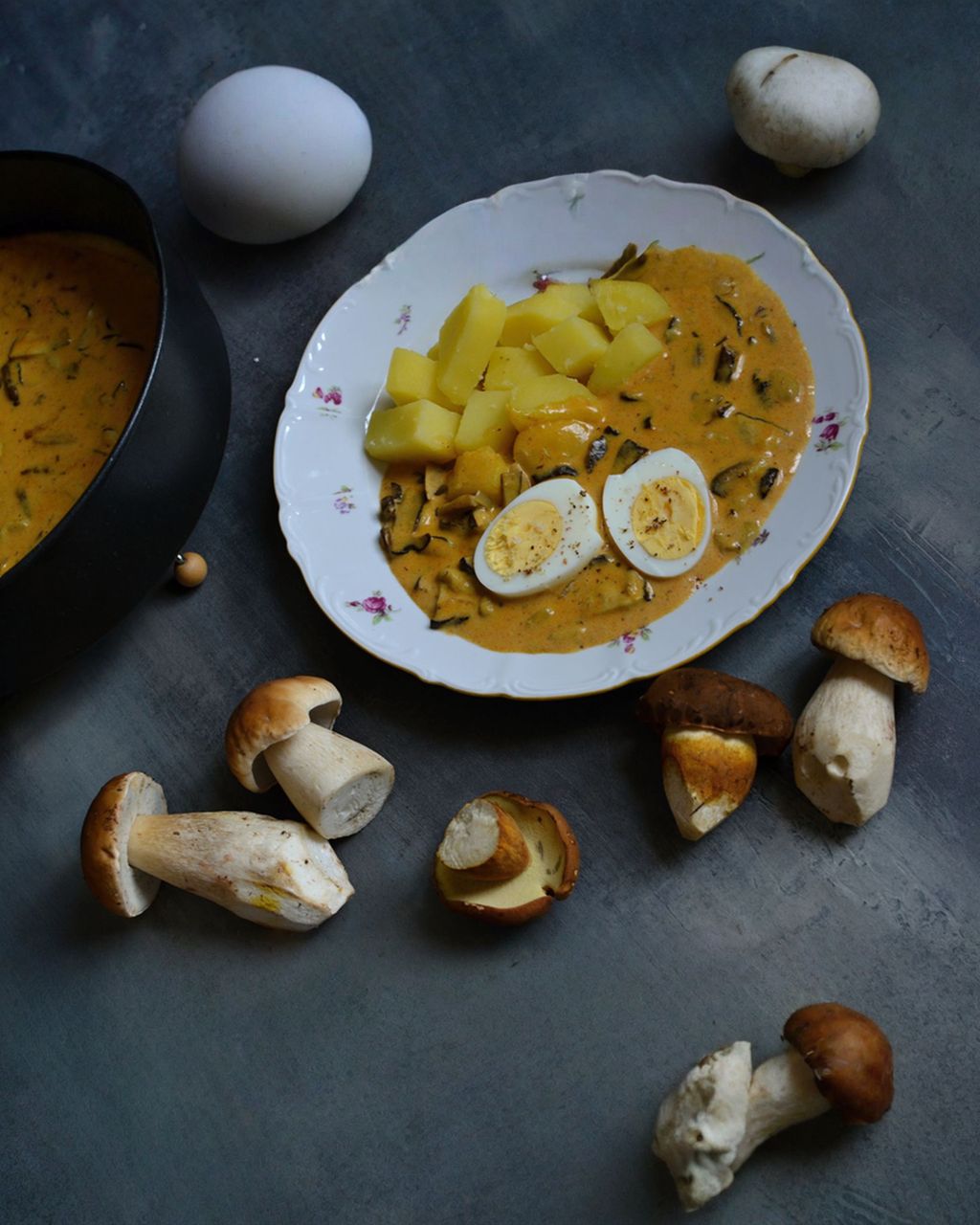
The recipe does not cover dumplings. Czech bread dumplings, boiled potatoes or pasta all go well. Have a lemon and a boiled egg ready for finishing and serving.
Common questions
Why is my dill oil brown or cloudy?
The dill was blanched too long, not chilled well, or squeezed in the cloth. Blanch for exactly 15 seconds, chill immediately and let the oil drip on its own.
Do I have to use cognac?
No. Leave it out and add a little more stock. The sauce will be milder, without the spirit note.
Why did my sauce split?
It boiled too hard after the cream and vinegar went in. Keep it at a gentle simmer and add the vinegar gradually. A briefly blended sauce often comes back together.
Can I cook the beef on the stovetop instead?
It works: covered, on the lowest heat, checking the liquid now and then. An oven holds the temperature more evenly, though.
Want a recipe like this every Thursday?
One recipe worth heating the oven for, and one tip that saves you time. Nothing else.