- Season
- Harvested at peak summer and dried for year-round use.
- Price
- Low
- Nutrition per 100 g
- 253 kcal
- 20 g protein
- 4.4 g fat
- 55.8 g carbs
Dried Dill
Dried Dill
Dried dill consists of the carefully dehydrated feathery leaves of Anethum graveolens, an annual herb of the Apiaceae family, prized for retaining the aromatic silhouette of fresh dill while offering greater shelf stability and a gentler, rounder expression of its volatile oils.
In practice
How to store
- On the counter
Store in an airtight container away from light, heat and moisture; flavour is best within about a year.
- In the fridge
Refrigeration is not recommended: moving the jar in and out of the cold causes condensation, which can lead to clumping and mould.
- In the freezer
Freezing is possible but rarely necessary; volatile oils may dull after thawing.
How to choose
Choose dried dill that remains vibrantly green rather than yellowed or brown, as color loss signals depleted essential oils. The aroma should be sweet and grassy when crushed between the fingers, never dusty or inert. Prefer whole dried fronds over fine powders, as surface area accelerates oxidation.
What to swap in
Best swap
Fresh dill, used at a ratio of three parts fresh to one part dried.
In a pinch
Dried fennel frond or a restrained blend of dried parsley and fennel seed.
Preparation
Crumble dried dill between the palms immediately before use to awaken dormant oils. Add early in slow-cooked preparations to allow rehydration, or bloom briefly in warm fat for sauces and soups.
Don't toss it
Stems left from home-drying can be infused into vinegar or oil, capturing residual aroma for dressings.
In the kitchen
Cooking
Dried dill excels in moist-heat applications such as soups, stews, pickling brines, and slow-simmered sauces, where time and liquid coax its subdued oils back into expression. It is less suited to raw applications unless rehydrated, and should be added sparingly to dry rubs to avoid bitterness.
Goes well with
- Salmon
- Cucumbers
- Yogurt
- Potatoes
- Eggs
- Mustard
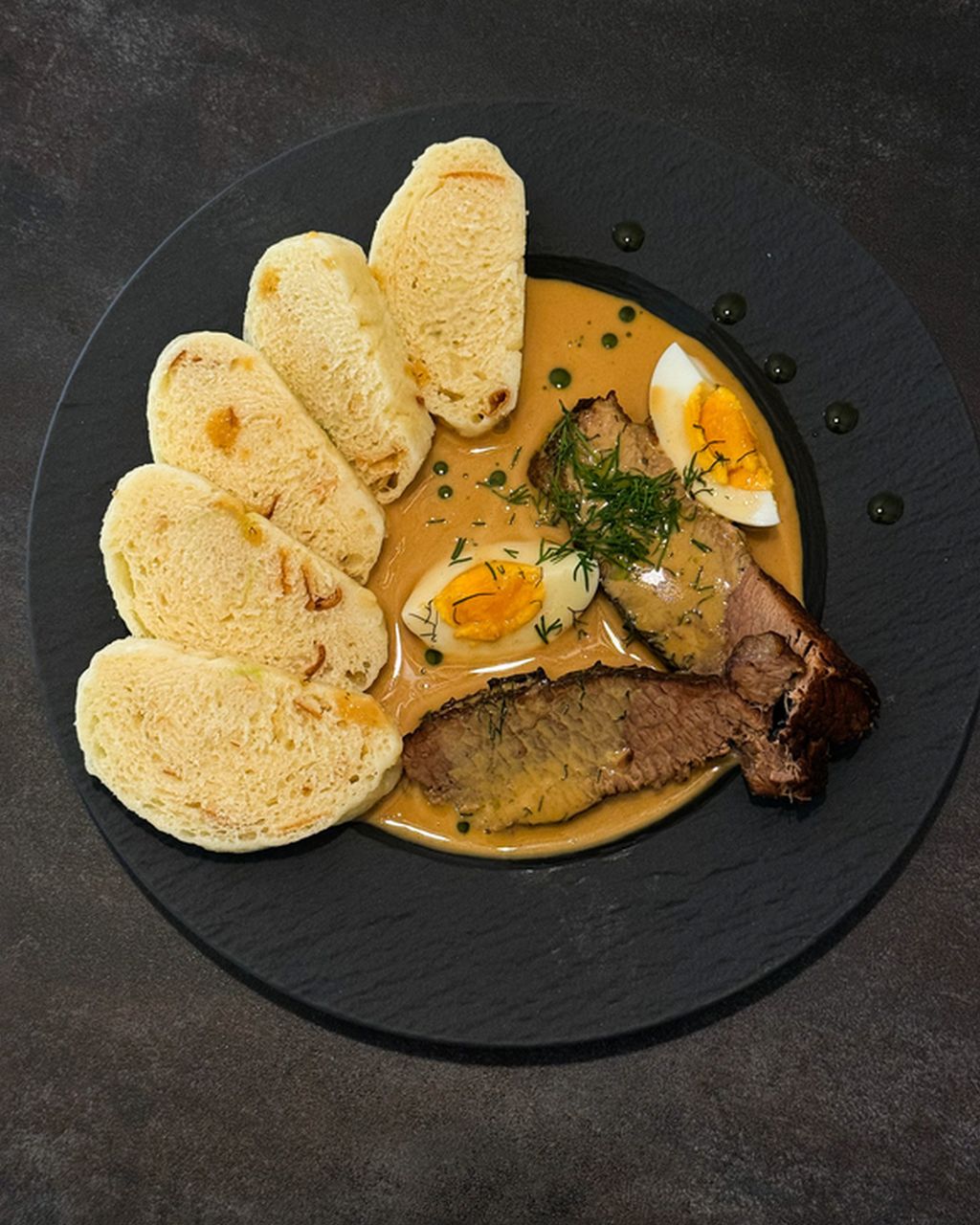
Recipes with this ingredient
What it is
Dried dill consists of the carefully dehydrated feathery leaves of Anethum graveolens, an annual herb of the Apiaceae family, prized for retaining the aromatic silhouette of fresh dill while offering greater shelf stability and a gentler, rounder expression of its volatile oils.
How it tastes
The flavor unfolds in three movements. The attack is softly green and aromatic, with fleeting notes of cut hay and fennel frond. The mid-palate broadens into sweet anise and meadow herbs, carrying a faint bitterness that anchors richness in dairy and fish. The finish is clean, slightly peppery, and drying, leaving a whisper of coastal freshness rather than the sharp chlorophyll snap of the fresh plant.
Did that help? We’ll send you more tips by email.
Seasonal baking plans, tested recipes and kitchen tricks that save you time. Unsubscribe in one click.
Common questions
Is dried dill as strong as fresh dill?
When should dried dill be added during cooking?
Can dried dill be used for pickling?
Deep dive
3 min read
Varieties
Though dried dill is often treated as a monolith, its character varies with cultivar, growing conditions and drying practice: leafy cultivars bred for foliage, such as 'Dukat' or 'Hera', give fuller, sweeter leaf, and essential-oil composition shifts with climate and harvest stage.
Harvest timing is decisive. Dill cut just before flowering concentrates leaf oils, while late-harvest material leans woody and austere once dried. Traditional drying on linen screens preserves color and volatile integrity, whereas industrial hot-air dehydration accelerates moisture loss at the expense of nuance. The resulting spectrum ranges from pale, almost tea-like fronds to deeply green leaves that crumble with a soft sigh, each carrying the memory of its field.
History
The story of dried dill is inseparable from preservation itself. Ancient era: In classical Greece and Rome, dill was valued both as a culinary herb and a medicament; Pliny the Elder records its use to soothe digestion. Medieval period: Dill was grown in monastic and estate gardens across Europe, appearing in Charlemagne's Capitulare de villis around 800, and by the Middle Ages it had become a fixture of Scandinavian and Eastern European cooking, where it is still used above all with fish, cucumbers and dairy.
Modern era
Industrial drying in the nineteenth and twentieth centuries standardized the herb for global distribution, allowing dill to season American pickles, Ashkenazi soups, and Eastern European dairy with equal ease. Though fresh dill now dominates haute cuisine, dried dill persists as a quiet archivist of older foodways, preserving not only leaves but methods shaped by scarcity and season.
Science
Drying dill alters its chemistry in measured ways. Water loss concentrates certain compounds while allowing others, notably limonene and alpha-phellandrene, to volatilize. Dill leaf owes its characteristic aroma chiefly to alpha-phellandrene and dill ether, the very compounds most readily lost in drying, which is why dried dill tastes softer than fresh; carvone, dominant in the seed, is present in the leaf in smaller amounts. Chlorophyll degradation accounts for color loss, while enzymatic browning is minimized through rapid, low-heat dehydration. Rehydration in fat or liquid partially restores aromatic perception by dissolving oil-soluble compounds and distributing them evenly through a dish.
Sourcing and ethics
Ethical sourcing favors small-scale growers who harvest by hand and dry without excessive heat, preserving both flavor and labor dignity. Dill is a low-impact crop, requiring modest water and thriving without heavy chemical inputs. Choosing organically grown dried dill reduces pesticide exposure and supports biodiversity, particularly pollinators that rely on flowering umbels left unharvested.